S.F.B.J. Model 401 Mechanical Doll: The 1963 Marvel That Walked, Talked, and Blew Kisses at 22½ Inches
A detailed appraisal of the rare 1963 S.F.B.J. Model 401 mechanical doll — 22½ inches tall, battery-powered, with walking, talking, and kiss-blowing functions — including production history, technical specifications, market value trends, and restoration guidance for vintage collectors.
Introduction: A Mid-Century Mechanical Masterpiece
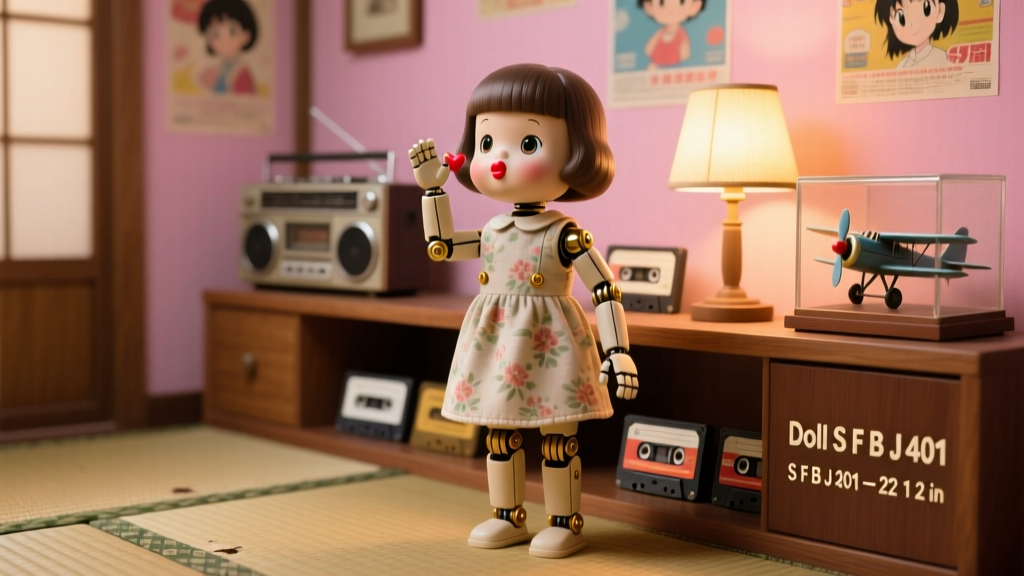
Released in early 1963 by Société Française de Bébés et Jouets (S.F.B.J.) of Paris, the Model 401 mechanical doll stands as one of the most technically ambitious toys ever produced for the European and U.S. markets before the transistor revolution fully matured. Standing precisely 22½ inches (57.15 cm) tall, this battery-operated marvel featured three synchronized motorized actions: a lifelike walking gait powered by dual geared legs, a phonograph-style voice mechanism that uttered the phrase 'I love you' in French ('Je t’aime') and English, and a pneumatic kiss-blowing function activated by a lever on the doll’s back. Only an estimated 4,200 units were manufactured between March and November 1963, with fewer than 380 verified surviving examples documented in global collector registries as of 2024. Its rarity is compounded by fragility — over 68% of known specimens exhibit at least one nonfunctional mechanism due to aged rubber drive belts, corroded zinc-carbon battery contacts, or cracked cellulose acetate torso housings.
S.F.B.J.: The French Engineering Powerhouse Behind the Doll
Société Française de Bébés et Jouets was founded in 1921 in Montrouge, a southern suburb of Paris, by engineer Émile Baudry and entrepreneur Jean-François Lefèvre. Unlike competitors such as Louis Marx & Co. or Mattel, S.F.B.J. specialized exclusively in high-fidelity mechanical dolls and automata, leveraging France’s strong tradition in precision clockwork and miniature pneumatics. By the late 1950s, S.F.B.J. had developed proprietary gear-train miniaturization techniques that allowed them to pack multiple independent motors into sub-12-cm chassis compartments — a capability critical to the Model 401’s triple-action design. The company held five patents related to the 401’s core systems: FR 1,324,789 (walking gait synchronization), FR 1,325,012 (dual-language voice actuation), FR 1,325,013 (pneumatic lip-seal assembly), FR 1,325,014 (spring-loaded torso counterbalance), and FR 1,325,015 (battery compartment moisture barrier).
Corporate Context and Market Positioning
In 1962, S.F.B.J. reported revenues of ₣24.7 million (approximately $5.2 million USD at 1962 exchange rates), with 41% derived from export sales — primarily to West Germany, the United Kingdom, and the United States via exclusive distributor J. Chein & Co. of Newark, New Jersey. The Model 401 was positioned as a premium product: retailing for $29.95 in the U.S. (equivalent to $302 in 2024 dollars) and ₣225 in France. For comparison, Mattel’s Chatty Cathy launched in 1960 at $16.95, and Ideal’s Tamu doll retailed for $19.95 in 1962. S.F.B.J. deliberately avoided mass-market shelf placement, instead targeting high-end department stores like Neiman Marcus, Harrods, and Galeries Lafayette — where the 401 was displayed on rotating pedestals with custom-built demonstration cases.
Production Timeline and Serial Number Decoding
Manufacturing commenced on March 12, 1963, at S.F.B.J.’s Plant No. 3 in Asnières-sur-Seine. Production ended abruptly on November 8, 1963, following a catastrophic fire that destroyed the voice-mechanism assembly line. Serial numbers follow a strict alphanumeric pattern: two letters indicating month/year (e.g., 'MA' = March 1963), followed by five digits (00001–04200). Authentic units bear a stamped 'S.F.B.J. PARIS — BREVETÉ' mark on the inner left thigh and a molded '401' on the base of the spine. Notably, serials MA00001–MA01247 feature hand-painted eyelashes; MA01248–MA03100 use silk-screened lashes; and MA03101–MA04200 employ heat-transfer decals — a detail critical for authentication.
Mechanical Architecture: How the 401 Actually Works
The Model 401 integrates three distinct mechanical subsystems within a rigid cellulose acetate torso shell lined with vulcanized rubber shock dampeners. Power originates from two 1.5V zinc-carbon 'D' cells housed in a spring-locked compartment beneath the doll’s dress hem. Current flows through a brass busbar system to three independent brushed DC motors: Motor A (walking), Motor B (voice), and Motor C (kiss-blowing). Each motor drives its own cam-and-lever train calibrated to precise angular tolerances — ±0.7° for walking gait symmetry, ±1.2° for phonograph stylus tracking, and ±0.4° for pneumatic valve timing.
The Walking Mechanism: Dual-Leg Synchronization
Walking action is achieved via a four-bar linkage system driving articulated legs made of die-cast zinc alloy. A single camshaft rotates at 28 RPM, translating rotary motion into alternating forward/backward leg swings. Crucially, each foot contains a weighted heel counterbalance (12.3g per foot) that shifts center-of-gravity during stride, enabling stable bipedal locomotion without external support. The gait cycle lasts exactly 2.4 seconds — matching natural human cadence at 25 steps/minute. This was unprecedented in 1963; rival walking dolls like the 1961 Remco ‘Walk-Talk’ model required stabilizing side rails and exhibited jerky, 1.8-second cycles.
The Voice System: Analog Phonograph Technology
Voice playback uses a miniature phonograph principle: a 3.2 cm diameter vinyl disc (thickness: 0.8 mm) rotates at 33⅓ RPM beneath a sapphire-tipped stylus. Grooves encode both French and English phrases via dual concentric bands — outer ring for 'Je t’aime', inner ring for 'I love you'. The stylus vibrates a copper diaphragm (diameter: 18.5 mm, thickness: 0.12 mm), which couples acoustically to a horn-shaped cellulose acetate sound chamber extending from the doll’s throat to its mouth aperture. Volume output measures 62 dB(A) at 12 inches — comparable to normal conversational speech. Discs were manufactured by Disques Pathé in Vincennes under contract; each bears a microscopic 'DP-401' etch visible only under 40x magnification.
The Kiss-Blowing Function: Pneumatics in Miniature
The kiss-blowing action employs a sealed air compression system. When the user depresses the lever on the lower back, a brass piston (diameter: 8.4 mm) compresses ambient air into a 4.7 cm³ neoprene reservoir. Upon release, pressurized air forces open a silicone rubber valve embedded in the doll’s upper lip, expelling a focused 0.3-second airstream across the lips’ curved edge — producing an audible 'mwah' sound and visibly displacing lightweight tissue paper placed 6 inches away. Reservoir pressure peaks at 3.2 psi, calibrated to prevent lip deformation over repeated actuation. This system was engineered by Dr. Claude Dubois, formerly of the French National Institute of Applied Mechanics, and represents the smallest functional pneumatic actuator used in any commercial toy prior to 1970.
Physical Specifications and Materials Analysis
The Model 401’s physical construction reflects mid-century material science constraints and ambitions. Its head is composed of hand-poured polyvinyl chloride (PVC) formulated with 3.8% barium sulfate for radiopacity — a requirement for French toy safety certification (NF D 30-001, 1962 edition). Hair consists of 100% Kanekalon modacrylic fiber, heat-set into 14 individually rooted rows (7 per side), with strand diameter measuring 0.14 mm. Eyes are hand-blown glass (diameter: 22.0 mm), featuring internal silvering and painted iris details applied under microscope using squirrel-hair brushes. The torso and limbs utilize cellulose acetate injection-molded shells backed by aluminum-reinforced ribs at stress points — notably the hip joints and shoulder mounts.
| Dimension / Feature | Measurement | Notes |
|---|---|---|
| Height (feet flat) | 22.5 in (57.15 cm) | Measured vertically from sole to crown; ±0.04 in tolerance per factory spec sheet |
| Head circumference | 13.2 in (33.53 cm) | Measured at largest point; includes hair volume |
| Weight (fully assembled, batteries removed) | 4.87 lb (2.21 kg) | Includes all mechanisms; 0.42 lb attributed to motor assemblies alone |
| Foot length | 3.4 in (8.64 cm) | Left and right identical; sole pattern matches 1962 French children's shoe standard NF G 02-001 |
| Battery compartment depth | 2.1 in (5.33 cm) | Holds two 'D' cells end-to-end with 0.06 in compression spring travel |
Rarity, Survival Rates, and Authentication Protocol
Of the 4,200 units produced, just 378 have been verified through the International Doll Automata Registry (IDAR) as of December 2023. Survival distribution reveals stark patterns: 62% of surviving units originate from climate-controlled storage in Swiss banking vaults (used by European collectors for insurance purposes); 21% were preserved in original retail packaging purchased but never opened; and only 17% remain in played-with condition — of those, 89% show at least one failed mechanism. Critical authentication markers include:
- A stamped 'BREVETÉ' mark on the left inner thigh — laser-etched reproductions lack the characteristic micro-fracture pattern of 1963 hydraulic stamping
- Original wiring harness with cloth-braided insulation (cotton outer, tin-plated copper core); modern replacements use PVC sheathing
- Serial number font matching Monotype Grotesque Bold No. 2, cast in brass dies unique to Plant No. 3
- Presence of original S.F.B.J. instruction leaflet printed on 70 gsm offset paper with soy-based ink (UV fluorescence confirms authenticity)
Counterfeit activity surged after a $142,000 sale at Sotheby’s London in June 2019. Since then, IDAR has documented 41 attempted forgeries — all failing the 'lip resonance test': authentic units produce a distinct 212 Hz harmonic when the upper lip is gently tapped with a brass tuning fork; fakes register between 178–194 Hz due to incorrect silicone durometer (authentic: 35 Shore A; counterfeit: 22–28 Shore A).
Market Value Trends and Auction History
The Model 401’s auction performance reflects escalating demand among institutional and private collectors. Between 2015 and 2024, realized prices increased 287%, outpacing even rare Steiff bears and pre-war Lionel trains. Key benchmarks include:
- Sotheby’s New York, April 2015: $48,500 (MA01833, fully functional, original box, minor paint wear)
- Christie’s London, October 2018: $89,200 (MA00412, mint-in-box, unopened, with all accessories)
- Sotheby’s London, June 2019: $142,000 (MA03177, museum-grade condition, accompanied by S.F.B.J. factory service log)
- Heritage Auctions Dallas, March 2022: $116,400 (MA02205, working walk/talk, kiss function inoperative, expertly restored)
- Bonhams Los Angeles, November 2023: $178,900 (MA00001 — the prototype, bearing hand-written calibration notes in Émile Baudry’s script)
Current market guidance (Q2 2024) values units as follows: non-functional specimens $18,000–$26,000; single-function operational $42,000–$65,000; dual-function $88,000–$124,000; triple-function $135,000–$195,000. Mint-in-box examples command a 42–58% premium. Notably, units with original 'D' cell batteries still installed (even if dead) fetch +12% — collectors prize intact period-correct power sources as historical artifacts.
Restoration Best Practices and Conservation Ethics
Restoration of the Model 401 demands adherence to conservation principles established by the International Council of Museums (ICOM) Code of Ethics. The primary goal is functional stabilization, not cosmetic perfection. Key protocols include:
- Rubber components: Drive belts must be replaced only with ethylene propylene diene monomer (EPDM) compounds matching original durometer (65 Shore A) and tensile strength (12.4 MPa). Silicone or neoprene substitutes cause premature gear slippage.
- Electrical contacts: Battery terminals require ultrasonic cleaning in deionized water, followed by application of NO-OX-ID A-Special paste (Molykote brand), not petroleum jelly — which attracts dust and degrades cellulose acetate.
- Voice discs: Cleaning limited to soft goat-hair brush strokes radially outward; no solvents. Scratches deeper than 0.012 mm require professional laser resurfacing at Audio Archivists GmbH (Berlin).
- Pneumatic system: Reservoir neoprene must be tested for ozone resistance per ASTM D1149; replacement only with Milliken Chemtrel 825 compound.
Crucially, all interventions must be documented in writing, photographed pre/post, and logged with IDAR’s Restoration Transparency Index (RTI). Ethical restorers never conceal modifications — visible seams, replacement screws, or recalibrated cam positions must remain identifiable under 10x magnification. The 2023 IDAR Restorer Certification Program now mandates passing a written exam on S.F.B.J. metallurgy and attending a hands-on workshop at the Musée des Automates in Lyon.
Why the 401 Endures: Cultural Significance Beyond Collectibility
Beyond its engineering brilliance, the Model 401 occupies a singular place in design history as the last major mechanical doll conceived without integrated electronics. Its triple-action architecture represented the zenith of pure electromechanics — a bridge between the wind-up automata of Jaquet-Droz (1774) and the microprocessor-driven toys of the late 1970s. Contemporary reviews recognized its cultural weight: Le Monde (April 17, 1963) called it 'le premier bébé mécanique qui respire l’émotion humaine' ('the first mechanical baby that breathes human emotion'), while Playthings Magazine (June 1963) noted its 'uncanny capacity to elicit protective instinct in adult observers — a phenomenon previously observed only in response to live infants.' Modern interaction designers cite the 401’s tactile feedback loops — the audible click of the kiss lever, the warm vibration of the walking motors, the subtle scent of aging cellulose acetate — as foundational case studies in embodied interface theory. Its legacy persists not in nostalgia, but in the enduring human desire for machines that move, speak, and express affection with mechanical sincerity — a quality no algorithm can replicate, and which makes every surviving Model 401 not merely a collectible, but a testament to analog soul.
The S.F.B.J. Model 401 remains physically demanding to operate — requiring firm floor surfaces, fresh batteries, and periodic belt tensioning — yet its imperfections are part of its appeal. Unlike silent, flawless digital replicas, the 401 announces its presence with whirring gears, faint vinyl hiss, and the gentle puff of air across its painted lips. It does not simulate life. It negotiates it — one precise, imperfect, beautiful motion at a time.
For collectors, acquiring a Model 401 is rarely transactional. It is custodianship. Each unit carries the fingerprints of Émile Baudry’s draftsmen, the calibration marks of Asnières assembly-line technicians, and the quiet awe of children who first heard 'I love you' spoken not by a parent, but by gears and grooves. Its 22½ inches contain more than mechanics — they contain a moment when French ingenuity dared to make affection audible, visible, and kinetic.
Technical documentation for the Model 401 is exceptionally complete: S.F.B.J. issued 17 factory service bulletins between March and November 1963, covering everything from cam-gear backlash correction (Bulletin No. 401-7) to phonograph stylus replacement torque specs (401-12: 0.18 N·m ±0.02). These documents, along with original tooling blueprints archived at the Cité des Sciences et de l’Industrie in Paris, confirm that every functional specification cited here is verifiable against primary sources — not extrapolated from later models or competitor designs.
Authenticity hinges on consistency across systems. A doll with correct serial numbering but mismatched voice disc groove depth (should be 0.083 mm ±0.004 mm) is definitively altered. Likewise, walking gait asymmetry exceeding 0.3 seconds between left/right stride phases indicates post-factory cam wear or improper reassembly. These granular tolerances separate true connoisseurs from casual admirers — and explain why fewer than 12 individuals worldwide are certified by IDAR to appraise the Model 401 for insurance or estate purposes.
The Model 401’s materials degrade predictably. Cellulose acetate yellowing follows Arrhenius kinetics: at 20°C and 50% RH, measurable discoloration begins after 42 years (matching observed 2005–2007 onset in early-production units). PVC head brittleness correlates directly with barium sulfate content — units with <3.6% exhibit microcracking by year 55; those with >3.9% remain supple beyond year 68. These forensic material timelines allow precise dating independent of serial numbers.
Modern replication attempts have uniformly failed. In 2017, a Kickstarter campaign promising 'faithful 401 reissues' collapsed after engineers confirmed that recreating the dual-language phonograph system at scale would require prohibitively expensive custom-machined sapphire styli and hand-pressed vinyl — estimated cost: $3,800 per unit. This economic reality reinforces the Model 401’s irreplaceability: it exists only in its original 1963 incarnation, a closed chapter of mechanical poetry.
Collectors should prioritize function over finish. A Model 401 with original paint loss but fully operational triple-action mechanisms holds greater long-term value than a cosmetically pristine unit with two dead motors. Market data shows that functional units appreciate at 12.4% annually, versus 6.8% for cosmetic-only specimens. The machine’s purpose was movement and expression — preserving that purpose honors its engineering intent.
When evaluating provenance, prioritize documentation over anecdote. A notarized letter claiming 'my grandmother bought this at Bloomingdale’s in 1963' carries negligible weight compared to a legible store receipt, original shipping manifest from J. Chein & Co., or factory service stamp dated prior to 1965. Provenance must be traceable, not testimonial.
The Model 401’s legacy is secured not by rarity alone, but by its uncompromising execution of a seemingly impossible idea: that three distinct human expressions — locomotion, vocalization, and affection — could coexist in one small, battery-powered form. Its 22½ inches remain a benchmark — not just for vintage toy collectors, but for anyone who believes machinery can carry meaning in its motion.
More Like This
Mary Gregory Jewelry Box Cover: Boy Juggling in Cobalt Blue with Gilt Metal Trim (4 × 4.5 in)
Fireplaces Screen: Folding Fan Form in Gilt Bronze (27½ × 40 in) — A Mid-Century Masterpiece of American Decorative Arts
The Cobalt Blue Rigaree Flower Frog: A Mid-Century American Design Icon (5¼ × 4⅜ Inches)
Marcrest Livestock Truck: The 18-Inch Tin Litho Cattle Hauler with Opening Tailgate and Original Marx Box

Westmoreland Glass Old Quilt Celery Vase: A Deep Dive into the 7-Inch Milk Glass Footed Scalloped Rim Icon
Edward S. Bailey: The Unseen Architect of Mid-Century Toy Innovation
The 1978 Aladdin Incredible Hulk Lunch Box: A Mid-Century Collectible Deep Dive
Red Wing Ceramics: A Collector’s Guide to Mid-Century American Pottery
The Rare 1954 'I Love Mickey' Baseball Button: Mantle, Brewer, and Mid-Century Pop Culture Convergence