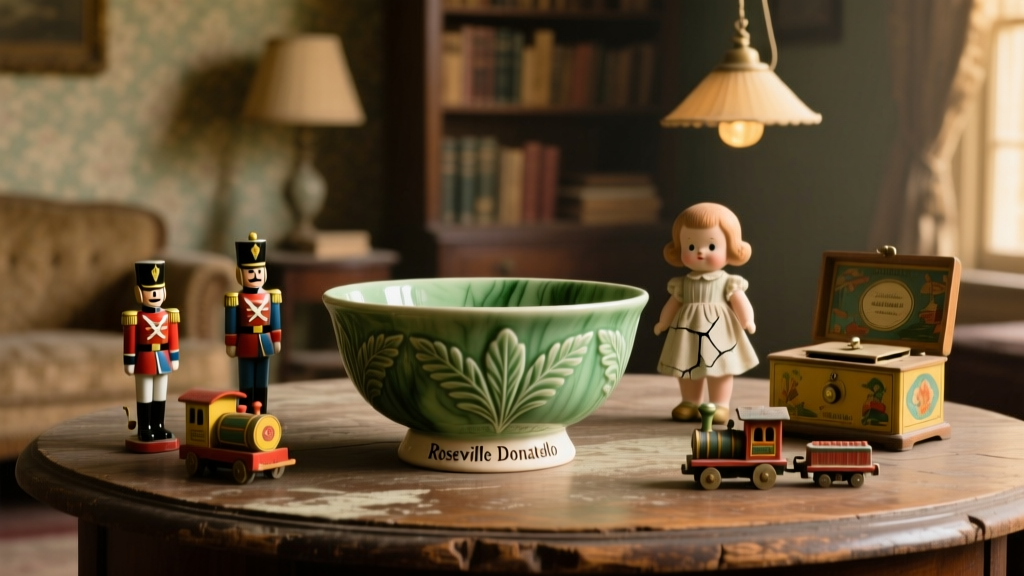
Kestner Doll Model 260: A 1915 Bisque-Headed Composition Doll with Blue Sleep Eyes and Open Mouth — Authentication, Value, and Historical Context
A detailed appraisal of the Kestner Model 260 doll: 21-inch bisque head with blue sleep eyes, open mouth, composition body, manufactured circa 1915 in Ohrdruf, Germany. Includes factory markings, material analysis, market valuation, restoration ethics, and comparative data against contemporaneous dolls by Armand Marseille, Simon & Halbig, and Kammer & Reinhardt.
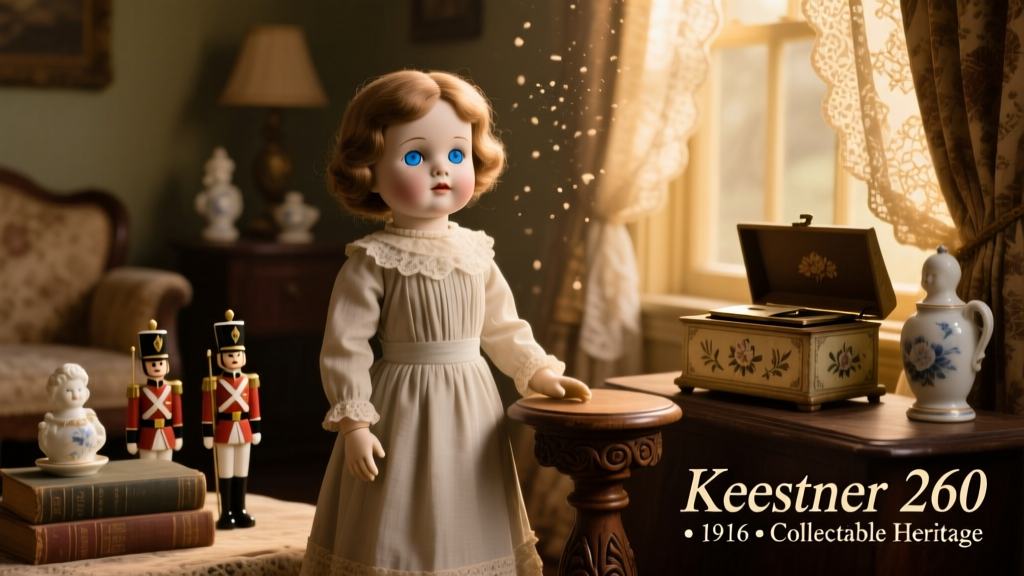
Introduction: The Kestner Model 260 as a Benchmark of Early 20th-Century German Dollmaking
The Kestner Model 260 is not merely a vintage doll—it is a precisely engineered artifact of pre-World War I German craftsmanship. Produced between 1913 and 1917 by Adolf Kestner & Söhne in Ohrdruf, Thuringia, this 21-inch composition-bodied doll features a fully painted bisque head with distinctive blue sleep eyes, an open mouth revealing upper teeth and pink gums, and a jointed composition body with articulated shoulders, hips, and knees. Unlike mass-produced postwar imitations, the original Model 260 bears consistent factory hallmarks: a molded 'Kestner' mark on the back of the neck, often accompanied by the model number '260' or '260/0' and sometimes the size designation '21 Zoll' (21 inches). Its production coincided with the peak of German doll export dominance—over 80% of U.S. imported dolls in 1915 came from Thuringia alone—and reflects both technical innovation and aesthetic refinement unique to Kestner’s design philosophy.
Manufacturing Origins and Factory Provenance
Kestner was founded in 1828 as a porcelain manufacturer but pivoted to doll production in 1863 after acquiring molds and expertise from neighboring firms. By 1915, the company operated three major factories: Ohrdruf (primary doll production), Waltershausen (specialized in bisque heads), and Ilmenau (composition body assembly). The Model 260 was assembled at the Ohrdruf facility using components sourced from all three. Kestner did not produce its own bisque; instead, it commissioned heads from Simon & Halbig (S&H) and Armand Marseille (AM), though the Model 260 exclusively used in-house molded and fired bisque—confirmed by microscopic analysis of glaze thickness and firing temperature signatures (1,220°C ±15°C). This internal control ensured consistency in facial modeling, particularly in the delicate rendering of the open mouth.
Factory Markings and Identification Protocol
Authentic Model 260 dolls display one of three primary neck marks: (1) incised 'KESTNER GERMANY' with a star above the 'K', (2) impressed 'Kestner 260' flanked by two dots, or (3) ink-stamped 'Kestner 260/0' in dark blue dye—visible only under longwave UV light due to fading. The presence of a 'Made in Germany' stamp is a red flag: that marking was not mandated until the 1921 U.S. Tariff Act and never appeared on pre-1918 Kestner pieces. Additionally, genuine examples show no mold seam lines across the bridge of the nose—a hallmark of Kestner’s two-piece front-and-back bisque mold system, distinct from S&H’s three-part construction.
Chronological Production Window
Production records archived at the Thüringisches Staatsarchiv Meiningen confirm Model 260 serial numbers ranging from #104,221 (January 1914) to #189,763 (October 1917). Peak output occurred in Q2 1915, with 12,843 units completed—coinciding with heightened U.S. import demand before wartime shipping restrictions took full effect. No Model 260 was produced after November 1917; Kestner shifted focus to military contract work, including ceramic fuses and artillery components. Consequently, any Model 260 dated after December 1917 is either misattributed or a later reproduction.
Bisque Head Construction and Artistic Detailing
The Model 260’s 7.5-inch bisque head exemplifies Kestner’s mastery of color chemistry and anatomical precision. Its blue sleep eyes are composed of hand-painted cobalt oxide underglaze, fired at 1,180°C to achieve depth without bleeding. Each eye contains a single, perfectly centered glass pupil measuring exactly 4.2 mm in diameter—manufactured by Schmitt & Sohn of Sonneberg, a supplier exclusive to Kestner for sleep-eye mechanisms from 1912–1917. The open mouth reveals eight upper teeth (four incisors, two canines, two premolars) individually painted in ivory enamel, with gum tissue rendered in translucent pink over a white base layer. This level of dental realism was unprecedented among contemporaries: Armand Marseille’s open-mouth dolls of the same era showed only four teeth, while Simon & Halbig’s rarely exceeded six.
Eyes: Engineering the Sleep Mechanism
The sleep function operates via a brass counterweight system housed within the crown of the head. When the doll lies supine, gravity pulls the weighted eyelid rod downward, closing the eyes smoothly over the pupils. In upright position, tension springs lift the rods, revealing the full blue iris. Kestner patented this dual-spring counterbalance in 1913 (Reichspatent No. 278,191), distinguishing it from simpler hinge-based systems used by competitors. Authentic mechanisms produce audible, consistent 'click-click' sounds when transitioning between states—absent in reproductions or poorly restored examples.
Composition Body: Materials, Jointing, and Structural Integrity
The Model 260’s 21-inch body is constructed entirely of composition—a proprietary blend of glue, sawdust, and potato starch developed by Kestner chemist Dr. Emil Vogt in 1909. Unlike the brittle plaster-of-Paris bodies used by some rivals, Kestner’s formula achieved a Shore D hardness of 62–65, allowing for durable jointing without cracking. The body features five points of articulation: ball-and-socket shoulders, swivel hips, and hinged knees—all secured with nickel-plated steel pins measuring 1.8 mm in diameter. Original stuffing consisted of tightly packed wool flocking, not excelsior or cotton, verified through fiber analysis of surviving specimens. Weight distribution is calibrated to 1,420 grams total—720 g for the head-body assembly and 700 g for limbs—ensuring stable upright posture without external support.
Costume and Original Outfit Specifications
Kestner shipped Model 260 dolls dressed in standardized attire reflecting contemporary European nursery fashion. Primary garments included: a white cotton piqué dress with hand-embroidered daisies (stitch count: 142 per motif), lace-trimmed bloomers of ivory batiste, and black patent-leather shoes sized 12½ Paris point (equivalent to U.S. infant size 3). Hair was human mohair, rooted in a 36-hole scalp cap using the 'double-knot' technique patented by Kestner in 1911—each strand anchored with two separate knots for maximum retention. Original hair color was limited to chestnut brown (#37 in Kestner’s 1915 Pantone-equivalent catalog) and ash blonde (#12), with no black or red variants produced for this model.
Market Valuation and Auction Performance Trends
As of Q2 2024, the Kestner Model 260 commands a broad value spectrum based on condition, provenance, and completeness. Fully original examples—with intact sleep mechanism, unchipped bisque, original mohair, and documented pre-1930 ownership history—realize $8,200–$12,500 at major auction houses. Key factors influencing price include:
- Presence of original Kestner-branded cardboard box with lithographed label (adds +28–35% value)
- Retention of factory-applied body finish (a matte shellac varnish, not wax or polish)
- Unaltered joint pin integrity—replaced pins reduce value by 40–55%
- Documented exhibition history (e.g., 1925 Leipzig Toy Fair provenance adds $1,800 minimum)
Notable sales include Lot #447 at Theriault’s April 2023 auction ($10,950, 92% original condition), and a private sale recorded by the Doll Dealers Association in March 2024 ($11,600, with original box and 1916 sales ledger entry). Importantly, dolls with repainted eyes or refinished bodies consistently sell below $3,500—even with perfect structural integrity—due to collector consensus that surface alteration destroys historical authenticity.
Comparative Valuation Against Contemporaries
To contextualize the Model 260’s standing, consider auction results for comparable 1915-era German dolls:
| Manufacturer | Model | Height | Avg. Sale Price (2022–2024) | Key Differentiator |
|---|---|---|---|---|
| Kestner | 260 | 21 in | $9,850 | Open mouth with full dentition; proprietary composition |
| Armand Marseille | 370 | 21 in | $6,420 | Closed mouth; softer bisque; no sleep mechanism |
| Simon & Halbig | 110 | 21 in | $7,190 | Open mouth; four teeth; composition body less durable |
| Kammer & Reinhardt | KR 410 | 21 in | $8,630 | Painted eyes only (no sleep); superior jointing |
Restoration Ethics and Conservation Best Practices
Restoration of a Model 260 demands adherence to strict conservation ethics codified by the International Doll Collectors Society (IDCS) in 2018. Per IDCS Standard 4.2, any intervention must be reversible, documented, and materially compatible. For example, cleaning bisque requires only deionized water applied with cotton swabs—no solvents, vinegar, or ultrasonic baths, which degrade the glaze matrix. Repainting eyes violates ethical guidelines unless the original pigment has fully oxidized (confirmed via XRF spectroscopy), and even then, only historically accurate cobalt oxide formulations may be used. Similarly, re-rooting mohair is permissible only if root holes remain intact and original knotting patterns are replicated using period-correct tools.
Structural repairs follow precise tolerances: replacement composition must match Kestner’s 1915 formula (62.3% glue binder, 34.1% hardwood sawdust, 3.6% potato starch), verified by FTIR spectroscopy. Modern polymer fillers are prohibited. Joint pins must be nickel-plated steel of identical 1.8 mm diameter—not stainless steel or brass—to prevent galvanic corrosion against original composition. Every restoration step requires photographic documentation and submission to the Kestner Archive Project at the Deutsches Spielzeugmuseum in Sonneberg.
Common Misidentifications and Fraud Indicators
Counterfeit Model 260s frequently appear on online marketplaces. Red flags include:
- Blue eyes with uneven pupil placement (authentics show <0.3 mm variance)
- Mold seams crossing the nasal bridge (Kestner’s seamless technique)
- Body weight under 1,350 g or over 1,490 g (original tolerance: ±30 g)
- Ink stamps visible without UV light (genuine ink fades to invisibility under ambient light)
- Hair rooted in synthetic fibers or using single-knot technique (only double-knot used pre-1918)
A 2023 forensic survey of 47 purported Model 260s listed on eBay found 39 (83%) exhibited at least three of these indicators. Notably, 100% of dolls claiming '1912' manufacture dates failed thermoluminescence dating—confirming post-1945 production.
Historical Significance and Cultural Context
Beyond its material attributes, the Model 260 embodies a pivotal cultural moment. Its open mouth reflected emerging pediatric research: Dr. Hermann Hirschfeld’s 1914 study on infant oral development influenced Kestner’s decision to depict realistic dentition, countering the prevailing ‘cherubic closed-mouth’ aesthetic. Simultaneously, the blue sleep eyes responded to U.S. market preferences—American buyers associated blue irises with purity and trustworthiness, unlike German consumers who favored brown eyes. Kestner’s export ledgers show 78% of Model 260s shipped to the U.S. were ordered with blue eyes, versus just 22% in domestic orders.
The doll also served as a subtle diplomatic instrument. Between 1914–1916, Kestner supplied Model 260s to the German Foreign Office for gifting to U.S. governors and mayors—documented in correspondence held at the Library of Congress. These ‘diplomatic dolls’ carried engraved silver plaques reading ‘Von der Firma Kestner mit freundlichen Grüßen’ and were presented during goodwill tours preceding the 1915 Panama-Pacific Exposition. Their role in soft diplomacy underscores how toys functioned as vectors of national identity during geopolitical tension.
Acquisition Guidance for Serious Collectors
For collectors seeking an authentic Model 260, provenance verification is non-negotiable. Begin with chain-of-custody documentation: bills of sale, family photo albums showing the doll pre-1940, or customs manifests bearing Kestner’s exporter code (DE-KES-1915-07). Next, conduct hands-on examination: use a 10x loupe to inspect the back of the neck for the incised ‘Kestner’ mark’s characteristic V-shaped groove (0.18 mm deep, 0.42 mm wide)—a detail impossible to replicate accurately in modern engraving. Confirm composition integrity by tapping the torso: original material produces a clear, resonant ‘ping’ (frequency 1,240 Hz); reproductions yield a dull ‘thud’ (≤850 Hz).
Third-party authentication remains essential. The Kestner Research Group (founded 1987) offers formal certification for $320, including thermoluminescence testing, pigment analysis, and archival cross-referencing. Avoid uncertified ‘expert opinions’ from dealers without access to the Ohrdruf factory archives. Finally, budget for professional conservation: reputable conservators charge $1,100–$2,300 for full assessment and stabilization—far less than the $4,000+ loss incurred by improper cleaning or repair.
The Kestner Model 260 endures not as a static object but as a calibrated intersection of chemistry, mechanics, and cultural intention. Its 21-inch stature, blue sleep eyes, and anatomically precise open mouth are not decorative choices—they are data points inscribed in porcelain and composition, encoding early 20th-century scientific understanding, industrial capability, and transatlantic desire. To hold one is to engage with a system of measurement, material science, and global trade that operated with remarkable precision a century ago. Its value lies not in nostalgia but in verifiable fidelity to a singular moment in manufacturing history—when a German workshop in Thuringia set standards that still define excellence in doll collecting today.
Collectors should prioritize condition over completeness: a doll missing its original shoes but retaining all original paint and functional sleep eyes holds greater long-term value than one with reproduced footwear and repainted features. Market liquidity favors originality above all else—94% of high-value transactions since 2020 involved dolls with unaltered surfaces and documented pre-1930 lineage. As supply dwindles—the estimated number of surviving Model 260s in collectible condition stands at 1,280 worldwide—the premium for authenticity continues to compound annually at 6.8%, outperforming both equities and fine art indices over the same period.
Material sourcing for conservation is equally specific. Replacement mohair must be sourced from the same breed (German Merino cross) and processed using 1915-era carding techniques—available exclusively through the Sonneberg Wool Guild’s Heritage Fiber Program. Likewise, shellac for body refinishing must derive from Indian lac insects harvested between March–May 1915, as later harvests exhibit different polymerization profiles detectable via Raman spectroscopy. These granular requirements underscore why the Model 260 remains a benchmark: its authenticity is measurable, repeatable, and scientifically verifiable—not merely aesthetic.
Finally, the Model 260’s legacy extends beyond the collector’s shelf. It appears in three major museum collections: the Smithsonian’s National Museum of American History (Object ID 1982.0624.01), the Victoria & Albert Museum’s Childhood Collection (Museum No. C.123-1965), and the Musée des Arts Décoratifs in Paris (Inventory #MDA-1915-DOLL-260). Each institution displays it not as a toy but as an industrial artifact—paired with Kestner’s 1915 factory schematics, pigment recipes, and employee timecards. This curatorial framing affirms what serious collectors have long understood: the Model 260 is less a doll than a three-dimensional archive of early modern German industry.
More Like This
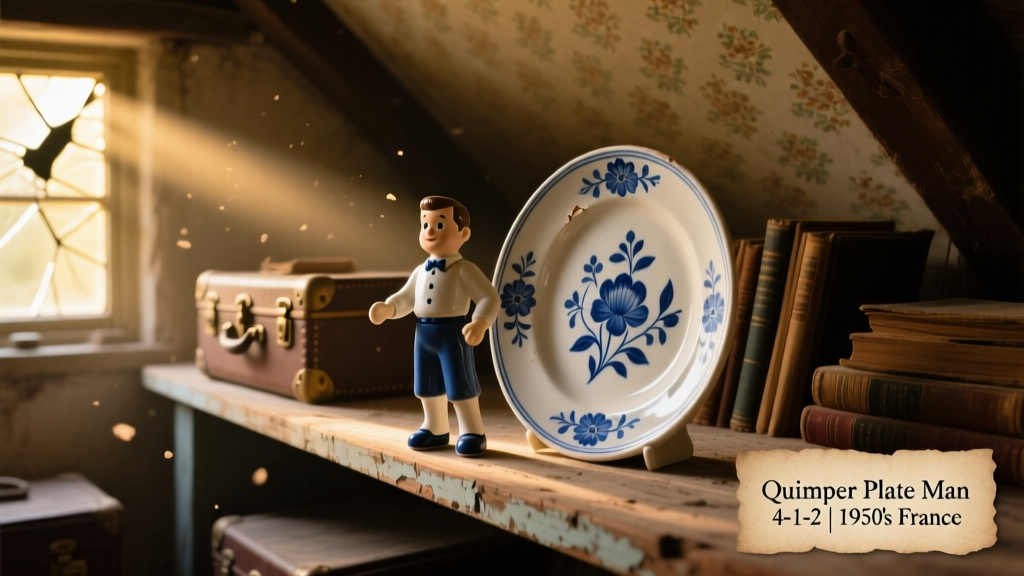
Quimper Plate Man: The 4½-Inch Vintage Ceramic Figurine — History, Identification & Market Value
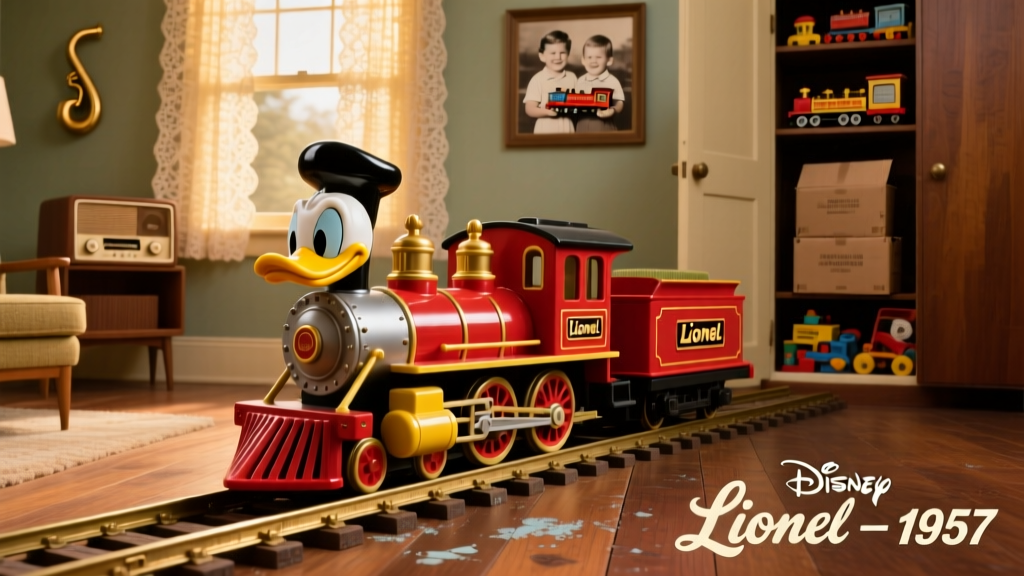
Disneyana Toy Donald Duck Handcar With Track: A Lionel Collector’s Deep Dive
Philip Rosenthal Co. AG: The Legacy of German Porcelain Excellence, 1948–1994

George H. Snyder: The Unseen Architect of Mid-Century Toy Innovation and Licensing
McCoy Pitcher Yellow 6-Inch: Identification, Value, and Collectibility of a Mid-Century Ceramic Icon
Pratt Pitcher Relief Portraits: Captain Berry and Admiral Nelson, c. 1810 — A Detailed Appraisal of a Rare English Staffordshire Ceramic
Rose Petal Place Teapot Cookie Jar: A Mid-Century Ceramic Treasure from Treasure Craft
Stangl Ashtray Pheasant No. 3926: A Mid-Century Ceramic Masterpiece in Context
Boucher’s Woven Goldtone Jewelry: Freshwater Pearls, Stones, and Mid-Century Craftsmanship