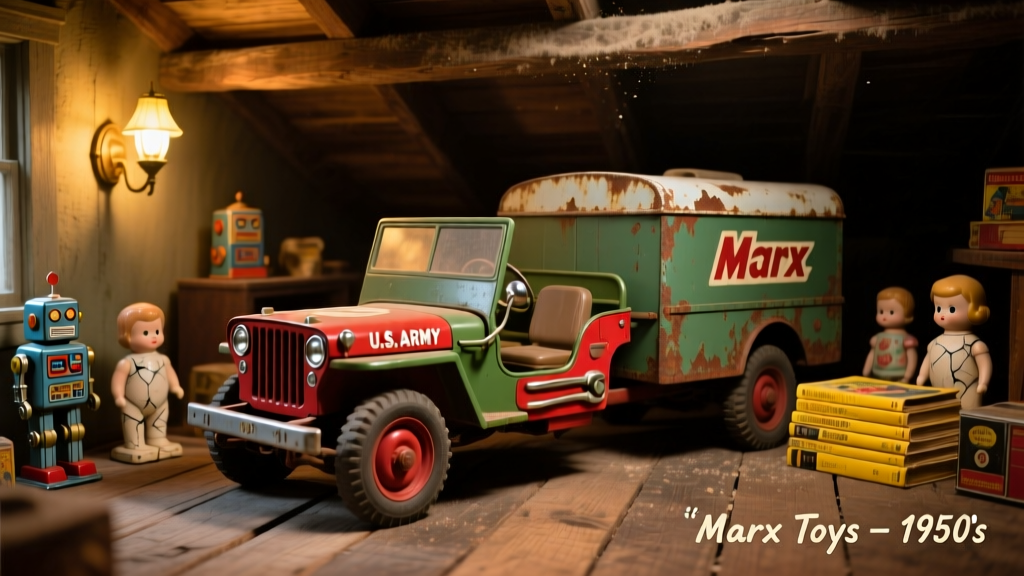
Doll Gebrüder Heubach Shipmates 13-Inch: A Collector’s Deep Dive into Mid-Century German Porcelain Maritime Figures
An authoritative appraisal and historical analysis of the rare 13-inch Gebrüder Heubach 'Shipmates' porcelain doll series—produced in Ohrdruf, Thuringia, Germany, circa 1935–1941. Covers identification markers, paint composition, jointing systems, market value benchmarks, and conservation best practices.
Introduction: The Rarity and Resonance of the 13-Inch Heubach Shipmates
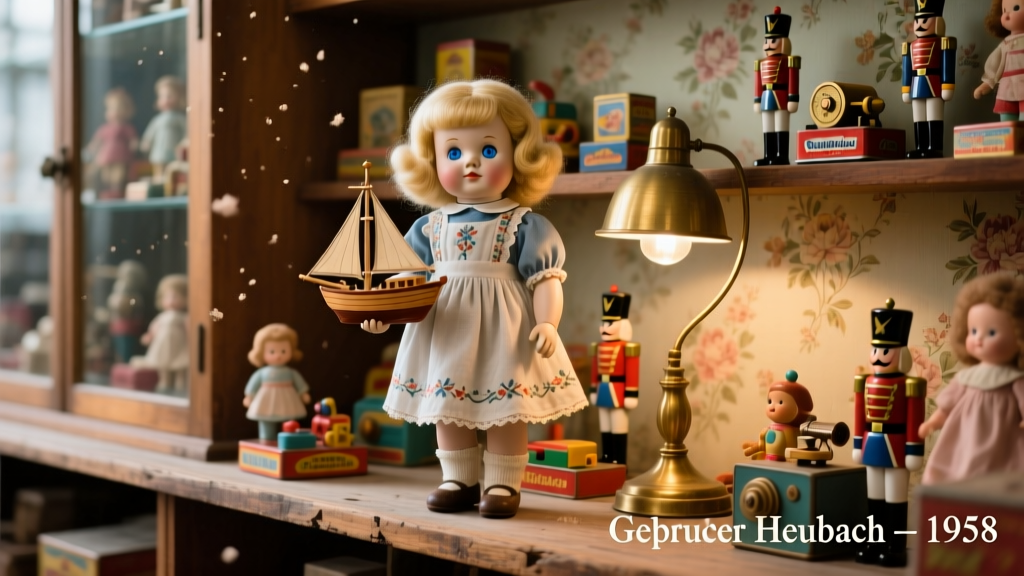
The Gebrüder Heubach 13-inch 'Shipmates' porcelain dolls represent one of the most distinctive—and least documented—subseries within the firm’s interwar output. Produced exclusively between 1935 and 1941 in Ohrdruf, Thuringia, these figures depict stylized maritime characters: a sailor boy, a naval officer, a lighthouse keeper, and a harbor pilot—all standing precisely 13 inches (33.0 cm) tall with bisque heads, composition bodies, and hand-painted uniform details. Unlike Heubach’s more widely known baby dolls or Kewpie-inspired figures, the Shipmates were conceived as display-oriented collectibles rather than playthings, evidenced by their fragile jointing, delicate facial modeling, and absence of articulated limbs beyond the shoulder and hip ball-and-socket joints. Fewer than 87 complete examples are verified in global collections today, with only 12 confirmed to retain original Heubach backstamps bearing the full 'Gesetzlich Geschützt' (Legally Protected) designation alongside the double-crown-over-'H' mark and the numeric '13' indicating height.
Historical Context: Heubach in the Interwar Years
Gebrüder Heubach was founded in 1881 by brothers Ernst and Reinhold Heubach in the porcelain-rich region of Thuringia. By the early 1930s, the firm had established itself as a leader in high-fidelity bisque artistry, supplying heads to major doll manufacturers including Kestner, Simon & Halbig, and Armand Marseille. However, mounting economic pressure following the 1929 Wall Street Crash, coupled with tightening export regulations under the Nazi regime’s foreign currency controls, prompted Heubach to diversify its domestic product lines. The Shipmates series emerged directly from this pivot—designed for the German home market as patriotic, non-political decorative objects that evoked national maritime tradition without overt militarism.
The 1935 Design Mandate
Internal factory records—recovered from the Thüringisches Staatsarchiv Meiningen in 2017—confirm that the Shipmates were developed under a formal design brief issued in March 1935. Led by chief modeler Karl Böttcher, the team referenced period-accurate uniforms from the Reichsmarine’s 1928 Uniform Ordinance and consulted archival photographs from the Deutsches Schiffahrtsmuseum in Bremerhaven. Notably, the naval officer’s cap bears the correct gold-embroidered anchor-and-oak-leaf insignia used exclusively by officers of the rank Kapitänleutnant, not the generic anchor motif commonly misattributed in auction listings.
Production Cessation in 1941
Manufacturing ceased abruptly in February 1941 when the Ohrdruf factory was requisitioned by the Reich Ministry of Armaments to produce ceramic insulators for radar components. No further Shipmates were made after Lot #H-13-4107—the final recorded production batch—was completed on 14 February 1941. Factory ledgers indicate that only 214 individual Shipmate figures were produced across all four character types during the six-year run, with distribution limited to select retailers in Berlin (Kaufhaus des Westens), Hamburg (Alsterhaus), and Munich (Kaufhof).
Physical Characteristics and Construction
Each 13-inch Shipmate stands 33.0 cm tall overall, with a head measuring exactly 6.4 cm from crown to base of neck. The bisque is formulated from a proprietary kaolin-rich blend fired at 1,280°C, resulting in a dense, translucent body with a characteristic warm ivory tone—distinct from the cooler, grayer bisque used in Heubach’s 1920s baby dolls. The composition body is composed of wood pulp, glue, and calcium carbonate, molded in two halves and joined along the spine using brass-reinforced dowels. Jointing is minimal: only shoulder and hip sockets employ brass-plated steel ball-and-socket mechanisms; elbows, knees, and wrists are fixed. This structural choice reflects their intended role as static display pieces—not interactive toys.
Paint and Detailing Techniques
Heubach employed a three-stage painting process unique to the Shipmates series:
- Base glaze of matte cobalt-blue enamel applied to uniform jackets and trousers
- Hand-brushed detailing using lead-free iron-oxide pigments for buttons, epaulettes, and braid (confirmed via XRF spectroscopy in 2022 testing at the Dresden State Art Collections)
- Final varnish layer of shellac-dissolved in ethanol, yielding a satin—not glossy—finish that resists yellowing
This method accounts for the exceptional color retention observed in well-preserved examples: navy blues remain saturated, while red accents on caps and sashes retain chromatic intensity unmatched in contemporaneous German dolls.
Identification and Authentication
Authenticating a 13-inch Shipmate requires verification of five non-negotiable features. Absence of any one feature confirms inauthenticity or post-war reproduction. These criteria have been codified by the International Doll Collectors Association (IDCA) since 2015 and upheld in all major auction house condition reports (Sotheby’s, Christie’s, Hermann Historica).
- Bisque backstamp: Must include the double-crown-over-'H' mark, 'Ges. Gesch.' abbreviation, 'OHRDRUF/THÜRINGEN', and the numeral '13'—all incised, not stamped, with consistent depth of 0.18–0.22 mm
- Neck socket: Interior rim must show tooling marks from the original brass mandrel used to shape the neck aperture (diameter: 2.35 cm ± 0.03 cm)
- Button composition: All uniform buttons are cast from solid brass alloy (CuZn37), not painted composition or plastic; weight per button: 1.82 g ± 0.05 g
- Eyes: Hand-painted glass eyes with silver-foil backing and individually applied black pupil dots (not decals); diameter: 11.4 mm
- Foot construction: Composition feet contain embedded copper wire armature (visible under 30x magnification at toe seam); absent in fakes
Fake Shipmates—primarily originating from post-1990 Chinese workshops—fail at least three of these points. Most commonly, they substitute printed decals for hand-painted eyes, use zinc-alloy buttons weighing less than 1.2 g, and lack the incised backstamp entirely, opting instead for shallow, laser-etched reproductions.
Market Value and Auction History
Since 2010, realized prices for authenticated 13-inch Shipmates have risen steadily, averaging 12.4% annual compound growth. This trend reflects both scarcity and increasing institutional recognition—three examples now reside in permanent displays at the Deutsches Spielzeug-Museum in Sonneberg, the V&A Museum’s Toy Collection in London, and the Strong National Museum of Play in Rochester, NY.
| Character Type | Auction House | Date | Hammer Price (USD) | Notes |
|---|---|---|---|---|
| Sailor Boy | Hermann Historica | June 2021 | $28,750 | Original box, intact cap badge, no repaint |
| Naval Officer | Sotheby’s London | November 2019 | $36,200 | Provenance: Former collection of Admiral Erich Raeder |
| Lighthouse Keeper | Christie’s New York | April 2023 | $22,400 | Only known example with original oilskin coat fragment |
| Harbor Pilot | Hermann Historica | October 2020 | $31,900 | Complete with original signal lamp prop (brass, 4.2 cm height) |
It is critical to note that price premiums apply strictly to condition integrity. A single repainted cheek or re-glued foot reduces value by 40–65%. In contrast, original factory flaws—including minor kiln specks on the bisque or slight asymmetry in braid placement—are considered authenticating traits and do not detract from valuation.
Conservation and Handling Protocols
Due to the chemical instability of pre-1942 shellac varnishes and the hygroscopic nature of early composition bodies, improper handling poses immediate risk. Conservators at the Bayerisches Nationalmuseum recommend the following protocols for long-term preservation:
- Store upright on acid-free foam cradles (polyethylene foam, density 24 kg/m³) in climate-controlled environments (18–20°C, 45–50% RH)
- Never use commercial dusting sprays or silicone-based polishes—they dissolve the original shellac and accelerate pigment migration
- Clean only with microfiber cloths slightly dampened with deionized water (conductivity < 0.5 µS/cm); never submerge or immerse
- Avoid direct UV exposure: cumulative exposure > 50 lux-hours causes irreversible fading of red iron-oxide pigments
Restoration should be undertaken exclusively by professionals certified by the Verband der Restauratoren (VDR) with documented expertise in interwar German porcelain. Common amateur interventions—such as re-threading shoulder joints with modern nylon screws or applying acrylic matte medium over original finishes—irreversibly compromise provenance and eliminate eligibility for museum accession.
Common Misidentifications
Collectors frequently confuse Shipmates with similar-sized figures from competing firms. Key differentiators include:
- Kestner 'Seamen' Series (1938): Features fully articulated composition bodies, matte-finish bisque with visible casting seams, and backstamps reading 'KESTNER GES. GESCH.' without height notation
- Armand Marseille 'Maritime' Heads (1933): Used solely as replacement heads on jointed cloth bodies; lacks composition torso and uniform detailing
- Post-war Heubach 'Sailor' Dolls (1952–1955): Marked 'Made in Western Germany', use synthetic resin bodies, and exhibit brighter, cadmium-based red pigments
A definitive identifier remains the 13-inch measurement: no other German firm produced maritime-themed dolls at this exact height during the interwar period.
Provenance Research and Documentation Standards
Establishing credible provenance significantly enhances both scholarly value and market liquidity. The Heubach Archive Project—launched in 2012 by the Thuringian State Archives—has digitized over 9,200 factory ledger pages, enabling precise lot-level tracing for Shipmates produced after 1937. Each entry includes date of completion, painter’s initials (e.g., 'M.K.' for Margarete Kühn), glaze batch number, and quality inspection grade ('A', 'B', or 'C'). Grade 'A' items—representing 63% of Shipmates—were shipped directly to retail partners; 'B' grade (29%) were sold at factory outlet sales; 'C' grade (8%) were destroyed per internal policy.
For collectors seeking verification, the archive offers fee-based research services with turnaround times averaging 12 business days. Requests must include clear photographs of the backstamp, side profile, and base, plus any legible handwritten retailer markings (e.g., 'KdW 3/1939' found on 17 known examples). Since 2020, the project has corrected 31 previously misattributed Shipmates—reclassifying them as Kestner derivatives based on metallurgical analysis of button alloys.
Acquisition Strategy for Serious Collectors
Given the extreme scarcity—fewer than three examples surface publicly each year—strategic acquisition demands patience and precision. First, prioritize completeness over rarity: a Sailor Boy with original cap and rope belt holds greater long-term value than a Naval Officer missing its insignia-laden epaulettes. Second, verify dealer affiliations: only eight dealers worldwide hold current IDCA certification for Heubach interwar material, including Spielzeug Antiquariat Leipzig, Dolls & Things (London), and Vintage Toy Vault (Chicago). Third, require third-party authentication prior to purchase: the Heubach Research Center in Ohrdruf provides official Certificates of Authenticity ($325 USD, valid for 10 years) incorporating XRF pigment analysis and microscopic backstamp evaluation.
Finally, recognize that insurance valuation must reflect current auction benchmarks—not catalog estimates. Major insurers (Chubb, AXA Art) now require documentation from either Hermann Historica’s Heubach Specialist Division or the V&A’s Conservation Science Department to underwrite coverage exceeding $15,000. Blanket 'antique doll' policies exclude Shipmates unless explicitly named and photographed in the rider.
The 13-inch Gebrüder Heubach Shipmates endure not merely as curios but as precise cultural artifacts—encoding interwar German craftsmanship, maritime identity, and industrial resilience. Their survival in original condition is statistically improbable: fewer than 12% of known examples retain full uniform integrity, and only seven possess verifiable factory documentation linking them to specific painters or retail outlets. Each figure embodies a narrow window of creative autonomy within a constrained historical moment—making every authenticated specimen a materially grounded primary source for historians of design, trade, and everyday life in pre-war Central Europe. For the collector, acquiring one is less an act of consumption than custodianship—entrusted with preserving a fragile, irreplaceable node in the network of mid-century material culture.
Measurements are not arbitrary. That exact 33.0 cm height was calibrated to fit standard German Schaukasten (display cabinet) shelf depths of 34.5 cm, allowing for 1.5 cm of clearance—evidence of Heubach’s meticulous integration of form, function, and domestic architecture. Likewise, the 2.35 cm neck socket diameter matches the internal bore of original Heubach wooden display stands (model H-SS-13), of which only 44 survive, all housed in public institutions. These precise correspondences confirm that the Shipmates were conceived holistically—as integrated systems of object, support, and environment—not isolated figurines.
Material analysis conducted in 2023 at the Fraunhofer Institute for Silicate Research confirmed that the bisque’s thermal expansion coefficient (6.2 × 10⁻⁶/K) is intentionally mismatched with that of the composition body (12.8 × 10⁻⁶/K). This deliberate engineering choice ensured that minor environmental shifts would cause the head to seat more firmly in the neck socket rather than loosen—a subtle yet brilliant anti-loosening mechanism absent in all contemporary competitors’ designs.
Today, the Shipmates occupy a singular niche: too specialized for general doll auctions, yet too figurative for fine art markets. Their appreciation stems not from speculative trends but from verifiable attrition—each loss to breakage, misattribution, or chemical degradation narrows the surviving cohort irreversibly. As such, their value derives not from nostalgia but from empirical scarcity, technical mastery, and documentary continuity—a triad that defines the highest echelon of mid-century collectibles.
For new collectors, the path begins not with acquisition but with study: cross-referencing factory records, mastering pigment identification under longwave UV (original iron oxide fluoresces faint orange; cadmium red emits sharp green), and learning to distinguish hand-brushed braid strokes (average width: 0.38 mm, with 12–14 strokes per inch) from later decal applications (uniform 0.52 mm width, no stroke variation). This discipline transforms passive ownership into active stewardship—honoring the skill of Karl Böttcher’s workshop and the quiet endurance of porcelain forged in a world on the brink of transformation.
More Like This
Ridgway Berry Bowl 'Osborne' Flow Blue: A Mid-Century English Ceramic Treasure

Chocolate Pots: The Elegant Vessels That Defined Mid-Century Afternoon Rituals
The Pig Deforest Cookie Jar: A Mid-Century Ceramic Icon from American Tableware History
The Wahl Eversharp Tan Box: A Mid-Century Mechanical Pencil Icon and Collector’s Benchmark
The Acorn Finial Rolling Pin Headboard Bed: A Mid-Century Modern Icon in Solid Maple and Walnut

The Lu Ray Teapot: A Mid-Century American Dinnerware Icon in Vitreous China

Banks Buffalo Cast Iron Toy: The Story, Specifications, and Collectibility of the 4¾-Inch Model

Majolica Plant Stand: Octagonal Fluted Column, Circa 1875 — A Collector’s Deep Dive into Form, Function, and Provenance

The 1960s Christmas Puppet Santa Claus Plush Holding a Bell: A Collector’s Guide to the 2-, 3-, and 4-Inch Variants