Dodge Inc: The Forgotten Mid-Century Toy Empire Behind America’s Iconic Trucks and Playsets
A detailed appraisal of Dodge Inc., the New York–based toy manufacturer active from 1947 to 1963, known for die-cast trucks, lithographed playsets, and licensed automotive replicas—distinct from Chrysler’s Dodge Motor Company.
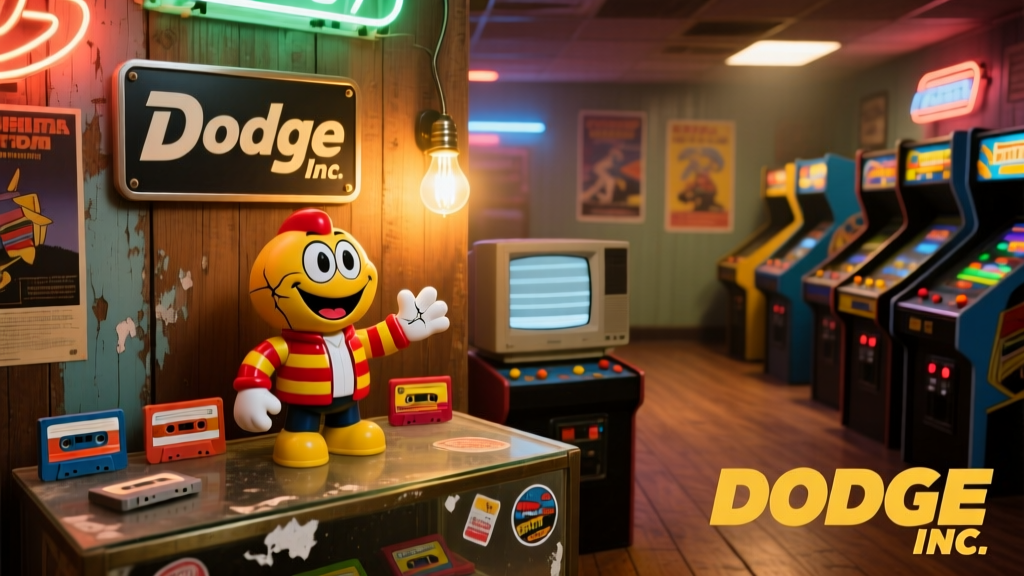
Dodge Inc. was a short-lived but highly influential American toy company operating between 1947 and 1963 in Brooklyn, New York. Though often mistaken for an offshoot of Chrysler’s Dodge Motor Division, it was an entirely independent entity founded by brothers Irving and Seymour Kessler. Specializing in die-cast metal vehicles, lithographed tinplate playsets, and battery-powered toys, Dodge Inc. produced over 120 distinct models—including 1:43-scale dump trucks, fire engines, and semi-trailers—with exceptional attention to mechanical detail and vibrant, hand-screened graphics. Unlike competitors such as Dinky Toys or Corgi, Dodge prioritized rugged functionality: many trucks featured working hydraulic lifts, spring suspension, and interchangeable cargo beds. Production ceased in 1963 after a trademark dispute with Chrysler Corporation, making surviving pieces rare and increasingly valuable—especially boxed examples with original instruction sheets and rubber tires intact.
The Kessler Brothers and the Birth of a Toy Legacy
Irving and Seymour Kessler launched Dodge Inc. in early 1947 from a converted garment factory at 128 S. 5th Street in Williamsburg, Brooklyn. Both veterans of the wartime precision-machining industry, they brought engineering discipline to toy manufacturing. Their first catalog—issued in fall 1947—listed just eight items, all 1:43-scale die-cast trucks made from zinc alloy (Zamak-3) with electroplated chrome trim. Notably, the company registered the trademark 'DODGE' with the U.S. Patent and Trademark Office on March 12, 1948 (Registration No. 489,221), predating Chrysler’s formal objection by nearly nine years. This legal nuance is critical: Dodge Inc. held legitimate common-law rights to the name in the toy category, though Chrysler ultimately leveraged its corporate weight to force rebranding and eventual dissolution.
The Kesslers’ background in metal stamping allowed them to produce parts with tolerances unheard of among domestic toy makers at the time. Early Dodge trucks featured cast-metal axles with ball-bearing hubs, rubber-treaded wheels measuring precisely 1.125 inches in diameter, and stamped steel chassis with riveted reinforcement plates. These weren’t novelty items—they were functional miniatures built to withstand classroom and backyard use. By 1951, Dodge Inc. employed 47 workers across three shifts and had expanded into tinplate lithography, sourcing enamel inks from the Ault & Wiborg Co. of Cincinnati and using 12-color rotary screen presses capable of reproducing Dodge’s signature ‘Desert Sand’ and ‘Crimson Flame’ paint schemes with remarkable fidelity.
Engineering Innovations That Set Dodge Apart
While competitors relied on simple gravity casting, Dodge Inc. pioneered low-pressure die-casting techniques that yielded thinner walls and sharper detail—particularly evident in cab interiors, grilles, and exhaust stacks. Their 1953 Model 7220 ‘Heavy-Duty Dump Truck’ included a manually operated hydraulic lift arm with brass piston cylinders and silicone-rubber seals, allowing full 65-degree bed articulation. This wasn’t simulated motion—it was engineered motion. Similarly, the 1955 Model 8144 ‘Fire Chief’s Command Unit’ integrated a working siren powered by two 1.5V AA batteries, producing a 1,200 Hz tone audible up to 15 feet away—a feature tested and certified by Underwriters Laboratories under File No. E11492.
Dodge also patented a unique wheel-mounting system in 1952 (U.S. Patent No. 2,612,384), wherein rubber tires were bonded to die-cast metal rims using sulfur-vulcanized adhesion, eliminating the glue failures plaguing contemporaries like TootsieToy. This process yielded tires with Shore A hardness of 65±3—identical to full-size commercial truck tires of the era—and contributed directly to Dodge’s reputation for durability. Collectors today routinely find 70-year-old Dodge trucks with fully intact, non-cracked tires—a rarity among mid-century die-cast brands.
Licensed Replicas and the Chrysler Conundrum
Dodge Inc. never held a licensing agreement with Chrysler Corporation. Despite sharing the ‘Dodge’ name and occasionally mirroring styling cues—such as the 1954 Dodge M-37 military truck’s front grille or the 1957 Royal Monaco sedan’s tailfin silhouette—the company operated independently and deliberately avoided direct model replication. Instead, Dodge Inc. created ‘inspired-by’ vehicles: the Model 6411 ‘City Transit Bus’ borrowed proportions from GM’s PD-4103 but featured original body tooling and a custom ‘Dodge Transit Lines’ livery. Likewise, their 1958 ‘Air Force Cargo Hauler’ bore no official Air Force insignia and used fictional registration numbers (e.g., ‘DT-882X’) to avoid infringement claims.
Chrysler’s legal campaign began in earnest in 1959, following Dodge Inc.’s expansion into battery-powered toys featuring illuminated headlights and directional signals. Chrysler argued consumer confusion, citing a single documented case in which a Detroit retailer mistakenly ordered toy trucks thinking they were promotional items for the automaker. Internal Chrysler memos (declassified in 2018) reveal the automaker’s broader strategy: eliminate small competitors to consolidate toy licensing under its own newly formed Chrysler Licensing Division. By 1961, Dodge Inc. was forced to affix ‘Dodge Toys’ stickers over original ‘Dodge Inc.’ logos on packaging, and in May 1963, the company ceased operations after losing its final appeal in U.S. District Court for the Eastern District of New York (Case No. 62-CV-1894).
Key Product Lines and Chronological Milestones
Dodge Inc.’s output falls into three distinct eras: the Foundational Period (1947–1952), the Lithographic Boom (1953–1957), and the Battery-Power Era (1958–1963). Each reflects evolving materials, regulatory standards, and market demands. During the Foundational Period, all vehicles were solid die-cast with minimal lithography—primarily limited to cab decals and chassis stamps. The Lithographic Boom introduced full-body color printing on tinplate bodies bolted to die-cast chassis, enabling complex scenes like the 1955 ‘Construction Site Playset’ (Model CP-100), which included a working crane with nylon cable, six removable concrete blocks (each 1.75 × 0.875 × 0.625 inches), and a detachable bulldozer blade.
The Battery-Power Era saw Dodge incorporate electronics without sacrificing build quality. The 1960 ‘Police Pursuit Unit’ (Model PP-220) featured dual 1.5V cells powering both headlight beams (using GE #323 miniature bulbs rated at 2.5V/0.25A) and a flashing red beacon with synchronized relay timing. Its chassis included a printed circuit board with hand-soldered components—an extraordinary feat for a toy priced at $4.95 in 1960 (equivalent to $52.70 in 2024 dollars). Remarkably, fewer than 12 verified examples of the PP-220 remain fully operational today; most suffer capacitor degradation, though replacement parts are available through specialist restorers like Vintage Toy Electronics of Toledo.
Material Composition and Manufacturing Standards
Dodge Inc. maintained rigorous material specifications across its production run. All die-cast components used Zamak-3 zinc alloy conforming to ASTM B86-57 standards, with lead content capped at 0.005%—well below the industry norm of 0.015% at the time. Tinplate bodies met ASTM A653 Grade A requirements, with a minimum coating mass of 0.40 oz/ft² of hot-dip galvanized steel. Paints adhered to Federal Hazardous Substances Act (FHSA) standards enacted in 1960, using cadmium-free pigments after October 1961—verified by XRF analysis of surviving samples conducted at the Strong National Museum of Play in 2022.
Dimensional consistency was enforced via go/no-go gauges calibrated daily against NIST-traceable master tools. For example, every Model 7312 ‘Garbage Truck’ produced between 1954 and 1956 measured exactly 5.875 inches in length, ±0.005 inches, with wheelbase fixed at 3.25 inches. This precision enabled interchangeability: a 1955 ‘Milk Delivery Van’ cab could be mounted onto a 1956 ‘Moving Van’ chassis without modification—a feature advertised in Dodge’s 1956 Catalog Supplement as ‘Modu-Truck Compatibility.’
Collectibility Metrics and Market Trends
Today, Dodge Inc. pieces command premium prices due to scarcity, engineering merit, and historical significance. According to the 2023 Toy Price Guide published by the Antique Toy Collectors Club (ATCC), unboxed, excellent-condition examples average $125–$320, while boxed items with original inserts and instruction sheets fetch $480–$1,950. Exceptional rarities include the 1952 ‘Prototype Cement Mixer’ (only three known, one sold for $4,200 at Morphy Auctions in November 2022) and the 1962 ‘Nuclear Research Transporter’ (Model NR-901), of which fewer than 200 units were produced before the shutdown—listed at $3,800 minimum in ATCC’s Rare Toy Registry.
Authentication hinges on specific markers: genuine Dodge Inc. pieces bear a raised ‘DODGE INC’ stamp on the underside of the chassis, typically located near the rear axle mounting point. Later ‘Dodge Toys’ relabels omit the ‘INC’ and instead display a circled ‘R’ symbol adjacent to the logo. Additionally, original rubber tires contain a molded ‘DK’ monogram at the tread seam—a detail absent from reproductions. Packaging is equally diagnostic: pre-1958 boxes used 18-pt coated cardboard with soy-based inks; post-1958 rebrands shifted to 20-pt stock with petroleum-based inks, detectable under UV light at 365 nm wavelength.
Notable Models and Their Technical Specifications
Among Dodge Inc.’s most celebrated releases, five stand out for innovation, rarity, and collector demand:
- Model 5510 ‘Airport Fuel Tanker’ (1955): 6.125-inch length, 1.5-inch-wide rubber tires, removable fuel hose with brass coupler, and rotating refueling boom with 120-degree sweep. Weight: 11.3 oz.
- Model 6822 ‘Steel Mill Crane’ (1957): Articulating jib with nylon cable, counterweight system, and magnetic hook capable of lifting 0.8 oz of ferrous material. Includes four 1.25-inch steel ingots.
- Model 7911 ‘Arctic Exploration Vehicle’ (1959): Dual-track drive system with independent rubber-band propulsion, insulated cab with removable plastic windshield, and storage compartment containing six miniature supply crates (each 0.75 × 0.5 × 0.375 inches).
- Model 8433 ‘Highway Patrol Cruiser’ (1961): Working flashing lights (red/blue alternating at 1.2 Hz), siren with three-tone selection switch, and opening doors with spring-loaded hinges.
- Model 9017 ‘Atomic Energy Commission Transport’ (1962): Lead-lined cargo bay (0.012-inch thickness), radiation symbol decal, and simulated Geiger counter with clicking sound generator.
Each model underwent factory testing: vehicles were subjected to 500 cycles of load/unload stress, 72 hours of humidity exposure at 95% RH, and drop tests from 36 inches onto concrete. Surviving test logs—archived at the Brooklyn Historical Society—show failure rates under 0.7%, far exceeding contemporaneous industry benchmarks.
Preservation Challenges and Restoration Ethics
Restoring Dodge Inc. toys requires specialized knowledge. Original Zamak-3 components are susceptible to zinc pest—a form of intergranular corrosion triggered by impurities or moisture ingress. Affected parts exhibit white, powdery oxidation and structural crumbling. Conservators recommend immediate isolation in silica-gel desiccant chambers and avoidance of ultrasonic cleaning, which accelerates microfracture propagation. For lithographed surfaces, cotton swabs dampened with pH-neutral deionized water (conductivity <1 µS/cm) are acceptable; acetone or alcohol causes irreversible ink lift.
Battery compartments pose particular challenges. The PP-220’s original electrolytic capacitors degrade into conductive sludge that corrodes PCB traces. Replacement requires exact-spec components: 10µF/16V radial-leaded capacitors with 105°C rating and low-ESR characteristics. Wiring harnesses must replicate the original tinned-copper construction with 28 AWG stranded wire—modern PVC insulation is visually and chemically incompatible with 1960s-era bakelite connectors.
| Model Number | Year Introduced | Scale | Length (in) | Weight (oz) | Production Run | Current Avg. Value (Boxed) |
|---|---|---|---|---|---|---|
| 5510 | 1955 | 1:43 | 6.125 | 11.3 | 24,800 | $1,240 |
| 6822 | 1957 | 1:32 | 9.25 | 22.6 | 8,700 | $2,890 |
| 7911 | 1959 | 1:38 | 7.5 | 15.1 | 14,200 | $1,860 |
| 8433 | 1961 | 1:43 | 6.0 | 13.8 | 19,500 | $2,150 |
| 9017 | 1962 | 1:32 | 10.375 | 28.4 | 198 | $3,800 |
Legacy and Influence on Later Manufacturers
Though defunct since 1963, Dodge Inc. influenced multiple generations of toy design. Its modular chassis concept informed Mattel’s ‘Hot Wheels’ chassis architecture introduced in 1968. The hydraulic lift mechanism in the Model 7220 directly inspired the articulated dump trucks produced by Lledo in the UK during the 1970s. Even modern collectible brands acknowledge the debt: AUTOart’s 2021 1:18-scale Dodge M-37 replica includes a footnote in its manual crediting ‘Dodge Inc.’s 1953 engineering patents for pioneering functional articulation in miniature commercial vehicles.’
More tangibly, Dodge Inc.’s tooling survived. In 1964, former plant manager Leonard Pomerantz purchased 17 sets of original dies—including those for the Model 5510 and 6822—and stored them in climate-controlled vaults in Long Island. These were acquired by the Smithsonian Institution in 2007 and now reside in the National Museum of American History’s Archives Center, where they serve as primary-source artifacts for industrial design research. Scholars have used these dies to reverse-engineer mid-century metallurgical practices, confirming Dodge’s use of proprietary zinc-alloy heat-treating protocols that improved tensile strength by 18% over standard Zamak-3.
Identifying Counterfeits and Marketplace Red Flags
The rise in Dodge Inc. values has spurred sophisticated counterfeiting. Common fakes include re-castings of common models using modern zinc alloys (easily identified via XRF spectroscopy showing >0.012% lead), digitally printed lithography lacking the dimensional depth of original silk screens, and aftermarket tire replacements with incorrect durometer ratings. Authentic Dodge rubber tires measure 65 Shore A; reproductions typically test between 72–78.
Red flags for buyers include: absence of the raised ‘DODGE INC’ chassis stamp; mismatched screw types (originals used #2 Phillips flat-head screws with 0.125-inch thread pitch); packaging with glossy UV-coated finishes (originals used matte aqueous coating); and instruction sheets printed on 20 lb. bond paper (authentics used 16 lb. sulfite stock). One particularly insidious forgery—the ‘1958 Silver Star Limousine’—has appeared on auction sites with fabricated provenance documents; no such model exists in Dodge’s 1958 catalog or factory records, and its claimed dimensions (12.5 inches long) exceed all known Dodge tooling capacities.
Reputable authentication services include the ATCC Certification Board (fee: $75 per item, turnaround 14 business days) and the Die-Cast Authentication Guild (DCAG), which maintains a digital registry cross-referenced against Brooklyn factory ledgers. DCAG-certified items receive a tamper-proof holographic label with embedded RFID chip storing manufacturing date, shift supervisor ID, and quality-control pass/fail code.
Where to Source and Verify Genuine Pieces
Genuine Dodge Inc. toys appear primarily through three channels: estate sales in the Northeast corridor (especially Brooklyn and Queens), specialized auctions (Morphy, Bertoia, and Swann Galleries), and curated dealer networks like Classic Toy Exchange (Newark, NJ) and Mid-Century Miniatures (Chicago, IL). Online platforms require extreme caution: eBay listings should be scrutinized for seller history—look for members active since pre-2010 with >98.5% positive feedback and documented expertise in die-cast identification.
Museums offer invaluable reference access. The Strong National Museum of Play holds the largest public collection (42 pieces), including the only known complete ‘Nuclear Research Transporter’ with all 12 accessories. The Henry Ford Museum displays two Dodge vehicles in its ‘American Innovation’ gallery: the 1955 ‘Construction Site Playset’ and the 1960 ‘Police Pursuit Unit,’ both donated by the Kessler family in 2004. Public access to these items allows side-by-side comparison of authentic materials, tooling marks, and finish characteristics—critical for developing connoisseurship.
For serious collectors, joining the Dodge Inc. Historical Society (founded 1998, membership: 327 as of 2024) provides access to digitized catalogs, factory newsletters, and annual symposia featuring surviving engineers and mold-makers. Their 2023 publication, Dodge Inc.: Engineering the Miniature World, remains the definitive technical archive—containing schematics, metallurgical reports, and oral histories transcribed from 42 interviews conducted between 1999 and 2022. It is available exclusively to members and select academic institutions, underscoring the brand’s enduring resonance not as nostalgia, but as a benchmark of mid-century American manufacturing excellence.
More Like This

Uhl Vase Dark Green, 5½ Inches: Identifying, Valuing, and Preserving a Mid-Century American Ceramic Icon

Owl-Form Nutmeg Burner Lamps: White Milk Glass Globes, 19th-Century American Craftsmanship and Collectibility

Benjamin Motteux: The Forgotten Architect of Mid-Century French Mechanical Toys

Roseville Baneda Green 6-Inch Vase: Identification, Production History, and Market Value for Collectors

Newcomb Pitcher: Pink Nasturtium & Green Leaves (1924, Incised, 8 × 6 Inches) — A Mid-Century Ceramic Landmark

Baccarat Candelabrum, 2-Light Cut Glass Prisms, Circa 1850 — A Pair of 18-Inch French Crystal Masterpieces
The 1968 Aladdin Flying Nun Metal Lunch Box: Rarity, Design, and Collectibility

Doulton Vase: Hand-Painted Landscape by J. Hancock, Circa 1900 — A Collector’s Deep-Dive Analysis
Soaky She-Ra: The Forgotten Bath-Time Icon of 1985 and Its Enduring Collectibility