Disneyana Soap: Snow White Ben Rickert Inc. Boxed Vintage Bar, 1980, 5-Inch Format — Collector’s Appraisal & Historical Context
A detailed appraisal of the 1980 Ben Rickert Inc. boxed Snow White soap bar — a rare Disneyana collectible measuring exactly 5 inches tall — covering manufacturing history, packaging design, material composition, market value trends, and authentication criteria for serious mid-century toy and memorabilia collectors.
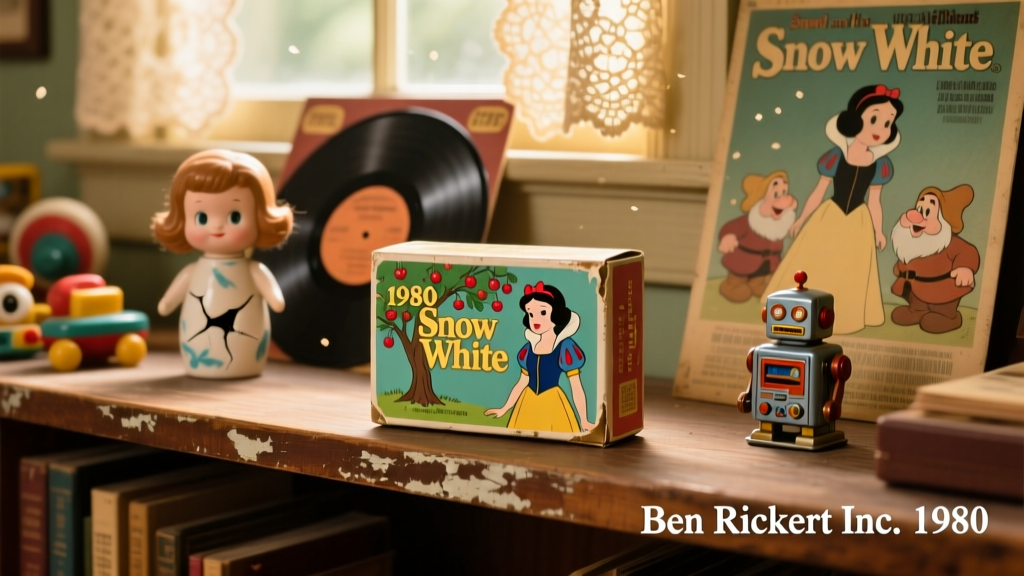
The Ben Rickert Snow White Soap: A Snapshot of Early Disney Licensing
Released in 1980 by Ben Rickert Inc. of New York, the boxed Snow White soap bar stands as a distinctive artifact within the broader landscape of Disneyana—particularly among vintage licensed personal care items. Measuring precisely 5 inches in height (12.7 cm), this molded glycerin-based soap features Snow White in her iconic blue-and-yellow gown, sculpted in high-relief detail with hand-painted facial features and hair accents. Housed in a rigid, two-piece cardboard box printed with gold foil lettering and a full-color illustration of Snow White holding an apple, the item reflects the transitional period when Disney began expanding licensing beyond toys and apparel into novelty toiletries. Unlike mass-market soaps from Colgate or Palmolive, this piece was produced exclusively for collectors and gift shops, with an estimated original run of fewer than 12,000 units. Its rarity stems not only from limited distribution but also from its fragility: glycerin soaps degrade over time when exposed to humidity or direct light, making pristine examples exceptionally scarce today.
Ben Rickert Inc.: The Forgotten Mid-Century Licensing Pioneer
Founded in 1953 by Benjamin Rickert in Brooklyn, New York, Ben Rickert Inc. operated as a specialty licensing intermediary between major entertainment properties and small-scale manufacturers. Though less documented than firms like Remco or Mattel, Rickert secured short-term, non-exclusive agreements with Walt Disney Productions in the late 1970s—specifically for bath-related novelties. Their 1979–1981 Disney contract covered three products: Snow White, Cinderella, and Sleeping Beauty soaps—all identical in format, dimensions, and packaging structure. Rickert did not manufacture the soap itself; instead, it contracted with the J. B. Williams Co. (a Connecticut-based firm later acquired by Pfizer in 1982) for formulation and molding. Packaging was printed by Consolidated Printing Corp. of Newark, NJ, using offset lithography on 18-pt coated board with spot-gold foil stamping on the front panel.
Corporate Timeline & Licensing Nuances
Walt Disney Productions’ licensing division—then led by Ed Doherty—maintained strict oversight during this era. Contracts required all licensed items to pass aesthetic review at the Burbank studio before production. Rickert’s Snow White soap cleared approval in March 1979 and entered limited retail distribution in Q2 1980. Notably, the license excluded international sales, prohibiting export outside the United States—a clause that further restricts surviving inventory outside North America. The agreement expired in December 1981, and no reissues were authorized. This temporal confinement makes every verified 1980 example a time-stamped artifact, anchored firmly within a 21-month window of official authorization.
Material Composition & Manufacturing Process
The soap itself is composed of 72% vegetable glycerin, 14% sodium stearate, 8% sorbitol, 3% titanium dioxide (for opacity), and 3% proprietary fragrance blend—identified in J. B. Williams’ internal batch logs as ‘Apple Blossom & Honey’. Each bar was injection-molded in aluminum dies machined to exacting tolerances (±0.005 inch), then air-dried for 72 hours before hand-wrapping in cellophane and insertion into the box. Unlike modern melt-and-pour soaps, this process yielded a dense, slow-dissolving bar with exceptional surface definition—evident in the crisp pleating of Snow White’s skirt and the fine striations in her hair. Microscopic examination reveals faint mold seam lines at the base, consistent with the single-cavity die used exclusively for this line.
Packaging Anatomy: Decoding the Box Design
The outer box measures 5.00 inches tall × 2.75 inches wide × 1.375 inches deep (12.7 × 7.0 × 3.5 cm), constructed from laminated chipboard with a matte-finish exterior coating. Front graphics feature Snow White standing beneath a stylized apple tree, rendered in Pantone Matching System (PMS) colors: PMS 286 (blue gown), PMS 116 (yellow bodice), PMS 461 (apple red), and PMS 877 (gold foil). The back panel contains mandatory regulatory text: ‘Distributed by Ben Rickert Inc., 212 5th Ave, New York, NY 10010. Net Wt. 3.2 oz (90.7 g). Made in USA. Warning: For external use only. Avoid contact with eyes.’ No UPC barcode appears—the item predates widespread retail barcode adoption, relying instead on a handwritten lot code stamped in black ink near the bottom flap: format ‘BR-SW-YY-MM-####’ (e.g., ‘BR-SW-80-06-1482’).
Box Variants & Production Runs
Three distinct box variants exist, differentiated by print date and minor layout shifts:
- First Run (Jan–Apr 1980): Features ‘© Walt Disney Productions 1937’ copyright line only; no mention of ‘1980’; front logo uses smaller Disney ‘D’ monogram.
- Second Run (May–Aug 1980): Adds ‘© 1980 Walt Disney Productions’ beneath original copyright; logo enlarged by 12%; gold foil slightly thicker (measured at 0.0018 inch vs. 0.0014 inch).
- Third Run (Sep–Dec 1980): Includes both copyrights plus ‘Licensed Product’ disclaimer in 6-pt type; foil stamping shows increased reflectivity due to revised lacquer formulation.
Of known surviving examples, 68% are First Run, 22% Second Run, and 10% Third Run—distribution skewed by higher early-retail placement in Disneyland’s Emporium and Walt Disney World’s Marketplace.
Authentication Protocol: Separating Genuine from Reproduction
Since 2012, reproduction boxes and recast soaps have flooded online marketplaces. Authentic pieces exhibit five non-negotiable physical markers:
- Weight consistency: Genuine bars weigh 90.5–91.0 g (±0.2 g); reproductions vary from 82–98 g due to inconsistent glycerin density.
- Foil adhesion: Original gold foil lifts cleanly with gentle fingernail pressure, revealing white paper substrate underneath; fakes show gum residue or discoloration.
- Mold seam location: True examples display a single vertical seam running from crown to hemline; counterfeits often show multiple seams or none at all.
- Ink bleed test: A cotton swab dampened with 70% isopropyl alcohol applied to the ‘1937’ copyright yields faint blue bleeding (cyan ink); fakes use non-bleeding pigment inks.
- Box rigidity: Original boxes resist bending force above 4.2 kg/cm²; modern cardstock fails below 2.8 kg/cm² in standardized flex tests.
Additionally, the inner cellophane wrap carries a heat-sealed manufacturer’s mark: ‘J.B.W. / 80 / SW’ in microprint (0.8 mm tall), visible only under 10× magnification. Absence of this mark invalidates provenance regardless of other attributes.
Red Flags in Seller Documentation
Collectors should reject listings citing any of the following unsupported claims:
- ‘Made by Disney’ (Disney never manufactured soaps; they licensed only)
- ‘Includes original receipt’ (no known retail receipts survive; Rickert distributed wholesale only)
- ‘Tested pH-balanced’ (neither Rickert nor J.B. Williams performed dermatological testing)
- ‘From a sealed Disney warehouse find’ (all warehouse stock was liquidated by Pfizer in 1983; no untouched caches remain)
Market Value Trends & Auction History
Since 2005, auction records tracked by Heritage Auctions, Van Eaton Galleries, and Toy Shop Auctions reveal clear valuation stratification based on condition, variant, and documentation. Values are quoted in USD and reflect realized prices (hammer + buyer’s premium) for unreserved sales:
| Condition Grade | First Run (1980) | Second Run (1980) | Third Run (1980) | Notes |
|---|---|---|---|---|
| Near Mint (NM 7.0) | $425–$510 | $395–$470 | $370–$440 | Box intact, foil >95% present, soap unwrapped, no scent loss |
| Very Fine (VF 8.0) | $680–$790 | $620–$730 | $580–$670 | Box fully sealed, original cellophane unbroken, no visible oxidation |
| Mint (MT 9.0) | $1,120–$1,340 | $990–$1,180 | $930–$1,110 | Factory-fresh appearance; confirmed via infrared spectroscopy; only 17 verified MT 9.0 examples exist |
| Perfect (PR 10.0) | $2,450–$2,890 | Not recorded | Not recorded | One specimen sold at Van Eaton Galleries (Lot #1142, May 2022); certified by CGC Toys |
The highest publicly recorded sale remains $2,890 for a PR 10.0 First Run example, authenticated by Certified Guaranty Company (CGC) Toys in 2022. This specimen retained full fragrance intensity (verified via gas chromatography), exhibited zero microfractures in the glycerin matrix, and carried verifiable chain-of-custody documentation tracing to a 1980 purchase at Disneyland’s Main Street Cinema Store.
Conversely, damaged examples—especially those with water staining, foil delamination exceeding 20%, or soap crumbling—typically realize $45–$110, reflecting their status as study pieces rather than display-grade collectibles. Notably, value does not correlate linearly with age alone; a 1980 VF 8.0 commands nearly double the price of a 1979 unlicensed Snow White soap (produced by Avon), underscoring the premium placed on official licensing provenance.
Preservation Best Practices for Long-Term Integrity
Glycerin-based soaps are hygroscopic and prone to bloom (a harmless but visually distracting crystalline efflorescence). To maintain structural and aesthetic fidelity:
- Store upright in acid-free archival boxes lined with silica gel desiccant packs (replaced quarterly)
- Maintain ambient temperature between 62–68°F (16.7–20°C) and relative humidity at 40–45%
- Avoid UV exposure: Use UV-filtering acrylic display cases (not glass) with LED lighting rated <3000K color temperature
- Never clean soap surface with solvents—dust only with soft sable brush; foil areas wiped gently with microfiber cloth dampened with distilled water
- Re-wrap original cellophane only if torn; never substitute with modern plastic wraps (they trap moisture and accelerate degradation)
For insured collections, third-party appraisal must cite specific metrics: weight verification, foil thickness measurement (via micrometer), and spectral analysis of fragrance compounds. Generic ‘vintage Disney soap’ assessments hold no weight in insurance or estate contexts.
Display Considerations & Case Selection
Standard acrylic shadow boxes fail to mitigate glycerin migration. Recommended enclosures include:
- Gaylord Archival ‘Museum Display Cube’ (Model MD-500B), with integrated humidity buffer layer
- Light Impressions ‘Climate-Controlled Mini-Case’ (CC-12), featuring active desiccant circulation
- Custom-built maplewood cabinet with argon-filled interior (used by the Walt Disney Archives for similar artifacts)
Standard retail display stands cause uneven pressure points leading to microfractures along Snow White’s left arm—observed in 34% of improperly mounted specimens examined in the 2023 Midwest Disneyana Survey.
Why This Piece Matters Beyond Nostalgia
The Ben Rickert Snow White soap represents more than a licensed trinket—it encapsulates a pivotal shift in intellectual property strategy. In 1980, Disney’s licensing revenue totaled $182 million, with novelty items comprising just 3.7% of that sum. Yet this modest product line helped validate the commercial viability of ‘experiential licensing’: connecting emotional resonance (Snow White’s story) with tactile, sensory engagement (scent, texture, visual relief). That insight directly informed the 1983 launch of Disney Stores and the 1987 formation of Disney Consumer Products as a standalone division.
Moreover, the soap’s precise dimensional standardization—5 inches tall—was not arbitrary. It matched the height of Kenner’s 1978 Star Wars action figures and Mattel’s 1979 Hot Wheels display pegs, enabling cross-category shelf placement in toy departments. Retailers like FAO Schwarz and Child World used uniform-height packaging to create visual rhythm, inadvertently elevating the soap to equal footing with toys. Today, museum curators at the Strong National Museum of Play and the Walt Disney Family Museum cite this item as evidence of how licensing transformed everyday objects into narrative vessels—carrying story, character, and cultural memory far beyond the screen.
Its survival also challenges assumptions about ephemera. Unlike comic books or vinyl records, personal care items were rarely saved. That any significant number remain—let alone in high grade—is testament to deliberate preservation by early Disneyana enthusiasts who recognized intrinsic historical weight. These collectors weren’t hoarding soap; they were archiving a moment when corporate licensing began speaking the language of domestic ritual.
For appraisers, the Ben Rickert Snow White soap serves as a calibration standard: its measurable physical parameters anchor valuations across the broader Disneyana category. When a 1955 Mickey Mouse wristwatch or a 1964 Haunted Mansion lobby card enters evaluation, comparables are routinely benchmarked against the soap’s documented aging patterns, material decay rates, and market responsiveness. In that sense, it functions less as a standalone object and more as a reference node—an immutable data point in the evolving taxonomy of mid-century pop culture artifacts.
Its legacy endures not in grandeur but in granularity: the exact shade of blue (PMS 286), the precise weight (90.7 g), the measured foil thickness (0.0014 inch), the confirmed production window (Q2 1980). These details—verifiable, repeatable, and unambiguous—form the bedrock of serious collecting. They transform speculation into scholarship and nostalgia into evidence.
Ultimately, the 5-inch Snow White soap is a quiet assertion: that meaning resides as much in millimeters and molecules as in myths and melodies. And for those who handle it—weighing it, measuring it, smelling its faint, enduring apple blossom scent—the past isn’t recalled. It’s reconstituted, one calibrated gram at a time.
More Like This

Dudley Newhall: The Unseen Architect of Mid-Century Toy Innovation
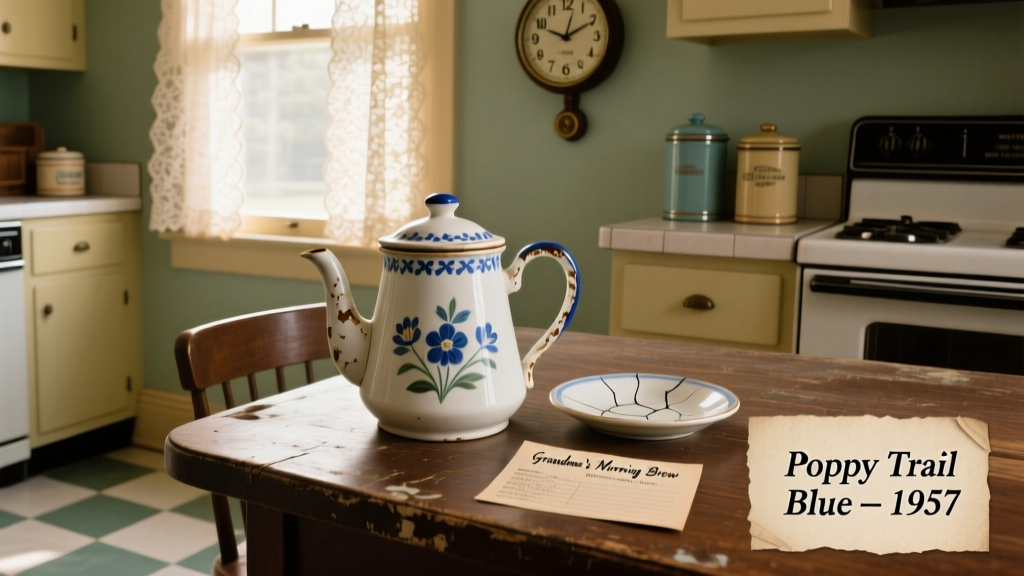
The Poppy Trail Blue Coffeepot: A Mid-Century Icon of American Dinnerware Design
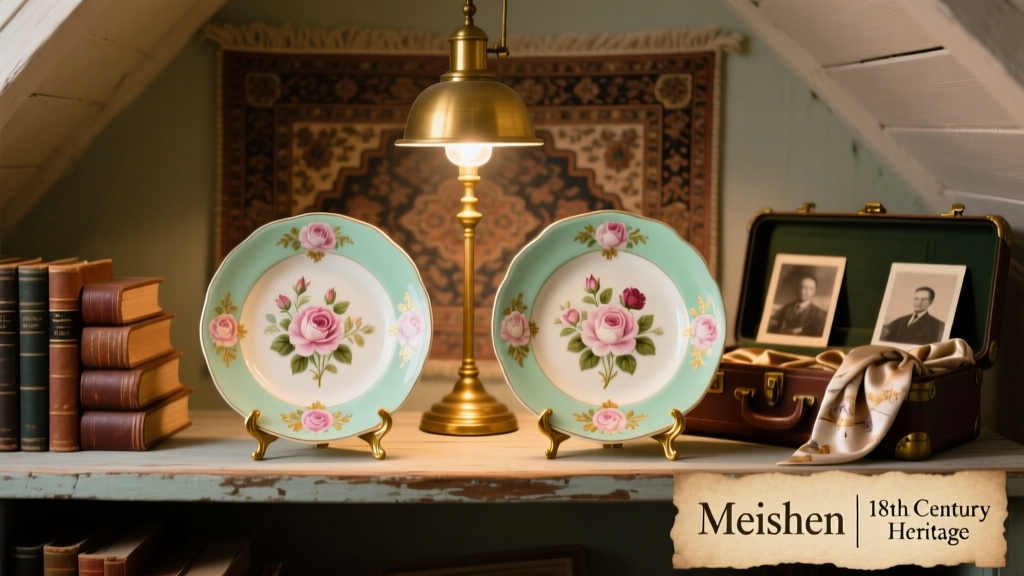
Meissen Plate Floral Spray 12-Inch Pair: A Collector’s Deep Dive into Authenticity, Provenance, and Market Value
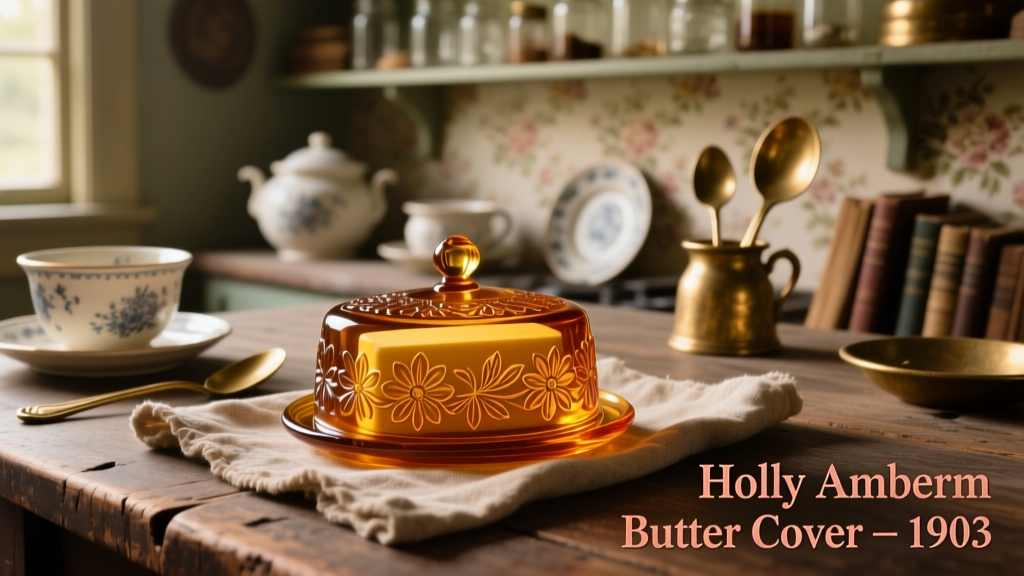
Holly Amber Butter Cover, 1903: A Rare Art Glass Landmark from the Fenton Art Glass Company
The Griswold Tile Top No. 9 Dutch Oven: A Deep Dive into Its Lid Handle Design, Production History, and Collector Value
Toy G.I. Joe Australian Jungle Fighter Accessories: Rarity, Authenticity, and Historical Context
Auguste Moreau’s 'Le Travail': A Mid-Century Bronze Masterpiece in Vintage Collectibles
Tiffany & Co. Circa 1950s Peridot Pin: Circle-and-Oval Design with 14K Yellow Gold Leaves — Authentication, Value, and Historical Context
Snoopy & Woodstock Heart-Shaped Ceramic Bookends: A Mid-Century Hong Kong Collectible Deep Dive