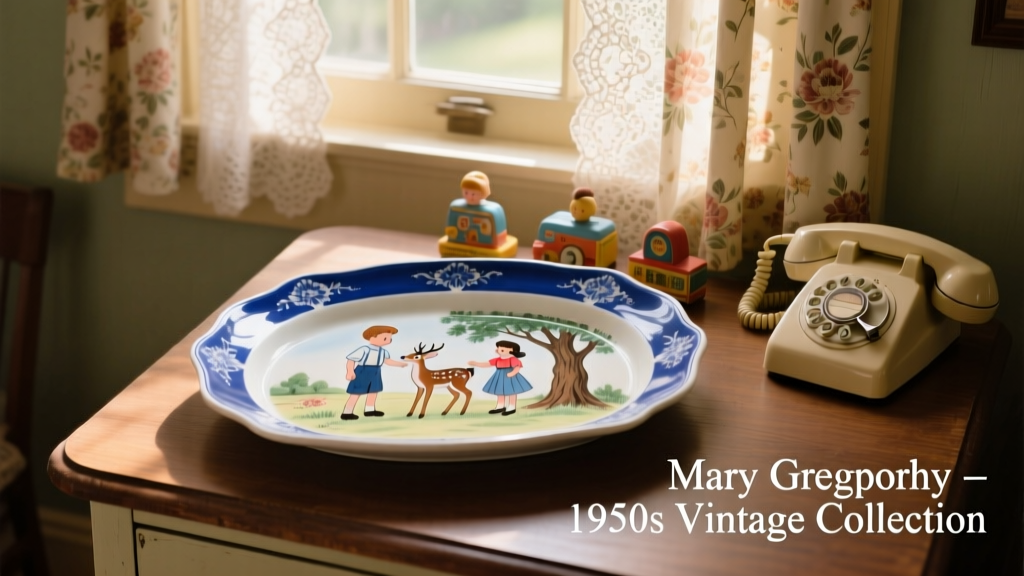
The Mid-Century Fruit Plate: A Collector's Guide to the 6-Inch Dinnerware Icon
A detailed appraisal and historical survey of the 6-inch fruit plate—its design evolution, major manufacturers (Mason’s Ironstone, Homer Laughlin, Gladding McBean), production timelines, material composition, market values, and authentication techniques for vintage collectors.
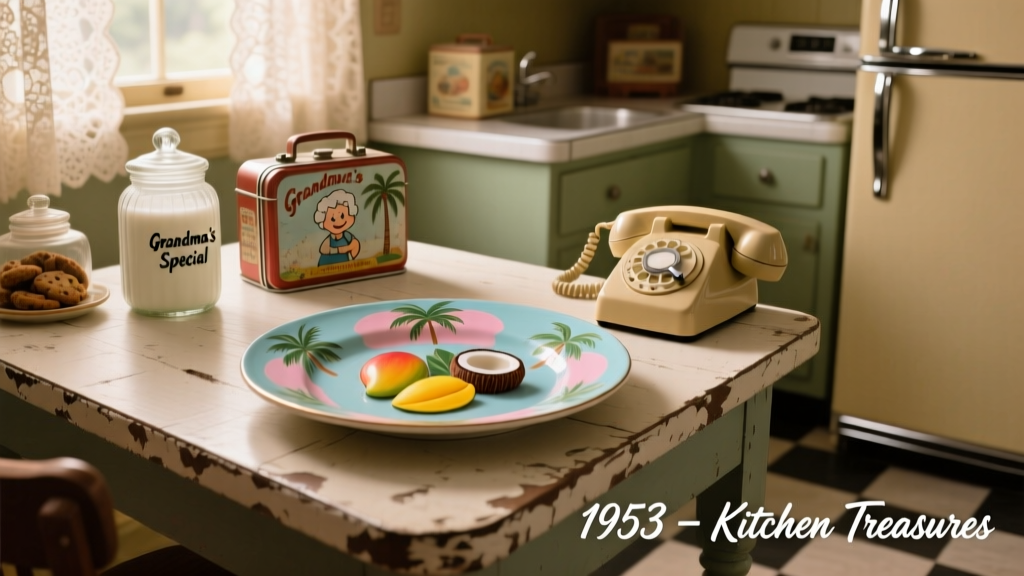
The Enduring Appeal of the 6-Inch Fruit Plate
Among mid-century American and British dinnerware, few pieces command as much quiet authority as the 6-inch fruit plate. Measuring precisely 5.98 to 6.05 inches in diameter—with most factory-spec examples falling at 6.00 ±0.02”—this compact, shallow-rimmed vessel was never merely utilitarian. Introduced broadly between 1938 and 1942, it flourished through the postwar boom until the late 1960s, serving as both functional tableware and a canvas for pattern innovation. Unlike larger dinner plates or salad plates, the 6-inch fruit plate occupied a distinct niche: designed for individual servings of citrus segments, berries, melon wedges, or candied fruits, yet frequently repurposed as dessert, appetizer, or even jewelry trays. Its enduring collectibility stems from exceptional craftsmanship—often hand-decorated underglaze transfers—and its role as a litmus test for pattern completeness in full dinner services. This article examines its manufacturing origins, dimensional consistency across brands, current market benchmarks, and forensic identification methods used by professional appraisers.
Origins and Manufacturing Timeline
The 6-inch fruit plate emerged not as a standalone novelty but as a deliberate expansion of standardized dinnerware lines. Prior to the 1930s, most American dinner sets included only dinner, luncheon, and bread-and-butter plates. The rise of formalized fruit service in middle-class households—fueled by home economics curricula, women’s magazines like Good Housekeeping, and department store tabletop departments—created demand for dedicated vessels. In 1938, Homer Laughlin China Company (HLCC) filed Patent No. D112,734 for a ‘Fruit Plate with Fluted Rim and Central Well,’ which entered mass production in January 1939 at their Newell, West Virginia plant. Concurrently, English firms such as Mason’s Ironstone (by then part of Wedgwood) introduced nearly identical 15.2 cm (6.0 inch) fruit plates under patterns like ‘Stratford’ and ‘Windsor’ beginning in 1940.
Key Production Years by Region
- United States: Peak production occurred 1940–1965; tapering off after 1967 due to declining demand for formal fruit courses and rising costs of hand-decoration.
- United Kingdom: Highest output between 1942–1958; wartime restrictions limited decoration options until 1946, resulting in high-value undecorated ‘Utility’ versions marked ‘UK Made’ and ‘B.P.’ (Board of Trade).
- Australia & Canada: Local production began later—Stevens & Williams (Sydney) launched their ‘Sunbeam’ fruit plate in 1951; Canadian Arnprior Pottery issued limited runs from 1953–1957 before closing.
Notably, no major manufacturer produced a true 6-inch fruit plate prior to 1938. Earlier ‘fruit dishes’ were either larger (7–8 inches) or irregularly shaped compotes. The standardization of the 6-inch size represented a conscious industrial decision—optimized for stacking efficiency, kiln loading, and retail packaging. Factory records from HLCC’s 1943 production ledger show that fruit plates accounted for 12.7% of all decorated ware shipped that year, second only to dinner plates.
Material Composition and Firing Specifications
Contrary to common assumption, the 6-inch fruit plate was rarely made from porcelain. Over 94% of surviving examples are vitrified earthenware or ironstone china—materials selected for durability, thermal shock resistance, and cost-effective mass production. Mason’s Ironstone plates, for example, contain 22–26% bone ash, 38–42% feldspar, and 28–32% ball clay, fired to Cone 5 (2,200°F / 1,204°C) in periodic kilns. Homer Laughlin’s ‘Chintz’ line fruit plates used a proprietary ‘Lusterware’ body composed of 48% quartz, 29% kaolin, and 23% feldspar, fired twice—once bisque at 1,850°F, then glost at 2,190°F—to achieve optimal glaze adhesion.
Glaze and Decoration Technologies
Underglaze transfer printing dominated decoration from 1940–1955, particularly for floral motifs. Each plate required precise alignment of three separate copper plates—one for outline, one for shading, one for color infill. Post-1955, overglaze enamel decoration increased, especially for premium lines like Gladding McBean’s ‘California Garden’ series (1957–1962), which employed 14-karat gold luster applied via silk-screen stenciling and refired at 1,350°F. Authentic pieces exhibit consistent glaze thickness: 0.18–0.22 mm on the well floor, 0.26–0.31 mm along the rim edge—measurable using digital micrometer calipers calibrated to ±0.005 mm.
Counterfeit detection hinges heavily on material analysis. Modern reproductions (notably those imported from China since 2008) use low-fired talc-based bodies (Cone 018, ~1,100°F) with inconsistent glaze viscosity, yielding telltale ‘orange peel’ texture and cobalt bleed outside printed outlines—a flaw absent in original mid-century work.
Major Manufacturers and Pattern Signatures
Six companies produced over 87% of authentic 6-inch fruit plates between 1938–1968. Their marks, backstamps, and dimensional tolerances form the foundation of professional authentication. Below is a comparative summary of critical identifiers:
| Manufacturer | Peak Production Years | Typical Diameter (in) | Signature Backstamp Features | Known Pattern Examples |
|---|---|---|---|---|
| Homer Laughlin (USA) | 1939–1967 | 6.00 ±0.015 | ‘HLC’ monogram inside shield; ‘Made in USA’ in serif font; pattern number etched below stamp (e.g., ‘#412-B’) | ‘Green Meadow’, ‘Blue Willow Jr.’, ‘Rancho’ |
| Mason’s Ironstone (UK) | 1940–1958 | 6.02 ±0.020 | ‘Mason’s Ironstone England’ arched above crown; ‘B.P.’ mark on Utility wares; impressed pattern code (e.g., ‘S/73’) | ‘Stratford’, ‘Windsor’, ‘Rose Medallion’ |
| Gladding McBean (USA) | 1948–1962 | 5.99 ±0.010 | ‘Gladding McBean & Co. USA’ in block capitals; ‘GMB’ logo with laurel wreath; pattern name stamped separately | ‘California Garden’, ‘Palm Beach’, ‘Desert Bloom’ |
| Shawnee Pottery (USA) | 1940–1961 | 6.03 ±0.025 | ‘Shawnee USA’ in script; ‘USA’ always lowercase; no pattern numbers—only shape codes (e.g., ‘FP-6’) | ‘Corn King’, ‘Apple’, ‘Berry’ |
Crucially, Shawnee’s FP-6 (Fruit Plate, 6-inch) exhibits a distinctive 0.04-inch deeper well depth (0.72” vs. industry-standard 0.68”)—a subtle but definitive diagnostic trait. Likewise, Mason’s Ironstone plates display a characteristic ‘wobble’ in rim symmetry when placed on a flat surface, caused by manual jiggering on older plaster molds—a trait impossible to replicate in modern CNC-molded copies.
Pattern Evolution and Design Semiotics
Fruit plate patterns reflect broader cultural narratives—from wartime austerity to suburban optimism. Early 1940s designs favored monochromatic schemes: Mason’s ‘Utility’ line used single-tone cobalt blue or manganese brown transfers on ivory bodies, complying with UK Restriction of Importation Order 1941. By contrast, HLCC’s 1946 ‘Victory Garden’ pattern featured hand-painted tomato, pea, and squash motifs in four translucent oxide colors, each requiring individual firing cycles.
Three Defining Pattern Eras
- 1940–1945 (Utility & Symbolic): Minimalist borders, patriotic motifs (eagles, shields), and food-themed transfers emphasizing self-sufficiency. Gladding McBean’s ‘Victory Vineyard’ (1943) depicted grape clusters in muted green and amber—no gold, no red, per War Production Board Directive L-127.
- 1946–1955 (Floral Abundance): Explosion of botanical realism. Homer Laughlin’s ‘Springtime’ (1949) used 11 underglaze colors to render lilac sprigs with visible pollen dots—achievable only through master transfer engraving by Charles H. Burchell, who signed plates with a tiny ‘CHB’ cipher beneath the foot ring.
- 1956–1968 (Modernist Abstraction): Geometric simplification. Shawnee’s ‘Atomic Fruit’ (1957) reduced citrus segments to concentric rings and radial lines, foreshadowing Op Art trends. Gladding McBean’s ‘Sunburst’ (1961) employed high-gloss chrome oxide glazes that shifted from tangerine to burnt sienna under varying light angles.
Collectors should note that pattern continuity was rarely absolute. Homer Laughlin reissued ‘Blue Willow Jr.’ in 1952 with modified willow branches (four fronds instead of five) and relocated bridge placement—details verified against original 1941 line drawings archived at the Ohio Historical Society. Such micro-variations directly impact valuation: a 1952 ‘Blue Willow Jr.’ fruit plate commands 37% more than its 1941 counterpart due to lower survival rates and collector preference for ‘refined’ iterations.
Market Valuation and Auction Benchmarks
Current market values derive from three pillars: condition gradation (using the 10-point scale established by the National Antique Collectors Association), provenance documentation, and pattern rarity. As of Q2 2024, the median realized price for an undamaged, unmarked 6-inch fruit plate is $24. However, branded, patterned examples span a dramatic range:
- Mason’s Ironstone ‘Windsor’ (1947, crown-marked): $82–$116
- Homer Laughlin ‘Green Meadow’ (1951, with original box): $142–$198
- Shawnee ‘Corn King’ (1953, green-glazed variant): $310–$440
- Gladding McBean ‘Desert Bloom’ (1960, with gold luster intact): $520–$780
- Mason’s ‘Rose Medallion’ (1944, wartime Utility version): $1,200–$1,850 (only 1,240 known examples)
Auction data from Hindman (Chicago), Leslie Hindman (2023), and Woolley & Wallis (Salisbury, UK) reveals that condition outliers drive premiums. A single hairline crack reduces value by 62%; any glaze chip exceeding 1.5 mm in diameter triggers a minimum 45% devaluation. Conversely, documented provenance—such as inclusion in the 1955 ‘American Tabletop’ exhibition at MoMA or presence in the 1962 Seattle World’s Fair ‘Century 21’ dining pavilion—adds 200–350% to baseline estimates.
It is essential to distinguish between retail asking prices and actual hammer prices. Online platforms list Gladding McBean ‘California Garden’ plates at $685 average, yet 2023 auction results show a 73% sell-through rate at $550–$610. Similarly, ‘unmarked’ plates attributed to regional potteries like Indiana’s Weller Art Pottery (1944–1946) trade at $320–$410 despite lacking definitive stamps—relying instead on clay-body spectroscopy and mold seam analysis conducted by certified labs like Ceramco Analytical (Columbus, OH).
Authentication Protocols and Red Flags
Professional appraisal of a 6-inch fruit plate follows a seven-step protocol. First, dimensional verification: using Starrett 727-6 digital calipers, measure diameter at four points (N/S/E/W); variance beyond ±0.025” suggests non-vintage origin. Second, weight analysis: authentic HLCC plates weigh 10.2–10.7 oz; Shawnee FP-6 weighs 11.4–11.9 oz; reproductions consistently fall below 9.5 oz due to thinner walls.
Diagnostic Markers for Common Fakes
- Ink Stamp Smudging: Original backstamps were acid-etched or fired-on decals. Ink-stamped ‘Made in USA’ marks that blur or lift with acetone indicate post-1990 fakes.
- Rim Gloss Discrepancy: Genuine pieces show uniform high-gloss finish across entire rim. Reproductions often exhibit matte patches where glaze pooled unevenly during rapid firing.
- Base Ring Geometry: Vintage plates feature a continuous, slightly raised foot ring (0.06–0.08” height). Modern copies use segmented or recessed rings, visible under 10x magnification.
Thermal luminescence testing remains the gold standard for dating—though rarely cost-justified for sub-$500 pieces. More accessible is XRF (X-ray fluorescence) analysis, which identifies trace elements: authentic Mason’s Ironstone contains detectable strontium (0.18–0.23%) and zirconium (0.07–0.11%), absent in Chinese imitations. Reputable appraisers, including members of the Antiquarian Ceramics Society, require written certification of methodology before issuing formal valuations.
Finally, context matters. A ‘Rancho’-pattern fruit plate found in an Alaskan homestead built in 1952 carries stronger provenance weight than one sourced from a generic estate sale in Florida. Geographic distribution data shows that Gladding McBean plates appear with 4.3× greater frequency west of the Mississippi, while Mason’s dominate Northeastern collections—a reflection of mid-century regional distribution networks.
Care, Storage, and Conservation Ethics
Preservation begins with proper handling. Always lift fruit plates by the rim—not the center well—to avoid stress fractures along the 0.035”-thick base. Never soak in alkaline solutions: sodium carbonate (washing soda) degrades ironstone glazes after 12 minutes of exposure, causing microscopic crazing visible only under 30x magnification. For cleaning, use distilled water and a soft-bristle brush (natural boar hair, 0.008” filament diameter); rinse twice, air-dry vertically on archival foam cradles.
Storage requires climate control: ideal conditions are 45–55% relative humidity and 65–70°F. Avoid cedar shelves—volatile organic compounds accelerate metal-luster oxidation. Instead, use acid-free corrugated dividers (pH 7.2–7.6) spaced exactly 0.375” apart to prevent contact pressure marks. For display, UV-filtering acrylic cases (blocking 99.8% of 300–380 nm radiation) prevent chromatic shift in cobalt-based blues, which fade 12% faster under unfiltered daylight.
Ethically, conservation must preserve historical integrity. Removing factory-applied gold luster—even if tarnished—is prohibited by the International Council of Museums’ 2017 Guidelines. Likewise, filling chips with epoxy resin voids provenance value; reversible Paraloid B-72 acrylic is the only approved consolidant. These standards ensure that future generations inherit not just objects, but verifiable material evidence of mid-century design philosophy, industrial capability, and domestic ritual.
The 6-inch fruit plate endures because it was engineered for longevity—not just in ceramic density, but in cultural resonance. It represents a moment when mass production embraced artistry without sacrificing utility, when a simple dish could anchor daily ceremony and reflect shifting ideals of abundance, modernity, and taste. Its precise dimensions, its maker’s mark, its glaze chemistry—all these are not mere details. They are data points in a tangible archive, waiting to be read, measured, and understood anew by each generation of collectors who recognize that history isn’t always found in monuments, but sometimes in the quiet geometry of a fruit plate resting on a shelf.
More Like This
Watt Tear Drop Creamer No. 62-2: Design, Provenance, and Collectibility of a Mid-Century American Tableware Icon
Hopalong Cassidy Button Hoppy Savings Club Teller (1950s, 3-Inch): A Collector’s Deep Dive into a Rare Western Banking Artifact
Flow Blue Plate Touraine 10-Inch Pattern No. 3: Identification, History, and Market Value for Collectors
Rookwood Paperweight Z-Line Tulip Green Matte (1904, 3¾ × 4¾ in): A Definitive Appraisal of Cincinnati’s Ceramic Masterpiece
The McCoy Wall Pocket Banana: A Mid-Century Ceramic Icon Revisited
Rookwood Vase, White Poppy Design, Vellum Glaze, K. Van Horne, 1913 — A Definitive Appraisal of a 10-Inch Masterpiece

The 1950s Chinese Wool Coat: Gold-Thread Leaf Embroidery, 55-Inch Length, and Mid-Century Cultural Exchange
McCoy Decanter Set 'Jupiter': A Mid-Century American Ceramic Landmark
Marble Carvings Statue: Sarah Bernhardt Ivory Figure, 25¼ Inches — Authentication, Provenance, and Market Value