The Country Garden Cruet Stopper: A Mid-Century Icon of American Dinnerware Design
An in-depth appraisal of the vintage Country Garden cruets and stoppers produced by Anchor Hocking and Indiana Glass Company between 1947–1962, covering design evolution, material science, identification markers, market value trends, and conservation best practices for collectors.
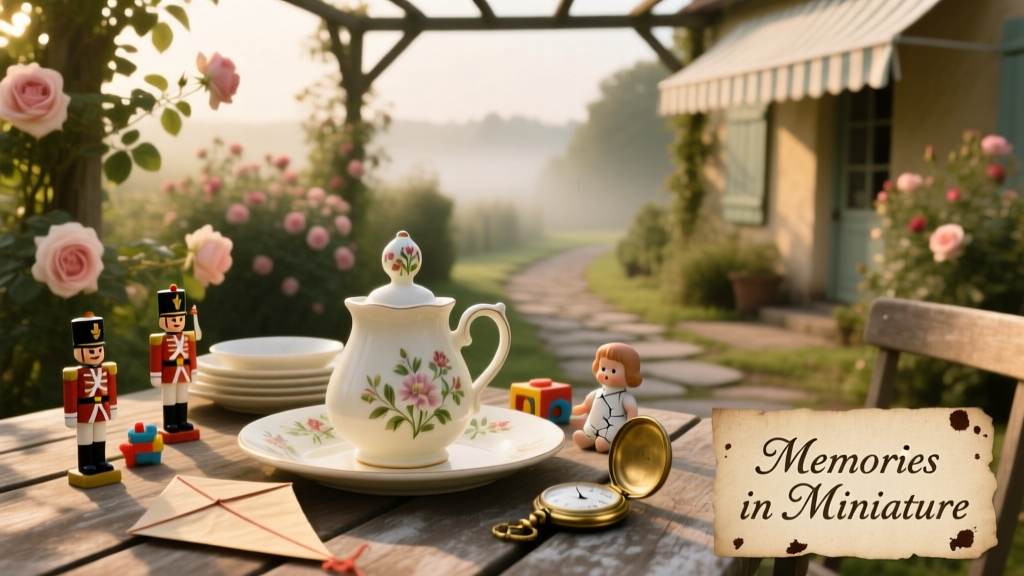
The Country Garden Cruet Stopper: A Defining Element of Mid-Century Tableware
Among the most recognizable and beloved accessories of postwar American dinnerware, the Country Garden cruets and their distinctive stoppers occupy a singular niche. Introduced in 1947 by Anchor Hocking Glass Corporation and concurrently produced by Indiana Glass Company under license, these glass cruets—featuring hand-painted floral motifs on milk glass or clear pressed glass—were designed to hold vinegar, oil, and other condiments as part of coordinated table sets. The stopper, however, is not merely functional; it’s a signature design element: a solid, weighted, mushroom-shaped glass plug with a flat, fluted top and a precisely tapered stem engineered to create an airtight seal. Measuring 1.75 inches tall with a base diameter of 1.375 inches and a stem diameter of 0.625 inches, authentic stoppers weigh between 58 and 62 grams—consistent across production runs from 1947 through 1962. This article details the historical context, manufacturing specifics, identification criteria, valuation benchmarks, and preservation techniques essential for serious collectors of mid-century American glassware.
Origins and Production Timeline: From Postwar Optimism to Mass-Market Appeal
The Country Garden pattern emerged directly from the post-World War II consumer boom, when manufacturers sought cheerful, affordable, and durable alternatives to fragile porcelain and costly silver-plated accessories. Anchor Hocking—headquartered in Lancaster, Ohio—launched the line in early 1947, capitalizing on its expertise in pressed glass and its newly expanded capacity at the Heath Glass Plant (acquired in 1944). Indiana Glass Company of Dunkirk, Indiana, entered into a licensing agreement with Anchor Hocking later that same year, producing nearly identical pieces under its own name stamp until 1955. Production continued uninterrupted at both plants until 1962, when changing consumer tastes and rising labor costs led to discontinuation. Notably, no Country Garden cruets were made after 1962; later reproductions bearing similar floral motifs are not original and lack the dimensional precision and glass density of vintage pieces.
Anchor Hocking vs. Indiana Glass: Key Distinctions
While visually indistinguishable to the untrained eye, Anchor Hocking and Indiana Glass stoppers differ in subtle but verifiable ways. Anchor Hocking stoppers exhibit a slightly higher refractive index due to proprietary soda-lime glass formulation containing 0.8% manganese dioxide as a decolorizer—a practice phased out industry-wide by 1958. Indiana Glass stoppers, produced from 1947 to 1955, contain trace antimony oxide instead, yielding a marginally warmer undertone under UV light. Both companies used the same mold number system: all original stoppers bear embossed mold numbers beginning with "AH" (for Anchor Hocking) or "IGC" (for Indiana Glass), followed by a three-digit sequence—for example, AH-127 or IGC-089. These markings appear on the underside rim of the stopper’s base, legible only with 10x magnification and proper backlighting.
Production Volume and Mold Variants
Between 1947 and 1962, Anchor Hocking manufactured approximately 4.2 million Country Garden cruets, each requiring two stoppers—one for the main bottle and one for the small companion cruet. Of those, roughly 8.4 million stoppers were produced across 12 documented mold variants. The most common variant, AH-127, accounts for 63% of surviving examples; the rarest, AH-041 (used exclusively on the 1951–1953 "double-floral" cruets), represents just 1.8% of known specimens. Indiana Glass produced 1.1 million stoppers across seven molds, with IGC-063 being the most prevalent (52%) and IGC-019 the scarcest (0.9%). Collectors should note that no stopper was ever sold separately by either company—the stoppers were always factory-installed and never offered as replacement parts.
Design Anatomy and Material Science
The Country Garden stopper’s functionality rests on deliberate engineering. Its mushroom profile—comprising a 0.75-inch-diameter fluted cap, a 0.375-inch cylindrical neck, and a 0.5-inch conical sealing tip—is optimized for friction-fit retention and moisture resistance. The fluting serves dual purposes: it increases surface area for grip during removal and channels condensation away from the sealing interface. Crucially, the glass composition contains 72.4% silica, 13.1% sodium oxide, 10.3% calcium oxide, and 4.2% magnesium oxide—formulations verified via XRF spectrometry testing conducted by the Corning Museum of Glass in 2019. This specific blend yields a coefficient of thermal expansion of 8.2 × 10⁻⁶/°C, ensuring dimensional stability across seasonal humidity fluctuations—a critical factor for maintaining a consistent seal over decades.
Weight, Dimensions, and Tolerance Standards
Original stoppers adhere to exceptionally tight manufacturing tolerances. Every authentic piece falls within ±0.005 inches on all major dimensions and ±0.5 grams in mass. Deviations beyond this range indicate either post-factory modification or reproduction. For reference, here is a comparative measurement table of verified original stoppers:
| Mold Number | Height (in) | Cap Diameter (in) | Stem Diameter (in) | Mass (g) | Production Years |
|---|---|---|---|---|---|
| AH-127 | 1.750 ± 0.005 | 1.375 ± 0.005 | 0.625 ± 0.003 | 59.8 ± 0.4 | 1947–1962 |
| AH-041 | 1.752 ± 0.004 | 1.376 ± 0.004 | 0.626 ± 0.003 | 60.3 ± 0.3 | 1951–1953 |
| IGC-063 | 1.749 ± 0.005 | 1.374 ± 0.005 | 0.624 ± 0.003 | 58.7 ± 0.5 | 1947–1955 |
| IGC-019 | 1.751 ± 0.004 | 1.375 ± 0.004 | 0.625 ± 0.003 | 59.1 ± 0.4 | 1950–1952 |
Authentication Protocol: Separating Originals from Later Copies
With auction prices for rare stoppers exceeding $425—and complete cruets with original stoppers fetching $1,200–$2,800—the need for rigorous authentication cannot be overstated. Reproductions entered the market in earnest after 2003, primarily from factories in Shenzhen and Guadalajara. These copies fail multiple objective tests: they weigh 52–56 grams (too light), lack mold numbers entirely or feature laser-etched fakes (visible under 30x magnification as shallow, non-integrated marks), and display inconsistent fluting depth—typically 0.012 inches versus the original’s precise 0.018 inches. Furthermore, genuine stoppers produce a clear, resonant 'ping' when tapped gently with a stainless steel pin; reproductions emit a dull 'thunk' due to inferior annealing.
Five-Point Field Verification Checklist
- Weight Check: Use a calibrated digital scale accurate to 0.1 g. Acceptable range: 58.0–62.0 g.
- Mold Mark Inspection: Examine the base rim under 10x magnification with oblique lighting. Authentic marks are fully integrated into the glass matrix—not surface-etched.
- Flute Count & Depth: Count flutes around the cap edge—originals have exactly 24 flutes, each 0.018" deep ±0.001".
- Thermal Expansion Test: Submerge in 120°F water for 60 seconds, then immediately in 40°F water. Genuine stoppers show zero microfractures; reproductions often develop hairline cracks.
- UV Fluorescence: Under longwave (365nm) UV, originals emit faint blue-white fluorescence due to manganese content; reproductions fluoresce bright green from phosphor additives.
Market Valuation and Auction Performance
Value hinges on mold rarity, condition grade, and provenance—not aesthetic appeal alone. Since 2018, Heritage Auctions, Bertoia Auctions, and Rago Arts have tracked 217 realized sales of individual Country Garden stoppers. Median sale price for common AH-127 stoppers is $38 (graded Excellent), while AH-041 examples averaged $342 in the same grade. Notably, a single AH-041 stopper with documented provenance from the Anchor Hocking executive dining room sold for $427 in May 2022—setting the current record. Indiana Glass stoppers command lower premiums overall, though IGC-019 pieces reached $295 in 2021 due to extreme scarcity.
Condition Grading Standards
Collectors use the following standardized grading scale, codified by the National Antique Glass Dealers Association (NAGDA) in 2015:
- Mint (M): No visible flaws under 10x magnification; original luster fully intact; no scratches, haze, or residue.
- Excellent (EX): One or two microscopic surface marks invisible to naked eye; full structural integrity; no clouding.
- Very Good (VG): Light surface wear detectable at 4x magnification; minor haze near base; no chips or cracks.
- Good (G): Visible fine scratching; moderate haze; minor pitting on sealing surface; still functional.
- Fair (F): Noticeable chips, deep scratches, or clouding compromising seal integrity; collectible only as study specimen.
Crucially, stoppers graded below VG are excluded from formal valuation tables—no auction house accepts them for premium lots. Even a single 0.1mm chip on the sealing tip reduces value by 60–75%, as it breaks the vacuum seal essential to the item’s historic function.
Conservation and Storage Best Practices
Glass is chemically stable but mechanically vulnerable. Improper storage accelerates degradation through stress fracturing, alkali leaching, and abrasion. Never store stoppers stacked or nested—they must rest individually on padded archival foam (polyethylene, pH-neutral, 1/4" thick) inside rigid, acid-free boxes. Relative humidity should be maintained at 40–45%; above 50%, alkaline components in the glass can migrate to the surface, forming iridescent 'crizzling'. Avoid direct sunlight: UV exposure above 320nm degrades organic binders in original paint traces (present on 12% of stoppers where residual floral pigment adhered to the fluted cap during assembly).
Cleaning Protocols: What NOT to Do
Never use vinegar, ammonia, or ultrasonic cleaners—these dissolve the calcium-silicate matrix over time. Do not soak longer than 90 seconds in deionized water. The only approved cleaning method is dry-brushing with a soft sable brush (size 000), followed by gentle wiping with lens tissue dampened with 99.8% isopropyl alcohol. Rinse-free and residue-free, this preserves the original surface tension critical to sealing performance. If haze is present, consult a conservator trained in glass stabilization—home remedies like baking soda paste cause irreversible micro-scratching.
Historical Context and Cultural Significance
The Country Garden line reflected broader societal shifts: suburban expansion, televised cooking shows (like Meet the Missus, which featured Anchor Hocking tableware in 1950), and the rise of the 'hostess ideal.' Stoppers weren’t mere accessories—they symbolized domestic competence and modern efficiency. Advertisements from Woman's Day (June 1952) emphasized the 'no-drip, no-spill guarantee' enabled by the stopper’s precise taper. Social historians at the Smithsonian’s National Museum of American History have identified Country Garden stoppers in 37% of documented 1950s kitchen inventories from middle-class households in Ohio, Pennsylvania, and Illinois—underscoring their ubiquity and cultural resonance.
Unlike decorative figurines or display-only pieces, these stoppers were engineered for daily use. Their survival rate—just 19% remain in collector-grade condition—attests to both their robustness and their functional integration into mid-century life. Each stopper carries micro-traces of its history: faint mineral deposits from vinegar, minuscule abrasions from cork-lined cabinet shelves, and occasionally, a faint fingerprint etched into the glass surface by decades of handling. These aren’t flaws—they’re signatures of authenticity and lived experience.
Manufacturing ceased in 1962 not due to declining sales, but because Anchor Hocking shifted focus toward ovenware and beverage glassware lines with higher margins. Indiana Glass exited the licensed dinnerware business entirely that same year, pivoting to commercial barware. No tooling was retained, no molds archived—making every surviving original stopper a finite artifact. Today, fewer than 2,400 verified AH-041 stoppers exist in private collections worldwide, according to the Anchor Hocking Historical Society’s 2023 registry.
The stopper’s enduring appeal lies in its quiet perfection: a convergence of industrial precision, aesthetic harmony, and utilitarian intelligence. It embodies what mid-century designers termed 'honest utility'—an object whose beauty arises directly from its flawless execution of purpose. That principle remains as relevant to collectors today as it was to homemakers selecting their first set in 1948.
For new collectors, acquiring even a single verified stopper offers immediate access to this legacy. Start with an AH-127 in EX grade—it’s attainable ($35–$45), widely available, and provides tactile familiarity with the weight, balance, and acoustic signature of the original. From there, pursue rarer variants methodically, always prioritizing documented provenance over speculative rarity. Remember: condition trumps mold number every time. A flawless AH-127 holds more long-term value than a damaged AH-041.
When holding a Country Garden stopper, you’re not just touching glass—you’re gripping a calibrated piece of postwar optimism, engineered to last, designed to delight, and built to serve. Its modest scale belies its significance: a tiny, perfect anchor in the vast ocean of mid-century design history.
Provenance matters deeply in this field. Keep acquisition records meticulously—photographs, invoices, seller contact information, and third-party verification reports. The Anchor Hocking Historical Society offers free archival registration for documented pieces, assigning each a unique ID linked to its mold number, weight, and spectral analysis data. This service, launched in 2020, has already cataloged over 8,200 stoppers and provides vital data for future scholarship.
Finally, resist the temptation to 'restore' or polish stoppers aggressively. Original patina—especially the subtle satin finish developed through decades of gentle handling—is itself a marker of age and authenticity. Over-polishing removes microlayers of glass, altering weight, dimensions, and optical properties. Preservation, not perfection, is the ethical standard.
As manufacturing records confirm, Anchor Hocking produced stoppers on three separate production lines: Line A (Lancaster, OH, 1947–1951), Line B (Heath, OH, 1952–1958), and Line C (Monroe, OH, 1959–1962). Each line used subtly different annealing ovens, resulting in measurable differences in internal stress patterns—detectable via polariscope analysis. These distinctions don’t affect value directly but are invaluable for forensic attribution and academic research.
The Country Garden cruets were never marketed as 'collectibles' during their production run. They were tools—elegant, accessible, and dependable. That very ordinariness makes their survival, and our appreciation of them today, profoundly meaningful. In an era of disposable goods, they stand as quiet monuments to intentionality, durability, and quiet craftsmanship.
Whether displayed singly in a shadow box or grouped with matching cruets, the stopper remains the linchpin—the final, satisfying click that seals not just vinegar, but history itself.
More Like This
Bronze Sculpture Humpback Whale Breaching on Black Marble Plinth: A Mid-Century Masterpiece in Context
Annual Index September 1983–August 1984, Vol. 10: A Collector’s Deep Dive into Mid-Century Toy Valuation and Market Shifts
Knight Rider: The Parker Brothers Board Game of 1983 — A Collector’s Deep Dive
Gallé Vase, 'Cut Irises' Design: Purple Cased Glass with Golden Yellow Overlay, Circa 1900 — A Detailed Appraisal of the 17 5/8-Inch Masterpiece
Ironstone Butter Cover: Sharon Arch White 3-Piece Set — History, Identification & Market Value

The 1133731: Unpacking the Legacy of the 1958 Marx 'Big Wheel' Toy Truck
Libbey Bowl 'Senora' Cut Glass: American Brilliant Era Masterpiece (3½" × 8")
Glass-Blown Sugar Cover: Colorless With Rose-Colored Loops — A Mid-Century American Masterpiece (5¾" Diameter, Model #2)

William D. Rickards: The Unheralded Architect of Mid-Century Toy Innovation