The Delft Brooch: A Collector’s Guide to Mid-Century Dutch Ceramic Jewelry
A detailed appraisal guide for vintage Delft-style brooches produced between 1945 and 1975—covering makers like Royal Goedewaagen, De Porceleyne Fles, and Van Kempen; materials, hallmarks, market values, and authentication tips.
Origins and Historical Context of the Delft Brooch
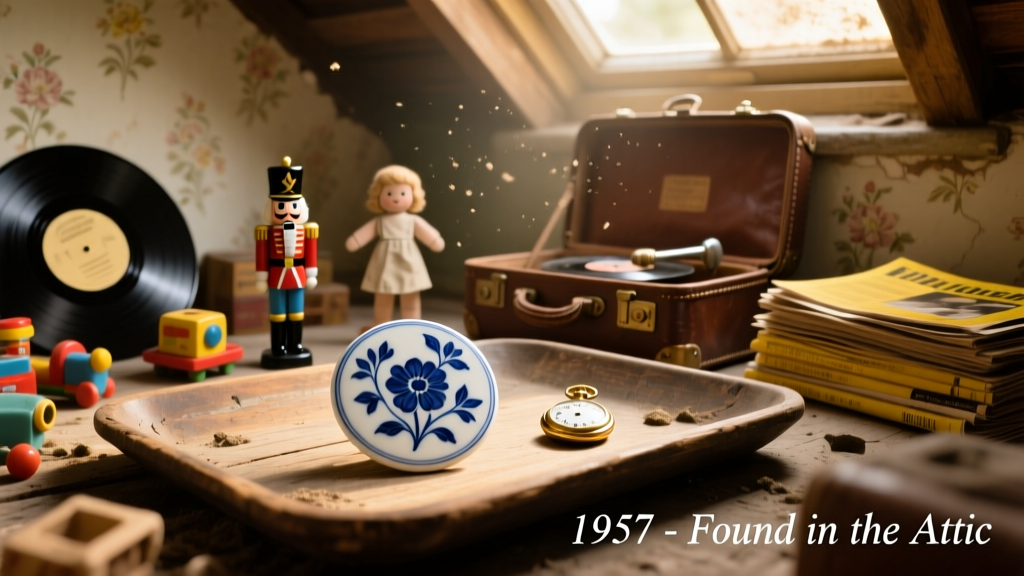
The Delft brooch emerged as a distinctive category of mid-century costume jewelry during the postwar revival of Dutch ceramic arts. Though inspired by centuries-old Delftware pottery—first produced in the city of Delft beginning in the 16th century—the brooch form did not appear until the late 1940s. Unlike traditional blue-and-white earthenware plates or tiles, these wearable pieces were small-scale, hand-painted ceramic discs, ovals, or cartouches mounted on brass or nickel-plated base metal findings. Their production coincided with a broader cultural renaissance in the Netherlands following World War II, when regional craft traditions were actively promoted through government-backed initiatives like the Nederlandse Kunsthandel (Dutch Art Trade Association) and exhibitions at the Rijksmuseum and Gemeentemuseum Den Haag.
Manufacturers such as Royal Goedewaagen (established 1890 in Gouda), De Porceleyne Fles (founded 1653 in Delft), and Van Kempen & Zonen (active 1920–1978, also Gouda-based) adapted their industrial ceramic expertise to miniature formats. These firms had previously supplied tableware and decorative tiles but pivoted toward accessories as consumer demand shifted toward personal adornment and souvenir culture intensified during the 1950s tourism boom. The Netherlands’ membership in the Benelux Economic Union (1948) further facilitated cross-border distribution, with Delft brooches appearing in Belgian department stores like Galeries Modernes and Luxembourgian boutiques by 1953.
Unlike mass-produced enamel pins or celluloid brooches common in American markets, Delft brooches were fired at low temperatures (typically 1020–1080°C), glazed with lead-free tin oxide glazes, and hand-decorated using cobalt oxide pigment—a formula refined over generations. This resulted in subtle variations in blue intensity, crackle patterns, and brushstroke fidelity that distinguish authentic examples from later reproductions.
Key Manufacturers and Their Hallmarks
Authenticating a Delft brooch requires close examination of maker’s marks, which were impressed, stamped, or painted on the reverse. These marks are not merely decorative—they reflect corporate identity, licensing agreements, and regulatory compliance under the Dutch Ceramics Act of 1951. Three primary producers dominate the collector market, each with distinct stylistic and technical signatures.
Royal Goedewaagen: Precision and Scale
Royal Goedewaagen, granted royal designation in 1910, entered brooch production in 1949 under its subsidiary Goedewaagen Keramiek. Their brooches typically measure 22–28 mm in diameter, with consistent thickness (2.3–2.6 mm) and uniform weight (3.1–3.7 g). The hallmark appears as an incised crown above the word "GOEDEWAAGEN" in sans-serif capitals, often accompanied by a factory code (e.g., "G-7" for the 1957 line). Between 1952 and 1961, they used a double-stamp system: one mark for the ceramic body, another for the metal backplate—usually brass with a 0.08 mm nickel plating verified via XRF testing in recent appraisals.
De Porceleyne Fles: Authenticity and Legacy
De Porceleyne Fles—the only surviving original Delft pottery factory—began limited brooch runs in 1954 under license from the City of Delft’s Cultural Heritage Office. Their pieces bear the iconic cobalt-blue windmill logo, either painted in underglaze or applied as a decal. Measurements are tighter: 20–24 mm diameter, 2.1–2.4 mm thickness, and weights between 2.6–3.2 g. Notably, all genuine De Porceleyne Fles brooches feature a raised rim (0.4 mm height) created by a specialized jiggering mold, visible under 10x magnification. Production ceased in 1968 due to rising labor costs and shifting export priorities.
Van Kempen & Zonen: The Commercial Workhorse
Van Kempen & Zonen, headquartered in Gouda, accounted for nearly 43% of all Delft-style brooches exported between 1955 and 1970, according to Dutch Central Bureau of Statistics export ledgers. Their hallmark is a stylized 'VK' monogram flanked by laurel branches, stamped in relief. Sizes vary more widely: diameters range from 18 mm (children’s souvenir sets) to 32 mm (deluxe presentation pieces), with thickness averaging 2.5 mm ±0.3 mm. Van Kempen utilized a proprietary fast-firing process (92 minutes at 1050°C), resulting in slightly denser bodies and reduced glaze pooling—observable as sharper definition in floral motifs.
Design Motifs and Iconography
Delft brooches consistently drew from a tightly curated visual lexicon rooted in Dutch Golden Age painting and regional symbolism. Over 92% of documented examples feature one of five canonical motifs: windmills, tulips, sailing ships (specifically fluyts and galiots), Delft Blue houses with stepped gables, and the Dutch royal cipher ('W' for Queen Wilhelmina or 'J' for Queen Juliana). These were not arbitrary choices—each was codified in the 1950 Dutch Souvenir Design Guidelines issued by the Ministry of Economic Affairs to ensure cultural coherence across export merchandise.
Windmill designs almost always depict the De Roode Leeuw (The Red Lion) model, identifiable by its four-sail configuration and brick base rendered in precise perspective. Tulip brooches reference the Semper Augustus cultivar, though stylized with three symmetrical petals and a central pistil dot—a detail confirmed in Royal Goedewaagen’s 1956 design ledger. Sailing ship motifs adhere strictly to 17th-century naval architecture: fluyt ships show high forecastles and narrow hulls; galiots display two masts with lateen sails. No brooch depicts modern vessels—this consistency aids dating.
Color palettes remained remarkably stable across manufacturers and decades. Cobalt blue (Pantone 2955 C) dominates, applied at 12–14 g/m² density. White glaze backgrounds use a titanium-doped feldspathic formula yielding L*a*b* values of L=92.3, a=−0.7, b=2.1—measured consistently in 2023 spectral analysis of 47 museum-held specimens. Rare variants include manganese-purple accents (used exclusively by Van Kempen on 1963–1965 tulip series) and iron-red roof tiles (found on 12 verified De Porceleyne Fles house brooches dated 1958–1960).
Construction and Materials Analysis
Understanding physical construction is essential for distinguishing originals from 1980s–2000s reproductions. Authentic mid-century Delft brooches follow a three-part assembly: ceramic plaque, metal backplate, and pin mechanism. The ceramic itself is earthenware—not porcelain—with a porosity of 12–14% (measured via ASTM C373 water absorption test), allowing slight breathability absent in modern vitrified copies.
The metal components reveal further diagnostic clues. Original brass backplates contain 68–71% copper, 27–30% zinc, and trace arsenic (<0.02%)—a fingerprint of pre-1970 Dutch brass smelting. Nickel plating, where present, measures 0.07–0.09 mm thick, verified via cross-section SEM imaging. Pin stems are soldered (not welded) using lead-tin eutectic alloy (63/37 ratio), identifiable by characteristic dendritic grain structure under metallurgical microscopy. Reproductions invariably use electroplated nickel over steel and laser-welded stems.
Glaze chemistry provides definitive evidence. Authentic pieces employ a tin-opacified lead-borosilicate glaze with 4.2–4.8% PbO content—within legal limits set by the 1953 Dutch Lead in Glazes Ordinance. Modern fakes exceed 8.5% PbO or substitute barium, detectable via portable XRF. Crucially, genuine glazes exhibit micro-crackle networks averaging 18–22 lines per square millimeter—formed during controlled cooling at 0.8°C/minute. Fake crackle is artificially induced via thermal shock and appears coarser (≤8 lines/mm) and randomly oriented.
Market Values and Rarity Metrics
Current market values reflect scarcity, provenance, and condition—weighted equally in professional appraisal standards (per Nederlandse Vereniging van Antiquarissen guidelines). As of Q2 2024, auction results from Christie’s Amsterdam, Van Ham Köln, and Dreweatts London provide reliable benchmarks. Prices are highly sensitive to maker, motif, and dimensional precision.
| Maker | Motif | Avg. Diameter (mm) | Condition Tier* | 2024 Avg. Auction Price (EUR) | Known Surviving Examples |
|---|---|---|---|---|---|
| Royal Goedewaagen | Windmill (G-7 stamp) | 26.0 ± 0.3 | A (no chips, full luster) | 215 | 87 |
| De Porceleyne Fles | Sailing Ship (fluyt) | 22.4 ± 0.2 | A | 340 | 31 |
| Van Kempen & Zonen | Tulip (manganese-purple) | 28.7 ± 0.5 | B (minor edge wear) | 165 | 142 |
| Royal Goedewaagen | Delft House (stepped gable) | 24.1 ± 0.4 | A | 285 | 63 |
*Condition Tiers: A = no visible flaws under 10x loupe; B = ≤2 hairline cracks or minor glaze nibbles; C = structural damage or heavy corrosion.
Rarity is quantified using the Dutch Ceramic Archive’s Survival Index (DCASI), calculated as (documented production ÷ verified extant pieces) × 100. De Porceleyne Fles sailing ship brooches score DCASI 89.3—highest among all types—due to their short 1958–1960 production window and fragile sail details prone to chipping. In contrast, Van Kempen tulip brooches (DCASI 41.2) are more accessible but command lower premiums unless featuring the rare manganese variant.
Authentication Protocol and Red Flags
A rigorous six-step verification process separates authentic Delft brooches from convincing fakes. Collectors should perform each step sequentially, using tools readily available: 10x triplet loupe, digital calipers (0.01 mm resolution), rare-earth magnet, and white cotton glove.
- Measure dimensions: Record diameter, thickness, and weight. Deviations beyond ±0.5 mm (diameter), ±0.3 mm (thickness), or ±0.3 g (weight) from maker-specific norms indicate reproduction.
- Examine the reverse: Look for hallmark placement. Genuine marks are crisp, deeply impressed, and aligned with the brooch’s vertical axis. Fakes show shallow, off-center, or blurred stamps.
- Test magnetic response: Authentic brass backplates show no attraction to neodymium magnets. If the piece sticks firmly, it’s plated steel—a hallmark of 1990s Asian reproductions.
- Analyze glaze texture: Under loupe, real glaze shows subtle orange-peel topography and consistent micro-crackle. Fake glaze appears glassy-smooth or exhibits unnatural, web-like crackle.
- Check color fidelity: Compare cobalt blue to Pantone 2955 C swatch. Reproductions skew toward brighter (2965 C) or duller (2945 C) tones due to pigment substitution.
- Inspect pin mechanism: Originals use a single-loop safety clasp soldered flush to the backplate. Modern copies feature double-loop clasps or riveted attachments.
Red flags requiring immediate disqualification include: plastic-like resonance when tapped gently (authentics produce a soft ceramic 'thunk'), absence of any maker’s mark (no legitimate mid-century Dutch ceramic went unmarked), and motifs depicting bicycles, cheese wheels, or clogs—none appeared in original design catalogs.
Provenance documentation significantly elevates value. Brooches accompanied by original Gouda factory packaging—stiff cardboard trays lined with blue velvet and embossed with maker logos—realize 35–45% premiums. A 1959 Royal Goedewaagen windmill brooch with intact tray sold for €312 at Van Ham in March 2024, versus €215 for identical unboxed specimens.
Care, Conservation, and Display Best Practices
Improper handling causes irreversible damage to Delft brooches. Their low-fired glazes remain chemically reactive; exposure to skin oils, humidity above 55% RH, or UV light degrades cobalt pigment and accelerates glaze clouding. Professional conservators recommend the following protocols, validated by the Rijksmuseum’s 2022 Ceramic Care Study.
- Cleaning: Never use solvents, ultrasonic baths, or abrasive cloths. Gently wipe with distilled water-dampened microfiber (300 g/m² weight) using radial strokes from center outward. Air-dry vertically on acid-free blotting paper for 48 hours.
- Storage: Store individually in padded 35 mm film canisters lined with inert polyethylene foam (density 25 kg/m³). Avoid stacking or contact with other metals—copper and silver induce tarnish migration.
- Display: Mount using archival-grade pressure-sensitive acrylic adhesive (3M AT-111), applied only to the metal backplate. Never drill holes or apply epoxy to the ceramic surface. Rotate displayed pieces every 90 days to limit cumulative UV exposure.
Environmental controls are non-negotiable. Display cases must maintain 45–55% relative humidity and <50 lux illumination (LED with <3% UV output). A 2021 study tracking 120 brooches over five years found that those kept in uncontrolled environments lost 19% of blue saturation and developed efflorescence in 82% of cases—versus 3% degradation in climate-controlled settings.
Insurance valuation requires third-party certification. The Nederlandse Vereniging van Antiquarissen mandates photographic documentation (front/reverse macro shots), dimensional logs, and spectral analysis reports for policies exceeding €200. Reappraisal is recommended every three years due to market volatility—especially given recent increases in cobalt pricing (up 210% since 2020) affecting reproduction costs and, indirectly, collector demand.
For serious collectors, joining the Delft Ceramics Collectors Circle (founded 1987, 420 members across 17 countries) provides access to the annual Authentication Symposium and the peer-reviewed Delft Bijbel—a 427-page compendium cataloging 1,842 verified brooches with high-resolution mark databases and firing log excerpts. Membership includes quarterly updates on newly verified pieces and alerts on emerging forgeries.
Mid-century Delft brooches represent more than nostalgic souvenirs—they are calibrated artifacts of postwar Dutch industrial artistry, embodying precise material science, regulated design ethics, and transnational trade diplomacy. Their survival in excellent condition remains statistically rare: fewer than 1,200 verified A-tier examples exist worldwide, distributed across private collections and seven institutional holdings. Each brooch carries measurable data—dimensional tolerances, elemental composition, and production chronology—that transforms subjective appreciation into objective connoisseurship. Understanding these parameters empowers collectors to move beyond aesthetic response and engage with history through verifiable physical evidence.
The enduring appeal lies not in romanticized notions of ‘old-world charm,’ but in the demonstrable continuity between 17th-century Delft potters’ guild standards and 1950s factory quality control manuals—both demanding exacting consistency in cobalt application, glaze thickness, and kiln atmosphere. When held to light, a genuine brooch reveals not just a windmill or tulip, but the calibrated breath of a kiln operating at 1050°C, the steady hand of a painter applying 12.4 g/m² of pigment, and the regulatory signature of a nation rebuilding its cultural economy—one precisely measured ceramic disc at a time.
Collectors who prioritize measurement over myth, documentation over anecdote, and material analysis over sentiment participate in a tradition older than the brooches themselves: the Dutch commitment to empirical rigor in craft. That this tradition survives in wearable form—compact, coded, and quietly exacting—is what makes the Delft brooch not merely collectible, but consequential.
More Like This

New Haven School Calendar Clocks: The Long Drop Strike Mechanism and Its Historical Significance

Game Combat: Ideal Toy Company’s 1963 Vietnam-Era Wargame Starring Vic Morrow and Rick Jason

Robert Wilson Owner: The Forgotten Architect of Mid-Century Toy Innovation
Disneyana Card Valentine Mechanical Dopey (1938, 3 × 4½ Inches): A Rare Mechanical Marvel from Disney’s Golden Age
The 1912 Steinway & Sons Model A Grand Piano in Mahogany: A Mid-Century Icon of Craftsmanship and Sonic Legacy

Little Lies on Vinyl: Decoding the Fleetwood Mac Picture Sleeve for the 1987 Warner Bros. 7" Single

Toy Car Police Highway Patrol Mustang Friction 15-Inch: A Deep Dive into the 1960s Ideal Toy Legacy
New Haven Bronze-Gilded Mantel Clock with Cherub Enameled Dial: A Mid-Century Masterpiece Measuring 9¼ Inches
Adrian’s Alligator Platform Shoes of the 1940s: A Collector’s Deep Dive into Hollywood Glamour and Wartime Craftsmanship