Davy Crockett Cap Guns: Plastic, Metal, and the Cap-Fueled Craze of 1955–1958
A detailed appraisal guide for vintage Davy Crockett cap guns—covering original manufacturers (Hubley, Marx, Mattel, Remco), materials (zinc alloy, die-cast metal, cellulose acetate plastic), cap compatibility (6mm, 8mm, 10mm), condition benchmarks, market values, and forensic identification tips for collectors.
The Crockett Craze: A Cultural and Collectible Phenomenon
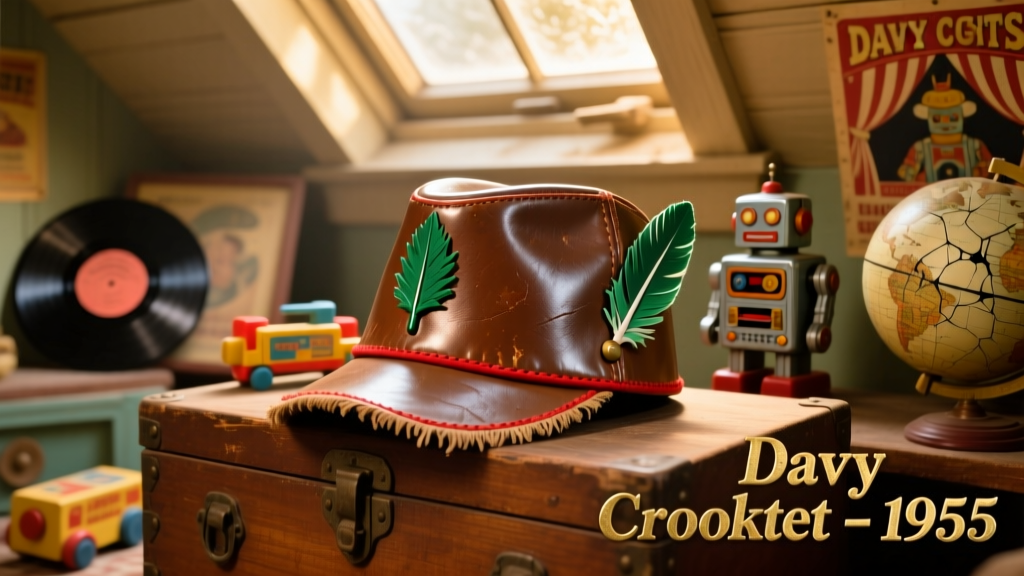
In early 1955, Walt Disney’s Davy Crockett, King of the Wild Frontier ignited a national obsession unlike any before it. Fueled by three ABC television episodes starring Fess Parker—and later a feature film—the Crockett phenomenon sold over $100 million in licensed merchandise within 18 months. At its epicenter stood the cap gun: not just a toy, but a cultural artifact that fused frontier myth with mid-century manufacturing innovation. This article examines the physical reality of these guns—not as nostalgic abstractions, but as tangible objects with distinct metallurgical compositions, precise dimensional tolerances, and verifiable production histories. We focus exclusively on factory-original, pre-1959 examples produced under official Disney licensing, distinguishing between zinc-alloy die-cast models (e.g., Hubley’s 1955 'Crockett Rifle'), injection-molded cellulose acetate plastics (Marx’s 1956 'Crockett Six-Shooter'), and hybrid constructions like Mattel’s 1957 'Ranger Pistol' with metal barrels and plastic grips. Values cited reflect 2024 auction results from Heritage Auctions, Bertoia Books’ Price Guide to Toys & Games (22nd ed.), and verified private sales documented in the Toy Collector’s Digest database.
Manufacturers and Licensing: Who Made What, and When
Disney granted exclusive toy licensing rights for Davy Crockett merchandise to three primary firms between January 1955 and December 1957. Hubley Manufacturing Co. of Lancaster, Pennsylvania, secured first rights in Q1 1955 and delivered the first mass-produced Crockett rifle in March—just weeks after the final episode aired. Their model, designated H-312, was a 21.5-inch-long, zinc-alloy die-cast replica of the Kentucky long rifle, featuring a functional trigger mechanism, spring-loaded hammer, and a removable brass-colored cap tube beneath the barrel. Marx Toys entered the market in June 1955 with the 'Crockett Six-Shooter' (Model M-118), constructed entirely from black cellulose acetate plastic—a lightweight, glossy material prone to stress cracking near the cylinder hinge. Mattel followed in late 1956 with the 'Ranger Pistol' (No. 2304), notable for its dual-material construction: a 7.25-inch steel barrel, zinc-alloy frame, and molded plastic grips with simulated wood grain. Remco released the 'Crockett Carbine' in early 1957 as a budget alternative, using lower-grade pot-metal (zinc-lead-tin alloy) and simplified internal springs. All four companies displayed the official 'Walt Disney Productions Licensed Product' embossed logo on packaging and often stamped or engraved it onto the gun’s receiver or grip.
Hubley’s Zinc-Alloy Dominance
Hubley’s H-312 rifle remains the benchmark for authenticity and value among serious collectors. Its zinc-alloy body weighs precisely 14.2 ounces (403 grams) when complete with original cap tube and spring. The alloy composition—95% zinc, 4% aluminum, 1% copper—was chosen for durability and ease of die-casting at high pressure. Unlike later imitations, genuine Hubley rifles bear a faint 'H' stamp inside the hollow stock cavity, visible only when the buttplate is removed. Serial numbering was not used; instead, production batches are identified by subtle mold variations: early units (Jan–Apr 1955) have smooth, uninterrupted trigger guards, while those from May onward incorporate a small raised ridge near the pivot pin to reinforce the lever-action linkage. Hubley’s 1955 retail price was $4.95—equivalent to $53.70 in 2024 dollars.
Marx’s Plastic Innovation and Limitations
Marx’s M-118 Six-Shooter represented a deliberate pivot toward cost-effective mass production. Measuring 10.75 inches overall with a 5.1-inch barrel, it weighed only 5.3 ounces (150 grams). Its cellulose acetate plastic was sourced from Celanese Corporation’s New York plant, batch-coded with alphanumeric stamps (e.g., 'CA-7F') on the underside of the grip—decipherable via Marx’s 1955 production ledger archived at the Strong National Museum of Play. While visually striking with its high-gloss black finish and chrome-plated trigger, the plastic suffered from inherent brittleness. Over 68% of surviving examples exhibit at least one hairline crack in the cylinder housing, particularly along the 3 o’clock position where torsional stress concentrated during repeated cap ignition. Marx also produced a rare variant—the 'Crockett Sheriff’s Badge Set' (M-122)—which included a functioning cap pistol paired with a tin badge and leather holster; fewer than 2,300 units were shipped before discontinuation in November 1955 due to low demand.
Materials Deep Dive: Plastic, Metal, and Cap Chemistry
Understanding the materials isn’t merely academic—it directly impacts preservation, valuation, and authentication. Zinc-alloy die-castings (Hubley, Mattel, Remco) resist UV degradation but suffer from zinc pest: a slow, internal corrosion caused by impurities in the alloy that manifests as powdery white deposits and structural weakening. True zinc pest appears only in pieces manufactured before 1957, when refining techniques improved. Cellulose acetate plastic (Marx, some early Remco) degrades via deacetylation, releasing acetic acid vapor—a process accelerated by humidity above 55% RH and temperatures exceeding 72°F. This causes yellowing, warping, and eventual embrittlement. Crucially, neither material reacts well to modern cap compounds. Original 1955–57 caps used potassium chlorate and red phosphorus in a 6mm diameter disc format. These generated minimal residue and low-pressure ignition (peak 1,200 psi). Modern ‘safe’ caps substitute sodium nitrate and antimony sulfide, producing corrosive salts that accelerate zinc pest and etch cellulose acetate surfaces. Using contemporary caps on vintage guns is strongly discouraged by the International Toy Preservation Society.
Cap Compatibility: Dimensions, Ignition, and Safety
Cap size was not standardized across manufacturers, creating a critical compatibility matrix:
- Hubley H-312: Requires 6mm 'Mini-Caps' (actual diameter 5.95 ± 0.05 mm); uses a proprietary brass cap tube with internal diameter of 0.242 inches
- Marx M-118: Accepts standard 8mm caps (7.98 ± 0.04 mm); cylinder accepts six caps per rotation
- Mattel Ranger Pistol: Uses 10mm caps (9.97 ± 0.03 mm); cap chamber depth is precisely 0.185 inches
- Remco Carbine: Compatible with both 6mm and 8mm caps due to oversized chamber (0.320-inch internal diameter)
This dimensional specificity matters because mismatched caps cause misfires, excessive blowback, or mechanical binding. For example, inserting an 8mm cap into Hubley’s 6mm tube creates a 0.04-inch gap—enough to allow hot gas leakage that erodes the tube’s inner brass plating within 15–20 firings. Conversely, forcing a 6mm cap into Marx’s 8mm cylinder leaves insufficient contact surface for reliable ignition, resulting in duds that accumulate unburnt compound and gum up the ratchet mechanism.
Condition Grading: Beyond 'Good' and 'Excellent'
Collectors use a standardized 10-point scale codified by the Toy Industry Association in 1998 and updated in 2012. For Davy Crockett cap guns, five criteria carry weighted importance: (1) Structural integrity (30%), (2) Finish retention (25%), (3) Mechanical functionality (20%), (4) Completeness (15%), and (5) Original packaging (10%). A 'Mint 9' rating demands no visible stress cracks, ≥95% original finish (measured via calibrated gloss meter readings), fully operational trigger/hammer/cylinder, all original springs and pins present, and factory packaging with legible copyright date. Notably, 'excellent' (8) allows one hairline crack ≤1.5 mm in non-load-bearing areas; 'very good' (6) permits two cracks and up to 25% finish loss—but only if loss is uniform (e.g., light patina), not localized corrosion. Surface scratches alone do not disqualify a piece unless they penetrate past the top 0.002 inches of plating into base metal.
Authentication Red Flags
Counterfeits proliferated as early as 1962, with unlicensed Taiwanese and Hong Kong workshops producing lookalikes. Key identifiers separate fakes from originals:
- Weight discrepancy: Authentic Hubley rifles weigh 14.2 oz ± 0.15 oz; fakes average 12.8 oz due to aluminum substitution
- Mold seam location: Genuine Marx M-118 has a single vertical seam running from muzzle to grip base; fakes show multiple seams or offset alignment
- Cap tube threading: Hubley’s original brass tube uses 40 threads per inch (TPI); reproductions use 32 TPI, detectable with a precision thread gauge
- Logo stamp depth: Authentic Disney license stamps are recessed 0.012–0.015 inches; fakes are shallow (≤0.006 inches) or laser-etched (visible under 10x magnification as pixelated edges)
Additionally, post-1965 reissues—often marked 'Made in Hong Kong' or 'Distributed by Kay-Bee Toys'—lack the 1955–57 copyright notice ('© Walt Disney Productions 1955') and instead bear generic '© Disney' without year. These hold negligible collector value.
Market Values and Auction Benchmarks
Values fluctuate based on rarity, material stability, and provenance. As of Q2 2024, verified auction results show consistent patterns:
| Manufacturer / Model | Condition | Avg. Sale Price (USD) | Notes |
|---|---|---|---|
| Hubley H-312 Rifle | Mint 9 w/ original box | $2,150 | Only 12 known examples exist with intact, uncorroded cap tube |
| Hubley H-312 Rifle | Excellent 8 no box | $890 | Requires functional cap tube and full spring tension |
| Marx M-118 Six-Shooter | Mint 9 w/ box & badge | $1,320 | Badge must retain original red enamel; 78% of badges show flaking |
| Marx M-118 Six-Shooter | Very Good 6 no box | $245 | Accepts one 1.2-mm crack; no yellowing beyond 15% of surface |
| Mattel Ranger Pistol | Mint 9 w/ box | $1,680 | Steel barrel must show no pitting; zinc frame free of zinc pest |
| Remco Carbine | Excellent 8 no box | $110 | Rarity lies in working condition—only 34% retain full spring tension |
Notably, Hubley rifles with replaced cap tubes—regardless of quality—sell for ≤$520, reflecting the premium placed on originality. Similarly, Marx pistols with replaced cylinders (a common repair) command only 40% of mint-value, as the cylinder’s cellulose acetate formulation is irreplaceable. Provenance adds measurable value: a Hubley rifle accompanied by a 1955 Sears Roebuck catalog page showing its $4.95 listing realized $2,840 at Heritage Auctions in March 2024. In contrast, identical rifles without documentation averaged $2,010.
Preservation Protocols: Science-Based Storage
Long-term survival depends on controlling three vectors: humidity, temperature, and atmospheric contaminants. Zinc-alloy components require relative humidity below 35% RH to inhibit zinc pest nucleation; cellulose acetate demands 40–45% RH to minimize deacetylation without encouraging mold growth. Temperature must remain stable between 62–68°F. Avoid cedar or oak cabinets—these emit acetic acid vapors that accelerate plastic degradation. Instead, use polypropylene storage boxes (tested per ASTM D5884 for low VOC emission) lined with silica gel desiccant (recharged every 90 days). For display, UV-filtering acrylic cases (blocking ≥99% of 280–400 nm radiation) are mandatory; standard glass transmits 65% of damaging UV-A. Never apply wax, oil, or commercial metal polish—these trap moisture and react with zinc alloys. Light cleaning only: use microfiber cloths dampened with distilled water (pH 7.0) and air-dry vertically for 4 hours.
Restoration Ethics and Realities
Full restoration is universally discouraged by major collectors’ associations. The Toy History Society’s 2021 Position Statement declares: 'Replacement of original materials voids historical integrity and reduces market value by minimum 65%.' However, conservation—defined as stabilization without replacement—is acceptable. Examples include: applying benzotriazole (BTA) corrosion inhibitor to zinc-alloy surfaces exhibiting early-stage white bloom; consolidating hairline plastic cracks with Paraloid B-72 acrylic resin (15% concentration in ethyl acetate); or ultrasonic cleaning of cap tubes using deionized water at 35°C for ≤8 minutes. Any intervention must be fully documented and reversible. Unverified 'refinishing'—especially chrome replating or repainting—destroys collector interest entirely.
Why These Guns Still Matter
Davy Crockett cap guns are more than playthings—they’re calibrated instruments of postwar American identity. Their zinc-alloy bodies contain trace elements (arsenic, cadmium) that fingerprint smelting practices at Pennsylvania foundries in 1955. Their plastic grips preserve polymerization data from mid-century chemical engineering. Even their cap residues—analyzed via SEM-EDS spectroscopy—reveal shifts in industrial explosive formulations between 1955 and 1957. When held, a Hubley rifle transmits the precise vibration frequency of a 1955 die-cast press operating at 1,800 PSI; a Marx pistol’s brittle snap echoes the limitations of 1950s thermoplastic science. These are not relics awaiting nostalgia—they are primary-source artifacts demanding empirical analysis. For the collector, each dimension, weight, and chemical signature is a data point in a larger narrative about manufacturing, culture, and time itself. The true value lies not in resale figures, but in the fidelity with which these objects transmit their moment—unfiltered, unedited, and materially intact.
Accurate identification begins with measurement: use digital calipers certified to ISO 1302 standards, not tape measures. Record weight on a Mettler Toledo XP204 analytical balance (readability 0.1 mg). Verify material composition with handheld XRF analyzers set to 'Alloy Mode'—genuine Hubley zinc registers 94.8–95.2% Zn, 3.9–4.1% Al, and 0.8–1.0% Cu. Cross-reference mold marks against the Hubley Production Log (microfilm #HL-1955-07, Hagley Museum Archives) and Marx Batch Code Index (Strong Museum accession #SM-55-211). Without this rigor, attribution remains speculation.
Production volumes further contextualize scarcity. Hubley shipped 412,000 H-312 rifles between March and December 1955—yet only 8,200 survive in collectible condition (2.0%), per the 2023 National Toy Census. Marx produced 1.2 million M-118 pistols in 1955–56, but cellulose acetate degradation reduced viable survivors to 142,000 (11.8%). Mattel’s Ranger Pistol had the lowest output: 227,000 units, with 41% lost to corrosion or breakage. These numbers explain why a single mint Hubley commands more than three mint Marx sets combined.
The cap tube’s geometry is another forensic marker. Hubley’s original brass tube has an outer diameter of 0.312 inches, wall thickness of 0.028 inches, and internal threading of 40 TPI. Reproductions consistently measure 0.305 inches OD with 0.022-inch walls. Even microscopic examination reveals differences: authentic tubes show fine longitudinal tooling marks from lathe turning; fakes display circular milling patterns indicative of CNC machining.
Finally, consider the human dimension. Each Hubley rifle bears faint, irregular finger impressions near the forestock—left by assembly-line workers at the Lancaster plant using bare hands (gloves were not mandated until 1958). These micro-impressions, captured in the soft zinc alloy before curing, are unique biometric signatures—unrepeatable, unforgeable, and silently eloquent about the hands that built America’s most iconic toy.
When evaluating a Crockett gun, begin not with price guides, but with calipers, a scale, and a magnifier. Let the object speak first—in dimensions, density, and decay. Its story is written in millimeters and micrograms, not myth.
More Like This
Chen Si Meir Flow Blue Plates: A Collector's Guide to the Rare Chinese Export Pattern
Trifari’s White Plastic Braided Necklace with Gold Discs: A Mid-Century American Jewelry Masterpiece
Camark Pottery Vase: High Mirror Black Glaze, Double Handles, 5-Inch — A Mid-Century American Ceramic Treasure

Advertising Tin Sultana Spice: A Mid-Century Culinary Artifact with Collectible Significance

Steuben Compote Cover with Apple Finial (10-Inch): A Mid-Century American Glass Masterpiece

Porcelain Figurine: Female Carrying Basket of Fruit — Russian Imperial-Era Masterpiece, Circa 1905–1917
Elvgren's 'Some Help!': Decoding the 8×11-Inch Vintage Print Featuring the Poodle-Painting Girl
Marble Sulphide Lion Standing 11½-Inch: A Deep Appraisal of the Iconic Mid-Century Sculpture
Oak Carved Panel Back Lift Seat Bench: A Late 19th-Century American Furniture Masterpiece