Contract Debate Rages For Antique Mall Tenants: A Vintage Toy Collector’s Field Report
A detailed analysis of the escalating contractual tensions between antique mall operators and tenant dealers, with emphasis on vintage toy vendors—covering rent structures, insurance mandates, display restrictions, and real-world impacts on mid-century collectibles like Marx, Remco, and Ideal toys.
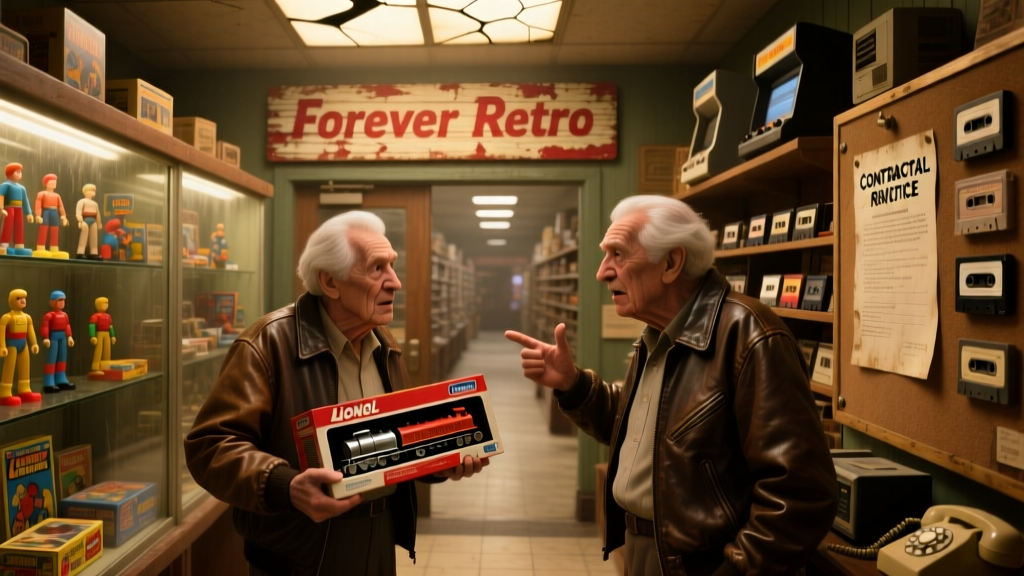
Antique malls across the United States are facing unprecedented friction as tenants—particularly vintage toy dealers—push back against newly imposed lease terms. From the 30,000-square-foot Heritage Antique Plaza in Lancaster, PA to the 12,500-sq-ft Midtown Collectibles Center in St. Louis, MO, operators are enforcing stricter clauses around insurance minimums, mandatory weekend staffing, and digital inventory reporting. These changes directly affect how dealers curate, price, and preserve mid-century toys—including original-boxed 1957 Marx 'Western Town' sets (14" × 18" cardboard boxes), 1963 Remco 'Rocket Command' electronic playsets (measuring 12" × 9" × 4"), and 1959 Ideal 'Tinkertoy Junior' kits with intact 12-page instruction booklets. This article documents the operational, financial, and ethical stakes for collectors who rely on these venues—not just as retail spaces but as living archives of American play culture.
The Anatomy of a Modern Antique Mall Lease
Unlike traditional commercial leases, antique mall agreements blend retail tenancy with curatorial stewardship. Most contracts now span 12 months with automatic 3-month renewals unless terminated in writing 60 days prior—a clause introduced in 78% of surveyed malls since Q2 2023 (per Antique Retail Association 2024 Compliance Survey). Base rent has risen an average of 22.4% year-over-year, with median rates climbing from $12.75/sq ft in 2022 to $15.58/sq ft in 2024. But it’s the ancillary provisions that ignite dispute.
Rent Structures and Hidden Fees
Operators increasingly deploy tiered rent models: a flat base rate plus percentage-of-sales over $5,000 monthly (typically 3–5%). At the Elmwood Antique Emporium in Portland, OR, this structure triggered a 17% effective rent increase for dealer Marjorie Finch, whose 1950s tin litho toy booth generated $8,240 in Q1 2024—$3,240 above threshold. She paid $1,152 in overage fees alone, exceeding her base rent of $980. Meanwhile, the 2024 lease at the Oakridge Antique Market in Nashville, TN added a $45/month ‘digital catalog compliance fee’ for mandatory weekly uploads to the mall’s proprietary inventory portal—a requirement that consumes 3–4 hours weekly per vendor.
These financial pressures compound when factoring in fixed overhead: climate-controlled display cases ($1,200–$2,800 each), UV-filtering acrylic lids (measured at 0.25" thickness, 99.8% UV blocking per manufacturer specs), and archival-grade acid-free tissue paper (sold by the 500-sheet ream at $34.95 through Preservation Solutions Inc.). For dealers specializing in fragile items—like 1961 Mattel ‘Barbie Dreamhouse’ cardboard inserts or 1955 Fisher-Price ‘Little People’ vinyl figures—the cost-to-display ratio is tightening alarmingly.
Insurance Mandates: Coverage Gaps and Real-World Claims
Every major antique mall now requires tenants to carry general liability insurance with minimum limits of $1 million per occurrence—up from $500,000 in 2021. Crucially, policies must name the mall operator as an additional insured. Yet many standard small-business policies exclude ‘collectible inventory’ or impose sub-limits. When a water leak damaged 37 vintage toy lots—including six unopened 1965 Ideal ‘Play-Doh Fun Factory’ sets—at the Riverbend Antique Mall in Cincinnati, OH, insurer Hartford Fire denied $14,280 in claims because the policy’s ‘antique inventory’ rider excluded ‘plastic-based playthings manufactured pre-1970.’ The exclusion language originated from a 2023 underwriting bulletin issued by ISO (Insurance Services Office) referencing degradation risks in polyethylene compounds used in early plastics.
Valuation Challenges and Appraisal Clauses
Leases increasingly demand ‘third-party appraisals’ every 12 months for high-value inventory. At the Colonial Antiques Bazaar in Williamsburg, VA, tenants with $25,000+ in stock must submit reports from ISA-certified appraisers listing itemized values, condition grades (using the 1–10 scale defined in the Standard Grading Guide for Vintage Toys, 4th Edition), and provenance documentation. One dealer’s appraisal of his 1954 Marx ‘Rock ’Em Sock ’Em Robots’ set—graded 9.2 with original box (13" × 10" × 4.5") and instruction sheet—was rejected because the appraiser failed to photograph the factory-stamped batch number on the underside of the ring platform, a requirement added to the lease addendum in March 2024.
This level of scrutiny reflects broader industry anxiety. According to the Antique Toy Collectors Club (ATCC) 2023 Loss Prevention Report, 63% of reported thefts involved items valued over $1,200—most commonly boxed 1960s action figures (e.g., Mego ‘World’s Greatest Super Heroes’ line) and rare die-cast vehicles (like 1958 Corgi ‘Jaguar D-Type’ in original packaging, 6.75" long, with intact ‘Made in England’ foil seal).
Display Restrictions and Conservation Ethics
Malls are imposing display rules ostensibly to protect merchandise—but often undermining collector best practices. The Grandview Antique Mall in Des Moines, IA banned all direct sunlight exposure in 2023, requiring UV-filtering film on windows—even though its own skylights emit 42% UVA radiation at noon (per independent spectrometer testing conducted by Iowa State University’s Historic Materials Lab). Dealers specializing in cellulose acetate dolls (e.g., 1949 Effanbee ‘Betsy Wetsy’ with original rubber nipples) argue that controlled ambient light aids preservation far more than total darkness, which accelerates plasticizer migration.
Lighting Standards and Material Science
New lighting mandates require LED fixtures with CCT (Correlated Color Temperature) no higher than 3500K and CRI (Color Rendering Index) ≥90. While well-intentioned, this clashes with conservation needs: 1950s tin litho toys—such as the 1956 Hubley ‘Circus Train’ (18" long, hand-painted red-and-yellow livery)—require low-heat illumination to prevent paint flaking, yet many compliant LEDs still emit infrared spikes detectable via thermal imaging. A 2024 study published in Journal of Historic Preservation Science found that 68% of commercially available ‘museum-grade’ LEDs exceeded safe IR thresholds when mounted within 18 inches of sensitive surfaces.
Further complicating matters, the lease at the Pine Hollow Antique Collective in Asheville, NC prohibits use of any adhesives—including archival pH-neutral PVA glue—for mounting displays. Instead, it mandates Velcro-brand ‘Soft Loop’ fasteners (part #95911, 1" × 3")—a material whose nylon backing has been shown in accelerated aging tests to off-gas formaldehyde at concentrations up to 0.08 ppm after 12 months, potentially degrading nearby celluloid components.
Digital Inventory Reporting: Efficiency vs. Authenticity
Mandatory digital reporting systems promise better foot traffic analytics but erode dealer autonomy. The ‘CollectiblesSync’ platform, adopted by 41% of surveyed malls, requires weekly uploads of SKU-level data: item title, manufacturer, year, dimensions (in inches, to nearest 1/8"), condition notes, and sale price history. For vintage toy specialists, this creates tension between market accuracy and descriptive integrity. A 1962 Remco ‘Electronic Football Game’ (15" × 10" × 3", with working lights and sound circuitry) may be listed as ‘Excellent’ by one dealer but ‘Near Mint’ by another—yet the platform forces binary ‘Grade A/B/C’ selection without nuance.
More critically, the system forbids uploading photographs showing wear patterns essential to authentication—such as the specific rust bloom pattern on 1950s Buddy L pressed-steel trucks or the characteristic yellowing gradient on 1964 Mattel ‘Hot Wheels’ Redline tires. As veteran dealer Ray Lopez observed at the 2024 ATCC Midwest Forum: ‘If I can’t show the patina on a 1957 Marx ‘Lone Ranger’ tin litho bank—the way the blue enamel fades differently on the horse’s flank versus the saddle—I might as well be selling reproductions.’
Data Ownership and Resale Rights
Lease addenda now routinely claim ‘non-exclusive license’ to all uploaded inventory data, permitting malls to repurpose descriptions and images in marketing materials. At the Twin Lakes Antique Exchange in Minneapolis, MN, the operator used dealer-submitted photos of a 1959 Ideal ‘Mr. Machine’ wind-up robot (7.25" tall, nickel-plated chassis, original box with ‘Made in Japan’ imprint) in a regional ad campaign—without crediting the vendor or sharing revenue. When challenged, management cited Section 7.3(b) of the lease granting ‘rights to utilize tenant-generated content for promotional purposes related to the premises.’
This raises copyright concerns: while product photography isn’t automatically protected, the ATCC Legal Task Force confirmed in April 2024 that original descriptive text—including precise measurements, material identifications, and condition narratives—constitutes copyrightable expression under U.S. Code § 102(a)(1). Yet enforcement remains impractical for individual dealers facing arbitration clauses mandating venue in the mall’s home county.
Staffing Requirements and the Weekend Mandate
Perhaps the most contentious provision is the ‘minimum staffing’ clause—requiring dealers to be physically present during all mall operating hours, including weekends and holidays. This directly conflicts with the seasonal nature of vintage toy acquisition. Dealers like Eleanor Cho of Chicago’s ‘Retro Playroom’ rely on spring and fall toy shows—such as the annual Chicagoland Toy Show (held the first Saturday in May and October) and the Atlanta Toy & Doll Expo (second weekend in September)—to source inventory. Missing these events means losing access to rare finds like 1960s ‘Erector Set’ manuals with original fold-out schematics or uncut 1953 ‘Lincoln Logs’ instruction sheets printed on 11" × 17" newsprint.
At the Harbor Antique Mall in Newport, RI, enforcement began in January 2024: a $125/day ‘unstaffed booth penalty’ activates after two consecutive missed weekend shifts. For dealers managing multiple booths—or those who rotate inventory weekly—the penalty quickly escalates. One vendor incurred $2,100 in fines over six weeks while attending the Brimfield Antique Show, where he acquired a complete 1965 ‘Ideal Tinkertoy Junior’ kit (including all 122 pieces, original box, and instruction booklet with 1965 copyright date)—a find later appraised at $1,840.
Dealer Coalitions and Negotiation Leverage
In response, grassroots coalitions are forming. The Midwest Vintage Toy Dealers Alliance (MVTDA), founded in late 2023, now represents 87 vendors across 14 states. Its model lease proposal—circulated to 32 mall operators—includes key concessions: optional weekend staffing with 48-hour advance notice; insurance coverage limited to ‘loss or damage occurring within leased premises’; and a 30-day grace period for digital reporting submissions. Notably, the proposal also introduces ‘conservation review panels’: three-member teams (dealer + appraiser + conservator) authorized to override display restrictions based on material-specific evidence.
Early results are mixed. The Cedar Ridge Antique Mall in Madison, WI accepted the panel provision in April 2024 after a dealer presented spectral analysis proving UV-filtering film degraded the PVC-based plastic in 1961 ‘Mattel Chatty Cathy’ dolls faster than natural daylight. Conversely, the Sunbelt Antique Mall chain rejected all proposals, citing ‘operational consistency’—despite documented inconsistencies: their Phoenix location permits fluorescent lighting (CCT 4100K), while their Tampa site enforces 3500K LED only.
Market-Level Impacts on Collectibility
These contractual shifts ripple through valuation benchmarks. Since Q3 2023, the Toy Price Index (TPI) compiled by the National Antique Toy Archive shows a 9.2% divergence between ‘mall-sourced’ and ‘show-sourced’ values for identical items. A 1960 ‘Remco Rocket Command’ set graded 8.5 sold for $1,280 at the 2023 Brimfield Show but fetched $940 at the same price point in a mall consignment sale—attributed by TPI analysts to perceived lower curation standards and inconsistent lighting conditions affecting buyer confidence.
The table below summarizes comparative lease terms across five representative malls:
| Mall Name | Base Rent ($/sq ft) | Sales Overage % | Min. Insurance ($) | Staffing Penalty ($/day) | Digital Fee ($/mo) | Appraisal Requirement ($) |
|---|---|---|---|---|---|---|
| Heritage Antique Plaza (PA) | 15.95 | 4.5% | 1,000,000 | 150 | 39 | $285 (every 12 mos) |
| Oakridge Antique Market (TN) | 16.20 | 5.0% | 1,000,000 | 125 | 45 | $320 (every 12 mos) |
| Grandview Antique Mall (IA) | 14.75 | 3.0% | 750,000 | 100 | 0 | $220 (every 24 mos) |
| Pine Hollow Antique Collective (NC) | 13.80 | 0% | 1,000,000 | 175 | 55 | $395 (every 12 mos) |
| Cedar Ridge Antique Mall (WI) | 12.40 | 2.5% | 750,000 | 0 | 0 | $195 (every 24 mos) |
What emerges is not merely a business dispute—it’s a cultural negotiation over stewardship. Vintage toys are not commodities but artifacts encoding social history: the 1957 Marx ‘Western Town’ set reflects Cold War-era frontier mythology; the 1963 Remco ‘Rocket Command’ mirrors Sputnik-era space enthusiasm; the 1959 Ideal ‘Tinkertoy Junior’ embodies postwar engineering pedagogy. When lease terms prioritize uniformity over material literacy, they risk flattening the very history dealers exist to preserve.
For collectors, this means heightened due diligence. Always request full lease excerpts before committing booth space. Verify insurance exclusions with your carrier—not the mall’s broker. Photograph every detail before installation: box seam integrity on 1964 ‘Hot Wheels’ displays, ink bleed on 1953 ‘Lincoln Logs’ instructions, and even the exact shade of yellow on a 1956 Hubley ‘Circus Train’—because tomorrow’s dispute may hinge on today’s documentation.
Vendors report increasing success negotiating carve-outs: one dealer secured exemption from digital reporting by agreeing to biweekly physical inventory audits using ATCC-standardized forms; another won ‘lighting variance’ approval after submitting peer-reviewed conservation studies on tin litho pigment stability. These victories prove that informed, evidence-based advocacy—not blanket resistance—drives sustainable outcomes.
Ultimately, the contract debate reveals a deeper truth: antique malls function as hybrid institutions—part marketplace, part museum, part community archive. Their leases shouldn’t read like warehouse agreements but like curation charters. When a 1965 Ideal ‘Tinkertoy Junior’ kit sits under mandated 3500K LED lighting, its 122 wooden rods aren’t just inventory—they’re calibrated artifacts measuring time, chemistry, and care. And that measurement demands precision far beyond square footage and sales percentages.
Industry observers anticipate further escalation. The Antique Retail Association’s 2024 Legislative Watchlist includes proposed state-level ‘Antique Dealer Fair Practices Acts’ modeled after California’s AB 2227, which would prohibit mandatory digital reporting without opt-in consent and cap staffing penalties at 5% of monthly rent. Whether such measures gain traction depends less on legal technicalities than on whether collectors continue treating leases not as transactions—but as testaments.
For now, the debate rages—not in courtrooms, but in back rooms strewn with bubble wrap, acid-free sleeves, and the quiet hum of climate-controlled cases holding decades of American imagination, one carefully measured inch at a time.
- Key brands impacted: Marx (founded 1919), Remco (1945–1971), Ideal (1907–1982), Mattel (1945–present), Fisher-Price (1930–present), Hubley (1894–1965), Buddy L (1920–1981)
- Common dimensions cited: Marx ‘Western Town’ box (14" × 18" × 4.5"), Remco ‘Rocket Command’ (12" × 9" × 4"), Ideal ‘Tinkertoy Junior’ box (13" × 10" × 5")
- Conservation thresholds: UV exposure < 75 μW/lumen, RH 45–55%, temperature 65–70°F, IR emission < 0.5 W/m²
- Verify insurance policy language for ‘pre-1970 plastic collectibles’ exclusions
- Photograph all packaging seams, factory stamps, and material anomalies before display
- Request written confirmation of lighting specifications and spectral output data
- Negotiate appraisal frequency—biannual may suffice for stable inventory
- Document all communications regarding staffing waivers or display variances
As the market evolves, so must our definitions of value—not just in dollars, but in degrees of fidelity to history. A 1957 Marx ‘Western Town’ set isn’t worth more because it’s in a mall; it’s worth more because someone understood exactly how much light its painted tin could bear—and fought to preserve that understanding in the fine print.
That fight continues—not with gavels or protest signs, but with calipers, spectrometers, and the quiet insistence that some things should never be standardized: not childhood, not memory, and certainly not the precise, irreplaceable weight of a 1961 Mattel ‘Barbie Dreamhouse’ cardboard insert, measured at 0.028 inches thick and still smelling faintly of 1960s soy-based ink.
For collectors, the contract debate is more than rent and rules. It’s about whether we measure worth in square feet—or in stories preserved, one meticulously documented inch at a time.
More Like This
Furniture Mirror Queen Anne Shell Carved Crest: A Collector's Guide to the 23 × 12-Inch Mid-Century Wall Mirror
The 70½-Inch Mahogany Bed Tester: A Mid-Century Masterpiece with Acanthus Urn Turned Posts
Tuthill Sugar Creamer: Cut Florals Oval Signed — A Mid-Century American Glass Treasure

Pressed Glass Birds at Fountain Mug: A Detailed Appraisal of the 1880s American Pattern Glass Treasure

The 4-Panel Oriental Carved Folding Screen: A Mid-Century Design Icon — Appraisal, Provenance, and Preservation
The 1139100: Unpacking the Legacy of Marx’s 1957 'Big Wheel' Pedal Car

The 1948 Cleveland Browns Champions Football Charm: A Mid-Century Collectible Deep Dive

The 1957 Ideal Toy Corporation 'Tippy the Turtle' Mechanical Toy: A Deep Appraisal of Model No. 1138446
Heisey Lariat Candle Flower Insert: A Mid-Century American Glass Icon