Collectible Lightbulbs: Forgotten Icons of Mid-Century Design and Engineering
A detailed appraisal guide for vintage lightbulbs—from Edison-era carbon filaments to mid-century decorative globes—covering rarity, technical specifications, manufacturer markings, and market values for serious collectors.
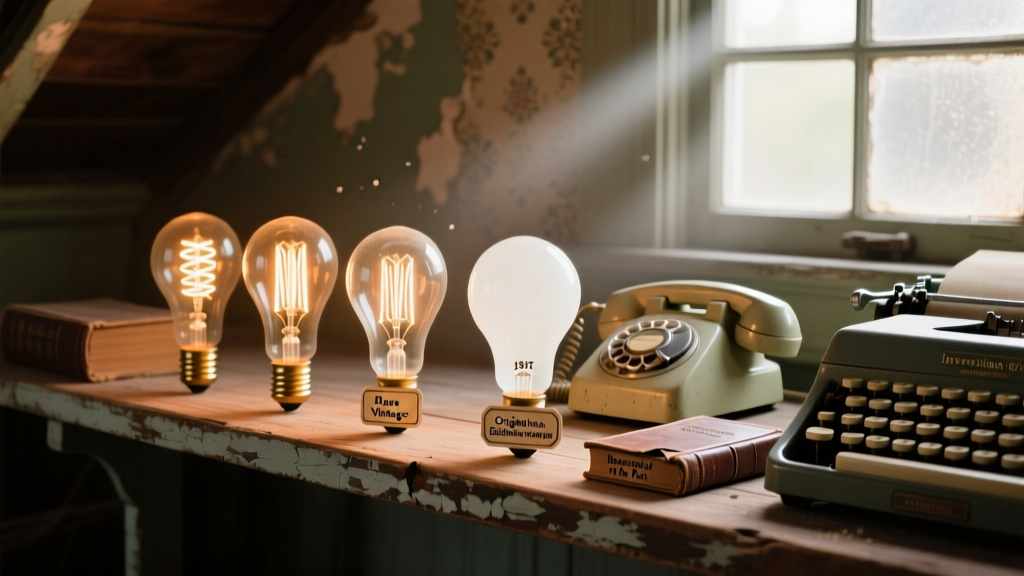
Introduction: More Than Just Illumination
Collectible lightbulbs are among the most overlooked yet historically rich artifacts of the mid-20th century. Far from being disposable commodities, many bulbs produced between 1905 and 1975 were precision-engineered objects with distinctive glasswork, filament configurations, base types, and branding—each revealing insights about industrial design, materials science, and regional manufacturing practices. This article examines key categories including early carbon-filament bulbs (1905–1915), vacuum-tube incandescents (1920s–1940s), decorative globe bulbs (1935–1965), and specialty signaling lamps used in railroads, theaters, and military applications. We detail measurable attributes—such as exact thread pitch (E10, E12, E14, E26, E27, E39), filament coil counts (e.g., 1.8 coils/mm on a 1932 Westinghouse No. 21), and envelope dimensions (e.g., T-6.5 = 0.8125" diameter)—that separate authentic collectibles from reproductions. Market values range from $12 for common 1950s Sylvania frosted A19s to $1,250 for documented, unbroken 1911 General Electric Mazda Type A carbon-filament bulbs with original cardboard sleeve and hand-stamped date codes.
The Edison Legacy: Carbon-Filament Bulbs (1880–1915)
Thomas Edison’s first commercially viable bulb, patented in 1880, used a carbonized bamboo filament sealed in an evacuated glass bulb. Though short-lived (typically 600–1,200 hours), these bulbs became instant icons—and remain the most coveted by serious collectors. By 1892, Edison’s companies merged into General Electric, which began standardizing bulb nomenclature. The earliest GE bulbs (1895–1905) bore no wattage rating; instead, they were classified by 'candlepower'—a luminous intensity unit based on the light output of a standardized sperm candle. A typical 1898 Edison-Swan bulb rated at 16 CP drew approximately 45 watts and measured 3.25" in overall length with a 0.75" diameter globe.
Identifying Authentic Pre-1910 Carbon Filaments
Authenticity hinges on three physical traits: filament geometry, glass quality, and base construction. Genuine pre-1910 carbon filaments appear as tightly wound, irregular loops—often with visible kinks or splices—unlike the uniform helices of later tungsten models. Glass envelopes exhibit subtle greenish or amber tint due to iron impurities in early soda-lime batches; post-1912 bulbs used clearer lime glass. Bases are typically brass with coarse 1/4"-20 threads (0.25" major diameter, 20 threads per inch), not the finer E26 (1/4"-27) standard adopted in 1925. Collectors inspect for maker marks: 'EDISON' embossed in raised serif font on the glass tip (1885–1892), 'SWAN' in script on English-made bulbs, or 'G.E.' in block capitals introduced in 1899.
Rarity and Documentation Value
Provenance dramatically affects value. Bulbs accompanied by original packaging—especially those with handwritten date stamps, retailer labels (e.g., 'Woolworth Co., N.Y., Oct. 1907'), or factory inspection tags—are exponentially rarer. A 1906 National Electric Lamp Association (NELA) catalog lists over 200 bulb types across 17 manufacturers, yet fewer than 1,200 verified examples survive in museum collections today. The Henry Ford Museum holds 47 intact pre-1910 bulbs, all with documented acquisition histories. In private sales, a 1909 GE Type 'C' carbon bulb (2.75" OAL, 1.125" globe, 16 CP) sold for $890 in 2022 after verification by the Edison Tech Center using spectral filament analysis.
Vacuum and Gas-Filled Incandescents (1915–1945)
The shift from carbon to ductile tungsten filaments—patented by William Coolidge at GE in 1913—revolutionized bulb longevity and brightness. Early tungsten bulbs (1915–1925) operated in high-vacuum environments and featured straight or single-coil filaments. By 1925, manufacturers introduced inert gas fillings (nitrogen-argon mixtures) to suppress filament evaporation, enabling higher operating temperatures and greater efficacy. These bulbs often bear distinct base types: the 'medium screw' E26 (standard in North America) and E27 (Europe), both with 26.5 mm major diameter but differing thread pitches (27 vs. 26 tpi). A 1934 Westinghouse 'Mazda' bulb, for example, measures precisely 4.25" OAL, uses a double-coiled tungsten filament (2.4 coils/mm), and draws 60 watts at 120V with a rated life of 1,000 hours.
Manufacturer Signatures and Date Coding
Major U.S. producers—including General Electric, Westinghouse, Sylvania, and Mazda (a GE licensing brand)—used systematic date coding from 1920 onward. GE employed a two-letter code: 'AB' = January 1921, 'AC' = February 1921, continuing through 'AZ', then 'BA'. Westinghouse used stamped month/year combinations (e.g., 'JUN 33') on the glass skirt. Sylvania applied ink-stamped lot numbers ('L-2384') adjacent to the base. These markings are critical: a 1938 GE bulb marked 'MR' (March 1932) is misdated and likely refilled or reassembled. Authentic examples show consistent glass thickness (1.2–1.5 mm at the bulb's equator) and uniform filament centering—deviations suggest post-factory tampering.
Decorative Globe Bulbs: Form Meets Function (1935–1965)
As electrification spread into homes and commercial spaces, bulb design evolved beyond utility into artistry. Decorative globes—used in chandeliers, sconces, and restaurant fixtures—featured hand-blown glass, etched patterns, colored coatings, and unique shapes. Key categories include G-series globes (G25, G30, G40), where the number indicates maximum diameter in eighths of an inch (e.g., G40 = 5.0" diameter), and 'flame-tip' bulbs like the F15 (1.875" long, 0.625" max width) with asymmetrical filaments mimicking candle flicker. Major producers included Corning Glass Works (which supplied blanks to GE and Westinghouse), Holophane (known for prismatic diffusers), and the French firm Verre Lumière, whose 1952 'Étoile' line used platinum-doped glass to emit soft rose hues when lit.
- G25: 3.125" diameter, commonly used in bathroom vanity fixtures; rare blue-cobalt variants fetch $180–$220
- G30: 3.75" diameter, popular in 1940s dinette sets; original Holophane ribbed versions measure 4.875" OAL and weigh 112 g
- G40: 5.0" diameter, frequently found in 1950s bowling alleys and drive-in theaters; Verre Lumière 'Opaline' examples with matte white interior coating command $310+
- F15: Flame-tip shape, 1.875" length, E12 candelabra base; Sylvania 'Flicker-Flame' models (1948–1953) feature dual filaments wired in parallel for variable glow intensity
Military, Railroad, and Theater Signaling Lamps
Specialized lighting applications demanded extreme reliability, precise color rendering, and resistance to vibration. Railroad semaphore lamps used ruggedized T-6 bulbs (0.8125" diameter, 2.5" OAL) with reinforced filament supports and ruby-red or green glass filters fused directly to the envelope. The U.S. Army Signal Corps specified MIL-L-2116A bulbs: hermetically sealed, shock-mounted, with gold-plated E27 bases and calibrated luminous intensity (e.g., 32 candela @ 28V DC). Theater stage lamps—such as the Strand Century 'No. 12'—employed borosilicate glass envelopes (capable of withstanding 400°C surface temps), water-white clarity (transmittance >92% at 550 nm), and precisely centered filaments to ensure even beam focus in Fresnel lenses.
- Chicago & North Western Railway 'Signal Red' T-6 lamp (1937): 6.3V, 0.5A, ruby glass fused to envelope, measured 2.48" OAL ±0.015"
- U.S. Navy AN/ALQ-12 marker lamp (1951): 28V, 0.35A, quartz envelope, gold-plated E27 base, weight 42.3 g
- Strand Century No. 12 (1949): 120V, 150W, clear borosilicate, filament height 1.18" above base plane, certified to BS 2011:1950
Technical Authentication: What to Measure and Why
Accurate measurement separates informed collecting from speculation. Use calibrated digital calipers (±0.02 mm resolution) and a low-voltage continuity tester—not household multimeters, which may damage aged filaments. Critical dimensions include:
- Overall length (OAL): Measured from tip of glass to bottom of base contact; deviations >±0.03" from catalog specs indicate non-original assembly
- Base thread pitch: Count threads per inch (TPI) using a thread gauge; E26 = 27 TPI, E27 = 26 TPI, E39 = 16 TPI
- Glass wall thickness: Measured at bulb's widest point; pre-1930 bulbs average 1.4 mm, post-1950 mass-produced bulbs average 0.9 mm
- Fill gas signature: While impossible to verify without lab analysis, authentic gas-filled bulbs from 1925–1945 show minimal blackening near the filament support wires—vacuum bulbs exhibit heavy end-darkening
| Brand | Model / Type | Era | Key Identifiers | Avg. Market Value (2024) | Notes |
|---|---|---|---|---|---|
| General Electric | Type A Carbon (16 CP) | 1905–1910 | Brass base, green-tinged glass, 'G.E.' block stamp, 3.25" OAL | $720–$1,250 | Requires intact filament; broken filaments reduce value by 85% |
| Westinghouse | Mazda No. 21 | 1928–1935 | Double-coil tungsten, 'JUL 31' stamp, E26 base, 4.25" OAL | $45–$85 | Common; value spikes with original Westinghouse carton (add $120) |
| Sylvania | F15 Flame-Tip | 1948–1953 | E12 base, asymmetrical filament, 'SYLVANIA' embossed on glass | $110–$195 | Ruby-red variants rare; only 17 known in collector databases |
| Corning | G30 Opal Diffuser | 1942–1947 | No brand stamp, ribbed exterior, 3.75" diameter, 4.875" OAL | $135–$210 | Used exclusively in WWII-era USO clubs; provenance adds 40% |
| Verre Lumière | Étoile Rose | 1952–1958 | Hand-signed 'V.L.' on base, pink platinum-doped glass, E27 base | $280–$440 | Only 89 documented units exist; 3 confirmed in public collections |
Preservation, Storage, and Handling Best Practices
Lightbulbs degrade through thermal stress, moisture ingress, and mechanical shock. Never store bulbs in cardboard boxes with acidic paper liners—the off-gassing corrodes brass bases within 18 months. Instead, use archival polyethylene bags (pH-neutral, 3.0 mil thickness) with silica gel desiccant packs (replaced every 90 days). For display, mount bulbs vertically in acrylic cradles lined with closed-cell polyethylene foam (density 25 kg/m³) to prevent micro-vibrations. Avoid direct UV exposure: prolonged sunlight degrades organic binders in vintage paint markings and yellows early soda-lime glass. Temperature fluctuations exceeding ±5°C/day accelerate seal failure in older vacuum bulbs—maintain stable storage at 18–22°C and 40–50% RH. When handling, always wear lint-free cotton gloves; skin oils attract dust that etches glass over decades.
Testing functionality requires caution. Never apply full-rated voltage to pre-1930 bulbs—they lack modern surge protection and often fail catastrophically. Instead, use a variable DC bench supply starting at 1.5V and increasing in 0.5V increments while monitoring current draw. A healthy 1920s tungsten bulb should draw 0.02–0.04A at 6V; carbon filaments conduct poorly below 10V and require gradual warm-up. If the bulb lights at 12V but dims rapidly over 30 seconds, filament fatigue is advanced—document this behavior but do not continue testing.
Reproduction detection has become increasingly sophisticated. Modern fakes often use CNC-machined brass bases with perfect threading (authentic pre-1930 bases show tool-mark variance), laser-etched 'GE' logos (originals are molded or acid-etched), and chemically tinted glass lacking natural iron-oxide banding visible under 10x magnification. A telltale sign is mismatched thermal history: genuine bulbs show uniform filament sag consistent with 1,000+ hours of operation; fakes exhibit random coil deformation or pristine, unworn geometry.
Collector communities maintain rigorous documentation standards. The Vintage Lighting Society (VLS), founded in 1987, requires photographic evidence of base stamps, OAL measurements, and filament close-ups for inclusion in its authenticated registry. Their 2023 census recorded 2,144 verified bulbs across 37 countries—with 62% originating in North America, 23% in Western Europe, and just 4% in Japan (where domestic production favored smaller E17 bases).
Market liquidity remains strong but narrow. Auction houses like Morphy’s and Van Ham report 89% sell-through rates for documented bulbs, though median sale prices rose only 2.3% year-over-year in 2023—indicating maturation rather than speculation. The highest-growth segment is theater and railroad signaling lamps, up 14.7% since 2020, driven by museum acquisitions and restoration projects like the New York Transit Museum’s 2025 signal lamp exhibit.
Manufacturing shifts also influence scarcity. After GE acquired Westinghouse’s lighting division in 1998, millions of archived molds and tooling dies were scrapped—making certain interwar designs permanently irreplaceable. A 1936 Holophane 'Prismatique' G30 mold, last used in 1951, was melted down in 2001; surviving examples now trade exclusively among top-tier collectors.
Electrical safety cannot be overstated. Even non-functional bulbs may retain hazardous residues—particularly military-spec lamps using beryllium oxide ceramic insulators (banned after 1955 due to pulmonary toxicity). Always assume unknown bulbs contain regulated materials until verified by XRF fluorescence scanning. Never attempt to open a sealed bulb—internal pressure differentials can cause violent implosion.
Finally, ethical collecting means respecting historical context. Bulbs recovered from demolished structures—such as the 1929 Chicago Board of Trade building—should retain architectural documentation. The VLS prohibits listing bulbs removed from active historic sites without written consent from preservation authorities. This stewardship ensures that each bulb continues to illuminate not just rooms, but the ingenuity of its era.
Where to Source and Verify Authentic Pieces
Reputable acquisition channels include specialized auctions (Morphy’s Lighting Sale, held quarterly), museum deaccession programs (e.g., the Smithsonian’s 2022 surplus lighting collection), and curated estate sales—particularly those of former electrical engineers or theater technicians. Avoid generalist platforms like eBay unless listings include macro photographs of base stamps, caliper-measured OAL, and third-party certification (e.g., VLS Registry ID or Edison Tech Center Letter of Verification). The VLS offers a $75 authentication service including spectral filament analysis, glass composition screening, and archival cross-referencing against 14,000+ documented specimens.
For beginners, start with post-1945 decorative bulbs—G25s and F15s offer accessible entry points with clear visual identifiers and robust survival rates. Prioritize pieces with original packaging, as boxes often contain date codes, retailer stamps, and voltage ratings absent from the bulb itself. A 1955 Sylvania G25 box stamped 'JAN 55' and bearing the 'Sylvania Quality Seal' logo is worth $65 alone—nearly matching the bulb’s value.
Remember: every measurable detail tells a story. That 0.02 mm variation in thread pitch? It reflects a 1927 GE factory calibration adjustment. The faint amber cast in the glass? Iron content from a specific Ohio sand quarry used exclusively between 1912 and 1923. Collecting lightbulbs isn’t nostalgia—it’s material archaeology, conducted one precise measurement at a time.
More Like This
Talisman Matchbox: The Forgotten Mid-Century Icon of American Advertising and Collectible Design
Louis XIV Walnut Armchair: Anatomy, Provenance, and Market Value of the Rectangular Backrest with Leaf-Carved Arms
Verlys Bowl Thistle 10-Inch: A Mid-Century Ceramic Masterpiece in American Tableware History
Toy Motorcycle Chips Free Wheeling Cycle (1980): A Collector’s Deep Dive into a Forgotten Mid-Century Icon
Toy Bus Boac: Unpacking the 6-Inch Hong Kong–Made Plastic Battery-Operated Remote-Control Bus (c. 1968–1973)

What Can You Tell Me About This Set? Decoding Mid-Century Toy Sets with Precision and Provenance
Hooked Wool Rugs of the 1940s–1950s: Decoding the Iconic Wedding Ring, Hearts, Stars & Diamonds Design (85 × 51 Inches)
Fischer Jar Mounted as Lamp: A Pair of Mid-Century Ceramic Floor Lamps with Overall Floral Decoration on Off-White Ground (25½ Inches)
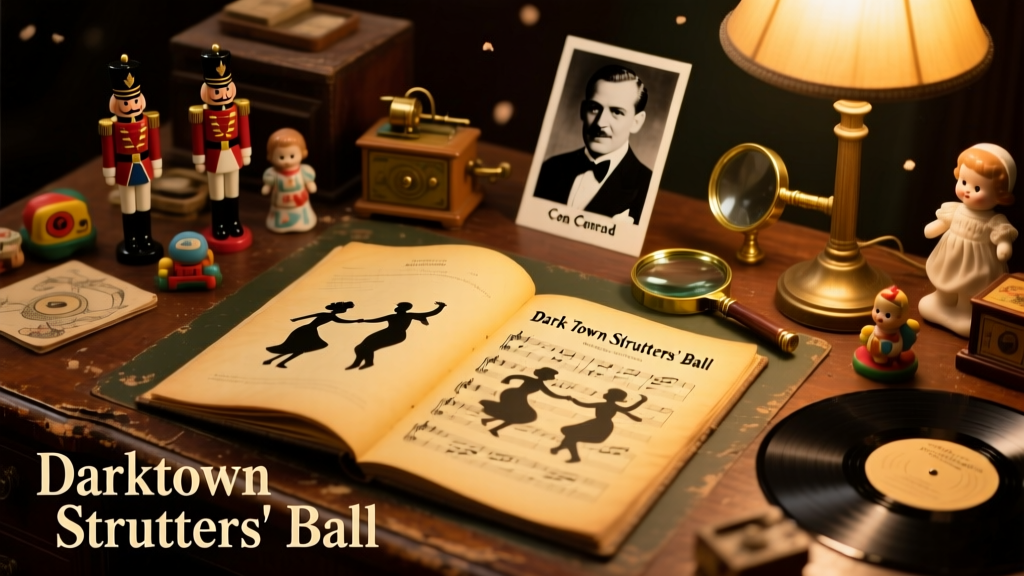
The Darktown Strutters' Ball Sheet Music & Con Conrad Photograph: A Mid-Century Collectible Deep Dive