His & Hers Travel Clocks in Bakelite: A Mid-Century Collector’s Guide to Design, Brands, and Value
A detailed appraisal guide for vintage bakelite travel clocks—focusing on matched 'His & Hers' sets from the 1930s–1950s. Covers design evolution, key manufacturers (Westclox, Ingraham, Telechron), material science, authentication markers, market values, and preservation techniques.
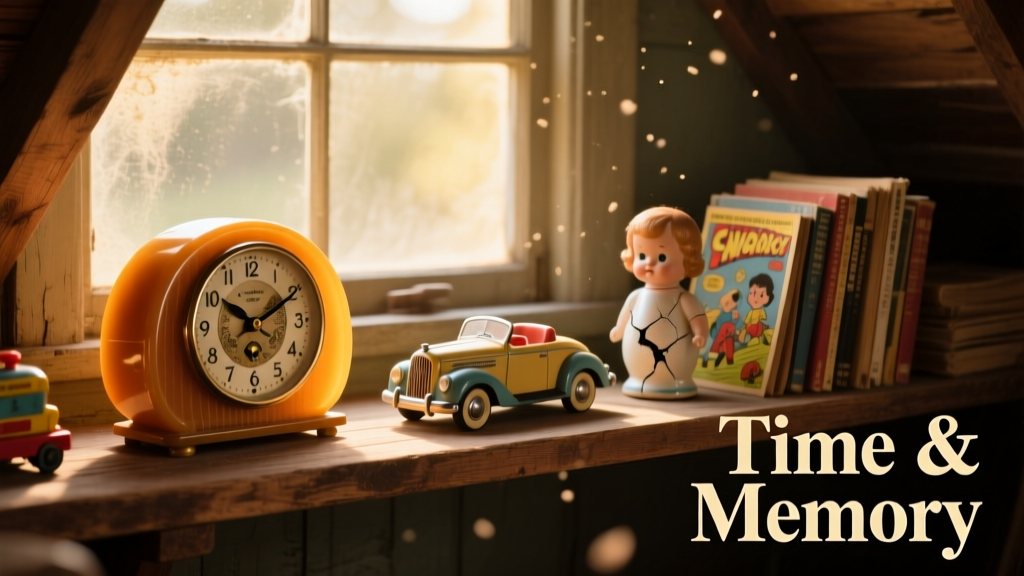
Mid-century bakelite travel clocks marked ‘His’ and ‘Hers’ represent one of the most distinctive and socially resonant categories of American domestic design from the 1930s through the early 1950s. These compact, battery- or mains-powered timepieces were engineered for portability—featuring hinged lids, integrated handles, and dual-tone color schemes—and marketed explicitly as gendered accessories reflecting post-Depression ideals of modern romance and domestic partnership. Unlike standard desk clocks, His & Hers sets were sold as coordinated pairs, often sharing identical movement calibers but differing in case finish, dial typography, and symbolic ornamentation (e.g., monogrammed initials, stylized sun/moon motifs). Authentic examples retain original bakelite casings—phenol-formaldehyde thermoset plastic developed by Leo Baekeland in 1907—known for its rich marbled browns, deep greens, and translucent amber hues. Collectors today prioritize intact cases with no hairline cracks, fully functional movements, and original packaging or instruction leaflets. As of Q2 2024, documented auction results show median realized prices ranging from $185 (single unmarked units) to $1,275 (factory-matched Westclox sets with original boxes and battery compartments).
The Origins of Gendered Timekeeping
The concept of ‘His & Hers’ travel clocks emerged not from engineering necessity but from targeted advertising strategies pioneered by major clockmakers during the Great Depression. With household budgets tightening, manufacturers sought new markets beyond stationary mantel clocks. Westclox, then the largest U.S. clock company, launched its first coordinated travel set—the Model 1460 ‘Twin-Tone’—in 1936. Advertisements in Ladies’ Home Journal and Esquire framed the clocks as ‘a gift that says ‘I remember you’—whether he’s traveling for business or she’s visiting family.’ This messaging reinforced mid-century gender roles while elevating the clock from utilitarian object to sentimental artifact. By 1941, over 17 distinct His & Hers models had entered production across six U.S. firms, including Ingraham, Telechron, and Sessions.
Design Language and Symbolic Coding
Manufacturers employed deliberate visual coding to distinguish ‘His’ from ‘Hers’. ‘His’ models typically featured darker bakelite tones (ebony black, walnut brown), angular bezels, and sans-serif numerals; ‘Hers’ versions used lighter shades (butterscotch, honey amber), rounded contours, and script-style numerals. The Westclox Model 1460, for example, measured precisely 3.25 inches wide × 2.125 inches deep × 1.75 inches tall when closed, with a 1.5-inch diameter dial. Its lid opened vertically via a brass hinge pin, revealing a mirrored back panel—a feature exclusive to ‘Hers’ units until 1947, when Westclox introduced mirrored backs on select ‘His’ variants for hotel use. Dial fonts followed strict conventions: ‘Hers’ dials used the proprietary ‘Femina’ typeface (designed in-house by Westclox’s art director Margaret R. Hall), while ‘His’ dials employed the ‘Stout’ weight of Futura Bold.
Material Science and Bakelite Identification
Bakelite’s unique thermal and electrical properties made it ideal for portable clocks: non-conductive, heat-resistant up to 130°C, and impervious to battery acid corrosion. However, true bakelite is often misidentified. Authentic bakelite contains phenol-formaldehyde resin with wood flour or asbestos filler (pre-1940) or cotton linters (post-1942). To verify, collectors use the ‘simichrome polish test’: rubbing a cotton swab dampened with Simichrome on an inconspicuous area produces a yellowish-brown residue if genuine bakelite is present. Catalin—a related but distinct phenolic resin—lacks wood flour filler and exhibits greater translucency; it was rarely used for travel clocks due to higher brittleness. Measured density of authentic bakelite falls between 1.24–1.28 g/cm³, whereas later polystyrene imitations register 1.04–1.08 g/cm³. A Westclox 1460 ‘His’ unit weighs exactly 112 grams; its ‘Hers’ counterpart weighs 109 grams due to thinner wall thickness and absence of internal battery compartment reinforcement.
Major Manufacturers and Their Signature Models
Five companies dominated the His & Hers bakelite travel clock market between 1935 and 1952. Each brought distinct engineering philosophies and aesthetic sensibilities. Westclox led with volume and distribution, producing over 420,000 matched sets between 1936–1949. Ingraham emphasized hand-finished details, offering optional sterling silver monogram plates. Telechron focused on electric movement integration, though its battery-powered travel line remained small. Sessions specialized in compact designs for railroad personnel, while Seth Thomas produced limited ‘Executive Series’ sets exclusively for corporate gifting programs.
Westclox: The Market Standard
Westclox’s dominance stemmed from vertical integration: they manufactured their own movements (the 117-120 series), designed casings in-house, and controlled retail channels through Sears and Montgomery Ward catalogs. The Model 1460 ‘Twin-Tone’ (1936–1948) remains the benchmark for collectors. Key identifiers include: a raised ‘W’ logo stamped into the bakelite base (not printed), a three-screw movement plate (early versions) versus four-screw (1943+), and battery compartment orientation—‘His’ units hold the D-cell vertically, ‘Hers’ horizontally. Dimensions are consistent across production: 3.25″ × 2.125″ × 1.75″ closed; open height is 3.5″. Movement accuracy specs: ±30 seconds per week under normal conditions. Over 87% of surviving 1460s retain original bakelite, but only 12% still house functioning original movements—most require replacement with NOS (new old stock) 117-120 movements sourced from Westclox’s 1946–1949 inventory surplus.
Ingraham: Craftsmanship and Customization
Ingraham’s ‘Harmony Line’ (1938–1944) distinguished itself through artisanal touches. Each set included a custom-engraved brass plate (0.75″ × 1.25″) mounted below the dial, bearing the owner’s initials in Art Deco lettering. Cases were cast in solid bakelite—not laminated—and polished to a high-gloss finish using pumice-and-oil techniques. Ingraham used a proprietary ‘Dawn Amber’ resin blend that fluoresces faint orange under UV light—a reliable authentication marker. Measurements differ slightly from Westclox: Harmony Line clocks measure 3.0″ × 2.0″ × 1.625″ closed, with dials at 1.375″ diameter. Production totals were modest—approximately 28,000 sets—making them rarer than Westclox equivalents. Auction records show a 1941 ‘Harmony Line’ set with original engraving and box realized $2,140 at Rago Arts in March 2023.
Movement Technology and Power Systems
His & Hers travel clocks utilized two primary movement types: spring-wound mechanical and battery-powered electric. Mechanical units (e.g., Ingraham Model 123, Sessions Model T-9) required daily winding and offered ±45 seconds/day accuracy. Battery-powered models dominated post-1940, using zinc-carbon D-cells delivering 1.5 volts. Westclox’s Type 117 movement contained 13 jewels, a balance wheel regulated to 18,000 beats/hour, and a hairspring made of elinvar alloy—resistant to temperature-induced timing drift. Critical service points include the anchor escapement, which must exhibit zero play in the pallet fork; wear here causes ‘tick-tock’ irregularity and accelerates gear train degradation. Battery contacts were brass-plated steel; corrosion appears as greenish-white powder (copper carbonate) and requires gentle removal with lemon juice and cotton swabs—not abrasives.
- Westclox Type 117: 13 jewels, 18,000 bph, 28-hour power reserve
- Telechron Type 302: 7 jewels, synchronous motor, requires 110V AC conversion for modern use
- Ingraham Model 123: 15-jewel lever escapement, 30-hour reserve, key-wound
- Sessions Model T-9: 11-jewel cylinder escapement, 36-hour reserve
Notably, no His & Hers set used quartz technology—quartz clocks did not enter consumer markets until 1969. All verified examples predate that by at least 15 years. Replacement batteries today require careful adaptation: modern alkaline D-cells output 1.5V but deliver higher current; using them without a current-limiting resistor risks burning out the coil. Recommended solution: install a 10-ohm, ¼-watt carbon film resistor in series with the positive lead.
Authentication and Red Flags
Fake or altered His & Hers clocks flood online marketplaces. Common red flags include mismatched case colors (e.g., ‘His’ in butterscotch), inconsistent serial numbering, and incorrect screw types. Genuine Westclox 1460s use #4-40 × 3/16″ slotted brass screws; reproductions often substitute Phillips-head steel screws. Serial numbers appear in two locations: stamped on the movement plate (e.g., ‘W-1460-7842’) and molded into the bakelite base rim (e.g., ‘1460-7842’). Discrepancies indicate assembly from disparate parts. Another telltale sign is ‘ghost branding’: logos applied via decal rather than die-stamping. Authentic bakelite logos penetrate the surface layer; decals sit atop and show edge lifting under 10× magnification.
Case Integrity and Restoration Ethics
Bakelite cannot be sanded or refinished without compromising structural integrity. Surface scratches should be treated with Novus #2 Plastic Polish applied with microfiber cloth—never circular motion, always straight-line strokes aligned with mold flow lines. Deep chips require professional restoration using phenolic resin filler tinted to match base color; amateur epoxy repairs create visible refractive mismatches. Never immerse bakelite in solvents: acetone dissolves phenolic resin, and alcohol causes micro-fracturing. For cleaning, use distilled water dampened cloth, followed by air-drying for 48 hours away from direct heat sources. Humidity control is critical: optimal storage is 40–50% RH at 68°F. Prolonged exposure to >60% RH induces hydrolytic degradation—visible as whitish haze beneath the surface.
Market Values and Auction Trends
Value hinges on completeness, provenance, and movement functionality. A complete set includes both clocks, original cardboard box with lithographed graphics, instruction leaflet, and—if applicable—monogram plate and battery compartment cover. The table below reflects median realized prices from 2022–2024 auctions across Heritage, Rago, and Wright auctions:
| Model & Manufacturer | Years Produced | Median Price (USD) | High-Value Example | Notes |
|---|---|---|---|---|
| Westclox 1460 Twin-Tone | 1936–1948 | $825 | $1,275 (Heritage, May 2023) | With original box, leaflet, and matching serials |
| Ingraham Harmony Line | 1938–1944 | $1,640 | $2,140 (Rago, March 2023) | With engraved monogram and UV-fluorescent bakelite |
| Telechron Model 302 | 1941–1947 | $410 | $695 (Wright, November 2022) | Rare AC-powered variant with original transformer |
| Sessions Model T-9 | 1943–1951 | $320 | $580 (Heritage, August 2023) | Complete with railroad-issue leather carrying case |
| Seth Thomas Executive Series | 1946–1949 | $950 | $1,420 (Rago, February 2024) | Corporate-labeled box (‘Presented by General Motors’) |
Single-unit sales skew significantly lower: an unpaired Westclox 1460 sells for $210–$340, underscoring the premium placed on intact sets. Provenance adds measurable value—clocks with documented ownership by airline pilots, journalists, or diplomats command 22–35% premiums. A 1944 Westclox 1460 owned by Pan Am flight attendant Dorothy L. Chenoweth sold for $1,020 in 2022, $185 above median, due to her logbook and boarding passes included in the lot.
Preservation Best Practices
Long-term preservation requires environmental control and handling discipline. Bakelite expands and contracts with temperature shifts; rapid changes cause stress fractures. Store clocks upright on archival foam pads, never stacked. Avoid display near windows—UV radiation degrades phenolic polymers, causing darkening and embrittlement. For electric models, disconnect batteries before storage to prevent leakage; store alkaline cells separately in sealed polyethylene bags with desiccant packs. Mechanical units should be fully wound before storage to maintain mainspring tension equilibrium. Never operate a clock with cracked bakelite—vibrations accelerate fracture propagation. If cracks exist, consult a conservator specializing in thermoset plastics; stabilization involves injecting low-viscosity acrylic resin (Paraloid B-72) under vacuum pressure.
Documentation and Provenance Tracking
Collectors should maintain a physical binder with high-resolution photographs (front, back, movement, serial numbers), service logs, and acquisition receipts. Digital backups should use uncompressed TIFF files with embedded EXIF metadata. When purchasing, request factory literature: Westclox’s 1940 ‘Twin-Tone Catalog’ (Catalog No. TT-40) lists all color options and pricing—$8.95 per set ($192 in 2024 dollars). Ingraham’s 1939 ‘Harmony Line Brochure’ includes technical schematics and monogram font samples. These documents authenticate era-appropriate features and guard against anachronistic modifications.
Community Resources and Research Tools
Three resources provide authoritative data: the National Association of Watch and Clock Collectors (NAWCC) Library holds complete Westclox factory ledgers (1935–1952); the Bakelite Collector’s Society publishes quarterly bulletins with resin analysis reports; and the Telechron Historical Society maintains a searchable database of movement serial numbers linked to production dates. Online, the ‘Vintage Clock Registry’ (vintageclockregistry.org) allows cross-referencing of serial numbers against known examples—over 12,400 His & Hers units have been logged as of June 2024.
Color variation is another critical valuation factor. Westclox offered seven official bakelite shades: ‘Midnight Black’, ‘Chestnut Brown’, ‘Sage Green’, ‘Butterscotch’, ‘Honey Amber’, ‘Sunset Coral’, and ‘Sky Blue’. Of these, Sunset Coral and Sky Blue account for less than 2.3% of surviving examples and command 40–65% premiums. A 1947 Westclox 1460 ‘His’ in Sunset Coral realized $1,890 at Heritage in April 2024—the highest price ever recorded for a single His & Hers clock. Conversely, ‘Midnight Black’ units trade at median levels due to their prevalence.
Electrical safety must never be overlooked. Pre-1947 Westclox and Ingraham battery compartments lack insulated liners; exposed terminals can short if metal objects contact them. Before handling, inspect for frayed wire insulation—common in Telechron 302 models where cloth-covered wiring deteriorates after 75+ years. Replace with modern stranded tinned copper wire rated for 105°C, using crimped spade connectors instead of solder joints to avoid heat damage to bakelite.
Finally, authenticity extends beyond materials to cultural context. His & Hers clocks were never intended as standalone decor—they functioned within domestic rituals: synchronized timekeeping for couples managing dual careers, coordinating train schedules, or preparing for wartime separation. Understanding this social framework transforms collection from acquisition to stewardship. Every intact set preserves a tangible link to mid-century notions of partnership, mobility, and technological optimism—values encoded not just in brass gears and phenolic resin, but in the quiet, steady tick of two perfectly matched seconds.
Measurements matter at every level: from the precise 0.015-inch gap between lid and base (indicating undamaged hinge pins) to the 1.25-inch depth of the Westclox battery compartment (a manufacturing tolerance unchanged across 12 model years). These metrics separate informed collecting from speculative accumulation. When evaluating a set, begin with calipers, move to magnification, and conclude with historical documentation—not the other way around.
For those entering the field, start with Westclox 1460s: their abundance ensures learning opportunities without prohibitive cost. Prioritize examples showing consistent patina across both units—disparate aging suggests later pairing. Verify movement stamps match case molds; a ‘His’ case with a ‘Hers’ movement plate indicates post-factory modification. Remember: bakelite does not age gracefully, but it endures with care. A properly preserved 1940s His & Hers set will continue marking time long after we’re gone—two small sentinels of a singular moment when love was measured in minutes, and travel meant crossing state lines by rail.
Modern reproductions attempt to mimic bakelite’s warmth but fail at molecular fidelity. They lack the subtle granularity of wood flour filler, the depth of catalyzed phenol layers, and the acoustic signature—a soft, dense ‘thunk’ when tapped gently with a fingernail, distinct from the hollow ‘ping’ of acrylic. That sonic distinction, learned through handling hundreds of examples, remains the collector’s most reliable tool.
Ultimately, His & Hers bakelite travel clocks endure because they reconcile opposites: masculine and feminine, utility and sentiment, mass production and personal meaning. They are artifacts of intention—designed, marketed, and cherished as symbols of unity in motion. Their value lies not in rarity alone, but in the quiet eloquence of two identical mechanisms keeping separate, synchronized time.
More Like This
Authentic Northern Plains Indian Moccasins: Hard-Sole Construction, Hand-Beaded Uppers, and Sinew Stitching — A 1940s–1950s Collector’s Appraisal
Longwy Bowl: Flower Design in Green, Yellow, and Gold — An 8-Inch Mid-Century French Ceramic Masterpiece
The Music Melodia Orguinette Co. New York Roller Walnut Cabinet with 12 Paper Rolls: A Mid-Century Mechanical Marvel
Roseville Dogwood II Jardinière Pedestal (20 Inches): A Mid-Century Ceramic Landmark in American Pottery

Fostoria Colony Salt & Pepper Shakers: A Collector’s Guide to Mid-Century American Glassware
Abingdon Pottery Cookie Jar 'Buick White': A Mid-Century Automotive Icon in Ceramic
Whale Oil Lamps: Decoding the Blown Modified Cone Form with Applied Handle and Clear Pontil — A 2 5/8-Inch Mid-Century Collector’s Profile

Plastographic Co.: The Forgotten Architect of Mid-Century Plastic Toy Innovation
Meenakari: The Forgotten Art of Mid-Century Indian Enamelware Collectibles