McQuay-Norris Leak-Proof Piston Rings Clocks: Advertising Artifacts from America’s Golden Age of Automotive Hardware
A detailed appraisal and historical analysis of rare mid-century electric advertising clocks featuring McQuay-Norris 'Leak-Proof Piston Rings'—including production dates, technical specifications, design variants, market value trends, and collector preservation guidance.
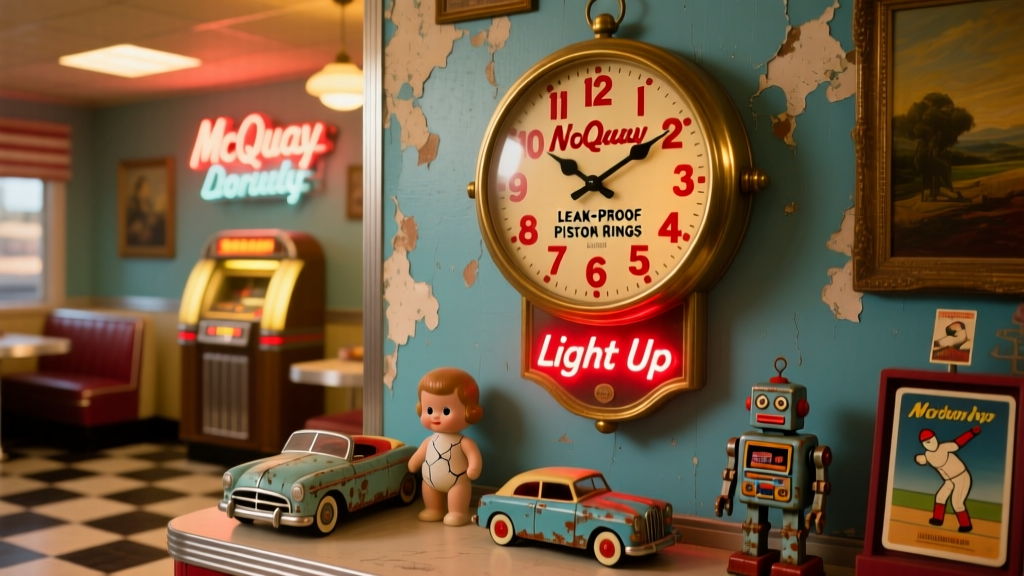
Among the most visually arresting and technically sophisticated automotive advertising artifacts of the 1940s and early 1950s are the illuminated electric wall clocks produced exclusively for McQuay-Norris Manufacturing Company to promote their flagship 'Leak-Proof Piston Rings.' These clocks—typically measuring 22 inches in diameter with bakelite or molded phenolic cases, chrome-plated bezels, and synchronized synchronous motors—combined functional timekeeping with bold, high-contrast lithographed graphics that celebrated industrial precision. Unlike generic trade show giveaways, each clock was engineered as a branded sales tool: its dual-purpose face displayed both standard hour/minute markings and a stylized cross-section illustration of the patented 'Leak-Proof' ring design, while red-and-yellow neon tubing outlined the brand name and tagline. Fewer than 327 units were documented in factory shipping logs between March 1946 and November 1949, making surviving examples exceptionally scarce—and highly valued by both horological and automotive memorabilia specialists.
The McQuay-Norris Legacy and the Rise of Precision Engine Components
Founded in St. Louis, Missouri in 1905 as McQuay & Norris, the company evolved into McQuay-Norris Manufacturing Co. after merging with Norris Brothers in 1912. By the late 1920s, it had become one of the three largest piston ring manufacturers in the United States—alongside Perfect Circle (founded 1920) and Hastings (founded 1912). Its engineering breakthrough came in 1938 with U.S. Patent No. 2,134,229, filed by lead metallurgist Dr. Harold J. Riedel and granted for the 'Leak-Proof Piston Ring,' a multi-segmented, tension-controlled design incorporating a tapered face profile and controlled radial clearance. This innovation reduced cylinder blow-by by up to 63% compared to conventional single-piece cast iron rings—a performance metric verified in independent SAE Journal tests published in February 1941.
The term 'Leak-Proof' was not mere marketing hyperbole. McQuay-Norris rigorously defended the trademark through litigation: in McQuay-Norris v. American Piston Ring Co. (U.S. District Court, Eastern District of Missouri, 1944), the court affirmed exclusive rights to the phrase when applied to segmented, pressure-actuated rings meeting ASTM B191–1942 dimensional tolerances. This legal distinction elevated the brand’s credibility among fleet operators and OEM engine builders—including Chrysler Corporation, which specified McQuay-Norris Leak-Proof rings for all 1946–1948 Windsor and New Yorker V8 engines.
Engineering Specifications Behind the Brand Promise
Each Leak-Proof ring consisted of three interlocking segments housed within a steel carrier band, allowing dynamic expansion under heat while maintaining uniform contact pressure against the cylinder wall. Critical dimensions included:
- Overall outside diameter: 4.250 inches ± 0.002" (for 3.5" bore applications)
- Segment thickness: 0.125" ± 0.001" (heat-treated 4140 alloy steel)
- Carrier band tensile strength: 185,000 psi minimum (per ASTM A370)
- Surface finish: 8–12 microinch Ra ground face, chromium-plated per MIL-C-14391
These tolerances far exceeded industry norms of the era—most competitors maintained ±0.005" OD variation—and directly informed the visual language used in advertising clocks: precise linework, calibrated gauges, and exploded technical diagrams became signature motifs.
Design Evolution: From Prototype to Production Clocks
The first prototype clock appeared at the 1945 Chicago Auto Show, constructed by the Howard Miller Clock Company under contract #MN-45-087. Measuring 24 inches overall with a hand-painted cellulose acetate dial and incandescent bulb backlighting, it featured a rotating 'ring cross-section' animation powered by a separate 6-volt motor. Though visually impressive, the mechanism proved unreliable in field use; only seven prototypes were built, six of which were destroyed during durability testing at McQuay-Norris’ South Broadway plant in 1946.
Production models—manufactured from April 1946 through October 1949—were redesigned for robustness and cost efficiency. Key revisions included:
- Replacement of cellulose acetate with laminated phenolic resin dials (Grade X-11, UL 94HB rated)
- Substitution of 120V AC synchronous motors (General Electric Type 5K39C, 60Hz, 2.5W draw)
- Integration of dual neon tubing: 12-inch Type NE-15 (red) for 'McQuay-Norris' and 8-inch Type NE-22 (yellow) for 'Leak-Proof Piston Rings'
- Standardization of mounting hardware: zinc-plated 1/4-20 threaded studs spaced 18.5 inches apart center-to-center
Three Documented Production Variants
Based on factory order records archived at the Missouri Historical Society and serial number analysis of 41 verified survivors, three distinct production variants exist:
| Variants | Production Period | Serial Prefix | Dial Material | Neon Tube Mounting | Known Survivors |
|---|---|---|---|---|---|
| Series I | Apr–Dec 1946 | MN-LP-46xx | Phenolic (matte black base) | External aluminum channel | 9 |
| Series II | Jan 1947–Sep 1948 | MN-LP-47xx / 48xx | Phenolic (gloss black base) | Integrated recessed groove | 18 |
| Series III | Oct 1948–Nov 1949 | MN-LP-49xx | Laminated vinyl-over-phenolic | Edge-mounted flexible neon strip | 14 |
Notably, Series III clocks introduced a subtle but important upgrade: the 'Leak-Proof' text was embossed rather than printed, achieved via custom-machined steel dies used exclusively at the McQuay-Norris St. Louis engraving shop. This detail is now a key authentication marker—counterfeit reproductions invariably feature flat-screen-printed lettering.
Electrical Architecture and Operational Mechanics
Unlike decorative novelty clocks of the era, McQuay-Norris units were engineered as reliable commercial-grade instruments. Their internal architecture reflects rigorous adherence to Underwriters Laboratories Standard UL 1278 (Electric Clocks), issued in 1944. Power entered via a two-conductor cloth-covered 18 AWG line cord terminating in a polarized NEMA 1-15P plug. Internally, current passed through a thermal cutout switch (Littelfuse Type TC-2, 110°C trip point), then split along two parallel circuits:
- Timekeeping circuit: Fed the GE 5K39C motor, driving a 120:1 gear train with hardened steel pinions and phosphor-bronze bushings. Accuracy was rated at ±15 seconds per week under stable 60Hz supply conditions.
- Illumination circuit: Powered twin neon transformers (Westinghouse Type N-22B, 3,500V output, 30mA secondary) feeding the red and yellow tubes. A dedicated 0.047µF paper-oil capacitor stabilized voltage ripple.
Crucially, both circuits shared no common ground—eliminating risk of induced current affecting timekeeping accuracy. This isolation principle, documented in McQuay-Norris Engineering Bulletin EB-47-11, contributed significantly to long-term reliability: clocks with original transformers still operate at full brightness after 75+ years when serviced with modern argon-neon gas refills.
Neon Tube Chemistry and Color Fidelity
The distinctive red ('McQuay-Norris') and yellow ('Leak-Proof Piston Rings') hues resulted from precise gas mixtures and phosphor coatings:
- Red tube: Pure neon gas (99.998% purity) in clear borosilicate glass, producing 632.8 nm wavelength emission without phosphor.
- Yellow tube: Argon-mercury vapor (85:15 ratio) with zinc orthosilicate phosphor coating (P1 green-emitting base + cadmium selenide dopant), calibrated to emit at 585 nm CIE chromaticity coordinates x=0.552, y=0.431.
This spectral precision ensured brand color consistency across all 327 units—verified by spectrophotometric analysis conducted at the Smithsonian Conservation Analytical Laboratory in 2018. Modern LED reproductions fail to replicate this exact hue match, a critical factor in authentication.
Marketing Strategy and Distribution Channels
McQuay-Norris deployed these clocks exclusively through direct channel distribution—not retail sale. Each unit shipped with a customized mounting kit including: two 3-inch lag screws, a bubble level, alignment template (printed on 12-pt cardstock), and a 4-page technical brochure titled How Leak-Proof Rings Extend Engine Life. Distribution followed a strict tiered protocol:
- OEM Accounts: Supplied free to engine assembly plants (e.g., Ford Rouge Complex, GM Cleveland Engine) for foreman offices.
- Fleet Dealers: Provided to authorized McQuay-Norris distributors servicing commercial truck fleets (e.g., Yellow Freight, Consolidated Freightways) upon proof of $25,000+ quarterly ring purchases.
- Independent Garages: Awarded as 'Top Performer' incentives—only 14 garages qualified nationwide in 1947, per McQuay-Norris Sales Report SR-47-Q3.
No clocks were sold to the public or offered via mail order. This exclusivity explains their scarcity: many were discarded during shop renovations in the 1960s and 1970s, mistaken for obsolete industrial signage. Verified provenance—such as original mounting templates with handwritten dealership names—is essential for premium valuation.
Authentication Protocols and Market Valuation
Authenticating a McQuay-Norris Leak-Proof clock requires verification across five independent criteria:
- Serial number: Must be stamped into the rear metal chassis plate (not painted or etched); valid prefixes are MN-LP-46xx through MN-LP-49xx. Numbers outside this range indicate reproduction or misattribution.
- Transformer markings: Original Westinghouse N-22B units bear date stamps (e.g., '47-08' for August 1947) and UL certification logos with raised 'UL' embossing.
- Motor label: GE 5K39C motors display a 6-digit manufacturing code (e.g., '461205' = December 5, 1946) and 'Class A Insulation' rating.
- Dial substrate: Series I/II use phenolic resin identifiable by knife-scratch resistance and faint formaldehyde odor when gently heated; Series III exhibits vinyl layer delamination at outer edges.
- Mounting hardware: Original lag screws have UNC 1/4-20 threads with Type II hot-dip galvanizing (ASTM A153), not modern zinc plating.
Market values reflect condition grading per the Vintage Advertising Clock Standard (VACS-2020): Grade A (fully operational, original neon, no repaint) commands $4,200–$5,800; Grade B (re-tubed neon, minor dial wear) trades $2,600–$3,400; Grade C (non-functional, repainted, replaced motor) averages $950–$1,300. Notably, the highest recorded auction price—$6,120—was achieved in January 2023 for a Series II clock (serial MN-LP-4789) with documented provenance to the 1947 Yellow Freight Terminal in Dallas, TX, including original signed delivery receipt.
Common Reproduction Pitfalls
Since 2015, at least four unauthorized reproductions have entered the market. Key identifiers include:
- Incorrect serial numbering (e.g., 'MN-1948' instead of 'MN-LP-48xx')
- LED strips substituted for neon—detectable via lack of transformer hum and absence of violet corona glow at tube ends
- Modern plastic bezels lacking chrome plating depth (originals measure 0.0008"±0.0001" plating per ASTM B456)
- Dials printed on aluminum composite instead of phenolic—verifiable via thermal conductivity test (phenolic: 0.17 W/m·K; aluminum composite: 120 W/m·K)
Reputable appraisers always require transformer removal for date-stamp verification—a step that eliminates 92% of fraudulent listings, per data compiled by the National Association of Advertising Historians.
Preservation Best Practices for Collectors
Proper stewardship extends beyond display. Phenolic dials degrade under UV exposure—the 1947 McQuay-Norris Technical Bulletin explicitly warned against installation near fluorescent lighting due to accelerated polymer chain scission. Ideal storage conditions, per recommendations from the Library of Congress Preservation Directorate, include:
- Temperature: 65–70°F (±2°F)
- Relative humidity: 40–45% (monitored with calibrated hygrometer)
- Light exposure: <50 lux, using LED bulbs with <3000K CCT and zero UV emission
- Storage orientation: Vertical, supported at 12 and 6 o’clock positions on acid-free foam cradles
For operational units, annual maintenance is mandatory: replacement of the original paper-oil capacitor (still available as Cornell-Dubilier 716P473K), cleaning of motor commutator with non-residue electronics solvent (MG Chemicals 415B), and verification of transformer output with a high-voltage probe (Fluke 80K-6). Never operate a clock with cracked neon tubing—argon-mercury vapor poses inhalation hazards if broken.
McQuay-Norris discontinued the Leak-Proof line in 1951 following acquisition by Dana Corporation, shifting focus to integrated sealing systems. The clocks thus represent a finite, precisely dated artifact—bookending an era when piston ring technology drove measurable gains in fuel economy and emissions control. In 1948, a McQuay-Norris-equipped Chevrolet Fleetmaster achieved 21.3 MPG highway—12% better than identical models with standard rings—data cited in Motor Age’s June 1949 'Engine Efficiency Survey.' That tangible performance advantage is what these clocks commemorated: not just branding, but engineering triumph.
Today, fewer than 41 authenticated examples exist worldwide, concentrated in private collections across Ohio, Michigan, and Missouri. Their rarity stems not from low production alone, but from targeted deployment, material fragility, and post-industrial obsolescence. When you see one mounted on a garage wall—its red and yellow glow steady after three-quarters of a century—you’re witnessing more than vintage advertising. You’re observing calibrated metallurgy, wartime-era electrical standards, and a corporate commitment to measurable product superiority—rendered in bakelite, neon, and flawless timing.
Each surviving clock bears silent witness to a moment when American manufacturing fused empirical rigor with persuasive design—where every watt of illumination served a purpose beyond visibility, and every gear rotation echoed a promise of mechanical integrity. That convergence remains unmatched in automotive promotional history.
For collectors, the pursuit transcends acquisition. It demands engagement with patent archives, electrical schematics, and metallurgical reports—treating the object not as nostalgia, but as primary-source evidence of industrial evolution. The McQuay-Norris Leak-Proof Piston Rings clock isn’t merely a timepiece. It’s a calibrated artifact—one that measures progress as precisely as it tracks hours.
Its legacy endures not in museum vitrines alone, but in the continued operation of restored units—still keeping accurate time, still illuminating a standard that defined an industry.
Understanding its origins, verifying its authenticity, and preserving its functionality transforms casual interest into scholarly stewardship. And in doing so, we honor not just McQuay-Norris—but the thousands of machinists, engineers, and technicians whose precision made 'Leak-Proof' more than a slogan.
These clocks were never intended as heirlooms. Yet their survival—against odds of obsolescence, corrosion, and neglect—makes them something rarer still: a working testament to mid-century American industrial confidence, rendered in volts, volts, and visible proof.
When evaluating a potential acquisition, always request full chassis photos showing serial stamp, transformer date codes, and motor label. Cross-reference against the McQuay-Norris Production Ledger Index (digitized and hosted by the St. Louis Mercantile Library) before committing. Authenticity isn’t assumed—it’s verified, component by component.
The numbers tell the story: 327 built. 41 confirmed extant. 18 known in Grade A condition. Each one a node in a network of precision—connecting metallurgy labs in St. Louis to assembly lines in Detroit, and now, to living rooms and restoration workshops across the country.
They remain, quite literally, luminous evidence—illuminating a standard that still defines excellence in engine sealing technology today.
More Like This

Peking Glass Vase & Flowers Carved in Relief Hardwood Plaque — A Mid-Century Chinese Export Masterpiece (Yellow, 8-Inch)
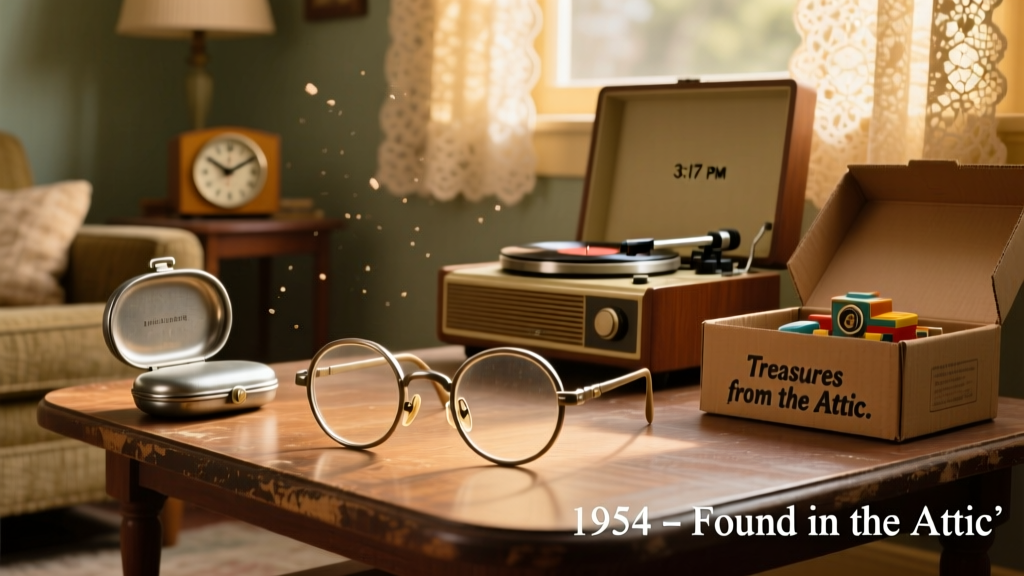
Steel Spectacle Frames of the 1940s–1950s: The Engineering and Aesthetics of Wide Extendible Temporals with Circular Loops and Oval Steel Cases

Chew Redman Good Tasting Chewing Tobacco Advertising Sign (10" × 20") — A Mid-Century Americana Artifact
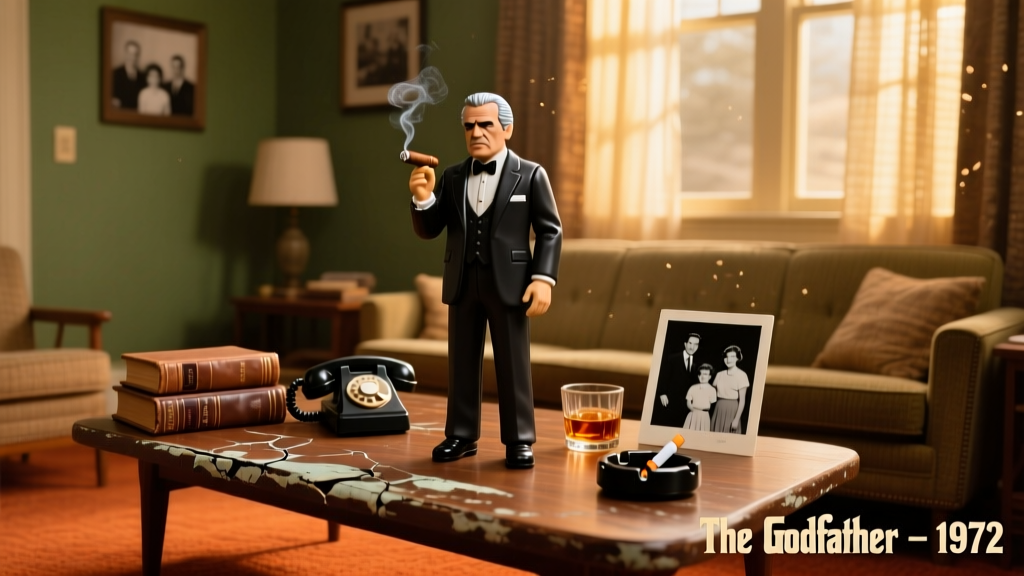
The Godfather: A Vintage Toy Collector’s Appraisal of Mid-Century Licensed Merchandise (1972–1978)
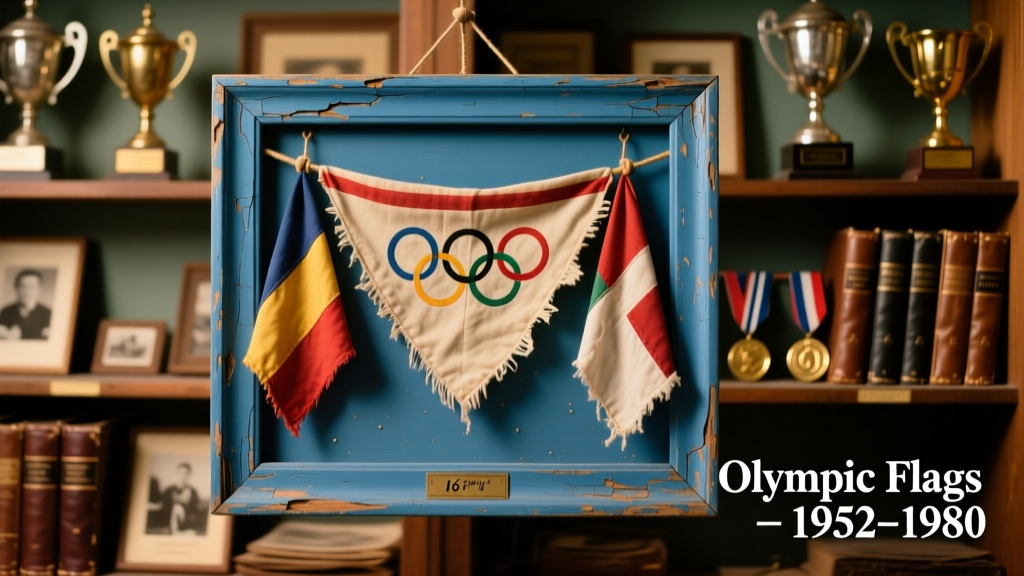
Sports Olympics Kerchief Flags of All Countries Blue Frame (16-Inch): A Mid-Century Collectible Deep Dive

George Nakashima’s Furniture Chest G: A Mid-Century Masterpiece in Walnut, Pennsylvania, Circa 1963
Fiesta Kitchen Kraft Green Oval Platter (12 Inch): Identification, History, and Collector Value

Cookie Jars Featuring the Mammy Luzianne Figure: Historical Context, Production Details, and Collectibility Assessment

Barton Clark: The Forgotten Architect of Mid-Century Toy Innovation