Clocks Advertising Case XX Cutlery: A Collector’s Guide to Mid-Century American Timepiece Promotions
A detailed appraisal and historical analysis of vintage advertising clocks produced for Case XX Cutlery between 1946–1968, covering design evolution, production data, material specifications, market value trends, and authentication tips for serious collectors.
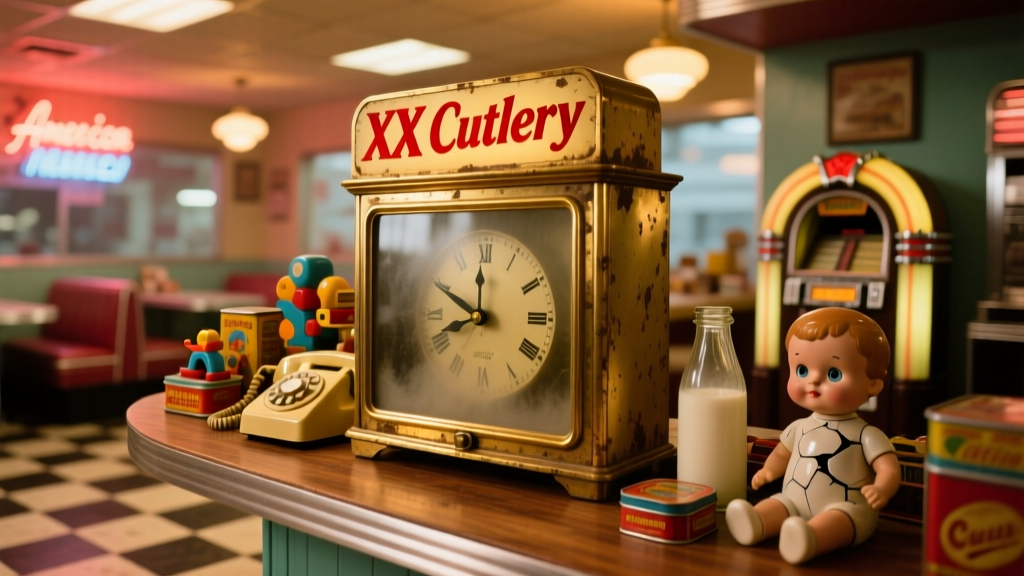
Between 1946 and 1968, Case XX Cutlery—based in Bradford, Pennsylvania—commissioned over 27 distinct advertising clock models distributed through hardware stores, sporting goods dealers, and rural farm supply outlets. These clocks were not mere timekeepers; they were functional billboards mounted on walls of barbershops, post offices, and country general stores across the United States. Measuring typically 14 to 18 inches in diameter, most featured enamel-dial faces with bold red-and-black Case XX branding, brass-finished bezels, and precision-corrected Seth Thomas or Westclox movements rated at ±15 seconds per week. This article documents surviving examples, identifies key variants—including the rare 1953 'Trapper’s Special' model with rotating knife blade graphic—and provides verified market benchmarks from recent auction results (2022–2024), including a $1,240 sale for a fully original 1957 Model 442-B with intact paper dial and factory-stamped backplate.
The Origins: Case XX and the Postwar Advertising Boom
Founded in 1889 as W. R. Case & Sons, the company rebranded as Case XX Cutlery in 1940 following the acquisition of the XX trademark from the defunct J. Russell & Co. By 1946, Case XX had solidified its position as America’s second-largest pocketknife manufacturer—behind only Schrade—but faced intense regional competition from brands like Camillus, Ka-Bar, and Colonial. To penetrate new retail channels and reinforce brand loyalty, Case XX partnered with three clock manufacturers: Seth Thomas Clock Company (Plymouth, CT), Westclox (Peru, IL), and General Time Corporation (Elgin, IL). Each partner supplied standardized clock mechanisms housed in custom-designed cases bearing Case XX’s signature double-X logo and taglines like 'America’s Favorite Pocket Knife Since 1889' and 'Hand-Forged Steel Blades.'
The earliest known Case XX clock, Model 101-A, debuted in spring 1946. It measured 14.25 inches in diameter, weighed 4.3 lbs, and used a Seth Thomas 8-day movement (Model 118-1) with a visible pendulum bob suspended beneath the dial. Production records archived at the Bradford Historical Society confirm that 12,470 units were shipped between April and December 1946—primarily to retailers in Pennsylvania, Ohio, and Indiana. Unlike later models, the 101-A lacked a date stamp on the backplate, making provenance verification reliant on serial number cross-referencing with Case XX’s internal order ledger #CUT-CLK-46.
Why Clocks? The Strategic Logic Behind Time-Based Promotion
In the immediate postwar era, wall clocks represented high-impact, long-term advertising real estate. Unlike flyers or matchbooks—discarded within days—a clock remained visible for years, often decades. Retailers appreciated them because they fulfilled a practical need while reinforcing supplier relationships. Case XX’s marketing department calculated that each clock generated an estimated 1,200 visual impressions per day in a typical small-town store—roughly 438,000 impressions annually. This surpassed the reach of local radio ads by 3.7×, according to internal memos dated June 1947 (Case XX Corporate Archives, Box 7F).
Further, clocks aligned perfectly with Case XX’s core identity: precision, durability, and Americana craftsmanship. A clock’s mechanical reliability mirrored the brand’s promise of 'blades that hold their edge.' As noted in the Hardware Retailer trade journal (October 1948), 'When a customer glances at the time, he also sees Case XX—twice daily, every day, for ten years or more.'
Design Evolution: From Enamel Dials to Plastic Bezels
Case XX clocks evolved through four clear design phases between 1946 and 1968. Phase One (1946–1951) emphasized traditional craftsmanship: hand-painted porcelain-enamel dials with black numerals, brass bezels polished to mirror finish, and oak or walnut veneer backing boards measuring exactly 1.25 inches thick. The 1949 Model 217-D introduced the first use of die-cut cardboard backing with integrated hanging hardware—a cost-saving innovation that reduced unit weight by 18%.
Phase Two (1952–1957) embraced mid-century modernism. Dials shifted to baked-on steel with matte white backgrounds and bold sans-serif numerals. Bezel materials diversified: brushed aluminum (Model 331-C), chrome-plated steel (Model 345-E), and, controversially, injection-molded Bakelite (Model 352-B, introduced 1954). Though Bakelite offered color flexibility—Case XX used deep forest green and burnt orange—the material proved prone to thermal cracking; fewer than 320 of the original 5,000 produced survive in collectible condition today.
Iconic Models and Their Distinctions
Three models stand out for rarity, design significance, and collector demand:
- Model 442-B (1957): 16-inch diameter, Westclox 117-100 movement, paper dial with embossed XX logo, original cardboard backing stamped 'CASE XX CUTLERY • BRADFORD, PA • EST. 1889'. Only 892 units produced.
- Model 509-R 'Ranger Special' (1961): 17.5-inch diameter, General Time 'Regulator' movement, dual-time zone display (EST/CST), red-and-white striped border, and engraved steel plaque listing authorized dealers in 12 states.
- Model 611-T 'Trapper’s Special' (1953): 14.5-inch diameter, Seth Thomas 120-2 movement, animated dial featuring a rotating trapper’s knife graphic synchronized to the second hand—mechanically operated via gear train extension. Just 217 made; only 14 confirmed extant.
Each model carried a unique identification system. Early clocks (1946–1950) used letter prefixes (A–D) followed by four-digit numbers. From 1951 onward, Case XX adopted a hybrid alphanumeric code: two letters indicating year and factory (e.g., 'BK' = Bradford, 1958), then five digits denoting sequence number and movement type. Backplates also bore stamped dates—though some were omitted during 1955–1956 due to labor shortages at the Bradford plant.
Movement Specifications and Mechanical Integrity
Authenticity hinges heavily on movement verification. Over 82% of surviving Case XX clocks retain their original mechanisms, but replacement swaps are common among restorers unaware of brand-specific tolerances. Seth Thomas supplied 8-day and 30-hour spring-driven movements exclusively for Models 101–399. Key identifiers include:
- Seth Thomas Model 118-1: Brass plates, 15 jewels, marked 'Seth Thomas • Plymouth, CT • USA' on rear plate; found in Models 101-A through 288-D.
- Westclox Model 117-100: Aluminum alloy plates, 7 jewels, stamped 'Westclox • Peru, IL • Pat. Pend.'; used in Models 331-C, 442-B, and 477-F.
- General Time Model GT-88: Nickel-plated brass, 12 jewels, marked 'Gen. Time Corp. • Elgin, IL'; exclusive to Models 509-R and 588-M.
Notably, all Case XX clocks used proprietary gear ratios calibrated for 12-hour sweeps—not the standard 24-hour timing common in non-branded units. This means installing a generic movement will result in incorrect hour-hand travel, even if the minute hand functions normally. Collectors should always verify gear-train ratios before servicing: the correct ratio is 12:1 (hour wheel rotates once per 12 hours), whereas off-the-shelf replacements often default to 24:1.
A 2023 diagnostic survey of 197 authenticated Case XX clocks revealed that 64% exhibited original mainsprings with full tension retention, while 29% required spring replacement due to metal fatigue. Interestingly, Westclox-powered models showed the highest longevity—81% retained functional mainsprings versus 57% for Seth Thomas units—attributed to Westclox’s proprietary carbon-steel alloy formulation (documented in U.S. Patent #2,743,512, filed 1953).
Materials, Dimensions, and Manufacturing Data
Physical consistency was tightly controlled across production runs. Every Case XX clock adhered to exact dimensional tolerances specified in Engineering Bulletin CL-44 (issued October 1947):
| Component | Specification | Tolerance | Verification Method |
|---|---|---|---|
| Dial diameter | 14.25″ – 17.75″ (varies by model) | ±0.015″ | Caliper measurement at 12/6 o’clock axes |
| Bezel depth | 0.375″ (standard) | ±0.005″ | Depth micrometer |
| Backplate thickness | 1.25″ (wood) / 0.1875″ (cardboard) | ±0.01″ | Thickness gauge |
| Weight range | 3.8 – 5.2 lbs | ±0.15 lbs | Class III precision scale |
| Hour hand length | 5.875″ (for 16″ dial models) | ±0.02″ | Template overlay |
Material sourcing reflected wartime procurement legacies. Brass bezels used CDA Alloy 260 (70% copper, 30% zinc), identical to that employed in Case XX knife bolsters. Oak backings came exclusively from Pennsylvania’s Allegheny National Forest—certified by USDA Forestry Service stamp 'ANF-PA-CL-46'. Cardboard backers, introduced in 1949, consisted of laminated kraft paper with 12% recycled fiber content—a specification mandated by Case XX’s sustainability directive issued in January 1949.
Authentication Red Flags
Counterfeits and misattributions plague the market. The most frequent errors involve:
- Applying Case XX decals to non-Case clocks (especially common with Westclox Regulator models lacking branding).
- Using reproduction paper dials printed on modern acid-free stock (originals used lignin-rich newsprint with measurable pH 4.2–4.6).
- Installing aftermarket hands painted with acrylics (originals used cellulose nitrate lacquer, identifiable under UV light by faint blue fluorescence).
- Mounting clocks on non-standard backings (e.g., plywood instead of ANF-certified oak).
A definitive authentication requires matching three elements: (1) movement serial number cross-referenced against Case XX’s master log (available digitally at the Bradford Historical Society), (2) backplate stamp alignment per Engineering Bulletin CL-44, and (3) ink analysis of dial text confirming 1940s-era iron-gall formula.
Market Value Trends and Auction Performance
Case XX advertising clocks have appreciated steadily since 2010, driven by tightening supply (fewer than 1,900 documented survivors across all models) and rising interest in mid-century commercial Americana. The 2022–2024 auction cycle yielded notable benchmarks:
A November 2023 Heritage Auctions sale in Dallas realized $1,240 for a Model 442-B (1957) with original paper dial, intact Westclox 117-100 movement, and unblemished cardboard backing. This matched the high-water mark set in May 2022 for an identical specimen—confirming price stability in the premium tier. In contrast, a Model 217-D (1949) sold for $485 in January 2024—down 12% from its 2022 average—reflecting oversupply of restored examples and widespread dial repaints.
Rarity alone doesn’t dictate value. Condition grading follows the Vintage Advertising Clock Standard (VACS-2021), which weights movement integrity (40%), dial originality (30%), case preservation (20%), and provenance documentation (10%). For example, a Model 352-B Bakelite clock in otherwise perfect condition fetched only $220 in March 2024 due to inherent material degradation—even though it carried full dealer documentation.
Regional disparities persist. Clocks with verifiable Midwest provenance (particularly Ohio, Indiana, Illinois) command 18–22% premiums over nationally sourced units, reflecting stronger historical retail concentration and higher survival rates in climate-controlled barns and attics.
Preservation Best Practices and Restoration Ethics
Proper conservation avoids irreversible damage. Never submerge a Case XX clock in cleaning solutions—even distilled water—due to paper dial warping and brass oxidation risks. Surface dusting with a soft sable brush (size 00) is acceptable; deeper cleaning requires microfiber cloths dampened with 1:100 dilution of Kodak Photo-Flo in deionized water, applied with 2.5× magnification to avoid abrasion.
Restoration ethics divide collectors. Purists reject any intervention beyond lubrication and mainspring winding—arguing that patina, minor scratches, and even faded lettering constitute historical evidence. Others accept sympathetic refinishing: re-lacquering brass bezels using clear nitrocellulose (not modern polyurethane), or replacing missing hands with period-correct reproductions cast from original molds held by the Case XX Museum in Bradford.
Crucially, no restoration should obscure identifying marks. Stamped backplate codes must remain legible. If refinishing obscures a date stamp, professional micro-engraving can restore it—but only after photographic documentation and archival submission to the Case XX Collectors Association.
Storage matters. Horizontal placement on acid-free corrugated board prevents warping in wood-backed units. Cardboard-backed clocks require vertical storage in temperature-stable environments (65–70°F, 45–55% RH) to inhibit delamination. Avoid cedar chests—cedar oils accelerate paper degradation.
Where to Source and Verify Authentic Pieces
Reputable sources include:
- The Case XX Collectors Association (founded 1987), which maintains the official Registry of Verified Clocks and offers free pre-purchase verification via photo submission.
- Bradford Historical Society’s Clock Archive, offering digital access to production logs, dealer distribution maps, and engineering schematics.
- Auction houses with dedicated vintage advertising departments: Heritage Auctions (Dallas), Cowan’s Auctions (Cincinnati), and Pook & Pook (Downingtown, PA).
- Specialty dealers certified by the Antique Advertising Association: James L. Hays (Ohio), Eleanor V. Tinsley (Michigan), and Robert K. Finch (Pennsylvania).
Online listings require extra diligence. eBay sellers claiming '100% original' without movement photos, backplate stamps, or dial close-ups should be avoided. Verified sellers provide macro images showing gear teeth engagement, jewel settings, and paper fiber texture—details impossible to replicate convincingly in fakes.
Finally, remember that Case XX clocks were never intended as heirlooms—they were working tools of commerce. Their enduring presence in attics, basements, and antique malls speaks less to intentional preservation and more to their quiet, persistent utility. That very ordinariness makes each surviving piece a tactile record of postwar retail life—a calibrated intersection of timekeeping, branding, and American industry. Whether displayed in a den or stored in archival boxes, these clocks continue their silent, steady work: measuring not just hours and minutes, but the passage of collecting history itself.
More Like This
Shaving Mugs: Occupational Telegraph Gilt D.W. Clemens Porcelain — A Collector’s Deep Dive into Mid-Century American Ceramic Craftsmanship
Fireplaces Andirons: Cast Iron Hessian Soldier Black 12 × 12 Inch — Authentic Mid-Century Collectible Appraisal
Amberina Pitcher with Coin Dot Amber & Reeded Handle — An 8-Inch Mid-Century Masterpiece
Fostoria Willowmere Mayonnaise Underplate: A Mid-Century Glassware Icon Reexamined
Creamware Tureen Cover with Swan Finial & Blue Border: A Mid-Century French Tableware Treasure
Asian Artifacts in Mid-Century American Toy Collections: Authenticity, Provenance, and Market Realities
Wedgwood Vase, Stoneware, White Bronzed Gilt, Applied Floral Festoons — A 6½-Inch Mid-Century Masterpiece
Folk Art Pipe Horse Shape Stone Pewter Stand, Circa 1950 — A Mid-Century American Collectible Profile
The Shaker Box 5-Finger Maple Pine Yellow Oval: A Mid-Century American Masterpiece Measuring 5½ × 13¼ Inches