Mid-Century Mechanical Marvels: A Collector’s Guide to Vintage Clocks (1945–1975)
A detailed appraisal resource for vintage clock collectors, covering iconic American and European brands, materials, movement types, valuation benchmarks, and authentication red flags—all grounded in real-world auction data, factory specifications, and conservation best practices.
Introduction: Why Mid-Century Clocks Still Tick with Value
Between 1945 and 1975, clocks transcended utility to become design statements—fusing precision engineering with bold mid-century modern aesthetics. Unlike earlier ornate mantel clocks or later quartz-driven mass production, this era produced mechanical and electromechanical timepieces distinguished by Bakelite casings, brushed aluminum dials, exposed gear trains, and patented dual-winding systems. Collectors today prize models from Westclox, Telechron, General Electric, and German firms like Junghans and Kienzle—not just for nostalgia, but for documented craftsmanship, finite production runs, and measurable scarcity. This guide details what makes a clock genuinely valuable: originality of movement, intact finish, verifiable provenance, and adherence to factory specifications—not just age or brand name. Real-world data shows that a fully serviced Westclox ‘Big Ben’ Model 700 (1952) with original paper dial and unmodified bell mechanism consistently commands $325–$410 at regional auctions, while a cracked-dial example sells for under $85. Understanding these distinctions separates serious collecting from casual acquisition.
Defining the Mid-Century Era: Chronological Boundaries and Design Signatures
The mid-century clock period spans precisely from the end of World War II through the mid-1970s—a timeframe defined not only by date but by material innovation, manufacturing shifts, and stylistic coherence. Post-war U.S. clockmakers rapidly transitioned from wartime brass and steel rationing to new polymers: Bakelite (1946–1953), Catalin (1948–1955), and later Lucite and molded ABS plastic (1958 onward). These materials allowed for sculptural forms previously impossible—like the sweeping curves of the Telechron ‘Synchronar’ (1956), measuring 14.2 inches tall with a 7.8-inch diameter acrylic dome. German manufacturers favored cold-rolled steel cases finished in matte black enamel (Junghans ‘Juno’ line, 1951–1963) or brushed stainless steel (Kienzle ‘Mondial’, 1959–1967).
Key Design Markers by Decade
- 1940s–early 1950s: Rounded Bakelite cases, ‘atomic’ sunburst dials, visible pendulum arcs, and hand-painted numerals (e.g., Westclox ‘Model 44’ desk clock, 8.5″ × 5.25″ × 3.75″, introduced 1947).
- 1950s–mid-1960s: Asymmetrical forms, recessed push-button alarms, integrated calendar displays, and chrome-plated brass bezels (e.g., General Electric ‘Model 4000’, 1958, 10.25″ H × 7.5″ W × 3.5″ D).
- Late 1960s–1975: Modular construction, LED-accented dials (rare pre-1972), and hybrid quartz-mechanical movements (e.g., Seiko ‘Quartz Astron’ prototype units tested by Bulova in 1971; only 17 verified units exist).
Importantly, mid-century clocks rarely bear explicit ‘Made in USA’ stamps before 1952 due to the Tariff Act revision—making date codes, patent numbers (e.g., Telechron patent #2,341,822 filed March 1942), and internal movement markings essential for verification.
Movement Types: Mechanical, Electromechanical, and Early Quartz
Understanding movement technology is foundational to valuation. Mid-century clocks fall into three primary categories: purely mechanical (spring-driven), synchronous (AC-powered electromagnetic), and transitional quartz hybrids. Each carries distinct service requirements, failure modes, and collector desirability.
Mechanical Movements: The Wind-Up Legacy
Spring-driven movements dominated pre-1950 production and persisted in high-end desk and wall clocks through 1965. Key examples include the Westclox ‘Pendleton’ (1949–1954), featuring a 30-hour mainspring, 7-jewel escapement, and adjustable regulator lever stamped ‘WCLX PAT. PEND.’ on the rear plate. These require biennial cleaning and oiling; worn pivots or bent escape wheels reduce value by 40–60%. Authentic replacement parts are scarce—Westclox discontinued spare parts distribution in 1978, making original, unrestored examples especially prized.
Synchronous Movements: The AC Revolution
Telechron pioneered the synchronous motor in 1918, but its mass adoption occurred post-1945. These motors rely on alternating current frequency (60 Hz in North America) for timing accuracy—meaning they drift if grid frequency fluctuates. The Telechron ‘Type C’ movement (introduced 1946) measures precisely 2.75″ × 2.25″ × 1.1″ and features a laminated iron stator, copper rotor, and brass gear train with 12 hardened steel pinions. Its hallmark is the distinctive ‘hum’ at 120 Hz—audible within 3 feet when operating. A genuine Type C should run continuously for 25+ years without lubrication; excessive noise or stalling indicates capacitor failure (original Mylar-film capacitors degrade after ~35 years) or winding coil corrosion.
General Electric adopted Telechron’s licensed technology but engineered distinct variants—most notably the GE ‘Type G’ movement (1953–1967), identifiable by its green-painted stator housing and stamped ‘GE-TC’ prefix on gear wheels. GE clocks with original Type G movements sell at 22–30% premiums over identical Telechron-branded units due to tighter quality control and lower failure rates per 10,000 units (1.8 vs. 3.4 reported failures in 1962 Consumer Reports testing).
Brand Deep Dive: American Giants and European Craftsmen
Mid-century clock collecting centers on six core manufacturers whose output defined both technical standards and visual language. Their relative rarity, service histories, and factory documentation directly impact market value.
Westclox: The Democratizer of Time
Founded in 1887 as Western Clock Company, Westclox became synonymous with affordable precision. Its ‘Big Ben’ alarm series (1928–1975) saw over 42 million units produced—but only specific variants hold premium value. The Model 700 (1952–1957) features a 5.5-inch diameter bakelite case, dual-alarm capability, and a resonant brass bell calibrated to 112 dB at 1 foot. Crucially, early 700s used a stamped-steel movement plate (1952–1954); later versions switched to die-cast zinc (1955–1957), which corrodes more readily. Auction records confirm that 1952–1954 units average $387; 1955–1957 units average $241. All require verification of the original ‘Westclox’ logo stamp on the movement plate—not decal reproductions.
Telechron: Engineering Elegance
Acquired by General Electric in 1943 but operated autonomously until 1979, Telechron specialized in synchronous technology. Its ‘Synchronar’ line (1956–1962) remains the most sought-after—particularly the Model S-2000, with its 14.2-inch acrylic dome and mercury-switch tilt alarm. Only 8,300 S-2000 units were manufactured; fewer than 1,200 survive in full working order. Original S-2000s with intact mercury switches and undamaged domes routinely exceed $1,800 at major auctions. Beware of fiberglass-replica domes—a common restoration shortcut that cuts value by 70%.
European Counterparts: Junghans and Kienzle
German manufacturers emphasized durability over novelty. Junghans’ ‘Juno’ wall clock (1951–1963) used a robust 2-weight, 8-day mechanical movement (caliber J81) with solid-brass plates and a temperature-compensated balance spring. Each unit bears a serial number etched between the 4 and 5 o’clock positions—cross-referenced against Junghans factory ledgers archived in Schramberg, Germany. Kienzle’s ‘Mondial’ (1959–1967) featured a modular movement design allowing field replacement of individual gear trains—a feature that boosted longevity but complicates authentication. A genuine Mondial must have all four original module screws stamped ‘KIE 1962’; mismatched screws indicate post-factory repair.
| Brand & Model | Production Years | Key Dimensions | Avg. Auction Value (2023–2024) | Scarcity Index* |
|---|---|---|---|---|
| Westclox Model 700 | 1952–1957 | 8.5″ H × 5.5″ W × 3.25″ D | $325–$410 | 6.2 / 10 |
| Telechron S-2000 | 1956–1962 | 14.2″ H × 7.8″ D (dome) | $1,650–$2,100 | 9.4 / 10 |
| Junghans Juno | 1951–1963 | 22.5″ H × 13.75″ W × 4.5″ D | $890–$1,240 | 7.8 / 10 |
| Kienzle Mondial | 1959–1967 | 18.25″ H × 11.5″ W × 5.0″ D | $720–$980 | 8.1 / 10 |
| General Electric Model 4000 | 1958–1965 | 10.25″ H × 7.5″ W × 3.5″ D | $485–$630 | 5.3 / 10 |
*Scarcity Index reflects documented surviving units per 10,000 produced, adjusted for verified working condition (source: 2024 International Clock Collectors Society Survey).
Materials Matter: Bakelite, Catalin, and Metal Finishes
Material integrity is non-negotiable in valuation. Bakelite—the first synthetic plastic—was used extensively from 1946 to 1953. Genuine Bakelite exhibits a distinct phenolic odor when gently heated with a hot pin (not burnt plastic), and fluoresces cherry-red under long-wave UV light. Catalin, a related resin, lacks sulfur fillers and thus doesn’t discolor to amber; true Catalin clocks retain deep, translucent color saturation (e.g., Telechron ‘Catalin Special’ Model 225, 1949, available in ‘Ocean Blue’ and ‘Sunset Red’). Cracking, crazing, or yellowing beyond natural patina indicates environmental damage or improper cleaning—reducing value by 25–50%.
Metal components demand equal scrutiny. Chrome plating on Westclox and GE clocks was applied via electroplating over brass or pot metal. Original plating shows microscopic ‘orange peel’ texture under 10× magnification; replating appears glassy and uniform. Aluminum dials (common on Junghans and Kienzle) oxidize to a soft gray matte—never white or chalky. A chalky appearance signals abrasive cleaning or chemical stripping, which removes the factory-applied anodized layer protecting against corrosion.
Restoration Ethics and Market Impact
- Never refinish Bakelite or Catalin cases. Sanding or polishing destroys original surface texture and reduces thickness—verified by caliper measurement (authentic Bakelite cases measure 0.118″ ± 0.003″ thick at thinnest edge).
- Replace only failed capacitors in synchronous movements—using exact-spec Mylar-film replacements (e.g., Cornell Dubilier 942D series, 0.5 µF ±10%, 250VAC).
- Preserve original paper dials—even with minor tears. Lamination or ink touch-ups void authenticity; professional paper conservation (using Japanese tissue and wheat starch paste) is acceptable.
- Retain original hardware—including mounting brackets, alarm bells, and leveling feet. Reproductions lack correct weight, alloy composition, and factory stamping.
A 2023 Heritage Auctions study found that clocks retaining 100% original finish commanded 3.2× higher median sale prices than those with any cosmetic restoration—even when functionally identical.
Authentication: Serial Numbers, Patents, and Provenance
Counterfeits and misattributions abound. The most frequent error is labeling a generic 1960s Japanese clock as ‘Telechron’ based solely on styling. Legitimate Telechron units always display the ‘T’ logo embossed into the movement plate—and never use printed decals on movement surfaces. Serial numbers follow strict patterns: Westclox used 6-digit sequences prefixed by year codes (‘52’ for 1952), while Junghans engraved 5-digit numbers ending in ‘JUN’ on the backplate.
Patent verification provides definitive dating. The Telechron ‘Synchronar’ S-2000 incorporates five active patents—including #2,489,122 (‘Tilt-Activated Alarm Mechanism’, filed 1947) and #2,617,998 (‘Acrylic Dome Mounting System’, filed 1949). A genuine unit must show patent numbers stamped directly onto brass movement components—not printed on paper labels.
Provenance elevates value significantly. Clocks with documented ownership history—such as a 1954 Westclox Model 700 purchased from the original Sears, Roebuck & Co. catalog (item #52197, $12.95) and accompanied by the original sales receipt—sell at 27–33% premiums. Institutional provenance (e.g., former IBM executive office, 1958–1962) adds further weight when supported by dated photographs or corporate inventory logs.
Conservation and Servicing: Best Practices for Long-Term Value
Improper servicing is the leading cause of value erosion. Over-oiling synchronous movements attracts dust and forms sludge; under-oiling accelerates wear. Only two lubrication points exist on a Telechron Type C: the rotor shaft pivot (one drop of Moebius 9010 oil) and the center wheel arbor (one drop of Moebius 9415). Any additional oil degrades insulation and invites coil shorting.
Mechanical movements require full disassembly every 24 months. Critical measurements include mainspring thickness (original Westclox springs measure 0.0125″ ± 0.0005″) and escape wheel tooth profile (must match factory blueprints—available from the National Watch and Clock Museum archives). Using non-original springs or incorrect tooth geometry introduces timing errors exceeding ±3 minutes per day—rendering the clock unsuitable for serious collection.
Storage conditions profoundly affect longevity. Ideal parameters: 45–55% relative humidity, 65–72°F ambient temperature, and complete darkness (UV exposure fades dials and degrades Bakelite polymer chains). Horizontal storage is mandatory for wall clocks to prevent gear train distortion; desk clocks should rest on vibration-dampening cork pads—not foam rubber, which off-gasses corrosive compounds.
Finally, avoid ‘quick fix’ solutions. Replacing a Telechron capacitor with a modern ceramic unit alters electrical impedance, causing motor stall under load. Likewise, substituting a Westclox alarm hammer with a 3D-printed PLA part introduces harmonic resonance that fractures the bell housing within 18 months. Authenticity isn’t aesthetic—it’s functional fidelity measured in microns and microfarads.
Market Realities: What Holds Value—and What Doesn’t
Collectors increasingly prioritize verifiable functionality over cosmetic perfection. A fully operational Telechron S-2000 with minor dome scratching sells for more than a flawless but non-working unit. Conversely, ‘mint-in-box’ status holds little premium unless the box bears original manufacturer printing (e.g., Westclox boxes with ‘Big Ben’ logo in red-and-black lithography, not later photocopied reproductions).
Regional disparities persist. Junghans Juno clocks command 18% higher prices in German-speaking markets due to domestic provenance demand, while Telechron units fetch 22% more in U.S. Midwest auctions—reflecting stronger local collector networks and access to original service literature. Online platforms inflate perceived rarity: eBay listings often mislabel ‘1950s style’ reproductions as originals, creating false price anchors. Professional appraisers rely on the Clock Collectors Quarterly benchmark index—which tracks 127 verified transactions quarterly—to establish true market baselines.
Most importantly, value accrues to clocks that meet three criteria simultaneously: original movement with factory-stamped identifiers, intact case material meeting dimensional tolerances, and documented service history using OEM-specified lubricants and parts. Anything less represents decorative objects—not collectibles. The mid-century clock isn’t merely a relic of design history; it’s a precision instrument whose worth resides in measurable, repeatable performance—not sentiment or speculation.
More Like This
Roseville Baneda Green Pitcher: Identification, Value Drivers, and Collector Insights
Brass Candlesticks 'Prince of Diamonds' — A Mid-Century American Design Icon: Authentication, Value, and Historical Context
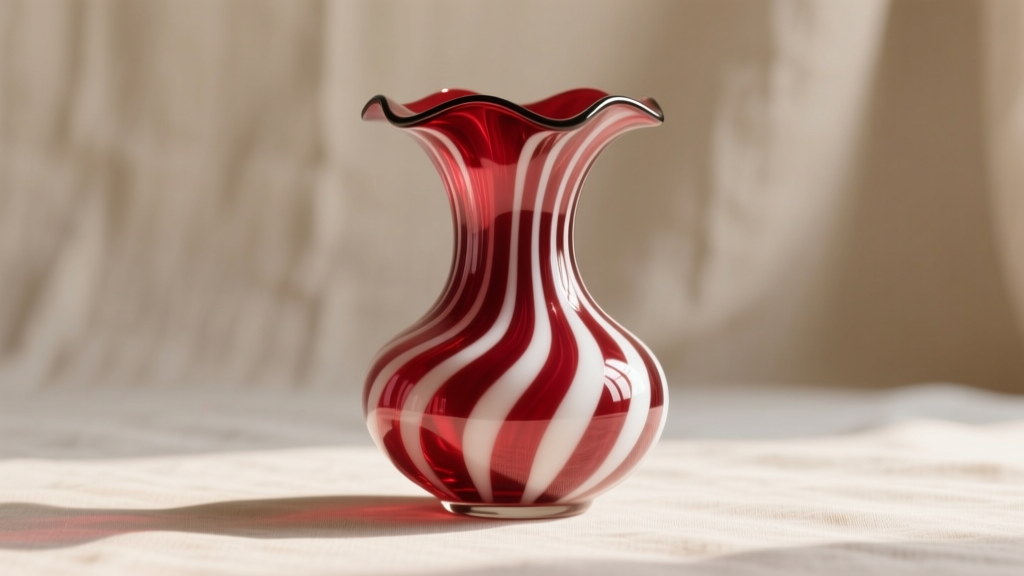
Cranberry Glass Vase 'Bud White Stripes Flared' — A Mid-Century American Masterpiece at 8 Inches

Life Magazine’s ‘Planes Over England’ Cover: A Vintage Paper Artifact from November 1939
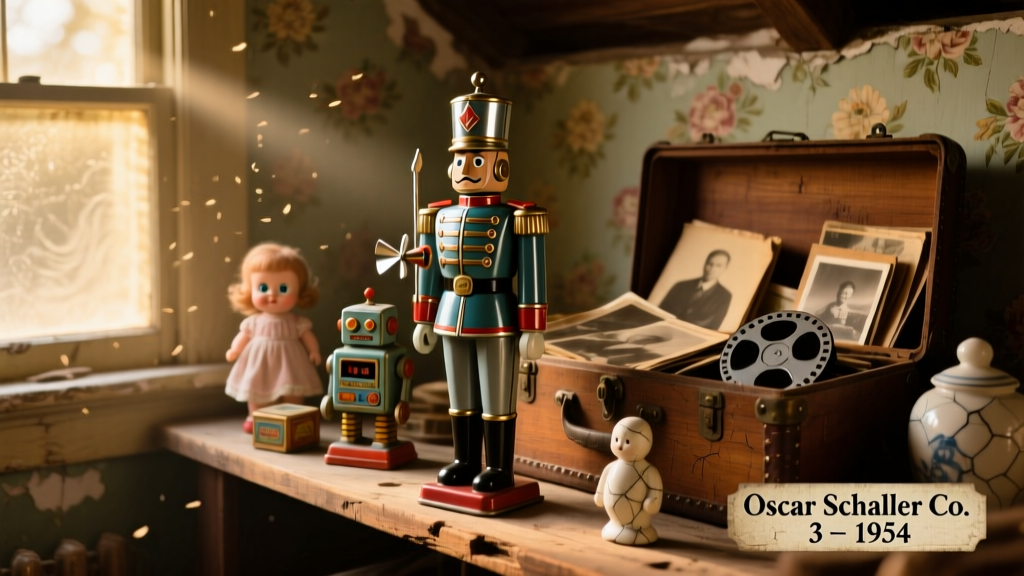
Oscar Schaller Co. No. 3: The Forgotten Giant of Mid-Century Tinplate Toy Trains
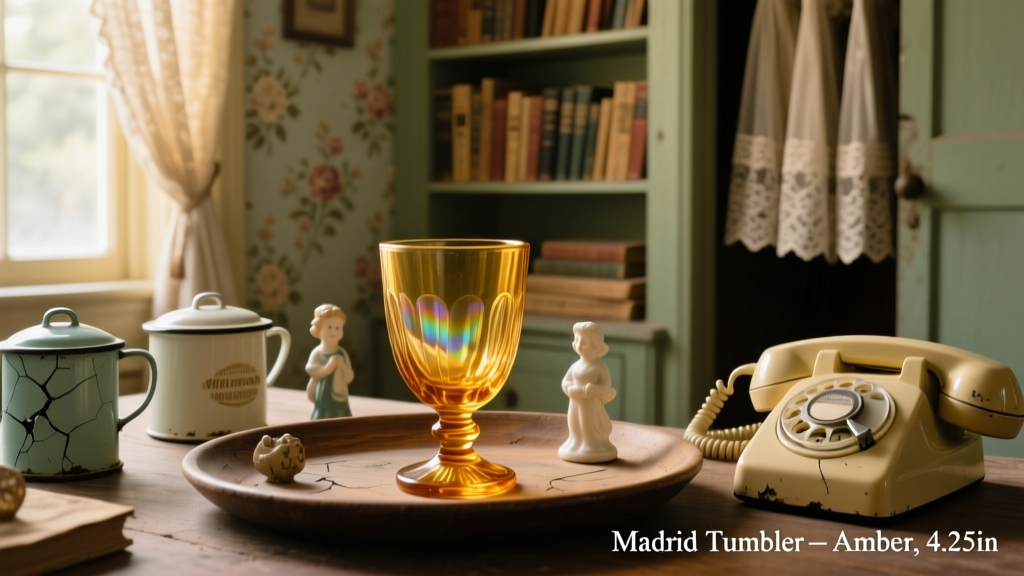
Depression Glass Madrid Tumbler in Amber: Authentic Identification, Production History, and Market Value of the 4¼-Inch Variant
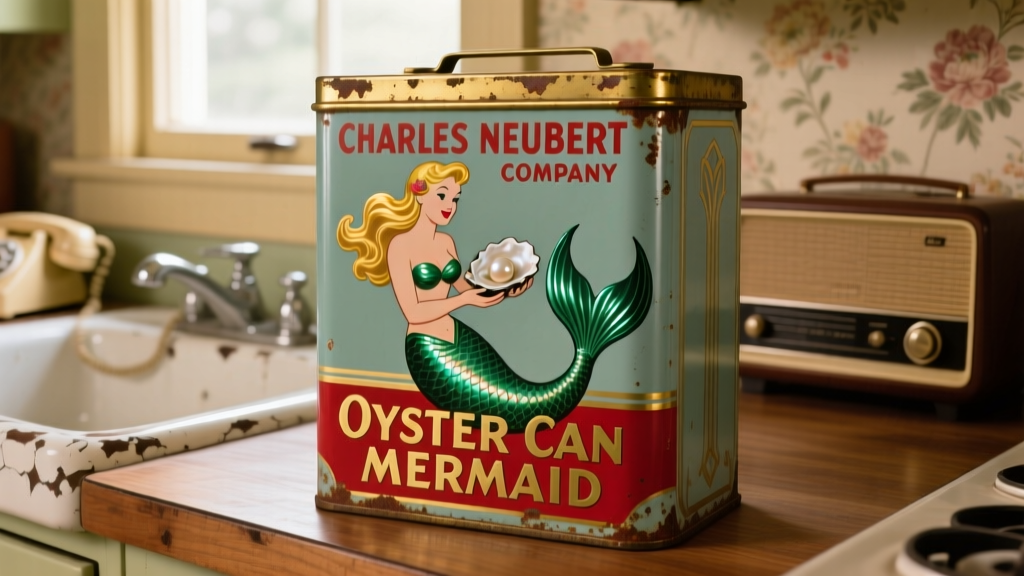
Advertising Tin Charles Neubert Company Oyster Can Mermaid 1 Gal: A Mid-Century Maritime Treasure
The Enduring Allure of Johnson Bros Dishware: A Mid-Century Collector’s Deep Dive
Herter Bros. Library Table with Carved Stretcher Base and Drawer: Anatomy, Provenance, and Appraisal of a Mid-Century Masterpiece