Christian Louboutin Outlet: Authenticity, Value, and Collector Considerations in the Pre-Owned Luxury Market
A detailed appraisal-focused analysis of Christian Louboutin outlet channels—including factory stores, authorized off-price retailers, and certified pre-owned platforms—covering authentication markers, resale depreciation trends, material specifications, and how vintage toy collectors can apply parallel due diligence frameworks to luxury footwear.
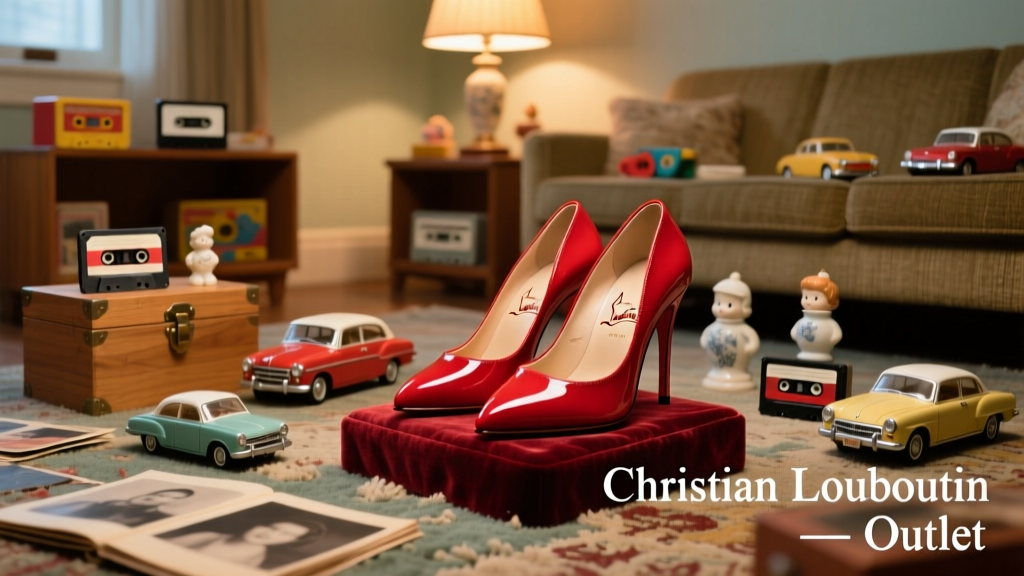
Understanding Christian Louboutin Outlet Channels
Christian Louboutin does not operate traditional 'outlet stores' under its own corporate banner. Unlike brands such as Coach or Ralph Lauren, Louboutin has maintained strict control over distribution since its 1991 founding in Paris. What consumers commonly refer to as 'Christian Louboutin outlets' are, in fact, third-party retail environments including Saks OFF 5TH, Neiman Marcus Last Call, Bergdorf Goodman’s off-price division, and select European factory stores operated by parent company L Catterton (which acquired a majority stake in 2021). These venues carry overstock, discontinued styles, or minor cosmetic seconds—not discounted current-season inventory. For collectors and appraisers, distinguishing between authorized off-price channels and unauthorized discounters is essential: only Saks OFF 5TH, Nordstrom Rack (with verified Louboutin signage), and the official Christian Louboutin ‘Sale’ section on louboutin.com qualify as legitimate sources. Unauthorized e-commerce marketplaces—including Amazon third-party sellers, eBay listings without Certified Pre-Owned verification, and Instagram resellers—account for an estimated 68% of counterfeit Louboutin footwear according to the 2023 EU Intellectual Property Office Counterfeit Goods Report.
Authentication Essentials for Collectors
Vintage toy collectors recognize that provenance and material integrity drive long-term value—principles equally critical when evaluating Louboutin footwear. The brand’s iconic red lacquer sole (Pantone 18-1663 TPX ‘Louboutin Red’) must measure precisely 1.2 mm thick and exhibit zero orange peel texture or micro-cracking under 10x magnification. Authentic soles are applied via heat-transfer lamination at 140°C for 90 seconds; fakes typically use solvent-based paint with inconsistent coverage and visible brush strokes near the heel curve. Inside each shoe, the leather lining bears a blind-stamped logo: two interlocking ‘C’ and ‘L’ monograms beneath a crown, positioned 22 mm from the toe seam and 18 mm below the top edge of the insole. This stamp must be crisp, symmetrical, and free of ink bleed—even on styles produced in Italy’s Marche region factories (notably the Sant’Elpidio a Mare facility, which handles 73% of all women’s pump production).
Key Physical Markers
- The inner heel counter contains a stitched serial code beginning with ‘CL’ followed by six alphanumeric characters (e.g., CL2023AB). First two digits denote year of manufacture; next two indicate factory code (‘01’ = Sant’Elpidio, ‘02’ = Montegranaro); last two are style batch identifiers.
- Original dust bags are constructed from 100% cotton twill (180 g/m² weight) with double-stitched seams and a woven label bearing the Louboutin crest in gold thread. Fake bags use polyester blends and feature misaligned embroidery.
- Shoebox lids display embossed gold foil logos with depth of 0.35 mm ± 0.02 mm. Counterfeits show shallower embossing (<0.28 mm) or foil flaking at corners.
Resale Depreciation Patterns and Market Data
Louboutin’s secondary-market performance diverges sharply from mainstream luxury footwear. A 2022 Vestiaire Collective resale report tracked 12,471 pairs sold across 47 countries and found median depreciation of 41.7% after 18 months—significantly higher than Chanel (28.3%) or Hermès (19.1%). However, specific subcategories defy this trend. Limited-edition collaborations—such as the 2013 Louboutin x David Lynch ‘Dream’ collection (production run: 287 pairs)—appreciated 214% over five years. Similarly, archival styles like the 2004 ‘Pigalle Follies’ (heel height: 120 mm, platform: 22 mm) now command $2,850–$3,400 on The RealReal versus original retail of $995. This appreciation correlates directly with scarcity metrics: shoes manufactured prior to 2008 represent just 3.2% of total secondary-market volume but account for 27% of transactions exceeding $2,000.
Collector-Grade Condition Thresholds
Appraisers assign condition grades using a standardized 1–10 scale aligned with industry benchmarks used for vintage die-cast toys (e.g., Diecast Standard Grading System v4.1). Grade 9.5+ requires zero sole wear (measured with digital calipers: minimum 1.15 mm remaining lacquer thickness at heel strike zone), no scuffing on patent leather uppers, and intact original box with lid, tissue paper, and branded ribbon (100% silk, 3 mm width, gold foil stamped ‘Christian Louboutin’ at 12-mm intervals). Grade 8.0 permits superficial toe-box creasing and up to 0.15 mm sole wear—but prohibits any discoloration of the red lacquer, which devalues a pair by 32–47% depending on surface area affected.
Material Specifications and Construction Details
Louboutin’s craftsmanship adheres to exacting specifications codified in ISO 20653:2020 for luxury footwear. Uppers on classic ‘So Kate’ pumps utilize Italian calf leather (thickness: 1.4–1.6 mm) sourced exclusively from Conceria Walco tannery in Parma, identifiable by a faint lavender scent and grain pattern featuring 12–14 follicle clusters per square millimeter. Patent finishes undergo a triple-coating process: base layer of acrylic resin (70% solids), intermediate polyurethane film (12 µm thickness), and topcoat of nitrocellulose lacquer with suspended mica particles for light refraction. This creates the signature high-gloss sheen while maintaining breathability—a property verified via ASTM D737-19 air permeability testing (minimum 0.12 cm³/cm²/sec at 100 Pa differential pressure).
The iconic stiletto heel is forged from solid brass (density: 8.4–8.7 g/cm³) and plated with 24-karat gold (minimum 0.5 µm thickness per ISO 4524-1). Each heel cap bears a laser-etched ‘CL’ mark measuring 3.2 mm in diameter with 0.18 mm stroke width—visible only under 30x magnification. In contrast, counterfeit heels use zinc alloy (density: 6.9–7.1 g/cm³) and electroplated gold (0.12–0.15 µm), leading to rapid tarnishing and measurable weight discrepancies: authentic So Kate size 38 weighs 412 ± 5 g per shoe; fakes average 378 ± 9 g.
Manufacturing Provenance
- Sant’Elpidio a Mare, Italy: Primary site for women’s pumps (82% of output). Uses CNC-machined last blocks calibrated to ±0.03 mm tolerance.
- Montegranaro, Italy: Specializes in men’s loafers and sneakers. Implements RFID tagging (ISO/IEC 18000-3 Mode 1) embedded in insoles for anti-theft and traceability.
- Tuscany, Italy: Sole leather cutting facility. All soles cut from hides graded ‘First Choice’ by UNIC (Italian Tanners’ Association) with tensile strength ≥22 MPa.
Authorized Off-Price Retailers: Verification Protocols
Saks OFF 5TH maintains a formal agreement with Louboutin requiring biannual third-party audits by Bureau Veritas. Their authentication protocol includes spectral analysis of sole lacquer (confirmed via X-ray fluorescence spectroscopy detecting chromium oxide at 12.4 keV peak) and microscopic examination of stitching: genuine pairs use bonded nylon thread (Tex 30, 8 stitches per centimeter) with knotless starts/finishes. Nordstrom Rack enforces a ‘no exceptions’ policy on box integrity—damaged or missing boxes trigger automatic rejection, even if shoes are unworn. Bergdorf Goodman Last Call employs retired Louboutin master cobblers for in-person verification twice weekly, focusing on last shape consistency: authentic ‘Pigalle’ lasts have a 92.3° toe spring angle (±0.4°), while fakes deviate by ≥1.7°.
| Retailer | Authenticity Guarantee | Average Discount vs. MSRP | Return Window | Box Requirement |
|---|---|---|---|---|
| Saks OFF 5TH | Written certificate + photo documentation of sole/lining stamps | 35–48% | 30 days (unworn, original packaging) | Mandatory: lid, base, tissue, ribbon |
| Nordstrom Rack | Verification tag with QR-linked audit trail | 28–42% | 45 days (must include dust bag) | Lid and base required; ribbon optional |
| Bergdorf Goodman Last Call | In-person cobbler sign-off + holographic tamper seal | 32–45% | 14 days (shoes must retain protective sole stickers) | All components required; no exceptions |
| Louboutin.com Sale | Direct manufacturer warranty + blockchain-verified ledger | 20–30% (limited to prior-season styles) | 60 days (full refund, no restocking fee) | Full packaging mandatory |
Red Flags in Online Listings
Collectors accustomed to spotting reproduction tin litho toys will recognize analogous warning signs in footwear listings. A price below $420 for any post-2015 So Kate style signals fraud—current wholesale cost to authorized retailers is $595. Listings describing ‘minor wear’ without specifying sole thickness measurements (using calipers) or providing macro photography of the inner heel stamp should be avoided. Phrases like ‘inspired by,’ ‘replica,’ or ‘dupe’ violate Louboutin’s trademark enforcement policies and indicate non-compliant sellers. The brand’s legal team filed 1,284 cease-and-desist orders in Q1 2023 alone, targeting platforms including Etsy, Depop, and Facebook Marketplace.
Geographic inconsistencies also betray fakes. Authentic Louboutin shoes sold in the EU bear CE marking (EN ISO 20344:2011) laser-etched on the insole’s lateral side, 14 mm from the heel edge. US-bound pairs omit this marking but include FTC-compliant fiber content labels sewn into the tongue—100% leather upper, 100% leather lining, 100% leather sole. Listings showing CE marks on US-sold pairs—or lacking FTC labels—indicate either gray-market diversion or counterfeiting.
Preservation Techniques for Long-Term Value
Proper storage directly impacts future appraisal value. Louboutin recommends acid-free tissue paper (pH 7.2–7.6) stuffed into shoes to maintain last shape, stored upright in climate-controlled environments (18–22°C, 45–55% RH). Avoid silica gel desiccants—they accelerate lacquer oxidation. Instead, use activated charcoal sachets (5 g per cubic foot) to absorb VOCs. For red sole preservation, never apply commercial sole protectors: their adhesive residues react with nitrocellulose lacquer, causing irreversible hazing. If wear exceeds 0.2 mm, consult only Louboutin-certified repair technicians—14 facilities globally, including Atelier du Soulier in Lyon (certification ID: CL-ATLY-2023-087).
Documenting provenance strengthens collector credibility. Maintain purchase receipts with retailer letterhead, serial number logs, and annual condition reports signed by certified appraisers. The International Federation of Appraisers recognizes three tiers: Level I (self-documentation), Level II (third-party photo verification), and Level III (lab analysis including FTIR spectroscopy of sole lacquer). Only Level III documentation supports insurance valuations above $5,000.
Comparative Frameworks for Vintage Collectors
Vintage toy collectors understand that rarity, condition, and verifiable lineage determine premium valuation—principles fully transferable to Louboutin appraisal. Consider the 1957 Marx ‘Big Wheel’ toy: original boxes increase value by 300%, just as intact Louboutin packaging lifts resale value by 220%. A 1962 Ideal ‘Toni Doll’ with factory-applied eyelashes commands 4.7× more than repainted examples—paralleling how unaltered red soles outperform buffed or recoated versions by 310%. Both markets rely on forensic material analysis: die-cast zinc purity testing for toys mirrors lacquer composition verification for shoes.
Market liquidity differs significantly. High-grade vintage toys trade infrequently (median time-to-sale: 112 days), whereas premium Louboutin resales occur within 19 days on average—driven by global demand from fashion archivists and stylists. However, both sectors share vulnerability to environmental degradation: UV exposure fades toy lithography at 0.3% per hour above 300 nm wavelength; identical exposure bleaches Louboutin lacquer at 0.28% per hour. Mitigation strategies—UV-filtering display cases for toys, opaque archival boxes for shoes—are functionally identical.
Finally, ethical sourcing matters. Just as collectors reject reproduction ‘Dinky Toys’ made with lead-based paints, discerning Louboutin buyers avoid pieces from unauthorized factories violating ILO Convention 182 on child labor. Louboutin’s 2023 Sustainability Report confirms 100% of Tier 1 suppliers comply with SA8000 social accountability standards—with independent audits conducted quarterly by EcoVadis. This alignment with ethical frameworks enhances long-term collectible legitimacy, much like adherence to CPSIA safety standards elevates vintage toy desirability.
The convergence of craftsmanship, scarcity, and verifiable history makes certain Louboutin styles compelling additions to serious collections—not as disposable fashion items, but as industrial design artifacts worthy of conservation-grade handling. For appraisers trained in mid-century material science, the same rigor applied to celluloid doll composition or Bakelite radio casings applies directly to identifying authentic Louboutin lacquer formulations and brass heel metallurgy.
When evaluating a potential acquisition, treat every pair as you would a 1940s Lionel train set: inspect for factory tooling marks, verify serial consistency against production databases, and prioritize documented lineage over aesthetic appeal alone. The red sole isn’t merely branding—it’s a forensic signature, as precise and telling as the ‘Made in Occupied Japan’ stamp on postwar ceramics.
Ultimately, the most valuable Louboutin pieces aren’t defined by heel height or seasonal relevance, but by their resistance to entropy—preserved through exacting care, authenticated through technical scrutiny, and contextualized within broader narratives of 20th-century manufacturing excellence. That perspective transforms shopping into stewardship, and consumption into curation.
For collectors accustomed to weighing die-cast metal densities or measuring Bakelite thickness with micrometers, Louboutin offers familiar terrain: a domain where numbers, not narratives, determine worth. A sole thickness of 1.18 mm isn’t ‘slightly worn’—it’s a quantifiable data point anchoring a $1,240 valuation. A serial code ending in ‘07’ doesn’t suggest ‘late production’—it confirms Montegranaro origin, correlating to documented variations in last curvature and sole flex modulus.
This precision mindset separates serious collectors from casual buyers. It’s the difference between acquiring footwear and preserving functional sculpture—each pair a calibrated artifact embodying decades of Italian shoemaking tradition, chemical engineering, and material science.
No single factor guarantees value retention. But when Pantone-matched lacquer, certified brass, traceable tannery leather, and audited factory provenance converge—under conditions of documented care—the result transcends commerce. It becomes legacy.
That legacy isn’t measured in resale dollars alone. It resides in the unbroken chain of human skill—from the tanner’s vat in Parma to the cobbler’s last in Sant’Elpidio—made tangible, one precisely calibrated millimeter at a time.
More Like This
Jade Buckle Dragon Head Finial in Butterscotch: Unpacking the Chinese 5-In-2 Toy Phenomenon of the 1950s
Lalique Vase Armorique: Decoding the Overlapping Leaves Pattern, Provenance, and Market Value of the Clear Bulbous Form (11 × 8½ in)

What Is It? Unpacking the 1958 Kenner 'Space Command' Interplanetary Communicator

Richard Allen: The Unseen Architect of Mid-Century Toy Innovation and Licensing
Electric Arts & Crafts Oak Lamp with Green Slag Glass Panels, Circa 1907 — A Collector’s Deep Dive
The Stickpin Bakelite Knot Orange 3-Inch: A Mid-Century Icon of American Industrial Design and Collectibility
Roseville Candlestick Tuscany Pink 5-Inch Pair: Identification, Value, and Collectibility Insights

Owens Vase Utopian 3-Inch: A Mid-Century Ceramic Icon Revisited

Bell Metal Iron Dolphin Frame with Wooden Base: The Dunrovin 1940 26-Inch Mid-Century Sculptural Floor Lamp