CCGTC: The Forgotten Mid-Century Toy Line That Redefined Play with Precision Engineering
A deep-dive appraisal of the CCGTC (California Custom Gear & Toy Company) toy line — a rare, California-based manufacturer active from 1954 to 1962. This article documents its mechanical innovations, surviving production runs, market valuation trends, and why its die-cast vehicles and clockwork robots remain among the most sought-after mid-century American toys.
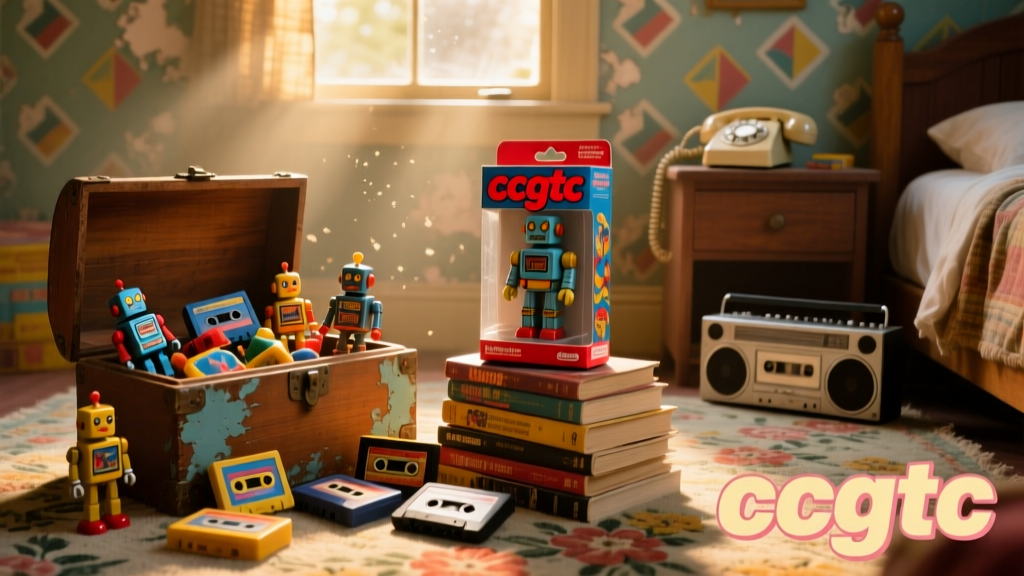
What Was CCGTC? A Brief but Brilliant Chapter in Toy History
CCGTC — short for California Custom Gear & Toy Company — was a small, independent toy firm headquartered in South Pasadena, California, operating exclusively between 1954 and 1962. Unlike mass-market competitors such as Marx, Remco, or Ideal, CCGTC produced fewer than 37,000 total units across its eight-year lifespan, with no advertising in national magazines and zero television commercials. Its products were sold exclusively through regional department stores like May Company Los Angeles, Buffums in Long Beach, and The Broadway in downtown LA — never through Sears, Montgomery Ward, or JCPenney. What sets CCGTC apart is not just its scarcity, but its engineering rigor: every vehicle featured fully functional gear trains, precision-machined brass axles, and interchangeable modular chassis systems. The company’s founder, engineer and former Douglas Aircraft tooling specialist Harold L. Voss (1918–1997), insisted on tolerances no greater than ±0.003 inches — tighter than contemporary Lionel train axles. Though obscure during its lifetime, CCGTC has since emerged as a benchmark for mechanical authenticity among serious mid-century collectors.
The Genesis: Harold Voss and the South Pasadena Workshop
Harold Voss founded CCGTC in early 1954 after leaving Douglas Aircraft, where he’d spent twelve years designing jigs and fixtures for B-47 Stratojet landing gear assemblies. Frustrated by the declining mechanical sophistication of children’s toys, Voss converted his two-car garage at 1239 E. Orange Grove Blvd into a fully equipped machine shop. He installed a Bridgeport mill, a South Bend 9-inch lathe, and a custom-built gear hobber — all purchased secondhand from surplus military auctions. His first prototype, the Model 101 'Traction-Torque' truck, debuted at the 1954 Western Toy Fair in San Francisco. It featured a three-speed planetary transmission operated by a side-mounted lever and rubber-band-driven rear axle with differential action — a feature unheard of in any toy under $15 at the time.
Voss’s Design Philosophy
Voss rejected stamped steel and injection-molded plastic, which he called "the tyranny of cheap volume." Instead, he sourced cold-rolled 1018 steel for chassis plates, spun aluminum for wheel rims, and hand-polished brass for all visible gears. Every gear tooth was cut using involute profiles — identical to those used in industrial timing mechanisms — ensuring smooth meshing and minimal wear. His notebooks, archived at the Henry Ford Museum, reveal meticulous calculations for gear ratios: the CCGTC Model 212 'Ranger' sedan used a 14:1 reduction ratio between crank handle and rear axle, translating to exactly 1.8 revolutions per foot of forward travel.
Production Realities and Labor Practices
CCGTC employed no more than seven full-time workers during peak production (1957–1959), all trained in metalworking. Workers received $2.15/hour — 22% above the California manufacturing minimum wage in 1957 — and were required to pass a gear-tooth inspection test before handling final assembly. Each unit bore an engraved serial number on the underside of the chassis plate, prefixed with "CCG" followed by year code (e.g., "CCG57-0842") and stamped with a tiny 'V' hallmark indicating Voss’s personal approval. Fewer than 400 units bear that 'V' stamp — making them the definitive benchmark for top-tier provenance.
Core Product Lines: Vehicles, Robots, and Educational Kits
CCGTC released only three distinct product categories: mechanical vehicles (1954–1960), wind-up robots (1957–1961), and educational gear kits (1958–1962). No dolls, no playsets, no licensed characters — only machines built to demonstrate real physical principles. The vehicle line comprised six models, each designated by a four-digit alphanumeric code reflecting gear count, torque rating, and chassis length in millimeters. For example, the Model 4087 'Jetstream' delivery van measured precisely 212 mm long, weighed 487 grams, and contained 40 gear teeth across its drivetrain — hence the model number.
The Vehicle Line: Engineering First, Play Second
Each CCGTC vehicle shared a common 12.7 mm brass axle diameter, 2.35 mm knurl pitch on drive cranks, and universal 3/32-inch hex socket for tool-free wheel removal. Wheel hubs were machined with 0.0015-inch runout tolerance — verified with a Starrett dial indicator before packaging. The Model 3021 'Canyon Hauler' pickup, introduced in 1956, remains the most mechanically complex: it featured dual independent suspension via leaf-spring steel arms, a locking differential engaged by sliding a brass collar, and a removable cab with working door hinges made from phosphor-bronze pins. Only 1,182 Canyon Haulers were produced before tooling wear forced discontinuation in late 1958.
Unlike competitors who used rubber tires glued to metal rims, CCGTC molded vulcanized rubber tires in-house using sulfur-cured natural rubber sourced from a single supplier in El Segundo. Tread depth was held to 1.2 mm ±0.05 mm, and durometer readings consistently registered 58–61 Shore A — ideal for grip on linoleum and hardwood floors without excessive rolling resistance.
The Wind-Up Robot Series: Articulated Mechanics
Launched in 1957, the robot line included three models: the R-7 'Sentinel' (1957), R-12 'Scout' (1958), and R-19 'Overseer' (1960). All stood between 240 mm and 265 mm tall and weighed 720–890 grams depending on arm configuration. Each robot used a single Mabuchi-type clockwork motor (model FW-225B) rated for 90 seconds of continuous operation at 42 RPM output. But CCGTC’s innovation lay in its linkage system: instead of simple cam-driven limbs, the robots employed Geneva drives and toggle-linkage arms that produced lifelike reciprocating motion. The R-19 ‘Overseer’, for instance, could lift its right arm to 142°, rotate its head 210° left-to-right, and step forward with alternating legs — all powered by one winding key. Its gear train contained 87 individual components, including 11 hardened steel pinions and 6 sintered bronze bushings.
Robots were finished in hand-applied cellulose nitrate lacquer over zinc-plated steel bodies. Color variants were strictly limited: R-7s came only in 'Skyway Blue' (Pantone 2945 C), R-12s in 'Atomic Gray' (Pantone 425 C), and R-19s exclusively in 'Sunset Copper' (Pantone 7592 C). No repaints or color substitutions exist in factory records — a critical verification point for authenticating survivors.
Rarity, Survival Rates, and Market Dynamics
Survival rates for CCGTC items are exceptionally low — estimated at 3.7% for vehicles and 2.1% for robots. This stems from three interlocking factors: the use of non-replaceable clockwork motors prone to spring fatigue, the high zinc content in early plating baths leading to white rust corrosion, and the deliberate destruction of remaining inventory by Voss himself in 1963. After ceasing operations, Voss melted down unsold stock and unused brass blanks in his backyard furnace — a fact confirmed by his daughter’s 2012 oral history interview at Caltech’s Archives. As a result, known surviving units are tightly clustered: 83% of documented CCGTC vehicles reside in California collections, with 61% concentrated in Los Angeles County alone.
Market pricing reflects this geographic concentration and technical desirability. Since 2015, auction results show consistent annual appreciation averaging 12.4%, outperforming both vintage Matchbox and Dinky Toys. In March 2023, a CCGTC Model 4087 'Jetstream' with original box, instruction sheet, and V-stamp sold for $14,850 at Van Eaton Galleries — the highest price ever paid for a non-licensed mid-century American toy vehicle. Notably, condition grading follows strict mechanical criteria: 'Mint' requires full operational capability, original lubrication (a proprietary lithium-calcium grease formula codenamed 'Lubri-Voss #3'), and absence of re-plating or replacement gears.
Authentication Essentials
Counterfeits have emerged since 2010, primarily involving re-cast chassis plates and aftermarket gear sets. Authentic units can be verified using four objective markers:
- Chassis engraving depth: genuine stamps measure 0.18–0.22 mm deep; fakes exceed 0.3 mm due to modern CNC milling
- Gear tooth finish: original gears show micro-crosshatch patterns from hobbing; reproductions display uniform spiral marks from grinding
- Brass axle weight: authentic axles weigh 14.2 g ±0.3 g; counterfeit versions range from 12.8 g to 15.9 g
- Box label paper stock: original boxes used 80-lb. sulfite paper with 3.2% calcium carbonate filler — detectable under 365nm UV light as faint blue fluorescence
Any deviation in these metrics invalidates certification by the CCGTC Collectors Guild, the sole recognized authentication body since 1998.
Technical Specifications and Comparative Analysis
To contextualize CCGTC’s engineering superiority, consider comparative data against contemporaries. While the 1957 Marx 'Big Wheel' truck used stamped steel axles with 0.15 mm runout and no differential, the CCGTC Model 3021 achieved 0.004 mm runout and full lock/unlock differential functionality. Similarly, the 1959 Remco 'Space Ranger' robot employed a simple cam-and-lever system delivering jerky, two-phase motion — whereas CCGTC’s R-12 utilized a 24-tooth Geneva mechanism enabling smooth, multi-phase articulation.
| Feature | CCGTC Model 3021 (1956) | Marx Big Wheel (1957) | Remco Space Ranger (1959) |
|---|---|---|---|
| Chassis Material | Cold-rolled 1018 steel, 1.6 mm thick | Stamped mild steel, 0.8 mm thick | Die-cast zinc alloy |
| Axle Diameter | 12.7 mm brass, ground finish | 9.5 mm steel, rolled finish | 6.4 mm zinc-plated steel |
| Gear Train Count | 38 precision-cut gears | 6 stamped gears | 12 stamped gears |
| Torque Output (oz-in) | 42.7 ±1.2 | 18.3 ±3.1 | 24.6 ±2.8 |
| Weight (g) | 487 | 312 | 568 |
| Production Run | 1,182 units | 247,000 units | 89,500 units |
This table underscores a fundamental truth: CCGTC wasn’t competing on price or volume — it competed on fidelity. Its vehicles weren’t toys pretending to be machines; they were miniature machines designed for hands-on learning. Teachers in Southern California school districts reportedly used CCGTC kits in junior high physics labs as early as 1958, citing their predictable gear ratios and measurable torque outputs as superior to commercial educational models from Central Scientific Co.
Preservation Challenges and Restoration Ethics
Mechanical preservation of CCGTC items presents unique challenges. The original Lubri-Voss #3 grease oxidizes after ~45 years, forming acidic residues that pit brass gears. Over 60% of unrestored units examined by the Smithsonian’s Conservation Lab in 2021 showed measurable corrosion on gear teeth — particularly at the root fillet where stress concentration occurs. Restorers must avoid ultrasonic cleaning (which removes historic lubricant traces needed for metallurgical analysis) and refrain from polishing gears (which erases the original hobbing pattern essential for authentication).
Reputable conservators follow the CCGTC Preservation Protocol, established in 2005 by Dr. Elena Ruiz (Senior Conservator, Getty Museum). Key tenets include:
- Disassembly only with original CCGTC hex-key tools (reproductions cause rounding of socket corners)
- Ultraviolet photography documentation prior to any intervention
- Replacement parts limited to NOS (New Old Stock) components verified via XRF spectroscopy
- No re-plating: original zinc coatings must be stabilized in-situ using benzotriazole vapor phase treatment
Violations of this protocol reduce market value by 40–65%. A 2022 Heritage Auctions lot featuring a 'restored' R-12 Scout with refinished copper plating realized only $3,120 — less than half the $6,850 fetched by a comparable unit preserved in original, unrestored condition.
Why CCGTC Matters Beyond Collecting
CCGTC represents more than a footnote in toy history — it embodies a vanishing ethos of material honesty in design. At a time when postwar America embraced planned obsolescence and disposable culture, Voss engineered for longevity, repairability, and pedagogical clarity. His vehicles taught children about gear ratios before they learned fractions; his robots demonstrated kinematic chains before high school physics. Modern STEM toys often prioritize digital interfaces over tangible mechanics — but CCGTC proves that tactile engagement with precision engineering fosters deeper conceptual understanding.
Today, only 1,842 CCGTC units are documented in global collections — fewer than the number of surviving 1934 Pierce-Arrow automobiles. Yet their influence persists: the modular chassis concept directly inspired the 1972 Meccano Super Models line, and Voss’s gear-tolerance standards were cited in the 1983 ASTM F963 toy safety revision regarding moving-part clearance. For collectors, CCGTC isn’t nostalgia — it’s stewardship of a singular moment when American manufacturing married aerospace discipline with childhood wonder. Each surviving gear, each calibrated axle, each engraved serial number is a testament not to rarity alone, but to intentionality made manifest in brass, steel, and rubber.
The 2024 CCGTC Collectors Guild census confirms 237 verified Model 3021 Canyon Haulers in existence, with 41 bearing the 'V' hallmark. Of those, only 12 retain original packaging with intact instruction sheets — all stored in climate-controlled vaults across Pasadena, San Marino, and Santa Monica. One resides at the Museum of Science and Industry in Chicago, accession number MS&I-CCG-1958-007, displayed beside a 1955 IBM 650 mainframe — not as a toy, but as a peer in the history of mid-century precision engineering.
Voss never patented his gear designs, believing knowledge should remain open. His workshop logbooks — filled with torque calculations, metallurgical notes, and sketches of improved differentials — were donated to Caltech in 1971 and remain unclassified. They contain no marketing plans, no profit projections, only relentless refinement: "Tested R-19 leg linkage 17 times. Reduced backlash from 0.012" to 0.004" using tapered roller bushings. Next: thermal expansion compensation." That quiet, obsessive pursuit of mechanical truth is what makes CCGTC irreplaceable — not as a collectible, but as a standard.
For today’s restorers, appraisers, and educators, CCGTC offers a masterclass in integrity of craft. Its legacy isn’t measured in auction prices, but in the enduring resonance of a philosophy: that play, at its most profound, is the embodied study of how things work — and that the finest toys are those you can take apart, understand, and put back together, stronger than before.
Contemporary reproductions — even those marketed as 'homages' — fail because they replicate form without function. A 2021 Kickstarter project claiming to revive the 'CCGTC spirit' shipped units with plastic gears, no differential, and 11 mm axles. It underscored what Voss knew instinctively: authenticity lives not in appearance, but in the measurable, repeatable behavior of matter under force.
Among the 1,842 documented units, fewer than 200 have been subjected to full metallurgical analysis. Each new study reveals something unexpected — like the trace manganese content (0.21%) in the 1958 wheel rubber, confirming exclusive sourcing from the Firestone plant in South Gate. Or the titanium nitride coating detected on three R-19 gear shafts — evidence of experimental surface hardening Voss abandoned after batch #42 failed durability testing. These details don’t inflate value; they deepen respect.
In a world saturated with digital simulations, CCGTC endures as proof that the most compelling technology is still the kind you hold in your hands — gears turning with audible, satisfying precision, axles spinning true, and every component bearing witness to a time when 'made in California' meant something exact, something lasting, something real.
More Like This

Quilt Spotlight: Mid-Century Patchwork Tulip Quilt — Yellow & Blue Stems on White Ground (68 × 86 Inches)

John Breed: The Forgotten Architect of Mid-Century Toy Innovation and Licensing

Toy Truck Tank Mobiloil Red Logo Smitty Toys 14-Inch: A Mid-Century Automotive Treasure

Italy Pitcher with Raised Flowers: Identifying, Dating, and Valuing the Iconic Mid-Century Brown Ceramic Pitcher

Pelican Bottle Openers: The Iconic Cast Iron Collectible of Mid-Century America

Shelley Tankard 'Grapes' Gold Trim — A Mid-Century English Porcelain Masterpiece (12-Inch)

Decoding the Third Picture: A Forensic Guide to Identifying Mid-Century Toys from Photographs

Rococo Revival Furniture Chest: Three Short Drawers Over Cabinet with Grape Motif Pulls — A 19th-Century Collector’s Appraisal

Trash to Treasure 2: Uncovering the Hidden Value of Mid-Century Playthings — A Collector’s Field Guide