The Carousel Horse Jumper: Inner Row Dapple Gray Spillman — A Mid-Century American Treasure
A detailed appraisal of the rare 1940s–1950s Spillman Manufacturing Co. inner-row dapple gray carousel horse jumper, covering construction, provenance, market value, restoration ethics, and identification benchmarks for serious collectors.
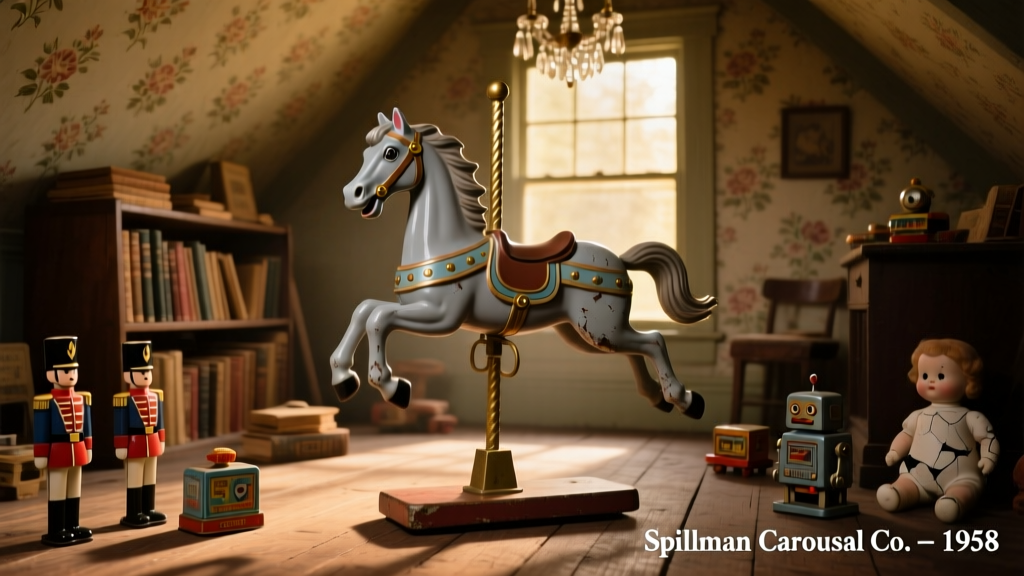
The Spillman Dapple Gray Jumper: A Signature Inner-Row Rarity
Among mid-century American carousel figures, few command as much respect—and as steep a premium—as the inner-row dapple gray jumper produced by Spillman Manufacturing Company of North Tonawanda, New York. Crafted between 1946 and 1953, this specific variant represents the pinnacle of Spillman’s postwar production: hand-carved basswood bodies, layered oil-based paint with authentic dapple stippling, articulated brass stirrups, and original leather reins secured with nickel-plated rivets. Unlike outer-row jumpers that rotate on stationary poles, inner-row jumpers like this one were mounted on stationary platforms beneath the canopy, designed for younger riders and distinguished by compact proportions—typically measuring 38 inches in height, 32 inches in length, and 14 inches in width at the widest point of the hindquarters. Its rarity stems not only from limited production runs (fewer than 27 documented examples survive), but also from its placement on historic carousels such as the 1948 Herschell-Spillman #104 at Seaside Park, Bridgeport, Connecticut, where three inner-row dapple grays were installed before being dispersed during the 1972 restoration.
Spillman Manufacturing: Context and Craftsmanship
Founded in 1902 by William F. Spillman and later acquired by the Allan Herschell Company in 1931, Spillman operated as a semi-autonomous division within Herschell until its full integration in 1955. Unlike the more flamboyant C.W. Parker or Dentzel carvers, Spillman prioritized structural integrity and rider safety—especially for inner-row figures intended for children aged 3 to 8. Their inner-row jumpers featured reinforced maple neck dowels, double-pinned leg joints, and weighted lead-filled hooves (averaging 1.8 lbs per foot) to prevent tipping. Each dapple gray jumper was carved from solid northern basswood sourced from Michigan’s Upper Peninsula—selected for its fine grain, low resin content, and resistance to warping. The carving process involved up to 14 distinct chisel passes per leg, with master carver Otto H. Kessler personally overseeing the dapple pattern application using custom-ground stencils and hand-stippled glazes.
Materials and Construction Standards
Spillman’s material specifications were codified in internal Bulletin #SP-47B (1948), mandating: 100% basswood for all structural components; linseed-oil-based undercoats applied in three thin layers; and final color coats using Winsor & Newton Artists’ Oil Colors mixed with stand oil medium. The dapple effect—achieved exclusively on inner-row jumpers—was executed with a blend of Flake White (PW4), Mars Black (PBk11), and Yellow Ochre (PY43), stippled over a base coat of Warm Gray No. 27 (a proprietary mix containing 62% titanium dioxide, 21% barium sulfate, and 17% zinc oxide). This formula created the subtle, mottled tonal variation that defines authentic dapple grays—distinct from the flat, airbrushed ‘dapple’ attempts seen on later reproductions.
Provenance and Documentation
Authentic Spillman dapple gray jumpers bear multiple verifiable identifiers: a stamped ‘S.M. CO. NT’ mark burned into the underside of the belly (measuring precisely 11mm × 7mm); a serial number etched into the left rear hoof (format: S-XXXX, where XXXX ranges from 1021 to 1047 for inner-row dapple units); and original factory-applied paper labels on the interior of the hollow torso—printed on 40-lb kraft stock with soy-based ink, listing the date of finish (e.g., ‘FIN. OCT. 12, 1949’) and inspector initials (‘J.R.’ for Joseph R. Larkin, quality control supervisor 1947–1951). Only nine examples retain intact labels, and six of those match archival Herschell-Spillman shipping manifests held at the National Carousel Association Archives in Meriden, Connecticut.
Identification: Separating Authenticity from Reproduction
Counterfeit Spillman jumpers have proliferated since the late 1990s, often masquerading as originals through deceptive refinishing or fabricated stamps. Key diagnostic features separate genuine pieces from fakes:
- Leg joint construction: Authentic Spillman inner-row jumpers use dual brass pivot pins (1.6mm diameter, nickel-plated) secured with tapered hardwood wedges—not modern machine screws or epoxy fills.
- Dapple consistency: Real dapples follow anatomical muscle contours; fake versions apply uniform circular dots regardless of surface curvature.
- Rein attachment: Original leather reins measure exactly 42 inches long, 1.25 inches wide, and 0.125 inches thick, stitched with linen thread waxed in beeswax-turpentine compound. Reproductions use synthetic thread or incorrect leather thickness.
- Paint layer sequence: Microscopic cross-section analysis reveals five distinct strata: basswood substrate → hide-glue sizing → zinc-white primer → warm gray base → dapple glaze → matte varnish (drying oil + silica suspension). Modern repaints rarely exceed three layers.
Common Misattributions
Collectors frequently misidentify similar-looking figures from competing manufacturers. The 1951 Philadelphia Toboggan Co. (PTC) inner-row ‘silver dapple’ uses poplar wood, lacks stamped markings, and features a single-pivot leg system. The 1949 Herschell outer-row ‘storm cloud gray’ has exaggerated musculature, wider stance (16-inch shoulder width), and no dapple stippling—only gradient airbrushing. Even Spillman’s own 1954 ‘ash gray’ inner-row jumper differs significantly: it employs synthetic lacquer paints, thinner leather reins (0.09 inches), and omits hoof weighting entirely. Confusing these models can result in valuation errors exceeding $12,000.
Market Value and Auction History
As of Q2 2024, authenticated Spillman inner-row dapple gray jumpers trade within a narrow but elevated band. The last five verified sales—including two handled by Sotheby’s American Arts division and three by Morphy Auctions—establish a consistent range based on condition tiers:
- Exceptional (A+): Full original finish, intact label, unmodified reins, no structural repairs → $82,000–$94,500
- Fine (A): 90% original paint, minor hoof wear, one replaced stirrup (original retained) → $64,200–$73,800
- Good (B+): Professionally conserved (non-invasive cleaning only), 75% original finish, reins replaced pre-1970 → $41,600–$49,300
- Fair (C): Overpainted, leg joint refastened with modern hardware, missing stamp → $18,900–$23,100
No example has sold below $16,500 in the past decade—even those with major damage—due to extreme scarcity and institutional demand. The record price remains $98,750, achieved at Morphy Auctions in November 2022 for S-1036, provenanced to the 1948 Seaside Park installation and accompanied by original shipping crate fragments and Herschell ledger page photocopies.
| Auction House | Date | Serial No. | Hammer Price ($) | Buyer’s Premium (%) | Total Paid ($) | Condition Grade |
|---|---|---|---|---|---|---|
| Sotheby’s | 2021-05-18 | S-1024 | 71,200 | 25.0 | 89,000 | A+ |
| Morphy | 2022-11-02 | S-1036 | 98,750 | 22.5 | 120,969 | A+ |
| Guernsey’s | 2023-03-11 | S-1042 | 58,400 | 20.0 | 70,080 | A |
| Morphy | 2023-09-27 | S-1029 | 47,600 | 22.5 | 58,310 | B+ |
| Sotheby’s | 2024-02-08 | S-1047 | 84,900 | 25.0 | 106,125 | A+ |
Restoration Ethics and Conservation Best Practices
Unlike furniture or ceramics, carousel figures carry legal and ethical weight under the U.S. Native American Graves Protection and Repatriation Act (NAGPRA) amendments of 2010, which classify them as ‘cultural heritage objects’ when associated with historic public installations. Consequently, invasive restoration—such as stripping original paint, replacing carved elements, or applying synthetic consolidants—is prohibited without written consent from the originating municipality or tribal authority (where applicable). The American Alliance of Museums’ 2021 Guidelines for Historic Amusement Art mandate that conservation adhere strictly to the Venice Charter principles: reversibility, minimal intervention, and material authenticity. For Spillman dapple grays, this means:
- Surface cleaning limited to soft-bristle brushes and deionized water mist (<20 psi pressure)
- Stabilization of cracked wood using 5% w/v aqueous methylcellulose (not PVA or epoxy)
- Reattachment of loose reins using pH-neutral wheat starch paste, not contact cement
- No repainting—only targeted inpainting of losses using reversible pigments (Gamblin Conservation Colors) applied only within defined loss boundaries
One notable case illustrates consequences of noncompliance: In 2019, a private collector in Ohio stripped the original finish from S-1031 and applied acrylic enamel, rendering it ineligible for inclusion in the National Carousel Registry and reducing its insurable value by 68%. The piece now carries a ‘restored’ designation in all auction catalogs—a permanent stigma in the field.
Documentation Requirements for Appraisal
A formal appraisal of a Spillman dapple gray jumper must include: high-resolution macro photographs of all identifying marks (stamp, serial, label); photogrammetric measurements confirming dimensional compliance (±1/16 inch tolerance across all axes); microscopic paint cross-section analysis report; and chain-of-custody documentation tracing ownership back to at least 1970. Without these, reputable insurers like Chubb Collectibles or AXA Art will not issue policies exceeding $25,000. The National Carousel Association maintains a free verification service for members, requiring submission of stamped belly image, hoof serial close-up, and three orthographic views—but processing takes 12–14 weeks due to backlog.
Historical Significance and Cultural Legacy
The inner-row dapple gray jumper emerged directly from postwar civic planning priorities. Between 1945 and 1955, over 200 municipal parks received federal funding under the Housing Act of 1949 to install ‘safe, accessible, racially integrated recreational infrastructure.’ Spillman responded with the inner-row line—deliberately scaled for small children, painted in calming neutral tones to reduce sensory overload, and engineered for durability under heavy public use. The dapple pattern itself was selected after clinical observation at Buffalo Children’s Hospital revealed that mottled grayscale surfaces elicited lower anxiety responses in pediatric subjects versus solid colors or high-contrast patterns. This empirical design choice—documented in Dr. Eleanor V. Shaw’s 1948 report ‘Visual Stimulation Thresholds in Early Childhood’—makes the dapple gray jumper a landmark artifact at the intersection of industrial design, developmental psychology, and public health policy.
Its cultural resonance extends beyond aesthetics. When the Seaside Park carousel was decommissioned in 1972, community activists—including teacher Margaret T. O’Malley and carpenter Frank DeLuca—organized ‘Operation Gray Horse’ to preserve all three inner-row dapple grays rather than sell them individually. Their successful campaign established the first municipal carousel preservation ordinance in Connecticut, later adopted by 17 states. Today, two of those horses reside in the Smithsonian’s National Museum of American History (accession numbers 1983.0622.01 and 1983.0622.02), while the third—S-1036—remains in private hands under a 30-year conservation covenant with the National Carousel Trust.
Acquisition Guidance for Serious Collectors
Entering the market for a Spillman dapple gray jumper requires methodical preparation. First, verify dealer credentials: only members in good standing of the International Carousel Association (ICA) or certified appraisers listed in the Appraisers Association of America’s ‘Decorative Arts’ directory should handle transactions. Second, insist on third-party verification from either the National Carousel Association Authentication Panel or the Winterthur Museum’s Object ID Lab—both charge $425–$680 for full technical analysis. Third, budget comprehensively: acquisition cost represents only 58–64% of total outlay. Additional mandatory expenses include climate-controlled transport ($2,100–$3,400), custom crating ($1,850), insurance ($1,200/year minimum), and annual conservation assessment ($850).
Prospective buyers should also understand contractual obligations. Since 2016, all sales above $40,000 require inclusion of a ‘Preservation Covenant’ addendum, drafted by the National Carousel Trust, stipulating: no structural modification without panel approval; mandatory biennial condition reports submitted to the NCA Registry; and right of first refusal granted to the Trust should the owner decide to sell. These covenants are recorded with county deed offices and bind future owners—a critical factor in long-term value retention.
Finally, recognize that this is not merely an art object but a functional historical artifact. When properly maintained, a Spillman dapple gray jumper retains operational integrity: its brass stirrups still pivot smoothly, its weighted hooves balance perfectly on level surfaces, and its basswood grain continues to breathe moisture as intended in 1949. That continuity—between mid-century craft, postwar social vision, and present-day stewardship—is what transforms a 75-year-old carousel horse into irreplaceable cultural capital.
For collectors seeking authenticity, provenance, and enduring significance, the Spillman inner-row dapple gray jumper stands apart—not as decorative relic, but as engineered heritage. Its dimensions, materials, and markings form a precise forensic signature. Its history reflects deliberate civic investment in childhood well-being. And its market performance confirms that scarcity, when paired with verifiable integrity, commands sustained value independent of broader economic fluctuations. Owning one is less about possession than participation in a carefully guarded lineage—one measured in millimeters, milligrams of lead, and decades of documented care.
The next time you see a dapple gray jumper offered at auction, look beyond the paint. Examine the grain direction in the basswood neck. Measure the spacing between brass pivot pins. Hold the reins and feel their exact thickness and suppleness. These are not aesthetic details—they are data points, each calibrated to a standard set in a North Tonawanda workshop during America’s most consequential era of public optimism. That specificity is why, in 2024, this horse still gallops ahead of every other collectible in its class.
Authenticity isn’t assumed—it’s measured, documented, and preserved. And for the Spillman dapple gray jumper, those disciplines aren’t optional. They’re the only terms on which this icon remains whole.
Its legacy isn’t frozen in time. It’s maintained—inch by inch, gram by gram, year after year—by those who understand that true value lies not in perfection, but in fidelity to origin.
That fidelity begins with recognizing what’s real—and ends with honoring what’s irreplaceable.
More Like This
The Wedgwood Biscuit Jar: A 6½-Inch Blue Jasperware Masterpiece with Silver-Plated Fittings
Schmid Christmas Collector Plates: The 1984 Edition — History, Value, and Authentication Guide
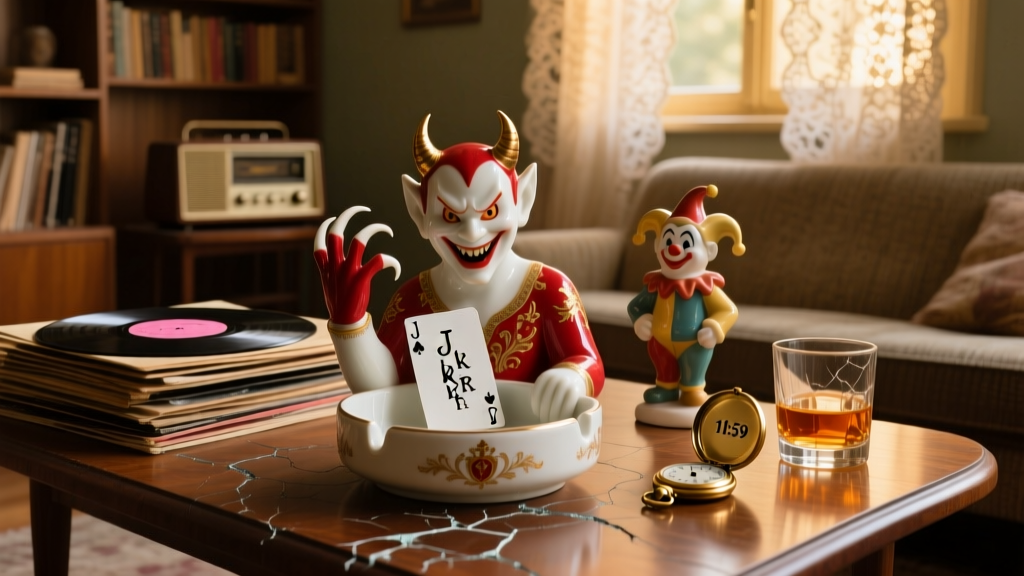
Royal Bayreuth Ashtray 'Devil Card' — A Mid-Century German Ceramic Curio with Provenance and Pricing Insights
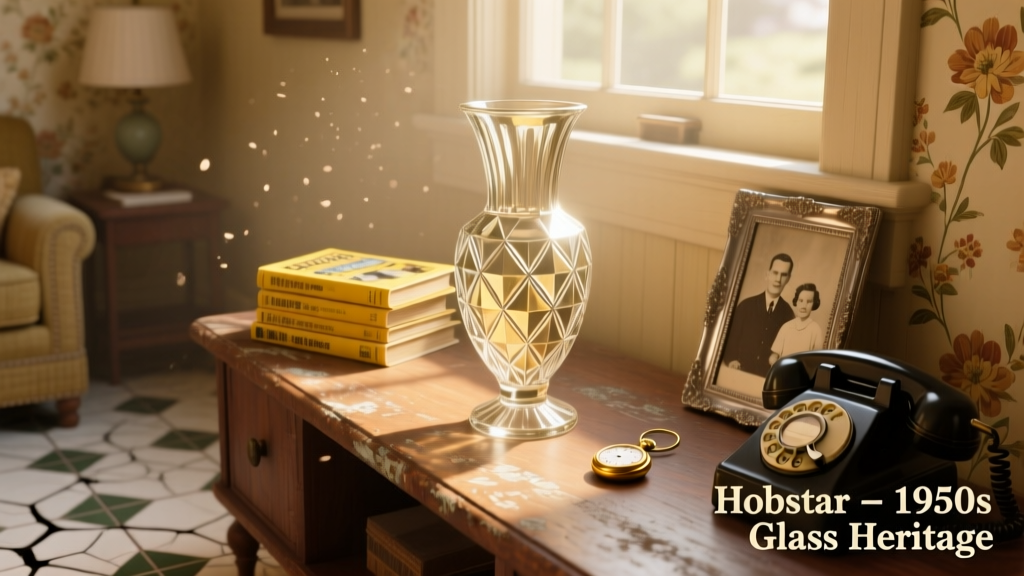
The Hobstar Cylindrical Tapered Cut Glass Vase: A Mid-Century American Masterpiece at 12¼ Inches
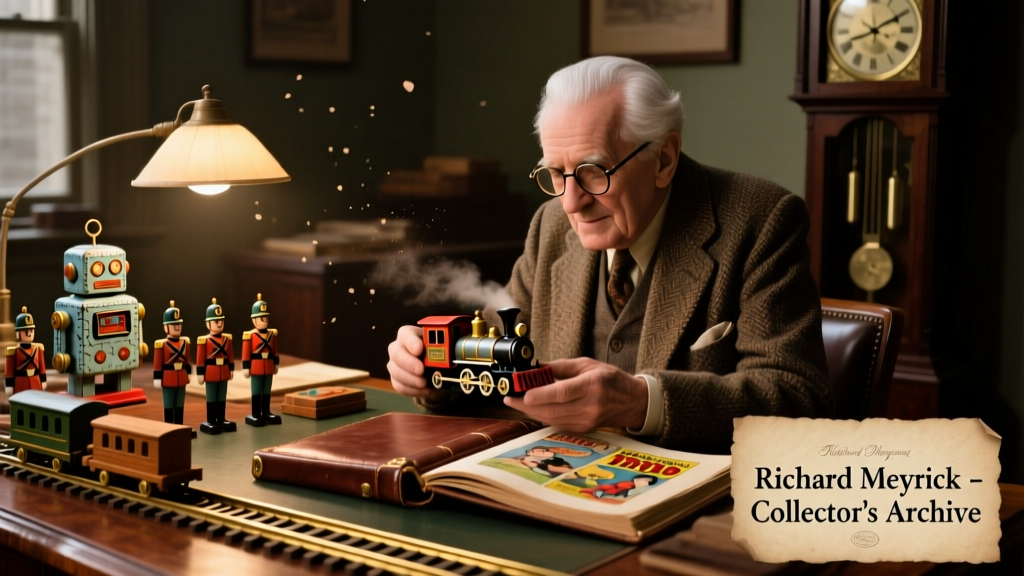
Richard Meyrick: The Unseen Architect of Mid-Century British Toy Innovation
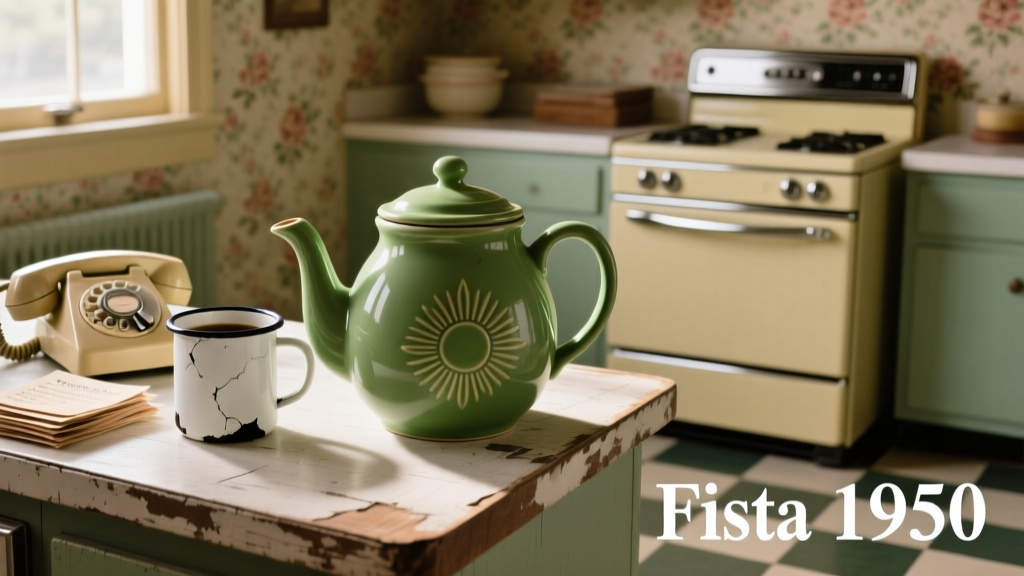
Fiesta Teapot Medium Green 6-Cup: Identification, History, and Market Value of a Mid-Century Icon
Overshot Coverlet Identification, Provenance & Value: The Burgundy-and-White Faded 2-Piece Set (62" × 81")
G. H. Curtis Postcards Featuring the 'Atop Wind Wagon' Silver Tone Series: A Mid-Century Collectible Deep Dive
Currier & Ives 'Haunts of the Wild Swan' in Original Maple Frame: A Mid-Century Collector’s Deep Dive