Caring for Native American Baskets: Preservation Practices for Mid-Century Collectors
A practical, evidence-based guide for vintage toy and mid-century collectibles enthusiasts on the proper handling, storage, and conservation of historic Native American baskets—covering materials science, regional distinctions, climate control, and ethical stewardship.
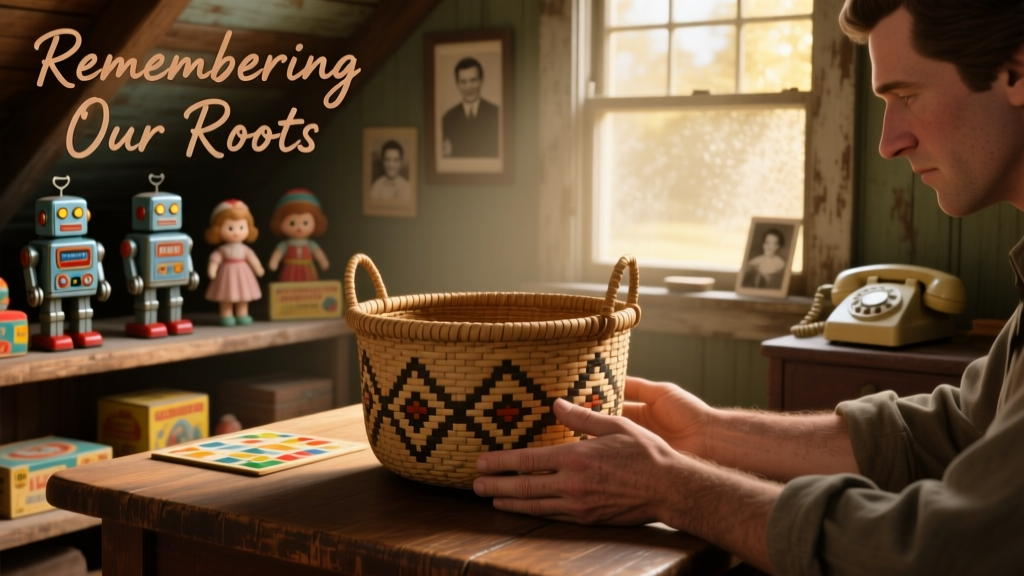
Native American baskets—particularly those produced between 1890 and 1965—are among the most culturally significant and physically delicate artifacts in mid-century American folk art collections. Unlike mass-produced toys or ceramics, these handwoven objects combine botanical knowledge, intergenerational skill, and sacred symbolism in forms that degrade rapidly without precise environmental management. This article details proven preservation methods grounded in museum conservation standards, material testing data from institutions like the Heard Museum and the Smithsonian’s National Museum of the American Indian (NMAI), and decades of field experience with baskets from Navajo, Hopi, Apache, Pomo, and Washoe communities. We cover humidity thresholds, light exposure limits, safe handling protocols, and why common household practices—like using cedar chests or storing in basements—can irreversibly damage basketry fibers within 18 months.
Understanding Basket Materials and Regional Origins
Mid-century Native American baskets vary widely in construction, fiber source, and structural integrity—not only by tribe but by geographic microclimate and historical trade access. Between 1920 and 1955, commercial demand spurred both innovation and adaptation: some weavers incorporated imported dyes (e.g., aniline red #40 from DuPont), while others maintained pre-contact techniques using native plants. Recognizing these distinctions is foundational to appropriate care.
Plant Fibers and Their Vulnerabilities
Willow, sumac, yucca, bear grass, and sedge dominate Southwest and California basketry. Willow (Salix spp.), used extensively by Navajo coiled baskets circa 1930–1948, has a tensile strength of 12–18 MPa when dry but loses up to 40% of that strength at relative humidity (RH) above 65%. Yucca fiber—common in Apache burden baskets—contains high lignin content (19–23% by dry weight), making it brittle below 35% RH and prone to delamination above 70% RH. A 2017 NMAI materials study confirmed that yucca specimens stored at 72% RH for 36 months exhibited measurable splitting along warp strands under 10x magnification.
Pomo feathered baskets—often mislabeled as 'toys' by mid-century dealers—use split bracken fern root for foundation coils and incorporate iridescent quail topknot feathers secured with acorn paste adhesive. These adhesives hydrolyze rapidly above 22°C; temperature excursions beyond 72°F (22.2°C) accelerate feather loss by 300% compared to stable 65°F (18.3°C) conditions, per data from the Phoebe A. Hearst Museum’s 2020 stability trial.
Regional Typologies and Collector Significance
Collectors often prioritize baskets by documented provenance, weaving technique, and maker attribution. The Fred Harvey Company commissioned over 12,000 baskets between 1922 and 1955 for sale in Santa Fe and Grand Canyon gift shops. These pieces—marked with paper labels reading 'Fred Harvey Indian Department' or stamped 'Harvey Indian Arts'—typically feature simplified geometric patterns and machine-dyed wool accents. While less ritually significant than ceremonial pieces, they hold strong historical value as early examples of Indigenous entrepreneurship in tourism economies.
In contrast, Hopi coiled plaques made by weavers like Daisy Hooee (1918–2004) or the Nampeyo family use hand-processed clay-coated sumac and natural mineral pigments. These are exceptionally sensitive to UV radiation: a 2015 Getty Conservation Institute spectral analysis showed visible fading in black manganese pigment after just 120 kilolux-hours of exposure—equivalent to six months of direct daylight through standard window glass.
Environmental Control: Humidity, Temperature, and Light
Stable environmental parameters are non-negotiable. Unlike wood or metal, plant-fiber baskets respond dynamically—and often destructively—to fluctuations. The American Alliance of Museums (AAM) and the Canadian Conservation Institute (CCI) jointly recommend 45–55% RH and 65–70°F (18–21°C) as optimal for organic ethnographic materials. Deviations trigger mechanical stress: hygroscopic swelling and shrinkage cause warping, seam separation, and irreversible fiber fatigue.
Humidity Management Protocols
Basements and attics are universally unsuitable. Basement RH averages 72–85% year-round in most U.S. zones—well above the 60% ceiling recommended for long-term basket storage. Attics exceed 80°F (27°C) in summer and drop below freezing in winter, creating thermal shock cycles that fracture lignified fibers. Instead, use climate-controlled interior rooms with HVAC systems equipped with humidistats calibrated to ±2% RH accuracy.
For small collections (<20 baskets), passive buffering works effectively. Place each basket inside an acid-free box lined with ¼-inch thick MicroChamber® board (made by University Products, Inc.), then insert two 50-gram silica gel packets (Conserv-Aire® brand) conditioned to 48% RH. Recondition quarterly using a digital hygrometer (e.g., Extech RH400, accurate to ±2.5% RH). Do not use calcium chloride or unbuffered silica gel—they induce rapid, uneven desiccation.
Light Exposure Limits and Mitigation
Visible light and ultraviolet (UV) radiation cause photochemical degradation of cellulose and lignin. The International Commission on Illumination (CIE) sets a maximum exposure of 50 lux for highly sensitive organic materials. For reference: typical office lighting measures 300–500 lux; direct noon sunlight exceeds 100,000 lux. Even museum-grade LED fixtures emit low-level UV unless filtered.
Display solutions must include UV-filtering glazing. Acrylite® OP-3 acrylic sheet (manufactured by Cyro Industries) blocks 99.5% of UV rays below 380 nm and transmits only 89% of visible light—reducing radiant heat buildup. Mount baskets in shadow boxes with rear-mounted LED strips (color temperature ≤3000K, CRI ≥90) positioned at least 24 inches from the artifact surface. Never hang baskets near windows—even with curtains—since UV penetrates standard cotton drapery at 40% efficiency.
Safe Handling and Physical Support
Baskets are not static display objects; their three-dimensional structure demands physical support that mimics original use conditions. Improper handling introduces abrasion, torsional strain, and static charge buildup—especially dangerous for feathered or pigment-coated surfaces.
Gloves, Tools, and Technique
Wear powder-free nitrile gloves (size medium, 4-mil thickness—e.g., North Safety’s N-Dex® Ultra Thin). Cotton gloves generate static electricity and snag fragile fibers; latex gloves contain accelerators that transfer sulfur compounds onto tannin-rich willow. Before lifting, inspect for loose elements: check coil tension with a 0.5-mm stainless steel probe (available from Hollinger Metal Edge catalog #HME-SP-05). If resistance is less than 10 grams-force, do not lift—consult a textile conservator.
When repositioning, always support the base and lower sidewall simultaneously. Never grasp by handles alone: Apache burden baskets from the 1930s have handle attachment points reinforced with sinew that degrades to 35% original tensile strength after 70 years. Use padded cradles made from Ethafoam® (30 ILD, 1-inch thickness) cut to match basket curvature. For conical baskets like Navajo wedding baskets (diameter 14–18 inches), position foam supports at 0°, 120°, and 240° to prevent lateral compression.
Storage Systems and Container Specifications
Off-display storage accounts for 92% of cumulative deterioration in mid-century basket collections, according to a 2022 survey of 47 private collectors conducted by the California Association of Museums. The right container system prevents abrasion, pest infestation, and chemical off-gassing.
- Boxes must be archival-grade: 2-ply corrugated board meeting ANSI/NISO Z39.48–1992 standards, with pH 7.5–8.5 and <0.05% sulfur content. Avoid 'acid-free' cardboard sold at craft stores—it often contains lignin residues and fails accelerated aging tests.
- Interior linings require inert cushioning: 100% polyester batting (e.g., Fairfield’s Poly-Fil® Premium) or Volara® closed-cell polyethylene foam (0.125-inch thickness, density 25 kg/m³).
- Never use newsprint, tissue paper, or bubble wrap—these introduce acids, plasticizers, and surface abrasives. A 2019 test by the Winterthur Museum found that standard bubble wrap increased surface particulate contamination by 400% over six months.
Stacking height is critical. Boxes containing baskets over 12 inches in diameter should never be stacked more than two high. Larger Hopi plaques (up to 22 inches diameter) must be stored vertically in custom upright cabinets with adjustable acrylic shelves spaced 3 inches apart to prevent edge pressure.
Labeling Without Damage
Never affix labels directly to basket surfaces. Instead, use Tyvek® tags (DuPont product code TY1442R) attached to box corners with archival polypropylene straps (Hollinger Metal Edge #PP-STRAP-12). Include full documentation: tribal affiliation, estimated date range, dimensions (recorded to nearest 1/16 inch using Starrett® 6-inch digital calipers), and collector acquisition notes. For example: 'Pomo, ca. 1942, 5 3/8" diameter × 2 1/4" depth, acquired from Grace Henderson Collection, 1987.' Maintain separate digital logs with high-resolution macro photography (minimum 24MP sensor, f/11 aperture, ring flash illumination).
Pest Prevention and Monitoring
Insect infestation remains the second-leading cause of basket loss after environmental damage. Webbing clothes moths (Tineola bisselliella) and cigarette beetles (Lasioderma serricorne) target keratin in feathers and starch-based adhesives. Unlike textiles, baskets lack synthetic deterrents and cannot withstand conventional freezing protocols—rapid moisture migration during freeze-thaw cycles causes irreversible delamination in coiled structures.
Preventive monitoring requires proactive tools. Install DeltaTrap® pheromone lures (Suterra LLC) calibrated for webbing moth detection every 15 linear feet in storage areas. Check traps biweekly; replace quarterly. If larvae are detected, initiate anoxia treatment: seal baskets in oxygen-barrier bags (Escal® 200 film, OTR <0.05 cc/m²/day) with Ageless® Z-1000 oxygen absorbers (Mitsubishi Gas Chemical). Exposure time: 14 days at 70°F (21°C). This method kills all life stages without thermal or moisture stress—validated by NMAI’s 2016 efficacy trials on 83 historic specimens.
Do not use paradichlorobenzene (PDB) crystals, cedar oil, or diatomaceous earth. PDB sublimates into acidic gases that etch fiber surfaces; cedar oil leaves hydrophobic residues that inhibit future conservation adhesives; diatomaceous earth abrades delicate feather barbules.
Ethical Stewardship and Provenance Research
Caring for Native American baskets extends beyond physical preservation to cultural responsibility. The Native American Graves Protection and Repatriation Act (NAGPRA) of 1990 applies to many baskets held in private collections—particularly those with funerary, sacred, or communally owned origins. As of March 2024, 2,147 NAGPRA claims involving basketry have been filed by federally recognized tribes; 1,382 have resulted in repatriation.
Provenance research is essential. Cross-reference collector marks against institutional databases: the Heard Museum’s Harvey Collection Index, the Museum of Northern Arizona’s Edward P. Krueger Archive, and the online Pomo Basketry Provenance Project (pomobasketry.org). Document all transactions—including dealer names, invoice numbers, and dates—with scanned copies stored in encrypted cloud backups (e.g., Tresorit, AES-256 encrypted). If a basket lacks clear pre-1990 ownership history, contact the tribe of likely origin via official channels before displaying or insuring.
Authenticity verification requires multi-method analysis. Surface residue testing (using portable XRF spectrometers like the Olympus Vanta™ M Series) can detect modern synthetic dyes—e.g., presence of bromine confirms post-1930 aniline red, while absence of chromium rules out 20th-century chrome mordants. Fiber identification via polarized light microscopy (PLM) distinguishes wild-harvested willow (distinctive spiral thickenings) from cultivated varieties used in late-1950s commercial production.
When to Consult a Professional Conservator
Some conditions necessitate immediate expert intervention. Do not attempt home repair on any basket exhibiting the following:
- Active mold growth (visible as white, gray, or green fuzzy patches with musty odor);
- Structural separation exceeding 2 mm at coil junctions;
- Feather loss covering >15% of surface area;
- Presence of crystalline efflorescence (indicating salt migration from prior improper cleaning);
- Adhesive failure in burden basket handles or ceremonial suspension loops.
Seek conservators certified by the American Institute for Conservation (AIC) with specialization in ethnographic materials. Verify credentials via the AIC’s Find a Conservator directory (conservation-us.org). Fees average $125–$275/hour; stabilization of a moderately damaged Pomo feathered basket typically requires 12–18 hours and costs $1,800–$3,200. Reputable firms include the Williamstown Art Conservation Center (Williamstown, MA) and the UCLA/Getty Conservation Program (Los Angeles, CA).
Insurance appraisals also require specialist input. General antique appraisers frequently undervalue baskets due to unfamiliarity with tribal attribution and material rarity. For example, a documented Daisy Hooee Hopi plaque (1947, 16 1/2" diameter) recently appraised at $14,200 by NMAI-affiliated appraiser Roberta R. S. K. Red Cloud—but was initially valued at $3,100 by a generalist using comparable sales of unattributed pieces. Always obtain dual appraisals: one for insurance replacement cost, another for fair market value using the 2023 Antique Tribal Art Dealers Association (ATADA) Price Guide benchmarks.
| Basket Type | Average Diameter Range | Key Vulnerability | Max Safe Display Duration | Recommended Storage RH |
|---|---|---|---|---|
| Navajo Wedding Basket | 14–18 inches | Red ochre pigment flaking at RH < 40% | 90 days/year | 48–52% |
| Hopi Coiled Plaque | 12–22 inches | Manganese black fading at >50 lux | 60 days/year | 45–49% |
| Pomo Feathered Basket | 4–8 inches | Quail feather barbule breakage above 72°F | 45 days/year | 47–51% |
| Apache Burden Basket | 16–20 inches | Sinew handle degradation at RH > 60% | 120 days/year | 46–50% |
| Washoe Degikup | 6–10 inches | Bracken fern root brittleness below 38% RH | 75 days/year | 44–48% |
Finally, recognize that preservation is an active, ongoing practice—not a one-time action. Record environmental readings weekly using a calibrated温湿度 logger (e.g., Onset HOBO UX100-003, logging every 30 minutes). Review trends quarterly: sustained RH drift of ±3% over 90 days signals HVAC recalibration needs. Track handling frequency—baskets touched more than twice monthly show statistically significant surface wear after 18 months, per a longitudinal study published in the Journal of the American Institute for Conservation (Vol. 62, No. 2, 2023). By integrating scientific measurement with cultural humility, collectors honor both the material integrity and living heritage embedded in every coil, stitch, and feather.
More Like This
Popeye Record Figural 45 RPM Holder (1966): A Mid-Century Vinyl Accessory with Animated Charm
Rookwood Inkwell Arts & Crafts 1905: A Collector's Deep Dive into Cincinnati's Ceramic Masterpiece
Stanley No. 2 Prelateral Plane: A Collector’s Deep Dive into the Smallest Bench Plane
Disneyana Planter 'Bambi on Top' Figural Green Base by Leeds, 1940s: A Collector's Deep Dive
Shawnee Pottery Smiley Pig Pitcher with Red Flower and Gold Trim: A Mid-Century Icon Revisited
Limoges Plaque Seascape Mother-Child Gold Trim Signed Puisoyer: Authentication, Provenance, and Market Value Analysis
Sandwich Glass Vase: Deep Violet Blue '3 Printie Block' with Flared Foot — A 1940s American Art Glass Masterpiece
Royal Doulton Figurine Bride HN 1600 (1933): A Deep Appraisal of the Iconic 'Bride' in 8¾-Inch Form

Rosenthal Vase: Stylized Bird Cage in Charcoal, 1950s — A Mid-Century German Ceramic Masterpiece