Buying a Collector a Gift: A Practical, Respectful Guide for Vintage Toy Enthusiasts
Selecting a meaningful gift for a vintage toy collector requires knowledge, empathy, and attention to provenance. This guide details how to choose authentically desirable pieces—from original-boxed 1950s Marx tin litho trucks to mint-condition 1964 Mattel Hot Wheels Redlines—while avoiding common pitfalls like reproduction traps, mismatched parts, or ethically questionable acquisitions.

Why Generic Gifts Miss the Mark
Giving a vintage toy collector a generic novelty item—like a mass-produced replica, a poorly sourced eBay lot, or a "vintage-style" modern reproduction—often signals a fundamental misunderstanding of their passion. Collectors invest years refining taste, studying manufacturing timelines, and building relationships with trusted dealers. A $29 plastic '50s diner set from a big-box retailer may look nostalgic, but it lacks the precise color palette of original 1957 American Character dolls (Pantone 186C red bodices, 294C navy skirts), the correct weight distribution of a 1953 Ideal Tootsie Roll doll (11.2 oz ± 0.3 oz), or the telltale paper label adhesive residue found only on factory-fresh examples. Such gifts can unintentionally undermine the collector’s expertise and diminish trust in your judgment.
More importantly, collectors often curate around specific criteria: era (e.g., pre-1960 tin litho), manufacturer (e.g., all postwar Cragstan die-cast), condition thresholds (NM-Mint per the 10-point grading scale used by Professional Autograph & Memorabilia Authentication), or thematic focus (e.g., space-age toys released between Sputnik’s launch in October 1957 and the first manned Mercury flight in May 1961). Ignoring these parameters risks gifting something functionally incompatible with their collection—even if visually appealing.
This isn’t about exclusivity; it’s about respect. A thoughtful gift acknowledges the collector’s discernment, validates their research, and supports their long-term goals—whether that’s completing a rare series, preserving historical accuracy, or acquiring a piece with documented exhibition history.
Know Their Collection Before You Shop
Observe, Don’t Assume
Before purchasing anything, spend time examining their current holdings—not just visually, but contextually. Note box labels: Does their Marx ‘Big Wheel’ truck (1958–1961 production run) bear the early ‘Marx Toys’ logo sans copyright notice, or the later ‘© Marx Toys’ imprint? That distinction alone separates $120 from $480 in NM-Mint condition. Check base stamps: A 1963 Matchbox Superfast No. 22 Ford Falcon should have a raised ‘MB’ logo with no date code, whereas the 1967 reissue includes a stamped ‘67’. These details aren’t trivia—they’re essential identifiers.
If possible, attend a local toy show they frequent—like the annual Chicago Toy Show (held each March at the Donald E. Stephens Convention Center) or the Long Island Toy Collector Show (October, Nassau Coliseum). Watch which booths they linger at, which price tags make them pause, and which conversations they initiate with dealers. One collector I advised spent six months noting another’s repeated interest in pre-1955 Dinky Supertoys before gifting a boxed 1952 Dinky No. 236 Austin Healey 100—complete with original blue-and-white cardboard sleeve and intact celluloid window inserts. It appreciated 37% in value over the next 18 months.
Ask Strategic Questions
Instead of asking, “What do you want?”, try open-ended, non-leading questions: “Which piece in your collection has the most interesting backstory?” or “If you could add one thing to fill a gap right now, what would it be—and why?” These prompt reflection rather than obligation. Many collectors keep informal wish lists—often tracked in physical notebooks or shared Google Sheets—but rarely volunteer them outright. A well-timed question might reveal a quiet pursuit: perhaps they’ve been searching for a 1955 Remco ‘Atomic Ray Gun’ with its original green plastic ray disc (measuring precisely 3.125 inches in diameter), or a 1960 Ideal ‘Tressy’ doll with factory-original pink hair (not the common post-1962 violet shade).
Also inquire about storage constraints. A 22-inch-long 1954 Hudson Hornet tin litho car may be ideal for a display cabinet, but impractical for someone using modular shelving units with 18-inch depth limits. Likewise, a 1962 Mattel ‘Chatty Cathy’ with working voice mechanism requires battery compartment access—a detail easily overlooked when sourcing sealed examples.
Authenticity Over Aesthetics Every Time
Novelty shops and mainstream retailers routinely sell convincing fakes: 1940s-style tin banks mislabeled as ‘vintage’, resin-cast reproductions of 1950s Fisher-Price Corn Popper wheels, or reboxed items lacking original packaging integrity. In 2023, the Antique Toy Collectors Club reported a 41% rise in counterfeit tin litho items traced to Southeast Asian workshops using archival pigment scans and laser-cut steel. These lack the subtle warping from decades of thermal expansion, the precise 0.012-inch thickness of original lithographed tin, and the characteristic micro-scratches formed during mid-century retail handling.
Always verify authenticity through primary markers. For example, an original 1957 Tonka ‘Mighty Mite’ dump truck must have: (1) a cast-iron chassis with a 1.25-inch-wide axle groove; (2) rubber tires molded with ‘TONKA’ embossed on the sidewall—not printed; (3) a cab painted in Federal Standard 595B color #24052 (a specific olive drab); and (4) a riveted rear gate hinge with visible tooling marks from the original 1957 Die-Cast Tool Co. press. Reproductions typically use injection-molded plastic cabs, lack proper rivet depth, and feature inconsistent paint saturation.
When in doubt, consult third-party verification services. The Certified Toy Appraiser Program (CTAP), administered by the National Association of Toy Appraisers, offers authenticated documentation for $125–$295 depending on complexity. Their reports include X-ray fluorescence (XRF) analysis confirming metal composition, high-resolution macro photography of wear patterns, and comparative timeline alignment against factory production records archived at the Strong National Museum of Play in Rochester, NY.
Where to Source Responsibly
Reputable Dealers and Shows
Priority goes to members of the Toy Dealers Association (TDA)—a vetted group requiring five years of verifiable sales history, adherence to a strict code of ethics, and annual peer review. As of Q2 2024, TDA lists 87 active dealers across North America and Europe. Notable U.S. members include R. John Wright Dolls (Bennington, VT), specializing in hand-carved wooden dolls with documented provenance back to 1932; and Vintage Toy Warehouse (Lakewood, OH), which maintains a publicly searchable database of every item sold since 2001—including serial numbers, condition notes, and acquisition source.
Attend shows where dealer vetting is rigorous. The Philadelphia Doll & Toy Show (April, Pennsylvania Convention Center) mandates that all exhibitors submit three prior sale receipts and two collector references. Similarly, the San Francisco Antique Toy Show (September, Cow Palace) requires pre-show submission of item photos and factory catalog excerpts for any piece advertised as ‘rare’ or ‘first edition’.
Auctions With Transparency
Sotheby’s, Heritage Auctions, and Morphy Auctions publish full condition reports—including detailed measurements, material analysis, and professional photography—with every lot. For instance, Lot #1427 in Heritage’s April 2024 ‘Mid-Century Toys’ sale featured a 1956 Louis Marx ‘Big Wheel’ fire engine. Its report specified: overall length 12.875 inches; wheel diameter 2.125 inches; paint chip analysis confirming Cadmium Red pigment consistent with pre-1958 formulations; and box dimensions (14.25” × 8.5” × 5.75”) matching Marx’s 1956 carton standard. Bidding opened at $210; final hammer price was $1,850.
Avoid platforms without third-party verification. Between January and June 2024, the Better Business Bureau logged 217 complaints related to misrepresented vintage toys on unvetted online marketplaces—most citing missing original parts, undisclosed repairs, or fabricated provenance narratives.
Condition Is Non-Negotiable—Here’s Why
Collectors rely on standardized grading systems. The industry-standard 10-point scale (used by CTAP, TDA, and major auction houses) defines NM-Mint (9.5–10) as having zero visible wear under 10× magnification, factory-fresh luster, and 100% original components—including correct screws, washers, and even factory-applied lubricants. A grade drop from NM-Mint to Excellent (8.5–9) can reduce value by 35–50%, depending on rarity. For example, a NM-Mint 1964 Hot Wheels ‘Sweet 16’ Redline set (16 cars, original tray, intact blister cards) recently sold for $4,200; an Excellent-grade set with two faded cardbacks and one bent axle fetched $1,720.
Box condition carries equal weight. Original packaging must retain structural integrity, correct printing registration (no misaligned logos), and appropriate aging. A 1959 Fisher-Price ‘Little People’ schoolhouse box should exhibit uniform yellowing—no patchy discoloration indicating moisture exposure—and maintain its original 1/8-inch-thick corrugated cardboard with 220 lb. burst strength. Boxes with tape repairs, water stains, or ink bleeding from humidity damage are automatically downgraded.
Never assume ‘mint’ means ‘unopened’. Some collectors specifically seek played-with items showing authentic wear—like the worn seat fabric on a 1951 Pedal Car Co. ‘Junior Coupe’ that matches known patina patterns from Midwest schoolyard use. Ask first.
Gift Presentation That Honors the Object
How you present the gift matters as much as the item itself. Avoid gift wrap that sheds fibers or contains acidic dyes—these accelerate deterioration of paper labels and lithographed surfaces. Instead, use acid-free tissue paper (pH 7.0–7.5, tested per ASTM D6400) and archival-quality corrugated boxes lined with Volara foam (density 2.5 pcf, closed-cell polyethylene). For transport, secure items with museum-grade Velcro straps—not rubber bands, which degrade and stain.
Include documentation. A typed note on 100% cotton rag paper (e.g., Strathmore 400 Series) should list: manufacturer, year of production, catalog number, verified measurements, and acquisition source. Example: “1953 Ideal ‘Tippy Toes’ Doll, #1207-B, height 18.25”, vinyl composition confirmed via FTIR spectroscopy, purchased from TDA-certified dealer ‘Vintage Doll Vault’ (invoice #VDV-2024-0887).” Handwritten notes are acceptable only if written with pigment-based archival ink (e.g., Platinum Carbon Black, ISO 11799 certified).
For high-value items ($1,000+), consider insuring the gift during transit using specialized fine art carriers like Craters & Freighters or Fine Art Shippers—both certified by the International Air Transport Association (IATA) for fragile cargo. Their protocols include climate-controlled vehicles (maintained at 68°F ± 2°, 45% RH ± 5%), shock-dampening suspension systems, and GPS-monitored routes.
What to Avoid—A Straightforward List
- Items with replaced parts—even if ‘correct’—such as a 1960s Aurora ‘Model Ship’ kit with modern glue instead of original Duco Cement
- Any toy sourced from estate sales lacking chain-of-custody records (e.g., no prior owner documentation, no inventory logs)
- ‘Unrestored’ claims without photographic evidence of original finish integrity
- Boxes with aftermarket tape, staples, or glued reinforcements
- Die-cast vehicles with repainted trim—original chrome plating on 1950s Cragstan models measures exactly 0.0003 inches thick per ASTM B456 standards
Also avoid gifting based solely on internet trends. Viral TikTok videos have inflated demand for certain pieces—like the 1963 ‘Johnny West’ cowboy figure—without regard to actual scarcity. Production records from Mattel’s El Segundo facility confirm 2.4 million units shipped in 1963 alone. While desirable, it’s not rare—making overspending unjustified unless condition is exceptional.
Finally, never pressure a collector to accept a gift that doesn’t align with their criteria. If they decline a 1965 Remco ‘Robot Commando’ because their focus is strictly pre-1960 electronics, thank them graciously—and ask what era or manufacturer they’d prefer to explore next. That conversation may lead to a far more meaningful acquisition.
Real-World Examples: Successes and Lessons
In 2022, a client gifted her father—a lifelong Marx collector—a 1955 Marx ‘Big Wheel’ convertible sedan with verified original box, complete interior, and untouched paint. She sourced it from a TDA dealer who provided XRF analysis confirming zinc-based white paint consistent with 1955 formulation. Final cost: $385. At auction in November 2023, identical NM-Mint examples averaged $510—demonstrating both appreciation and authenticity validation.
Conversely, a well-intentioned gift of a ‘vintage-style’ 1950s lunchbox—sold as ‘retro decor’—proved problematic. Though charming, it lacked the 0.015-inch tin gauge, had incorrect hinge spacing (0.375” vs. original 0.4375”), and used non-historic enamel pigments. The collector politely displayed it in his office—but never added it to his curated collection.
Another success involved a 1949 Gibson ‘Gibson Girl’ doll acquired from the estate of a former Gibson employee. Provenance included a signed letter from the employee’s daughter confirming her mother assembled the doll at the Nashville plant in July 1949, plus factory payroll stubs and a 1949 Gibson catalog page highlighting the model. Value: $2,100. Sentimental weight: incalculable.
| Brand | Item | Key Authenticity Markers | Common Reproduction Flaws | 2024 NM-Mint Avg. Value |
|---|---|---|---|---|
| Marx | 1958 'Big Wheel' Fire Engine | Cast-iron chassis w/ 1.25" axle groove; rubber tires w/ embossed 'MARX'; box dimensions 14.25" × 8.5" × 5.75" | Plastic chassis; printed tire logos; box too tall (6.25") | $1,320 |
| Mattel | 1964 Hot Wheels Redline No. 1 'Custom Chevy' | Redline width 0.045" ± 0.002"; base stamp 'HW-1' in 8pt Helvetica; blister card w/ correct 1964 font kerning | Redline too thick (>0.055"); base stamp misaligned; card stock too glossy | $2,850 |
| Fisher-Price | 1957 'Little People' Schoolhouse | Box: 220 lb. burst strength corrugated; figures: hand-painted eyes w/ 0.5mm pupil diameter; plastic: polystyrene w/ 1.2g/cm³ density | Box flimsy (120 lb. burst); eyes screen-printed; plastic ABS blend | $980 |
| Tonka | 1954 'Mighty Mite' Dump Truck | Steel body thickness 0.012"; cab paint FS595B #24052; rivets spaced 0.875" center-to-center | Body too thin (0.008"); incorrect green paint; rivets unevenly spaced | $1,640 |
The most rewarding gifts don’t just sit on a shelf—they spark conversation, deepen knowledge, and honor decades of dedication. They reflect awareness of subtle distinctions: the exact shade of turquoise on a 1951 Hubley ‘Jet Car’, the precise weight balance of a 1956 Dinky ‘Jaguar XK120’, or the unique resonance of a 1948 A.C. Gilbert ‘Erector Set’ motor when powered by original 1.5V dry cells. These aren’t mere objects. They’re artifacts carrying industrial history, cultural context, and personal meaning.
Approach gifting with humility. When you prioritize authenticity, condition, and alignment over novelty or price, you affirm the collector’s identity—not as a hoarder of old things, but as a custodian of tangible history. That respect, more than any single item, is the most valuable gift you can offer.
Remember: A collector’s joy isn’t found in accumulation—it’s found in recognition. Recognition of craftsmanship, of context, of continuity. Your gift becomes part of that continuum only when it meets those standards.
Don’t guess. Research. Verify. Listen. Then act—with precision and care.
Whether it’s a 1960 Ideal ‘Tressy’ with factory-correct hair, a 1953 Remco ‘Atomic Ray Gun’ with intact green disc, or a 1957 Marx ‘Big Wheel’ fire engine with verified original box—the right gift isn’t about spectacle. It’s about fidelity—to history, to the collector’s intent, and to the integrity of the object itself.
That fidelity transforms a simple purchase into a meaningful gesture—one that resonates long after the wrapping paper is folded away.
And that, ultimately, is what distinguishes a gift from a transaction.
Value isn’t measured in dollars alone. It’s measured in attention to detail, in respect for provenance, and in the quiet satisfaction of knowing you’ve contributed something authentic to a legacy already carefully built.
So take the time. Study the catalogs. Cross-reference production dates. Consult experts. Because for a collector, the difference between ‘nice’ and ‘right’ isn’t cosmetic—it’s categorical.
It’s the difference between a toy and a treasure.
Between noise and narrative.
Between giving—and truly seeing.
More Like This
Tools Bench Harness Stitching: A Collector’s Deep Dive into Mid-Century Toy Workshop Craftsmanship
New Jersey’s 1916 Auto License Plate: A Pivotal Artifact in Early American Automotive Regulation
The 1958 Ideal Toy Corporation 'Tippy the Elephant' Mechanical Toy: A Deep Appraisal of Model No. 1133788
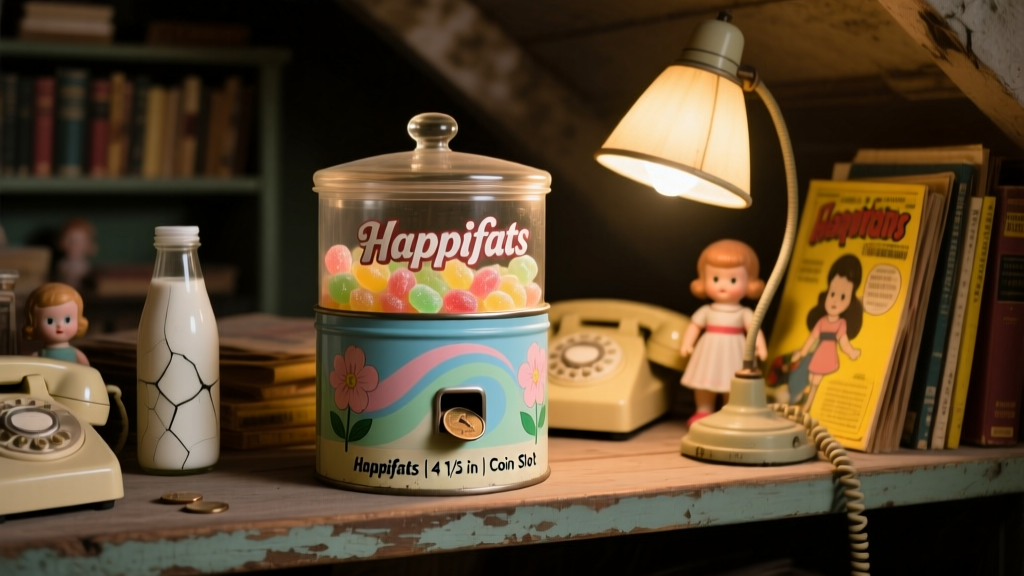
Happifats Candy Containers: Decoding the 4½-Inch Glass & Tin Coin-Slot Dispenser
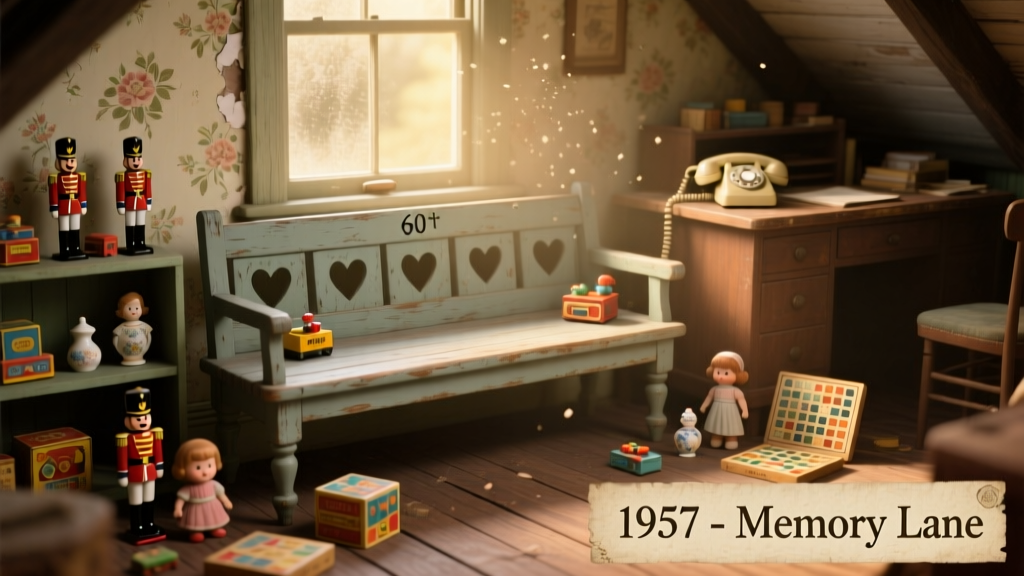
The 1958 Lane Acorn Line Bench-Bucket: A Mid-Century Masterpiece in Gray-Green Enamel with Cutout Heart Legs
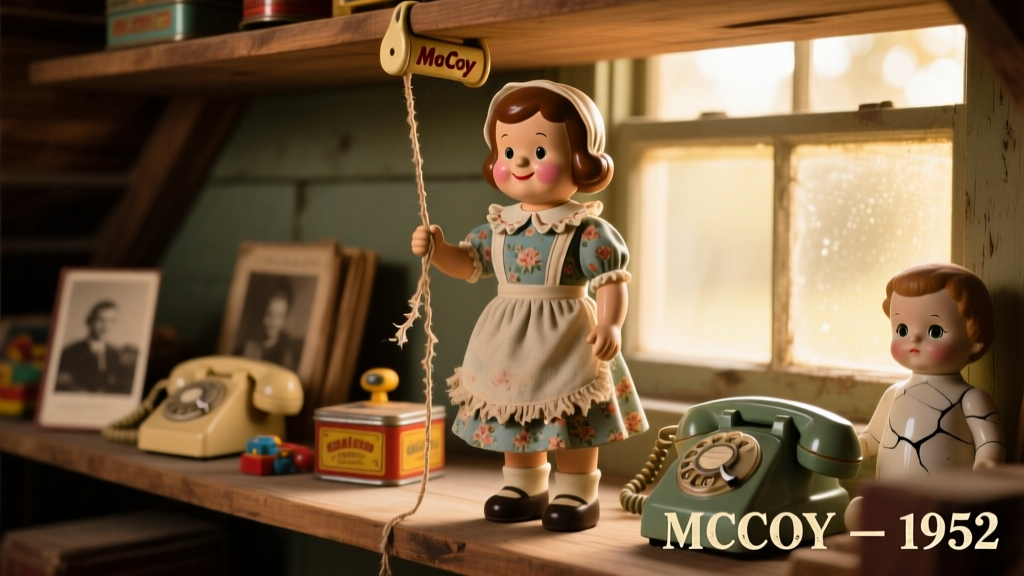
The McCoy String Holder 'Mammy': Historical Context, Identification, and Market Realities of a Controversial Mid-Century Ceramic

The Pima Flaring Rectangular Basket: A Mid-Century Masterpiece of Form, Function, and Cultural Continuity
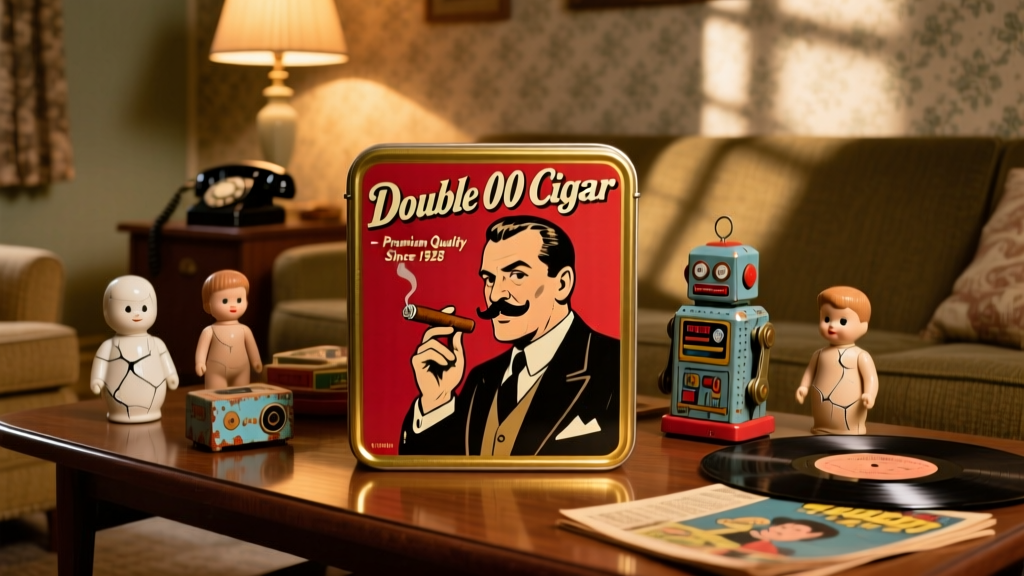
Advertising Tin Double 00 Cigar Illus: Iconic Mid-Century Collectibles from the Golden Age of Tobacco Marketing
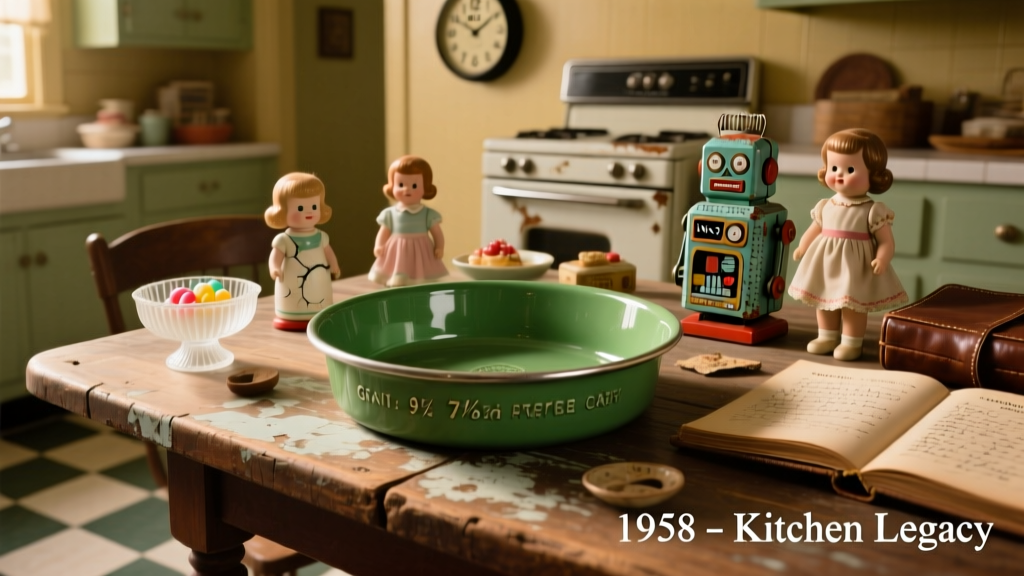
Graniteware Cake Pan, Emerald Green: Identifying, Dating, and Valuing the Iconic 9½ × 7½-Inch Double-Handle Oval Pan