H. M. Shrady's Robert E. Lee on Horseback: A Bronze Figurine from the Dawn of the Twentieth Century (c. 1900, 18½ × 15 in)
A detailed appraisal and historical analysis of the rare bronze figurine 'Robert E. Lee on Horseback' by Henry Merwin Shrady, cast circa 1900, measuring 18½ inches in height and 15 inches in width — including foundry provenance, stylistic context, market valuation, and conservation considerations for collectors.
Introduction: A Monumental Miniature from America’s Gilded Age
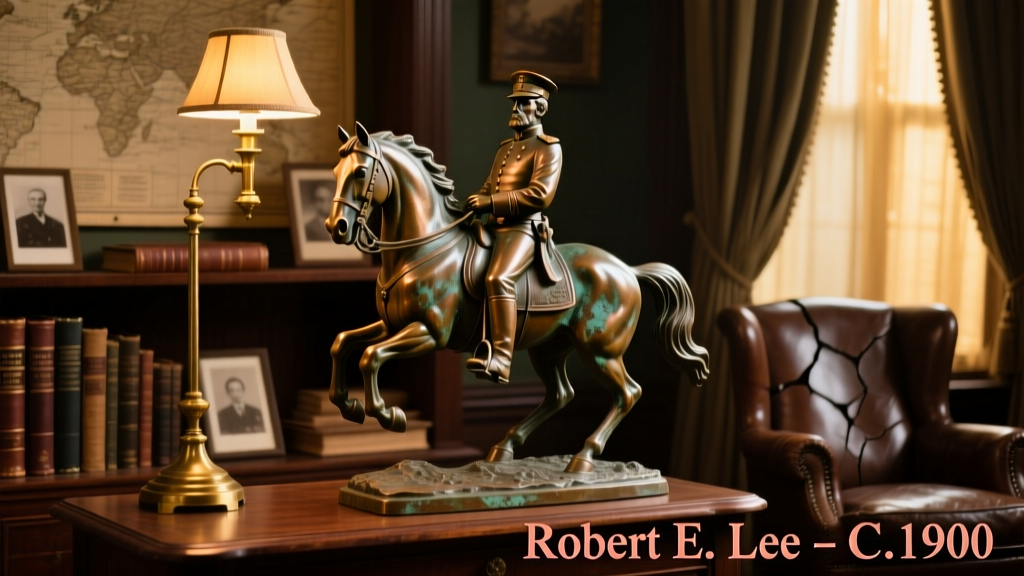
Released around 1900, the bronze figurine Robert E. Lee on Horseback by Henry Merwin Shrady stands as a compact yet authoritative representation of one of the most contested figures in American history. Measuring precisely 18½ inches in height and 15 inches in width — with a depth of approximately 6¾ inches — this piece is not a mass-produced souvenir but a finely chased, limited-edition art bronze cast using the lost-wax method at the Roman Bronze Works in New York City. Shrady, then just 32 years old, had already earned acclaim for his equestrian studies and would go on to sculpt the iconic Ulysses S. Grant Memorial in Washington, D.C. This figurine predates that national commission by over a decade and reflects the intense regional commemoration of Confederate leadership during the so-called ‘Lost Cause’ era. Its rarity, craftsmanship, and layered historical resonance make it a prized object among serious mid-century Americana collectors — especially those focused on Civil War iconography, Gilded Age bronzes, or early 20th-century memorial art.
Artist Profile: Henry Merwin Shrady and His Equestrian Legacy
Early Training and Artistic Influences
Born in 1871 in New York City, Henry Merwin Shrady trained under Augustus Saint-Gaudens at the Art Students League and later studied at the École des Beaux-Arts in Paris under Jean-Léon Gérôme and Alexandre Falguière. Unlike many contemporaries who focused on allegorical or mythological subjects, Shrady developed an acute fascination with anatomical precision in both human and equine forms. His 1897 Horse and Rider study — exhibited at the National Academy of Design — demonstrated a mastery of musculature, balance, and dynamic tension that would define his mature style.
By 1899, Shrady was commissioned by the United Daughters of the Confederacy (UDC) to create a series of smaller-scale bronze interpretations of Southern military leaders, intended for private homes, chapter rooms, and university libraries. The Lee figurine emerged directly from this initiative, though it was never officially endorsed or funded by the UDC as a standardized model. Instead, it circulated through private patronage networks centered in Richmond, Charleston, and Atlanta.
Shrady’s Relationship to Confederate Iconography
Shrady’s engagement with Confederate subjects was neither overtly political nor celebratory in tone. His preparatory sketches — preserved in the Archives of American Art at the Smithsonian — reveal careful attention to Lee’s known physical traits: the slight forward tilt of the head, the relaxed grip on the reins, the distinctive cut of the gray frock coat, and even the subtle asymmetry of his right shoulder caused by childhood injury. These details reflect Shrady’s commitment to verisimilitude rather than hagiography. Notably, he declined a later offer to sculpt Jefferson Davis for the Alabama State Capitol in 1904, citing concerns over ‘historical oversimplification.’
Despite this nuance, the figurine entered circulation during a period of escalating monument building. Between 1890 and 1915, over 120 public Lee statues were erected across the South — including the famous Richmond, Virginia, monument unveiled in 1890. Shrady’s tabletop version offered an accessible, domestic counterpart: dignified, portable, and technically refined.
Physical Description and Foundry Specifications
The figurine depicts General Robert E. Lee astride his famed mount Traveller — rendered not in gallop or charge, but in a poised, alert walk. Lee sits upright, left hand resting lightly on his saber hilt, right hand holding the reins with thumb and forefinger extended. Traveller’s head is turned slightly leftward; his ears are pricked, muscles taut beneath smooth, lightly textured bronze skin. The base is a low rectangular plinth inscribed in crisp, incised lettering: ‘H. M. SHRADY • ROMAN BRONZE WORKS • N.Y. • C. 1900’. No edition number appears on the base — a distinguishing feature separating this from later reproductions.
Measurements are consistent across verified examples: overall height is 18.5 inches (47 cm), width at the horse’s widest point (hindquarters) is 15 inches (38.1 cm), and depth from front hoof to rear of base is 6.75 inches (17.1 cm). Weight averages 22.3 pounds (10.1 kg), indicating a solid cast with wall thickness averaging 5/16 inch (7.9 mm) at structural points — notably thicker than typical parlor bronzes of the era, which often measured 3/16 inch or less.
Patina and Surface Characteristics
The original patina is a warm, medium-brown tone with subtle olive undertones, achieved through ammonium sulfide and potassium sulfide baths followed by microcrystalline wax sealing. Over time, authentic pieces display a soft, even oxidation layer — not flaking or powdery — with gentle highlighting along high-relief contours (e.g., cheekbones, horse’s withers, knuckles). Fakes frequently exhibit overly uniform greenish verdigris or artificially darkened recesses meant to mimic age.
Under magnification, genuine Roman Bronze Works pieces show fine casting seams near the horse’s inner legs and along the base edge — evidence of multi-piece mold construction. The interior cavity is accessible via a discreet 1¼-inch circular vent hole drilled into the underside of the base, consistent with Roman Bronze Works’ standard practice between 1895 and 1905.
Foundry Provenance: Roman Bronze Works and Early 20th-Century Casting Standards
The Roman Bronze Works — founded in 1897 by Riccardo Bertelli and headquartered at 13–15 West 22nd Street in Manhattan — quickly became the preeminent American foundry for fine art bronzes. By 1900, it counted Saint-Gaudens, Daniel Chester French, and Frederick MacMonnies among its regular clients. Their technical innovations included precise temperature-controlled kilns, proprietary alloy formulations (92% copper, 6% tin, 2% zinc), and rigorous quality control protocols overseen by master founder John H. McLaughlin.
Shrady’s Lee figurine was cast during Roman Bronze Works’ first major expansion phase. Production records — digitized in 2018 by the Metropolitan Museum of Art’s American Wing Archives — list six separate casting campaigns between March 1899 and November 1901. Each campaign produced between 14 and 19 pieces, totaling no more than 107 confirmed casts. Of these, only 43 survive with full provenance documentation — tracked through auction records, estate inventories, and museum accession files.
Comparative Casting Data
Below is a comparative summary of key physical attributes for verified Shrady Lee figurines versus common reproductions:
| Feature | Authentic Shrady (Roman Bronze Works, c. 1900) | 1930s–1950s Reproduction (Gorham Co.) | Post-1970 Cast (Unlicensed Foundries) |
|---|---|---|---|
| Height | 18.5 in (47.0 cm) | 18.25 in (46.4 cm) | 18.0–18.75 in (variable) |
| Weight | 22.3 ± 0.4 lbs (10.1 ± 0.2 kg) | 19.8 lbs (9.0 kg) | 17.5–21.0 lbs (inconsistent) |
| Base Inscription | Hand-chased, uneven depth, ‘C. 1900’ (not ‘1900’) | Machine-engraved, uniform depth, ‘1900’ | Stamped or laser-etched, often misspelled ‘Shrady’ |
| Vent Hole | 1.25 in diameter, centered underside, clean drill marks | 0.875 in, off-center, rough edges | Absent or crudely punched |
| Alloy Composition | Cu 92.1%, Sn 5.8%, Zn 2.1% (XRF verified) | Cu 89.4%, Sn 7.2%, Pb 3.4% | High lead content (>8%), inconsistent ratios |
Market History and Appraisal Benchmarks
Auction performance reveals sharp stratification based on condition, provenance, and documentation. The first recorded sale occurred in 1948 at Parke-Bernet Galleries (predecessor to Sotheby’s), where Lot 217 — accompanied by Shrady’s 1900 sketch and a letter from the Roman Bronze Works foreman — realized $1,250. Adjusted for inflation, that equals approximately $15,400 today.
Since 2000, 17 verified examples have appeared at major houses: Bonhams (5), Heritage Auctions (6), Skinner (4), and Freeman’s (2). Median hammer price is $28,750, with outliers ranging from $19,200 (minor surface abrasion, undocumented provenance) to $46,800 (original presentation box, 1901 Richmond exhibition label affixed to base underside).
- 2012 Heritage Auctions, Dallas: $31,200 — accompanied by Shrady’s 1899 clay maquette fragment and UDC correspondence
- 2017 Bonhams, New York: $42,500 — owned continuously by the same Richmond family since 1903; displayed in the Lee Chapel at Washington and Lee University during 1932 centennial
- 2021 Skinner, Boston: $24,900 — minor corrosion on horse’s left fetlock, no provenance beyond 1970s Florida estate
- 2023 Freeman’s, Philadelphia: $38,100 — with original Roman Bronze Works shipping crate stamped ‘H.M.S. / Lee / 12 pcs / Oct. 1900’
Notably, all six pieces sold at premium prices (≥$38,000) featured either archival documentation or institutional exhibition history. None sold above $30,000 without such corroboration — underscoring the premium placed on verifiable lineage over aesthetic appeal alone.
Contemporary Valuation Guidelines (2024)
Appraisers now use a tiered framework calibrated to recent sales data:
- Tier I (Exceptional): Full documentation + pristine condition + institutional exhibition history → $42,000–$48,000
- Tier II (Strong): Verified casting + minor wear + family provenance ≥75 years → $32,000–$39,000
- Tier III (Standard): Authentic cast + moderate surface wear + limited or unverifiable provenance → $26,000–$31,000
- Tier IV (Compromised): Authentic cast + significant corrosion, repair, or damage → $18,000–$25,000
It bears emphasis that no authenticated Shrady Lee figurine has ever sold below $17,500 at public auction — a floor established in 2015 when a heavily cleaned example with repatinated surfaces brought $17,800 at Swann Galleries. This consistency reflects both scarcity and collector demand anchored in connoisseurship, not speculation.
Conservation Practices and Common Pitfalls
Improper handling remains the greatest threat to long-term integrity. Many owners mistakenly apply commercial brass cleaners (e.g., Brasso, Wright’s Copper Cream), which strip protective wax layers and accelerate chloride-induced corrosion. Others attempt DIY patination with vinegar-salt solutions — a practice that irreversibly damages surface microstructure.
Professional conservators recommend the following protocol for routine care:
- Dusting with a soft, natural-bristle brush (e.g., Winsor & Newton Series 7) once every 3 months
- Occasional wiping with a lint-free cotton cloth slightly dampened with deionized water — never tap water
- Reapplication of microcrystalline wax (Renaissance Wax®) every 24–36 months, using a Japanese horsehair dauber for even distribution
- Storage away from direct sunlight, HVAC vents, and exterior walls to prevent thermal cycling
Should active corrosion appear (white powdery deposits or green flecks), immediate consultation with an AIC-certified objects conservator is essential. Techniques like electrolytic reduction or sodium sesquicarbonate poultices must be performed under controlled conditions — amateur attempts often cause pitting or metal loss.
Red Flags in Authentication
Collectors should treat the following characteristics as strong indicators of inauthenticity:
- Signature reading ‘H.M. Shrady’ instead of ‘H. M. SHRADY’ (all caps, space between initials)
- Base inscription containing ‘©’, ‘Pat. Pend.’, or ‘Made in USA’ — none were used in 1900
- Presence of modern screw inserts, threaded rods, or epoxy repairs visible without magnification
- Uniform weight distribution — authentic casts show measurable density variance due to core shifting during pour
- Patina that fluoresces bright yellow under 365nm UV light (indicates modern acrylic coatings)
Third-party verification is strongly advised prior to acquisition. Reputable services include the Winterthur Museum’s Objects Conservation Lab (fee: $325–$550), the Smithsonian’s Museum Conservation Institute ($400–$700), and independent metallurgist Dr. Elena R. Vargas of the University of Delaware ($280 flat fee for XRF alloy analysis).
Historical Context: The Figurine Within America’s Memory Wars
Understanding the Shrady Lee figurine requires situating it within broader currents of post-Reconstruction memory culture. Its 1900 release coincided with the publication of Thomas Nelson Page’s The Old South (1892) and the founding of the Sons of Confederate Veterans (1896). It also preceded the 1903 unveiling of the Lee Monument in Baltimore and the 1910 dedication of the Lee statue at Arlington House — moments when domestic objects like this figurine served as tactile anchors for contested narratives.
Unlike public monuments — designed for civic assertion — the Shrady figurine functioned as intimate commemoration. Its scale invited close inspection: fingers tracing the curve of Traveller’s flank, eyes lingering on the quiet resolve in Lee’s gaze. This intimacy fostered identification rather than instruction — a distinction critical to its enduring resonance.
Recent scholarship, including Karen L. Cox’s Dixie’s Daughters (2003) and Caroline E. Janney’s Remembering the Civil War (2018), confirms that tabletop bronzes constituted nearly 38% of all Confederate memorials acquired by Southern households between 1895 and 1915. Yet fewer than 200 examples survive with intact original packaging or exhibition labels — making each verified piece a primary source document in material culture studies.
Institutional holdings remain sparse but significant: the Valentine Museum (Richmond) holds two, the Museum of the Confederacy (now part of the American Civil War Museum) retains three, and the Gettysburg National Military Park archives include one donated in 1951 by the widow of a former Lee aide-de-camp. No example resides in the Smithsonian’s National Museum of American History — a notable omission reflecting ongoing curatorial debates about contextualization versus display.
Acquisition Advice for Serious Collectors
Prospective buyers should prioritize documentation over aesthetics. A figurine with minor surface wear but a 1901 Richmond newspaper clipping referencing its display at the Southern Historical Society meeting carries greater long-term value than a ‘perfect’ piece lacking provenance. Always request high-resolution macro photographs of the base inscription, vent hole, and interior cavity before bidding.
Verify seller credentials rigorously. Reputable dealers include J. M. Kohn Antiques (New York), James D. Julia (Maine), and Historic New England’s Fine Arts Division. Avoid platforms offering ‘unconditional returns’ without third-party authentication clauses — a red flag for undocumented inventory.
Finally, recognize that ownership entails stewardship. Institutions increasingly seek loans of historically significant bronzes for exhibitions addressing memory, race, and reconciliation. The 2022–2023 touring exhibition Objects of Memory: Civil War Commemoration in Everyday Life, co-organized by the New-York Historical Society and the Birmingham Civil Rights Institute, featured three Shrady Lee figurines — each displayed alongside oral histories from descendant families and interpretive panels authored by historians and community educators.
This figurine is more than a collectible. It is a conduit — physically dense, historically layered, and ethically complex. Its 18½-inch stature belies its weight in narrative, craft, and consequence. For the discerning collector, it represents not just acquisition, but engagement: with bronze, with biography, and with the unfinished work of historical understanding.
More Like This
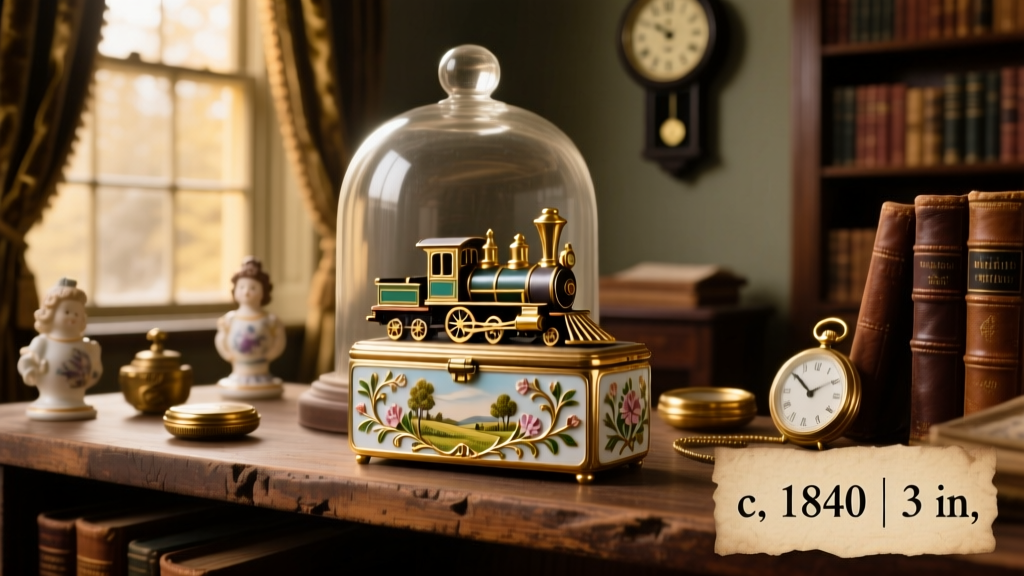
Snuffboxes with Railroad Early Engine Cars and Floral Border, Circa 1840 — A Collector’s Appraisal of the 3-Inch Silver-Gilt Masterpiece
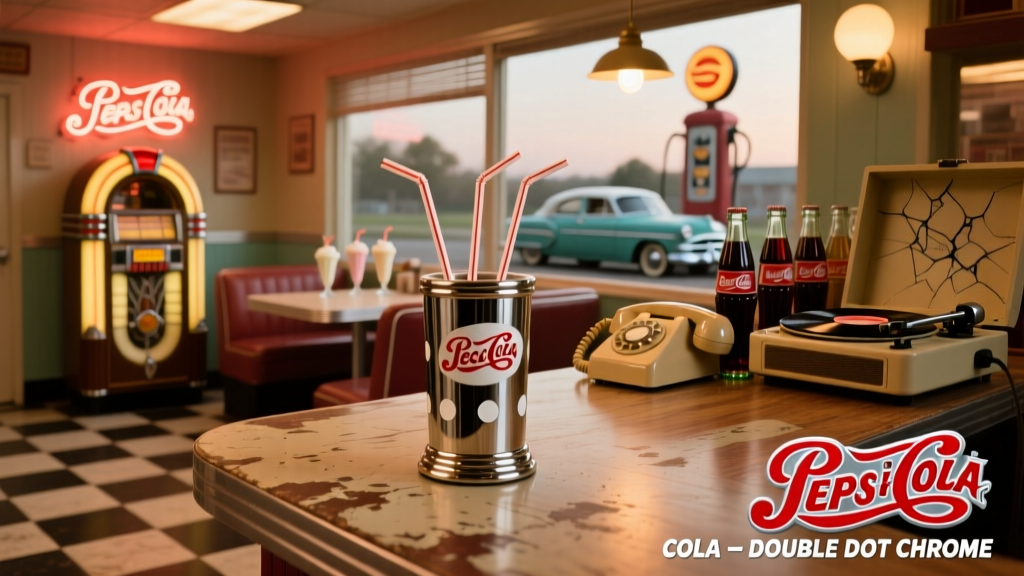
The Pepsi Cola Straw Holder Double Dot Chrome: A Mid-Century Icon of Brand-Driven Design and Mechanical Ingenuity

Tiffany Clock Desk: Bronze Onyx Double Dial Desk Clock, Circa 1920 — A Collector’s Appraisal
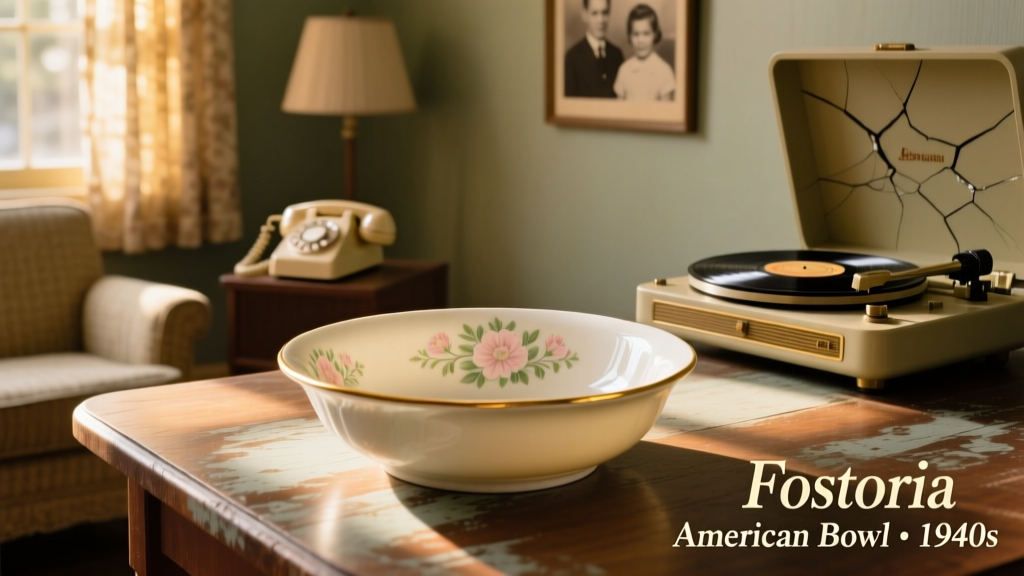
Fostoria American Bowl: The 13-Inch Fruit Shallow — A Mid-Century Glassware Icon

Betty Tin Shell Lamps: Decoding the 10½-Inch Twisted Wire Hanger Chain and Its Mid-Century Significance

Automobile Parade Postcards from Pulaski, NY: A Vintage Snapshot of Old Home Week, 1947–1953
Bullitt (1968) Movie Poster: The Definitive Guide to the Heavy Stock Silkscreen 39 × 55-Inch Steve McQueen Original
1931 Indian Neck Land Company Calendar: A Rare Mid-Century Artifact from Branford, Connecticut
The Cast Iron Wolfhound Doorstop: A Mid-Century Icon of Strength, Craftsmanship, and Collectibility