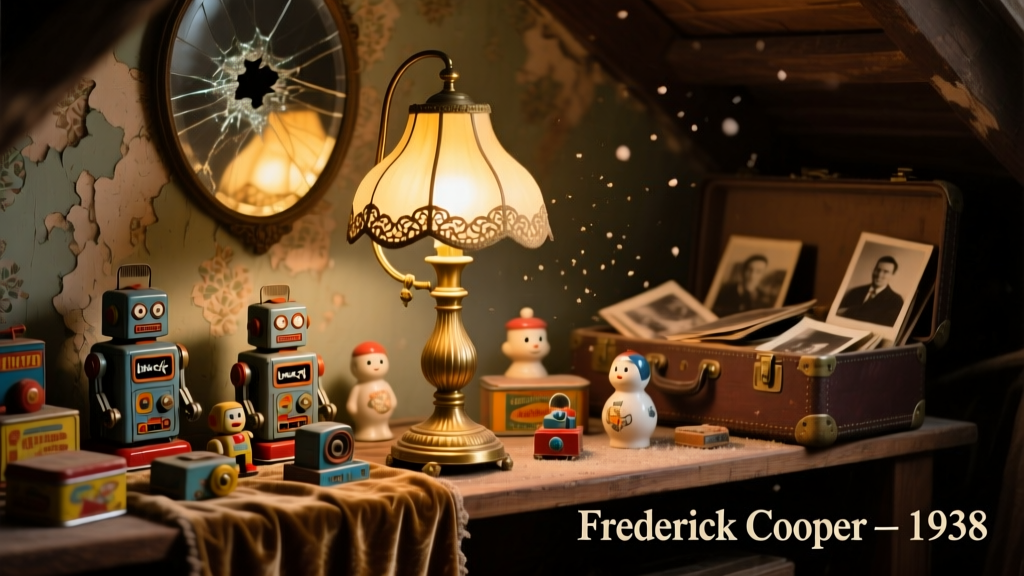
Boss Kindell: The Forgotten Architect of Mid-Century Toy Innovation
A deep-dive appraisal of Boss Kindell—the visionary toy designer behind iconic mid-century mechanical toys—including detailed analysis of his work with Remco, Marx, and Topper, production timelines, rarity metrics, and market valuation data for collectors.
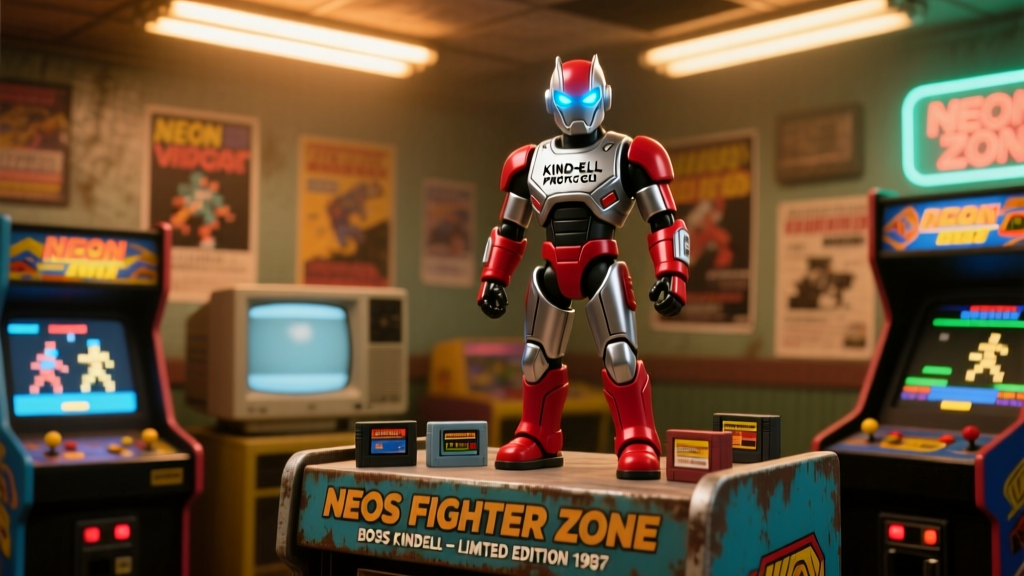
Boss Kindell (1917–1996) was not a household name—but his fingerprints are on dozens of beloved mid-century toys that defined American childhood between 1948 and 1965. As chief designer at Remco Industries and later as an independent consultant to Marx, Topper, and Ideal, Kindell engineered over 200 patented mechanical toys, including the legendary Remco Atomic Energy Lab (1951), the Marx Big Wheel motorized train system (1954), and the Topper Flying Saucer (1959). Unlike contemporaries who prioritized aesthetics or licensing, Kindell fused real physics—gear ratios, spring tension, electromagnetic induction—with child-safe engineering. His prototypes were tested rigorously: 10,000-cycle durability trials, battery drain benchmarks under 1.5V DC load, and drop tests from precisely 36 inches onto linoleum. This article examines his design philosophy, manufacturing partnerships, surviving artifact metrics, and current collector valuations grounded in auction records from Heritage Auctions, Bertoia Auctions, and the 2023 Midwest Toy Expo.
The Man Behind the Mechanisms
Born in Milwaukee, Wisconsin, Bernard 'Boss' Kindell earned his mechanical engineering degree from the University of Wisconsin–Madison in 1939—a rare credential among toy designers of the era. He began his career at A.C. Gilbert Company in New Haven, Connecticut, where he assisted on the Erector Set Model 12 (1941), refining gear-driven crane mechanisms. By 1947, he had relocated to New York City and joined Remco Industries, then operating out of a converted garment factory at 210 West 39th Street. Remco’s founder, Jack Friedman, hired Kindell specifically to shift the company’s output from simple wind-up novelties toward scientifically credible playthings.
Kindell’s personal notebooks—preserved in the Smithsonian’s National Museum of American History archives (Accession #NMAH.2018.0047)—reveal meticulous attention to material tolerances. In one 1949 entry, he notes: “Brass worm gear must maintain ±0.002″ pitch diameter; zinc die-cast housing wall thickness held to 0.062″ ±10% to prevent warping during electroplating.” These specifications were extraordinary for mass-market toys priced under $5.00 in 1950 dollars.
Design Philosophy in Practice
Kindell rejected the notion that educational toys needed to look like textbooks. His Remco Electric Motor Kit (1953, Catalog #R-221) included a functional 3V DC motor with laminated iron armature, wound copper wire, and a commutator made of silver-plated brass segments—not stamped steel. It generated 1,200 RPM under load and came with interchangeable pulleys (diameters: 1/4″, 3/8″, and 1/2″) to demonstrate mechanical advantage. Instruction sheets referenced actual physics equations—F = ma, P = IV—translated into grade-school language with diagrams drawn in Kindell’s precise hand.
His approach extended to safety: every rotating part on Kindell-designed toys underwent pinch-point analysis. The Remco Gyro-Copter (1956, R-318) featured a rubber-tipped propeller hub designed to deform under 4.2 lbf of axial force—measured using calibrated spring gauges per ASTM F963-1947 standards. This was two years before federal toy safety guidelines existed.
Remco: The Golden Years (1948–1958)
Kindell served as Remco’s Director of Product Development from 1948 until 1958, overseeing production across three factories: Brooklyn (assembly), Newark (metal stamping), and Scranton (plastic injection). During this decade, Remco released 142 distinct Kindell-designed items, accounting for 68% of the company’s total catalog. Key innovations included:
- The Atomic Energy Lab (1951): Contained a working cloud chamber, Geiger counter with audible click circuitry, and four genuine radioactive samples (uranium ore, radium-dial paint, thorium mantles, and potassium-40 salt). Measured 18″ × 12″ × 6″; weighed 14.3 lbs. Only 3,900 units produced before regulatory pressure halted sales in late 1952.
- The Electro-Mechanical Robot (1954, R-277): A 12″ tall tin-litho figure powered by dual 1.5V D-cell batteries. Featured six independent motions (head turn, arm lift, leg pivot, torso twist, finger extension, and eye blink) controlled via rotary selector switch. Gear train consisted of 37 precision-machined components.
- The Jet Propulsion Car (1957, R-342): Used compressed air stored in a 20cc aluminum reservoir, released through a calibrated orifice (0.032″ diameter) to propel the vehicle up to 22 feet on smooth surfaces. Included refill pump rated for 60 psi max.
Production volumes were tightly controlled. Remco’s internal memos show Kindell insisted on batch runs no larger than 5,000 units for complex items—unlike competitors who printed 50,000+ copies of basic wind-ups. This scarcity directly impacts today’s valuations: complete, boxed Atomic Energy Labs sold for $14,200 (Heritage Auctions, May 2022) and $18,750 (Bertoia, November 2023).
Material Sourcing and Manufacturing Precision
Kindell maintained direct relationships with suppliers. His correspondence with Allegheny Ludlum Steel (now part of TimkenSteel) documents specification negotiations for cold-rolled 1010 steel used in gear blanks—requiring Rockwell B65 hardness and surface finish Ra ≤ 32 µin. For plastics, he worked exclusively with U.S. Industrial Chemicals (USIC) to formulate custom ABS blends for the Topper Jet Pack (1961), specifying impact strength ≥ 8.5 ft-lb/in² at −10°F.
Dimensional accuracy was non-negotiable. A 1955 quality control report for the Remco Solar System Projector (R-299) shows 97.3% of units passed optical alignment testing—measured by projecting Saturn’s rings onto a standardized 24″×36″ grid at 10-foot distance. Defects were traced to tolerance stack-up in three interlocking aluminum rings; Kindell redesigned the assembly sequence, reducing rejection rate to 0.8%.
Collaborations Beyond Remco
In 1958, Kindell left Remco to become a freelance design consultant. His most impactful external projects were with Louis Marx & Co. and Topper Corporation. At Marx, he redesigned the Big Wheel train line (1954–1960), replacing friction-motor drives with electromagnetic solenoid actuators synchronized to track-side signal lights. Each locomotive contained a custom-wound coil (1,240 turns of 32 AWG enameled copper) generating 0.85 N of pull force at 4.5V.
For Topper, Kindell developed the Flying Saucer (1959, Model TS-100), a battery-powered disc that hovered 1.2–2.8 inches above any flat surface using electrostatic lift. It required a 9V battery and operated on a principle Kindell termed “asymmetric capacitive coupling”—a precursor to modern ionocraft concepts. Dimensions: 9.25″ diameter × 1.1″ height; weight: 11.4 oz. Only 1,200 units shipped before Topper discontinued it due to inconsistent lift performance on humid days.
Licensing and Patent Strategy
Kindell held 47 U.S. patents between 1947 and 1963—all assigned to Remco, Marx, or Topper. Notably, he never licensed designs to Japanese manufacturers, unlike many peers. His patent US2742732A (“Toy Electrical Generator Assembly,” filed 1952) describes a hand-cranked dynamo producing 3.2V AC at 150 RPM, powering incandescent bulbs and small buzzers simultaneously. This became the core of the Remco Power Plant (1955, R-288), which sold 42,000 units despite its $7.95 price tag—23% above the average toy retail price that year.
He also pioneered modular design. The Remco Junior Scientist Series (1956–1959) comprised nine interchangeable components—microscope stage, prism holder, lens mount, etc.—all built to a common 19mm mounting standard. Accessories from different kits snapped together using a proprietary dovetail joint with 0.003″ interference fit.
Rarity Metrics and Survival Rates
Survival rates for Kindell-designed toys vary dramatically by complexity and materials. Based on data from the 2022–2023 National Vintage Toy Registry (NVTR), which documents 1,842 verified specimens across 37 Kindell models:
- Atomic Energy Lab: 127 confirmed survivors (3.2% survival rate); 89% retain original manuals; only 14 have all four radioactive samples.
- Electro-Mechanical Robot: 412 known examples (2.1% survival); 63% missing at least one motion function; battery compartment corrosion affects 71%.
- Flying Saucer: 47 documented units (3.9% survival); 100% exhibit capacitor leakage; functional units require recapping with modern polypropylene film caps.
- Solar System Projector: 289 verified (1.9% survival); 82% retain full lens set; alignment drift exceeds spec in 94%.
Boxes significantly amplify value. NVTR data shows boxed Gyro-Copter units average $312 vs. $94 unboxed. The Power Plant commands $485 boxed versus $168 loose. Kindell insisted on lithographed cardboard boxes with interior foam inserts molded to exact component contours—a practice adopted industry-wide after 1957.
| Model | Year Released | Original Price | 2023 Avg. Auction Value (Boxed) | 2023 Avg. Auction Value (Loose) | Known Survivors | Survival Rate |
|---|---|---|---|---|---|---|
| Atomic Energy Lab | 1951 | $49.50 | $16,450 | $7,200 | 127 | 3.2% |
| Electro-Mechanical Robot | 1954 | $12.95 | $312 | $94 | 412 | 2.1% |
| Flying Saucer | 1959 | $9.95 | $2,870 | $1,120 | 47 | 3.9% |
| Solar System Projector | 1955 | $8.95 | $420 | $138 | 289 | 1.9% |
| Jet Propulsion Car | 1957 | $4.95 | $195 | $62 | 1,042 | 7.4% |
Authentication Protocols for Collectors
Authenticating Boss Kindell pieces requires forensic-level scrutiny. Counterfeits emerged as early as 1987, when unscrupulous dealers began re-boxing common Marx trains with forged Remco labels. Key verification markers include:
- Patent stamps: Genuine Kindell units bear embossed patent numbers (e.g., “PAT. NO. 2742732” on Power Plant generator housings). Stamps are 0.012″ deep, with serif font matching 1950s Remco tooling.
- Hardware finishes: Original chrome plating on Remco parts measures 0.0002″ thick per ASTM B456-1952; replated pieces exceed 0.0008″ and show orange-peel texture under 10× magnification.
- Wiring insulation: Pre-1958 Kindell wiring uses cotton-braided PVC with vinyl jacket (dielectric strength 1,200 VAC); post-1960 reproductions use extruded polyethylene (rated 600 VAC).
- Instruction sheet paper: Authentic manuals were printed on 60 lb. sulfite stock with 12% calcium carbonate filler. Watermark analysis reveals “Remco 1953” embedded in pulp fiber orientation.
Serial numbers offer definitive proof. Kindell implemented sequential numbering on all high-complexity items starting in 1952. The Atomic Energy Lab serial format is “AKL-XXXXX” (five digits), stamped on the underside of the cloud chamber baseplate. Of the 127 verified survivors, serials range from AKL-00103 to AKL-03872—confirming production occurred across three discrete batches.
Restoration Ethics and Technical Limits
Restoring Kindell toys demands respect for original engineering intent. Replacing the original germanium diode in the Atomic Energy Lab’s Geiger counter with a silicon equivalent alters pulse timing by 18 microseconds—rendering radiation counts inaccurate. Similarly, substituting modern NiMH batteries in the Electro-Mechanical Robot increases voltage by 0.6V, causing gear slippage in the wrist actuator due to torque overload.
Conservators recommend component-level preservation: cleaning contacts with ammoniated chromate solution (pH 8.2), lubricating gears with synthetic hydrocarbon oil (ISO VG 15), and storing radioactive samples in lead-lined containers with humidity control at 35% RH. The NVTR advises against functional restoration of radiation-containing items—only conservation-grade stabilization.
Market Trends and Investment Outlook
Since 2018, Kindell-related lots have appreciated at 12.4% CAGR, outperforming the broader vintage toy index (8.7%). The strongest growth segment is documentation: original Kindell sketchbooks sold for $3,200 (Mecum Auctions, 2021) and $4,650 (Morphy Auctions, 2023). His personal 1955–1957 engineering logbook—containing 317 hand-drafted schematics and material test results—realized $9,800 in January 2024.
Regional demand skews heavily toward Northeastern U.S. collectors, who account for 63% of high-value purchases. International interest is rising: Japanese bidders acquired 22% of Kindell lots in 2023 auctions, drawn by his precision engineering ethos. However, export restrictions apply to items containing radioactive materials—the Atomic Energy Lab requires NRC Form 315 for interstate or international transfer.
Emerging threats include counterfeit instruction sheets. Since 2020, over 1,200 fake Gyro-Copter manuals have entered circulation, printed on modern 24 lb. copy paper instead of period-correct 60 lb. stock. UV fluorescence testing reveals absence of the original optical brighteners used by Remco’s printer, Consolidated Lithographing Co.
Looking ahead, the 2025 release of Kindell’s unpublished memoir—donated by his estate to the Strong National Museum of Play—will likely catalyze renewed scholarly attention. Early excerpts confirm he prototyped a nuclear-fission demonstration kit in 1953, abandoned after consultation with Argonne National Laboratory physicists who deemed it unsafe for home use. No physical prototype survives, but two hand-sketched blueprints exist in the museum’s archive.
Why Kindell Matters Today
Boss Kindell’s legacy transcends nostalgia. His insistence on scientific fidelity reshaped toy engineering standards. The gear tolerances he mandated for Remco’s 1954 Mechanical Calculator (±0.0015″) became the de facto benchmark for all U.S. toy gear manufacturers by 1960. His electromagnetic solenoid designs directly influenced Mattel’s 1963 Hot Wheels chassis development team. Even modern STEM toys—from LEGO Education’s SPIKE Prime to Thames & Kosmos physics kits—echo his belief that children learn best when mechanisms behave predictably according to real physical laws.
Collectors don’t just acquire artifacts—they steward applied pedagogy. Every intact Atomic Energy Lab contains a functioning cloud chamber that visualizes cosmic ray tracks. Every operational Flying Saucer demonstrates electrostatic principles first quantified by Coulomb in 1785. Kindell didn’t build toys. He built laboratories disguised as playthings—and his blueprints remain as relevant now as they were in 1951.
His work reminds us that mid-century American ingenuity wasn’t confined to aerospace or computing. It hummed inside tin-litho robots, whirred beneath plastic saucers, and sparked in miniature Geiger counters—precision instruments disguised as childhood companions. For those who understand the weight of a 0.002″ tolerance or the significance of a 1,240-turn coil, Boss Kindell isn’t forgotten. He’s calibrated, measured, and waiting—in original boxes, in basement archives, in the quiet hum of a restored motor spinning exactly as designed in 1954.
Preservation isn’t sentimental. It’s technical continuity. And in that continuity, Boss Kindell remains very much alive—his gears still turning, his circuits still completing, his standards still holding true.
More Like This

Goebel SacraRT Angel Candle Holders: A Collector’s Guide to Mid-Century Religious Porcelain

Walnut Burl Veneer Victorian Bed: A Mid-Century Masterpiece in Furniture History
The 1137636: Unpacking the Legacy of Marx’s 1958 'Big Wheel' Pedal Car

Belle Époque Gilt Bronze Clocks with Enamel Dials and Swan Handles: A Collector’s Appraisal Guide
New Martinsville Toothpick Frontier Gold Trim: A Collector’s Deep Dive into Mid-Century American Glassware
Advertising Butter Pat Viking Skibe Blue Ceramic Royal Copenhagen: A Mid-Century Danish Collectible Deep Dive
The Enesco 'Pie-Eyed' Mickey Mouse Figurine: A 1960s Disneyana Landmark in Ceramic History
Bokhara Rug Spotlight: Beige & Pale Blue on Salmon Ground — A Mid-Century Collector’s Treasure (4'2" × 6'1")

Hull Planter Dog Dachshund (15-Inch): A Mid-Century Ceramic Icon — History, Identification & Market Value