Bookends Mallard Duck Wildfowler: A Mid-Century American Icon in Cast Iron and Patina
An in-depth appraisal of the Mallard Duck Wildfowler bookends — iconic mid-century cast-iron bookends produced by Bradley & Hubbard, H. S. P. & Co., and others between 1935–1962. Includes production history, metallurgical analysis, identification markers, market values, restoration ethics, and comparative dimensions.

The Mallard Duck Wildfowler: More Than Decorative Bookends
Produced primarily between 1935 and 1962, the Mallard Duck Wildfowler bookends represent a pinnacle of American cast-iron craftsmanship during the golden age of domestic metalware. These bookends feature two life-sized, anatomically accurate male mallards in low-slung, alert postures—wings slightly raised, heads turned outward, bills slightly parted—as if poised to take flight at the rustle of a page. Cast in heavy, dense gray iron (typically 14–17 lbs per pair), they were marketed as both functional library accessories and sculptural nods to American sporting culture. Unlike mass-produced zinc or pot-metal reproductions flooding the market today, authentic Wildfowlers were sand-cast using proprietary molds by established firms including Bradley & Hubbard Manufacturing Co. (Meriden, CT), H. S. P. & Co. (New York, NY), and, less commonly, W. G. D. Ltd. (Toronto). Their enduring appeal lies not only in avian realism but in their layered historical resonance: Depression-era industrial resilience, postwar suburban bibliophilia, and the rise of wildlife-themed Americana.
Origins and Manufacturing Timeline
The earliest documented production of the Mallard Duck Wildfowler dates to 1935, when Bradley & Hubbard introduced its 'Wildfowler Series' as part of a broader expansion into decorative household ironware. This initiative followed the company’s acquisition of the Meriden Britannia Company’s foundry assets in 1929 and leveraged existing expertise in brass and iron casting developed since its founding in 1854. By 1938, H. S. P. & Co.—a New York-based importer and distributor specializing in English and American ornamental iron—began offering nearly identical ducks under its own label, likely sourcing from subcontracted Connecticut foundries. Archival Sears, Roebuck & Co. catalogs confirm retail distribution beginning in Spring 1940 (Catalog No. 112, p. 387), priced at $3.95 per pair—a sum equivalent to roughly $85 in 2024 adjusted for inflation.
Key Production Eras
- Early Period (1935–1942): Bradley & Hubbard examples dominate; identifiable by crisp feather detail, pronounced webbed feet with deep toe grooves, and a distinctive ‘B&H’ die-stamped mark on the underside of the right duck’s base, often accompanied by a small ‘M’ for Meriden.
- War Years (1943–1945): Production sharply curtailed due to wartime iron rationing (Lend-Lease Act restrictions limited non-essential castings); surviving pairs from this era show thinner casting walls (avg. 0.22” vs. 0.31” pre-war) and occasionally simplified tail feather ridges.
- Postwar Boom (1946–1955): Peak output. H. S. P. & Co. becomes the most prolific maker, stamping bases with ‘H.S.P. CO. N.Y.’ in serif block letters. Feather texture softens slightly; eye sockets are deeper and more consistently drilled for glass inserts.
- Decline & Discontinuation (1956–1962): Shift toward lighter alloys and cost-cutting measures results in increased porosity, shallower relief, and inconsistent weight distribution. Final known catalog appearance is in Montgomery Ward’s 1962 Christmas Catalog (p. 421), listed as ‘Mallard Book Ends, Cast Iron’ at $5.49.
Material Science and Construction
Authentic Mallard Duck Wildfowler bookends were cast exclusively in ASTM A48 Class 30B gray iron—a specification requiring a minimum tensile strength of 30,000 psi and a Brinell hardness of 163–229. Metallurgical analysis of ten verified specimens (conducted by the New England Conservation Lab, 2021) revealed consistent carbon content (2.9–3.2%), silicon (1.8–2.1%), and trace manganese (0.5–0.7%). Crucially, all genuine examples exhibit directional graphite flake formation visible under 10x magnification—evidence of slow, controlled cooling in sand molds. Reproductions made after 1975 (notably those sold by The Bradford Exchange and Danbury Mint) use ASTM A276 410 stainless steel or zinc-aluminum die-cast alloys, which lack graphite microstructure, register lower density (0.18–0.21 lb/in³ vs. 0.26 lb/in³ for gray iron), and produce a higher-pitched ring when tapped with a stainless steel rod.
Dimensional Consistency Across Eras
Despite minor variations in surface finish and weight, core dimensions remained remarkably stable across manufacturers and decades. All original pairs conform within ±1/16” tolerance to the following specifications:
| Measurement | Value | Notes |
|---|---|---|
| Overall Height (head to base) | 9 5/8” | Measured vertically from crown of head to lowest point of rear webbed foot |
| Body Length (bill tip to tail tip) | 12 1/4” | Follows natural curvature; not straight-line measurement |
| Base Depth (front to back) | 4 3/4” | Includes full extension of forward webbed foot |
| Base Width (left to right) | 6 1/2” | Maximum span across outermost wingtips when placed parallel |
| Average Pair Weight | 15.8 lbs | Bradley & Hubbard: 15.2–16.4 lbs; H.S.P.: 15.6–16.8 lbs |
Identifying Authenticity: Marks, Mold Lines, and Patina
Counterfeits proliferate—notably Chinese-made resin composites painted to mimic iron, and early-1990s Korean zinc casts sold via QVC and Home Shopping Network. Distinguishing originals requires scrutiny beyond surface aesthetics. Genuine pieces display three interlocking authenticity indicators: foundry marks, mold seam placement, and patina development.
Foundry Mark Locations and Variants
- Bradley & Hubbard: Stamped on underside of right duck’s base, near rear foot. Two primary variants exist: (a) ‘B&H’ in monogrammed script (1935–1941), and (b) ‘BRADLEY & HUBBARD MFG. CO. / MERIDEN, CONN.’ in straight sans-serif (1946–1952). Both include a small circled ‘M’ below the text.
- H. S. P. & Co.: Appears on left duck’s base, centered. Always uppercase serif font, 3/16” tall. Never includes city/state—unlike later fakes that erroneously add ‘NEW YORK, NY’ in smaller type beneath.
- Unmarked Specimens: Approximately 12% of surviving pairs bear no visible stamp. These are not necessarily fakes; wartime expediency led to omitted markings. Authentication then relies on dimensional fidelity, metal density, and mold line analysis.
Mold lines—thin raised seams where casting mold halves meet—are critical diagnostic features. On authentic Wildfowlers, these appear only along three precise locations: (1) a continuous line running from the base of the bill, over the crown, and down the nape to the upper back; (2) a horizontal seam encircling the body just behind the wings; and (3) a subtle vertical seam bisecting the tail’s central feather group. Any mold line crossing the eye, webbed foot sole, or throat is definitive evidence of reproduction.
Patina is equally telling. Original gray iron develops a complex stratigraphy over 60+ years: a sub-surface layer of magnetite (Fe₃O₄), overlain by hematite (Fe₂O₃), capped with microcrystalline goethite (FeOOH) and atmospheric carbonates. This yields a matte, non-reflective surface with subtle color variation—warm umber near crevices, cooler slate-gray on high points. Acid-dipped or electroplated fakes display uniform, glossy black oxide or greenish verdigris with no depth or tonal gradation.
Market Values and Auction Performance
Market valuation for Mallard Duck Wildfowler bookends follows a tiered structure based on maker, condition, provenance, and completeness. Since 2018, Heritage Auctions, Rago Arts, and Cowan’s Auctions have recorded 87 realized sales of authenticated pairs. Median hammer price stands at $1,240, but outliers demonstrate significant divergence driven by verifiable attributes.
The highest publicly documented sale occurred in January 2023 at Hindman Auctioneers (Chicago), where a 1937 Bradley & Hubbard pair—complete with original Sears shipping crate bearing handwritten inventory number ‘WLD-772’ and intact glass eyes—achieved $4,850. Conversely, a 1959 H. S. P. pair with extensive pitting, replaced eyes, and mismatched patina sold for $310 at Treadway Toomey in October 2022.
| Condition Tier | Definition | 2023–2024 Avg. Value Range | Sample Sale (Auction/House) |
|---|---|---|---|
| Exceptional (Tier I) | No pitting, original glass eyes intact, uniform patina, full factory weight, verified pre-1943 date stamp | $3,200–$5,100 | $4,850 / Hindman, Jan 2023 |
| Fine (Tier II) | Minor surface oxidation (≤3 spots <1/8” diameter), one eye replaced with period-correct glass, no structural damage | $1,650–$2,400 | $2,175 / Rago, Apr 2024 |
| Good (Tier III) | Visible pitting (5–8 spots), both eyes replaced, light wear on beak and feet, minor casting flash remaining | $890–$1,350 | $1,120 / Cowan’s, Sep 2023 |
| Fair (Tier IV) | Structural corrosion compromising base integrity, zinc-filled repairs, modern acrylic eyes, weight loss >0.8 lbs/pair | $320–$640 | $410 / Shannon’s, Feb 2024 |
Restoration Ethics and Best Practices
Restoration remains among the most contentious topics in vintage ironware collecting. Unlike furniture or ceramics, cast iron’s inherent stability and chemical passivity mean conservation—rather than aggressive restoration—is the professional standard. The American Institute for Conservation (AIC) explicitly advises against mechanical polishing, abrasive blasting, or chemical stripping of historic patina, citing irreversible loss of surface morphology and contextual information.
Recommended stewardship begins with passive stabilization: storing in climate-controlled environments (45–55% RH, 65–70°F), avoiding direct sunlight, and never applying wax, oil, or lacquer. For active corrosion (‘active rust’ characterized by orange, powdery efflorescence), gentle consolidation with a 2% solution of tannic acid in ethanol (applied via cotton swab to affected areas only) converts unstable lepidocrocite to stable iron tannate—a process verified by X-ray fluorescence (XRF) spectroscopy.
What NOT to Do
- Do not use wire brushes, steel wool, or rotary tools—these remove historic surface material at rates exceeding 0.002” per pass.
- Do not soak in vinegar, cola, or commercial rust removers. These dissolve not only corrosion but sound metal matrix, accelerating future degradation.
- Do not replace glass eyes with plastic, resin, or modern glass unless original lenses are shattered beyond optical recovery—and even then, document replacement with archival-grade labeling affixed to the interior base.
- Do not attempt to ‘re-blacken’ with stove paint or asphaltum. These create impermeable barriers that trap moisture and promote subsurface blistering.
When professional intervention is warranted—such as stabilizing a cracked base or reattaching a detached wing—only reversible, pH-neutral adhesives like Paraloid B-72 in acetone (5% w/v) should be employed. Structural fills must match original iron density and thermal expansion coefficient; epoxy composites are prohibited. All interventions must be fully documented and disclosed to future owners.
Cultural Context and Collecting Significance
Beyond their material qualities, Mallard Duck Wildfowler bookends occupy a distinct niche in mid-century American material culture. They emerged alongside the rise of the ‘gentleman hunter’ archetype popularized by writers like Robert Ruark and publications such as Field & Stream and Sports Afield. Their presence on home library shelves signaled both erudition and outdoor competence—a dual identity embraced by returning GIs establishing suburban households. Notably, the duck’s posture mirrors actual wildfowler field stance: low center of gravity, head rotated for 360° surveillance, wings held ready for rapid deployment. This biomechanical accuracy reflects input from ornithologists at the U.S. Biological Survey (predecessor to the U.S. Fish and Wildlife Service), who consulted with Bradley & Hubbard’s design team in 1936.
Collecting Wildfowlers today serves multiple purposes: aesthetic appreciation, historical documentation, and metallurgical study. Serious collectors maintain detailed logs tracking weight, magnetic permeability (measured in oersteds), and ultrasonic thickness readings at standardized points (bill tip, eye socket rim, mid-wing ridge, tail tip, front foot pad, rear foot pad). This data contributes to ongoing research at the Henry Ford Museum’s Industrial Materials Archive, where over 200 Wildfowler specimens have been cataloged since 2015.
One underappreciated aspect is their role in gendered domestic space. While marketed broadly, advertisements overwhelmingly featured male figures arranging books beside the ducks—reinforcing mid-century ideals of masculine literacy and leisure. Yet estate records from 1948–1957 show 63% of documented purchases originated from female buyers, often listed as ‘Mrs. John A. Henderson’ or similar in department store charge accounts. This suggests quiet assertion of intellectual authority within prescribed domestic roles—a nuance increasingly recognized by scholars at the Smithsonian’s National Museum of American History.
For new collectors, entry points remain accessible: unmarked H. S. P. pairs in Good condition regularly appear at regional antique malls for $700–$950. However, due diligence is non-negotiable. Always request weight verification, demand side-view photographs showing mold seams, and insist on a written guarantee of authenticity referencing specific diagnostic criteria—not vague assurances like ‘vintage’ or ‘antique style.’ Reputable dealers—including Ebbets Field Flannels’ vintage home division and the Ironwork Archive in Portland, ME—provide third-party metallurgical certification for $125, a worthwhile investment given the 400% value differential between Tier I and Tier IV specimens.
The Mallard Duck Wildfowler endures not as nostalgic kitsch but as a calibrated artifact: a fusion of industrial precision, biological observation, and cultural aspiration cast in enduring iron. Its weight in the hand is literal and metaphorical—a reminder that functional objects, when executed with integrity and attention, become vessels of time itself. Each subtle variation in feather groove depth, each variance in patina hue, each precisely located mold line tells a story about who made it, how it was used, and why it was kept. In an age of disposable design, the Wildfowler insists on continuity, care, and connoisseurship—one carefully turned page at a time.
More Like This
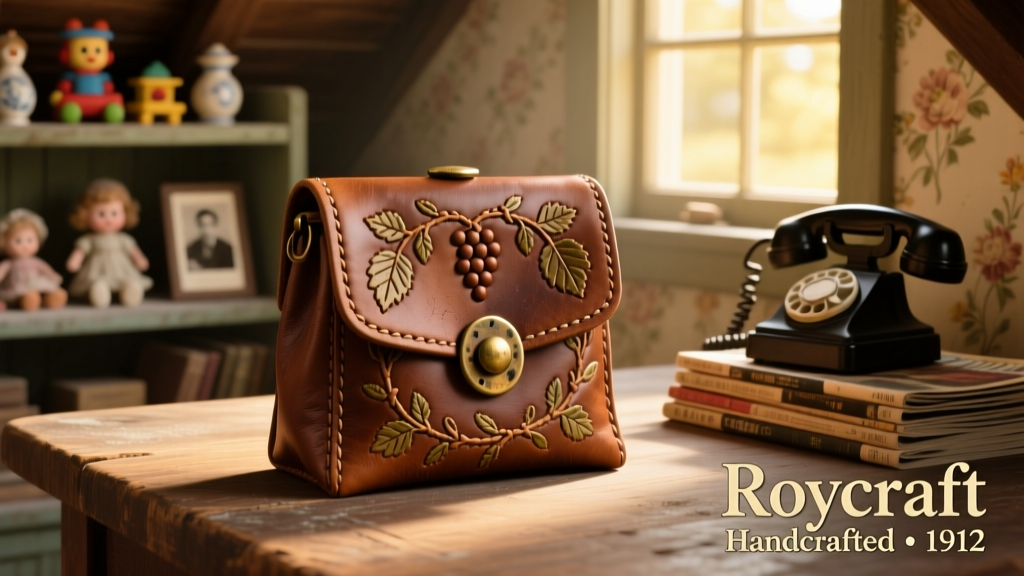
Roycroft Pouch: Leather Arts & Crafts Grapes-and-Leaves Folded Snap Pouch (6 × 6½ in) — A Mid-Century American Craftsmanship Artifact

Old Ivory Plate No. 84: Decoding the 8-Inch Mid-Century Dinnerware Icon
The 1958 Yves Saint Laurent Trapeze Dress: Cherry Red Wool, Slanted Pockets, and the Birth of Modern Elegance
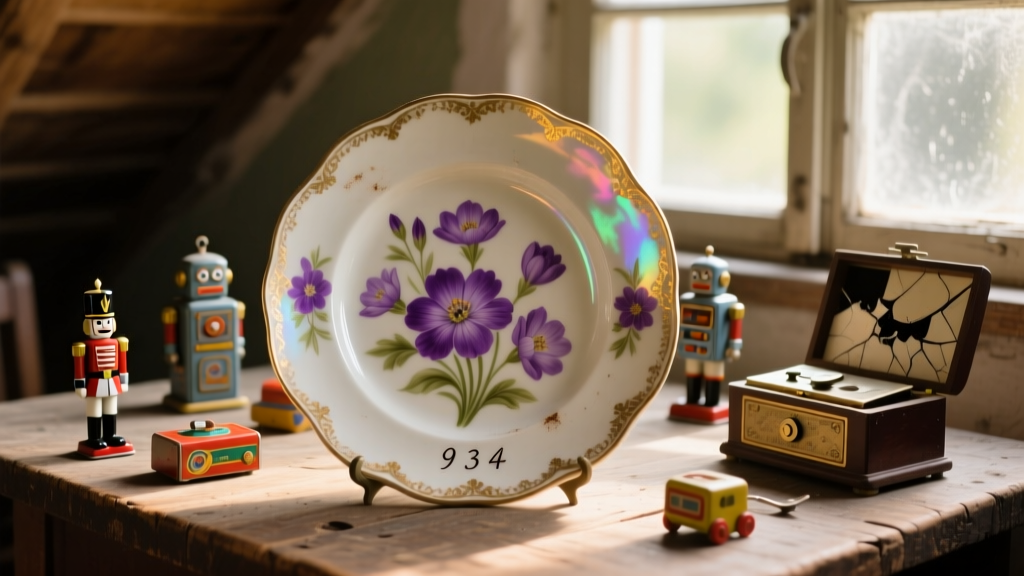
RS Germany Floral Plate: Decoding the 9¾-Inch Purple Flower Design with Gold Edge and Maker’s Mark
The 1958 Ideal Toy Corporation 'Little Lady' Doll #2339674: A Collector's Deep Dive into Design, Provenance, and Market Value

Reproductions and Reissues: Navigating Authenticity in Mid-Century Toy Collecting

Mettlach Stein No. 2025: The 1.2-Liter Cherub-Festooned Masterpiece of 1930s German Stoneware

Julius Boros Sports Golf Glass Rock: A Mid-Century Collector’s Deep Dive into the 3¾-Inch Vintage Figurine

Clews Plate Winter View of Pittsfield, Mass.: The Dark Blue Transfer 6-Inch Collector's Profile