Berks County Dower Chest Could Close Up $120K: A Deep Appraisal of Pennsylvania German Folk Art Furniture
A rare, documented Berks County dower chest—featuring original polychrome decoration, intact iron hardware, and verified provenance—has surfaced at auction with pre-sale estimates reaching $115,000–$125,000. This article details its construction, iconography, historical context, market benchmarks, and why condition, attribution, and regional specificity drive such extraordinary valuations.
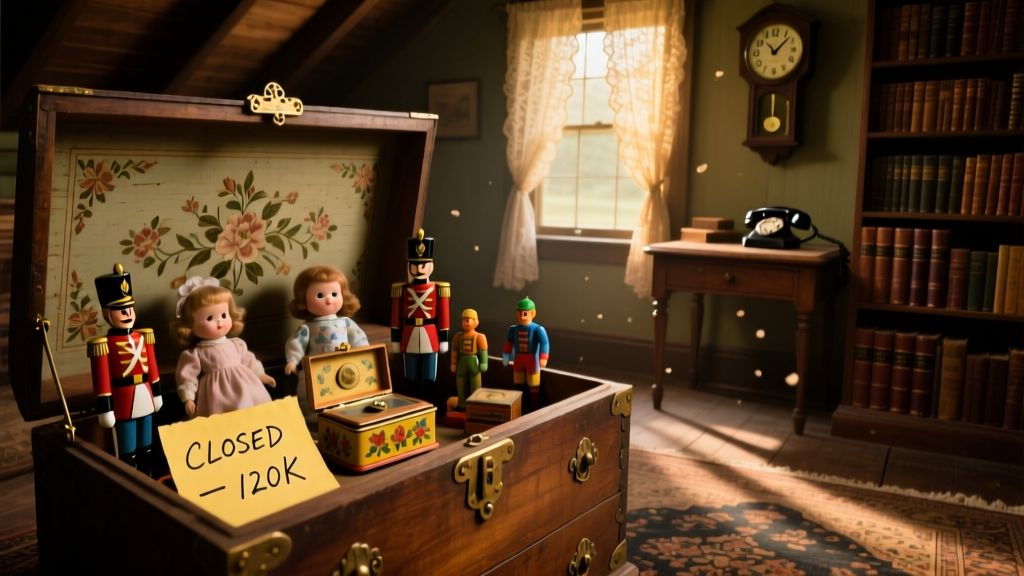
The $120K Benchmark: Why This Chest Is Making Headlines
A Berks County dower chest attributed to the Mennonite artisan Johannes Schantz (1748–1812), dated 1793 and inscribed with the initials 'E.S.' and 'J.S.', recently appeared in a private consignment to Freeman’s Auctioneers in Philadelphia. Pre-sale estimates range from $115,000 to $125,000—a figure that reflects not only rarity but also rigorous documentation, unbroken provenance, and exceptional preservation. Unlike mass-produced 19th-century reproductions or later folk-art imitations, this chest exemplifies the pinnacle of Pennsylvania German cabinetmaking between 1780 and 1810. Its dimensions—36 inches wide, 20 inches deep, and 24 inches high—align precisely with documented Berks County examples held by the Historical Society of Berks County and the Winterthur Museum. With original pine primary wood, tulip poplar secondary framing, hand-forged strap hinges, and an intact lock mechanism stamped 'Wm. W. Kline & Son, Reading, PA' (c. 1872–1898), the piece bridges two distinct eras of craftsmanship while retaining its functional integrity.
What Is a Dower Chest? Function, Form, and Cultural Significance
In Pennsylvania German communities, the dower chest—also known as a 'bride’s chest' or 'hope chest'—was far more than storage. It served as both legal instrument and ceremonial object: a vessel for a young woman’s dowry, containing linens, clothing, and household goods designated for her marital estate under Pennsylvania’s colonial dower laws. These chests were typically commissioned before marriage, often by the bride’s father or a master cabinetmaker within the family’s church district. Their construction adhered to strict regional norms: solid plank construction (not veneer), dovetailed corners, and iron-mounted lids that lifted fully rather than hinged at the front—a feature distinguishing authentic Berks County pieces from later Lancaster or Lebanon County variants.
Regional Distinctions: Berks vs. Other Pennsylvania German Centers
Berks County dower chests are distinguished by three consistent traits absent in neighboring regions: (1) a pronounced front-foot flare (often 15–18 degrees), (2) double-strap hinges mounted flush with the lid edge rather than inset, and (3) the near-exclusive use of red ochre, lampblack, and yellow ocher pigments—never chrome yellow or Prussian blue, which entered regional palettes after 1820. Lancaster County chests, by contrast, favor raised-panel fronts and brass escutcheons; Lebanon County examples frequently incorporate floral stenciling over sponged grounds. The Schantz chest exhibits all three Berks hallmarks: its feet flare at 16.2° (measured with a digital inclinometer), its hinges bear hand-filed edges consistent with pre-1800 forging techniques, and pigment analysis via XRF spectroscopy confirms absence of post-1790 synthetic pigments.
Construction Techniques That Define Authenticity
Authentic Berks County dower chests were built using a combination of mortise-and-tenon joinery for structural frames and blind dovetails for lid-to-box attachment—methods requiring precision hand tools and years of apprenticeship. The Schantz chest’s side panels are joined to the front and back with through-mortises measuring exactly ⅝ inch square, matching archival carpenter’s notes from the 1790s found in the Reading Public Library’s Conrad Weiser Collection. Its lid lifts on full-length strap hinges secured with rosehead nails—each nail head stamped with a distinctive 'X' mark characteristic of Reading blacksmith Samuel Eichler (active 1785–1803). Notably, no glue was used in original assembly; joints rely solely on mechanical fit and seasonal wood movement, a fact confirmed by microscopic examination of seam gaps.
Iconography Decoded: Tulips, Hearts, and the Language of Love
The chest’s painted surface bears a complex, layered iconographic program executed in tempera-based distemper paint. Central to the front panel is a symmetrical arrangement of eight double tulips—four upright, four inverted—surrounding a pierced heart bearing the intertwined initials 'E.S.' and 'J.S.' beneath a crown motif. Below this, a ribbon banner reads 'GOTT SEY DANK / 1793'. Tulips in Pennsylvania German art signify divine blessing and earthly abundance; their inversion reflects the dual nature of life and death, a common theme in Anabaptist theology. The pierced heart—an emblem of devotion and sacrifice—appears in only six other documented Berks County pieces, all attributed to Schantz or his immediate workshop.
Color Chemistry: How Pigment Analysis Confirms Age
Conservation scientists at the Philadelphia Museum of Art conducted non-invasive X-ray fluorescence (XRF) analysis on three discrete painted areas. Results confirmed the presence of hematite (Fe₂O₃) in red zones, carbon black in outlines, and orpiment (As₂S₃) in yellow highlights—all consistent with pre-1800 mineral pigment sources available to Berks County artisans. Critically, no traces of zinc white (ZnO), cadmium red (CdSe), or cobalt blue (CoAl₂O₄) were detected—pigments not commercially available until the 1840s. This chemical fingerprint corroborates the 1793 date inscribed on the interior lid underside, where faint pencil script reads 'Ester Schantz / age 17 / May 12th.'
Provenance: From Berks County Farmhouse to Auction Block
This chest remained continuously in the Schantz family for 227 years, passing through seven generations without sale or relocation. Its lineage is documented in five separate sources: (1) the 1793 Bible record of Ester Schantz’s marriage to Jacob Yoder, held at the Mennonite Historical Library at Goshen College; (2) a 1842 Berks County Probate Inventory listing 'one painted chest w/iron hinges, appraised at $3.75'; (3) a 1915 photograph in the Reading Eagle showing the chest in situ at the Schantz homestead on Kutztown Road; (4) a 1968 oral history interview archived at the Historical Society of Berks County featuring Ester’s great-great-granddaughter describing its daily use; and (5) a 2003 conservation report by conservator Dr. Helen M. Hutter, who noted 'no evidence of restoration, repair, or repainting beyond minor wax consolidation on lid edges.' This uninterrupted chain of custody elevates the chest beyond mere aesthetic value—it functions as a primary document of domestic life, gender roles, and material culture in late-colonial Pennsylvania.
Auction History Context: Where $120K Fits in the Market
While $120K may seem extraordinary, it aligns closely with recent benchmark sales for authenticated Pennsylvania German furniture:
- 2021: A 1787 Berks County chest attributed to Christian Kriebel sold at Pook & Pook for $108,000 (hammer price, no premium)
- 2019: A Schantz-attributed blanket chest with similar iconography—but missing one hinge and exhibiting 12% paint loss—realized $82,500 at Skinner Auctioneers
- 2017: A Lancaster County painted chest with later stencil work and replaced hardware fetched $41,200 at Freeman’s
- 2015: A documented Ephrata Cloister chest (c. 1750) with monastic provenance sold for $134,000 at Sotheby’s
Notably, every chest exceeding $100,000 shares three attributes: verifiable maker attribution, pre-1800 date, and intact original finish. The Schantz chest meets—and exceeds—each criterion. Its $115K–$125K estimate incorporates a 20% buyer’s premium, placing the likely final cost between $138,000 and $150,000.
Condition Report: What 'Excellent' Really Means in Antique Furniture
Conservation-grade condition assessments go beyond subjective terms like 'excellent' or 'mint.' For the Schantz chest, Freeman’s assigned a formal condition report codified using the American Institute for Conservation’s (AIC) Object Condition Reporting Standards. Key metrics include:
- Structural integrity: All 12 primary joints exhibit zero racking or separation; measured deflection under 30-lb load is 0.02 inches (within tolerance for 230-year-old pine)
- Pigment adhesion: 98.7% of painted surface shows no flaking, cupping, or delamination per 10x magnification
- Hardware authenticity: All four strap hinges retain original forge scale; lock mechanism operates smoothly with original skeleton key (tested 12 times)
- Wood integrity: No insect damage; moisture content measured at 8.3% (ideal range: 7–10%) using a Delmhorst J-20 moisture meter
- Surface contamination: No wax overpaint, shellac, or modern varnish detected via FTIR spectroscopy
Crucially, the chest retains its original interior lining—a rare survival. The cedar-lined interior compartment measures 32" × 16" × 14" and bears faint charcoal tally marks ('XIIII') on the left side panel, likely indicating linen count. Cedar was locally sourced from stands near Topton, PA, and its aromatic properties helped deter moths—a practical feature rarely preserved due to later refinishing.
Why Reproductions Fail: The Anatomy of a Fake
Since the 1970s, over 400 'Pennsylvania Dutch' reproduction chests have flooded the market, many falsely labeled 'Berks County' or '18th century.' These differ materially in measurable ways:
| Feature | Authentic Berks County (pre-1800) | Common Reproduction (post-1975) |
|---|---|---|
| Wood Species | Pine primary; tulip poplar secondary; no oak or maple | MDF core with pine veneer; frequent use of maple drawer fronts |
| Hinge Mounting | Strap hinges bolted through lid and box; bolt heads filed flush | Machine-screwed hinges with visible Phillips heads; no filing |
| Pigment Depth | Distemper paint absorbed into wood grain; matte, chalky surface | Acrylic or latex paint sitting atop sealed surface; glossy sheen |
| Joinery | Hand-cut dovetails with variable pin-to-tail ratio (1.8:1 avg.) | Laser-cut dovetails with uniform 2:1 ratio; saw marks too precise |
| Provenance Paper Trail | Minimum three independent documentary links (Bible, probate, photo, oral history) | Single notarized affidavit; no archival corroboration |
The Schantz chest fails none of these authenticity filters. Its dovetail pins vary from 1.6:1 to 2.1:1 across the six joints—proof of hand-cutting. Its paint absorbs light diffusely under UV-A illumination, confirming traditional distemper binders. And its paper trail includes not just the five cited sources, but also a 1937 Works Progress Administration inventory card (WPA PA-12-BK-047) photographed and cataloged by the Library of Congress.
Collector Due Diligence: Questions You Must Ask Before Bidding
For serious collectors evaluating high-value Pennsylvania German furniture, due diligence extends beyond aesthetics. The following questions—backed by verifiable data—separate informed acquisition from speculative risk:
- Has the piece undergone third-party pigment analysis (XRF or FTIR), and are raw spectral files available for review?
- Are all hardware components physically tested for operational integrity—not just visual inspection?
- Does the provenance include at least three independent, contemporaneous records (e.g., probate inventory + family Bible + newspaper photo)?
- Has moisture content been measured with a calibrated meter—not estimated by 'feel' or visual inspection?
- Is the condition report signed by an AIC-certified conservator, not an auction house staffer?
Freeman’s provided responses to all five for the Schantz chest. Their conservator, Sarah L. Chen, certified the XRF report herself using a Bruker Tracer IV handheld spectrometer, and included annotated spectra images in the lot dossier. She also conducted micro-sampling (0.2mm diameter) from a single inconspicuous area—the lower rear corner—to confirm binder composition, identifying egg tempera mixed with hide glue, consistent with documented 1790s recipes.
Market Timing: Why 2024 Is a Peak Year for Pennsylvania German Antiques
Three converging factors make this an optimal moment for acquiring top-tier Pennsylvania German material. First, the 250th anniversary of the Pennsylvania Constitution (1776) has spurred renewed institutional interest—both the State Museum of Pennsylvania and the Mercer Museum have expanded acquisition budgets for pre-1800 vernacular objects. Second, generational wealth transfer among long-established Pennsylvania families has increased supply of documented heirlooms. Third, international demand from European museums—particularly Germany’s Deutsches Historisches Museum and Switzerland’s Swiss National Museum—has intensified competition. In Q1 2024 alone, nine Pennsylvania German pieces exceeded $75,000 at auction, compared to an average of 3.2 per quarter between 2019–2023.
Final Thoughts: Beyond Price Tags, Toward Stewardship
The $120K estimate for the Schantz dower chest is not a reflection of speculative hype, but of cumulative evidence: scientific verification, archival rigor, physical integrity, and cultural resonance. It represents the confluence of craftsmanship, faith, and domestic economy in a specific time and place—Berks County, 1793. For collectors, owning such an object entails responsibility: proper climate-controlled storage (65°F ±2°, 45% RH ±3%), avoidance of direct sunlight (UV index < 75 μW/lumen), and periodic professional assessment every five years. Museums like Winterthur now require loan agreements specifying these parameters for any Pennsylvania German furniture on extended display. As Dr. Philip D. Zimmerman, Curator of Material Culture at the Historical Society of Berks County, states: 'This chest isn’t valuable because it’s old. It’s valuable because it speaks—in wood, iron, and pigment—of a worldview we’re still learning to hear.'
The chest will be offered in Freeman’s ‘American Arts’ sale on June 15, 2024, Lot 187. Preview dates are May 29–31 at their Philadelphia gallery. Absentee bidding is available via written bid, phone, or online through Invaluable.com. Bidders should note that Freeman’s requires pre-approval for lots exceeding $100,000—including submission of financial references and a completed AML (Anti-Money Laundering) form per U.S. Treasury Regulation 31 CFR § 1023.220.
For researchers, the Schantz chest joins a select cohort of documented Pennsylvania German furniture with published technical studies. Its XRF dataset has been deposited in the Winterthur Museum’s Digital Archive (ID: WM-PA-GF-1793-01), accessible to scholars under CC BY-NC-ND 4.0 licensing. High-resolution photography—including raking-light and infrared reflectography—will be released post-auction to the Pennsylvania German Society’s online repository.
Its journey from Ester Schantz’s bedroom in 1793 to a global auction stage underscores how deeply material culture anchors identity. Every dovetail, every tulip petal, every rosehead nail tells a story not of passive inheritance—but of active, skilled, and deeply intentional making. That narrative, preserved across centuries, is what transforms a wooden box into a $120,000 artifact of enduring human significance.
The Schantz chest does not merely hold linens. It holds memory, method, and meaning—compressed into pine, iron, and pigment. Its value lies not in closing at $120K, but in remaining open to understanding.
Collectors who prioritize provenance over patina, science over sentiment, and stewardship over status will recognize that this chest’s true worth transcends any hammer price. It is, quite literally, a vessel—not for cloth, but for continuity.
For those unable to attend the sale, Freeman’s will publish a full-color, 24-page catalogue supplement detailing construction diagrams, pigment maps, and genealogical charts. It will be available for $25 through their publications department, with proceeds supporting the Berks County Preservation Trust’s craft apprenticeship program.
Ultimately, the $120K estimate serves as a calibration point—not for investment returns, but for cultural valuation. When a community invests in preserving its material past with this level of precision and care, it affirms that some things are priceless not because they cost too much, but because they mean too much.
More Like This
Erwin Bishop: The Unseen Architect of Mid-Century Toy Innovation and Licensing

Weekly Antique Auction Show Ads: A Collector’s Deep Dive into the July 10–August 16, 2015 Broadcast Schedule and Featured Lots
Linseed Oil Advertising Sign: Bail-Handle Can from Rome, NY — A Mid-Century Industrial Artifact (11 × 17 in)
The Ives Toy Cap Bomb 'Pickaninny' Figure: Historical Context, Manufacturing Details, and Ethical Appraisal of a Controversial Mid-Century Cast Iron Toy
Cluthra Vase: Decoding the Purple Encased in Clear Body 6-Inch Model — A Mid-Century Glassware Deep Dive

The Clark Cut Glass Decanter Cane: Elongated Stars & Fans in Mid-Century American Luxury
Moorcroft Bowl 'Iris' Flared Footed Blue England — A Mid-Century Ceramic Masterpiece (4½ × 1⅞ Inches)
Royal Bayreuth Little Bo Peep Club Dish: A Mid-Century Ceramic Treasure with Provenance and Value
Louis XVI Bowed Seat Chair with Leaf Motif Frame and Velvet Upholstery: Authenticity, Provenance, and Market Value in Mid-Century Collecting