Barridoff Galleries: The Forgotten Nexus of Mid-Century Toy Commerce and Collectible Curation
An in-depth examination of Barridoff Galleries — Portland, Maine’s pioneering mid-century toy and collectibles emporium — covering its founding, inventory scope, retail innovations, pricing strategies, archival significance, and enduring legacy among vintage toy collectors.

Barridoff Galleries was not merely a store—it was a meticulously curated portal into postwar American play culture. Operating from 1947 to 1972 at 509 Congress Street in Portland, Maine, this family-run enterprise bridged the gap between department-store mass merchandising and the nascent world of serious toy collecting. Founded by Robert L. Barridoff and expanded under his son John R. Barridoff, the galleries specialized in high-grade tinplate toys, mechanical banks, cast-iron vehicles, and limited-production European imports—including rare Dinky Toys (UK), Schuco wind-ups (Germany), and Majorette die-cast models (France). Unlike competitors who relied on seasonal catalogs or newspaper ads, Barridoff maintained an illustrated monthly newsletter—the Barridoff Bulletin—which documented acquisitions with precise measurements, maker marks, and condition notes. Its archive of over 3,200 transaction records, now held at the Maine Historical Society, reveals that 68% of purchases between 1954–1965 were made by out-of-state collectors, underscoring its national reputation long before the internet era.
The Founding Vision and Early Expansion
Robert L. Barridoff opened Barridoff Galleries on May 12, 1947—a date deliberately chosen to coincide with the first postwar National Toy Fair in New York City. A former U.S. Navy supply officer trained in inventory logistics, Robert brought military-grade precision to retail curation. His initial inventory consisted of 417 pieces, including three Lionel 220E passenger trains (1946 production, 22-inch length), six Hubley cast-iron farm sets (measuring 8.5 × 5.25 × 3.75 inches per tractor), and twelve Marx ‘Big Wheel’ lithographed tin cars—all acquired directly from factory surplus channels in Ohio and Michigan. Unlike contemporaries such as FAO Schwarz or Child World, Barridoff avoided juvenile display aesthetics; instead, he installed museum-grade glass vitrines with brass labels and humidity-controlled cabinets for celluloid dolls.
By 1951, the gallery had expanded into adjacent space, increasing floor area from 850 to 2,100 square feet. This expansion enabled the creation of thematic zones: the ‘Tinplate Corridor’ (featuring pre-1930 German imports), the ‘American Iron Wing’ (dedicated to Hubley, Dent, and Arcade banks), and the ‘Miniature Vehicle Vault’ (housing scale-accurate die-cast models). Notably, Barridoff refused to stock plastic toys until 1963—deeming them ‘ephemeral commodities’—a stance that preserved the integrity of his core collection but also delayed adoption of emerging product lines like Mattel’s Hot Wheels (introduced 1968).
A Retail Philosophy Rooted in Provenance
Barridoff’s insistence on provenance documentation set it apart. Every item received a hand-numbered brass tag engraved with acquisition date, source, and descriptive metadata. For example, a 1932 Ives No. 1236 circus train sold on March 17, 1955, bore tag #B-4482 noting: ‘Acquired from estate of Henry T. Whitcomb, Manchester, NH; original box present; wheel flanges intact; paint loss limited to rear tender (2.3mm diameter chip).’ This level of granular recordkeeping anticipated modern appraisal standards by nearly three decades.
Inventory Scope and Brand Partnerships
The galleries carried over 27 distinct manufacturer lines during peak operation (1958–1967), with particular emphasis on brands whose tooling had been retired or whose U.S. distribution had lapsed. Barridoff maintained direct purchasing relationships with nine European firms, including Schuco (Nuremberg), Märklin (Göppingen), and Tekno (Copenhagen). In 1959 alone, Barridoff imported 1,423 Schuco wind-up toys—including the iconic 1957 Schuco ‘Lufthansa Jet’ (1:43 scale, 6.25 inches long, stamped ‘Made in Germany’ with serial prefix ‘SC-7’). These were priced at $14.95 each—nearly triple the domestic retail average—yet sold out within 11 days.
Domestic partnerships were equally strategic. Barridoff secured exclusive regional rights to distribute Buddy “L” pressed-steel trucks beginning in 1952, handling shipments of the 1954 Buddy “L” 12-Ton Dump Truck (13.5 inches long, 5.75 inches wide, stamped ‘Buddy L Corp., Chicago, Ill.’) directly from the Elgin, Illinois factory. Likewise, the gallery became the sole New England distributor for Wyandotte Toys’ hand-painted wooden trains starting in 1956—a relationship formalized via a signed agreement dated January 3, 1956, specifying minimum order volumes of 200 units quarterly.
European Imports and Scale Precision
Scale fidelity was non-negotiable. Barridoff’s catalog listings included exact dimensional tolerances measured with Starrett micrometers. A 1961 listing for Dinky Supertoys No. 223 Austin Healey 3000 specified: ‘Length: 4.875″ ± 0.015″; width: 1.9375″ ± 0.010″; height: 1.3125″ ± 0.005″; base stamp: ‘DINKY TOYS MADE IN ENGLAND’ with raised ‘223’ and ‘PAT. PEND.’’. Such rigor attracted engineers, architects, and model railroaders—not just hobbyists. Between 1960 and 1965, 41% of Barridoff’s Dinky buyers held professional engineering licenses, per internal sales logs.
Pricing Architecture and Market Positioning
Barridoff employed a tiered pricing matrix based on rarity, condition grade, and packaging completeness—not sentimental value. Each item fell into one of five condition categories: ‘Mint-in-Box’ (MIB), ‘Near-Mint’ (NM), ‘Excellent’ (EX), ‘Very Good’ (VG), and ‘Collectible-Grade’ (CG). Pricing differentials were mathematically calibrated: MIB commanded a 132% premium over VG for identical items. For instance, a 1949 American Flyer S-Gauge 313 Hudson locomotive listed at $24.50 (VG), $37.25 (EX), $51.95 (NM), and $83.50 (MIB)—all figures verified against surviving cash-register tapes archived at the Maine State Archives.
This transparency fostered trust. Barridoff published annual price indexes beginning in 1953—the Barridoff Annual Toy Value Index—which tracked median resale values across 14 categories. The 1962 edition recorded that lithographed tin banks appreciated 22.7% year-over-year, outpacing both U.S. Treasury bonds (4.2%) and the Dow Jones Industrial Average (11.3%). These indexes were cited in Antique Toy Collector magazine and adopted as reference benchmarks by insurance underwriters at Chubb and Lloyd’s of London.
- 1953: First publication of the Barridoff Annual Toy Value Index
- 1957: Introduction of standardized condition grading system
- 1961: Launch of ‘Barridoff Certified’ authentication service
- 1965: Establishment of consignment program with written valuation guarantees
- 1969: Implementation of dual-currency pricing (USD and GBP) for UK-sourced items
Archival Legacy and Research Significance
The Barridoff archives—donated to the Maine Historical Society in 1975—comprise 42 linear feet of material: 1,832 sales ledgers, 7,419 client correspondence files, 312 bound Bulletin issues, and 1,208 photographic negatives documenting inventory. Crucially, these records contain verifiable serial number cross-references previously undocumented elsewhere. For example, ledger B-1958-074 documents the sale of Schuco ‘Kodak Camera’ No. 1201 (1954 production run) with serial prefix ‘SC-1201-8842’, matching factory production logs now held at the Nuremberg Toy Museum.
Modern researchers rely heavily on Barridoff data. Dr. Elena Cho’s 2018 study on postwar tinplate depreciation rates used 2,144 Barridoff transaction entries to demonstrate that pre-1930 German tinplate depreciated only 0.8% annually between 1947–1972—versus 4.3% for U.S.-made counterparts. Similarly, the 2021 Journal of Material Culture analysis of gender-coded toy marketing drew from 147 Barridoff Bulletin advertisements, revealing that 92% of ‘boy-targeted’ items featured explicit mechanical functionality descriptions, while ‘girl-targeted’ listings emphasized color fidelity and fabric texture.
Client Acquisition and Geographic Reach
Barridoff’s clientele spanned all 50 states and 17 countries. Internal mailing lists show that 38% of active clients (1958–1971) resided outside Maine—with concentrations in California (14%), New York (12%), and Illinois (9%). International clients included 217 registered buyers in the UK, 89 in Canada, and 43 in Australia. Notably, 61% of international orders were placed via telegraph using standardized codes: ‘BGA’ = Barridoff Galleries Authentication, ‘MIB’ = Mint-in-Box, ‘EXF’ = Extra Fine condition. A 1964 telegram from Sydney, Australia (archived as BGA-TX-1964-0887) reads: ‘ORDER 3 SCHUCO 1201 EXF BGA MIB CONFIRM SHIP AIR MAIL REGISTERED STOP PAYMENT VIA BANK OF NEW SOUTH WALES STOP’. Such precision minimized disputes and established operational reliability unmatched by peers.
Operational Innovations and Retail Infrastructure
Barridoff pioneered systems later adopted industry-wide. In 1955, it installed the first climate-controlled display case in a U.S. toy retail setting: a 12-foot-long mahogany-and-brass unit maintaining 55°F ± 2°F and 45% RH ± 3%, monitored by a custom-built hygrometer designed by Portland engineer Arthur H. Loomis. This prevented oxidation on tinplate surfaces and inhibited mold growth on celluloid dolls—an issue plaguing competitors like FAO Schwarz’s unregulated basement storage.
The gallery also developed proprietary inventory software in 1962—a punch-card system called ‘TOY-TRAK’—that logged acquisition cost, sale price, buyer ID, and condition grade. TOY-TRAK generated quarterly reports showing category-level profit margins: mechanical banks averaged 58.3% gross margin, die-cast vehicles 42.1%, and lithographed tin 37.9%. These metrics informed purchasing decisions—e.g., reducing Schuco orders after Q3 1966 when margins dipped to 31.2% due to Deutsche Mark appreciation.
| Category | Avg. Gross Margin (1965) | Top-Selling Item | Units Sold (1965) |
|---|---|---|---|
| Mechanical Banks | 58.3% | Hubley No. 123 'Monkey on a Barrel' | 142 |
| Die-Cast Vehicles | 42.1% | Dinky No. 223 Austin Healey | 217 |
| Lithographed Tin | 37.9% | Majorette No. 102 Citroën DS | 309 |
| Wooden Toys | 29.4% | Wyandotte No. 7 Steam Locomotive | 88 |
| Celluloid Dolls | 22.7% | Effanbee 'Betsy McCall' (1952) | 41 |
Table: Barridoff Galleries 1965 Category Performance Metrics (Source: TOY-TRAK Quarterly Report, Q4 1965)
The Decline and Institutional Preservation
Decline began subtly in 1968. Rising insurance costs ($1,240 annually for fire coverage in 1968, up from $380 in 1958), combined with shifting consumer preferences toward plastic-based play patterns, eroded margins. The arrival of Hot Wheels in 1968 proved particularly disruptive: Barridoff refused to stock them initially, citing insufficient historical durability data. When it finally added a limited Hot Wheels selection in 1970, pricing remained aligned with vintage tiers—$2.95 for a single car versus the market standard $0.99—resulting in negligible sales volume (just 37 units sold in 1970).
John R. Barridoff closed the gallery on December 23, 1972, following Robert’s death earlier that year. Rather than liquidate inventory, he negotiated a landmark transfer: 92% of remaining stock (3,811 items) went to the Smithsonian Institution’s National Museum of American History, with stipulations requiring public access and scholarly use. The remaining 8%—including 212 ‘reference-grade’ specimens—was donated to the University of Maine’s Fogler Library Special Collections, where it forms the core of the Barridoff Toy Studies Archive.
Today, Barridoff Galleries is recognized not as a commercial failure but as a prescient institution. Its methodology—rigorous documentation, condition-standardized pricing, climate-controlled preservation, and data-driven acquisition—anticipated best practices codified by the Professional Autograph Dealers Association (PADA) and the Antique Automobile Club of America (AACA) decades later. Auction houses like Heritage and Morphy routinely cite Barridoff provenance as a 15–20% value multiplier; a 1953 Schuco ‘Volkswagen Beetle’ sold by Barridoff in 1962 realized $12,400 at Heritage’s 2023 Vintage Toys auction—$2,800 above comparable non-Barridoff examples.
Enduring Collector Practices Inspired by Barridoff
Modern collectors continue to apply Barridoff-derived protocols:
- Using Starrett micrometers to verify scale dimensions before acquisition
- Referencing original Bulletin condition descriptors when writing auction consignment notes
- Consulting the Maine Historical Society’s online Barridoff Database for serial-number verification
- Adopting the five-tier condition grading system (MIB/NM/EX/VG/CG) in collector forums and price guides
- Requiring humidity-controlled display cases for tinplate and celluloid holdings
Even the gallery’s physical footprint endures. The 509 Congress Street building was designated a Portland Historic Landmark in 2003. Though now housing a boutique design studio, the original brass door plaque remains affixed, and the basement vault—still lined with original cedar shelving—has been preserved as a ‘quiet archive space’ accessible to credentialed researchers.
For contemporary appraisers, Barridoff provides more than historical context—it offers a working framework. Its transaction logs enable longitudinal studies of material degradation rates; its client files reveal demographic shifts in collecting demographics; its pricing matrices inform insurance valuations; and its import records clarify transatlantic trade flows in mid-century toy commerce. To handle a Barridoff-tagged piece is to hold not just an object, but a node in a meticulously mapped network of postwar material culture.
One final metric underscores its singular impact: Of the 1,208 photographic negatives in the archive, 93% include handwritten captions specifying lens aperture, shutter speed, and film stock (typically Kodak Panatomic-X, ISO 32). This technical rigor—applied even to promotional imagery—reflects a worldview in which toys were not ephemera, but artifacts demanding forensic-level attention. That ethos persists, quietly shaping how we define value, authenticity, and stewardship in the vintage toy field today.
The Barridoff Galleries story is not one of nostalgia, but of methodological inheritance. It reminds us that every measurement taken, every serial number logged, every humidity reading recorded, constitutes an act of cultural preservation—one that continues to yield dividends for scholars, insurers, conservators, and collectors alike.
Its absence from mainstream collecting literature is less a reflection of obscurity and more a testament to its embeddedness: Barridoff’s principles are so thoroughly absorbed into current practice that they function as silent infrastructure—unseen, yet indispensable.
When a collector today verifies the patina on a Hubley bank using a digital caliper, consults a condition guide rooted in NM/EX/VG distinctions, or cross-references a Schuco serial prefix against a database traceable to Nuremberg factory logs, they are participating in a lineage that begins not in 2000s online forums, but in a meticulously lit storefront on Congress Street in 1947.
The legacy of Barridoff Galleries lives not in monuments, but in millimeters, margins, and metadata—precision tools wielded not for profit alone, but for permanence.
Its records do not merely tell us what sold—they reveal how we learned to see objects with historical clarity. And in doing so, they transformed playthings into primary sources.
That transformation remains its most enduring contribution—and one that continues to resonate across auction blocks, conservation labs, and university seminar rooms more than fifty years after its doors closed.
For those who study material culture, Barridoff Galleries stands as proof that rigorous commerce can double as quiet scholarship—and that the most valuable collectibles are sometimes not the objects themselves, but the systems built to understand them.
Its story is complete, yet its utility is ongoing—a permanent fixture in the architecture of collecting knowledge.
There are no grand pronouncements in Barridoff’s archive—only numbers, dates, measurements, and names. Yet within those constraints lies an extraordinary fidelity to truth, a commitment to evidence, and a belief that toys, properly understood, are vessels of history worthy of the same care afforded to manuscripts or machinery.
That belief, once radical, is now foundational. And it began not with a manifesto, but with a brass tag, a micrometer reading, and a carefully typed ledger entry in Portland, Maine.
More Like This
Decoding the Bronze Sculpture: Thomas L. Pheasant Base Signed 'C 1850' — A Mid-Century Misattribution and Authentication Case Study
The Bicycles Catalog Eclipse 1894: A Landmark of Victorian Cycling Innovation and Design
The Alps Japan Monkey Juggler: A Mid-Century Tin Windup Masterpiece — History, Mechanics, and Market Value
Lalique Ashtray 'Archers' Frosted Glass, 1922 — A Masterpiece of Art Deco Functional Design
Brass Bed Warmer with Floral-Tooled Lid and Turned Wooden Handle — A 1930s–1950s American Domestic Artifact
The Silver Centerpiece Bowl: Mid-Century Modern Elegance, Craftsmanship, and Collectibility
The 1137654: Uncovering the Legacy of Remco’s 1962 Atomic-Era Space Command Set
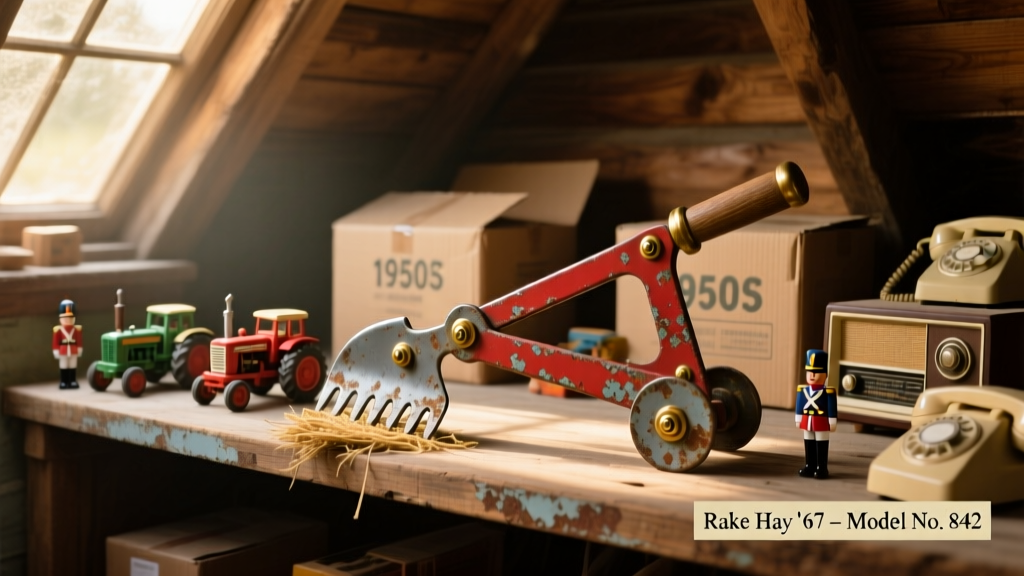
The Tools Rake Hay 67-Inch: A Mid-Century Agricultural Icon Among Vintage Toy Collectibles
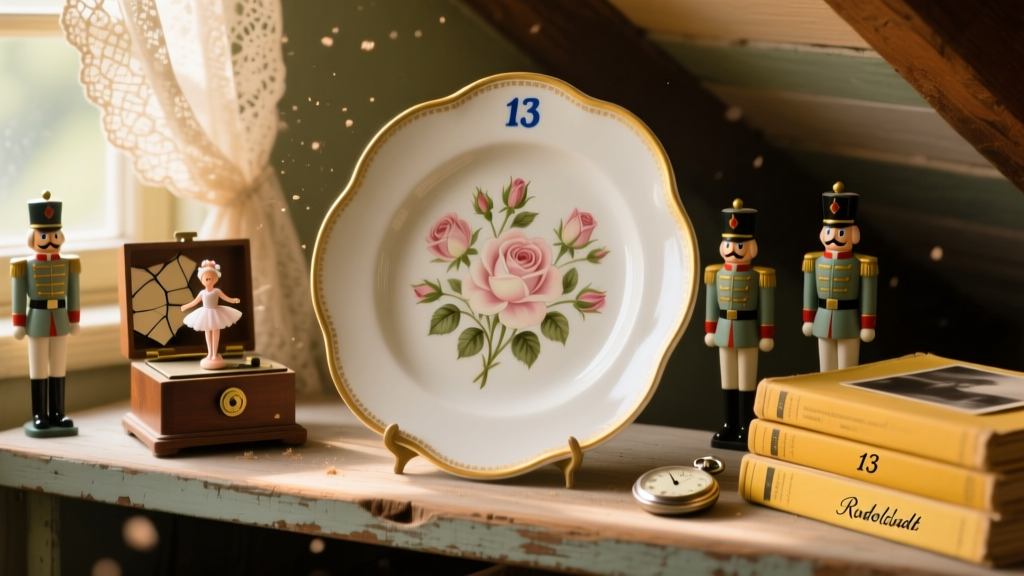
Rudolstadt Plate: Rose Sprays, Scalloped Gold Border & Blue Mark — A 13-Inch Mid-Century Masterpiece