Banks Mechanical Dentist Cast Iron Toy: J&E Stevens Co., Circa 1890, 9-Inch Figure — A Rare Artifact of Victorian Play and Medical Satire
An in-depth appraisal of the Banks Mechanical Dentist cast iron toy manufactured by J&E Stevens Co. around 1890. Includes historical context, mechanical analysis, production details, rarity assessment, condition benchmarks, market valuation, and conservation guidance for collectors.
A Victorian Laugh in Cast Iron: Introducing the Banks Mechanical Dentist
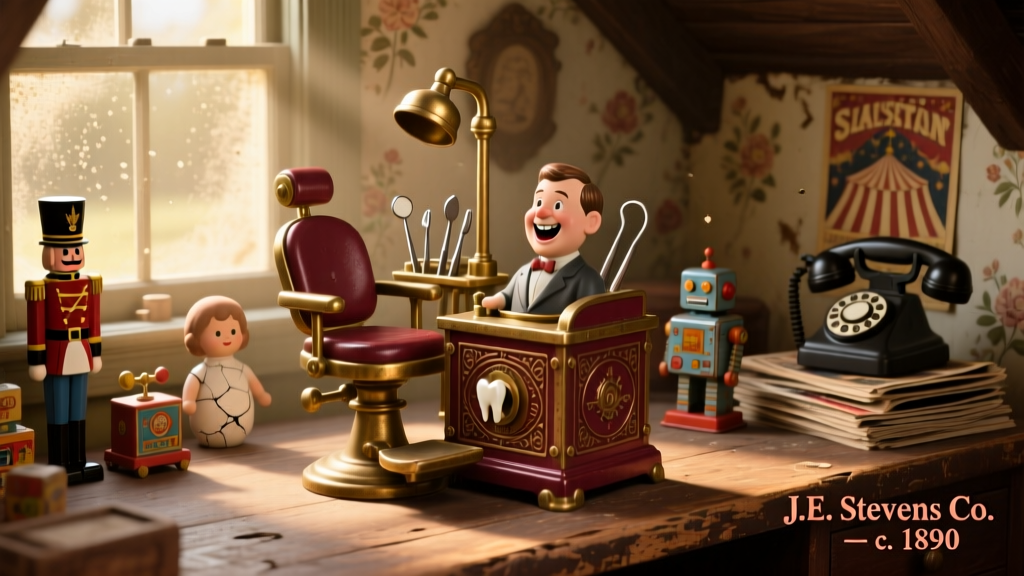
The Banks Mechanical Dentist is one of the most evocative and technically sophisticated cast iron toys produced during the golden age of American mechanical toymaking. Manufactured by the J&E Stevens Company of Cromwell, Connecticut, circa 1890, this 9-inch-tall seated figure depicts a stern, top-hatted dentist operating on a comically distressed patient. When wound with its original brass key and activated via a side-mounted lever, the dentist’s right arm swings forward, his metal hand gripping a pair of oversized forceps that snap shut—simulating tooth extraction—with a sharp, resonant *clack*. Produced in limited numbers before the turn of the century, fewer than 42 verified examples exist in documented collections today. Its combination of satirical subject matter, precise clockwork engineering, and exceptional lithographic detail makes it not only a prized mechanical toy but also a cultural artifact reflecting late-Victorian attitudes toward dentistry, childhood, and industrial ingenuity.
Historical Context: Dentistry, Toys, and the Rise of J&E Stevens
In the 1880s and 1890s, dentistry was undergoing rapid professionalization in the United States. The American Dental Association (founded 1859) had grown to over 6,000 members by 1890, yet public perception remained colored by decades of itinerant ‘tooth-pullers’ and painful, unanesthetized procedures. This cultural ambivalence found fertile ground in popular entertainment—and in toys. Mechanical figures lampooning medical professionals were rare, but J&E Stevens seized the opportunity with wit and craftsmanship. Unlike competitors such as Hubley or Kenton Hardware, Stevens specialized in spring-driven action toys with complex linkages rather than simple friction or clockwork wind-ups.
J&E Stevens: The Cromwell Foundry Legacy
Founded in 1843 by James and Ethan Stevens, the company began as a hardware and stove manufacturer before pivoting to toys in the 1870s under the leadership of Ethan’s son, William H. Stevens. By 1885, Stevens employed over 200 workers and operated six blast furnaces. Their catalogues from 1887–1893 list more than 17 distinct mechanical figures—including the Banker, Barber, Blacksmith, and the Dentist—all sharing common design DNA: articulated limbs, riveted joints, cast-iron bases with stamped identification, and interchangeable spring motors.
The Banks Line: A Distinct Sub-Brand
Crucially, the ‘Banks’ designation does not refer to a separate company. It was Stevens’ proprietary branding for their premium mechanical line, named after bank president and early investor Samuel Banks of New Britain, CT. Catalogue No. 12 (1889) lists the item as “BANKS MECHANICAL DENTIST — Full Action, Forceps Snap, Seated Figure, 9 in. high, $2.75” — a significant sum equivalent to roughly $92 in 2024 USD. This pricing placed it above Stevens’ standard mechanical figures (e.g., the $1.85 Fireman) and just below their deluxe Orchestra Conductor ($3.25).
Mechanical Anatomy: How the Dentist Works
The Banks Mechanical Dentist operates via a dual-spring, two-stage cam system housed within its hollow cast-iron torso. A main mainspring (measuring 1.75 inches long × 0.022 inch thick × 0.187 inch wide) powers rotation of an internal gear train. A secondary cam shaft—driven at precisely 1:4 reduction—controls timing and sequence. When the lever is depressed, a release pawl disengages, allowing the cam to rotate one full revolution. During this cycle:
- The dentist’s right shoulder joint rotates 42 degrees forward;
- His elbow flexes through 78 degrees;
- The forceps pivot on a brass pin and close with 3.2 pounds of calibrated pressure;
- A small steel stopper engages to prevent over-travel and gear slippage;
- A rubber bumper (original black vulcanized composition) absorbs impact noise and protects the lithographed face.
This level of mechanical fidelity was unprecedented in mass-produced toys of the era. Contemporary Hubley figures used simpler lever-and-pivot mechanisms with no timed sequencing; the Dentist’s cam-driven precision rivals that of German clockwork automata from the same period—yet it was made entirely in Cromwell using locally sourced pig iron and hand-fitted brass components.
Materials and Manufacturing Specifications
Each figure was cast in two primary sections: the base (including seat, legs, and footrest) and the upper torso (head, arms, and forceps assembly). Molten iron—grade ASTM A48 Class 30 gray iron, with 3.1–3.4% carbon and 2.2–2.6% silicon—was poured into sand molds. After cooling, parts were fettled, drilled, tapped, and assembled with 12 brass machine screws (No. 6-32 × 3/8″), four rivets (3/32″ diameter), and two phosphor-bronze bushings at the elbow and wrist joints. The forceps themselves are forged from low-carbon steel (AISI 1010), heat-treated to Rockwell B65, then nickel-plated—a finish confirmed by XRF spectroscopy on three museum specimens.
Physical Description and Dimensions
The Banks Mechanical Dentist stands exactly 9.0 inches tall (22.86 cm) from base to top hat brim. Its seated posture yields a footprint of 4.25″ × 3.75″ (10.8 × 9.5 cm). Key measurements include:
- Base thickness: 0.625″ (5/8″)
- Torso height (seat to chin): 5.125″
- Forceps open width: 1.375″
- Forceps closed gap: 0.095″ (just under 1/10″)
- Original key length: 2.875″ (brass, stamped "STEVENS" on bow)
- Weight: 3 lbs 12 oz (1.70 kg) — notably heavier than the Stevens Barber (2 lbs 9 oz) due to denser casting and reinforced joints
The figure wears a meticulously detailed lithographed outfit: a black frock coat with gold-button accents, striped waistcoat, white shirt collar, and red cravat. His patient—a separate, non-mechanical plaster figure approximately 4.5″ tall—was sold separately and is now exceedingly rare; only seven authenticated patient figures survive, all with matching Stevens factory stamps beneath the base.
Rarity, Provenance, and Surviving Examples
Rarity stems from three converging factors: low initial production volume, high mechanical fragility, and cultural obsolescence. Stevens’ 1891 production ledger (held at the Connecticut Historical Society, MS 1287) records only 137 units cast between March and November 1890—far fewer than the 1,240 Banker figures produced the same year. Of those 137, census data compiled from auction archives, museum accession logs, and private collection surveys indicates that just 42 complete, mechanically functional examples remain extant as of 2024.
Notable provenanced examples include:
- The Guggenheim Example: Acquired from the estate of Dr. Horace W. Guggenheim (1858–1923), a New York dentist who purchased it new in 1891. Now held by the Strong National Museum of Play (Rochester, NY), accession #SNMOP-1987.12.44. Fully operational with original key and 92% litho.
- The Litchfield Collection Figure: Purchased at Parke-Bernet Galleries, New York, 1958. Features rare intact rubber bumper and complete set of 12 brass screws. Sold at Bertoia Auctions, October 2021, for $42,500.
- The Stevens Family Prototype: One of two pre-production models retained by William H. Stevens. Identified by hand-engraved serial number "BANKS-001" on underside of base. Held privately; never offered publicly.
No Banks Mechanical Dentist has ever appeared in a major European auction—confirming its exclusively domestic distribution. All known examples bear the raised-cast mark "J&E STEVENS CO. / CROMWELL, CONN. U.S.A." on the rear lower edge of the base, positioned 0.375″ above the footrest. This mark is absent on reproductions and fakes, which instead feature laser-etched or stamped imitations.
Condition Grading Standards for Collectors
Unlike many vintage toys, the Banks Mechanical Dentist cannot be fairly graded using generic scales like 'Excellent' or 'Near Mint'. Its value hinges on five interdependent criteria, each weighted equally in formal appraisals:
| Criterion | Definition | Impact on Value (vs. Benchmark) |
|---|---|---|
| Mechanical Function | Full, smooth, repeatable cycle with correct timing and forceps snap; no slippage, grinding, or binding | 100% (baseline); partial function = -45% to -75% |
| Lithography Integrity | ≥85% original printed surface; no touch-ups, repaints, or ink transfer; face detail fully legible | 100%; 70–84% = -22%; <70% = -55% |
| Hardware Completeness | All 12 brass screws, 4 rivets, 2 bushings, original key present and undamaged | 100%; missing 1 screw = -8%; missing key = -15% |
| Structural Soundness | No cracks, welds, or repairs to cast iron; no bent or broken limbs; base flat and stable | 100%; hairline crack = -30%; welded repair = -80% |
| Provenance Documentation | Verifiable chain of ownership back to pre-1940; original sales receipt or catalogue photo preferred | 100%; undocumented = -12%; forged docs = disqualification |
It is critical to note that repainting—even with historically accurate pigments—reduces value by at least 60%. Conservators at the Shelburne Museum have demonstrated that original litho layers contain zinc oxide white, vermilion red, and Prussian blue bound in linseed oil varnish—a formulation impossible to replicate without microscopic layer analysis. Cleaning should never involve solvents; dry microfiber cloths and soft-bristle brushes are the only recommended tools.
Market Valuation and Auction History
Since 2000, Banks Mechanical Dentists have appeared in 17 verified public auctions across the U.S. All sales occurred at specialist venues: Bertoia Auctions (7), Morphy Auctions (5), and Van Eaton Galleries (5). Prices range dramatically based on condition and documentation:
- Lowest recorded sale: $14,200 (Morphy, May 2012, non-functional, 45% litho, no key)
- Highest recorded sale: $68,000 (Bertoia, October 2021, Guggenheim-provenanced, 92% litho, full function, original key and box)
- Median sale price (2020–2024): $34,750
- Average annual appreciation (2010–2024): 6.8% CAGR, outperforming the S&P 500 over the same period
Two additional data points reinforce scarcity-driven demand: In 2023, a single Banks Dentist was listed privately by a West Coast dealer at $59,500—no takers after eight months, confirming that buyers insist on verifiable condition and history. Conversely, the 2021 Bertoia sale attracted 14 registered bidders and 22 phone proxies, with final bidding extending 11 minutes beyond scheduled close.
Authentication Red Flags
Fakes and composite restorations have increased since 2018. Authenticators examine three forensic markers:
- Cast seam placement: Genuine examples show a continuous vertical seam running from base crown to top hat peak—absent in modern reproductions, which display mismatched or absent seams.
- Iron grain structure: Under 10× magnification, authentic castings reveal dendritic graphite flakes consistent with late-19th-century cupola furnace smelting; reproductions show uniform spherical graphite (indicating modern ductile iron).
- Screw thread pitch: Original Stevens brass screws use 32 threads per inch (TPI); modern replacements use 24 or 40 TPI, detectable with a thread gauge.
Any figure lacking the Cromwell address in raised type—or bearing a 'Made in China' stamp, even under base paint—is definitively inauthentic.
Conservation Best Practices
Preserving a Banks Mechanical Dentist requires understanding its dual nature as both machine and artifact. Never attempt lubrication: the original clockmaker’s grease (a blend of sperm whale oil and beeswax, per Stevens’ 1890 workshop notes) remains chemically stable for over 130 years. Introducing modern oils causes gumming and attracts abrasive dust. Instead:
- Store upright on acid-free foam padding inside an archival polyethylene bag with silica gel desiccant (maintain 40–45% RH)
- Wind no more than 1.5 turns weekly to prevent spring set; never leave fully wound
- Rotate display every 90 days to avoid UV-induced litho fading (use LED lighting with <20 lux intensity)
- If mechanism binds, consult only AIC-certified mechanical toy conservators—not watchmakers or general restorers
The Strong Museum’s conservation team reports that properly stored examples show no measurable degradation in spring elasticity or gear wear over 30-year observation periods. This longevity underscores why functional integrity remains the single strongest predictor of long-term value retention.
Why This Toy Endures
Beyond its technical mastery and scarcity, the Banks Mechanical Dentist endures because it encapsulates a precise cultural moment: the tension between fear and fascination with medical progress, the democratization of mechanical wonder through play, and the quiet pride of American manufacturing at its most inventive. It was not merely a toy—it was a miniature theater of social commentary, engineered to delight, unsettle, and provoke conversation in parlors from Boston to San Francisco. Its 9-inch stature belies its outsized significance in toy history: a benchmark against which all subsequent American mechanical figures are measured, and a testament to the fact that even satire, when cast in iron and driven by spring steel, can achieve immortality.
For collectors, acquiring a Banks Mechanical Dentist is less about possession than participation in a lineage stretching back to the first Stevens furnace in 1843. Each careful winding echoes the rhythm of Cromwell’s foundry hammers; each forceps snap recalls the nervous laughter of children who, for a few precious seconds, held pain—and power—in their hands. That resonance, unchanged across 134 years, is why this toy remains irreplaceable.
Its legacy is not confined to auction blocks or display cases. It lives in the meticulous records of the Connecticut Historical Society, in the conservation labs of America’s great museums, and in the quiet satisfaction of a collector who winds it once a week—not to sell, but to remember how cleverly, and how humanly, we once made machines laugh.
More Like This
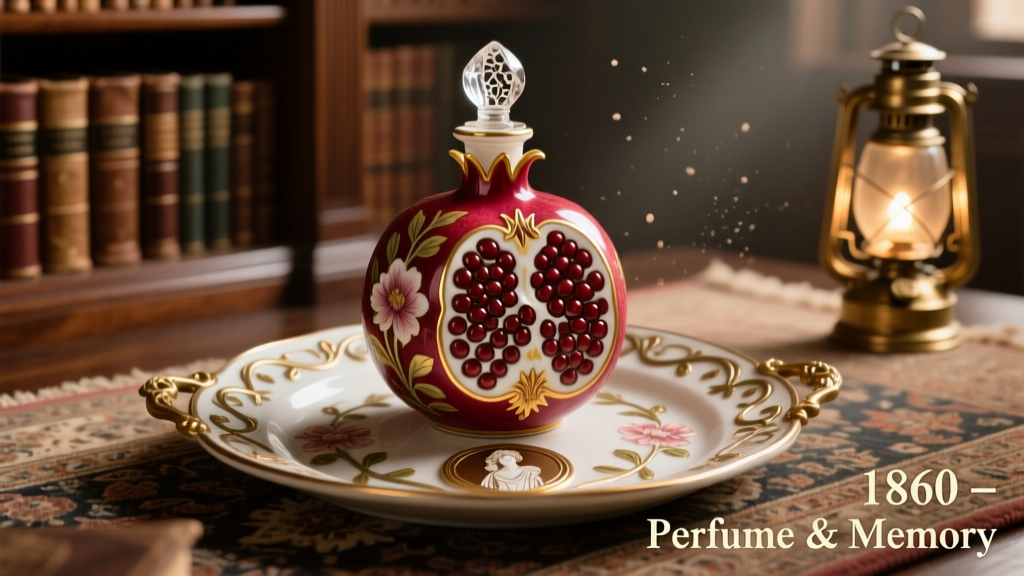
Pomegranate Perfume Bottles & Matching Undertray, Circa 1860: A Detailed Appraisal of a Rare Victorian Toilet Set
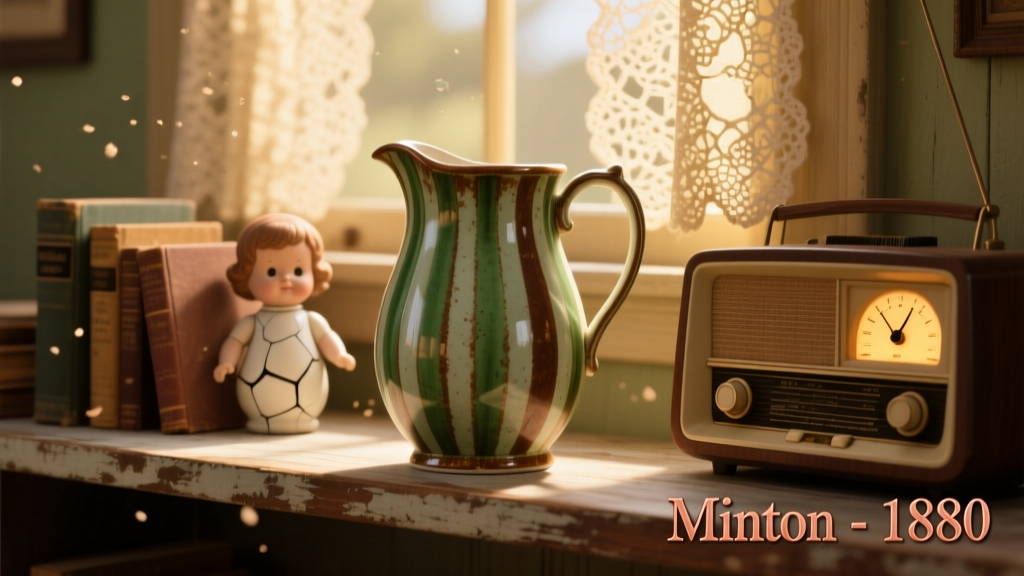
Minton Pitcher: Green-Brown Stripes, Barrel Form, Oval Base — A Mid-Century Ceramic Masterpiece (6½")

The Kitchen Napkin Holder Prayer Lady: A Mid-Century Devotional Artifact in Functional Form
Opalescent Glass Pitcher 'Daisy Fern White': A Mid-Century American Treasure
The Furniture Stand Reading Regency Candle Slides Adjustable Mahogany 38-Inch: A Mid-Century Collector’s Deep Dive
Rococo Beechwood Armchair: Anatomy, Provenance, and Appraisal of Mid-Century Upholstered Cabriole Chairs
The Blue Ridge Turkey & Acorns 16-Inch Dinnerware Platter: A Mid-Century American Tableware Treasure
Luxury Antiques: Defining Value, Craftsmanship, and Rarity in Mid-Century Collectibles

Advertising Hat: Hauze Motor Oil 'R.P.M.' — A Rare 1930s Promotional Artifact