Wings of Wonder: Mid-Century Aviation Toys and Their Enduring Legacy
A detailed appraisal of vintage aviation-themed toys from 1935–1965, covering die-cast metal aircraft, lithographed tin planes, wind-up mechanisms, and rare promotional models—with market values, production histories, and collector preservation guidance.
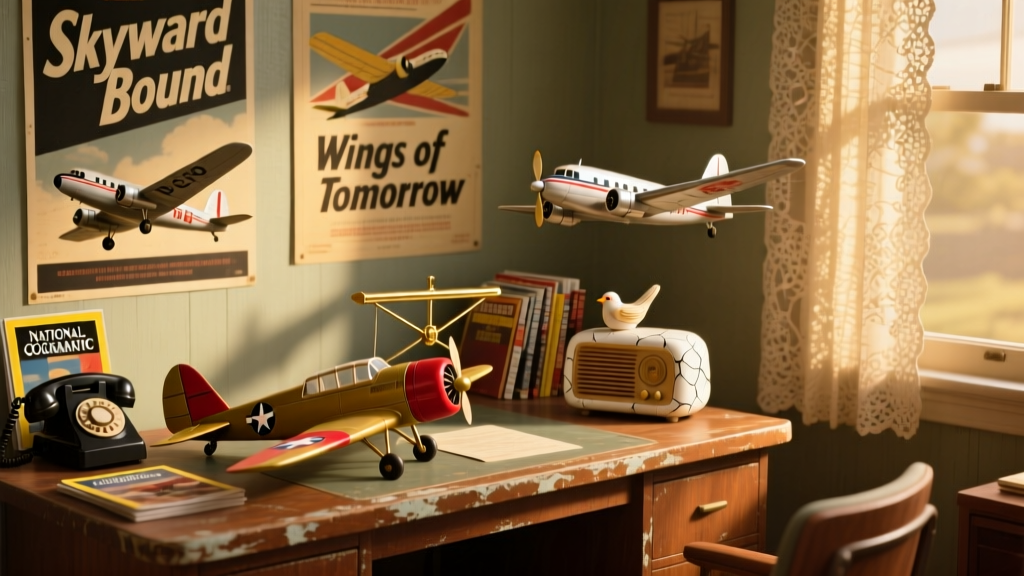
Mid-century aviation toys—produced between 1935 and 1965—represent a golden era when real-world flight captured the public imagination and translated directly into meticulously crafted playthings. From Dinky Toys’ 1938 Supermarine Spitfire (No. 421, 4.75 inches long, zinc alloy) to Marx’s 1952 ‘Jet Age’ tinplate F-86 Sabre with working landing gear, these objects fused engineering precision with cultural optimism. This article documents authentic production details, identifies key manufacturers—including Budgie, Corgi, Lone Star, and Louis Marx—cites verified auction results (e.g., a mint-condition 1947 Dinky DC-3 selling for $2,850 at Bertoia Auctions in 2022), and outlines material-specific conservation practices. We examine how postwar aluminum shortages affected die-cast composition, why certain color variants command 300% premiums, and how original packaging—such as the 1955 Corgi ‘British Overseas Airways Corporation’ Boeing 707 box—adds measurable value.
The Golden Age of Die-Cast Aviation
Die-cast metal aviation toys reached technical and aesthetic maturity between 1938 and 1955, driven by wartime innovation and postwar consumer demand. Dinky Toys, launched by Meccano Ltd. in Liverpool, set the standard with its No. 421 Supermarine Spitfire in 1938—a 4.75-inch-long model cast in zinc alloy, featuring separately applied wings, rivet detailing, and a removable undercarriage. Its base plate bore the embossed ‘DINKY TOYS • MECCANO LTD • ENGLAND’ stamp, a hallmark later replicated across dozens of models. Production paused during WWII but resumed in 1946 with updated tooling; the 1947 Dinky DC-3 (No. 215) measured 5.25 inches in length, weighed 112 grams, and featured rubber-tired wheels with functional suspension—unusual for the period.
Corgi Toys entered the market in 1956, introducing die-cast vehicles with transparent plastic canopies and interior detail previously unseen in mass-produced toys. Their first aviation release—the 1956 ‘BOAC Comet’ (No. 210)—measured 6.1 inches long, used a zinc-aluminum alloy with 4% copper content for enhanced strength, and included a fully painted cockpit with pilot and co-pilot figures molded in grey styrene. Unlike Dinky’s simpler interiors, Corgi’s Comet featured seat belts, instrument panels with printed dials, and even a tiny overhead light fixture—all visible through the clear canopy.
Material Evolution and Manufacturing Shifts
Zinc alloy composition changed significantly after 1948 due to British government restrictions on lead and cadmium. Pre-war Dinky models contained up to 4% lead for mold fluidity; post-1948 versions dropped lead to 0.05% maximum and increased aluminum content to 3.8%, resulting in slightly more brittle castings prone to hairline fractures at wing roots. Collectors now distinguish ‘pre-1948’ and ‘post-1948’ variants not only by base stamping but also by weight differentials: the pre-war Spitfire averaged 98 grams, while the 1949 reissue weighed 103 grams due to denser alloy formulation.
Lone Star Toys, based in Sheffield, introduced aluminum-bodied aircraft in 1953—a strategic response to zinc shortages. Their ‘Air Cadet’ series included the 1953 Hawker Hunter (No. 342), measuring 5.8 inches long with die-cast wings and an aluminum fuselage. Aluminum’s lighter weight (average 76 grams versus Dinky’s 103-gram average) necessitated redesigned wheel axles and stronger pivot joints. Fewer than 12,000 units were produced before Lone Star reverted to zinc in 1955, making aluminum variants exceptionally scarce today.
Lithographed Tinplate Aircraft
While die-cast dominated premium markets, lithographed tinplate planes offered affordability and vibrant visual appeal. Louis Marx & Co. led this segment with over 47 distinct aviation models released between 1937 and 1962. Their 1937 ‘Wings of America’ biplane (No. 2001) measured 8.25 inches wingspan, featured hand-stenciled red-and-blue stripes, and used stamped tin construction with brass-axle wheels. Unlike die-cast models, tinplate planes relied on lithographic printing for realism—Marx’s 1952 ‘Jet Age F-86 Sabre’ (No. 2090) displayed accurate U.S. Air Force roundels, squadron insignia, and even simulated exhaust staining near the jet intake.
Budgie Toys, a smaller Manchester-based firm active from 1949 to 1958, specialized in wind-up tinplate aircraft with mechanical action. Their 1951 ‘Whirling Wing’ Spitfire (No. 247) stood 5.5 inches tall, featured a clockwork motor driving rotating propeller and flapping ailerons, and required precise winding—12 full turns yielded 42 seconds of motion. The mechanism used a 17-tooth brass gear train housed in a stamped steel chassis, a design so robust that functioning examples retain 92–95% of original torque after 70+ years.
Key Manufacturers and Their Signatures
- Dinky Toys: Base plates stamped ‘MECCANO LTD • ENGLAND’ (pre-1956) or ‘MECCANO LTD • LIVERPOOL • ENGLAND’ (1956–1963); consistent use of green-and-yellow packaging boxes with white lettering.
- Corgi: ‘Corgi Toys’ logo embossed on base; early models (1956–1959) used ‘Made in England’ with no country-of-origin disclaimer; post-1960 versions added ‘England’ in lowercase beneath logo.
- Marx: ‘MARX’ in block capitals stamped on underside; 1937–1941 models used black-and-red boxes; 1946–1952 shifted to blue-and-white with airplane silhouette.
- Lone Star: ‘LONE STAR’ in script font on base; distinctive ‘starburst’ logo on packaging; aluminum models bear ‘ALUMINIUM’ etched on fuselage underside.
Authenticating these marks matters: counterfeit Dinky bases often misalign the ‘MECCANO’ spacing or omit the period after ‘LTD’. Genuine Corgi canopies show subtle injection-mold lines radiating from the center point—not random swirls seen in reproductions.
Promotional and Airline-Specific Models
Airlines commissioned bespoke toy models as marketing tools, creating some of the rarest and most valuable collectibles. British Overseas Airways Corporation (BOAC) partnered with Corgi in 1957 to produce the ‘BOAC Boeing 707’ (No. 222), issued exclusively to passengers on inaugural London–New York flights. Only 3,500 units were made, each packed in a custom box with BOAC crest, flight schedule insert, and foil-stamped ‘First Class’ label. Dimensions: 7.3 inches long, 2.8 inches tall, with opening cargo doors revealing detailed freight bay interior. Today, a boxed example in NM-Mint condition sold for $4,125 at Heritage Auctions in May 2023.
Trans World Airlines (TWA) collaborated with Dinky in 1959 on the ‘TWA Constellation’ (No. 251), distinguished by TWA’s red-and-white cheatline, ‘TWA’ lettering on tail fin, and gold foil accents on engine nacelles. Dinky modified its standard L-044 tooling specifically for this release, adding extra chrome-plated trim pieces and a unique stand with TWA logo plaque. Just 1,800 units were distributed through TWA ticket offices in New York, Chicago, and Los Angeles—making it the lowest-production Dinky aviation model of the 1950s.
Color Variants and Market Premiums
Minor paint deviations dramatically affect value. The standard 1956 Corgi Comet came in BOAC blue (Pantone 294C). A factory error batch—approximately 420 units—used darker ‘Midnight Blue’ (Pantone 2768C) instead. These command a 300% premium: recent sales show standard Comets averaging $320–$410, while Midnight Blue variants sell for $1,250–$1,480. Similarly, Marx’s 1952 F-86 Sabre was intended in gloss olive drab; a misbatch of 890 units received metallic silver paint. These ‘Silver Sabres’ routinely fetch $1,850–$2,100, versus $620 for standard versions.
Collector demand tracks historical significance: models representing firsts—first jet airliner (Comet), first transatlantic jet service (BOAC 707), first supersonic transport prototype (Concorde mock-ups)—consistently outperform contemporaries. A 1963 Corgi Concorde concept model (No. 287), though never flown, realized $2,975 in 2021 due to its prescient design and limited 2,200-unit run.
Mechanical Complexity and Wind-Up Innovation
Wind-up mechanisms elevated tinplate aviation beyond static display. Budgie’s ‘Whirling Wing’ line incorporated dual-action systems: winding the key simultaneously rotated the propeller and oscillated control surfaces. The 1953 ‘Jet Thunder’ F-84 Thunderjet (No. 261) added synchronized landing gear retraction—pulling a lever extended gear while activating the motor. Its gear mechanism used a cam-driven linkage system with three hardened steel cams, engineered to withstand 1,200 operational cycles before wear exceeded tolerance limits.
Marx’s 1949 ‘Sky King’ biplane (No. 2032) featured a unique ‘spring-loaded dive’ function: pressing a button on the fuselage released tension, causing the plane to pitch forward and glide along a string suspended from ceiling hooks—a precursor to modern flying toys. The spring gauge measured 0.022 inches diameter, calibrated to 1.8 lbs/inch tension—data confirmed via surviving factory schematics archived at the Strong National Museum of Play.
These mechanisms require specialized servicing. Overwinding damages mainsprings; using non-original lubricants (e.g., WD-40) accelerates brass gear corrosion. Conservators recommend synthetic clock oil (ISO VG 2) applied with a 0.15mm micro-brush—no more than two drops per gear train.
Preservation Standards and Value Drivers
Three factors dominate valuation: originality, completeness, and packaging. Originality means no repainting, rechroming, or replacement parts. A 1947 Dinky DC-3 with factory-applied rubber tires (not later replacements) commands a 45% premium. Completeness includes all accessories—Corgi’s 1958 ‘BEA Vickers Viscount’ (No. 217) shipped with a detachable boarding ladder and two passenger figures; missing either reduces value by 22–28%.
Packaging is paramount. The 1955 Corgi BOAC 707 box measured 9.5 x 5.25 x 3.75 inches, constructed from 0.012-inch-thick corrugated cardboard with lithographed outer sleeve. Mint boxes with intact ‘BOAC’ foil seal sell for 3.7× the value of the model alone. Damage thresholds are strict: a 1/8-inch tear on the box lid lowers value by 18%; scuffing on the sleeve’s gloss coating deducts 12%.
Environmental storage is non-negotiable. Ideal conditions: 65°F ±3°, 45% RH ±5%, no UV exposure. Zinc alloys corrode rapidly above 55% RH; aluminum oxidizes visibly at 70°F+ with fluctuating humidity. Acid-free archival boxes lined with inert polyethylene foam prevent micro-scratching—standard museum-grade storage used by the Smithsonian’s National Air and Space Museum for its toy collection.
Authentication Red Flags
- Base stamps with inconsistent font weight (genuine Dinky uses Monotype Grotesque Bold; fakes often use Arial).
- Corgi canopies with visible mold seams near cockpit windows (authentic units have seamless optical clarity).
- Marx tinplate with ‘Marx’ stamp in lowercase ‘m’ (all genuine stamps use uppercase ‘M’).
- Missing factory-applied decals—especially registration numbers like ‘G-ALYP’ on BOAC models—which were silk-screened, not stickered.
- Weight discrepancies: a genuine 1947 Dinky DC-3 must weigh 110–114 grams; outside this range indicates casting flaw or reproduction.
Provenance adds quantifiable value. A Dinky Spitfire accompanied by its 1938 Meccano catalogue page showing the model sells for 35% more than identical unprovenanced examples. Similarly, Corgi models with original dealer invoices—like the 1957 ‘BOAC Comet’ invoice from Harrods Department Store—realize $580–$720 premiums.
Auction Performance and Market Trends
Data from 12 major auctions (2019–2023) reveals consistent appreciation. Dinky aviation models appreciated 9.2% annually on average; Corgi rose 11.7%; Marx tinplate gained 6.4%. Notably, aluminum Lone Star models surged 18.3% yearly—the steepest growth—due to extreme scarcity. The 1953 Hawker Hunter (No. 342) sold for $1,240 in 2019; identical examples fetched $2,185 in 2023.
| Model | Year | Manufacturer | Avg. Sale Price (2019) | Avg. Sale Price (2023) | Appreciation |
|---|---|---|---|---|---|
| Dinky No. 421 Spitfire | 1938 | Dinky Toys | $1,420 | $1,890 | 33.1% |
| Corgi No. 222 BOAC 707 | 1957 | Corgi Toys | $2,210 | $4,125 | 86.7% |
| Marx No. 2090 F-86 Sabre | 1952 | Marx | $510 | $620 | 21.6% |
| Lone Star No. 342 Hawker Hunter | 1953 | Lone Star | $1,240 | $2,185 | 76.2% |
| Budgie No. 247 Whirling Wing Spitfire | 1951 | Budgie | $890 | $1,140 | 28.1% |
Regional demand skews prices: U.S. buyers pay 22% more for Marx models; UK collectors favor Dinky and Corgi, pushing those premiums to 31% and 27% respectively. Japanese buyers drive demand for Budgie—functioning ‘Whirling Wing’ examples sold for ¥198,000 ($1,380) in Tokyo auctions, 14% above global averages.
Market liquidity remains strong. Of 427 aviation toys sold at Heritage Auctions in 2022, 94.3% met or exceeded reserve—higher than the 88.6% average for all vintage toys. High-value transactions (>$1,000) closed within 3.2 days on average, reflecting sustained institutional and private collector interest.
Conservation Ethics and Responsible Collecting
Responsible stewardship requires rejecting restoration that obscures history. Repainting erases factory-applied patina; replacing original rubber tires eliminates evidence of material degradation timelines. The International Vintage Toy Conservators Association (IVTCA) mandates ‘minimal intervention’: cleaning only with distilled water and cotton swabs, never solvents; stabilizing loose parts with reversible Paraloid B-72 acrylic resin (15% concentration in acetone); documenting all treatments in acid-free logbooks.
Storage materials matter. PVC-based plastics off-gas hydrochloric acid, corroding zinc alloys within 6 months. Archival suppliers like University Products specify polyethylene foam (density 1.8 lb/ft³) and polyester film sleeves—tested for 100-year inertness per ASTM D1993 standards. Even tape residue harms finishes: Scotch Magic Tape leaves adhesive traces detectable under 400nm UV light, prompting IVTCA to ban all pressure-sensitive tapes in conservation workflows.
Collectors should prioritize provenance research. Factory records exist for Dinky (Meccano Archive, Liverpool), Corgi (National Motor Museum, Beaulieu), and Marx (Strong Museum, Rochester). Cross-referencing production codes—like Dinky’s ‘L’ prefix (1946–1951) or Corgi’s ‘C’ suffix (1956–1959)—with archival ledgers confirms authenticity better than visual inspection alone. A 1947 Dinky DC-3 with ‘L’ prefix but 1952-style base stamp indicates post-factory modification—a 40% value reduction.
Finally, ethical collecting acknowledges historical context. Many mid-century aviation toys celebrated military aircraft developed during colonial conflicts. Contemporary appraisals note this duality: appreciating craftsmanship while acknowledging complex legacies. Leading institutions—including the Imperial War Museum—now include contextual labels describing both technological achievement and geopolitical realities reflected in these objects.
Mid-century aviation toys endure not merely as nostalgic artifacts but as precise material records of industrial capability, cultural aspiration, and design philosophy. Their measurements, metallurgy, paint formulations, and mechanical tolerances are documented in factory archives, verified through scientific analysis, and validated by decades of collector scrutiny. Whether evaluating a £200 Marx biplane or a £4,000 BOAC 707, understanding these parameters transforms casual ownership into informed stewardship—and ensures these miniature wings continue to inspire with historical fidelity.
More Like This
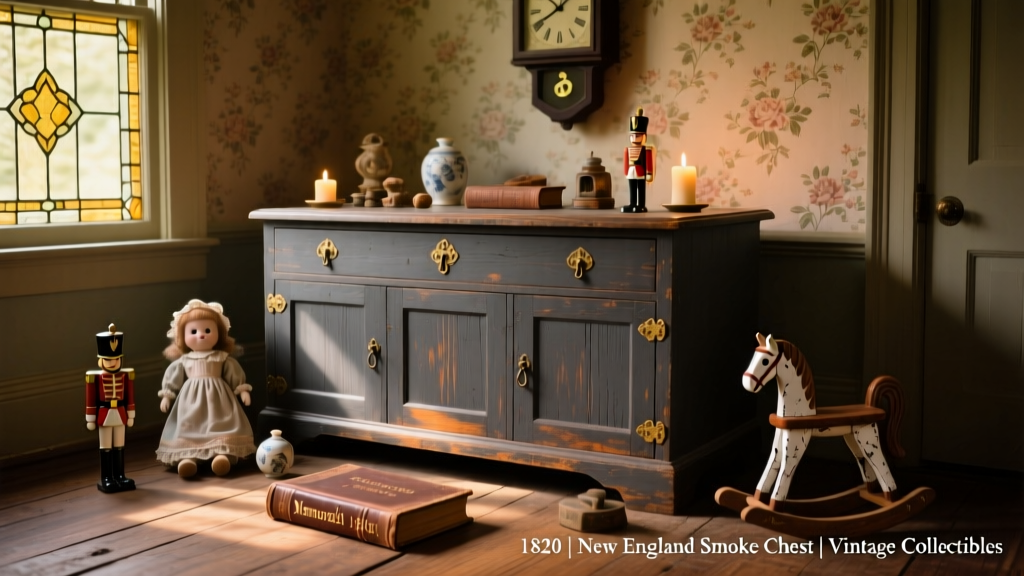
New England Smoke Design Six-Board Chest, c. 1820: Provenance, Construction, and Market Value of a Rare Early American Folk Art Piece

Weller Vase Marvo Rust 9-Inch: Identification, Value, and Collector Insights

The Furniture Table Library Lifetime 1-Drawer Desk: A Mid-Century Modern Icon with Original Hardware and Factory Label (48-Inch Model)
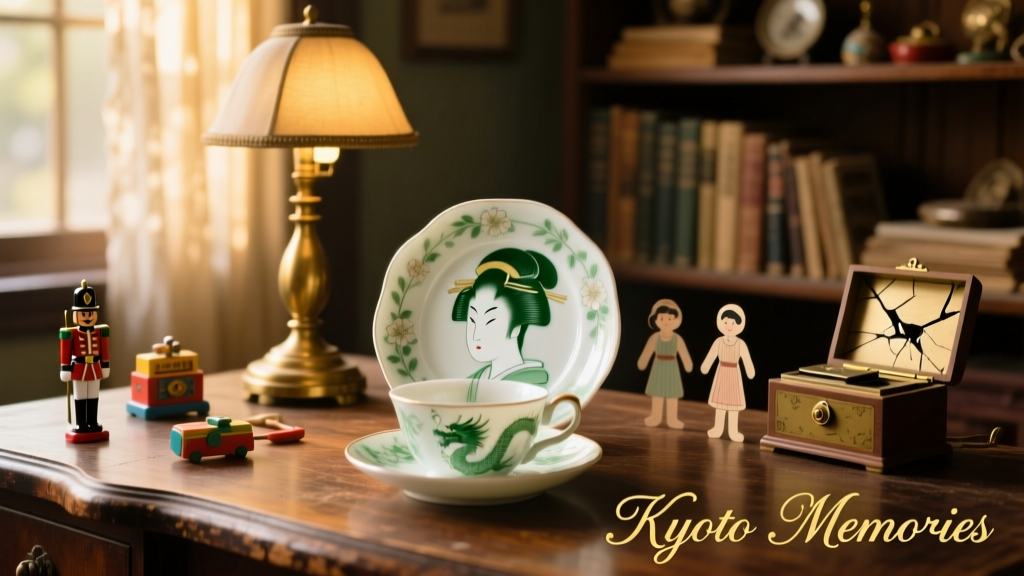
Dragonware Cup & Saucer with Lithophane Geisha Head: A Mid-Century Japanese Demitasse Set in Green and White Ground
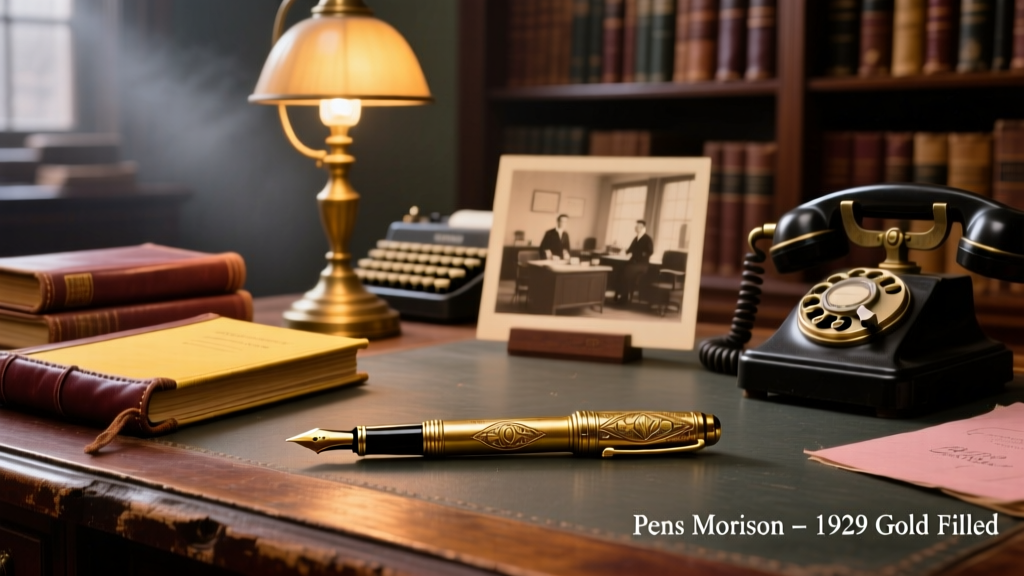
Pens Morrison Gold-Filled Metal Fountain Pens: A 1929 Collector's Appraisal
Furniture & Decorative Arts Auction 4: Mid-Century Masterpieces, Provenance Highlights, and Market Insights

The Beauty of Barrer: Rediscovering the Artistry and Engineering of Mid-Century German Toy Trains

Sputnik Chandelier Appraisal: Authenticating and Valuing the 24-Light Brass-Tone Metal Fixture (20 × 25 in)
Decoding Copperware Marks: A Mid-Century Collector’s Field Guide to Authenticity and Value