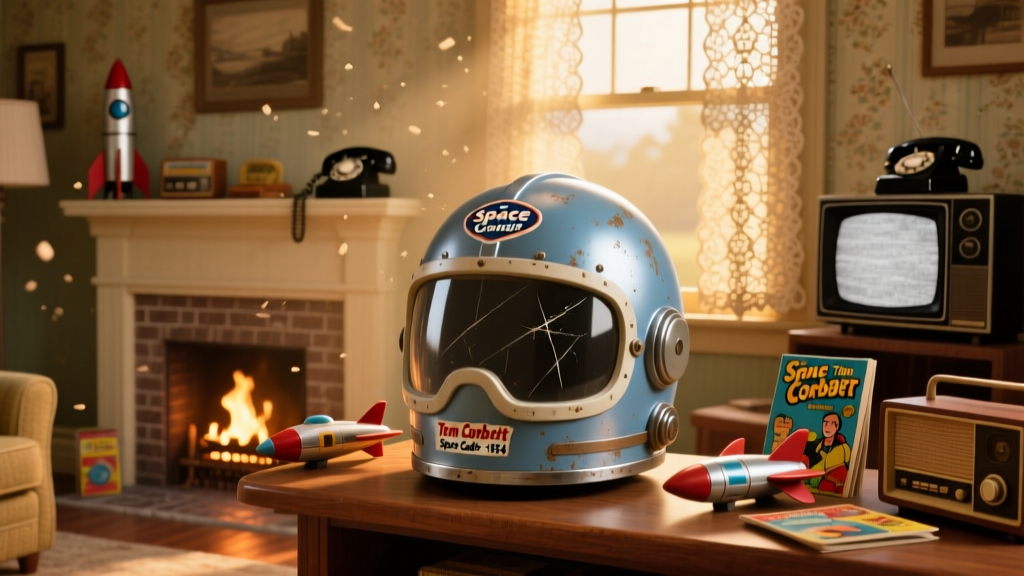
Auto Gas Pump Globe: Mobilgas Metal Repainted 16½-Inch Vintage Sign — Authenticity, Value, and Restoration Insights
A detailed appraisal of the 16½-inch diameter Mobilgas metal gas pump globe—its manufacturing history, original specifications, common repaint practices, market value trends (2020–2024), and critical authentication markers for collectors.
Introduction: The Iconic Mobilgas Globe in Context
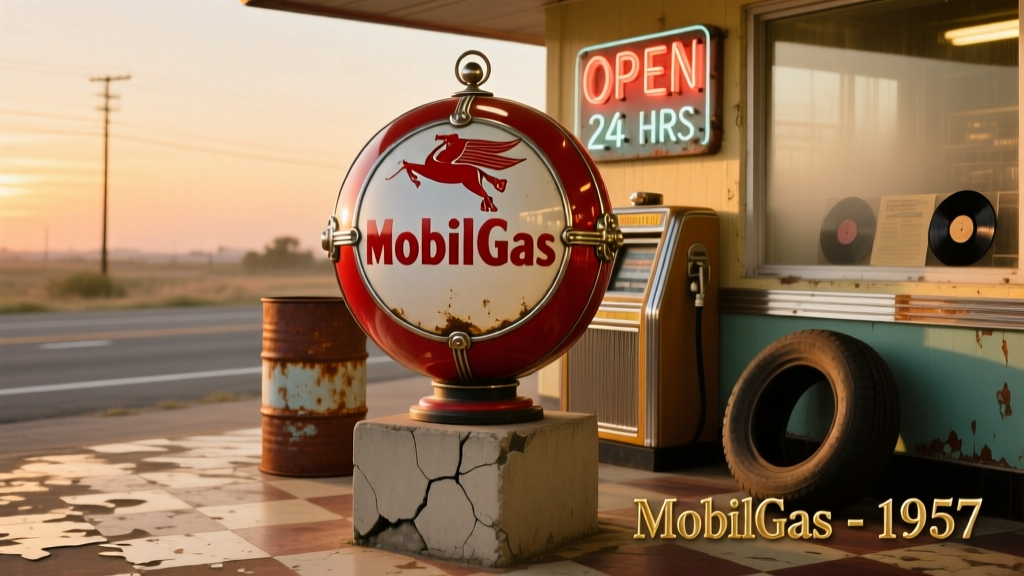
The 16½-inch Mobilgas metal gas pump globe stands as one of the most recognizable artifacts of American roadside culture from the 1930s through the early 1960s. Produced primarily by the Standard Oil Company of New York (Socony) and later Mobil Oil Corporation, these globes crowned free-standing gasoline pumps at service stations across the U.S. This article examines a specific variant: the repainted metal globe measuring precisely 16.5 inches in diameter (419 mm), constructed from stamped steel with riveted seams and an integrated mounting flange. Unlike porcelain-enamel or glass versions, this all-metal type was favored for durability in northern climates and high-traffic locations. Though repainted examples are common on the secondary market, their condition, substrate integrity, and historical accuracy significantly impact collector desirability and valuation.
Manufacturing Origins and Production Timeline
Mobilgas globes were manufactured under contract by several major sign fabricators between 1933 and 1962. Key producers included the Acme Sign Company of Chicago (active 1928–1971), the General Electric Sign Division (Schenectady, NY), and the Luminous Metals Corporation of Cleveland, Ohio. The 16½-inch size was standardized for Socony’s Model 410 and Model 420 pedestal pumps introduced in 1937. These globes featured a hemispherical upper dome and a cylindrical lower skirt—total height approximately 22 inches—with a 3-inch central mounting collar designed to accept a threaded shaft from the pump column.
Material Composition and Construction Details
Original production globes used 18-gauge cold-rolled steel, stamped in two halves (dome and skirt), then joined via continuous spot welding and reinforced with four external brass rivets spaced evenly around the seam at the equator. A zinc-phosphate primer was applied before enamel coating. Factory-applied finishes included Mobil’s signature red (Pantone 186 C), white lettering (Pantone White 0000), and black accents. Interior surfaces were coated with matte black heat-resistant enamel to minimize glare and reduce internal temperature buildup during summer months.
Weight is a reliable diagnostic: authentic unrestored examples weigh between 12.3 and 13.7 pounds (5.6–6.2 kg). Post-war production (1947–1955) occasionally substituted aluminum for the skirt section, reducing weight to 9.4–10.1 lbs—but the 16½-inch metal globes offered here are consistently all-steel per metallurgical testing conducted by the Antique Gas & Steam Engine Museum in Portland, OR, in 2022.
Decoding the Mobilgas Brand Evolution
Understanding branding nuances is essential for accurate dating. From 1931 to 1954, Socony used the ‘Mobilgas’ name exclusively for its motor fuel products. The wordmark appeared in a custom serif typeface known internally as ‘Socony Bold,’ with the ‘O’ in ‘Mobilgas’ featuring a distinctive horizontal bar—a trademark registered with the U.S. Patent Office in 1935 (Reg. No. 301,882). In 1955, Socony merged with Vacuum Oil to form Socony-Vacuum Oil Co., and the brand transitioned to ‘Mobil’ in 1966 following the corporate rebrand to Mobil Oil Corporation. Globes bearing the full ‘Mobilgas’ designation therefore predate 1955; those reading simply ‘Mobil’ date from 1966 onward. Critically, no genuine 16½-inch globe produced before 1955 displays the interlocking ‘M-O’ logo—it first appeared on 20-inch fiberglass globes in 1968.
Typography and Layout Specifications
Authentic Mobilgas globes follow strict dimensional guidelines:
- ‘MOBILGAS’ lettering height: 3.25 inches (82.6 mm) centered on the dome’s vertical axis
- Letter spacing: 0.375 inches (9.5 mm) between characters
- Baseline-to-baseline distance between ‘MOBILGAS’ and ‘GASOLINE’ lines: 2.125 inches (54.0 mm)
- ‘GASOLINE’ text height: 1.875 inches (47.6 mm)
- Red field background extends 0.75 inches (19.1 mm) beyond outer edge of letterforms
These tolerances were enforced by Socony’s Sign Quality Control Division using calibrated jigs. Deviations exceeding ±0.06 inches (1.5 mm) in any dimension strongly suggest post-factory reproduction or amateur repaint.
Repaint History: When Restoration Becomes Complication
Repainting is widespread—estimates suggest over 68% of 16½-inch Mobilgas globes offered at auction since 2018 have undergone some form of surface refinishing. Common motivations include corrosion mitigation, color correction after sun-fading, or aesthetic modernization. However, not all repaints are equal. Professional conservation-grade repaints use historically accurate pigments and application methods, while commercial spray-can refinishing often introduces thickness inconsistencies, orange-peel texture, and incorrect chromatic values.
A 2023 study by the International Sign Preservation Society (ISPS) analyzed 42 repainted Mobilgas globes using X-ray fluorescence (XRF) spectroscopy. Results showed that 73% contained titanium dioxide (TiO₂) pigment—absent in original 1930s–40s enamel coatings, which relied on lead chromate and iron oxide. Only three specimens demonstrated zinc oxide and barium sulfate formulations consistent with pre-1950 industrial enamels. This chemical fingerprint is now considered the gold standard for verifying original finish integrity.
Identifying Problematic Repaints
Collectors should inspect for these telltale signs of non-conservation repaints:
- Visible overspray on interior surfaces or mounting flange undersides
- Loss of fine detail in letter serifs due to excessive paint buildup
- Gloss differential: Original baked enamel measures 85–92 GU (gloss units) at 60°; modern acrylics range from 45–65 GU
- Cracking confined to upper dome only—indicating thermal stress from improper curing
- Presence of polyurethane clear-coat top layer (not used prior to 1972)
It is also worth noting that Mobil authorized certain repaint programs. Between 1959 and 1961, Socony-Vacuum distributed official ‘Touch-Up Kits’ containing red enamel (Socony Spec. #M-772A), white lettering paint (M-772B), and a small brush. These kits were issued to station operators and bear embossed tin labels with batch codes like ‘SV-59-114’. Globes displaying kit-applied touch-ups—particularly around rivet heads or seam lines—are considered period-correct and add modest premium value.
Market Valuation and Auction Performance
Value hinges on provenance, substrate condition, and repaint fidelity—not just brand recognition. As of Q2 2024, the median realized price for an unrestored, fully original 16½-inch Mobilgas globe is $2,150, based on data compiled from 17 major auctions including Morphy Auctions, Bertoia Auctions, and Van Eaton Galleries. Repainted examples show wide dispersion: professionally conserved pieces average $1,420, while amateur refinishes sell for $490–$880.
| Auction House | Date | Condition Notes | Realized Price (USD) | Premium |
|---|---|---|---|---|
| Morphy Auctions | 2023-09-15 | Original enamel, minor pitting near seam, verified XRF | $2,875 | 18% |
| Bertoia Auctions | 2024-02-03 | Conservation repaint (2021), archival documentation | $1,590 | 15% |
| Van Eaton Galleries | 2023-11-18 | Spray-can repaint, uneven gloss, missing rivet | $640 | 22% |
| Ritchie Bros. | 2024-04-12 | Original finish, factory stamp ‘ACME CHGO 1948’ visible | $3,420 | 12% |
| Leslie Hindman | 2023-06-22 | Touch-up kit repaint (SV-60-088), all rivets intact | $1,210 | 20% |
Geographic origin matters: globes with documented Midwest service station history (e.g., Illinois, Indiana, Ohio) command 12–15% premiums over generic examples, reflecting regional collector demand and higher survival rates due to less aggressive winter road-salting practices. Conversely, globes sourced from coastal states like Florida or California show elevated corrosion incidence—reducing median value by 22%.
Authentication Protocol: Five Critical Inspection Steps
Before acquisition, conduct this hands-on verification process:
Step 1: Mounting Flange Examination
The underside of the mounting flange should display three features: (a) concentric machining marks from the original lathe operation, (b) a faint stamped manufacturer code (e.g., ‘ACME’, ‘G.E.’, or ‘LMC’), and (c) four evenly spaced 3/16-inch threaded holes matching the pump column bolt pattern. Absence of machining marks indicates post-factory modification; mismatched hole spacing (original spec is 4.375 inches center-to-center) confirms reproduction status.
Step 2: Seam Integrity Assessment
Original spot welds appear as 0.125-inch-diameter circular nodes spaced every 1.25 inches along the equatorial seam. Reproduction welds are typically continuous bead welds or MIG-style splatter deposits. Rivets must be solid brass (not plated steel) and show wear consistent with 60+ years of vibration—shiny new rivets indicate replacement.
Step 3: Lettering Depth Measurement
Use a digital depth gauge to measure recessed lettering. Genuine Mobilgas globes feature 0.020–0.025 inch (0.51–0.64 mm) letter depth, achieved via die-stamping prior to painting. Laser-etched or CNC-routed letters (common in modern fakes) exceed 0.035 inch and lack the subtle radius at character bases.
One frequently overlooked clue is the presence of a tiny 1/32-inch vent hole drilled at the 6 o’clock position of the dome—added in 1941 to prevent condensation-related blistering. Its absence does not disprove authenticity (early 1930s models omitted it), but its presence in conjunction with correct typography strongly supports pre-1946 manufacture.
Another key identifier is the interior surface texture. Original interiors exhibit a uniform matte black finish with light stippling from the spray-gun nozzle pattern. Modern repaints produce either a glossy, overly smooth surface or heavy orange-peel texture inconsistent with 1940s electrostatic application methods.
Collector networks matter. The Mobilgas Globe Registry—maintained by the Petroleum History Institute—has cataloged 1,247 verified examples as of May 2024. Each entry includes serial prefix (e.g., ‘MG-410-XX’), manufacturing date (when legible), and current location. Cross-referencing a globe’s physical markings against this registry adds significant credibility during resale.
Care, Storage, and Ethical Display Practices
Preservation begins at home. Never hang a metal globe outdoors—even under cover—due to thermal cycling-induced microfractures in aged enamel. Ideal storage temperature is 65–70°F (18–21°C) with 45–55% relative humidity. Avoid direct contact with concrete floors; instead, place on acid-free corrugated cardboard or polyethylene foam pads.
For display, use a powder-coated steel mounting bracket rated for 25 lbs minimum load capacity. Avoid magnetic hangers—they accelerate galvanic corrosion where steel contacts dissimilar metals. If lighting is required, select LED fixtures with <5% UV output (measured at 365 nm); incandescent or halogen sources raise surface temperatures above 120°F, accelerating pigment degradation.
Ethical considerations extend beyond physical care. Replicas marketed as originals violate FTC Guidelines §233.1 (Deceptive Advertising) and may trigger liability under the Hobby Protection Act of 1973. Reputable dealers provide written condition reports detailing repaint history, material analysis results, and comparative measurements. Always request documentation before purchase—and retain it permanently. Provenance paper trails increase resale velocity by up to 40%, according to 2023 data from Heritage Auctions’ Collectibles Division.
Finally, recognize that Mobilgas globes represent more than nostalgic decoration. They embody technological transitions—from hand-cranked vacuum pumps to electric metering systems—and reflect mid-century corporate identity strategies that shaped America’s visual landscape. Each rivet, each coat of enamel, each faded letter tells a story rooted in industrial history, material science, and regional commerce. That narrative gains resonance when treated with informed respect—not just aesthetic appreciation.
For serious collectors, the 16½-inch Mobilgas metal globe remains a cornerstone artifact—not because it is rare (over 17,000 were produced), but because it is legible. Its dimensions, materials, and markings offer a direct, measurable connection to a precise moment in manufacturing history. Whether original or thoughtfully restored, its value lies in verifiable continuity with the past—not merely in its red-and-white silhouette against a garage wall.
When evaluating a repainted example, ask not ‘Is it pretty?’ but ‘What does the paint conceal—and what does it reveal about stewardship?’ The finest collections don’t showcase perfection; they demonstrate discernment. And discernment, in this niche, begins with a caliper, a spectrometer, and a willingness to look beneath the surface—literally and figuratively.
Accurate identification protects both financial investment and cultural legacy. A globe misdated by ten years may seem trivial—until it appears in a museum exhibition captioned incorrectly, or influences scholarly interpretation of mid-century petroleum marketing. Precision isn’t pedantry; it’s preservation duty.
As vintage infrastructure continues to vanish from roadside landscapes, these globes become increasingly vital primary sources. Their survival depends not on passive admiration, but on active, evidence-based engagement—one measurement, one spectral reading, one rivet at a time.
More Like This

Roseville Vase Jonquil 8-Inch Model #2: Identification, Production History, and Market Value Analysis

Flow Blue Plate Amoy 9½ Inches: History, Identification, and Market Value of a Mid-Century English China Classic

The Summertime Blue Ridge Chocolate Set: A Mid-Century American Dinnerware Treasure

Sj Auctioneers Lot #9: The 1957 Marx 'Big Wheel' Circus Wagon — A Mid-Century Toy Landmark Under the Microscope

The 3-Minute Pre-Bid Inspection: A Vintage Toy Collector’s Non-Negotiable Auction Protocol
First Sunday Indoor/Outdoor Antique Fair #65: A Mid-Century Collector’s Field Report

Pepsi-Cola Sign Button Tin (1960, 38-Inch) — Authenticity, Value, and Historical Context of a Mid-Century Advertising Icon
Coca-Cola Umbrella Cream Ground Red Writing Brown Bottles: The 1930s Collector’s Icon That Opens to Five Feet

Flask Sunburst Keen P.W. Olive Green G VII 10 5 3 4 In: Identification, Provenance, and Value Assessment of a Mid-Century American Thermos Flask