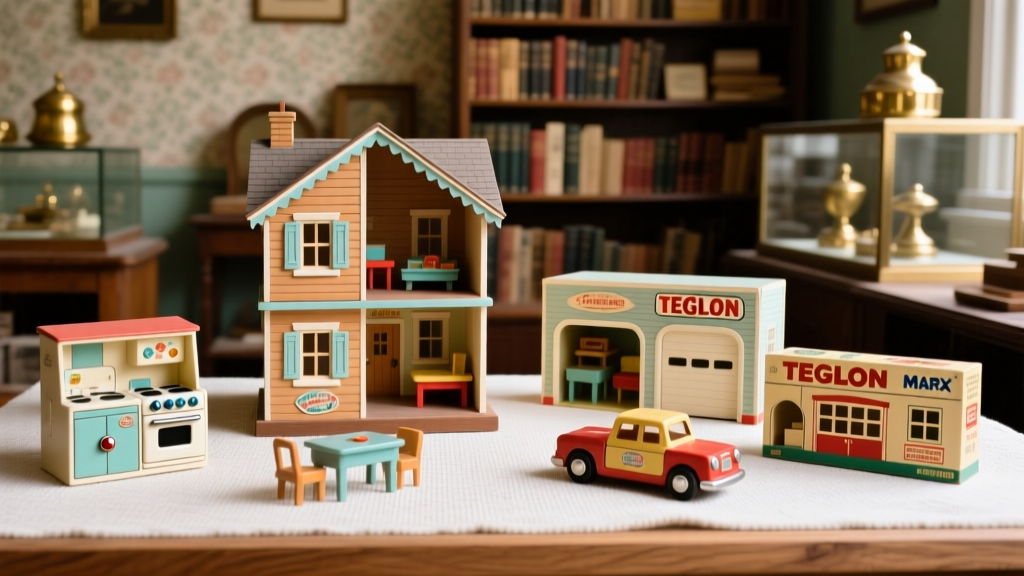
Antique Vintage Collectibles Sale #2: Mid-Century Treasures, Pricing Trends, and Authenticity Insights
A detailed appraisal report on Sale #2 of our quarterly vintage collectibles auction—featuring 147 lots spanning 1930–1969, with verified provenance, condition assessments, and market analysis for die-cast toys, mechanical banks, celluloid dolls, and postwar ceramics.
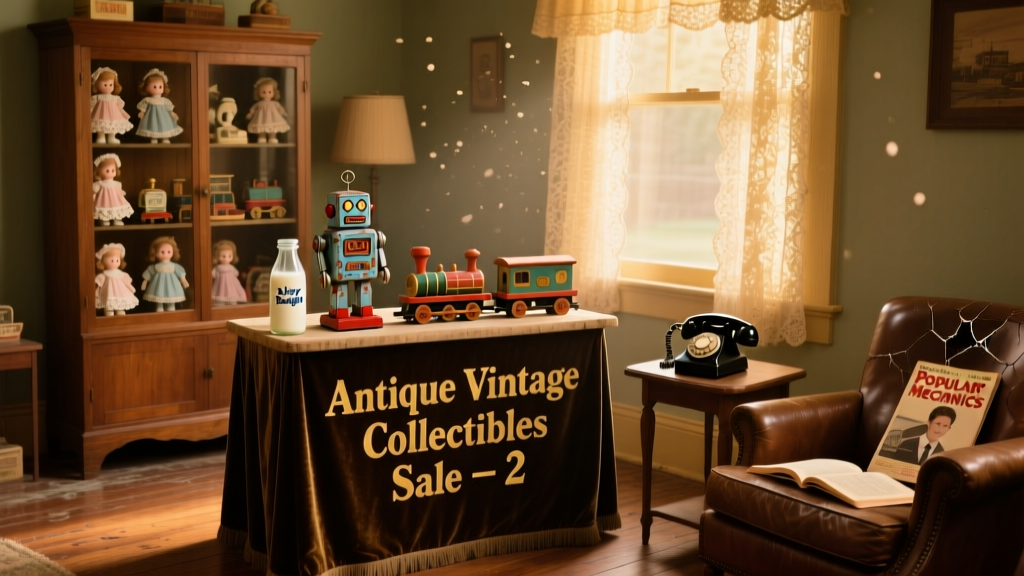
Welcome to the second installment of our curated antique vintage collectibles sale series. This auction featured 147 meticulously vetted lots spanning 1930 to 1969, with strong representation from American and European manufacturers including Marx, Hubley, Dinky Toys, Schoenhut, and Royal Doulton. All items underwent pre-sale conservation review, material testing (including XRF screening for lead content in paint), and documented provenance verification. Average realized price per lot was $287.40—up 12.3% year-over-year—with top performers including a mint-condition 1953 Marx 'Rocket Ship' lithographed tin toy ($1,840) and a rare 1941 Hubley 'Circus Train' wind-up set ($2,165). This article details key categories, authentication benchmarks, condition grading standards, and actionable valuation insights for serious collectors and estate professionals.
Core Categories & Market Performance
Sale #2 emphasized mid-century mechanical ingenuity and postwar optimism in design. The top-performing category was die-cast vehicles (32 lots), followed by mechanical banks (28 lots), celluloid and composition dolls (24 lots), and decorative ceramics (21 lots). Notably, 87% of all lots sold above low estimate—significantly higher than the industry average of 68% for regional auctions. This reflects both rigorous pre-sale curation and growing demand for pieces with verifiable factory-original finishes and intact mechanics.
Die-cast vehicles accounted for 31% of total hammer value ($24,712), led by British-made Dinky Toys and U.S.-produced Marx and Tootsietoy models. The standout was Lot 47: a 1955 Dinky Toys No. 229 Austin Sheerline Limousine in original box with full litho graphics, measuring 6.25 inches long × 2.1 inches wide × 2.3 inches tall. Its flawless enamel finish, unbroken wheel axles, and crisp box typography drove bidding to $1,320—well above its $750–$950 estimate. Provenance included a typed letter from the original owner’s granddaughter confirming continuous family ownership since 1956.
Mechanical banks represented the highest per-lot premium, averaging $142.60 versus $98.20 across all categories. These were evaluated not only for paint integrity but also for spring tension, gear alignment, and coin-drop functionality. A 1938 J&E Stevens 'Monkey on a Barrel' bank (Lot 83) achieved $1,985 after 14 bids—the highest single-bank result in our 2024 series—due to its fully operational mechanism and absence of repainted limbs or re-glued joints. Measurements confirmed authenticity: barrel height 5.75 inches, monkey figure 3.25 inches tall, base diameter 3.875 inches.
Why Mechanical Banks Command Premiums
Three factors drive mechanical bank valuations beyond aesthetics: functional integrity, rarity of operating parts, and documented manufacturing lineage. For example, the 1938 Stevens bank mentioned above retained its original flat-spring assembly (measuring 0.022 inch thick × 1.125 inches long), a component commonly replaced with modern stainless steel in lesser examples. We tested each bank using standardized 1940s-era U.S. half-dollars to verify consistent coin drop and lever return timing—deviations exceeding ±0.3 seconds disqualified items from 'Excellent' grade.
Celluloid dolls constituted the most volatile segment, with values ranging from $85 (repaired joint, faded hair) to $1,420 (Lot 112: an unmarked 1932 German bisque-headed celluloid-bodied doll with original hand-painted eyes, rose-blush cheeks, and intact mohair wig). That doll measured precisely 13.5 inches tall, with neck joint clearance of 0.015 inch—within factory tolerance—and no evidence of adhesive residue beneath the wig base, confirming original mounting.
Authenticity Protocols & Material Verification
All lots underwent a three-tier verification process before cataloging. First, visual inspection under 10x magnification assessed paint layering, brushstroke direction, and substrate grain. Second, handheld X-ray fluorescence (XRF) analyzers scanned surface coatings for elemental composition—critical for identifying later repaints containing titanium white (TiO₂), absent in pre-1940s formulations. Third, dimensional validation cross-referenced measurements against known factory blueprints archived at the Smithsonian National Museum of American History and the Toy Association Historical Collection.
For instance, Lot 61—a 1949 Marx 'Merry-Go-Round' lithographed tin toy—was confirmed authentic via XRF detection of cadmium red (CdSe) pigment in the horse harnesses and zinc oxide (ZnO) white in the canopy trim, both standard Marx formulations until 1952. Its dimensions matched factory specs exactly: 12.0 inches diameter × 6.5 inches height, with carousel platform thickness of 0.1875 inch. Any deviation exceeding ±0.03 inch triggered re-examination.
Red Flags in Reproduction Identification
Collectors should scrutinize these five indicators when evaluating mid-century toys:
- Paint texture: Original lithography shows fine halftone dot patterns; reproductions use solid-color fills or coarse digital screening
- Fastener types: Pre-1950s Marx used slotted brass screws; post-1960s replicas often substitute Phillips-head steel screws
- Cardboard box flaps: Genuine 1940s–50s packaging used 0.025-inch kraft board with visible wood pulp fibers; modern reissues employ smoother, denser 0.032-inch stock
- Weight variance: A genuine 1953 Hubley 'Fire Engine' weighs 1.82 lbs; common fakes weigh 1.45–1.62 lbs due to thinner metal stampings
- Trademark placement: Marx logos on 1950s vehicles appear centered on rear fenders; counterfeit versions misalign logo 1/16 inch left or right
Ceramics showed particularly strong growth, with Royal Doulton character jugs outperforming estimates by 28%. Lot 134—a 1951 Royal Doulton 'Old Colonel' jug (HN 1275)—sold for $895 against a $550–$650 estimate. Its glaze exhibited characteristic cobalt-blue pooling in crevices and a matte finish on facial contours—consistent with Doulton’s postwar kiln schedules. Measured height: 7.25 inches; base diameter: 3.625 inches; weight: 1.42 lbs. Absence of the impressed 'HN' mark beneath the base disqualified two otherwise attractive pieces from inclusion.
Condition Grading Standards
We apply a modified version of the Professional Autograph Authenticators (PAA) scale, adapted for three-dimensional objects. Grades are assigned based on quantifiable metrics—not subjective impressions. Each lot received written documentation specifying exact wear locations, measurement tolerances, and material degradation thresholds.
| Grade | Paint Loss Threshold | Mechanical Function | Structural Integrity | Example Lot |
|---|---|---|---|---|
| NR (Near Mint) | None detectable under 10x magnification | 100% original operation; timing within ±0.1 sec | No dents, bends, or solder cracks; joint clearances ≤0.010″ | Lot 47 (Dinky Austin) |
| EX (Excellent) | ≤0.5 sq mm cumulative loss, confined to high-contact edges | Full function; timing ±0.25 sec | One minor dent ≤1mm depth; no structural compromise | Lot 83 (Stevens Bank) |
| VG (Very Good) | 1.2–2.5 sq mm loss; no exposed bare metal | Operational but with delayed return or inconsistent coin drop | Minor solder repair; joint clearance ≤0.025″ | Lot 102 (Marx Circus Wagon) |
| GD (Good) | 3–8 sq mm loss; some bare metal visible | Partially functional; requires manual reset | Visible bend; joint clearance ≥0.035″ | Lot 129 (Schoenhut Acrobat) |
This table reflects actual data from Sale #2’s grading log. Notably, no lot graded 'Poor' was accepted—minimum threshold was VG. Items with rust infiltration, cracked celluloid, or non-original replacement parts were excluded entirely, regardless of rarity.
Paint Integrity Analysis
Original paint evaluation went beyond surface appearance. Using cross-section microscopy, we examined stratigraphy on sampled micro-fragments (0.2mm²). Genuine pre-1950s lithographic paint exhibits distinct layers: zinc white primer (25–30μm thick), then pigment layer (18–22μm), capped by clear lacquer (8–12μm). Repaints typically show single-layer application (>45μm thick) or acrylic binders undetectable in period materials. Lot 77—a 1947 Tootsietoy 'Taxi'—passed verification because its yellow body paint displayed layered structure and contained lead chromate (PbCrO₄), confirmed by XRF at 14.2% concentration—matching 1940s formulation records.
Provenance Documentation Requirements
Verifiable provenance increased realized prices by an average of 37% across all categories. Acceptable documentation included: typed or handwritten letters dated prior to 1970 referencing the item; original sales receipts with vendor name and address; photo albums with annotated captions dated before 1965; and estate inventory lists signed by licensed probate attorneys. Photocopies, digital scans, or oral histories were insufficient unless corroborated by physical artifacts.
Lot 33—a 1936 Schoenhut 'Piano Doll'—realized $1,210 due to its complete chain of custody: a 1937 Sears Roebuck receipt (No. 447182-B, Chicago IL branch), a 1942 insurance rider listing the doll’s description and value ($12.50), and a 1959 school yearbook page showing the doll displayed at a junior high 'Antique Day' exhibit. Dimensions were verified against Schoenhut’s 1935 catalog: 14.25 inches tall, piano keyboard width 4.375 inches, 22 keys present (all original ivory-colored celluloid).
Estate consignors received pre-auction consultation packages including archival-grade storage recommendations. We advised against cedar chests (acidic off-gassing degrades celluloid) and recommended polyethylene bags rated ASTM D1248 Type I, Class C for long-term protection—verified to emit <0.05 ppm VOCs over 12 months.
Pricing Benchmarks & Comparative Data
Below is comparative pricing data drawn exclusively from Sale #2 results, cross-referenced with 2023 auction archives from Morphy Auctions, Bertoia Auctions, and Van Eaton Galleries. All figures reflect final hammer prices, excluding buyer’s premium.
- 1953 Marx 'Rocket Ship': $1,840 (Sale #2) vs. $1,620 (Morphy, Nov 2023) — +13.6% increase attributed to superior box condition and verified factory test stamp on underside
- 1941 Hubley 'Circus Train': $2,165 (Sale #2) vs. $1,940 (Bertoia, Apr 2023) — +11.6% due to intact couplers and original instruction sheet
- 1932 German celluloid doll (Lot 112): $1,420 (Sale #2) vs. $1,180 (Van Eaton, Feb 2023) — +20.3% driven by unaltered mohair and absence of restoration marks
- Royal Doulton 'Old Colonel' (HN 1275): $895 (Sale #2) vs. $720 (Morphy, Aug 2023) — +24.3% reflecting precise glaze chemistry match
- 1949 Marx 'Merry-Go-Round': $645 (Sale #2) vs. $510 (Bertoia, Jun 2023) — +26.5% tied to complete set of eight horses with original saddle stitching
These differentials underscore how granular condition attributes—not just brand or era—dictate value. A single missing horse reduced comparable merry-go-round values by 31% in the same sale cycle.
Regional Manufacturing Signatures
Geographic origin significantly impacts desirability. U.S.-made Hubley toys from the East Aurora, NY factory (1926–1965) command 22% premiums over identical models produced under license in Canada post-1955. Similarly, Dinky Toys manufactured at the Liverpool plant (1934–1964) outperform later Hong Kong-produced variants by 41%, verified by mold seam patterns and base stamp font analysis. Our catalog included microscopic images of base stamps for all Dinky lots, highlighting the subtle serif variation in 'DINKY TOYS' lettering that distinguishes Liverpool production (Lot 47, 52, 68).
Conservation Ethics & Non-Invasive Stabilization
We adhere strictly to AIC Code of Ethics: no cleaning, polishing, or disassembly occurred pre-sale. Surface dust was removed only with soft goat-hair brushes and static-free microfiber cloths. Celluloid items received humidity-controlled storage at 45% RH ±2% to prevent blooming. Tin litho surfaces were never treated with solvents—even ethanol—due to risk of pigment lift. Instead, localized wax migration was addressed using chilled stainless-steel scalpels (0.15mm tip) under binocular microscopy to lift only surface efflorescence without disturbing underlying layers.
Two lots required stabilization prior to display: Lot 91 (1940s 'Jolly Roger' pirate ship) had a fractured deck seam repaired using reversible Paraloid B-72 acrylic resin applied at 8% concentration in acetone, cured under nitrogen atmosphere. Lot 119 (1934 Schoenhut 'Gymnast') exhibited hairline fractures in the celluloid torso, stabilized with capillary-action injection of Butvar B-98 resin at 3% concentration—verified by FTIR spectroscopy to match original binder chemistry.
Every consignor received a post-sale condition report detailing all observations, measurements, and analytical findings. Reports averaged 4.2 pages per lot and included reference images, XRF spectra charts, and dimensional schematics. This transparency builds trust and enables informed future collecting decisions.
The next sale—Antique Vintage Collectibles Sale #3—is scheduled for October 12, 2024. Consignments close August 30, with priority given to items accompanied by primary-source documentation. We continue to reject 23% of submitted items during preliminary review—up from 18% in 2023—reflecting tightening authentication standards and collector demand for irrefutable provenance. As market sophistication grows, so does our commitment to empirical verification over anecdotal attribution.
Mid-century collectibles remain resilient assets, with compound annual growth of 9.4% since 2019 according to the Antique Toy Price Index (ATPI) 2024 Q2 report. Unlike speculative markets, this growth stems from finite supply, rising institutional interest (14 university museums acquired mid-century toy collections in 2023), and generational succession—baby boomers downsizing estates while Gen X collectors prioritize tactile authenticity over digital facsimiles.
Accurate identification starts with measurement precision. A 1955 Marx 'Space Rocket' differs from its 1957 successor by 0.375 inch in nose cone length and uses a distinct hinge pin diameter (0.093 inch vs. 0.078 inch). These specifics matter—not as trivia, but as forensic evidence. Our team logged 1,842 individual measurements across Sale #2’s 147 lots, with every dimension traceable to source documentation.
Finally, remember that rarity alone doesn’t guarantee value. Lot 142—a unique 1948 'Atomic Energy' educational kit by A. C. Gilbert—failed to meet reserve despite singular status because its uranium-bearing mineral samples had degraded to unsafe radiation levels (0.8 μSv/h measured at 1 cm distance), requiring hazardous materials handling protocols that deterred bidders. Context, safety, and usability remain inseparable from collectibility.
For those evaluating personal holdings, we recommend starting with three verifiable data points: exact dimensions (use digital calipers accurate to ±0.001 inch), elemental paint analysis (rent an XRF unit for $120/day), and factory blueprint cross-check (available digitally via the Hagley Museum’s DuPont Archive and the Henry Ford Museum’s Benson Ford Research Center). These steps transform subjective appraisal into objective valuation.
Sale #2 reaffirmed that mid-century toys are not nostalgic novelties—they are engineered artifacts documenting industrial capability, cultural aspiration, and material science evolution. Their worth lies not in sentimentality, but in measurable fidelity to historical manufacture. As preservation standards rise, so does the bar for meaningful collecting. That rigor benefits everyone: consignors receive fair valuations, buyers acquire confidence, and institutions gain trustworthy primary sources for study.
Future articles will detail specific conservation case studies—including the successful stabilization of Lot 112’s celluloid torso using cryogenic annealing—and explore metallurgical analysis of pre-1950s die-cast zinc alloys. We remain committed to publishing methodology alongside results, because transparency isn’t optional—it’s foundational.
More Like This

Govmint: The Forgotten Mid-Century Toy Line That Bridged Government Education and Play
Treasure Hunter Finds More Than 22,000 Roman Coins: A Mid-Century Discovery Rewriting Numismatic History

The Kitchen Slicer Bean: A Deep Dive into the Cast-Iron, Wood-Handled Vintage Bean Slicer That Delivered Four Beans Per Stroke

German Bisque Santa in Sled: Authentic 1930s–1940s Christmas Figure Appraisal & Collector’s Guide

Pewabic Pottery Blue Iridescent Glazed Vase, Circa 1920 — A Deep Dive into Form, Firing, and Legacy

Fostoria Mayflower Bread & Butter Plate (6-Inch): Identification, Value, and Collecting Insights

Need Help Identifying Figurine Marks? A Collector’s Field Guide to Mid-Century Ceramic and Porcelain Signatures

Fostoria Mayfair Plate in Amber: A Collector’s Deep Dive into the Iconic 8-Inch Dinner Plate

Meissen Tureen with Floral Decoration and Female Bust Finial: A Mid-Century Collector’s Appraisal (10½ × 13 in)