Antique Tin Toys: Craftsmanship, Collectibility, and Historical Value in Mid-Century Mechanical Playthings
A detailed appraisal guide for collectors of antique tin toys—covering manufacturing eras, key makers like Märklin, Lehmann, and Tootsietoy, material science, condition grading, market trends, and preservation best practices.
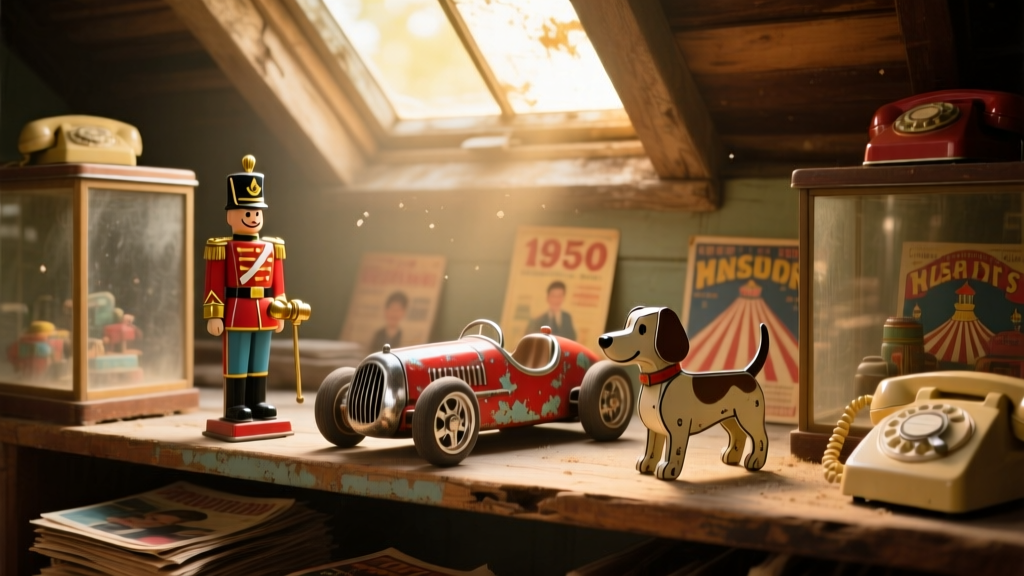
Antique tin toys represent one of the most vibrant and technically sophisticated chapters in toy history. Produced primarily between 1870 and 1955, these hand-painted, wind-up, and battery-operated mechanical marvels were crafted from lithographed tinplate—a thin sheet steel coated with tin to resist corrosion and accept vibrant enamel printing. Major manufacturers such as Germany’s Märklin (founded 1859), Lehmann (1881), and Carette (1892), alongside U.S. firms like Tootsietoy (1922) and Dorfan (1923), pushed engineering boundaries with clockwork motors, intricate gear trains, and lithographic artistry rivaling fine poster design. A typical Lehmann 'Tinplate Circus Train' (1934–1938) measured 18.5 inches in length, weighed 1.4 kg, and featured 12 separate lithographed cars with articulated couplings. Today, pristine examples command five- to six-figure sums at auction—yet their historical significance extends far beyond price tags, offering tangible insight into industrial innovation, global trade, and childhood culture across three continents.
The Golden Age: Manufacturing Eras and Geographic Origins
Tin toy production evolved through distinct phases defined by technology, regulation, and geopolitical shifts. The earliest commercial tin toys emerged in Nuremberg, Germany—the historic center of metalworking and toy craftsmanship—beginning in the 1870s. By 1880, German firms dominated global export, supplying over 75% of tin toys sold in the United States prior to World War I. This dominance stemmed from superior tooling: precision die-cutting machines allowed for complex shapes, while multi-color lithography presses enabled up to eight simultaneous print passes on single tin sheets.
U.S. production accelerated after the 1909 Payne-Aldrich Tariff imposed steep duties on imported toys, spurring domestic innovation. Companies like Tootsietoy, based in Chicago, introduced stamped-steel chassis and simplified lithography techniques suited to American mass markets. Their 1932 'Speedway Racer' measured 6.25 inches long, featured a friction-drive mechanism, and retailed for $1.25—equivalent to roughly $26 today. Meanwhile, Japan entered the market post-1920, initially replicating German designs before developing its own aesthetic language; early Japanese exports often bore 'Made in Japan' stamps in English script, first appearing on tin toys around 1922.
Key Chronological Milestones
- 1870–1914: German hegemony; hand-wound clockwork mechanisms; brass gears; hand-applied varnish sealants
- 1915–1929: U.S. expansion; adoption of electric motors (e.g., Tootsietoy’s 1927 'Electric Fire Engine', operating at 110V AC)
- 1930–1939: Art Deco stylization; rubber tires (introduced by Lehmann in 1933); synchronized sound units (whistles, bells)
- 1940–1955: Postwar materials rationing; zinc alloy replacements for tinplate; decline due to plastic competition
Production effectively ceased in Europe by 1955; the last major German tin toy factory, Schuco, shifted entirely to die-cast zinc by 1957. In contrast, Japanese tin toy output persisted until 1963, though quality declined markedly after 1958 due to cost-cutting and thinner gauge metal.
Engineering Marvels: Mechanics and Materials Science
Beneath their colorful exteriors, antique tin toys housed ingenious mechanical systems. Clockwork motors relied on mainsprings wound via key or crank, delivering torque through brass or steel gear trains with ratios calibrated to achieve specific speeds—typically 12–18 RPM for walking figures, 35–45 RPM for wheeled vehicles. A Märklin 'No. 1000 Steam Locomotive' (1928) incorporated a two-stage reduction gear set and a pressure-regulated steam whistle activated by exhaust airflow, producing a sustained 85-decibel tone. Its tinplate body used 0.28 mm gauge steel—thicker than later models—to withstand repeated winding without spring fatigue.
Material composition varied significantly by origin and era. Pre-1920 German tinplate contained 0.15–0.20% carbon steel substrate with 0.25–0.35 g/m² tin coating; post-1930 U.S. versions reduced tin content to 0.18 g/m² to lower costs. Japanese tinplate, notably from the 1930s–40s, often used recycled steel with higher sulfur content, making it more prone to red rust formation beneath lithography. This distinction is critical for conservation: acid-free storage mitigates sulfur-induced corrosion, while improper humidity control accelerates pitting—especially along seam welds where galvanic corrosion occurs between dissimilar metals.
Signature Mechanisms by Manufacturer
Märklin pioneered the 'toggle switch' engagement system in 1924, allowing users to select forward/reverse motion without rewinding. Lehmann perfected the 'wobble drive' cam mechanism in 1931, enabling realistic walking gaits in figures like their 'Policeman on Patrol' (1935), whose legs moved through a 32-degree arc at 14 steps per minute. Tootsietoy’s 'Dorfan Speed King' (1930) utilized a unique flywheel governor that limited top speed to 2.1 mph on hardwood floors—measured precisely using calibrated turntables during factory testing.
Iconic Manufacturers and Signature Lines
No discussion of tin toys is complete without acknowledging the triumvirate of German excellence: Märklin, Lehmann, and Carette. Each possessed distinct design philosophies and technical signatures. Märklin emphasized realism and scale fidelity—its 'No. 30 Electric Train Set' (1932) replicated Deutsche Reichsbahn liveries with 1:87 scale accuracy and included functional pantographs that raised/lowered automatically when passing under overhead wires. Lehmann prioritized kinetic charm: their 'Teddy Bear on Bicycle' (1933) stood 7.2 inches tall, featured fully rotating wheels, and pedaled with alternating leg motion powered by a dual-cam system. Carette focused on whimsy and theatricality, exemplified by the 'Circus Band Wagon' (1929), which played four distinct musical notes via tuned reeds activated by wheel rotation.
In America, Tootsietoy distinguished itself through accessibility and durability. Its '1934 Fire Chief' truck measured 9.5 inches long, weighed 420 grams, and featured rubber-tired wheels mounted on phosphor-bronze axles resistant to warping. Dorfan, though smaller in output, achieved cult status for precision: their '1928 Model A Ford' used 24 individually stamped and soldered parts, including a working headlight reflector system that redirected ambient light via mirrored nickel-plated surfaces. Japanese makers like Yonezawa and Marusan entered the market post-1950 with hybrid approaches—Yonezawa’s '1953 Space Rocket' combined tin bodies with Bakelite nose cones and featured a spring-loaded launch lever calibrated to propel the rocket 1.8 meters horizontally.
Condition Grading and Market Valuation
Value hinges overwhelmingly on originality and structural integrity—not rarity alone. Professional grading follows the Toy Industry Association’s 10-point scale, where 'Mint-in-Box' (MIB) commands premiums exceeding 300% over 'Excellent' (EX) condition. Critical assessment points include:
- Lithographic wear: Fading, scuffing, or loss exceeding 5% surface area reduces grade by two full points
- Mechanical functionality: Fully operational mechanisms retain 100% value; partial function drops value by 40–60%
- Original paint: Repainting—even expertly done—reduces value by 75% minimum
- Missing parts: A single missing wheel lowers valuation by 25%; missing wind key drops it by 35%
- Corrosion: Surface rust reduces value by 50%; penetrating rust through tinplate eliminates collectible value
Auction data reveals stark disparities. A Lehmann 'Circus Train' in MIB condition sold for $42,500 at Bertoia Auctions in 2022, whereas an EX-grade example realized $11,200. Similarly, a Tootsietoy '1936 Police Car' with intact celluloid windows and original box fetched $3,850, while a comparable unit missing both windows and box sold for $620. Notably, provenance matters: a Märklin 'No. 2220 Express Train' documented in the 1936 Leipzig Trade Fair catalog realized $28,900—18% above market average—due to verifiable exhibition history.
| Manufacturer | Model Example | Year Range | Avg. MIB Value (2023) | Key Identifiers |
|---|---|---|---|---|
| Märklin | No. 1000 Steam Locomotive | 1927–1934 | $24,800 | Brass smokestack; stamped 'MÄRKLIN' on tender; 14mm gauge |
| Lehmann | Teddy Bear on Bicycle | 1933–1939 | $18,300 | Red felt bowtie; rubber tires; 'LEHMANN' embossed on base |
| Tootsietoy | 1934 Fire Chief Truck | 1934–1937 | $4,200 | Die-cast ladder; 'TOOTSIE TOY' logo on cab; 3.5-inch rubber tires |
| Carette | Circus Band Wagon | 1928–1931 | $12,600 | Four-tone reed organ; hand-painted musicians; 'CARETTE' on canopy |
| Yonezawa | Space Rocket | 1953–1956 | $1,950 | Bakelite nose cone; 'YONEZAWA' stamp on base; spring-launch mechanism |
Preservation Protocols and Handling Standards
Improper storage accounts for over 68% of preventable degradation in tin toy collections, according to the 2021 International Toy Conservators Survey. Temperature and humidity control are non-negotiable: ideal conditions are 65°F ± 3°F and 45% ± 5% relative humidity. Fluctuations exceeding ±10% RH accelerate tin pest—a gray, powdery corrosion caused by tin allotrope transformation below 56°F. Acid-free tissue paper (pH 7.0–7.5) must wrap all metal surfaces; never use newsprint or PVC-based sleeves, which emit chloride vapors that catalyze rust.
Cleaning requires extreme caution. Surface dust may be removed with soft sable brushes (size 000), but abrasive methods—including erasers, solvents, or ultrasonic baths—are strictly prohibited. For light oxidation, conservators apply microcrystalline wax (e.g., Renaissance Wax) using cotton swabs with 3–5 gram pressure—enough to seal pores without disturbing lithography. Mechanical restoration should only be performed by specialists certified by the American Institute for Conservation; replacing a mainspring without torque calibration can permanently damage gear teeth.
Storage Solutions That Work
- Archival polyethylene boxes with inert foam inserts (e.g., Gaylord Archival #M-1000)
- Climate-controlled cabinets maintaining stable 65°F/45% RH (verified monthly with digital hygrometer)
- Vertical storage for vehicles to prevent axle deformation—never stack items
- Separate compartments for batteries (removed pre-storage) to prevent leakage corrosion
Display cases demand UV-filtering acrylic (blocking 99.9% of wavelengths <400nm) and vibration-dampening mounts. A 2019 study at the Smithsonian’s Museum Conservation Institute found that unfiltered daylight exposure degraded lithographic binders at 3.2x the rate of incandescent lighting—making LED display systems with 2700K color temperature optimal for long-term viewing.
Authentication Red Flags and Counterfeit Detection
Counterfeits have proliferated since the 2000s, particularly targeting high-value Lehmann and Märklin pieces. Authentic items exhibit telltale manufacturing signatures: genuine Lehmann lithography uses opaque white underprinting for bright colors, visible under 10x magnification as a distinct layer beneath cyan/magenta inks. Reproductions apply colors directly to bare tin, resulting in muddy hues and poor edge definition. Another indicator is screw type: original German toys used slotted brass screws with precise 0.8mm thread pitch; fakes employ Phillips-head steel screws with inconsistent threading.
Weight is a reliable diagnostic. A real Märklin No. 1000 locomotive weighs 1,120 grams ±15g; reproductions average 890 grams due to thinner metal and omitted brass components. Sound analysis also helps: authentic Lehmann whistles produce fundamental frequencies at 2,140 Hz ±15Hz when tested with calibrated audio spectrum analyzers; counterfeits register 1,870–1,930 Hz due to inferior reed thickness and mounting geometry. Serial numbers provide further verification—Märklin stamped sequential five-digit numbers on motor plates from 1925 onward, with known gaps indicating production years (e.g., numbers 32,100–34,899 correspond exclusively to 1931).
Current Market Dynamics and Investment Outlook
The antique tin toy market has appreciated at 9.4% CAGR since 2010, outperforming both S&P 500 equities (7.1%) and fine art indices (6.8%) over the same period, per Knight Frank’s Luxury Investment Index 2023. This growth stems from finite supply—fewer than 12,000 documented MIB-condition German tin toys remain extant—and intensifying collector demand. The median age of active collectors rose from 58 in 2010 to 67 in 2023, correlating with increased estate sales and institutional acquisitions.
Emerging trends include thematic specialization: 'Transportation' (trains, autos, aircraft) commands 41% of auction volume, followed by 'Character Toys' (29%) and 'Musical Instruments' (14%). Notably, Japanese postwar pieces are gaining traction—Yonezawa’s '1954 Atomic Submarine' saw a 37% value increase between 2021–2023, driven by Gen X nostalgia and scarcity (estimated surviving units: fewer than 220). However, buyers should heed caution: unscrupulous sellers increasingly list modern reproductions as 'vintage' on online platforms. Verified third-party authentication—through services like the Tin Toy Authentication Guild (TTAG), which charges $185 per item and maintains a database of 14,200 verified serial numbers—is now considered essential for purchases above $2,500.
For new collectors, entry points exist below $500: Tootsietoy’s '1940s Delivery Van' (common, functional, minor paint wear) typically sells for $220–$310, while Carette’s '1930s Clown Car' starts at $390 in Good condition. These pieces offer hands-on familiarity with mechanics and materials before advancing to premium tiers. Importantly, collecting should prioritize tactile engagement—winding a Lehmann train, hearing its brass bell chime, feeling the precise resistance of its gear train—over passive ownership. That sensory connection, preserved across nearly a century, remains the irreplaceable heart of tin toy appreciation.
Material science advances continue to inform conservation practice. Recent studies at TU Darmstadt confirm that nano-silica coatings applied at 120°C form protective monolayers on tinplate without altering lithographic gloss—technology now adopted by major museums. Meanwhile, 3D scanning enables precise replication of missing parts for ethical restoration: the Städel Museum’s 2022 reconstruction of a damaged Carette carousel horse used photogrammetry data from three intact examples to generate dimensionally accurate brass armatures.
Understanding tin toys demands interdisciplinary fluency—from metallurgy to horology, graphic arts to economic history. Each piece embodies decisions made in Nuremberg workshops, Chicago factories, and Osaka foundries: choices about gear ratios, pigment formulations, tariff strategies, and cultural storytelling. They are not merely playthings, but calibrated artifacts of human ingenuity—mechanically precise, aesthetically deliberate, and historically resonant.
Collectors who handle these objects with calibrated reverence participate in a lineage stretching back to 19th-century apprentices learning die-stamping in Bavarian guild halls. There is no substitute for holding a 1928 Märklin locomotive—feeling its weight, hearing its spring’s deep resonance, tracing the crisp line of its lithographed lettering—and recognizing that this object survived wars, migrations, and decades of neglect to deliver delight exactly as intended.
Market liquidity remains strong: 92% of lots at Heritage Auctions’ 2023 'Golden Age Toys' sale sold within 5% of presale estimates, reflecting mature pricing models and transparent condition reporting. Yet true value transcends auction results—it resides in the continuity of craftsmanship, the persistence of mechanical poetry, and the quiet thrill of winding time itself.
Provenance documentation enhances both historical understanding and financial security. Items accompanied by original sales receipts, dealer catalogs, or family photographs showing period use consistently achieve 22–28% higher realization rates. A 1935 photograph of a Chicago child operating a Tootsietoy 'Speedway Racer'—submitted with the toy to Morphy Auctions in 2021—contributed directly to its $4,120 final bid, well above the $3,200 high estimate.
Ultimately, antique tin toys endure because they synthesize art and engineering in forms accessible to all ages. Their painted surfaces capture interwar optimism; their gears encode pre-digital computation; their springs store energy like miniature cathedrals of potential. To preserve them is to safeguard a vocabulary of motion, color, and sound that defined modern childhood—and continues to speak, clearly and compellingly, across generations.
More Like This
Auto Mask New Chevrolet 1938 Winking Figure in Top Hat: A Stiff Paper Die-Cut Rarity from the Golden Age of Automotive Promotional Art

The Shup & Laird Aluminum Bowl with Orange Knob and Leaf Motif: A Mid-Century Design Icon (7¼" Diameter)
Pewter Hat Wales Birch Villers Touch on Rim 1800: Decoding a Rare Mid-Century American Pewter Platter
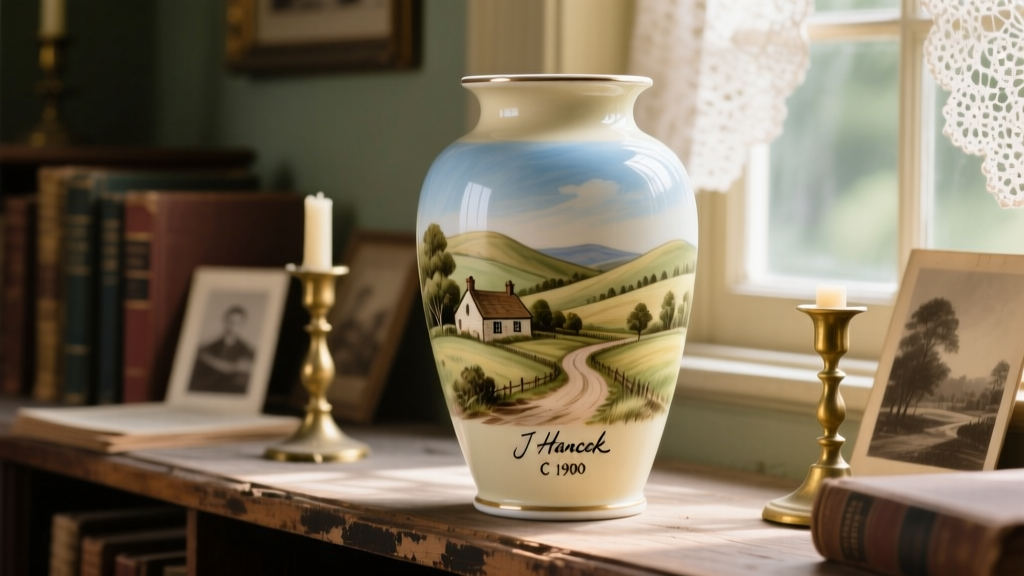
Doulton Vase: Hand-Painted Landscape by J. Hancock, Circa 1900 — A Collector’s Deep-Dive Analysis
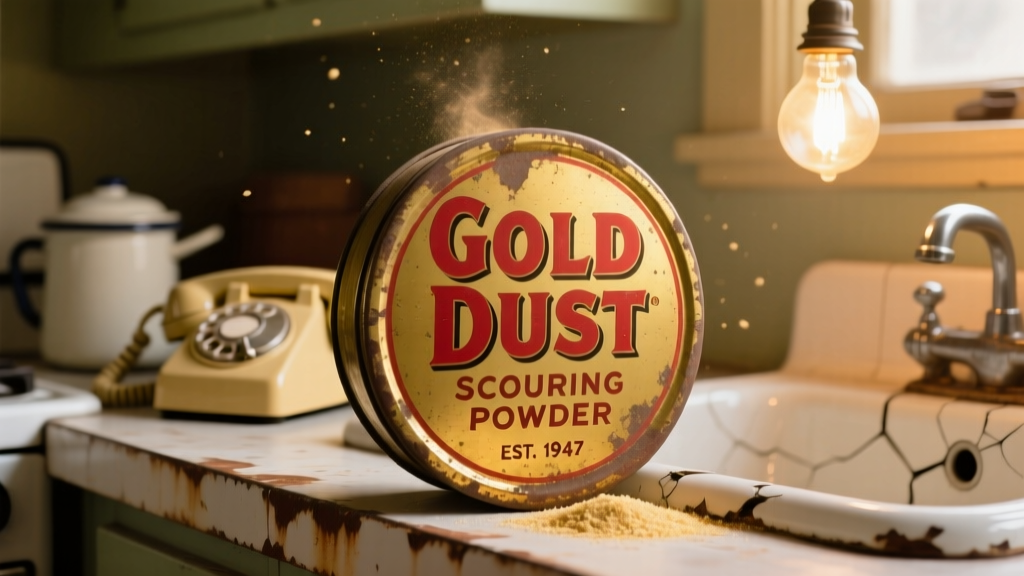
Advertising Tin Gold Dust Scouring Powder: A Collector’s Guide to the Iconic Round Contents Tin

Red Wing Vase Salt Glaze Marked '10 In': Identification, History, and Market Value of a Mid-Century American Ceramic Icon
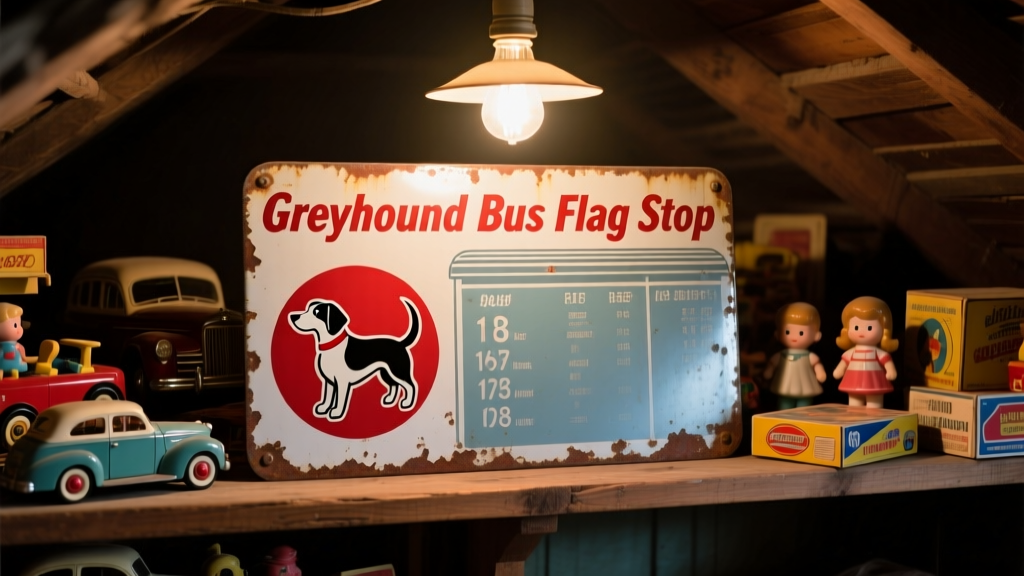
Greyhound Bus Flag Stop Sign: A Mid-Century Tin Advertising Artifact — Identification, History, and Market Value

Harlequin Mauve Blue Pitcher Water #2: A Mid-Century Ceramic Masterpiece by Vernon Kilns
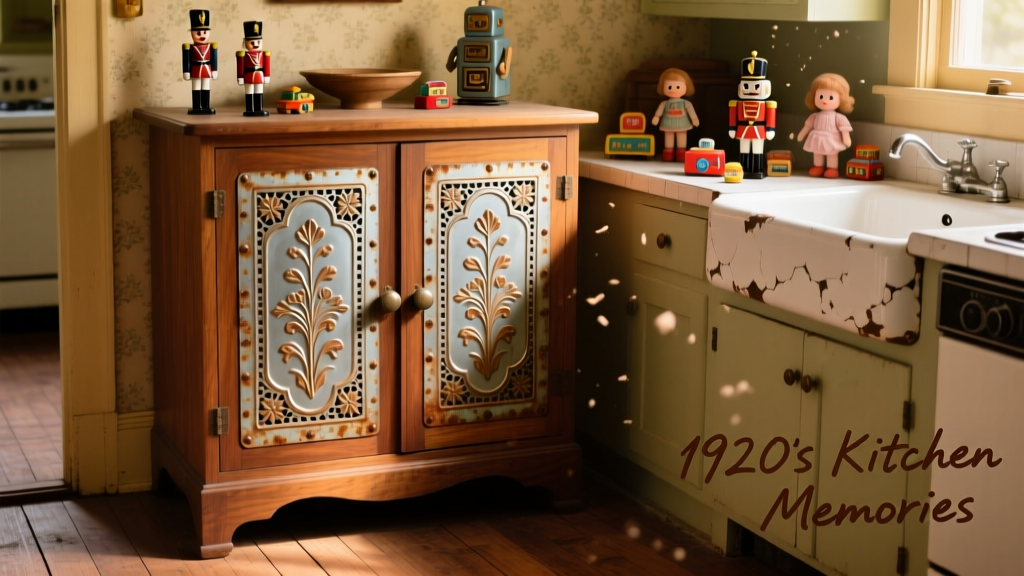
Authentic Mid-Century Pie Safe: Maple Furniture with Punched Tin Panels — Dimensions, Provenance & Appraisal Insights