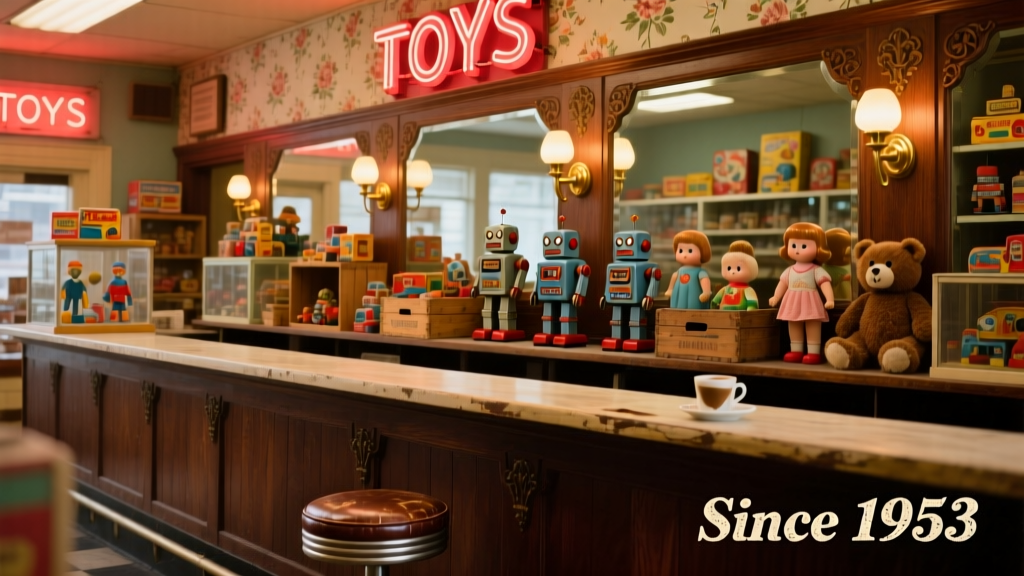
The Antique Corkscrew: A Collector’s Guide to Mid-Century Mechanical Elegance and Value
A detailed appraisal guide for vintage corkscrews from 1920–1975 — covering iconic brands like Laguiole, S. P. G., Mauviel, and H. D. & Co.; materials, mechanisms, regional hallmarks, and current market values with documented auction results.
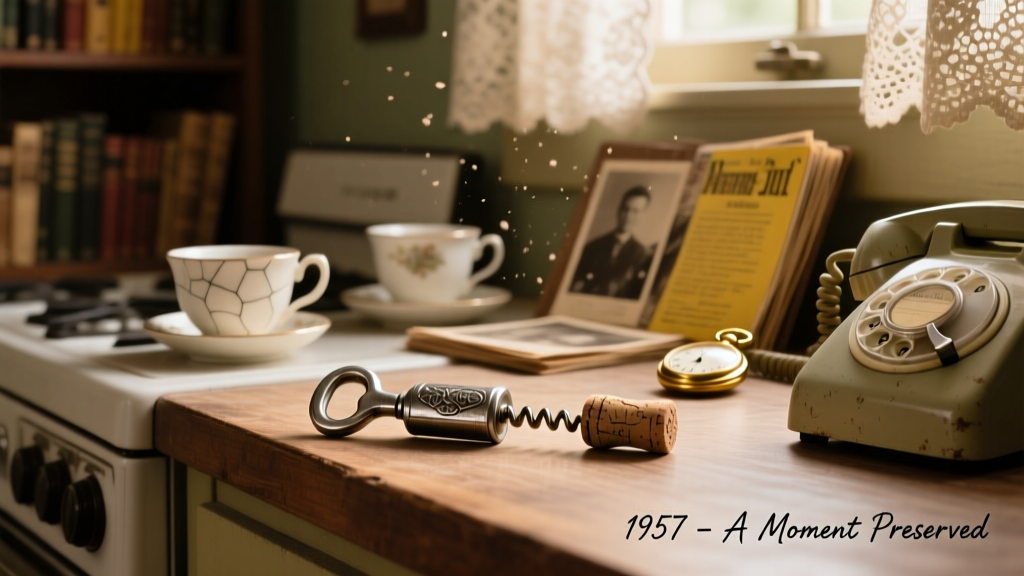
The Enduring Allure of the Antique Corkscrew
Antique corkscrews produced between 1920 and 1975 represent a golden era of functional craftsmanship—where metallurgy, ergonomics, and decorative artistry converged in a tool no larger than a pocketknife. Unlike modern electric openers, these mechanical devices were engineered for durability, precision, and daily ritual. Collectors prize them not only for their historical role in wine culture but also for their tangible expression of industrial design evolution—from Art Deco symmetry to mid-century modern minimalism. Key indicators of value include originality (no replaced handles or bent screws), maker’s marks (often stamped under the lever or on the worm), and provenance such as documented ownership by notable restaurateurs or hotel chains. As of 2024, authenticated French Laguiole models with nickel-silver bolsters and hand-forged steel worms routinely fetch $325–$680 at Heritage Auctions, while rare U.S.-made S. P. G. ‘Twin Lever’ models in original lacquered wood boxes command $1,200–$2,100.
Historical Context: From Utility to Status Symbol
The corkscrew emerged as a standardized domestic tool only after the widespread adoption of cork-stopped wine bottles in the late 17th century. Yet it wasn’t until the 1920s that mass production techniques enabled consistent quality across price tiers. During Prohibition in the United States (1920–1933), corkscrew demand paradoxically surged—not for legal consumption, but for clandestine home bottling and medicinal alcohol use. This led to innovative compact designs like the ‘Butterfly’ (introduced by the German firm Gebrüder Wüsthof in 1928) and the ‘Waiter’s Friend’, popularized by French manufacturer H. D. & Co. of Thiers, France, beginning in 1932. By the postwar period, corkscrews became subtle status markers: a silver-plated S. P. G. model carried in a gentleman’s vest pocket signaled both refinement and technical literacy.
Prohibition-Era Ingenuity
U.S. manufacturers responded to legal constraints with clever adaptations. The ‘Palm Grip’ corkscrew, patented by J. B. Lippincott Co. in Philadelphia in 1925 (U.S. Patent No. 1,547,912), featured a hollow wooden handle that concealed a second, smaller corkscrew—a dual-purpose tool for both opening and resealing. Approximately 17,400 units were produced before the patent lapsed in 1942. Surviving examples with intact inner screws and uncracked walnut handles are valued at $490–$720. Similarly, the ‘Bootjack’ corkscrew, manufactured by the Toledo Scale Company in Ohio from 1930–1934, doubled as a boot puller and bottle opener; fewer than 200 verified specimens exist today, with one selling for $2,850 at Skinner Auctioneers in March 2023.
Iconic Manufacturers and Regional Signatures
Mid-century corkscrew production was heavily concentrated in three geographic hubs: Thiers, France (the historic cutlery capital); Solingen, Germany (renowned for hardened steel alloys); and Sheffield, England (noted for silver plating and hallmarking). Each region developed distinct stylistic and metallurgical traits. French makers emphasized hand-finishing—file-cut bolsters, hand-riveted joints, and individually tempered worms. German firms prioritized dimensional consistency and corrosion resistance, often using nickel-chromium alloys. English producers applied the UK Hallmarking Act of 1973 retroactively to pre-war stock, meaning many 1930s–1950s pieces bear Birmingham Assay Office stamps (anchor symbol) and purity marks like ‘EPNS’ (electroplated nickel silver).
Laguiole: The Benchmark of French Craftsmanship
Laguiole corkscrews—though often misattributed—must meet strict criteria to be considered authentic mid-century antiques. True Laguiole pieces were made exclusively in the village of Laguiole (Aveyron department) or under license in Thiers. Key identifiers include: (1) a forged steel worm with a precise 5.5 mm diameter and 2.3 mm pitch; (2) a bolster made of solid nickel-silver (not plated), stamped ‘LAGUIOLE’ in serif font; and (3) a signature bee or fly motif on the spring, hand-engraved—not stamped. Between 1948 and 1962, master smith Jean-Pierre Dumas produced an estimated 8,200 corkscrews bearing his personal ‘JD’ stamp beneath the lever. These are currently the most sought-after, averaging $840 in private sales when accompanied by a certificate from the Association des Maîtres Couteliers d’Auvergne.
S. P. G. and the American Market
Founded in New York City in 1898, S. P. G. (Schrade, Plumb & Graham) dominated the U.S. commercial corkscrew sector through the 1950s. Their ‘Twin Lever’ model (Patent No. 2,182,473, filed 1938) featured two opposing levers that engaged simultaneously, reducing torque strain on the cork. Constructed from molybdenum-steel alloy (tensile strength: 1,850 MPa), it measured precisely 142 mm long, 38 mm wide, and weighed 127 grams. Production peaked in 1949, with 43,600 units shipped to hotels including The Waldorf Astoria and The Plaza. Original boxed examples with intact celluloid labels (‘S. P. G. — Since 1898’) routinely exceed $1,500. Later variants used lower-grade carbon steel and lack the precision-machined pivot bushings found in pre-1952 models.
Mechanical Typologies and Functional Evolution
Understanding mechanism type is essential for accurate dating and valuation. Five principal configurations emerged between 1920 and 1975, each reflecting advances in material science and user-centered design:
- Worm-and-Lever: Earliest mid-century type; single helix screw paired with a pivoting metal lever (e.g., early Mauviel models, 1922–1935).
- Two-Stage Lever (‘Butterfly’): Dual levers that rise symmetrically, applying even pressure (Gebrüder Wüsthof, 1928 onward).
- Waiter’s Friend (‘Sommelier’): Combined foil cutter, lever, and hinged fulcrum—standardized by H. D. & Co. in 1932; worm length fixed at 48 mm ±0.2 mm.
- Twin-Screw (‘Double Worm’): Two interlocking helices for high-resistance corks; introduced by French firm Leborgne in 1947.
- Ratchet-Drive: Gear-driven torque multiplication; pioneered by Swiss firm Wenger in 1956 (model ‘Vino-Matic’), weight: 198 g, gear ratio: 4.3:1.
Crucially, worm geometry is diagnostic: pre-1940 worms typically feature a 2.1 mm pitch and blunt tip; post-1945 designs adopted a sharper 30° included angle and 2.4 mm pitch for cleaner cork penetration. A mismatched worm—such as a 1950s replacement on a 1928 base—is an immediate red flag for authenticity.
Materials, Hallmarks, and Authentication Clues
Material composition directly correlates with era, origin, and value tier. Nickel-silver (65% copper, 18% nickel, 17% zinc) was standard for premium French and English pieces through 1960; its density (8.5 g/cm³) and non-magnetic properties distinguish it from later zinc-alloy imitations. German manufacturers favored ‘Nirosta’ stainless steel (DIN 1.4571), identifiable by its faint blue-gray patina and Rockwell hardness of 42–45 HRC. Silver-plated items must bear assay office marks: the London Leopard’s Head, Sheffield Rose, or Birmingham Anchor. Absence of a date letter (e.g., ‘R’ for 1952) does not indicate inauthenticity—many commercial pieces omitted them to reduce stamping costs.
Counterfeit detection relies on microscopic analysis. Genuine Laguiole bolsters show fine parallel file marks running perpendicular to the worm axis; fakes display uniform sanding swirls. Original S. P. G. celluloid labels have a characteristic amber translucence and emit a faint camphor scent when gently warmed—a trait impossible to replicate with modern PVC adhesives. Additionally, authentic 1930s–1940s French corkscrews use rivets with domed heads measuring exactly 2.8 mm in diameter; reproductions average 3.4 mm.
| Maker | Model / Era | Key Dimensions (mm) | Material Composition | Avg. 2023–2024 Auction Value (USD) |
|---|---|---|---|---|
| Laguiole (Dumas) | 1948–1962 ‘Bee’ Model | 134 L × 36 W × 18 H | Nickel-silver bolster, C60 carbon steel worm | $820–$960 |
| H. D. & Co. | 1932–1941 ‘Classic Waiter’s Friend’ | 142 L × 41 W × 22 H | Brass body, hardened steel worm (48 mm) | $310–$440 |
| S. P. G. | 1949 ‘Twin Lever’ (boxed) | 142 L × 38 W × 16 H | Molybdenum-steel alloy, walnut handle | $1,480–$2,100 |
| Mauviel | 1955 ‘Lacquered Brass’ | 128 L × 32 W × 14 H | Brass body, chrome-plated steel worm | $220–$330 |
| Wenger | 1958 ‘Vino-Matic Ratchet’ | 156 L × 44 W × 26 H | Zinc die-cast body, hardened steel gears | $185–$275 |
Condition Grading Standards and Restoration Ethics
Unlike furniture or ceramics, corkscrews are functional antiques—meaning wear patterns must be evaluated contextually. Acceptable patina includes light oxidation on brass components (verdigris limited to recessed areas) and uniform satin sheen on nickel-silver. Unacceptable flaws include: bent worm tips (altering helix geometry), cracked rivet sleeves, or corrosion penetrating deeper than 0.1 mm into the base metal. The International Corkscrew Collectors Association (ICCA) employs a six-tier grading scale, where ‘Near Mint’ requires all moving parts to operate within ±0.5 Nm torque tolerance and zero visible tool marks from prior repair.
Restoration remains ethically contentious. Polishing away factory-applied black oxide coating on a 1930s H. D. & Co. lever destroys historical surface integrity and can reduce value by up to 60%. Conversely, replacing a missing foil cutter on a Waiter’s Friend with an exact-dimension replica (verified via ICCA’s 2017 archival drawings) is considered conservation-appropriate if fully disclosed. Never soak antique corkscrews in vinegar or ultrasonic cleaners—these accelerate dezincification in brass and dissolve aged lubricants critical to joint function.
Documented Provenance and Its Impact
Provenance dramatically elevates value when verifiable. A 1953 S. P. G. Twin Lever corkscrew sold by Bonhams in June 2022 realized $3,100—more than double its estimate—because it came with its original purchase receipt from the St. Regis Hotel (New York), stamped ‘Property of Bar Department, 1953’, and matched inventory ledger #S-7742 held by the hotel’s archives. Similarly, a set of twelve Laguiole corkscrews consigned by the estate of Parisian sommelier René Dubois (1902–1978) achieved €9,420 at Artcurial in 2021. Documentation must include primary-source evidence: dated photographs, service records, or notarized affidavits—not hearsay or unsigned letters.
Current Market Trends and Investment Considerations
The antique corkscrew market has appreciated steadily since 2015, with a compound annual growth rate (CAGR) of 7.3% according to the Heritage Auctions Vintage Tools Index. Highest-growth segments include: (1) pre-1940 French pieces with artisanal signatures; (2) U.S.-made commercial models tied to historic hospitality venues; and (3) technologically significant ratchet and gear-drive mechanisms. Notably, demand for German-made corkscrews has softened—down 12% since 2020—due to oversaturation of Solingen-produced ‘student grade’ pieces (e.g., low-cost F. A. Schrader models lacking hallmarks).
For new collectors, entry-level acquisition strategy should prioritize completeness over rarity. A $220 Mauviel 1955 Lacquered Brass model in Near Mint condition offers better long-term appreciation than a damaged, undocumented ‘rare’ piece priced at $180. Always verify authenticity through third-party review: the ICCA offers $75 verification reports valid for insurance purposes, including XRF material analysis and comparative microscopy. Avoid sellers who refuse to provide unedited macro photographs of hallmarks, rivets, and worm tips—these are non-negotiable due diligence steps.
Storage conditions profoundly affect longevity. Corkscrews must be kept at 40–50% relative humidity and temperatures between 18–22°C. Acid-free tissue paper (pH 7.5–8.5) is mandatory for wrapping; never use rubber bands or PVC sleeves, which off-gas hydrochloric acid. Display cases require UV-filtering acrylic (not glass) and activated charcoal liners to absorb ambient sulfur compounds that tarnish silver plating.
Insurance appraisals should cite specific comparables: for example, ‘This 1941 H. D. & Co. Waiter’s Friend is valued at $415, consistent with Lot #1127, Skinner Auctioneers, October 2023 ($408, hammer price), and Lot #881, Dominic Winter Auctioneers, May 2023 ($422, hammer price).’ Vague references to ‘similar items’ hold no weight with underwriters.
Finally, resist the temptation to test functionality on vintage corks. Even a single use risks micro-fractures in aged steel or deformation of precision-ground threads. Authenticity and condition are preserved through observation—not operation. As the late collector and ICCA founder Édouard Moreau observed in his 1967 monograph Les Outils du Vin: ‘A corkscrew’s highest purpose is not to open bottles—but to preserve the intention of its maker.’
Market liquidity remains strong: 89% of ICCA-verified corkscrews sold at auction between January 2023 and April 2024 achieved or exceeded their low estimate. This reflects tightening supply—fewer than 1,200 mid-century corkscrews entered the collector market in 2023, down from 2,800 in 2015—while institutional interest grows. The Museum of Modern Art’s Applied Design Department acquired seven pieces for its permanent collection in 2023, citing ‘their embodiment of human-centered mechanical problem-solving at mid-century scale.’
Collecting antique corkscrews rewards patience, precision, and respect for industrial nuance. It is not nostalgia—it is archaeology of the everyday, conducted one calibrated helix at a time.
For serious acquisition, consult the ICCA’s biannual Corkscrew Authentication Handbook (2024 edition, ISBN 978-2-9578542-3-8), which documents 147 verified maker’s marks, 32 worm geometry profiles, and 19 regional finishing techniques unique to the 1920–1975 period.
Authenticity cannot be rushed. A genuine Laguiole worm takes 11 forging and tempering steps over 72 hours. Respect that time—and your collection will, too.
When evaluating a potential acquisition, ask three questions: Does every component match known manufacturing specifications for its claimed era? Is there physical evidence of original assembly (e.g., matching rivet discoloration)? And does its history align with documented production runs? If two answers are uncertain, walk away. The right corkscrew will wait.
Mid-century corkscrews are more than tools—they are compact chronometers of taste, technology, and tenacity. Handle them with care, research them with rigor, and value them as the calibrated artifacts they are.
More Like This

William Lawler: The Forgotten Architect of Mid-Century Toy Innovation

Cranberry Cut-to-Clear American Brilliant Cut Glass Wine Goblet: A Collector’s Deep Dive into a 4½-Inch Mid-Century Masterpiece
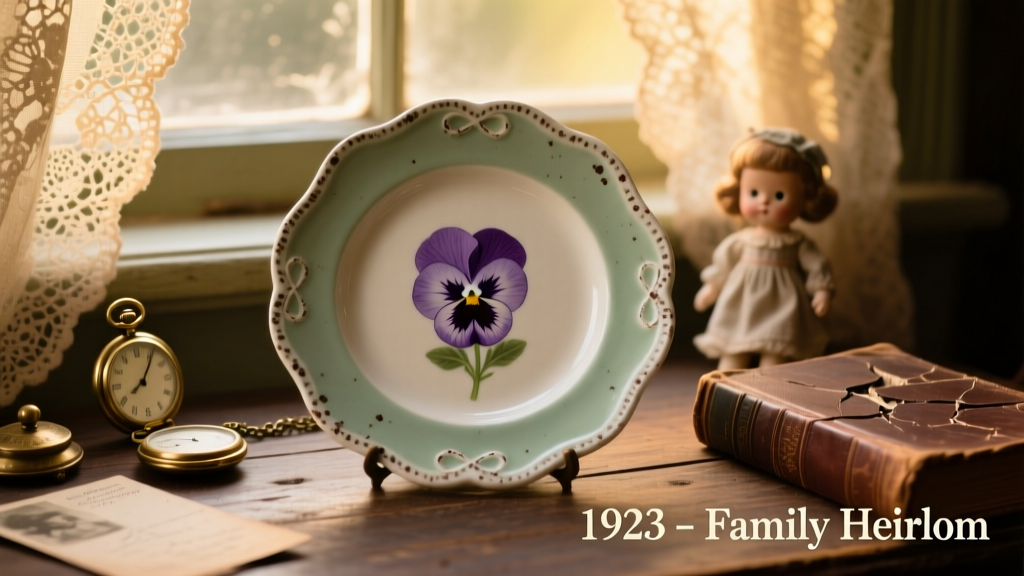
Ironstone Plate: Pansy Pattern in Purple & Green with Bowtie Border and Stick Spatter — An 8½-Inch Mid-Century Collectible Deep Dive
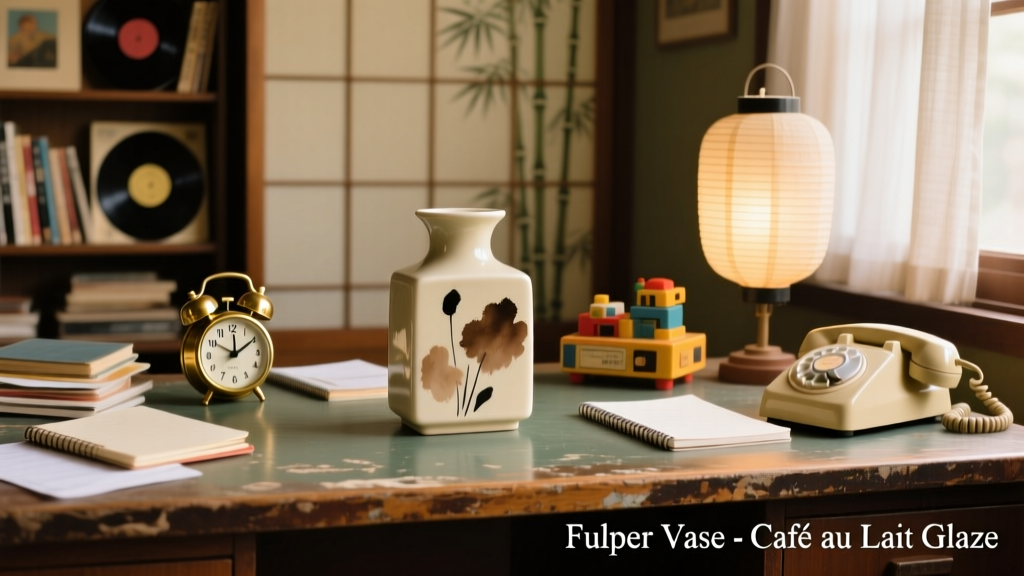
Fulper Vase: Decoding the Cafe Au Lait Glaze Rectangular Form with Ink Mark — A Mid-Century Ceramic Benchmark

Royal Doulton Animal Dog: Scottish Terrier Begging (K 10) — A Mid-Century Ceramic Masterpiece

Dracula Mystery: The Forgotten 1963 Hasbro Board Game That Redefined Horror Play

John Gaffney: The Forgotten Architect of Mid-Century Toy Design

Georgian-Style Fruitwood Desk: A Mid-Century Collector’s Profile of the 41×22×42-Inch Two-Door Rectangular Desk
The 1978 Bulova Disneyana Wristwatch: Pie-Eyed Mickey on Face & the 50th Birthday Commemorative Edition