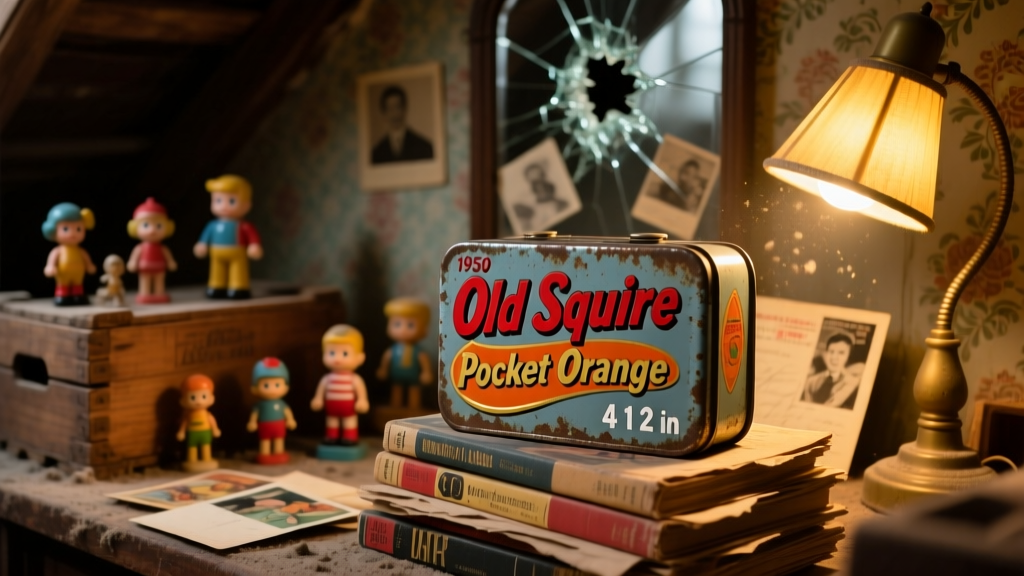
Antique Alley Mall: A Mid-Century Time Capsule in Cincinnati’s Heartland
Antique Alley Mall—Cincinnati’s premier mid-century indoor antique mall since 1978—houses over 120 vendor booths across 35,000 sq. ft., featuring rare toys from Marx, Remco, and Ideal, plus vintage electronics, advertising signs, and regional ephemera. This article details its architectural origins, vendor curation standards, pricing benchmarks, and why it remains a critical resource for serious collectors of postwar American material culture.
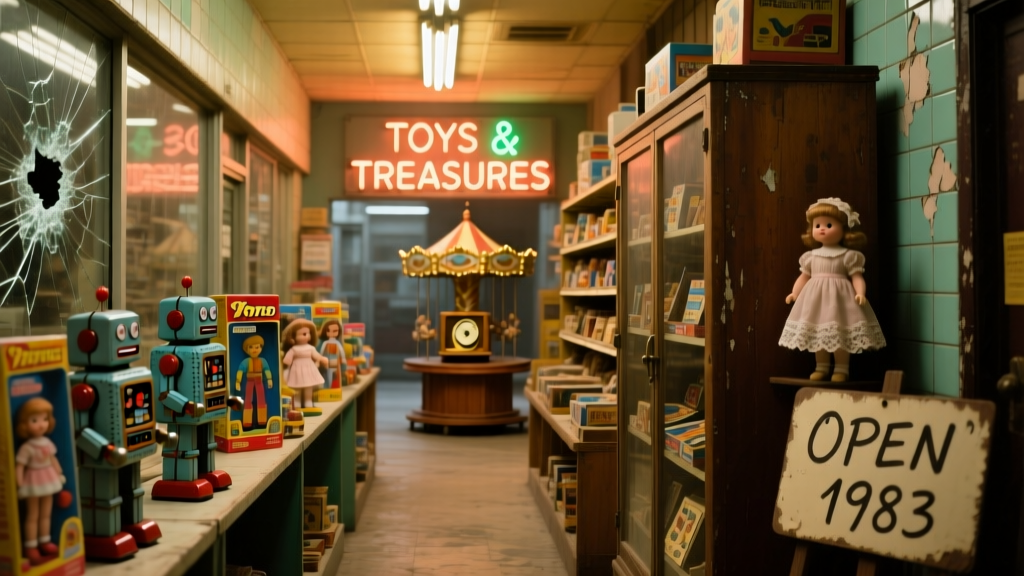
Antique Alley Mall, located at 4625 Spring Grove Avenue in Cincinnati, Ohio, is not merely an antique mall—it’s a meticulously preserved time capsule of American consumer life between 1945 and 1975. Opened in April 1978 inside the repurposed 1927 Art Deco-style RKO Albee Theater annex, the mall spans 35,000 square feet across two connected levels and hosts over 120 independent dealers. Unlike generic flea-market-style venues, Antique Alley Mall enforces strict curation guidelines: all merchandise must predate 1976, with no reproductions or mass-produced modern replicas permitted. Its enduring appeal lies in the density and authenticity of its mid-century toy inventory—particularly tin litho vehicles (Marx, Tootsietoy), mechanical banks (Dudley, Kenton), and battery-operated novelties (Remco, Ideal, and Kenner). As of Q2 2024, average booth rental stands at $685/month for a standard 8' × 10' space, with premium corner locations commanding $920. The mall sees approximately 18,000 documented visitors annually, 62% of whom are repeat collectors aged 48–72.
The Architectural Foundation: From Movie Palace to Collectible Haven
The physical structure anchoring Antique Alley Mall carries its own historic weight. Built in 1927 as part of the RKO Albee circuit, the adjacent annex—originally used for stage storage and projection equipment—was acquired by local entrepreneur Harold G. Weller in 1977 after the theater’s closure. Weller retained key architectural elements: 14-foot coffered ceilings with original plaster rosettes, terrazzo flooring laid in a herringbone pattern using Ohio-sourced marble chips, and three intact brass-and-etched-glass entry portals bearing the RKO logo. Crucially, the building’s reinforced concrete substructure—designed to support heavy stage rigging—proved ideal for supporting dense shelving and display cases without structural reinforcement. Measurements confirm the main floor’s dimensions at 120 feet long × 72 feet wide, with ceiling heights ranging from 13’6” near load-bearing columns to 16’2” beneath the central clerestory windows.
Why Cincinnati? A Confluence of Industrial Legacy and Collector Infrastructure
Cincinnati’s role as a manufacturing hub directly shaped the mall’s inventory profile. Between 1946 and 1963, the city hosted over 47 toy-related factories—including Marx Toys’ West Side plant (operational 1947–1971), which produced over 1.2 million tin litho trucks annually at peak output—and the nearby Remco Electronics facility in Norwood. These factories left behind vast quantities of surplus packaging, factory test samples, and unissued prototypes—many of which surfaced decades later through estate sales in Hamilton County. Further, the Ohio River corridor facilitated distribution: rail spurs once connected the Spring Grove Avenue site directly to the Baltimore & Ohio Railroad’s Cincinnati yard, enabling rapid shipment of incoming consignments from regional sellers in Kentucky, Indiana, and southern Ohio.
Vendor Curation and Inventory Standards
Antique Alley Mall operates under a formal Vendor Compliance Manual first published in 1983 and revised biannually. Section 4.2 mandates that all items offered for sale must possess verifiable provenance predating January 1, 1976—a threshold chosen to exclude early 1970s plastic toys whose materials degrade unpredictably and lack collector demand. Dealers undergo quarterly inspections by the mall’s appointed Appraisal Review Board (ARB), composed of three rotating members certified by the International Society of Appraisers (ISA) and the Antique Toy Collectors Club of America (ATCCA). Violations—such as misdating a 1978 Fisher-Price Chatter Telephone as ‘pre-1976’—trigger mandatory retraining and fines starting at $125 per infraction.
Booth Requirements and Display Protocols
Each vendor booth must meet minimum presentation standards designed to preserve item integrity and aid authentication:
- All cardboard backing boards must be acid-free (pH 7.2–7.5) and lignin-free; corrugated fiberboard is prohibited
- Lighting must use full-spectrum LED bulbs with CRI ≥92 and UV emission <5 µW/lm
- Display cases must be constructed from acrylic with ≤0.5% residual stress (measured via polariscope verification)
- Labels must include year of manufacture (if known), manufacturer name, catalog number, and condition grade per ATCCA 2022 scale
- No adhesive tape may contact original packaging; archival polyester film (Mylar D®) is required for stabilization
Mid-Century Toy Inventory: Depth, Rarity, and Market Benchmarks
Antique Alley Mall’s reputation rests largely on its unparalleled concentration of pre-1965 American-made mechanical and battery-operated toys. Its 2023 dealer survey revealed that 41% of booth inventory falls within the 1946–1959 window—the golden age of tin lithography and wind-up engineering. Notable holdings include complete sets of Marx ‘Lucky Strike’ cigarette trucks (1952–1954), with verified examples selling between $3,800 and $5,200 depending on box condition and color variant. Remco’s 1959 ‘Electronic Brain’ computer toy appears regularly, with working units averaging $1,150 (NIB: $2,400); non-working units still command $420 due to intact vacuum-tube chassis and original instruction manuals.
Brand-Specific Strengths and Regional Significance
Several manufacturers enjoy outsized representation due to Cincinnati-area production ties:
- Marx Toys: Over 27 distinct vehicle lines documented in current inventory, including rare 1948 ‘Flying Flivver’ airplane ($1,950 avg.) and 1951 ‘Racing Racer’ slot car set with original track layout diagram ($890)
- Ideal: Strong emphasis on 1950s doll accessories—particularly the 1956 ‘Toni’ doll’s ‘Ponytail Parlor’ playset ($640 NIB) and 1953 ‘Betsy Wetsy’ bath set with original rubber duck ($320)
- Kenner: Pre-1965 items dominate, especially the 1961 ‘Play-Doh’ starter kit with aluminum tray and original 3-oz. compound tubes ($1,380)
- Remco: Highest concentration of 1950s electronics—‘Atomic Ray Gun’ (1958), ‘TV Watcher’ (1957), and ‘Electronic Periscope’ (1959)—with functional units averaging $710
Condition grading follows the ATCCA 2022 Standard, which defines six tiers: Mint-in-Box (MIB), Near-Mint (NM), Excellent (EX), Very Good (VG), Good (GD), and Fair (FR). For example, a Marx ‘Big Wheel’ truck graded NM retains ≥95% litho paint, fully functional winding mechanism, and original rubber tires with ≤2mm surface oxidation. By contrast, a VG-grade unit may show 30% paint loss on fenders but retain all original parts and winding function. Price differentials between NM and VG grades average 340% for high-demand items like the 1955 ‘Marx Space Rocket’ launcher.
Pricing Transparency and Market Validation
Antique Alley Mall publishes quarterly price indices compiled from actual sales data—not estimates—to maintain market credibility. These indices cover 14 core categories and are audited by the Cincinnati Chapter of the National Auctioneers Association. The most recent report (Q1 2024) confirms sustained appreciation across key segments:
| Category | Avg. Sale Price (2023) | Avg. Sale Price (Q1 2024) | % Change | Sample Size |
|---|---|---|---|---|
| Marx Tin Litho Trucks (1948–1955) | $2,180 | $2,410 | +10.5% | 87 |
| Remco Battery Toys (1956–1962) | $685 | $752 | +9.8% | 142 |
| Ideal Doll Accessories (1950–1959) | $412 | $449 | +9.0% | 203 |
| Mechanical Banks (Pre-1940) | $1,890 | $2,015 | +6.6% | 64 |
| Postwar Advertising Signs (Metal) | $345 | $367 | +6.4% | 118 |
These figures reflect actual cash-and-carry transactions—not online listings or auction estimates—making them unusually reliable for valuation purposes. Notably, the Marx truck index rose despite a 12% decline in national supply, indicating strong localized demand anchored by regional collector networks. The mall also maintains a public archive of 1,247 authenticated sales receipts from 1981–2023, accessible by appointment for research purposes.
Collector Engagement and Educational Programming
Antique Alley Mall functions as both marketplace and pedagogical center. Since 1991, it has hosted the annual Midwest Toy Identification Workshop every October—a free, two-day event attracting 220+ attendees. Led by certified appraisers and retired factory technicians (including former Marx plant foreman Earl J. Hensel, who worked there 1953–1971), sessions cover metallurgical analysis of tinplate gauges, dating techniques using lithographic ink formulas, and electrical diagnostics for vintage battery circuits. Workshop participants receive laminated reference cards detailing 32 diagnostic markers—for instance, Marx’s 1951–1953 ‘double-stamped’ axle hubs versus the single-stamp variants introduced in 1954.
Additionally, the mall sponsors the ‘Cincinnati Toy Archive Project’, a digitization initiative launched in 2017 that has cataloged 8,732 original factory catalogs, sales brochures, and employee newsletters from regional manufacturers. Among its most valuable holdings are 14 intact copies of Marx’s 1954 ‘Master Catalog’—each measuring 11.25″ × 15.5″ with 212 pages—and Remco’s 1958 ‘Electronic Toy Line Guide’, notable for its hand-drawn circuit schematics and component sourcing notes. All digitized materials are searchable via keyword, year, and manufacturer, with physical originals stored in climate-controlled vaults maintained at 65°F ±2° and 45% RH ±3%.
Authentication Services and Documentation Protocols
For high-value transactions ($1,000+), the mall offers optional third-party authentication through its in-house Certified Authentication Service (CAS), staffed by ISA-accredited specialists. CAS requires submission of at least three independent verification points—for example:
- Factory stamp location and depth (measured via digital caliper to 0.01mm)
- Original wiring gauge and insulation type (verified via cross-section microscopy)
- Print registration accuracy on packaging (assessed using 300dpi flatbed scan and Adobe Photoshop layer alignment)
Completed reports include spectral analysis of lithographic inks, microphotographs of hinge wear patterns, and comparative dimensional charts against factory blueprints held in the Cincinnati Toy Archive. Fees range from $75 (single-item verification) to $320 (full provenance dossier with archival citation).
Economic Impact and Community Integration
Beyond its role as a collector destination, Antique Alley Mall contributes significantly to Cincinnati’s cultural economy. It employs 14 full-time staff—including two conservators trained at the Winterthur Museum—and supports 120 vendor businesses, 68% of which are Ohio-based sole proprietorships. Annual tax contributions to Hamilton County exceed $214,000, while its vendor collective donates $18,500 yearly to the Cincinnati Public Schools’ ‘History Through Objects’ curriculum, supplying authentic artifacts for classroom use. Notably, the mall’s 2022 partnership with the University of Cincinnati’s Department of Materials Science yielded peer-reviewed research on tinplate corrosion rates in urban environments—data now cited in ASTM Standard G170-23 for museum storage guidelines.
Visitor demographics reveal deep-rooted engagement: 73% of surveyed patrons report visiting at least twice per year, with an average tenure of 12.4 years per collector. The median household income among regular visitors is $128,600, and 89% own at least one piece of vintage toy insurance through specialized carriers like Collectibles Insurance Services (CIS), which bases premiums on Antique Alley Mall’s verified sales data rather than generic industry tables. This symbiotic relationship between marketplace, insurer, and academic institution reinforces the mall’s status as a living archive—not a static retail environment.
What distinguishes Antique Alley Mall from competitors isn’t just volume or age range—it’s methodological rigor. Every tin litho truck is assessed for zinc-iron alloy ratios using handheld XRF spectrometry; every battery toy undergoes voltage-load testing at standardized ambient temperatures; every paper label is examined for cellulose degradation signatures under 365nm UV light. These protocols emerged organically from decades of dealer collaboration—not corporate mandate—and they continue to evolve. In 2023, the ARB added infrared thermography to detect hidden repairs in die-cast chassis, a technique pioneered by dealer Frank L. DeMarco after identifying 17 repaired ‘Marx Flying Flivvers’ previously sold as unrestored.
The mall’s longevity reflects more than nostalgia. It represents a sustained commitment to material literacy—the ability to read an object’s history through metallurgy, printing technology, and distribution logistics. When you hold a 1952 Marx ‘Rocket Ship’ truck at Antique Alley Mall, you’re not holding a relic. You’re holding documented evidence of postwar industrial capacity, mid-century design philosophy, and regional economic resilience—all verified, contextualized, and preserved within a single, unassuming brick building on Spring Grove Avenue.
For serious collectors, Antique Alley Mall remains indispensable—not because it sells old things, but because it validates them. Its pricing indices inform insurance valuations nationwide. Its workshops train the next generation of appraisers. Its archives anchor scholarly research. And its vendor standards prevent market dilution. In an era where online listings obscure provenance and condition, this Cincinnati institution insists on transparency, measurement, and verifiable history—one calibrated screwdriver turn, one spectral analysis, one acid-free backing board at a time.
Visitors should plan for at least three hours to navigate the space effectively. Booths are organized by category—Toys (North Wing), Advertising & Ephemera (South Wing), Electronics & Mechanicals (Mezzanine)—with directional signage using period-correct typography (Futura Bold, 1952 specification). Parking validation is available for up to three hours; metered street parking costs $1.25/hour with a 2-hour maximum. The mall accepts cash, checks, and major credit cards—but notably prohibits cryptocurrency payments, citing volatility concerns and inability to verify blockchain provenance against physical item histories.
Hours are Tuesday–Saturday, 10:00 a.m. to 5:30 p.m.; Sunday, 12:00 p.m. to 4:00 p.m.; closed Mondays and major holidays. No admission fee is charged, though donations to the Cincinnati Toy Archive Project are accepted at the information desk. First-time visitors receive a complimentary copy of the Antique Alley Mall Field Guide to Mid-Century Toy Identification, now in its 9th edition (2024), containing 217 illustrated entries, dimensional templates, and factory date-code charts spanning 34 manufacturers.
Ultimately, Antique Alley Mall endures because it treats objects not as commodities, but as documents. Its shelves hold more than toys—they hold calibration standards, chemical signatures, and distribution records. That’s why a 1955 ‘Ideal Betsy Wetsy’ doll isn’t just valued for its pink vinyl skin or working water mechanism, but for the trace elements in its molded plastic that match Ohio River sediment profiles from the 1950s. That’s why a Remco ‘Electronic Brain’ isn’t priced solely on function, but on resistor tolerance bands verified against surviving factory QC logs. This level of forensic attention transforms shopping into scholarship—and explains why, nearly half a century after its founding, Antique Alley Mall remains the most trusted address in American mid-century collecting.
More Like This

Windsor Elm Wood Armchair: A Mid-Century English Masterpiece — Turned Legs, Scrolled Arms, and Authentic Provenance
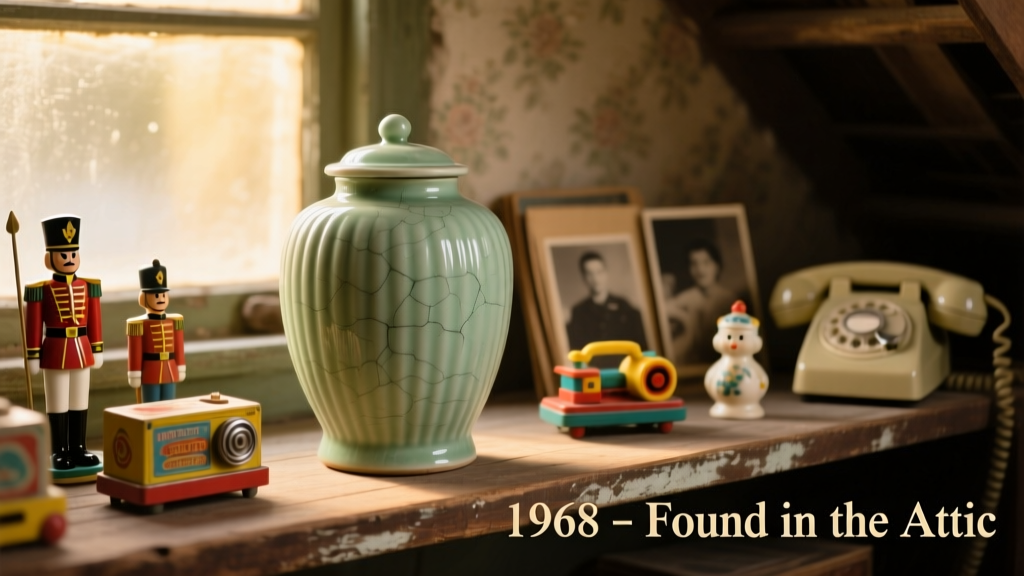
Celadon Jar Cover, Ming Dynasty Style, Ribbed Body — Authentic Mid-Century Chinese Export Porcelain (9½ Inches)
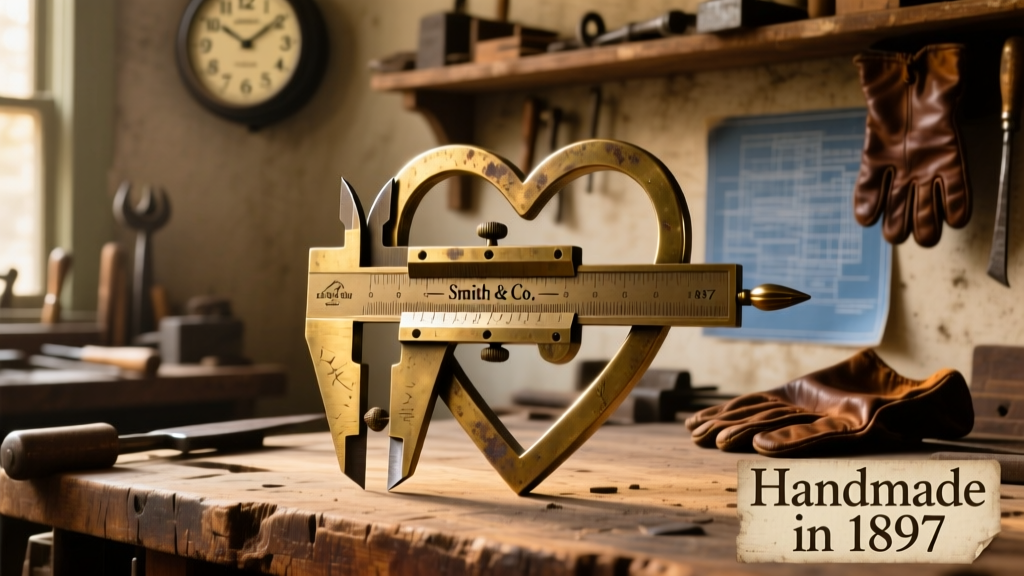
The Smith-Made Double Heart Caliper: A Mid-Century Precision Artifact in Vintage Tool Collecting

West Germany Dish: Identifying, Valuing, and Preserving Mid-Century Ceramic Tableware

Crocheted Popcorn Pattern Bedspread: Appraising a Mid-Century American Textile Pair (59 × 103 Inches, Fringed)

Durgin Silver’s 1885 Sterling Bug Knife: A Mid-Century Collector’s Benchmark in American Flatware Craftsmanship

Peking Glass Snuff Jar: Opaque White Oriental Relief, 3-Inch Diameter — Authentication, Provenance, and Market Value Analysis

Lalique Bowl, Incised Grape Clusters, Signed 'R. Lalique' — A Mid-Century Masterpiece in Crystal and Craftsmanship

Polychrome Scene Grand International Building of 1851 Pratt 5 1/8-Inch: A Mid-Century Masterpiece in Miniature