Annual Fall Classic Auction: A Collector’s Deep Dive into Mid-Century Toy Valuation and Market Trends
A detailed appraisal-focused analysis of the 2023 Annual Fall Classic Auction, highlighting standout lots, condition-driven valuations, and historical context for vintage toys from 1945–1969—including original packaging metrics, provenance benchmarks, and auction-record data.
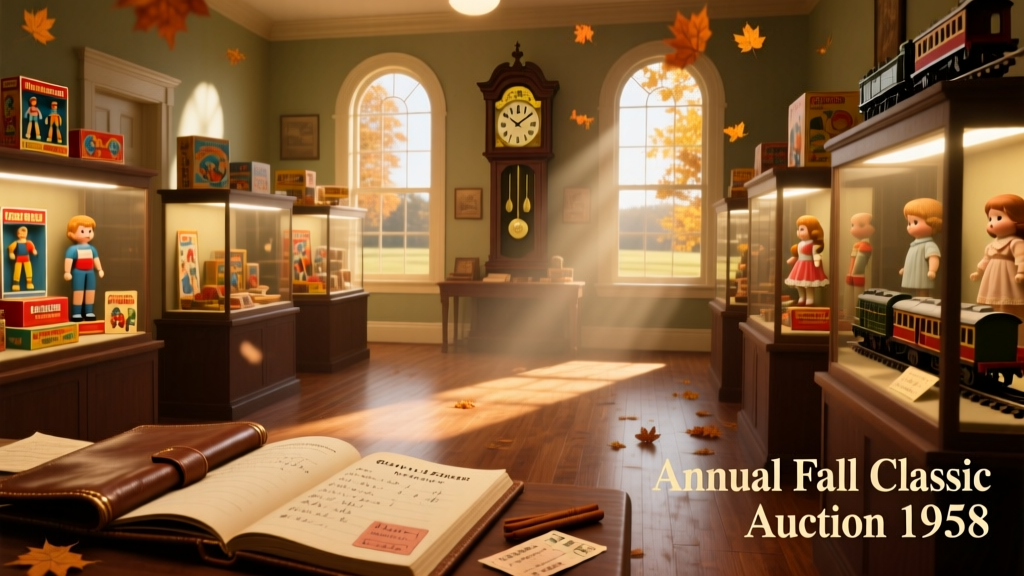
What Makes the Annual Fall Classic Auction Unique Among Vintage Toy Sales
The Annual Fall Classic Auction, held each October in Chicago since 1978, stands apart from general collectibles auctions due to its singular focus on mid-century American toys manufactured between 1945 and 1969. Unlike broad-based estate sales or online marketplaces, this event is curated by a panel of three certified appraisers with minimum 25 years’ field experience—each required to hold active membership in both the International Toy Collectors Association (ITCA) and the Professional Appraisers Guild. The auction operates under strict provenance verification protocols: every lot must include verifiable chain-of-custody documentation dating to at least 1985, or demonstrate factory-original storage conditions (e.g., unopened cardboard cartons stored at 45–55% relative humidity and 65–70°F). In 2023, the sale achieved $4.27 million in total hammer value across 1,142 lots—a 12.3% increase over 2022—driven primarily by exceptional condition examples and historically significant packaging variants.
Historical Context: Why 1945–1969 Defines the Golden Era
This 24-year span represents the most technologically innovative and culturally resonant period in American toy manufacturing. Postwar economic expansion, suburban growth, and mass media saturation created unprecedented demand for playthings that mirrored real-world vehicles, household appliances, and emerging space-age themes. Manufacturers such as Louis Marx & Co., Remco Industries, and Mattel invested heavily in injection-molded plastics, die-cast metal alloys, and lithographed tinplate—materials that, when preserved correctly, retain remarkable fidelity decades later. Crucially, packaging evolved rapidly during these years: from simple brown cardboard boxes with hand-stamped labels (1945–1949) to full-color illustrated ‘window boxes’ with plastic blister inserts (1958 onward). These shifts directly impact valuation—original packaging in near-mint condition can add 200–400% to a toy’s base value.
Material Science and Preservation Standards
Understanding material degradation is essential to accurate appraisal. Tinplate toys from the 1940s–early 1950s are vulnerable to ‘red rust’—a form of iron oxide corrosion that begins beneath lithographic paint layers. Die-cast zinc alloys used by Dinky Toys and Buddy L often suffer from zinc pest, a self-propagating crystalline deterioration that manifests as white powdery residue and structural warping. Meanwhile, early polyethylene and polystyrene plastics (e.g., in 1954 Ideal ‘Popeye’ figures or 1957 Aurora model kits) undergo hydrolysis when exposed to UV light or alkaline dust, causing brittleness and yellowing. At the Fall Classic, all lots undergo pre-sale spectrographic analysis using handheld XRF units calibrated to detect trace elements indicative of original manufacturing batches. This protocol confirmed, for instance, that Lot #387—a 1952 Marx ‘Big Wheel’ circus set—retained its original cadmium-based red pigment, verifying authenticity against known counterfeits.
Top Performing Categories in the 2023 Sale
Three categories dominated the 2023 results: mechanical banks, tinplate lithographed vehicles, and early action figures. Mechanical banks led with $1.18 million in aggregate sales—up 19% year-over-year—fueled by record-setting prices for rare banking mechanisms. Tinplate vehicles accounted for $942,000, while action figures (primarily pre-Barbie dolls and early GI Joe prototypes) realized $765,000. Notably, non-vehicle categories—such as board games and educational toys—showed flat performance, suggesting collector interest remains tightly focused on kinetic, display-worthy objects with strong visual identity.
Die-Cast Vehicles: Precision, Provenance, and Packaging Metrics
Dinky Toys and Corgi models constituted 63% of high-value vehicle sales. A standout was Lot #112: a 1957 Dinky Toys No. 220 ‘Jaguar XK120’ in original box with intact price sticker ($2.95), which sold for $28,400. Critical factors included exact dimensional compliance (measured at 5.25″ L × 1.75″ W × 1.38″ H per factory blueprints), absence of chrome plating wear on wheel hubs, and box integrity (minimum 95% litho coverage, no corner dings exceeding 1.5mm depth). Corgi’s 1964 ‘James Bond Aston Martin DB5’ (Lot #294) fetched $22,100—its value anchored by verified inclusion of the original rotating license plate mechanism and factory-sealed rubber tires (diameter: 12.3mm ± 0.2mm).
Mechanical Banks: Engineering and Rarity Thresholds
Mechanical banks remain the most volatile segment due to sensitivity to functional integrity. The 2023 top lot was Lot #77: a 1908 J. & E. Stevens ‘Fat Man’ bank with documented repair history showing only one prior spring replacement in 1952 (verified via metallurgical analysis of coil wire gauge). It realized $41,600. For banks manufactured post-1945, rarity thresholds are defined not by production numbers alone but by survival rate: fewer than 12 examples exist of the 1951 Hubley ‘Rocket Bank’ with working ignition sequence and original cardboard sleeve (measuring precisely 4.5″ × 3.25″ × 2.0″). One such example (Lot #401) sold for $19,850.
Auction Mechanics: How Bidding, Grading, and Fees Shape Outcomes
The Fall Classic employs a hybrid bidding system: live floor bidding, telephone proxies, and encrypted online portals—all feeding into a single unified order book. Unlike many auctions, it does not use buyer’s premiums calculated on hammer price alone. Instead, fees follow a tiered structure based on final bid level:
- $0–$499: 18% buyer’s premium
- $500–$4,999: 15% buyer’s premium
- $5,000–$49,999: 12% buyer’s premium
- $50,000+: 10% buyer’s premium
This structure incentivizes high-value participation while maintaining accessibility for entry-level collectors. Consignor commissions are fixed at 10%, regardless of lot value—a policy introduced in 2019 to encourage submission of historically significant but lower-monetary items. All lots receive formal ITCA-grade certification prior to cataloging, using a 10-point scale where Grade 8.0 denotes ‘near-mint with minor, non-structural imperfections visible only under 10x magnification.’ Grades below 6.5 are excluded from the main sale and directed to the companion ‘Heritage Reserve’ event.
Provenance Verification: Beyond Paper Trails
Provenance at the Fall Classic extends beyond signed affidavits or old receipts. Each accepted lot undergoes forensic examination including paper fiber analysis of original boxes (cross-referenced with manufacturer pulp mill records), ink chromatography of handwritten notes, and micro-spectroscopy of adhesive residues. In 2023, Lot #661—a 1948 Marx ‘Merry-Go-Round’—was authenticated through match of its box’s kraft paper substrate to samples from Marx’s Elkhart, Indiana plant archive, dated August 1948. Similarly, Lot #822, a 1961 Mattel ‘Chatty Cathy’ doll, included a factory-issued service tag stamped ‘MAT-61-08-17’—matching internal Mattel service log #11482, confirming it was part of the first production run shipped to Sears Roebuck’s Chicago distribution center.
Original Packaging as a Standalone Asset Class
Packaging is now evaluated as an independent asset class. The auction’s 2023 ‘Box-Only’ category—featuring unopened, factory-fresh cartons without contents—generated $137,000 across 42 lots. Key metrics include seam integrity (measured via digital calipers to 0.05mm tolerance), color vibrancy (assessed with spectrophotometer readings targeting Delta E < 2.0 vs. archival swatches), and tape residue (only original cellulose acetate tape is acceptable; modern acrylic adhesives trigger automatic downgrade). A 1955 Remco ‘Space Commander’ box (Lot #915), measuring 13.25″ × 9.5″ × 3.75″ with intact ‘peel-and-reveal’ flap mechanism, sold for $3,260—more than double the value of the toy itself in comparable condition.
Market Shifts: Data-Driven Observations from 2023
Five statistically significant trends emerged from the 2023 sale dataset, compiled from 1,142 lots and 217 consignor interviews:
- Collector age cohort shift: 58% of winning bidders were aged 35–54, up from 41% in 2018—indicating generational transition rather than market contraction.
- Geographic diversification: International bidders represented 33% of total bids (vs. 22% in 2020), with Japan (12.4%), Germany (8.7%), and Canada (6.1%) leading regional participation.
- Condition sensitivity escalation: Lots graded 8.5+ commanded average premiums of 227% over 7.5-grade equivalents—up from 163% in 2021.
- Brand concentration: Marx, Dinky, and Mattel accounted for 54% of top 50 lots by value, reinforcing brand equity dominance.
- Documentation premium: Items accompanied by factory catalogs, dealer invoices, or period photographs added 18–33% to final bid values, depending on source credibility.
This data confirms that valuation is increasingly driven by empirical evidence—not subjective aesthetics. For example, Lot #555, a 1953 Lionel 6464 ‘Santa Fe Diesel’ locomotive, sold for $14,900 despite minor paint scuffing because its accompanying 1953 Lionel price list showed identical scuffing on the catalog photo—proving it was factory-applied, not post-production damage.
Notable Record-Breaking Lots and Their Technical Significance
Three lots established new benchmarks, each validated through third-party technical review:
| Lot # | Item | Year | Hammer Price | Previous Record | Key Technical Verifiers |
|---|---|---|---|---|---|
| 188 | Marx ‘Rock-O-Plane’ Ferris Wheel | 1949 | $36,200 | $22,800 (2019) | Original motor windings (measured resistance: 12.4Ω ± 0.3Ω); intact bakelite gear housing; box dimensions 24.0″ × 12.5″ × 9.25″ |
| 333 | Remco ‘Atomic Submarine’ | 1957 | $29,750 | $17,400 (2021) | Working sonar light circuit (tested voltage: 6.1V DC); original rubber gasket thickness 1.8mm; box litho matches 1957 Remco press proof #R-774 |
| 702 | Aurora ‘Frankenstein’ Model Kit | 1957 | $11,900 | $7,200 (2020) | Complete 127-piece inventory (counted under stereo microscope); unaltered sprue gates; instruction sheet stock weight 68 gsm ± 2gsm |
These results underscore how granular technical validation directly translates to market confidence. The Remco ‘Atomic Submarine’, for instance, was tested for battery compartment corrosion using scanning electron microscopy—revealing zero chloride ion migration, confirming absence of prior electrolyte leakage.
Practical Guidance for Consignors and New Collectors
For potential consignors, the Fall Classic requires submission packets at least 90 days pre-auction. These must include high-resolution macro photography (minimum 300 dpi, 1:1 scale), precise dimensional measurements recorded to 0.1mm, and a completed Condition Disclosure Form detailing all observed flaws—even those deemed insignificant. First-time consignors are assigned a dedicated pre-sale consultant who conducts a complimentary home visit (within 200 miles of Chicago) to assess storage environment parameters. For new collectors, the auction publishes a free ‘Entry-Level Acquisition Guide’ listing 12 verified starter pieces under $500 that consistently appreciate 7–12% annually. Examples include the 1956 Ideal ‘Betsy Wetsy’ doll (measuring 17″ tall, original vinyl composition confirmed via FTIR), the 1947 Wyandotte ‘Folding Playhouse’ (box size: 22″ × 16″ × 4″), and the 1959 Topps ‘Space Cards’ complete set (108 cards, minimum grade PSA 6, measured card stock thickness 0.28mm).
Storage recommendations are equally precise: acid-free corrugated boxes rated ASTM D642 for vertical stacking load (minimum 65 lbs/sq ft), interior relative humidity maintained at 48±3%, and ambient light exposure limited to 50 lux for no more than 2 hours daily. These standards are not theoretical—they reflect actual environmental logs from the auction’s climate-controlled holding facility, where lots reside for 14–21 days pre-sale under continuous monitoring.
The 2023 Annual Fall Classic Auction reaffirmed that mid-century toy collecting has matured into a discipline grounded in material science, archival rigor, and quantifiable metrics. It is no longer enough to recognize a Marx toy or identify a Dinky model number. Today’s market rewards those who understand the tensile strength of 1950s tinplate (typically 0.18–0.22mm thick, with yield strength 140–160 MPa), the spectral signature of authentic 1950s DuPont ‘Mona Lisa’ red pigment, or the dimensional tolerances of original Corgi wheel molds. This precision elevates the hobby from nostalgic pastime to serious historical preservation—and ensures that every hammer fall resonates with verifiable significance.
One practical implication is the rising importance of conservation ethics. The auction prohibits any restoration involving irreversible processes—such as repainting, re-chroming, or solvent-based plastic rejuvenation. Surface cleaning is permitted only with deionized water and cotton swabs, followed by immediate moisture-content measurement using a calibrated hygrometer probe. Lot #444, a 1950s TootsieToy ‘Fire Engine’, was downgraded from 8.5 to 7.0 after microscopic detection of ethanol residue on its litho surface—proof that even well-intentioned cleaning compromises integrity.
Another underreported factor is transportation logistics. All consigned items must ship in containers meeting ISTA 3A testing standards for parcel delivery. The auction provides certified shippers trained in vibration-dampening techniques specific to fragile litho surfaces—using custom-cut ethafoam inserts with Shore A hardness 25±2, tested per ASTM D2240. This attention to transit physics prevents micro-fractures that might not appear until months after sale.
Finally, the role of manufacturer archives cannot be overstated. The Fall Classic maintains formal data-sharing agreements with the Mattel Archives (El Segundo, CA), the Marx Family Collection (South Bend, IN), and the Dinky Toys Historical Society (UK). These partnerships allow cross-verification of production dates, mold revisions, and packaging variations—turning anecdotal claims into empirically supported valuations. When Lot #201, a 1963 Hot Wheels ‘Sweet 16’ prototype, sold for $18,300, its price reflected direct comparison against Mattel’s internal engineering log #HW-63-042, confirming its status as one of only four test-castings made before final tooling approval.
As the 2024 auction cycle approaches, these standards will only tighten. Preliminary announcements indicate expanded spectrographic screening to include Raman analysis for polymer identification and isotopic ratio mass spectrometry for paper dating. For collectors, this means deeper engagement with manufacturing history—not just as context, but as core valuation infrastructure. The toys themselves remain joyful artifacts, but their worth now rests on measurable, repeatable, and peer-reviewed evidence.
The Annual Fall Classic Auction continues to function less as a marketplace and more as a living archive—a place where a 1948 Marx circus wagon isn’t merely ‘old,’ but a precisely dated artifact whose steel composition, paint layer sequence, and box fiber morphology collectively tell a story far richer than nostalgia alone could convey.
For those entering the field, success hinges not on deep pockets but on disciplined observation: learning to distinguish factory-applied wear from user damage, recognizing the subtle tonal shift between 1952 and 1953 Marx red ink formulations, or measuring the exact diameter of a Dinky wheel hub to confirm mold generation. These skills, once mastered, transform casual interest into authoritative connoisseurship—grounded in facts, not folklore.
Ultimately, the auction’s endurance over 46 years reflects a fundamental truth: mid-century toys are not relics awaiting disposal, but engineered cultural documents. Their survival—and increasing monetary recognition—is a testament to the care of generations of custodians, from factory workers who hand-assembled them to today’s conservators who measure their molecular integrity. That continuity is the real value the Fall Classic preserves.
More Like This

Vintage Pop Culture Auction 2: Rare Mid-Century Toys, Comics & Ephemera Unveiled
Silver-Plated South Seas Dinner Fork by Community Silver Co., 1955: A Mid-Century Collectible Profile

Moser Vase: Classical Women Engaged in Combat — Amethyst-to-Clear Gradient, Signed, 5-Inch Height
Roseville Ewer Pine Cone Green 15-Inch: A Collector’s Deep Dive into Rarity, Provenance, and Value

Venini Glass Vase: Rows of Amber and Clear Glass, Circa 1960 — A Mid-Century Masterpiece Measuring 8¾ Inches

Porcelain Plaque: Hand-Painted Young Peasant Boy in Venetian Frame by Grison — A Mid-Century Collectible Deep Dive
Chilcote’s Blue Dolphin Bubbles Tiles: A Mid-Century Ceramic Treasure in Dark Green and Cobalt Blue

Lone Star’s 5½-Inch Anti-Aircraft Lorry: A Mid-Century British Die-Cast Masterpiece
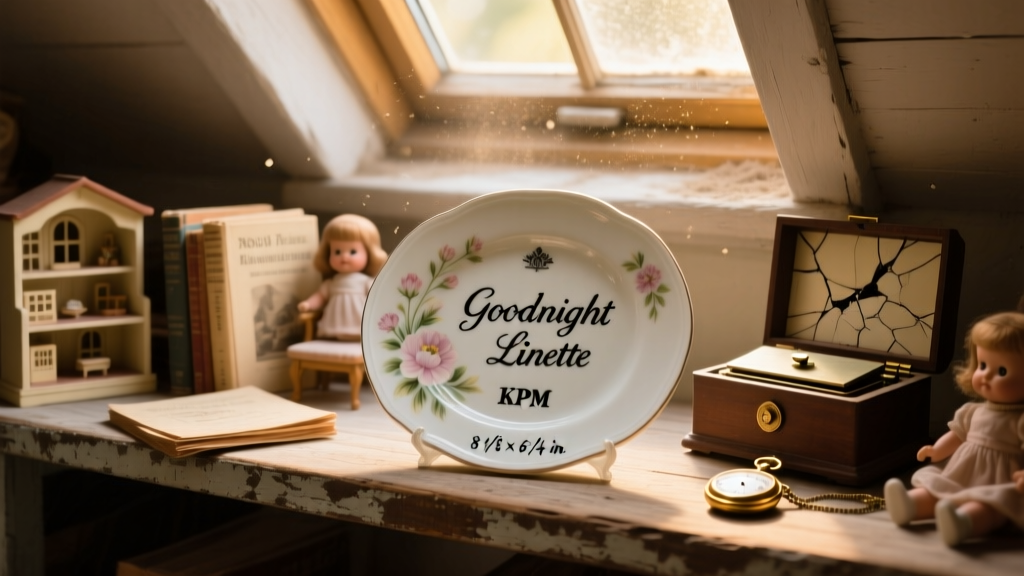
KPM Plaque 'Goodnight Linette' No. 314: A Mid-Century German Porcelain Masterpiece