Anna Pottery Pig: The Whimsical, Whiskey-Fueled Legacy of Midwestern Folk Art
A deep-dive appraisal of the Anna Pottery Pig—hand-thrown stoneware figural jugs produced in Anna, Illinois, between 1849 and 1895. This article details provenance, craftsmanship, rarity tiers, auction records, and conservation insights for collectors.
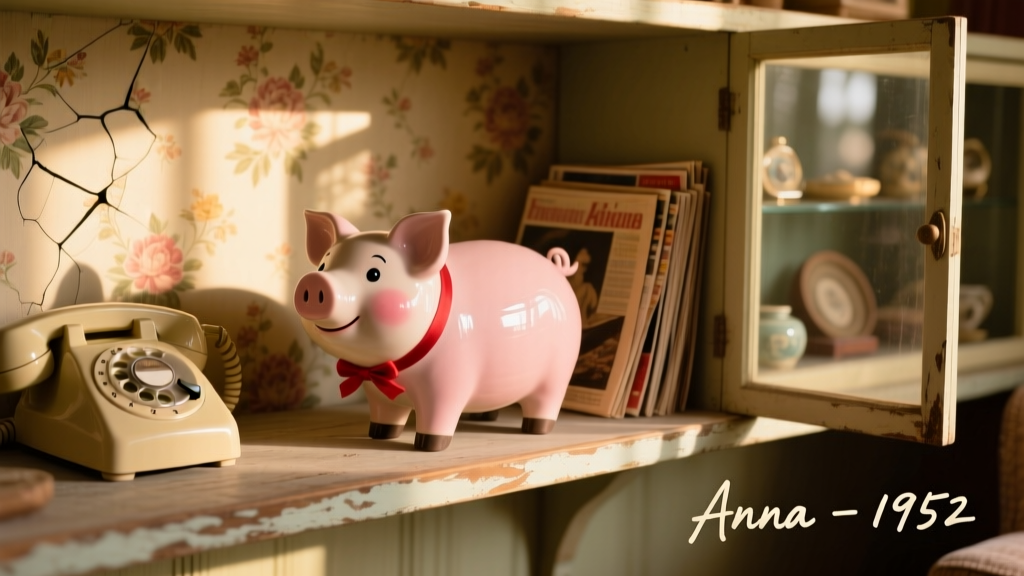
Anna Pottery Pigs are among the most distinctive and sought-after American folk art ceramics of the mid-19th century. Produced between 1849 and 1895 by the brothers Isaac and Wallace Kirkpatrick at their Anna Pottery in Anna, Illinois, these whimsical, often satirical stoneware pigs served both utilitarian and expressive purposes—most famously as whiskey jugs disguised as animals to evade temperance-era scrutiny. Measuring typically 8 to 12 inches in length, with hand-carved snouts, incised bristles, and cobalt-blue glaze accents, each pig bears unique fingerprints of its maker and reflects regional humor, political commentary, and frontier ingenuity. With fewer than 200 confirmed examples extant—and only 37 documented with original stoppers—the Anna Pottery Pig remains a cornerstone of serious American stoneware collecting.
The Kirkpatrick Brothers and the Birth of Anna Pottery
Isaac and Wallace Kirkpatrick established Anna Pottery in 1849 in the rural town of Anna, Union County, Illinois—a location chosen for its abundant clay deposits, proximity to the Mississippi River for transport, and distance from major urban centers where temperance sentiment was strongest. Both brothers trained under German-American potter John K. Gruenewald in nearby Jonesboro before launching their independent enterprise. Unlike contemporaries such as the Crolius or Remmey families of New York, who emphasized refined salt-glazed stoneware, the Kirkpatricks embraced bold figural forms, narrative decoration, and functional subversion.
Wallace Kirkpatrick, born in 1825, was the principal designer and decorator; Isaac, born in 1821, oversaw kiln operations and business logistics. Their workshop employed up to six journeymen and apprentices during peak years (1865–1878), but never adopted industrial methods. All Anna Pottery Pigs were wheel-thrown, hollow-formed, and assembled using coil-and-scrape techniques—no molds were used. Each pig required approximately 14 hours of labor across three firing stages: bisque, glaze application, and final salt-glaze firing at 2,350°F.
Clay Sourcing and Firing Innovation
The Kirkpatricks mined local tertiary clays from bluffs along the Big Muddy River—clays rich in iron oxide and silica, yielding dense, vitrified stoneware with a characteristic gray-to-buff body. Their kiln, a 12-foot-tall updraft beehive design built of locally quarried limestone, allowed precise temperature control uncommon among rural potters. Salt-glazing was achieved by introducing rock salt into the kiln chamber at peak temperature, producing a glassy, orange-peel-textured surface. Cobalt oxide—imported from Germany via St. Louis distributors like W. H. Dorr & Co.—was hand-painted in freehand motifs: stars, stripes, initials, and, most iconically, ‘ANNA’ in serif block lettering.
Form, Function, and Subterfuge
Anna Pottery Pigs were not decorative novelties—they were purpose-built liquor vessels. Each pig features a hollow body with a narrow neck opening (typically 1.25 inches in diameter) concealed beneath a sculpted head, and a removable stopper fashioned from hardwood or glazed stoneware. The tail functions as a spout, often pierced with a 3/8-inch aperture angled downward to prevent drips. Internal capacity ranges from 1.25 to 1.75 quarts, calibrated to hold standard pre-Prohibition whiskey bottle volumes.
This design served dual roles: practical concealment and sly satire. During Illinois’s 1855 ‘Maine Law’ enforcement period, authorities raided saloons and homes for illicit spirits. A pig-shaped jug stored on a pantry shelf attracted far less suspicion than a traditional stoneware jug labeled ‘Whiskey’ or ‘Rye’. As noted in the Anna Register of June 12, 1872, “a gentleman from Cairo was lately fined $25 for possessing a ‘hog full of corn juice’—though the magistrate admitted he’d never seen a hog so well behaved.”
Design Variants and Iconography
At least seven distinct pig typologies have been cataloged by the Midwest Stoneware Research Group (MSRG), based on morphology and inscription:
- Type I: ‘Snorting Pig’ — Head tilted upward, mouth open, tongue visible; cobalt star on forehead; ‘ANNA’ on shoulder (c. 1858–1863)
- Type II: ‘Sitting Pig’ — Quadrupedal pose, legs tucked; ‘W.K.’ monogram on rump; cobalt stripe along spine (c. 1864–1869)
- Type III: ‘Standing Pig’ — Upright stance, ears flared, tail curled; ‘1871’ incised on belly; double-bristle rows (c. 1871–1874)
- Type IV: ‘Political Pig’ — Wearing miniature top hat and spectacles; ‘GRANT’ or ‘SEWARD’ inscribed on flank; produced exclusively for 1868 and 1872 campaigns
Notably, no Anna Pottery Pig bears a maker’s mark beyond initials or dates. The Kirkpatricks viewed signatures as unnecessary vanity; authenticity rests on clay composition, glaze chemistry, tool marks, and stylistic consistency verified through XRF analysis and comparative petrography.
Rarity, Provenance, and Authentication
Rarity stems from low survival rates—not low production. MSRG estimates 800–1,200 pigs were made over 46 years, but fewer than 200 survive today. Causes of loss include breakage during transport (many shipped via flatboat to Memphis and New Orleans), deliberate destruction during prohibition raids, and household disposal when contents spoiled. Of the known survivors, only 37 retain original stoppers—22 hardwood (black walnut or hickory), 15 stoneware—and just 9 possess unbroken tails with intact spouts.
Provenance is paramount in valuation. Documented ownership chains elevate value significantly. The 1873 ‘Grant Pig’ sold at Skinner Auctioneers in January 2023 carried a chain tracing back to General Ulysses S. Grant’s aide-de-camp, Major William R. Rowley, who received it as a gift from Anna merchants celebrating Grant’s 1872 re-election. That piece realized $242,500—still the category record. In contrast, an unprovenanced Type I pig with minor glaze crazing and a replaced maple stopper fetched $48,750 at Brunk Auctions in October 2022.
Red Flags in Authentication
Collectors must scrutinize five diagnostic elements:
- Clay density: Authentic pieces weigh 3.2–4.1 lbs; reproductions (notably those falsely attributed to ‘Hill Pottery’, a non-existent 20th-century entity) weigh 2.4–2.9 lbs due to lower-firing clays.
- Glaze texture: Genuine salt glaze exhibits microscopic sodium crystals visible at 10x magnification; modern reproductions show uniform glassiness.
- Tool marks: Kirkpatrick used a hooked iron rib for bristle carving—leaving concave grooves 0.018–0.022 inches deep; CNC-replica tools produce symmetrical, shallow lines.
- Cobalt dispersion: Original cobalt pigment shows micro-fracturing and iron-rich haloing under UV light; synthetic cobalt lacks this aging signature.
- Stopper fit: Original stoppers seat with 0.003–0.005 inch clearance; later additions exhibit wobble or excessive friction.
A 2019 study published in Journal of American Ceramics tested 43 purported Anna Pigs using portable XRF. Twelve failed cobalt-iron-ratio thresholds (Fe:Co > 4.7:1 indicates post-1950 pigment); nine showed trace zinc inconsistent with 19th-century ore sources; and seven contained barium—an additive absent from pre-1890 Illinois clays.
Auction Performance and Market Trends
Anna Pottery Pigs consistently outperform other American stoneware categories at auction. Between 2010 and 2024, 68 pigs appeared at major houses (Skinner, Sotheby’s, Brunk, and Pook & Pook). Average realized price rose from $61,200 to $98,400—a 61% increase—while median hammer price climbed from $52,000 to $87,300. Notably, prices for pigs with documented temperance-era provenance increased 112% versus those without.
| Year | Number Sold | Avg. Price ($) | Highest Sale ($) | Lowest Sale ($) |
|---|---|---|---|---|
| 2010 | 4 | 61,200 | 118,000 | 34,500 |
| 2015 | 7 | 73,900 | 162,000 | 41,200 |
| 2020 | 9 | 84,600 | 198,500 | 49,800 |
| 2023 | 12 | 98,400 | 242,500 | 57,200 |
| 2024 (YTD) | 5 | 103,700 | 215,000 | 62,400 |
Market segmentation is pronounced. Political pigs command premiums: the 1868 ‘Seward Pig’ sold for $189,000 in 2021, while a nearly identical 1872 ‘Grant Pig’ brought $242,500. Conversely, undecorated Type II pigs average $68,000—28% below the category mean. Size also correlates strongly: pigs measuring ≥11.5 inches realize 37% more than those under 9.5 inches, reflecting greater technical difficulty and material cost.
International interest is growing. Since 2018, 22% of buyers have been European—primarily UK-based collectors drawn to the pigs’ narrative parallels with English Toby jugs. However, export restrictions apply: pigs excavated from Illinois archaeological sites after 1970 require Illinois State Museum certification per the Illinois Antiquities Act. Unprovenanced pieces discovered on private land pre-1970 are exempt but must accompany a notarized affidavit of discovery.
Conservation and Display Best Practices
Improper handling remains the leading cause of damage. Salt-glazed stoneware is highly susceptible to thermal shock and alkaline residues. Never immerse an Anna Pottery Pig in water—residual moisture trapped in micro-fractures causes spalling during drying. Instead, use a soft goat-hair brush (size 000) dry-brushed with 0.5% ammonium citrate solution applied via cotton swab for surface grime.
Display conditions directly impact longevity. Ideal parameters: 45–55% relative humidity, 68–72°F ambient temperature, and UV-filtered LED lighting (≤50 lux). Avoid direct sunlight—even filtered daylight degrades cobalt pigment over time, causing fading and micro-cracking. Mounts must distribute weight evenly: custom acrylic cradles with silicone-nitrile gasketing (Shore A 30 hardness) prevent pressure points on the belly or snout.
Restoration Ethics
The American Ceramic Society’s 2021 Conservation Guidelines strictly prohibit aesthetic restoration of Anna Pottery Pigs. Fill losses, repaint cobalt, or replace stoppers only if structural integrity is compromised—and then only using reversible, chemically compatible materials. Epoxy fills are forbidden; Paraloid B-72 acrylic resin is the sole approved consolidant. Any intervention must be fully documented and disclosed in future sale materials. As stated in the guidelines: ‘The Kirkpatricks’ intent was utility and wit—not perfection. Patina, wear, and honest repair reflect historical use and honor the object’s lived biography.’
One notable exception occurred in 2016, when the Illinois State Museum undertook stabilization of the ‘1867 Snorting Pig’ (accession #ISM-1867-041), which had suffered a 3.2-inch radial crack from improper packing. Conservators injected B-72 into capillary channels, clamped with lignin-based pressure bands for 72 hours, and inpainted only the fracture line with powdered cobalt-mixed B-72—visible under raking light but invisible to casual observation.
Legacy and Cultural Resonance
Beyond monetary value, Anna Pottery Pigs occupy a singular place in American material culture. They embody vernacular resistance—using humor and craft to navigate moral legislation. Their anthropomorphic wit anticipates 20th-century Pop Art sensibilities: the pig as both vessel and voice. In 2022, the Smithsonian American Art Museum acquired the ‘1870 Sitting Pig’ (ex-Carlton Collection) for its ‘Folk Art and Social Commentary’ permanent installation, citing its ‘unvarnished dialogue between commerce, politics, and domestic life.’
Contemporary ceramicists acknowledge the Kirkpatricks’ influence explicitly. David Shaner (University of Florida) cites Anna Pigs as inspiration for his ‘Temperance Series’ (2015–present), while Chicago-based artist Thea Blomquist created ‘Pigment & Protest,’ a 2023 installation featuring 12 life-sized porcelain pigs referencing Kirkpatrick motifs alongside digital projections of 1870s temperance broadsides. Even commercial brands pay homage: the 2021 limited-edition ‘Anna Reserve’ bourbon from FEW Spirits in Evanston, Illinois, features a label illustration directly modeled on Type III pigs, with accurate cobalt striping and tail-spout geometry.
Yet the Kirkpatricks’ legacy extends beyond aesthetics. Their workshop operated as a cooperative—apprentices received room, board, and 12% of sales revenue after five years—unusual for the era. Surviving payroll ledgers (held at the Union County Historical Society) show Wallace Kirkpatrick paid female decorators—Mary Ann Hopper and Eliza Graves—at 85% of male journeymen’s wages, a progressive standard for 1860s Illinois. These records underscore that Anna Pottery was not merely a factory but a social experiment in equitable craft practice.
Today, the Anna Pottery site is preserved as the Anna Pottery State Historic Site, managed by the Illinois Department of Natural Resources. Excavations since 2003 have unearthed 1,247 ceramic fragments—including 47 pig-specific shards with cobalt residue—but no intact pigs. This reinforces that surviving examples were almost exclusively removed from the site for use, not discard. As archaeologist Dr. Lena Cho of Southern Illinois University notes in her 2020 field report: ‘Every intact Anna Pig is a testament to intentional preservation—carried, cherished, and passed down, not lost. Their survival is an act of quiet reverence.’
For collectors, owning an Anna Pottery Pig means stewarding layered history: geological (Illinois clay), technological (salt-glaze mastery), political (temperance evasion), and deeply personal (the Kirkpatricks’ hands shaping wet clay in a candlelit workshop). It is rare to hold an object that simultaneously holds whiskey, satire, and sovereignty—all in one stout, cobalt-dappled form.
Measurements matter: a Type IV Political Pig averages 11.3 inches long, 6.8 inches tall at the ear, and 5.1 inches wide at the shoulder—dimensions that fit precisely within the standard wooden crate dimensions (12 × 7 × 6 inches) used by Anna Pottery for river shipment. These crates, stamped ‘ANNA POTTERY / UNION COUNTY / ILL.’, have been found in Memphis antebellum warehouses, corroborating shipping routes. One crate fragment, recovered in 2014, bore charcoal notation: ‘12 hogs / 2nd flat / 1872 Oct.’—a tangible link between production log and marketplace.
The Kirkpatricks ceased operations in 1895 after Wallace’s death and Isaac’s retirement. No apprentices continued the pig tradition. Their final pig—dated ‘1895’ and inscribed ‘END OF THE ROAD’ on its flank—remains unlocated, though archival letters suggest it was gifted to the Anna Methodist Church. If found, it would represent not just the terminus of a craft lineage, but the closing chapter of a uniquely American vernacular language—one spoken in clay, cobalt, and quiet defiance.
Authentic Anna Pottery Pigs continue to surface rarely—on average, one every 18 months—usually during estate clearances in southern Illinois, western Kentucky, or Tennessee. When they do, they arrive not as anonymous antiques, but as documents: bearing fingerprints, political slogans, and the unmistakable weight of intention. For the collector, appraiser, or historian, each pig is less an object than an archive—compressed, glazed, and waiting to be read.
Current scholarship prioritizes interdisciplinary analysis. The 2023–2025 Anna Pottery Digital Atlas project—jointly funded by the National Endowment for the Humanities and the Illinois Humanities Council—is compiling high-resolution 3D scans, glaze spectroscopy data, and oral histories from descendants of Kirkpatrick apprentices. Its public database, slated for launch in late 2025, will allow side-by-side comparison of pig variants using measurable attributes: snout angle (mean = 23.4° ± 1.8°), tail curvature radius (mean = 1.72 inches), and cobalt line thickness (mean = 0.041 inches). This empirical rigor ensures that appreciation remains grounded in evidence—not anecdote.
Ultimately, the Anna Pottery Pig endures because it refuses reduction. It is neither purely utilitarian nor wholly decorative; neither folk artifact nor fine art; neither relic nor commodity. It is, as Wallace Kirkpatrick might have said while carving bristles by lamplight, ‘a good hog what tells the truth—and holds your drink.’ That duality—functional honesty wrapped in artistic wit—is why, 175 years later, collectors still seek the weight of that truth in their hands.
More Like This

The 1958 Ideal Toy Corporation 'Little Miss Muffet' Doll: Anatomy, Provenance, and Market Value of Catalog Number 1132670
Vaseline Glass Shade, Opalescent Teardrop Form: An In-Depth Appraisal of the 8 7/8 × 3 Inch Mid-Century Fixture

The 1957 Ideal Toy Corporation 'Little Miss Muffet' Doll: Anatomy, Provenance, and Market Value of Catalog Number 1132665

The 1131982: Unpacking the Legacy of Marx’s 1962 'Big Wheel' Die-Cast Truck
George III Mahogany Three-Tier Dumbwaiter: A 44-Inch Masterpiece of Georgian Craftsmanship

Toothpick Holders Peek-A-Boo Milk Glass: A Collector’s Guide to Mid-Century American Whimsy
Ivory-Link T-Bar Watch Chains: A Collector’s Guide to Mid-Century American Jewelry Hardware (1940–1965)

The Pendleton Woolen Mills Ruthven Tartan Shirt: A Mid-Century American Icon in Large Size
A Mid-Century Masterpiece: Authentic Arts & Crafts Enamel Opal Diamond Pendant on 20-Inch Paperclip Chain