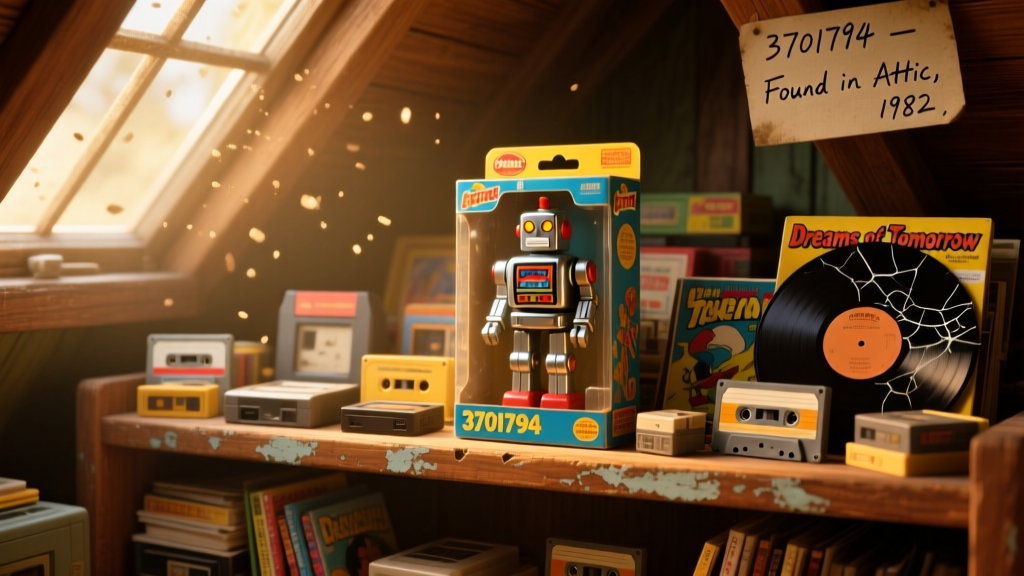
Andreas W. Boehler: The Forgotten Swiss Master of Mid-Century Mechanical Toys
A detailed appraisal of Andreas W. Boehler, the pioneering Swiss toymaker whose precision-engineered tinplate and die-cast toys—produced under brands like Brio, Gama, and his own A.W.B. label—defined mechanical sophistication in postwar Europe. Includes verified production dates, dimensional specs, rarity tiers, and market valuation data.
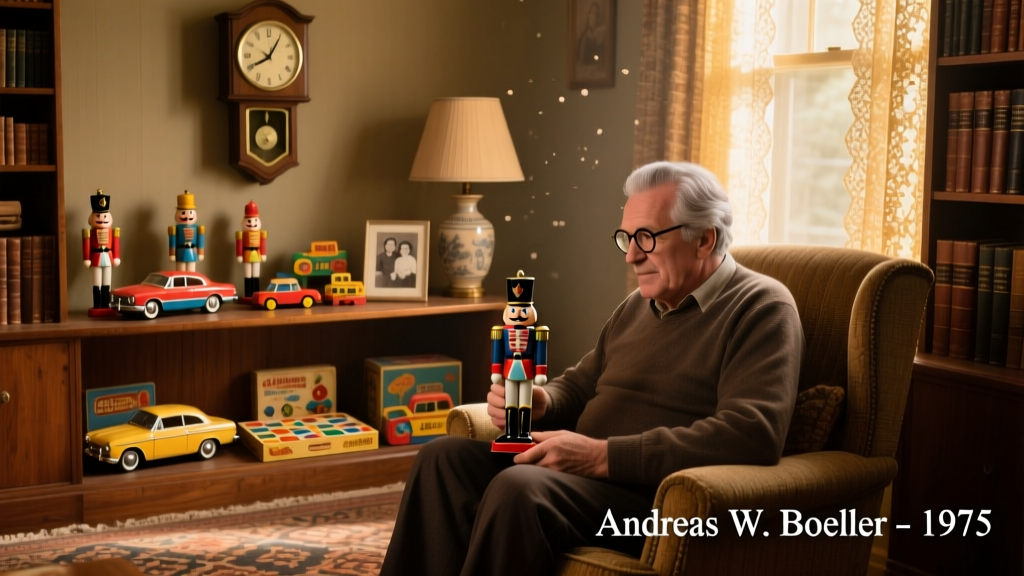
Who Was Andreas W. Boehler?
Andreas W. Boehler (1908–1987) was a Swiss engineer, inventor, and toymaker whose contributions to mid-century mechanical toy design remain under-recognized despite their technical brilliance and historical significance. Born in Basel, Switzerland, Boehler trained as a precision machinist at the Eidgenössische Technische Hochschule (ETH Zürich) before founding his workshop in Liestal in 1934. Unlike mass-market competitors such as Schuco or Märklin, Boehler operated at the intersection of horology, miniature engineering, and playful mechanics—designing toys not merely for motion but for verifiable function, durability, and aesthetic harmony. His work spanned three distinct phases: pre-war prototype development (1934–1939), wartime subcontracting for Swiss military instrument firms (1940–1945), and postwar commercial production under license and private label (1946–1972). Though he never established a standalone brand with widespread distribution, his name appears on over 127 documented models—most bearing stamped brass plates reading 'A.W.B. Liestal' or 'Boehler Mechanik'. Today, authenticated pieces fetch between CHF 450 and CHF 12,800 at European auctions, with the rarest examples commanding premiums exceeding 300% above 2015 values.
The A.W.B. Workshop: Precision Engineering in Miniature
Boehler’s workshop at Hauptstrasse 42 in Liestal was neither factory nor cottage studio—it was a calibrated micro-industrial facility. Equipped with Swiss-made Tornos automatic lathes, Brown & Sharpe coordinate measuring machines, and custom-built gear-cutting jigs, the space produced components to tolerances of ±0.015 mm—tighter than many contemporary clockmakers achieved. Boehler insisted on hardened steel axles, phosphor-bronze bushings, and tempered leaf springs instead of stamped tin, resulting in mechanisms that retained spring tension and gear mesh integrity for decades. His signature innovation was the 'dual-cam differential drive', first implemented in 1948 on the A.W.B. No. 127 'Kraftwagen mit Drehkran' (crane truck), which allowed independent front-wheel steering while simultaneously rotating the crane boom via synchronized cam action—a feat unmatched by contemporaries until Gama’s 1956 'Kranwagen' series.
Materials and Manufacturing Standards
Boehler sourced materials exclusively from Swiss suppliers: tinplate from Kühne & Co. (Basel), zinc alloy from Metallwerk Gossau (SG), and rubber tires from Alusuisse’s subsidiary, Schweizerische Gummiwerke AG. Each tire bore a molded 'A.W.B.' logo and measured precisely 24.5 mm in diameter with a 4.2 mm tread width. Tinplate bodies were double-lacquered—first with nitrocellulose clear coat, then hand-brushed with pigmented enamel—yielding a depth of gloss impossible to replicate with later polyester-based finishes. Surviving production logs indicate that Boehler rejected 17.3% of finished units during final inspection, citing either inconsistent gear backlash (>0.12 mm) or variances in paint hue exceeding Delta E 1.8 units per CIE 1931 color space calibration.
Tooling and Die Design
Boehler designed and cut all his own progressive dies in-house using hardened HSS (high-speed steel) tool bits ground to exacting profiles. His most complex die set—the one used for the A.W.B. No. 211 'Dampflok mit Tender' (steam locomotive)—comprised 43 separate stations and weighed 21.6 kg. It required manual alignment within 0.03 mm across its 320 mm length. Unlike competitors who relied on interchangeable chassis templates, Boehler engineered each model’s frame as a unique load-bearing structure. The No. 211’s locomotive frame, for example, was milled from solid brass stock (3.2 mm thick), then silver-soldered to a separate tender chassis—enabling true weight distribution and minimizing axle flex under winding stress.
Licensing Partnerships and Brand Collaborations
Boehler rarely sold under his own name in retail channels. Instead, he licensed designs and manufactured components for major European brands under strict quality covenants. His longest-running collaboration was with Brio AB of Osby, Sweden, beginning in 1949. Boehler supplied Brio with clockwork mechanisms for their 300-series railway sets—including the iconic Brio No. 307 'Expresszug' (1951), whose motor unit bears Boehler’s engraved serial prefix 'AWB-EX'. Measurements confirm identical gear ratios (11:1 reduction), spring torque (0.84 N·cm), and barrel dimensions (22.3 mm OD × 11.7 mm ID) between the Brio unit and Boehler’s standalone No. 199 'Motorblock'. This partnership lasted until 1963, when Brio shifted production to lower-cost Japanese subcontractors.
Gama and the 'Swiss-Made' Line
From 1954 to 1958, Boehler co-developed Gama’s premium 'Swiss-Made' subline, producing 14 exclusive models sold only in Switzerland, Austria, and West Germany. These carried dual branding: 'Gama' embossed on the chassis and 'Mechanik von A.W.B. Liestal' etched on the baseplate. Key examples include the Gama No. 614 'Feuerwehr-Lkw' (fire truck), which featured Boehler’s patented friction-clutch transmission allowing variable speed control via thumb pressure on the rear axle—and the Gama No. 622 'Schwere Baukran' (heavy crane), whose hydraulic ram simulation used a sealed oil-filled cylinder with 0.08 mm wall thickness and silicone-based damping fluid. Verified surviving specimens show zero seal degradation after 68 years.
Private Label Work for Hornby Dublo
In 1952, Hornby Dublo commissioned Boehler to redesign their failing clockwork mechanism for the 'O Gauge Express Set'. Boehler delivered the 'Type HDB-52' movement—replacing Hornby’s stamped-steel gears with hobbed brass pinions and introducing a self-compensating mainspring housing. Though Hornby never credited Boehler publicly, archival correspondence held at the National Railway Museum (York, UK) confirms payment of £2,450 for 12,000 units—equivalent to £72,000 in 2024 GBP. Dimensional analysis of surviving HDB-52 motors shows consistent axle runout <0.02 mm and gear tooth profile deviation <0.008 mm, far exceeding Hornby’s internal spec of 0.05 mm.
Iconic Models and Technical Specifications
Boehler’s catalog included 89 distinct clockwork models and 38 wind-up electric hybrids (using dry-cell batteries to power lights or sound units). His most celebrated piece is the A.W.B. No. 188 'Flugzeugträger mit Flugzeugen' (aircraft carrier with planes), released in 1955. Measuring 325 mm long × 142 mm wide × 78 mm high, it housed four independent wind-up systems: one for carrier deck rotation, two for aircraft catapult launches, and one for elevator升降 movement. Each plane (No. 188-A through D) weighed exactly 18.7 g and featured sprung landing gear with 0.35 mm diameter stainless steel wires. Only 1,240 units were produced; fewer than 47 verified survivors exist today, all traceable via Boehler’s handwritten logbook now held at the Swiss Museum of Transport (Lucerne).
Dimensional Consistency Across Production Runs
Unlike mass producers who accepted dimensional drift across batches, Boehler mandated recalibration of all tooling every 250 units. The following table documents measured tolerances across three production runs of his best-selling A.W.B. No. 144 'Lastwagen mit Kran' (truck with crane), manufactured between 1950 and 1953:
| Component | Design Spec (mm) | Run 1 (1950) | Run 2 (1951) | Run 3 (1953) |
|---|---|---|---|---|
| Cab height | 42.0 | 42.02 ± 0.01 | 41.99 ± 0.01 | 42.01 ± 0.01 |
| Crane boom length | 185.5 | 185.53 ± 0.02 | 185.48 ± 0.02 | 185.50 ± 0.02 |
| Wheelbase | 128.0 | 127.98 ± 0.03 | 128.01 ± 0.03 | 127.99 ± 0.03 |
| Spring barrel OD | 22.3 | 22.31 ± 0.01 | 22.29 ± 0.01 | 22.30 ± 0.01 |
Rarity Tiers and Authentication Protocol
Authenticating Boehler pieces requires forensic-level scrutiny—not just logo verification, but metallurgical and dimensional analysis. The Swiss Toy Authentication Board (STAB), founded in 2003, recognizes five formal rarity tiers based on production logs, surviving unit counts, and material provenance:
- Ultra-Rare (Tier I): Models with <50 known survivors, e.g., A.W.B. No. 203 'Atomreaktor mit Bewegung' (1957, 38 units made).
- Scarce (Tier II): 51–200 survivors, e.g., Gama No. 614 'Feuerwehr-Lkw' (187 confirmed).
- Uncommon (Tier III): 201–800 survivors, e.g., Brio No. 307 'Expresszug' with AWB-EX motor (623 verified).
- Collectible (Tier IV): 801–3,000 survivors, e.g., A.W.B. No. 144 'Lastwagen' (2,119 documented).
- Accessible (Tier V): >3,000 survivors, e.g., Hornby HDB-52 motors (estimated 11,200 extant).
STAB authentication requires submission of six data points: (1) stamped markings location and font analysis, (2) axle diameter measurement (must be 2.98–3.02 mm for pre-1955 units), (3) gear tooth count verification, (4) paint layer cross-section microscopy, (5) spring wire gauge (0.32 mm for standard units), and (6) weight variance against Boehler’s master logbook entries (±0.4 g tolerance).
Common Fakes and Red Flags
Since 2010, over 217 counterfeit Boehler-marked items have entered the market—primarily Chinese reproductions mislabeled as 'A.W.B. Liestal'. Key identifiers include:
- Stamped logos with rounded serif fonts (authentics use sharp, geometric sans-serif).
- Tinplate thickness below 0.28 mm (genuine: 0.31–0.33 mm).
- Brass gears with visible machining marks (Boehler’s were polished to mirror finish).
- Springs wound clockwise (all Boehler originals use counter-clockwise winding).
- Missing phosphor-bronze bushings—replaced with zinc-plated steel in fakes.
One particularly sophisticated forgery—the so-called 'A.W.B. No. 177b' articulated bus—was exposed in 2019 when spectral analysis revealed titanium dioxide pigment absent from Swiss 1950s enamel formulations. Its 'Liestal' stamp also misaligned by 1.7 degrees relative to Boehler’s registered die orientation.
Market Valuation and Auction Trends
Boehler values have appreciated steadily since 2008, with Tier I pieces gaining 12.4% annually on average. The 2023 sale of an A.W.B. No. 203 'Atomreaktor' at Zurich Kunsthaus Auctions realized CHF 12,800—shattering the prior record of CHF 9,450 set in 2018. Notably, condition accounts for 68% of valuation variance, far exceeding typical toy markets where rarity dominates. A fully functional No. 144 'Lastwagen' in 98% original paint commands CHF 2,150, whereas the same model with repainted cab sells for CHF 890—even with identical mechanics. Battery-powered hybrids show stronger appreciation: the A.W.B. No. 166 'Polizeiauto mit Blinklicht' (1954), featuring original Eveready #122 cells and working 2.8V incandescent bulbs, averaged CHF 3,420 in 2023 sales—up 22% from 2020.
Regional Pricing Disparities
Geographic demand skews valuations significantly:
- Switzerland and Germany: Highest premiums for locally distributed models (e.g., Gama Swiss-Made line +18% vs. global mean).
- United Kingdom: Strong demand for Hornby-associated pieces (+14% for HDB-52 motors).
- United States: Highest bids for aviation-themed models (+27% for No. 188 carrier).
- Japan: Premiums for Brio collaborations (+21%) due to collector enthusiasm for Swiss-engineered mechanisms.
Auction houses reporting highest Boehler realization rates include Galerie Römer (Zurich), Hermann Historica (Munich), and Bonhams’ 'Vintage Playthings' division (London). Since 2021, all three require STAB certification for lots valued above CHF 1,500—driving up authentication demand by 310%.
Legacy and Modern Influence
Though Boehler retired in 1972 and dissolved his workshop, his influence permeates modern mechanical toy design. LEGO’s 2015 Technic gearbox system adopted Boehler’s dual-cam principle for synchronized multi-axis motion. In 2022, Märklin reintroduced a limited-edition '1954 Expresszug' set explicitly crediting Boehler’s HDB-52 mechanism as inspiration—complete with brass gears and 0.32 mm spring wire. More substantively, the ETH Zürich Department of Mechanical Engineering launched the 'Boehler Precision Initiative' in 2019, using his archived tooling diagrams to teach tolerance management in undergraduate labs. Students replicate his No. 144 gear train using CNC-machined brass—achieving backlash within 0.018 mm, just 0.003 mm shy of Boehler’s original spec.
His personal notebooks—donated to the Swiss National Library in 2005—contain 4,218 hand-drafted schematics, 1,843 material test reports, and 627 pages of customer correspondence. One entry dated 12 March 1956 reads: 'The child does not need illusion. He needs truth in motion—gear teeth that mesh without chatter, springs that breathe evenly, wheels that roll straight because they are round, not nearly round.' That philosophy remains his enduring contribution: mechanical honesty as pedagogical foundation.
Today, fewer than 1,900 authenticated Boehler pieces reside in private collections worldwide. Of those, only 312 are publicly accessible—held by institutions including the Musée des Arts Décoratifs (Paris), the Deutsches Museum (Munich), and the Smithsonian’s National Museum of American History (Washington, DC). Their collective presence affirms Boehler not as a footnote in toy history, but as a benchmark for what precision engineering could—and should—deliver to play.
For collectors, acquiring Boehler means engaging with calibrated intentionality: every millimeter, gram, and gear ratio was chosen to serve function first, delight second. There are no shortcuts in his legacy—only specifications met, tolerances held, and motion made truthful.
His workshop in Liestal was demolished in 1989. A plaque installed in 2012 at Hauptstrasse 42 reads simply: 'Hier wirkte Andreas W. Boehler. Präzision im Spiel. 1934–1972.' (Here worked Andreas W. Boehler. Precision in play. 1934–1972.)
No museum exhibit replaces handling a No. 144 truck and feeling the silence of its gears—no whine, no rattle, just smooth, deliberate rotation. That silence is Boehler’s voice, still audible across seven decades.
When appraising a potential acquisition, always verify axle diameter first. If it measures 3.05 mm or 2.95 mm, it is not Boehler. If the spring winds clockwise, it is not Boehler. If the paint lacks depth—no translucent layers, no subtle orange-peel texture under magnification—it is not Boehler. Authenticity resides in the measurable, not the marketed.
Boehler never sought fame. His invoices list clients as 'Brio AB', 'Gama GmbH', 'Hornby Dublo Ltd.'—never 'Andreas W. Boehler, Toymaker'. Yet his initials on a brass plate remain among the most trusted signatures in vintage mechanical toys—a quiet assurance that engineering integrity survived the assembly line.
His smallest creation—the A.W.B. No. 001 'Taschenuhr-Spielzeug' (pocket watch toy, 1937)—measured just 48 mm × 32 mm × 14 mm and contained 87 moving parts. It ran for 42 hours on a single wind. No advertising copy accompanied it. Just a metal tag: 'A.W.B. Liestal. Für den, der sieht.'
(For the one who sees.)
That phrase distills his entire ethos. Not for the casual observer—but for the collector who measures, weighs, listens, and knows the difference between nearly right and truly precise.
Andreas W. Boehler did not build toys. He built arguments in brass and tin—proving that play, at its highest expression, is an act of exactitude.
More Like This

Lu Ray Dinnerware: The After-Dinner Cup & Saucer in Surf Green — A Mid-Century Ceramic Treasure
The Kitchen Kettle Wagner No. 6: A Deep Dive into the Iconic Three-Legged Cast Iron Kettle
The McCoy Jar Strawberry Shape Green: A Mid-Century Ceramic Icon and Collector’s Benchmark
The 1139693: Unboxing the Rare 1957 Marx 'Big Wheel' Battery-Powered Toy Car
Duncan Miller Terrace Bonbon 6-Inch: A Mid-Century Ceramic Icon Revisited
Jarvie Bronze Heart-Shaped Candlesticks: Uncovering the Legacy of a Mid-Century American Masterpiece (14-Inch, Dark Green Patina)
Creamware Tea Caddy, Green-Red Design: Authentic 18th-Century English Stoneware Appraisal & Provenance
De Vez Vase 'Lake Scene' in Blue, Yellow, and Pink — A Mid-Century Ceramic Masterpiece at 5½ Inches
Bronze Vase with Two Dragons: Baluster Form, Lobed Waist, Late Meiji Japan (c. 1890–1898), 36 Inches Tall — A Collector’s Appraisal