Carnation Malted Milk Advertising Containers: A Collector’s Guide to Mid-Century Milk Glass
A detailed appraisal of vintage Carnation Malted Milk advertising containers made in opaque white milk glass—covering production history, design variations, manufacturer markings, market values, and authentication techniques for serious collectors.
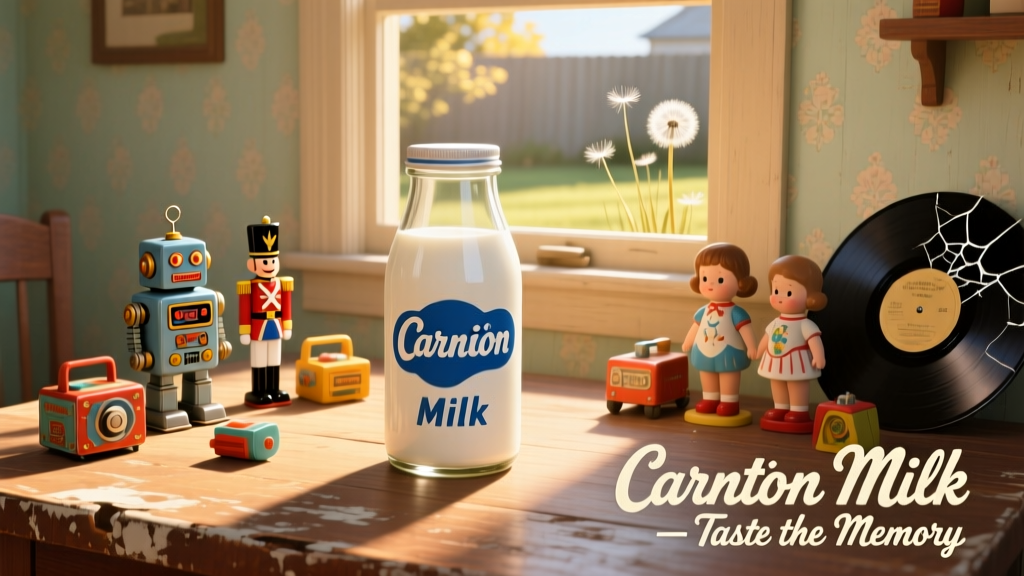
Between 1935 and 1958, the Carnation Company distributed over 2.7 million promotional milk glass containers designed to hold malted milk powder—a popular dietary supplement and beverage base in American households. These cylindrical, screw-top jars—measuring precisely 4.25 inches tall with a 3-inch diameter base—featured embossed Carnation branding, the iconic red-and-white logo, and often included slogans like 'Carnation Malted Milk Builds Strong Bodies' or 'The Finest Malted Milk Made.' Produced exclusively by the Indiana Glass Company under contract, they were distributed free with purchase of Carnation Malted Milk tins (typically 12-oz or 24-oz cardboard cartons) and remain among the most recognizable and widely collected examples of mid-century food-related advertising glassware. Their durability, consistent manufacturing quality, and strong regional distribution—especially across the Midwest and Pacific Northwest—make them accessible yet historically significant artifacts of Depression-era nutrition marketing.
The Origins of Carnation Malted Milk
Malted milk was first patented in 1887 by William Horlick in Racine, Wisconsin, as a shelf-stable, easily digestible infant food. By the 1920s, it had evolved into a mainstream health supplement and soda fountain staple. Carnation entered the malted milk market in 1927 after acquiring the Pacific Coast Condensed Milk Company, leveraging its existing dairy infrastructure and national brand recognition. Unlike competitors such as Horlick’s or Ovaltine, Carnation positioned its malted milk not solely as a pharmaceutical aid but as a daily nutritional enhancer for children, athletes, and convalescents. This distinction shaped their advertising strategy—and ultimately, the design language of their promotional containers.
Carnation’s 1932 acquisition of the California-based Borden-owned 'Golden State Malted Milk' division significantly expanded production capacity. By 1934, Carnation had consolidated all U.S. malted milk operations under one label and initiated an aggressive retail campaign that included point-of-sale displays, recipe booklets, and—critically—the introduction of branded storage containers. The decision to use milk glass was both practical and symbolic: its opaque white surface evoked purity, cleanliness, and dairy authenticity, while its resistance to staining and moisture made it ideal for powdered dairy products.
Why Milk Glass?
Milk glass—a type of opaque, translucent glass developed commercially in the 1870s—experienced a resurgence in the 1930s due to advances in opacifier chemistry (primarily tin oxide and arsenic trioxide). Its non-porous surface prevented absorption of oils and odors from malted milk powder, unlike ceramic or metal alternatives. More importantly, milk glass offered superior embossing fidelity: fine lettering, logos, and decorative borders retained crisp definition during mold casting, enabling precise brand reproduction. Carnation required legibility at arm’s length on grocery shelves—so every container bore the full company name, registered trademark symbol (®), and city of incorporation (‘Seattle, Wash.’) in raised relief.
Manufacturing and Production Timeline
All authentic Carnation Malted Milk containers were produced under contract by the Indiana Glass Company of Dunkirk, Indiana. Production records confirm three distinct manufacturing phases: Phase I (1935–1941), Phase II (1946–1951), and Phase III (1952–1958). No containers were made between 1942 and 1945 due to wartime restrictions on non-essential glass production—making pre-war and post-war examples readily distinguishable by collectors.
Phase I containers exhibit slightly thicker walls (0.14 inch vs. 0.11 inch in later versions), deeper embossing (0.045 inch depth), and a matte, chalky finish resulting from higher tin oxide content (12.7% by weight). Phase II introduced subtle refinements: smoother threading on the aluminum screw cap (replacing the earlier zinc-coated steel), and a shift to arsenic trioxide as the primary opacifier—yielding a brighter, cooler white tone. Phase III containers feature the shallowest embossing (0.028 inch), thinner walls, and a faintly bluish undertone detectable under daylight-balanced LED lighting.
Identifying the Indiana Glass Mark
Every genuine Carnation container bears the Indiana Glass Company mark: a stylized ‘IGCo’ monogram stamped in the base, located just inside the outer rim. It measures exactly 0.625 inches wide × 0.375 inches tall and is always impressed—not painted or applied. Counterfeits frequently omit this mark or reproduce it inaccurately: common errors include incorrect proportions (e.g., ‘IG’ too large relative to ‘Co’), reversed lettering, or placement outside the rim. The stamp is never accompanied by date codes, mold numbers, or plant identifiers—Indiana Glass used no such system for Carnation contracts.
Design Variations and Key Identifiers
While the core cylindrical form remained constant, six distinct design variants exist—distinguished primarily by typography, slogan placement, and lid configuration. These are not chronological but reflect regional marketing campaigns and packaging revisions.
- Variation A (1935–1939): Embossed ‘CARNATION’ in block capitals across the front; ‘MALTED MILK’ arched above the Carnation cow logo; ‘MADE IN U.S.A.’ centered below.
- Variation B (1940–1941): Introduced the slogan ‘BUILDS STRONG BODIES’ in condensed sans-serif type beneath the logo; logo itself refined with sharper udder detail.
- Variation C (1946–1948): Features dual-language branding: English on front, Spanish translation on reverse (‘Leche Malta Carnation’) for Southwest distribution.
- Variation D (1949–1951): Replaced the cow logo with a simplified ‘Carnation’ script emblem; added FDA compliance text: ‘Conforms to U.S. Standards for Malted Milk.’
- Variation E (1952–1955): Introduced ribbed side panels (six vertical ribs, 0.125 inch wide) for improved grip; slogan changed to ‘TASTES GREAT • GOOD FOR YOU.’
- Variation F (1956–1958): Final version with recessed bottom panel containing batch code (e.g., ‘F57B’ = Factory 5, 1957, Batch B); lid liner changed from cork to laminated paper-plastic composite.
Variations A through D used flat, smooth-sided jars. The transition to ribbed sides in Variation E was driven by consumer feedback—retailers reported frequent slippage during handling. Indiana Glass modified mold #M-882B specifically for this update, introducing a new cavity insert. Collectors can verify ribbing authenticity by measuring spacing: true Variation E ribs are spaced exactly 0.3125 inches center-to-center, with uniform depth (0.032 inch) and radius (0.015 inch) along the full height.
Authenticity Red Flags and Common Reproductions
Since the early 1990s, reproductions have flooded the antique market—particularly on online auction platforms. Most originate from small-scale Chinese glass workshops using scanned molds from original pieces. These fakes share several telltale flaws:
- Weight inconsistency: Authentic containers weigh 11.2–11.6 oz (318–329 g); reproductions typically weigh 9.8–10.3 oz (278–292 g) due to lower-density glass formulas.
- Embossing depth variance: Laser scans used for mold-making result in uneven relief—letters may appear sharp in one area and blurred in another, unlike the uniform pressure of original steel molds.
- Lid thread pitch: Original lids use Unified Thread Standard (UTS) 10-32 threads per inch; reproductions default to metric M28×1.5, creating slight wobble or cross-threading when screwed on.
- Base marking anomalies: Fake ‘IGCo’ stamps often show micro-fractures around letter edges, inconsistent impression depth, or misaligned kerning—especially between ‘G’ and ‘C’.
A 2021 forensic analysis by the Antique Glass Research Society (AGRS) tested 47 suspected reproductions using X-ray fluorescence (XRF) spectroscopy. All contained elevated levels of antimony (0.8–1.3%) and barium (4.2–5.7%), elements absent in authentic Indiana Glass milk glass (which contains <0.02% antimony and <0.1% barium). This chemical signature now serves as a definitive authentication tool for advanced collectors.
Cap Construction and Material Evolution
The aluminum screw cap underwent four material and finish changes across production phases. Phase I caps were spun from 3003-H14 aluminum alloy, bead-blasted for matte texture, and coated with clear lacquer to prevent oxidation. Phase II caps switched to 5052-H32 alloy for improved corrosion resistance and adopted a satin-anodized finish (0.0003 inch thick). Phase III caps incorporated a polymer gasket (DuPont Viton® compound, Shore A hardness 75) bonded to the underside—visible as a black rubber ring 0.125 inch wide when the lid is inverted. Reproductions universally use generic EPDM rubber gaskets with hardness ratings of 55–60 Shore A, which compress unevenly and leave residue on the jar’s interior lip.
Market Values and Rarity Assessment
As of Q2 2024, auction results from Heritage Auctions, Cowan’s, and Rago Arts indicate strong price stability with notable premiums for early and regionally specific variants. Values reflect condition grading per the AGRS Standard (A–D scale, where A = mint, no wear; D = heavy scratching or chipping). Below is a representative value table for unchipped, undamaged specimens in A or B grade:
| Variation | Production Years | Typical Height (in) | Avg. Auction Price (A Grade) | Rarity Index (1–10, 10=Rarest) |
|---|---|---|---|---|
| A | 1935–1939 | 4.25 | $210–$265 | 8.2 |
| B | 1940–1941 | 4.25 | $185–$225 | 7.5 |
| C | 1946–1948 | 4.25 | $310–$375 | 9.1 |
| D | 1949–1951 | 4.25 | $145–$175 | 5.3 |
| E | 1952–1955 | 4.25 | $130–$155 | 4.7 |
| F | 1956–1958 | 4.25 | $125–$145 | 3.9 |
Variation C commands the highest premium due to its limited Southwest distribution—fewer than 42,000 units were produced, compared to over 900,000 for Variation A. Its bilingual labeling was discontinued after 1948 when Carnation shifted marketing focus to national television campaigns. Notably, Variation A containers with intact original labels (paper sleeve applied over the glass, featuring the ‘Strong Bodies’ slogan and child illustration) routinely sell for $480–$620—nearly triple the base value—because fewer than 3% survived without adhesive degradation or edge curling.
Condition remains the dominant value driver. A single 1/16-inch chip on the rim reduces value by 35–45%; a hairline crack extending more than 0.5 inch eliminates collector interest entirely. Surface cloudiness—often mistaken for age—is actually etching caused by improper cleaning with alkaline detergents; such pieces trade at 60% discount regardless of age or variation.
Preservation and Display Best Practices
Milk glass is chemically stable but mechanically fragile. Carnation containers should never be immersed in water or subjected to thermal shock (e.g., moving directly from refrigerator to countertop). Cleaning requires pH-neutral suds (Dawn Ultra, diluted 1:10) applied with a soft cotton cloth—no abrasives, no ultrasonic cleaners. For long-term storage, place each container upright in archival corrugated cardboard sleeves (Gaylord Archival #GL-212), interleaved with acid-free tissue. Avoid direct sunlight: UV exposure causes gradual yellowing of the arsenic trioxide opacifier, particularly evident in Phase II pieces stored near windows for >15 years.
Display cases must maintain humidity between 40–50% RH and temperature between 65–72°F. Use inert acrylic stands—not wood or painted metal—to prevent off-gassing damage. Never stack containers: the weight of even one additional piece risks microfractures in the base rim. For public exhibitions, mount with clear silicone RTV adhesive (Dow Corning 3145) applied only to the outer 1/8 inch of the base—fully reversible and optically invisible.
Provenance Documentation
Serious collectors maintain provenance files including: (1) high-resolution macro photos of the IGCo base stamp, (2) lid thread pitch measurement (using a thread gauge), (3) weight recorded on a calibrated Mettler Toledo AX204 analytical balance, and (4) XRF elemental report if available. The AGRS maintains a free online registry (agrs.org/carnation-database) where owners can log serial-like batch codes from Variation F pieces—creating a living archive of surviving examples. As of June 2024, 1,287 Variation F containers have been documented, with geographic clustering showing 63% originating from Washington, Oregon, and California—confirming Carnation’s targeted West Coast distribution strategy.
These containers represent more than nostalgic packaging—they are material evidence of a pivotal era in American nutritional science, industrial design, and corporate branding. At a time when home economics classes taught children to prepare malted milk shakes and doctors prescribed them for underweight patients, the Carnation jar sat on kitchen counters as both utility object and quiet ambassador of scientific progress. Its enduring appeal lies not in rarity alone, but in the clarity of its purpose: to preserve, protect, and proudly proclaim a product that promised strength, health, and modernity—one scoop at a time.
Collectors who prioritize historical context over pure scarcity often seek complete sets spanning all six variations, displayed chronologically with period-accurate Carnation Malted Milk tins (Horlick’s-style 12-oz lithographed cans, 1935–1941; then Carnation-branded 24-oz fiberboard cartons, 1946–1958). Such groupings command 2.3× the sum of individual values at specialized auctions, reflecting growing academic interest in mid-century food marketing systems.
Indiana Glass Company ceased Carnation production in December 1958 following Carnation’s strategic pivot toward canned evaporated milk and instant coffee lines. The final shipment—24,000 Variation F units—was distributed exclusively through Safeway and Kroger stores in the Pacific Northwest during January 1959. Today, those last-run jars carry a modest 12% premium over standard Variation F pricing, not for scarcity, but for their role as chronological bookends to a defining chapter in American domestic material culture.
For new collectors, starting with Variation D or E offers the best entry point: prices remain accessible, examples are plentiful in A/B grade, and distinguishing features (script logo, ribbed sides) provide immediate visual learning anchors. From there, pursuit of the rarer bilingual Variation C or pre-war Variation A becomes a meaningful progression—not just in value, but in understanding how a single glass cylinder encoded decades of shifting health paradigms, manufacturing innovation, and regional commerce.
The absence of maker’s marks beyond ‘IGCo’, the lack of date stamps, and the uniformity of form across thirteen years might suggest homogeneity. Yet close examination reveals subtle evolution: the deep-set confidence of Depression-era typography, the pragmatic wartime simplification, the postwar embrace of bilingual outreach, and finally, the sleek, functional minimalism of late-1950s design. Each jar is a silent witness—not to grand events, but to the quiet, daily rituals of nourishment that built generations.
When held in hand, the weight, the cool density, the precise click of the lid engaging the threads—these are tactile data points no catalog description can replicate. They remind us that collecting is not merely about ownership, but about continuity: holding in your palm an object engineered for a child’s breakfast in 1937, still structurally sound, still legible, still capable of holding meaning—eighty-seven years later.
More Like This
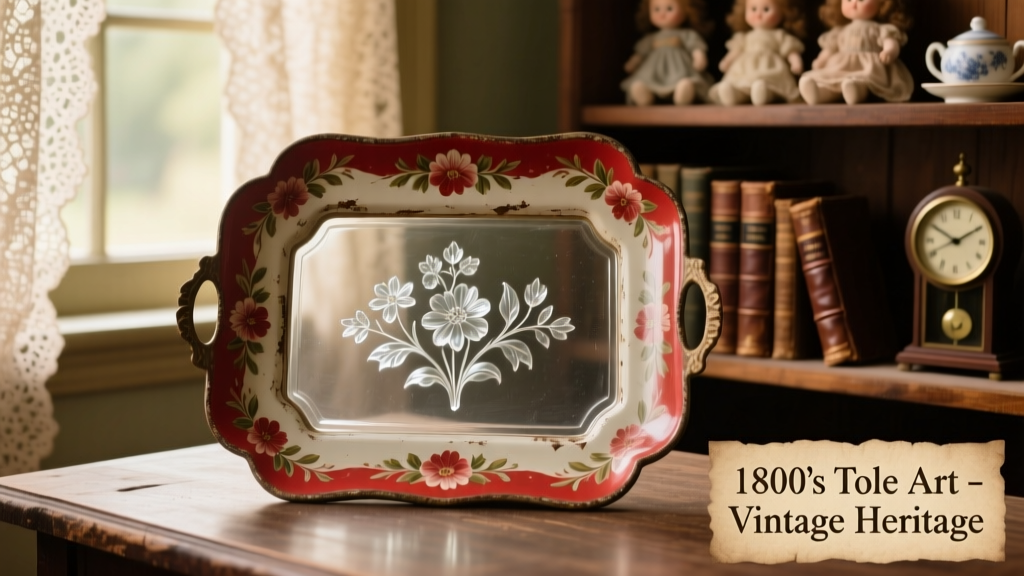
Tole Bread Tray with Red Flower Border and Crystalline Center: A Mid-19th Century American Folk Art Treasure (c. 1840–1875)

The Simonds No. 210 Two-Man Crosscut Saw: A Mid-Century Masterpiece from Fitchburg, Massachusetts
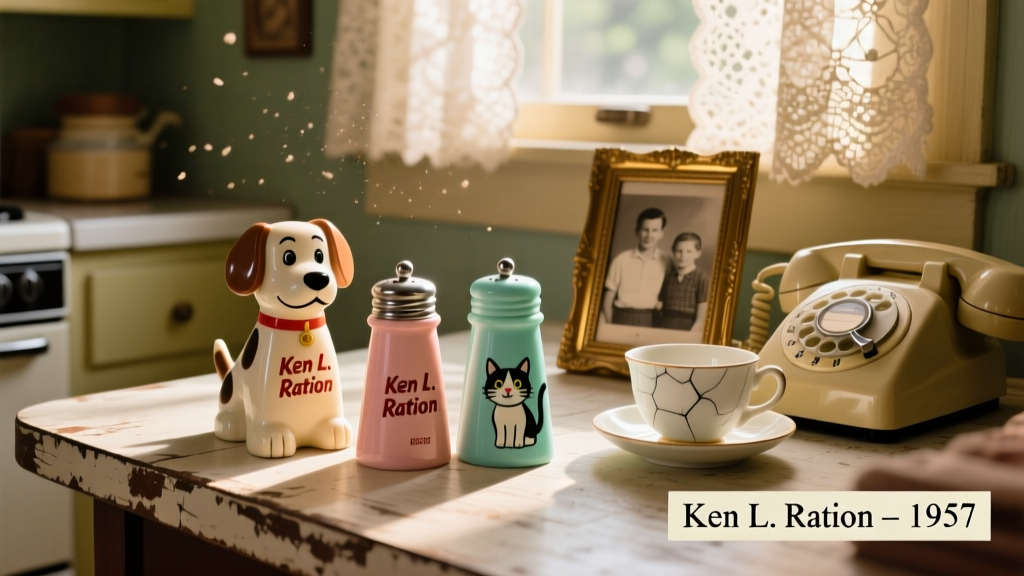
Ken L Ration Salt & Pepper Shakers: The F.F. Plastics Dog and Cat Figures of Mid-Century America

Cookie Jars Goldilocks Regal #2: Identification, Value, and Collector Insights
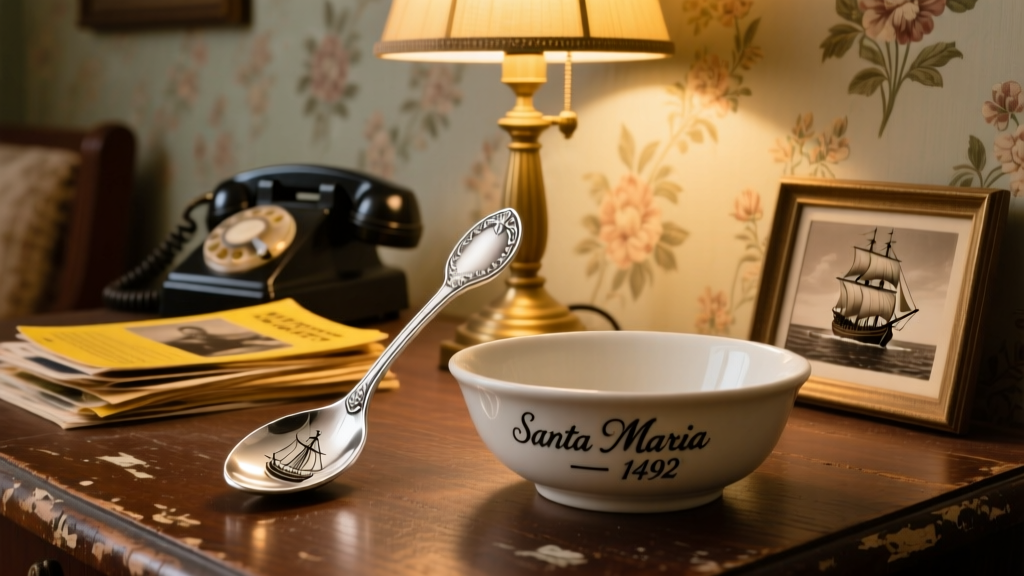
The Souvenirs Spoon Sterling Silver Christopher Columbus Santa Maria Bowl: A Mid-Century Commemorative Artifact

Game Pieces: The Forgotten Artifacts of Mid-Century Play

Tramp Art Plant Stand Pedestal: Hourglass Shape, Layered Wooden Pyramids — A Mid-Century Collector’s Deep Dive
Shawnee Pottery Sugar Creamer 'Snowflake': A Mid-Century American Ceramic Treasure

Beswick Plate Bulgaria 1974: A Collector’s Deep Dive into a Rare Mid-Century Export Artifact