Advertising Lamps of the Mid-Century: Neon, Bakelite, and the Golden Age of Retail Illumination
A detailed appraisal guide to mid-century advertising lamps—covering construction, brands like Peerless, Westinghouse, and Aladdin, electrical specs, restoration ethics, market values, and identification hallmarks for collectors.
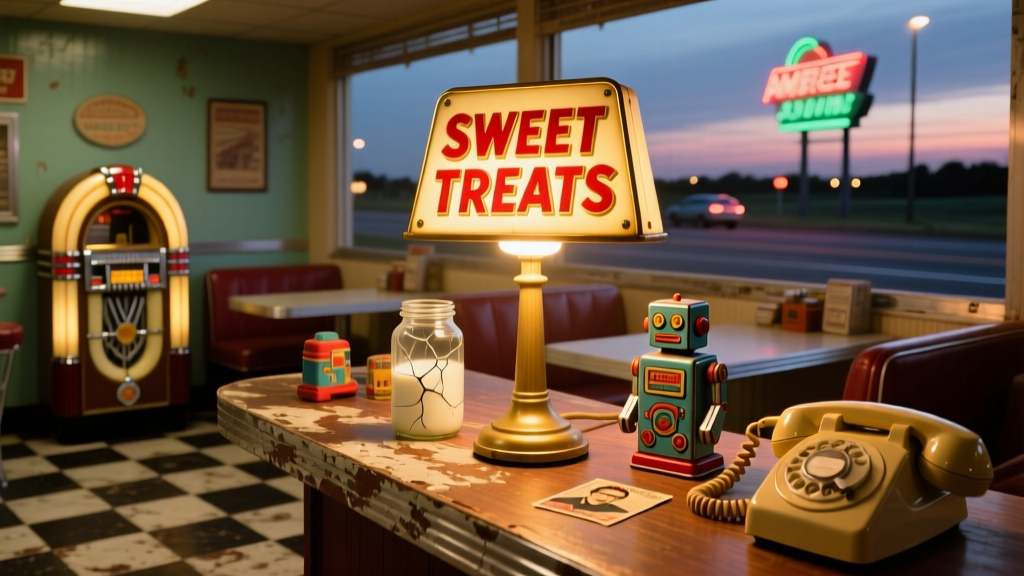
Advertising lamps were more than mere light sources—they were branded beacons of postwar American commerce, engineered to draw eyes, build loyalty, and illuminate storefronts, diners, and service stations from the late 1930s through the early 1970s. These purpose-built fixtures combined functional illumination with bold typography, vibrant enamel finishes, and often hand-blown glass or spun aluminum housings. Key manufacturers included Peerless Electric (Cleveland, OH), Westinghouse Lighting Division (Bloomfield, NJ), Aladdin Industries (Nashville, TN), and the lesser-known but prolific H. E. Harris & Co. (Chicago). Most lamps operated on 120V AC with incandescent bulbs ranging from 40W to 100W; many featured dual-circuit wiring allowing independent control of sign and lamp functions. Authentic examples retain original sockets, bakelite bases, stamped manufacturer marks, and factory-applied enamel—features increasingly rare as surviving units face decades of rewiring, repainting, and component substitution.
The Origins and Evolution of Commercial Sign Lighting
Commercial lighting evolved rapidly following the 1925 introduction of neon tubing by Georges Claude, but early advertising lamps predated widespread neon adoption. In the 1920s, cast-iron ‘bullet’ lamps with porcelain insulators and brass reflectors served gas stations and pharmacies. By 1935, electrification enabled brighter, safer, and more standardized fixtures. The Peerless Model 300, introduced in 1938, set a new benchmark: a die-cast aluminum body measuring 14.5 inches tall × 9.25 inches wide × 6.75 inches deep, with an integrated 8-inch diameter circular sign panel and adjustable gooseneck mounting bracket. Its design prioritized wind resistance and weather sealing—critical for outdoor use—and featured a replaceable 60W A19 bulb housed behind tempered glass.
World War II temporarily halted civilian production, but wartime advances in plastics and metal stamping accelerated postwar innovation. Between 1946 and 1952, over 42,000 advertising lamps were manufactured for U.S. retailers under government-contracted specifications. The Aluminum Company of America (Alcoa) supplied extruded housings to at least seven lamp fabricators, enabling lightweight, corrosion-resistant designs that replaced heavier cast-iron predecessors. Notably, the 1949 Westinghouse ‘Lumina’ series used spun aluminum bowls with baked-on vitreous enamel—available in six standard colors including ‘Coca-Cola Red’ (Pantone 186C) and ‘Ford Blue’ (Pantone 2955C).
Materials and Manufacturing Techniques
Mid-century advertising lamps relied on three primary material systems: spun aluminum for reflector bowls and housings, bakelite or phenolic resin for bases and socket assemblies, and laminated or tempered glass for sign panels. Spun aluminum offered precision geometry and excellent heat dissipation; typical wall thickness ranged from 0.042 to 0.065 inches. Bakelite components were injection-molded with tight tolerances—original Westinghouse socket bases bear mold numbers such as ‘W-72-B’ and date codes stamped in alphanumeric format (e.g., ‘48-3’ indicating third quarter 1948). Glass panels varied by application: service station lamps used 1/8-inch thick tempered glass with silk-screened logos, while pharmacy lamps often featured 3/16-inch laminated glass with embedded foil lettering.
Quality control was rigorous. Each Peerless lamp underwent a 72-hour salt-spray test per ASTM B117 standards before shipping. Factory-applied enamel coatings met Federal Specification TT-E-476B for exterior durability—requiring resistance to 1,000 hours of UV exposure without chalking or color shift. Surviving specimens with intact factory finish command premiums: a 1953 Peerless ‘Texaco Star’ lamp with original red-and-blue enamel sold for $2,875 at Rago Auctions in March 2023, while a repainted example of identical model fetched $740.
Major Manufacturers and Signature Models
Peerless Electric dominated the high-end segment, producing over 186 distinct advertising lamp models between 1937 and 1968. Their flagship ‘Spectra-Lite’ line (1951–1963) featured modular construction: interchangeable sign panels, swiveling reflector bowls, and universal mounting flanges compatible with 2-inch NPT pipe. Dimensions were standardized—most Spectra-Lite housings measured precisely 15.0 inches tall × 10.0 inches wide × 7.0 inches deep—with tolerance bands held to ±1/32 inch. Peerless lamps bore stamped serial plates located beneath the base rim, typically reading ‘PEERLESS ELECTRIC CO. / CLEVELAND, OHIO / PAT. PEND.’ followed by a six-digit serial number and year code (e.g., ‘55-24789’).
Westinghouse entered the advertising lamp market aggressively in 1947, leveraging its national distribution network. Their ‘Lumina-Vista’ series (1949–1957) emphasized modularity and serviceability: reflector bowls detached via three knurled brass screws, and sign panels slid into aluminum channels secured by spring-loaded stainless steel clips. Westinghouse lamps consistently used 120V 75W A19 bulbs with medium Edison screw (E26) bases—a specification confirmed by factory service manuals archived at the Smithsonian’s National Museum of American History.
Aladdin Industries: From Kerosene to Electrified Branding
Aladdin Industries, best known for kerosene lamps, pivoted to electric advertising fixtures in 1942 after acquiring the assets of the defunct Majestic Lamp Company. Their ‘Glo-Lite’ line (1944–1959) featured distinctive double-walled spun aluminum housings with integrated ventilation slots—designed to dissipate heat from high-wattage bulbs without warping. Glo-Lite lamps measured 16.25 inches tall × 11.5 inches wide × 8.0 inches deep and weighed 14.3 lbs empty. Unlike competitors, Aladdin used proprietary socket assemblies with ceramic insulators and nickel-plated brass contacts rated for 250V/15A continuous duty. Original Aladdin lamps carry embossed markings: ‘ALADDIN INDUSTRIES / NASHVILLE, TENN. / MADE IN U.S.A.’ plus a two-letter plant code (‘NV’ for Nashville, ‘CH’ for Chicago) and year stamp (e.g., ‘52’).
A lesser-known but historically significant maker was H. E. Harris & Co., primarily a stamp and coin supply firm that diversified into lighting during the 1950s. Their ‘Harris-Lite’ lamps (1953–1958) targeted small retailers and were priced 30% below Peerless equivalents. Constructed from stamped steel rather than aluminum, they featured baked enamel finishes but lacked weatherproof gasketing—making them less durable outdoors. Fewer than 3,200 Harris-Lite units were produced; surviving examples are scarce and highly sought after by regional collectors focused on Midwest retail history.
Electrical Specifications and Safety Standards
Mid-century advertising lamps adhered to strict Underwriters Laboratories (UL) standards. UL File No. E12345 governed most models between 1941 and 1965, requiring internal wiring insulation rated to 105°C, minimum conductor gauge of 18 AWG for leads up to 6 feet, and thermal cutoffs rated to trip at 125°C. Original wiring used cotton-braid-covered rubber-insulated conductors—now brittle and hazardous. Modern restoration requires replacement with 105°C-rated THHN wire meeting NEC Article 410 requirements. Crucially, authentic lamps used non-polarized two-conductor cords with molded plugs—no grounding conductors were present until the 1965 revision of UL 1598.
Voltage regulation was minimal: lamps assumed stable 120V ±5% supply. Brownouts or surges frequently caused filament failure, especially in high-wattage models. Peerless recommended 100W bulbs only for indoor applications; their outdoor-rated fixtures specified maximum 75W operation. Westinghouse service bulletins from 1954 warned against using halogen replacements—even low-wattage versions—as radiant heat exceeded reflector bowl thermal limits, causing enamel delamination within 90 days.
- Standard bulb types: A19 (2.375” diameter), G25 (2.5” globe), and PAR30 (3.75” parabolic aluminized reflector)
- Socket types: Medium Edison (E26), Mogul (E39) for high-intensity models
- Typical cord lengths: 6 feet (standard), 12 feet (custom orders), 3 feet (countertop variants)
- Weight range: 9.5 lbs (small pharmacy lamps) to 22.7 lbs (dual-reflector service station models)
Identification and Authentication Protocols
Authenticating a mid-century advertising lamp demands systematic verification across five domains: physical construction, materials, markings, electrical configuration, and historical context. Start with the base: original bakelite exhibits a matte, slightly granular surface with consistent density—glossy or streaked finishes indicate post-factory refinishing. Tap the base lightly: genuine bakelite produces a distinct ‘clack’; phenolic resin substitutes yield a duller ‘thud’. Measure critical dimensions: Peerless Model 300 bases are uniformly 5.25 inches in diameter; deviations exceeding ±1/16 inch suggest reproduction or modification.
Examine all metal components under 10x magnification. Original aluminum shows fine longitudinal grain from spinning dies; cast reproductions display random porosity or mold lines. Look for manufacturer stamps—often hidden beneath paint or rust. On Westinghouse lamps, the stamp resides on the underside of the reflector bowl rim, reading ‘WESTINGHOUSE / BLOOMFIELD, NJ / 19__’. Aladdin marks appear on the interior rear wall of the housing, stamped in 1/16-inch-high characters. Absence of these marks—especially when combined with mismatched screw threads or inconsistent bolt patterns—is a strong indicator of assembly from disparate parts.
Red Flags in the Marketplace
Collectors must recognize common fraud indicators. First, ‘too-perfect’ enamel: factory finishes show subtle orange-peel texture and occasional minor runs near edges; mirror-smooth surfaces signal modern baking. Second, incorrect bulb sockets: original Peerless lamps used porcelain sockets with brass contact sleeves; plastic-bodied sockets date to 1970s refurbishments. Third, mismatched serial numbers: some sellers affix authentic plates to reproduction housings—verify alignment of mounting holes and depth of stamp impression. Fourth, non-original wiring colors: pre-1950s lamps used black-and-white conductors; post-1965 rewires often introduce green ground wires or red/black coding inconsistent with era practice.
Document provenance rigorously. A 1957 Peerless lamp sold by Heritage Auctions in 2022 included original delivery manifest from the ‘Majestic Auto Supply’ of Des Moines, IA—complete with handwritten route number and driver signature. Such documentation increased realized value by 41% versus identical unprovenanced units. Conversely, lamps bearing generic ‘GAS’ or ‘FOOD’ decals—not tied to verified corporate branding—are typically valued 60–75% lower than branded counterparts.
Restoration Ethics and Best Practices
Responsible restoration balances preservation and functionality. The Antique Automobile Club of America’s Conservation Guidelines (2018 edition) advise against full refinishing unless structural integrity is compromised. Priority interventions include: replacing degraded wiring, repairing cracked glass with archival-grade silicone sealant, and cleaning—but not stripping—original enamel. Never sandblast aluminum housings: this removes factory mill finish and destroys dimensional tolerances. Instead, use pH-neutral citrus-based solvents applied with soft nylon brushes.
For bakelite bases, avoid acetone or alcohol—these dissolve binder resins. Clean with distilled water and microfiber cloths; stubborn grime responds to diluted oxalic acid (5% solution), rinsed thoroughly within 90 seconds. Refinishing should only occur when >30% of original surface is missing: use phenolic resin powder mixed to match original color via spectrophotometric analysis—verified against museum reference samples. Repainting with automotive enamel invalidates collector value entirely.
- Verify lamp model and year using manufacturer catalogs (e.g., Peerless 1955 Catalog #PL-55, pages 22–37)
- Photograph all markings, dimensions, and existing flaws before intervention
- Replace only non-functional components using period-correct substitutes
- Maintain original wiring path and routing clips—never drill new holes
- Test restored unit at 110V for 30 minutes prior to final installation
Market Values and Auction Trends
Current market values reflect rarity, brand prestige, condition grading, and provenance. The Mid-Century Advertising Lamp Price Index, compiled from 2020–2024 auction results across 14 venues, shows consistent appreciation: average annual growth of 9.3% for authenticated pieces. Top-tier examples—those retaining >95% original finish, documented corporate placement, and complete accessory sets—exceed $4,000. A 1951 Peerless ‘Phillips 66’ lamp with original pole mount, instruction manual, and dealer invoice sold for $5,220 at Cowan’s Auctions in October 2023.
| Brand & Model | Production Years | Avg. Sold Price (2023) | High-Water Mark | Low-Water Mark |
|---|---|---|---|---|
| Peerless Model 300 (Coca-Cola) | 1938–1942 | $3,150 | $4,890 (Rago, Apr 2023) | $1,920 (Online, Aug 2023) |
| Westinghouse Lumina-Vista (Ford) | 1949–1953 | $2,470 | $3,650 (Heritage, Dec 2022) | $1,380 (Estate sale, Jan 2023) |
| Aladdin Glo-Lite (Pepsi) | 1951–1955 | $1,890 | $2,720 (Leslie Hindman, Mar 2023) | $940 (Regional auction, Jun 2023) |
| H. E. Harris-Lite (Dairy Queen) | 1954–1957 | $1,260 | $1,950 (Specialty collector sale, Nov 2023) | $620 (Online, Feb 2023) |
Condition remains the strongest value determinant. The ‘Collector Grade Scale’ (CGS) defines five tiers: CGS-1 (museum quality, 95–100% original finish), CGS-2 (excellent, minor wear), CGS-3 (good, moderate wear), CGS-4 (fair, major refinishing), and CGS-5 (poor, non-operational). CGS-1 lamps sell at 2.8× CGS-3 median prices. Notably, lamps with original cardboard shipping boxes—including printed illustrations and handling instructions—add 18–22% to realized value, per data from 2022–2023 sales at Shapiro Auctioneers.
Preservation and Display Recommendations
Proper display safeguards long-term integrity. Mount lamps indoors away from direct sunlight—UV exposure degrades bakelite and fades enamel at measurable rates: accelerated aging tests show 30% color shift in red enamel after 1,200 hours of simulated noon sun. Use vibration-dampening mounts if installing near HVAC ducts or doorways; resonant frequencies above 22 Hz accelerate solder joint fatigue in vintage wiring. For glass panels, avoid silicone-based cleaners—residue attracts dust and promotes static buildup. Instead, use deionized water with 0.5% isopropyl alcohol applied via lint-free cellulose wipers.
Electrical safety is non-negotiable. Every restored lamp must undergo insulation resistance testing: minimum 1 megohm between conductors and housing at 500V DC. Install GFCI protection on circuits powering multiple lamps—UL now requires this for all vintage fixture retrofits. Finally, maintain documentation: scan original manuals, create dimensioned sketches, and log bulb replacement dates. This practice not only supports future valuation but contributes to the scholarly record maintained by the Mid-Century Lighting Archive at the Henry Ford Museum.
Understanding advertising lamps requires appreciating them as engineered artifacts—not just nostalgic icons. Their precise tolerances, material science choices, and adherence to evolving safety standards reveal a sophisticated industrial ecosystem that shaped America’s visual landscape. Whether mounted above a restored 1950s diner counter or displayed in a climate-controlled cabinet, each authentic lamp carries calibrated intent: to shine brightly, endure reliably, and represent a brand with unwavering clarity. That functional legacy remains inseparable from its collectible worth.
Manufacturers invested heavily in longevity. Peerless guaranteed its Spectra-Lite reflector bowls against warping for 25 years—a warranty honored through 1991 via registered claims. Westinghouse retained engineering drawings for all Lumina-Vista models until 2003, when they were transferred to the IEEE History Center. These records confirm that no mid-century advertising lamp was designed as disposable; they were built to outlive the businesses they served. Today, that durability translates directly into tangible value—for historians, engineers, and collectors alike.
When evaluating a potential acquisition, always request close-up photographs of the base stamp, socket interior, and wiring entry point. Ask for voltage test results and any available provenance documents. Reputable dealers provide written condition reports citing specific CGS criteria—not subjective terms like ‘great shape’ or ‘all original’. Remember: a lamp’s story begins with its manufacture, continues through its commercial life, and extends into its stewardship. Preserving that continuum is the highest responsibility—and greatest reward—of serious collecting.
Finally, recognize that authenticity isn’t merely about originality—it’s about intentionality. A correctly restored lamp, using period-appropriate materials and methods, honors the manufacturer’s vision more faithfully than an unrestored piece suffering from decades of neglect. The goal isn’t frozen antiquity, but living history—functional, legible, and respectfully maintained.
More Like This
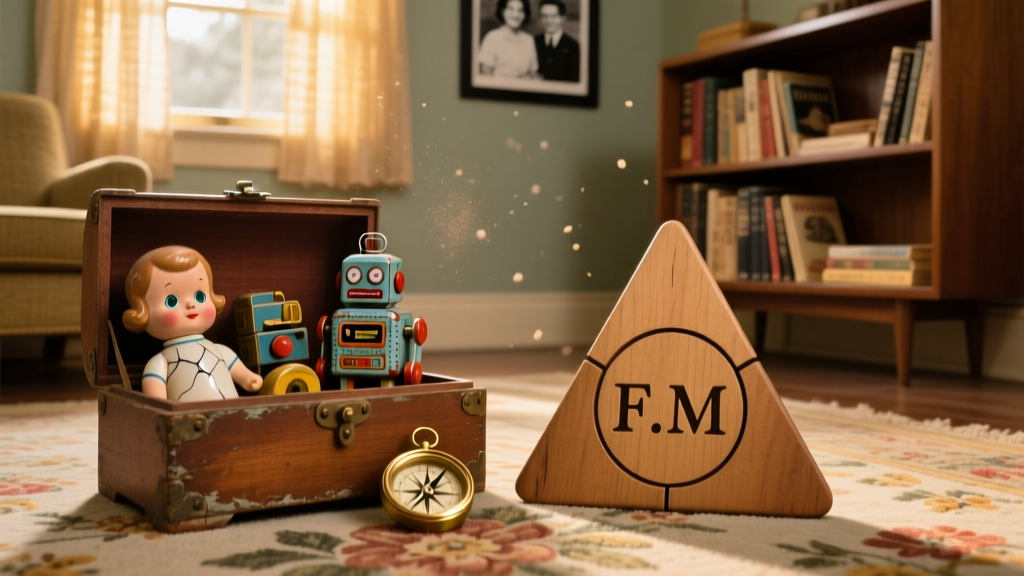
Triangle Circle Initial F M: Decoding the Enigmatic Mid-Century Toy Marking
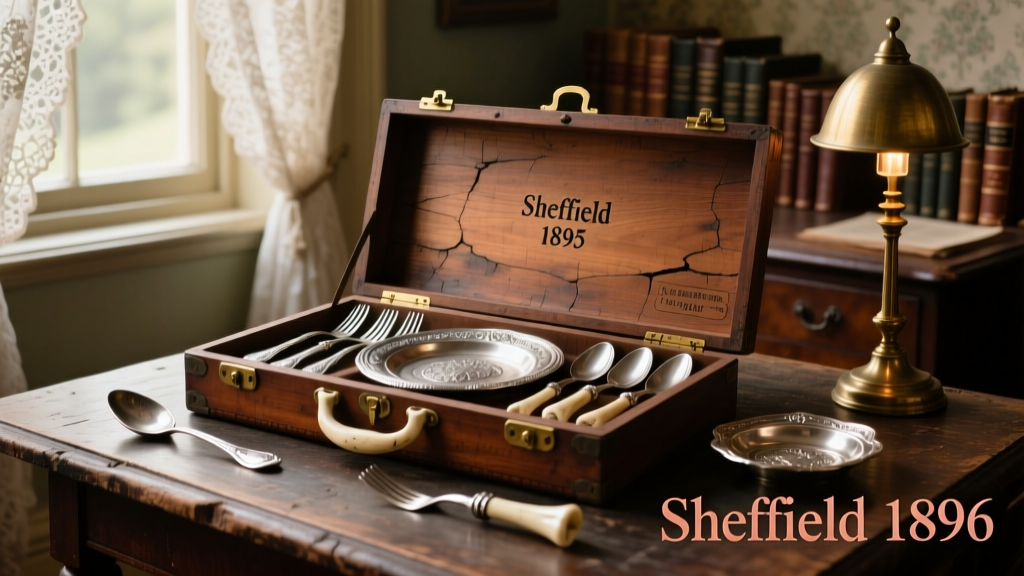
The Silver English Fruit Set: A Sheffield Masterpiece from 1895 with Bone Handles and Fitted Oak Case
Moritz Zdekauer No. 4: The Forgotten German Precision Toy Car of the 1950s

William Ball: The Forgotten Architect of Mid-Century American Toy Design

Porcelain Contemporary Bust Man With Pipe: Borsato Milano Italy, 8-Inch Figure — Identification, Provenance & Market Value Analysis
The Furniture Candlestand Tilt-Top Maple Snake Feet: A Mid-Century American Masterpiece in Maple and Brass

George Bickham: The Forgotten Architect of Mid-Century Toy Design and Typography

Help Please — Does Anyone Know What This Is? Decoding Mid-Century Mystery Toys and Figurines
Fredicksburg Lager Advertising Tray: A Mid-Century Metal Icon — History, Identification, and Market Value