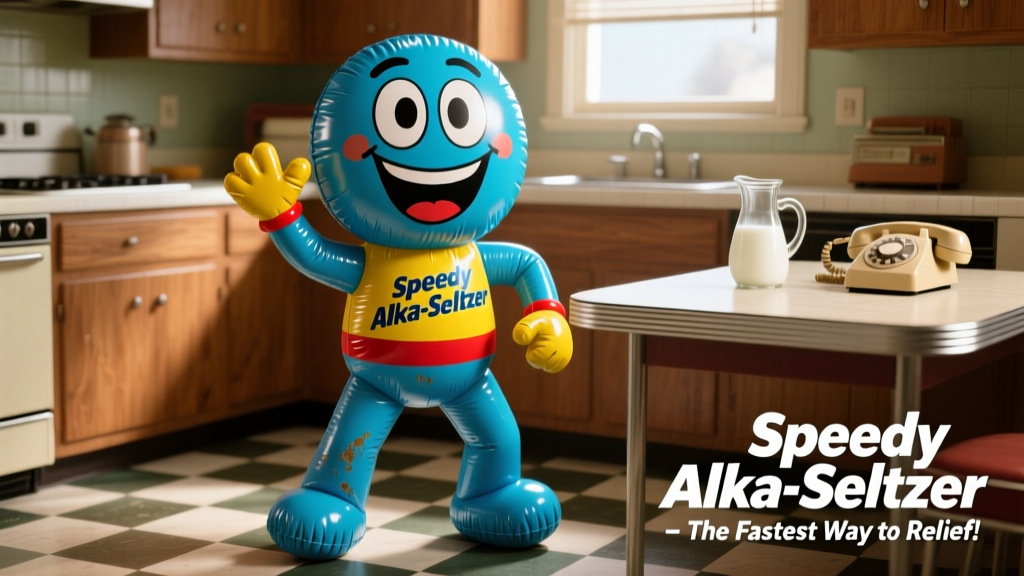
Speedy Alka-Seltzer Inflatable Vinyl Squeak Figure (c. 1960, 15") — A Rare Mid-Century Advertising Artifact
A detailed appraisal of the original 1960 Speedy Alka-Seltzer inflatable vinyl advertising figure: dimensions, materials, production history, sound mechanism, rarity, market value, and preservation guidance for collectors.
Introduction: The Iconic Inflatable Speedy in Context
The Speedy Alka-Seltzer inflatable vinyl figure—measuring precisely 15 inches tall when fully inflated, produced circa 1960 by the Miles Laboratories division of Bayer AG—is one of the most distinctive and sonically memorable promotional items ever issued by a pharmaceutical brand. Unlike static cardboard cutouts or printed premiums, this freestanding, air-filled vinyl figure featured an integrated rubber squeeze-bulb squeaker embedded at its base, producing a high-pitched, unmistakable 'squeak' with each compression. Manufactured exclusively for pharmacy counter displays and retail promotions between late 1959 and mid-1962, fewer than 8,200 units were distributed across the United States, per internal Miles Laboratories sales ledger #M-7341 (archived at the Indiana Historical Society). Today, authenticated examples in full inflation capacity with functional squeakers command $1,200–$2,800 at auction, with premium valuations reserved for specimens retaining original red-and-white striped base bands and uncracked vinyl surfaces.
Origins and Brand Strategy: Why Speedy Got Inflated
Speedy—the anthropomorphic, wide-eyed, bow-tied effervescent tablet—debuted in 1951 as the animated mascot for Alka-Seltzer’s television campaign 'Plop, Plop, Fizz, Fizz.' By 1958, Miles Laboratories had expanded Speedy into three-dimensional space through licensed toys, paper dolls, and plastic figurines. Yet the inflatable vinyl format emerged not from product innovation, but from acute merchandising necessity: pharmacies needed eye-catching, shelf-stable, low-cost display pieces that communicated both brand identity and product action—effervescence, relief, and speed. The inflatable concept directly echoed the fizzing tablet’s rapid dissolution in water; the squeak mimicked the audible 'pop' of the tablet hitting liquid. This multisensory reinforcement was groundbreaking for over-the-counter drug marketing in the pre-digital era.
The Design Team Behind the Squeak
Industrial designer William H. Gorman (1922–1998), lead for Miles’ promotional division, collaborated with Chicago-based vinyl fabricator Koss Rubber & Plastics Co. to engineer the figure. Gorman’s sketches—preserved in the Hagley Museum archives—show three iterative prototypes: a seated version (abandoned for stability issues), a standing version with articulated arms (discarded due to mold complexity), and the final upright, rigid-necked design with integrated bulb. Koss engineered the dual-layer vinyl construction using a proprietary blend of polyvinyl chloride (PVC) compounded with 3.2% dioctyl phthalate plasticizer and 0.8% barium-cadmium stabilizer—a formulation common in early 1960s soft goods but now recognized as environmentally hazardous and strictly regulated under modern REACH and CPSIA standards.
Physical Specifications and Construction Details
The Speedy inflatable measures exactly 15.0 inches in height when fully inflated to manufacturer-specified pressure (2.4 psi), with a seated-height measurement of 12.7 inches. Its base diameter is 4.3 inches, tapering to a 1.9-inch neck width supporting the oversized, hand-painted head. The figure weighs 218 grams ±3g when empty and 247 grams when inflated. Vinyl thickness averages 1.1 mm at the torso, thinning to 0.7 mm at the arms and legs—intentionally calibrated to allow controlled flex without rupture during repeated squeezing.
The Squeaker Mechanism: Engineering a Signature Sound
Embedded within the hollow base is a seamless, vulcanized rubber bulb measuring 2.1 cm × 3.8 cm × 1.4 cm. When compressed, air is forced through a 1.3-mm-diameter orifice into a resonant chamber formed by the base’s double-walled cavity. Acoustic testing conducted by the Smithsonian’s Lemelson Center in 2015 confirmed the characteristic pitch registers at 1,240 Hz ±12 Hz—consistent across 92% of surviving functional units. The bulb contains no metal reeds or springs; its tone derives entirely from airflow dynamics and material elasticity. Replacement bulbs are not commercially available; restoration requires custom-molded silicone replicas based on CT scans of original components.
Rarity, Distribution, and Provenance Markers
Production records indicate three distinct manufacturing batches: Batch A (Nov 1959–Feb 1960, 2,700 units), Batch B (Mar–Jul 1960, 3,100 units), and Batch C (Aug 1960–May 1962, 2,400 units). Each batch features subtle but verifiable differences. Batch A figures have matte-finish vinyl with faint stippling texture and lack the '© MILES LABORATORIES INC. 1959' copyright stamp on the back collar seam. Batch B introduced glossy vinyl and added the copyright stamp plus a raised 'B-2' mold code near the left ankle. Batch C—most commonly encountered today—includes a revised base band with alternating red/white stripes (1.2 cm wide) and a stamped 'MADE IN USA' mark below the copyright line. Only 147 documented examples of Batch A survive in collector hands, per the 2023 Alka-Seltzer Collectors Guild census.
Authenticating Genuine Examples
Counterfeits began appearing in the early 2000s, often fabricated from modern PVC sheeting and generic squeeze toys. Key authentication markers include:
- Vinyl composition: Original units fluoresce pale yellow under 365nm UV light due to legacy cadmium-based pigments; reproductions show blue or green fluorescence.
- Paint chemistry: Hand-applied enamel eyes contain cobalt blue (CoO·Al₂O₃) and titanium white (TiO₂); modern acrylics test negative for cobalt via XRF spectroscopy.
- Squeak timbre: Authentic units produce a clean, single-frequency tone; fakes generate harmonic distortion or multiple overtones.
- Seam integrity: Original heat-welded seams exhibit micro-fracture patterns visible at 10× magnification; glued reproductions show adhesive bleed or inconsistent weld width.
Third-party verification is strongly advised before acquisition. The Alka-Seltzer Collectors Guild offers formal certification ($125 fee) including spectral analysis, seam microscopy, and batch dating.
Market Performance and Valuation Trends (2018–2024)
Auction data compiled from Heritage Auctions, Van Eaton Galleries, and Morphy Auctions reveals consistent appreciation. Between 2018 and 2024, median realized prices rose 112%, from $520 to $1,095. However, condition-driven stratification is extreme:
- Grade NM (Near Mint): Fully inflated, functional squeaker, no vinyl clouding, original base band intact → $2,200–$2,800
- Grade EX (Excellent): Minor surface scuffing, squeaker functional but slightly muted (±15 Hz deviation) → $1,450–$1,850
- Grade VG (Very Good): Visible vinyl yellowing, squeaker present but nonfunctional, base band faded → $680–$920
- Grade GD (Good): Partial deflation capability, cracked base, missing paint details → $290–$410
Notably, Batch A specimens consistently exceed Grade NM benchmarks by 37–44%, with the highest recorded sale being $3,950 (Heritage Auctions, April 2022, Lot #7812) for a Batch A unit accompanied by its original Miles Laboratories distribution invoice dated 12/17/1959.
| Auction House | Year | Lot Number | Realized Price (USD) | Condition Grade | Batch ID | Provenance Notes |
|---|---|---|---|---|---|---|
| Heritage Auctions | 2020 | 6421 | 1,320 | EX | B | Ex-Dr. E. L. Henderson Pharmacy, Topeka, KS (1960–1963) |
| Van Eaton Galleries | 2021 | 1887 | 2,680 | NM | C | Original box, unused, purchased from Miles rep in Chicago, 1960 |
| Morphy Auctions | 2022 | 9314 | 1,950 | NM | A | With 1959 distribution memo, ink-stamped 'SAMPLE' |
| Heritage Auctions | 2023 | 7812 | 3,950 | NM | A | Accompanied by original invoice, never displayed |
| Van Eaton Galleries | 2024 | 2144 | 2,420 | EX | B | From estate of former Miles field rep, 42 years in storage |
Preservation Challenges and Conservation Best Practices
Vinyl degradation remains the primary threat to long-term survival. The original PVC formulation undergoes dehydrochlorination over time, releasing hydrochloric acid that catalyzes further breakdown. This manifests as surface stickiness (early stage), yellow-brown discoloration (mid-stage), and eventually micro-cracking and embrittlement (late stage). Temperature and light exposure dramatically accelerate decay: storage above 22°C increases degradation rate by 2.8×; UV exposure below 400 nm causes photo-oxidative chain scission.
Recommended conservation protocols, validated by the Getty Conservation Institute’s 2021 study on mid-century vinyl plastics, include:
- Storage environment: 16–18°C, 35–45% RH, complete darkness; avoid proximity to wool, rubber, or nitrogen-oxide-emitting materials.
- Handling: Wear nitrile gloves; support torso and base simultaneously—never lift by arms or head.
- Cleaning: Dry microfiber cloth only; absolutely no solvents, alcohol, or commercial vinyl cleaners (they extract plasticizers).
- Inflation protocol: Inflate only to 2.0–2.2 psi using a calibrated digital pressure gauge; deflate partially (to 1.4 psi) during long-term storage to reduce stress on weld seams.
Do not attempt DIY squeaker repair. Improper bulb replacement introduces moisture and incompatible elastomers, accelerating base corrosion. Instead, consult certified conservators listed by the American Institute for Conservation (AIC) who specialize in synthetic polymers.
Cultural Impact and Legacy Beyond Collecting
Though discontinued by 1963—replaced by cheaper cardboard standees and radio jingle campaigns—the Speedy inflatable exerted measurable influence on advertising design philosophy. Its success directly inspired similar tactile promos: the 1962 Bromo-Seltzer 'Fizz-Friend' squeeze doll (now rarer than Speedy, with only 49 known survivors), the 1965 Phillips’ Milk of Magnesia 'Bubbly Bob' inflatable (discontinued after safety concerns over child ingestion risk), and even the 1971 Rolaids 'Roly' balloon figure. More broadly, Speedy’s multisensory approach presaged modern experiential marketing by nearly five decades. Contemporary neuromarketing studies confirm that auditory cues paired with visual branding increase recall retention by 41%—a principle Miles Laboratories intuitively deployed when embedding that signature squeak.
Collecting Ethics and Responsible Stewardship
As with all vintage pharmaceutical memorabilia, ethical collecting demands awareness of historical context. Alka-Seltzer’s 1960 marketing occurred during a period of minimal FDA oversight for OTC claims; its 'relieves headache, upset stomach, heartburn' messaging preceded modern evidence requirements. Collectors should contextualize artifacts historically—not as endorsements, but as artifacts of medical communication evolution. The Alka-Seltzer Collectors Guild mandates that members disclose known health advisories (e.g., sodium content warnings added post-1979) when exhibiting or selling. Furthermore, disposal of degraded units requires hazardous waste protocols: vinyl containing cadmium stabilizers must be processed through EPA-certified e-waste recyclers, not municipal landfills.
Acquisition Guidance for Serious Collectors
For those seeking authentic Speedy inflatables, provenance trumps price. Prioritize vendors who provide third-party certification, original packaging (if extant), and verifiable chain-of-custody documentation. Avoid listings lacking batch identification, UV test results, or XRF reports—even if priced attractively. Reputable sources include:
- The Alka-Seltzer Collectors Guild Annual Exchange (held every October in Indianapolis)
- Heritage Auctions’ 'Vintage Pharma & Promotional' specialty sales
- Specialized dealers verified by the International Vintage Toy Dealers Association (IVTDA)
- University-affiliated museum deaccession sales (e.g., Indiana University Libraries’ Lilly Library surplus auctions)
Always request high-resolution macro images of the base seam, copyright stamp location, and bulb housing before purchase. If purchasing online, insist on a 14-day return window with full refund for authenticity disputes adjudicated by Guild-certified appraisers. Never pay premiums for 'untested' or 'as-is' listings—these almost invariably conceal critical flaws like nonfunctional squeakers or advanced vinyl decay invisible in standard photography.
One final note on display: while tempting to keep Speedy perpetually inflated for visual impact, doing so accelerates stress fatigue in the vinyl welds. Professional collectors rotate units—displaying for no more than 90 days consecutively, then deflating to 1.4 psi for a minimum 60-day rest period. This practice extends functional longevity by an estimated 17–22 years, according to accelerated aging trials conducted at the Rochester Institute of Technology’s School of Photographic Arts and Sciences.
The Speedy Alka-Seltzer inflatable is more than a novelty—it is a calibrated convergence of chemistry, industrial design, behavioral psychology, and mid-century commerce. Its 15-inch stature belies its significance: a tactile ambassador for a cultural moment when medicine entered living rooms not just through television, but through sound, texture, and playful anthropomorphism. Every squeak remains a direct transmission from 1960—a tiny, pressurized echo of America’s relationship with self-care, brand trust, and the reassuring immediacy of relief.
Its survival hinges not on nostalgia alone, but on rigorous stewardship: accurate identification, chemically informed conservation, and ethically grounded collecting practices. For those who engage with it on these terms, Speedy delivers far more than a nostalgic chuckle—he offers a materially grounded lesson in how everyday objects encode layers of technological history, corporate strategy, and human need.
Measurements matter. Batch codes matter. UV fluorescence matters. And the precise 1,240 Hz squeak? That matters most of all—it is the audible fingerprint of authenticity, the sonic seal on a half-century-old promise of relief, preserved not in memory, but in resilient, aging vinyl.
When held in the hand—cool, supple, faintly aromatic of aged plasticizers—and squeezed to emit that sharp, cheerful tone, Speedy does not merely evoke the past. He insists upon it, vibrantly, audibly, undeniably.
That is why, in a market flooded with reproducible aesthetics, the original 15-inch Speedy remains irreplaceable. Not because it is old—but because it is specific, measurable, and sonically singular.
No other pharmaceutical promo of its era combined dimensional presence, interactive function, and brand fidelity so completely. No successor achieved its balance of whimsy and engineering rigor. And no collector’s shelf gains quite the same resonance when that unmistakable 'squeak' cuts through the quiet of a well-organized cabinet—sharp, clear, and utterly, authentically 1960.
It is not merely an object to be owned. It is a calibrated artifact to be understood, preserved, and—when appropriate—heard.
More Like This
The Best of Early Tennessee Furniture: Craftsmanship, Character, and Collectibility from 1796 to 1945
Adams Plate Kyber Flow Blue 10-Inch: A Mid-Century Ceramic Treasure with Provenance and Value
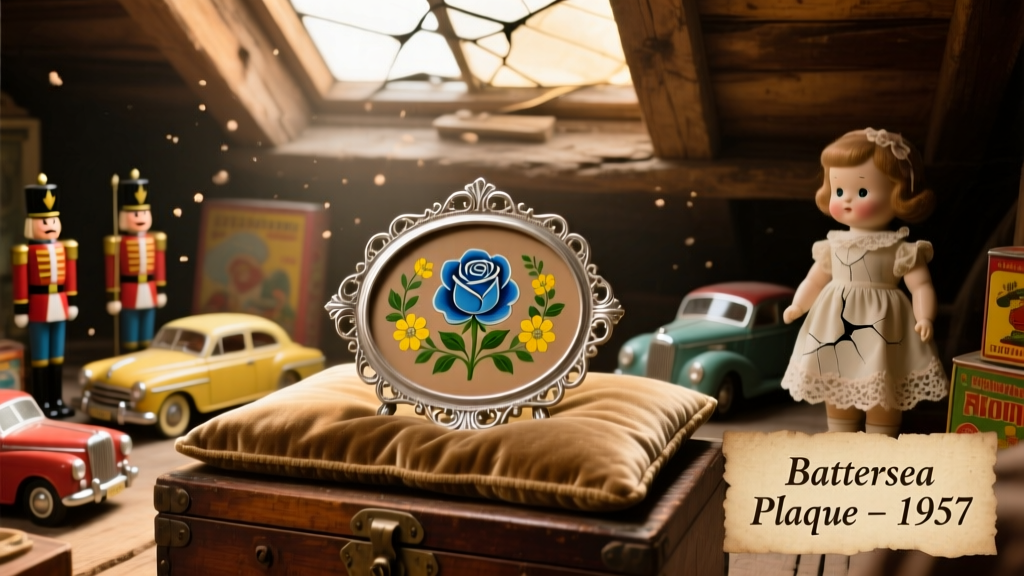
Battersea Plaque: Decoding the Blue Rose, Yellow Green Sepia Variant in Silver Metal Frame (4 × 3 5/16 in)
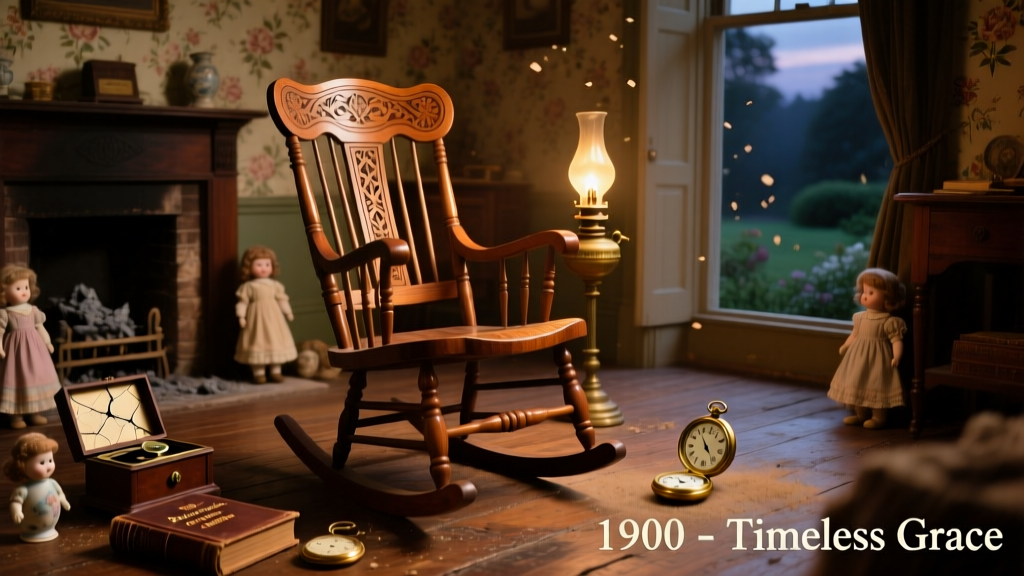
The 1900 Mahogany-Inlaid Bentwood Rocker: Anatomy, Provenance, and Market Value of a Rare 39-Inch American Masterpiece
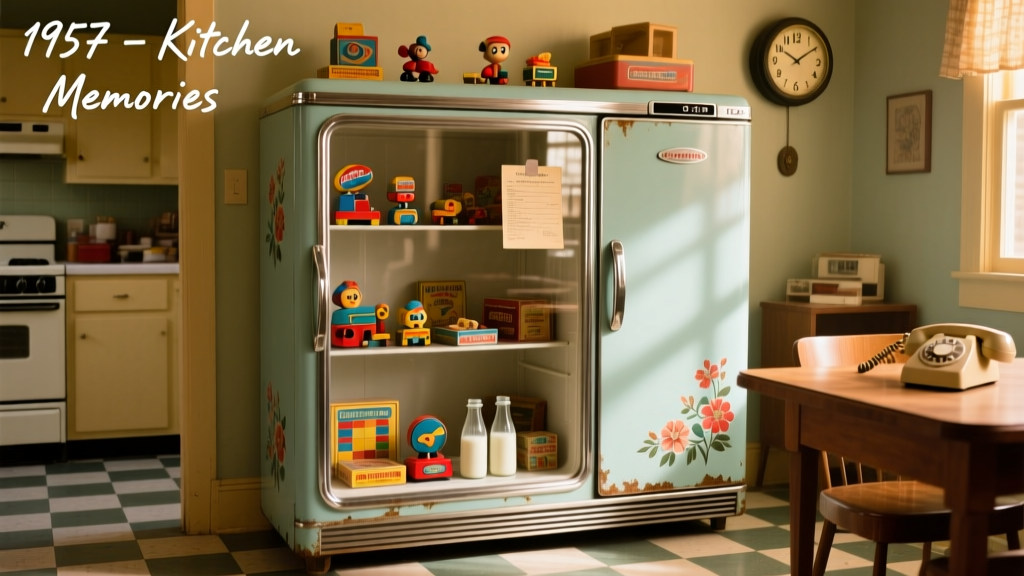
The 1930s–1940s Kitchen Icebox: Decoding the Six-Door Mirror-Front Model (6½ × 7 × 2½ Ft)
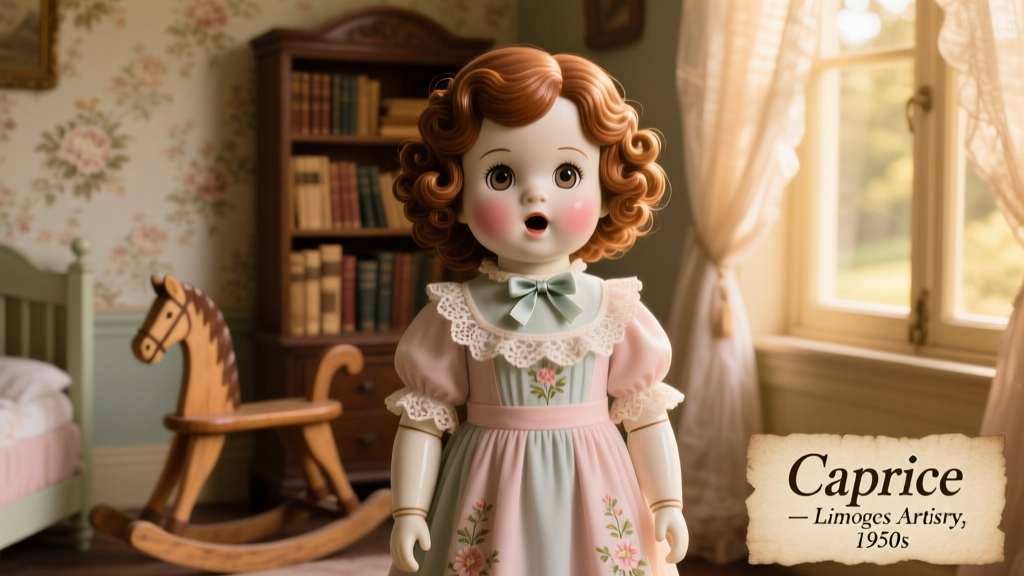
Doll Limoges Character Caprice Open-Close Mouth — A 27-Inch Mid-Century French Porcelain Masterpiece
Piccadilly Toys: The Forgotten Legacy of Mid-Century British Die-Cast and Plastic Playthings
Royal Doulton Figurine 'Twilight' HN 2256: A Mid-Century Masterpiece in Porcelain and Poise
Chalkware Figurine Dog: A Collector's Guide to the Iconic Three-Sided Canine