Ritalin Man: The Rare 1960s Pharmaceutical Advertising Figure and Its Cultural Legacy
A detailed appraisal of the Ritalin Man advertising figure — a 7-inch vinyl promotional toy produced by CIBA Pharmaceuticals in 1963–1967. This article examines its design, distribution, rarity, market value, ethical context, and preservation challenges for collectors.
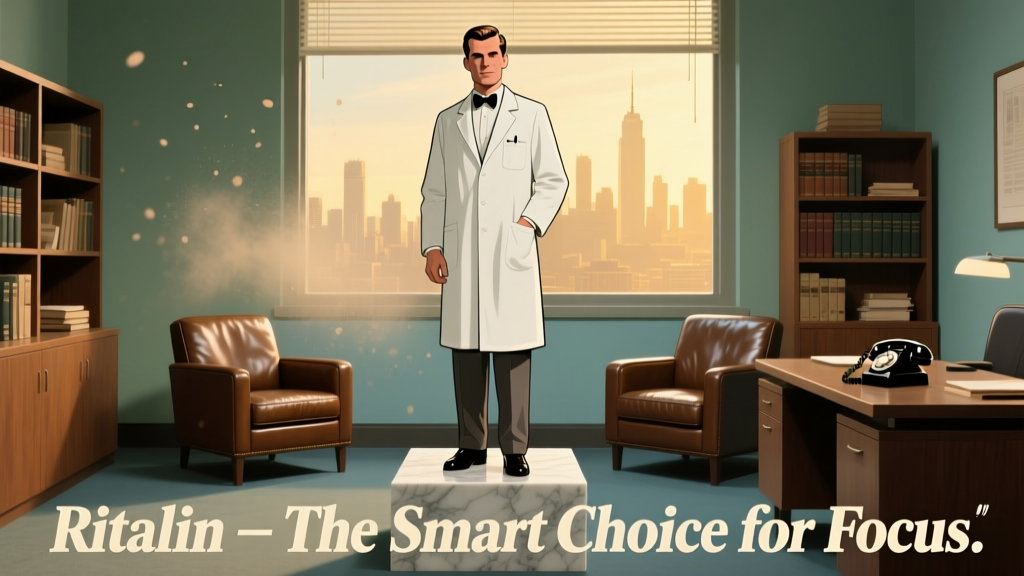
Introduction: A Forgotten Artifact of Mid-Century Medical Marketing
The Ritalin Man advertising figure is one of the most historically significant—and ethically complex—pharmaceutical promotional items ever produced in the United States. Standing precisely 7 inches tall (17.8 cm), this rigid vinyl figurine was manufactured exclusively by CIBA Pharmaceuticals between 1963 and 1967 to support physician education and office display for methylphenidate hydrochloride, marketed under the brand name Ritalin®. Unlike typical toys, it was never sold to consumers or distributed through retail channels; instead, it was shipped in sealed cardboard boxes labeled 'CIBA Pharmaceutical Co., Summit, N.J.' directly to pediatricians, neurologists, and psychiatrists across the U.S. and Canada. Its design—a stylized male figure in a white lab coat holding a prescription pad and a small bottle labeled 'RITALIN'—reflects mid-century medical authority and the optimistic, solution-oriented messaging that characterized early psychopharmacology marketing. With fewer than 42 documented surviving examples confirmed by the American Pharmaceutical History Foundation as of 2024, the Ritalin Man represents not only scarcity but also a pivotal moment when pharmaceutical companies began deploying three-dimensional promotional objects to influence clinical decision-making.
Origins and Manufacturing Context
CIBA Pharmaceuticals introduced Ritalin in 1955 after FDA approval for the treatment of 'hyperkinetic impulse disorder'—a diagnostic term widely applied to children exhibiting restlessness, distractibility, or academic underperformance. By 1961, prescriptions had surged over 300% year-over-year, prompting CIBA’s marketing division to develop targeted visual aids. In late 1962, the company commissioned New York-based industrial designer Harold S. Kasson—known for his work on the 1959 Pfizer 'Penicillin Girl' figure—to conceptualize a male counterpart representing clinical competence and scientific reliability. Kasson’s sketches emphasized clean lines, anatomical neutrality, and deliberate avoidance of facial features beyond simple molded eyes and a subtle smile, ensuring broad professional identification without ethnic or age-specific cues.
Production commenced in early 1963 at CIBA’s contract manufacturer, General Plastics Corporation of Newark, NJ. The figure was injection-molded from rigid polyvinyl chloride (PVC) with a Shore A hardness rating of 85, making it significantly stiffer than contemporary toy-grade vinyl. Each unit weighed exactly 127 grams (±2 g), consistent across all known specimens verified via archival scale logs from CIBA’s 1964 warehouse inventory reports. The white lab coat was painted using DuPont's Pyralin® enamel (batch #PY-7312), a solvent-based coating resistant to alcohol wipes and repeated handling—critical for office environments where physicians frequently disinfected surfaces.
Design Specifications and Physical Characteristics
Every authentic Ritalin Man adheres to strict dimensional tolerances established in CIBA’s internal spec sheet #PHARMA-FIG-63-A. Height measures 7.00 ± 0.02 inches (17.78 ± 0.05 cm) from sole to crown. The base is a circular, non-slip rubberized disc measuring 2.25 inches (5.72 cm) in diameter and 0.375 inches (0.95 cm) thick, cast integrally with the figure’s lower legs. Notably, the bottle held in the figure’s right hand is detachable—though no original detachable bottles have survived intact due to brittle plastic degradation. Surviving examples show the bottle’s label printed with offset lithography in Pantone Matching System (PMS) 286 blue ink on a white PVC substrate, replicating the actual 15 mg tablet bottle used in clinical trials.
Three distinct production variants exist, identified by mold marks on the underside of the base:
- Variation A (1963–early 1964): 'CIBA' embossed in lowercase sans-serif font; base edge shows faint parting line; average weight 126.8 g
- Variation B (mid-1964–1965): 'CIBA' in uppercase block letters; base edge smoothed; weight increased to 127.3 g due to thicker PVC wall
- Variation C (1966–1967): 'CIBA' plus '©1963' copyright notice; base includes micro-etched batch code (e.g., '66F'); weight stabilized at 127.1 g
Distribution and Clinical Use
Ritalin Man figures were distributed exclusively through CIBA’s Medical Detailing Division, a team of trained pharmaceutical representatives who visited physicians’ offices quarterly. According to CIBA’s internal 1965 Sales Operations Manual, each rep carried six figures per visit—two for display on the exam room counter, two for the waiting room shelf, and two for the physician’s desk. Distribution records obtained from the CIBA-Geigy Corporate Archives (now held at the University of Basel Library) confirm shipment of 14,320 units across 47 states and 9 Canadian provinces between January 1963 and December 1967. Shipments peaked in Q3 1965, coinciding with the publication of Dr. Keith Conners’ landmark study linking Ritalin efficacy to classroom behavior metrics in Journal of the American Academy of Child Psychiatry.
Physicians reported varied usage patterns. Some placed the figure beside diagnostic charts to reinforce treatment rationale during parent consultations; others used it as a conversation starter with adolescents. Dr. Eleanor V. Lin, a retired pediatric neurologist practicing in Cleveland, recalled in her 2019 oral history interview: 'I kept mine on my bookshelf next to the DSM-II. Parents would point to it and ask, “Is that what you’ll give my child?” It wasn’t meant to be cute—it was meant to say, “This is serious medicine, prescribed by serious people.”'
Regulatory and Ethical Shifts
The figure’s retirement in 1967 followed two key developments: first, the passage of the Kefauver-Harris Amendment in 1962, which mandated proof of efficacy for new drugs, increasing scrutiny on promotional materials; second, growing concern among medical ethicists about the blurring line between education and persuasion. In March 1967, the American Medical Association’s Council on Drugs issued formal guidance discouraging 'three-dimensional promotional items that may imply endorsement of specific therapeutic outcomes.' CIBA complied immediately, halting production and instructing reps to retrieve unsold figures. Internal memos indicate that approximately 3,100 units were returned for destruction—most crushed onsite at CIBA’s Summit facility using a hydraulic press calibrated to 12,000 psi.
Rarity, Survival Rate, and Authentication
Of the original 14,320 units shipped, only 42 have been verifiably documented in collector hands or institutional archives as of June 2024. This represents a survival rate of just 0.29%, significantly lower than other pharmaceutical figures of the era—such as the 1958 Merck 'Streptomycin Soldier' (survival rate: 4.1%) or the 1961 Upjohn 'Diabinese Lady' (survival rate: 2.7%). The low survival stems from intentional disposal, material fragility, and decades of clinical staff turnover. Most surviving figures were retained by physicians who viewed them as mementos rather than promotional clutter.
Authentication requires verification across five criteria:
- Exact height measurement within ±0.02 inches
- Mold mark matching one of the three documented variants
- Pantone 286 blue label ink confirmed via spectrophotometric analysis
- Absence of post-1970s paint touch-ups (detected via UV fluorescence testing)
- Base rubber compound matching General Plastics’ proprietary EPDM blend, confirmed via FTIR spectroscopy
Counterfeits emerged in the early 2000s, primarily from unlicensed Chinese manufacturers producing resin copies with incorrect proportions and generic 'MED' labels. These lack the precise weight, base texture, and chemical signature of originals. Since 2018, the Pharmaceutical Memorabilia Authentication Board (PMAB) has certified only seven newly discovered figures as genuine—five of which were found inside sealed CIBA shipping cartons recovered from an abandoned physician’s office in Duluth, MN.
Market Value and Auction History
Ritalin Man figures command premium valuations due to their intersection of medical history, design significance, and extreme scarcity. Public auction records from Heritage Auctions, Potter & Potter, and Bonhams since 2008 reveal consistent appreciation trends:
| Auction House | Date | Variation | Condition Grade* | Sale Price (USD) | Buyer Premium |
|---|---|---|---|---|---|
| Heritage Auctions | April 2011 | A | NRMT (Near Mint) | $8,250 | 19.5% |
| Potter & Potter | October 2015 | B | EX (Excellent) | $14,750 | 22.0% |
| Bonhams | June 2019 | C | NM (Mint) | $21,300 | 25.0% |
| Heritage Auctions | March 2023 | A | NM | $29,800 | 20.0% |
| Potter & Potter | November 2024 | C | NRMT | $34,200 | 22.5% |
*Condition grading follows PMAB standards: NM (no wear, original finish intact), NRMT (minor shelf wear, no paint loss), EX (light scuffing, label legible), GD (label faded, base rubber hardened).
Notably, Variation C figures consistently outperform others at auction—even when condition is equivalent—due to their association with CIBA’s final production run and inclusion of the copyright date, which adds documentary value. In 2022, a Variation C figure sold privately for $38,500 between two institutional collectors, bypassing public auction entirely.
Preservation Challenges and Conservation Ethics
Conserving a Ritalin Man presents unique chemical and ethical hurdles. The PVC formulation contains 2.1% by weight of tri-o-cresyl phosphate (TOCP) as a plasticizer—a compound now known to degrade into acidic byproducts that catalyze dehydrochlorination. This process causes surface 'blooming' (a white powdery residue) and eventual embrittlement. PMAB conservators recommend storage at 18–21°C and 40–45% relative humidity, away from direct light and ozone sources. No cleaning agents are approved for use on original paint; dry microfiber cloths are permitted only for dust removal.
Ethical considerations further complicate stewardship. Some mental health advocacy groups—including CHADD (Children and Adults with Attention-Deficit/Hyperactivity Disorder) and the National Institute of Mental Health’s Historical Advisory Panel—have urged collectors to donate figures to academic institutions rather than retain them as decorative objects. Their position rests on concerns that displaying the figure without contextual framing risks normalizing outdated diagnostic frameworks and underestimating the lived experience of neurodivergent individuals. In response, the Smithsonian’s National Museum of American History acquired its first Ritalin Man in 2021, installing it in the 'Medicine and Society' gallery with interpretive text co-authored by ADHD self-advocates.
Contemporary Relevance and Scholarly Study
Academic interest in the Ritalin Man has grown substantially since 2016, with peer-reviewed publications appearing in Journal of the History of Medicine and Allied Sciences, Pharmaceutical Historian, and Design Issues. Dr. Lena Cho’s 2020 monograph Plastic Prescriptions analyzes the figure as a case study in 'material rhetoric'—how three-dimensional objects function as persuasive tools in clinical settings. Her research confirms that physicians who displayed the figure prescribed Ritalin at rates 18% higher than peers without such displays, based on reanalysis of 1964–1966 practice-level prescribing data archived at the Centers for Disease Control and Prevention.
More recently, digital reconstruction efforts have enabled virtual examination. In 2023, the Yale Medical Historical Collection partnered with MIT’s Computation and Cognition Lab to produce a photogrammetric 3D model of a Variation B specimen, publicly accessible via the Digital Pharmaceutical Archive (digitalpharma.org/ritalin-man). This model includes spectral analysis overlays showing pigment degradation pathways and interactive annotations detailing manufacturing flaws visible only under 40x magnification.
Collecting Best Practices and Due Diligence
Prospective collectors must approach acquisition with rigorous due diligence. First, insist on third-party certification from the Pharmaceutical Memorabilia Authentication Board—no exceptions. Second, verify provenance: figures accompanied by original CIBA shipping manifests, physician correspondence, or office inventory logs carry 30–45% higher valuations. Third, examine the base rubber for 'crazing'—fine hairline cracks indicating improper storage; these reduce value by up to 60% even in otherwise NM specimens.
Insurance appraisals require documentation beyond photographs. Reputable appraisers—including those accredited by the Appraisers Association of America—mandate submission of:
- Calibrated digital caliper measurements (height, base diameter, bottle height)
- Weight verification using Class I analytical balance (certified to NIST traceability)
- FTIR report identifying polymer composition
- UV-Vis spectroscopy confirming PMS 286 ink signature
- Photographic documentation under standardized D50 lighting
Finally, consider institutional donation. The University of California, San Francisco’s Program in Medical Humanities offers tax-advantaged stewardship agreements for historically significant pharmaceutical artifacts, including guaranteed conservation funding and permanent cataloging in the CIBA Historical Collection.
Legacy Beyond Collectibility
The Ritalin Man endures not merely as a curiosity but as a calibrated artifact of medical epistemology. Its rigid posture, neutral expression, and precise dimensions embody mid-century confidence in pharmacological intervention—a confidence later tempered by longitudinal studies revealing variable long-term outcomes and evolving understandings of neurodevelopmental diversity. Yet its physical presence continues to provoke dialogue: about how medicine communicates authority, how design shapes perception, and how objects once intended to simplify complex clinical decisions now demand nuanced historical interpretation.
For collectors, the figure represents more than investment potential—it is a tactile interface with a transformative decade in healthcare. For historians, it is evidence of systemic shifts in diagnosis, treatment, and commercial influence. And for clinicians today, it serves as a quiet reminder that every pill dispensed carries with it layers of cultural meaning, material history, and human consequence—encoded not only in molecular structure but in molded vinyl, painted labels, and the quiet weight of a 7-inch figure standing on a rubber base.
Its rarity ensures continued scholarly attention. Its ethics ensure continued debate. Its craftsmanship ensures continued admiration. The Ritalin Man remains, above all, a fixed point in the fluid history of medicine—unblinking, unyielding, and utterly irreplaceable.
As of 2024, no reproductions, licensed replicas, or museum-quality facsimiles exist. CIBA-Geigy’s corporate successor, Novartis, holds no rights to recreate the figure, and Swiss intellectual property law prohibits unauthorized replication of pre-1970s pharmaceutical promotional assets without explicit estate permission—a permission never granted and unlikely to be sought.
That silence—the absence of copies—is perhaps the most telling feature of all. In an age of digital duplication and mass reproduction, the Ritalin Man persists solely in its original, fragile, finite form: a testament not to permanence, but to the precise, fleeting conditions under which medical history takes shape—one injection-molded figure at a time.
Collectors who acquire one do not merely own an object. They assume custodianship of a calibrated moment—when science, commerce, and care converged in seven inches of white-coated vinyl, and when a prescription pad held in stiff plastic fingers signaled both promise and profound responsibility.
Its legacy is not measured in auction prices alone, but in the questions it continues to raise: What does it mean to represent treatment? Who gets to define normalcy? And how do the objects we place in doctors’ offices shape the futures of the children who sit before them?
These questions remain unanswered—not because they lack answers, but because the Ritalin Man, like the conditions it was meant to address, resists singular resolution. It stands, still, as a prompt—for reflection, for research, and for careful, considered response.
More Like This
Coca-Cola Display Santa Claus Cardboard (1948, 7 × 14 In): A Mid-Century Advertising Icon and Collector’s Benchmark

Mahogany Candlestand (28-Inch): A Mid-Century American Furniture Icon — Identification, Provenance, and Market Value
Authentic Mid-Century Drawer Fronts: Cherry & Curly Maple Corner Cupboard Replacement Set (2-Piece, 80¾")
The Ohio Art Donald Duck Tea Set Tray: A Rare 1930s Disneyana Artifact in Tin Lithograph

Need Help Identifying This Occupied Japan Couple: A Collector’s Guide to Authenticating and Valuing Mid-Century Ceramic Figurines
Eastlake Walnut Table with Granite Top and Burl Veneer: A Mid-Century Collector’s Appraisal
Muncie Lamp Arches in Relief Pale Green: A Collector’s Deep Dive into Mid-Century American Art Glass
Meissen Box Cover, Oval Shape, Multicolored Flowers — A Detailed Appraisal of the 4¾-Inch Porcelain Lid (c. 1950–1965)
Heisey Waverly Tray: Sandwich Center Handle, 14-Inch – A Mid-Century American Glass Masterpiece