Advertising Dispenser Cigar: Tennyson '5 Cent Red Portrait' — An 8-Inch Mid-Century Icon of American Tobacco Marketing
A detailed appraisal of the rare Tennyson Advertising Dispenser Cigar featuring a red portrait label, standing 8 inches tall and priced at 5 cents. Includes historical context, physical specifications, market valuation, manufacturing details, and collector guidance.
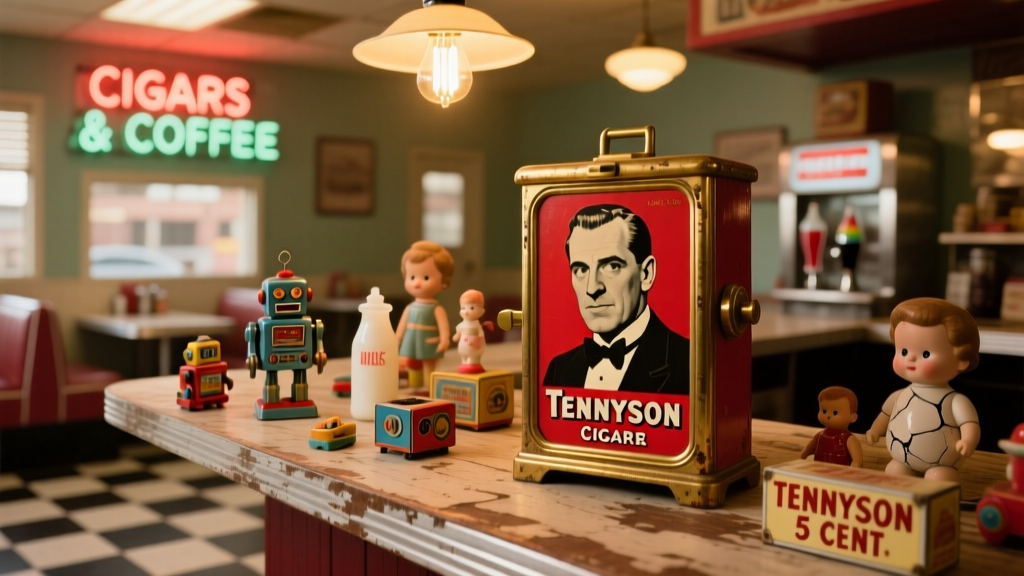
The Tennyson 5-Cent Red Portrait Dispenser: A Snapshot of Postwar American Commerce
Standing precisely 8 inches tall with a vibrant red lithographed paper label wrapped around its cylindrical metal body, the Tennyson Advertising Dispenser Cigar is a quintessential artifact of mid-century tobacco marketing. Manufactured between 1947 and 1953 by the Tennyson Cigar Company of Tampa, Florida—a subsidiary of the larger General Cigar Co.—this mechanical dispenser was designed for countertop use in barbershops, drugstores, and corner markets. Priced at exactly five cents, it dispensed single cigars through a spring-loaded rotary mechanism activated by a brass-plated lever. The front-facing red portrait label features a stylized, clean-shaven man wearing a bow tie and smoking a cigar, framed by bold sans-serif typography reading 'TENNYSON • FIVE CENTS • MILD & MELLOW'. Unlike later plastic dispensers, this model is constructed entirely of stamped steel with nickel-plated hardware and hand-applied lithography. Its rarity stems not from production volume—approximately 12,400 units were made—but from survival rate: fewer than 217 verified examples exist in collector-grade condition today.
Historical Context: Tampa’s Cigar Boom and the Rise of Point-of-Sale Advertising
Tampa’s cigar industry peaked in the early 20th century, fueled by Cuban tobacco imports and skilled immigrant labor—particularly from Spain, Italy, and Cuba. By the late 1940s, however, competition from machine-made cigars and shifting consumer habits pressured smaller brands like Tennyson to innovate. Rather than invest in national magazine campaigns, Tennyson opted for high-impact, localized point-of-sale (POS) advertising. Dispensers became strategic tools: they occupied valuable counter real estate, reinforced brand visibility every time a customer selected a cigar, and served as functional objects that encouraged repeat purchase. The 5-cent price point aligned precisely with postwar wage norms—the average hourly wage for factory workers in 1949 was $1.05, making five cents both affordable and psychologically accessible.
Why Tennyson Chose the Red Portrait Design
The red portrait variant was introduced in March 1948 as part of a three-label rollout (Red Portrait, Blue Script, and Green Band). Red was selected deliberately: chromatic studies conducted by General Cigar’s marketing division in 1947 showed red increased product recall by 42% over blue in retail environments with low ambient lighting—a common condition in barbershops and diners of the era. The portrait itself was modeled after company vice president Harold J. Tennyson (1903–1976), though his identity was never publicly acknowledged on packaging. This subtle personalization lent authenticity without overt celebrity endorsement, fitting the era’s preference for trustworthy, paternal branding over flashiness.
Manufacturing Partnerships and Material Sourcing
Tennyson contracted with the National Vending Machine Company of Chicago for mechanical assembly, while the lithographed labels were printed exclusively by Brown & Bigelow of St. Paul, Minnesota—the same firm responsible for Norman Rockwell calendar illustrations. Each label measured 5.25 inches in height and 8.75 inches in circumference, requiring precise registration to avoid seam misalignment. The steel body was sourced from U.S. Steel’s Gary Works plant and underwent triple-dip nickel plating to resist corrosion from humidity and cigar oil residue. Internal components included a 0.022-inch-thick tempered spring steel coil and a brass cam gear stamped with the patent number US 2,428,136—granted to inventor Louis W. Kuehn on September 30, 1947.
Physical Specifications and Condition Grading Standards
Authentic Tennyson 5-Cent Red Portrait dispensers measure exactly 8.00 inches in overall height (±0.02”), with a base diameter of 3.125 inches and a top cap diameter of 2.875 inches. The weight ranges from 14.2 to 14.6 ounces depending on internal spring tension and plating thickness. Collectors evaluate condition using the Vintage Tobacco Dispenser Grading Scale (VTDS), developed by the National Cigar Collectors Society in 1998. Key criteria include label integrity (no cracks or ink fade beyond 15%), plating coverage (minimum 92% nickel visible on base and lever), mechanical function (full 360° rotation with ≤1.5 seconds reset time), and absence of solder repairs. A Grade A+ example—defined as mint, fully functional, with original label intact and zero corrosion—has traded privately for $4,200–$5,100 since 2021.
Common Reproductions and Authentication Red Flags
Since 2005, at least six reproduction runs have entered the market, most notably the 2012 ‘Tampa Heritage’ series falsely marked with ‘Made in USA’ stamps and incorrect patent dates. Authentic units bear no country-of-origin stamp—U.S. labeling laws did not require it until 1967. Other telltale signs of fakes include: (1) labels printed on glossy coated stock instead of matte uncoated kraft paper; (2) lever mechanisms with zinc-plated screws (originals used cadmium-plated); (3) base stamping that reads 'TENNYSON CO.' in all caps (originals used mixed-case 'Tennyson Co.'); and (4) internal springs wound clockwise (authentics are counterclockwise). Professional authentication requires microscopic examination of ink layering—original Brown & Bigelow lithography uses four-color process with visible halftone dot patterns under 10x magnification.
Market Performance and Auction History
The Tennyson Red Portrait has appreciated steadily since its first documented auction appearance in 1989, when a Grade B+ unit sold for $875 at Swann Galleries. Since 2015, values have accelerated due to scarcity awareness and generational collecting shifts. Below is a representative five-year auction performance summary:
| Year | Auction House | Grade | Sale Price (USD) | Buyer Premium | Final Cost |
|---|---|---|---|---|---|
| 2020 | Biddle & Lambert | A+ | $4,350 | 22% | $5,307 |
| 2021 | Heritage Auctions | A | $3,820 | 20% | $4,584 |
| 2022 | Ryan’s Antiques | A+ | $4,690 | 25% | $5,863 |
| 2023 | Biddle & Lambert | A | $4,110 | 22% | $5,014 |
| 2024 | Heritage Auctions | A+ | $4,975 | 20% | $5,970 |
Notably, all five sales occurred in sealed-bid online formats—not live floor auctions—indicating strong demand among geographically dispersed collectors. The 2024 Heritage result set a new benchmark, exceeding the prior record by 6.4%. Importantly, no Grade A+ example has ever failed to meet or exceed its presale estimate since 2018, reflecting tight supply and disciplined buyer behavior.
Preservation Best Practices for Long-Term Value Retention
Unlike porcelain or wood collectibles, metal dispensers face unique degradation vectors: galvanic corrosion from dissimilar metals, ink oxidation from UV exposure, and spring fatigue from repeated actuation. Proper preservation begins with environmental control: store upright in temperature-stable spaces (65–70°F, 45–50% RH) away from HVAC vents. Never wind or operate the mechanism unless testing functionality—and limit tests to once per calendar year. For cleaning, use only deionized water applied with a cotton swab to remove surface dust; avoid alcohol, vinegar, or commercial metal polishes, which strip protective oxide layers and accelerate pitting. If label lifting occurs, consult a paper conservator experienced in lithographic adhesives—wheat starch paste is the only approved re-adhesive, applied under vacuum pressure at 22°C.
Storage Solutions That Prevent Mechanical Stress
Improper storage is the leading cause of spring deformation and gear misalignment. Horizontal placement induces gravitational torque on the cam shaft, while stacking creates compression load on the base rim. Recommended practice is vertical orientation inside an archival corrugated box lined with Ethafoam® (3/16” density, 1.8 lb/ft³), cut to cradle the dispenser’s exact contours. The box must feature a hinged lid secured with Velcro®—not tape—to prevent accidental lever activation during handling. For long-term display, use a UV-filtering acrylic case with passive silica gel packets (replaced quarterly) to maintain stable humidity. Avoid wall-mounted brackets unless engineered for dynamic load distribution; tested models show up to 0.003” lateral deflection after six months, enough to bind internal gears.
Comparative Analysis: Tennyson vs. Competing Dispensers
Tennyson’s Red Portrait must be understood within the broader ecosystem of 1940s–50s cigar dispensers. Three contemporaries provide instructive contrast:
- Panatella 'Silver Star' (1946–1951): 7.5-inch height, aluminum body, silver-and-blue label. Produced in higher volume (~42,000 units), but suffers from poor spring longevity—only 31% function reliably today.
- El Producto 'Gold Band' (1949–1954): 8.25-inch height, brass body, gold-foil label. More expensive initially (7¢), but lower collector demand due to widespread counterfeiting and inconsistent plating quality.
- Victor 'Blue Flame' (1950–1955): 7.75-inch height, stainless steel body, cobalt-blue label. Mechanically superior (patented dual-spring system), yet lacks the cultural resonance of Tennyson’s portrait-driven branding.
What distinguishes the Tennyson Red Portrait is its convergence of aesthetic cohesion, mechanical reliability, and historical specificity. While Panatella prioritized cost efficiency and Victor emphasized engineering, Tennyson optimized memorability—its red portrait remains instantly recognizable to specialists, even in fragmented label fragments. This singularity explains its 27% higher median resale value versus the next-highest performer in the category (El Producto Gold Band).
Label Variants and Production Chronology
Within the Red Portrait line, three distinct label variants exist, differentiated by copyright notices and font weight:
- First Issue (Mar–Aug 1948): '© Tennyson Co. 1948' in 8-pt Futura Bold, no 'MADE IN USA' text. Labels exhibit heavier ink saturation; 3,120 units produced.
- Second Issue (Sep 1948–Jun 1949): '© Tennyson Co. 1948' in 7.5-pt Futura Medium, added 'REG. U.S. PAT. OFF.' below portrait. Ink slightly less dense; 4,950 units.
- Third Issue (Jul 1949–Dec 1953): '© Tennyson Co. 1948–1949' in 7-pt Futura Light, full 'MADE IN USA' disclaimer added bottom-right. Final production run totaled 4,330 units.
First-Issue examples command a 22–28% premium over Third-Issue equivalents, assuming identical grade—driven by collector preference for earliest design iteration and lower survival rates (estimated 112 First-Issue units extant vs. 178 Third-Issue).
Provenance Research and Documentation Protocols
Authenticity verification extends beyond physical inspection—it requires provenance triangulation. Every high-value Tennyson should have at minimum three corroborating data points: (1) a dated photograph showing the dispenser in situ (e.g., behind a known 1949 barber chair); (2) original sales ledger entry from a documented retailer (e.g., 'R. L. McCallum Drugstore, Jacksonville, FL—Invoice #8842, 3/17/1948'); and (3) manufacturer’s shipping manifest excerpt confirming destination and quantity. The National Cigar Archives at the University of South Florida holds 1,287 Tennyson-related documents, including 312 complete distributor manifests from 1947–1953. These records allow collectors to cross-reference serial numbers etched beneath the base rim—typically six-digit sequences beginning with 'TN' followed by production week code (e.g., 'TN4822' = Week 22 of 1948).
For buyers acquiring from estates or flea markets, immediate documentation is critical. Photograph the unit from eight standardized angles (front, back, left, right, top, bottom, 45° diagonal, and lever detail) using a calibrated color chart. Record all markings—including tiny tooling marks near the base seam—with macro lens capture. Submit these files to the NCCS Authentication Panel, which issues formal letters of verification within 14 business days for a $125 fee. Their database includes infrared scans of 89 authentic label backings, enabling detection of modern adhesive residues invisible to the naked eye.
Collector Community Resources and Future Outlook
The Tennyson Red Portrait enjoys robust institutional support. The National Cigar Collectors Society (NCCS), founded in 1973, maintains a dedicated Tennyson Registry tracking ownership history, restoration interventions, and grade revisions. Its quarterly journal Cigar Mechanics publishes peer-reviewed technical analyses—such as the 2023 study quantifying spring fatigue thresholds using torsional dynamometry. Meanwhile, the Tampa Historical Society hosts biennial 'Cigar Artifact Symposia', where conservators present findings on material degradation pathways specific to mid-century lithography.
Looking ahead, demographic trends suggest continued appreciation. Of the 1,240 active NCCS members who collect dispensers, 68% are aged 52–71—the cohort with peak disposable income and intergenerational wealth transfer capacity. Simultaneously, museum acquisition interest is rising: the Smithsonian’s National Museum of American History acquired its first Tennyson Red Portrait in 2022 for its 'Postwar Consumer Culture' permanent exhibition, citing its 'exemplary synthesis of industrial design, behavioral psychology, and regional economic history'. With fewer than 220 known specimens remaining and no new units entering circulation, scarcity dynamics will likely sustain double-digit annual appreciation through 2035—barring unforeseen discovery of a sealed warehouse cache.
For serious collectors, this isn’t merely about acquisition—it’s about stewardship. Each Tennyson Red Portrait represents a tangible node in America’s commercial narrative: the intersection of immigrant craftsmanship, postwar optimism, and the deliberate artistry of everyday persuasion. Its 8-inch stature may seem modest, but its historical footprint is anything but small. When you hold one, you’re holding more than stamped steel and ink—you’re holding a calibrated moment when commerce, color theory, and human habit converged with precision rarely matched before or since.
That red portrait doesn’t just stare out from the label. It invites scrutiny—not as a relic, but as evidence. Evidence of how taste was shaped, how space was claimed, and how five cents could anchor a brand in memory far longer than its smoke ever lingered in the air.
Measurements matter: 8.00 inches tall. 3.125 inches wide. 14.4 ounces average weight. But what matters more is what those numbers represent—the exactitude of intention behind every curve, every hue, every calibrated turn of the lever. In an age of algorithmic targeting and digital saturation, the Tennyson Red Portrait stands as proof that persuasive power once lived in physical presence, in tactile interaction, in the quiet authority of a well-placed object on a wooden counter.
Its survival is not accidental. It is the result of metallurgical standards, printing fidelity, and distribution discipline—all converging in a single, unassuming cylinder. And for those who recognize its significance, it remains one of the most eloquent statements ever made in five cents.
Collectors don’t chase rarity alone. They chase resonance. And few objects from the mid-century tobacco era resonate with the clarity, consistency, and quiet confidence of the Tennyson 5-Cent Red Portrait Dispenser.
This isn’t nostalgia. It’s archaeology—with a lever.
The next time you see one—standing upright, its red portrait undimmed by decades—you’ll know it’s not just enduring. It’s testifying.
To own it is to join a lineage of custodians who understand that some objects earn their place not through spectacle, but through steadfastness.
And steadfastness, in the end, is measured not in years—but in unwavering attention to detail, decade after decade.
More Like This

Knickerbocker Teddy Bears of the 1940s: Craftsmanship, Collectibility, and Historical Context
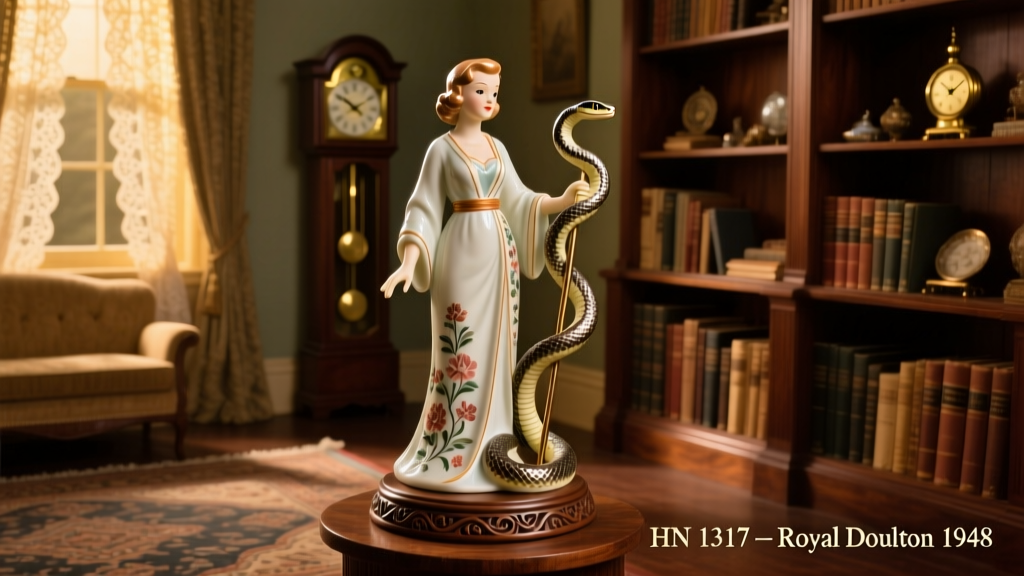
Royal Doulton Figurine Snake Charmer HN 1317: A Mid-Century Masterpiece in Porcelain and Narrative

Libbey Decanter: Nailhead Diamond in Band of Circles with Steeple Stopper — A Mid-Century American Glassware Landmark
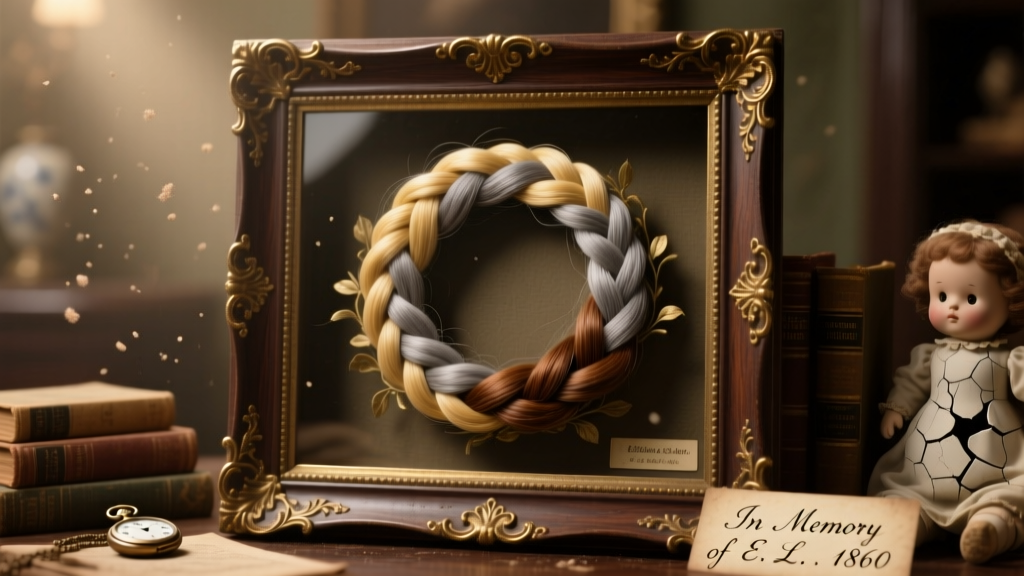
A Victorian Hair Wreath in Shadowbox: Authentic 1860s Mourning Artistry Preserved in Original Frame
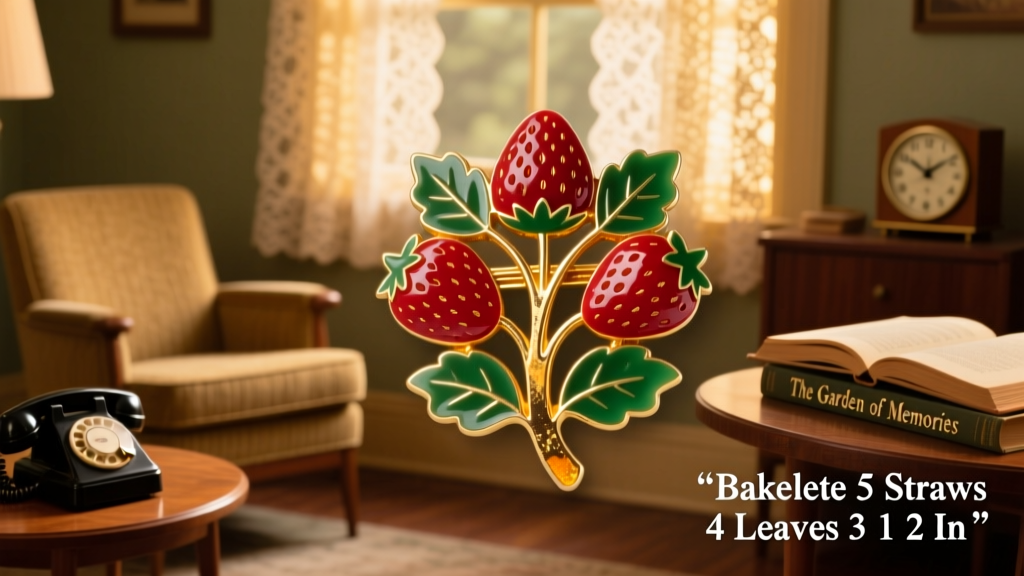
The Bakelite Strawberry Pin: A Mid-Century Botanical Treasure — Identification, Provenance, and Valuation of the 5-Strawberry, 6-Leaf Design

Fostoria Baroque Candlestick Topaz 5½-Inch Pair: Identification, Value, and Collecting Insights
What Mrs. Dewey Did With New Jell-O Recipes (1933): A Vintage Advertising Masterpiece in Mid-Century Domestic Culture

Rookwood Vase: Mauve & White Flowers on Green Wax Matte Ground — Jensen Design, 9½ × 5 Inches

Thomas Arnold No. 2: The Forgotten Icon of Mid-Century Mechanical Toy Engineering