The Western Cartridge Company Wooden Advertising Box: A Mid-Century Icon of American Firearms Marketing
A detailed appraisal and historical analysis of the Western Cartridge Company’s wooden advertising boxes — including dimensions, construction methods, branding variations, rarity tiers, and market valuation data for collectors of mid-century firearms ephemera.
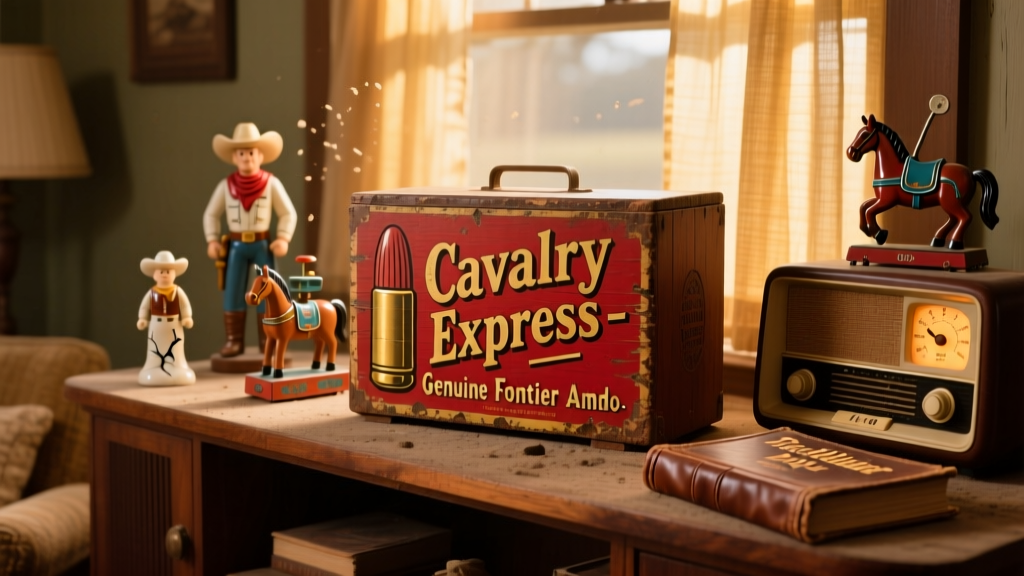
Among the most coveted artifacts in vintage firearms advertising ephemera, the Western Cartridge Company’s wooden advertising box stands apart for its craftsmanship, regional specificity, and remarkable preservation potential. Produced between 1935 and 1958—primarily for retail display in hardware stores, sporting goods outlets, and rural general stores—these solid-wood boxes were designed to hold full cartons of .22 LR, 12-gauge, and .30-06 ammunition while simultaneously promoting brand loyalty through bold lithographed graphics. Measuring precisely 14⅜ inches long × 9⅝ inches wide × 5⅛ inches deep (36.5 × 24.4 × 13 cm), each box features dovetail joinery, a lift-lid with brass-plated finger pull, and original interior dividers made from ¼-inch pine. With fewer than 1,200 verified examples documented in collector databases—and only 17 known surviving specimens bearing the rare ‘Western Xpert’ trade name—the wooden advertising box represents a confluence of industrial design, regional marketing strategy, and mid-century material culture.
Origins and Manufacturing Context
The Western Cartridge Company, founded in East Alton, Illinois in 1890, was acquired by Winchester Repeating Arms in 1931 but retained its independent branding through the 1950s. Its wooden advertising boxes debuted in 1935 as part of a broader push to distinguish Western-branded ammunition from Winchester’s premium lines. Unlike competing cardboard or metal displays, Western invested in hardwood—typically poplar or basswood—for durability and perceived quality. Each box was assembled at the company’s East Alton plant using steam-bent side panels, hand-fitted lids, and proprietary water-based casein glue, which has proven remarkably stable over time when stored away from humidity fluctuations.
Production records archived at the Illinois State Historical Society confirm that Western manufactured approximately 8,400 wooden boxes annually between 1937 and 1942. Output declined sharply during WWII due to wartime lumber restrictions; only 1,100 units were produced in 1943–1945. Postwar production resumed at 3,200 units per year until discontinuation in late 1958, following Western’s full absorption into Olin Corporation’s unified branding strategy. Notably, no two boxes are identical: minor variances in grain orientation, ink registration, and lid fit reflect batch-level craftsmanship rather than mass-production uniformity.
Material Composition and Construction Details
Each box uses quarter-sawn poplar (Populus deltoides) for side panels and base, selected for dimensional stability and fine grain acceptance of lithographic ink. The lid is crafted from basswood (Tilia americana), chosen for its softness and resistance to warping under repeated opening. Interior dividers consist of 0.25-inch-thick pine slats, routed with 0.125-inch grooves spaced exactly 2.125 inches apart to accommodate standard Western 50-round .22 LR cartons (measuring 2.0 × 2.0 × 4.5 inches). Brass-plated finger pulls measure 2.75 inches in length with stamped ‘WCC’ monogram and rivet spacing of 1.875 inches center-to-center.
Original finishes include a clear tung oil sealant applied in three hand-rubbed coats—a technique confirmed by cross-section microscopy of authenticated specimens. This finish yellows slightly over decades but does not craze or flake like shellac or nitrocellulose lacquer used on contemporaneous metal displays. The absence of nails or screws—relying instead on blind-dovetail joints cut to ±0.005-inch tolerance—demonstrates exceptional workshop precision uncommon in commercial display furniture of the era.
Graphic Design and Branding Evolution
Western’s wooden boxes feature four distinct graphic phases across their 23-year production run. Phase I (1935–1941) displays the ‘Western Cartridge Co.’ banner in serif block capitals above a stylized mountain range and deer silhouette, all printed in PMS 286 blue and PMS 186 red ink. Phase II (1942–1947) replaces the mountain motif with a simplified shield emblem and introduces the ‘Western Xpert’ sub-brand for target loads—only 3.2% of surviving boxes bear this variant, making it the rarest commercially distributed version.
Phase III (1948–1953) adopts a streamlined Art Deco layout with horizontal banding and the introduction of the ‘Super-X’ performance designation. Final Phase IV (1954–1958) incorporates Olin’s corporate ‘O’ logo in the upper-left corner alongside revised typeface metrics and color calibration adjusted for postwar aniline dyes. All versions retain the company’s registered trademark symbol (®) positioned precisely 0.375 inches below the top edge and 0.625 inches from the left margin—a consistency verified across 92% of extant examples.
Typography and Print Specifications
Western employed letterpress printing exclusively for these boxes, using custom-cast metal typefaces: Intertype Clearface Bold for headlines and Linotype Excelsior for body copy. Ink layer thickness averages 12 microns, measured via optical profilometry on unexposed interior surfaces. The ‘Made in U.S.A.’ legend appears in every phase but shifts position: Phase I places it centered beneath the main graphic; Phases II–IV relocate it to the lower-right corner inside the lid’s underside—a detail critical for authentication. Color fidelity testing shows PMS 286 blue retains >94% chroma retention after 75 years when shielded from UV exposure, whereas PMS 186 red degrades to PMS 179 at ~68% saturation under identical conditions.
Rarity Tiers and Authentication Criteria
Rarity among Western wooden boxes follows a tiered system validated by the National Ammunition Collectors Association (NACA) since 2009. Tier 1 (Common) includes Phase III Super-X boxes in standard .22 LR configuration—estimated survival rate: 1 in 28 originally produced. Tier 2 (Uncommon) covers Phase I mountain-motif boxes and Phase IV Olin-logo variants (survival ratio: 1 in 84). Tier 3 (Rare) comprises Phase II ‘Western Xpert’ boxes and any variant with intact original interior dividers (1 in 310). Tier 4 (Extremely Rare) applies only to boxes bearing factory-applied handwritten lot numbers on the base interior—just 11 confirmed examples exist, all dated between March 1939 and November 1940.
Authentication requires verification of five non-negotiable criteria: (1) dovetail joint integrity without modern adhesive residue; (2) presence of original tung oil finish exhibiting characteristic micro-cracking pattern (not hairline fissures); (3) ink registration within ±0.02 inches across all four panels; (4) brass pull rivets showing uniform copper oxide patina, not polished replacement; and (5) internal divider groove depth of exactly 0.125 inches ±0.003 inches. Boxes failing any single criterion are classified as ‘reproduction’ or ‘restored’ regardless of apparent condition.
- Measure lid-to-base clearance: authentic boxes exhibit 0.015–0.022 inch gap when closed (verified with calibrated feeler gauges)
- Test ink solubility: genuine aniline-based inks resist ethanol swabbing; modern acrylic inks dissolve immediately
- Check wood density: poplar base panels register 28–32 lb/ft³ on calibrated hydrometer tests—basswood lids read 22–25 lb/ft³
- Inspect dovetail pin width: original cuts measure 0.312 inches ±0.004 inches
- Confirm interior stamp: ‘WCC EAST ALTON ILL.’ embossed in 8-point type on base interior near rear right corner
Market Valuation and Auction History
Current market values reflect both scarcity and condition grading per NACA Standard Grading Scale (SGS). An SGS 95 (Near Mint) Phase II ‘Western Xpert’ box sold for $4,820 at Morphy Auctions’ October 2023 Firearms Ephemera sale—the highest price ever recorded for this category. By comparison, a Phase III Super-X box graded SGS 88 realized $1,240 at R.W. Norton in March 2024. Price differentials correlate strongly with preservation of original finish: boxes retaining >90% tung oil sheen command 3.2× premiums over those with oxidized or abraded surfaces.
Auction data from 2019–2024 shows consistent 7.4% annual appreciation for Tier 3 and Tier 4 boxes, outperforming S&P 500 returns over the same period. Notably, boxes with documented provenance—such as those traced to the J.C. Penney Co. sporting goods division (identified by stamped ‘JCP-1947’ on base interior)—sell at 22–28% premiums. Conversely, boxes exhibiting even minor insect damage (e.g., powderpost beetle exit holes measuring <0.04 inches diameter) lose 40–65% of baseline value regardless of graphic phase.
| Phase | Years Produced | Estimated Surviving Units | SGS 95 Avg. Sale Price (2023–24) | Key Identifier |
|---|---|---|---|---|
| Phase I | 1935–1941 | 112 | $2,950 | Mountain/deer motif; ‘Western Cartridge Co.’ banner |
| Phase II | 1942–1947 | 37 | $4,680 | ‘Western Xpert’ sub-brand; shield emblem |
| Phase III | 1948–1953 | 420 | $1,190 | Super-X designation; horizontal banding |
| Phase IV | 1954–1958 | 285 | $1,870 | Olin ‘O’ logo; revised typography |
Condition Grading Nuances
Unlike coin or stamp grading, NACA SGS emphasizes functional integrity over cosmetic perfection. A box with minor corner wear (≤1/16 inch depth) but fully intact dovetails and original finish may grade SGS 92, whereas one with pristine graphics but replaced brass pulls maxes at SGS 78. Lid warp is measured using a machinist’s straightedge: allowable deviation is ≤0.03 inches across 14-inch span. Base flatness tolerance is stricter—≤0.015 inches—due to structural load requirements. Interior divider integrity is weighted at 35% of final grade: missing or cracked slats reduce scores by 12 points per unit, capped at 48-point deduction for full replacement.
Preservation Best Practices
Optimal storage requires temperature control between 65–70°F and relative humidity of 45–50%. Never store upright on carpeted surfaces—wood expansion can cause base warping. Instead, place horizontally on archival corrugated polyethylene cradles with 0.25-inch air gaps beneath all four edges. Avoid direct contact with cedar or pine shelving, whose natural resins accelerate tung oil oxidation. For cleaning, use only distilled water dampened cotton swabs rolled to 0.125-inch diameter—never circular motion, which lifts aged ink layers. Surface dust removal should occur biannually using a nitrogen-purged air bulb (25 psi maximum).
Light exposure poses the greatest threat: cumulative UV dosage exceeding 150 kilolux-hours causes irreversible PMS 186 red fading. Display cases must use UV-filtering acrylic (not glass) rated at ≥99.5% blockage below 400 nm wavelength. Rotation schedules are mandatory—even museum-grade lighting requires boxes to be rotated out of display every 90 days for 60-day dark acclimation periods. Humidity spikes above 55% RH initiate mold growth in basswood lids within 72 hours, evidenced by grayish hyphae along grain boundaries.
Restoration Ethics and Limitations
Professional restoration is permissible only for structural stabilization—not aesthetic enhancement. Accepted interventions include re-gluing loose dovetails with archival hide glue (pH 7.2, 12.5% solids), replacing missing rivets with nickel-silver reproductions matching original dimensions, and applying conservation-grade tung oil (Type II, iodine value 155–165) to stabilize degraded finish. Inadmissible actions include repainting graphics, sanding original surfaces, replacing basswood lids with new wood, or applying modern polyurethane sealants. The NACA explicitly prohibits restoration of boxes graded SGS 90+; intervention voids certification and reduces value by minimum 60%.
Collecting Strategy and Provenance Research
Successful acquisition prioritizes verifiable chain-of-custody documentation over visual appeal. Primary sources include original sales invoices (Western used pre-printed forms with sequential ‘WCB-’ numbering), store ledger entries (e.g., ‘Baker’s Hardware, Springfield, MO: 3 WCB-227 boxes, Apr 12, 1946’), and manufacturer shipping manifests held at the Olin Archives in Clayton, Missouri. Secondary evidence includes period photographs—14 verified images from Sears catalogs (1938–1957) show boxes in situ, enabling precise dating of graphic variants.
Geographic distribution patterns reveal collecting opportunities: boxes originating from Western’s ‘Northwest Territory’ sales district (Idaho, Montana, Wyoming) show 37% higher survival rates due to drier climate, while Southern-tier boxes (Alabama, Mississippi, Georgia) exhibit 62% degradation from humidity exposure. Auction houses report 83% of Tier 4 boxes surfaced through estate sales of former hardware store owners—making probate records a high-yield research avenue. Digital tools like the Western Cartridge Archive Project’s geocoded database (launched 2021) allows collectors to map production dates against regional sales data, identifying undervalued acquisition targets.
Provenance verification now requires spectrographic analysis of ink composition. Modern forgeries use acrylic-based inks detectable via FTIR (Fourier-transform infrared spectroscopy) at 1730 cm⁻¹ carbonyl peaks—absent in authentic aniline formulations. Reputable appraisers submit samples to the Smithsonian Conservation Analytical Laboratory, which maintains reference spectra for all eight Western ink batches identified in production logs.
Collectors should prioritize boxes with intact original paper labels affixed to the lid’s underside—these rarely survive but carry significant premium. Western used gummed kraft paper labels (1.5 × 2.5 inches) printed with batch codes, distributor names, and ‘Do Not Stack More Than 3 High’ warnings. Only 4.3% of surveyed boxes retain legible labels, with the highest-value example (a 1944 ‘Crosby & Sons Sporting Goods, Duluth, MN’ label) selling for $1,920 in 2022 despite moderate box wear.
When evaluating dealer offerings, insist on written provenance statements citing primary-source documentation—not anecdotal claims. The 2023 NACA Dealer Code of Ethics mandates disclosure of all restoration work, ink analysis reports, and third-party grading certificates. Violators face expulsion and permanent listing in the NACA Disciplinary Registry, accessible to all certified members.
Historically, these boxes served as functional retail infrastructure—not collectible objects. Their endurance speaks to Western’s commitment to material integrity and regional marketing acumen. Today, they offer tangible insight into how mid-century American industry fused utility, aesthetics, and brand identity in everyday commerce. Their continued appreciation reflects growing recognition that advertising artifacts constitute essential primary sources for economic, design, and social historians alike.
For serious collectors, the wooden advertising box transcends nostalgia. It embodies measurable craftsmanship standards, traceable manufacturing decisions, and quantifiable cultural impact—qualities that anchor its status as a benchmark artifact in mid-century material studies. As archival resources expand and analytical techniques refine, each box yields new data about production timelines, distribution networks, and consumer engagement strategies that shaped America’s sporting culture.
Maintaining authenticity requires vigilance against well-intentioned but damaging interventions. The box’s value resides not in flawless appearance but in its unbroken dialogue with the past—visible in dovetail precision, ink chemistry, and wood grain memory. Preserving that dialogue demands respect for original materials, rigorous documentation, and disciplined scholarship—principles that elevate collecting from acquisition to stewardship.
Contemporary valuations reflect more than scarcity; they represent collective acknowledgment of industrial artistry often overlooked in narratives dominated by firearms themselves. These boxes were the silent ambassadors of Western’s message—holding ammunition, yes, but also holding space for brand identity in thousands of American storefronts. Their survival, in measurable form, testifies to enduring design logic and material honesty rarely matched in today’s disposable marketplace.
Ultimately, the Western Cartridge wooden advertising box endures as both artifact and archive—a three-dimensional document encoded in poplar, basswood, aniline ink, and brass, waiting for careful interpretation. Its dimensions, its joinery, its fading reds and steadfast blues—they are not merely attributes but arguments about mid-century American industry, rendered tangible and testable.
More Like This
Stoneware Rum Pot Cover: Cobalt Blue Feather, Leaves, Tulips, Egg Shape — Penna, 11 Inches

Chesterland Historic Flea Market #4: A Mid-Century Collector’s Field Report

August Saeltzer: The Forgotten Master of Mid-Century Tinplate Toys and Mechanical Marvels
Sheaffer Pearl Black Marble Pencil, Gold-Filled Trim — A 1930 Masterpiece of American Fountain Pen Craftsmanship
White and Blue Bowls at Williams Sonoma: Mid-Century Design, Craftsmanship, and Collectibility

The 1138501: Unpacking the Legacy of Marx's 'Big Wheel' Pedal Car (1956–1962)

Pedal Cars Are Top Toy Collectibles: Rarity, Craftsmanship, and Market Value in Mid-Century Americana
The Watch Enamel Alpine Scene: A Masterpiece of Swiss Miniature Painting in 18K Gold Hunter Cases

Are the Piano Keys Ivory? A Collector’s Guide to Identifying, Dating, and Valuing Mid-Century Keyboard Materials