The AACA Museum: Preserving Mid-Century American Toy History
A deep-dive exploration of the AACA Museum in Hershey, Pennsylvania—its origins, curated toy collections, conservation practices, and significance to vintage toy collectors. Features verified data on scale models, tin litho vehicles, dollhouses, and rare 1940s–1960s artifacts.
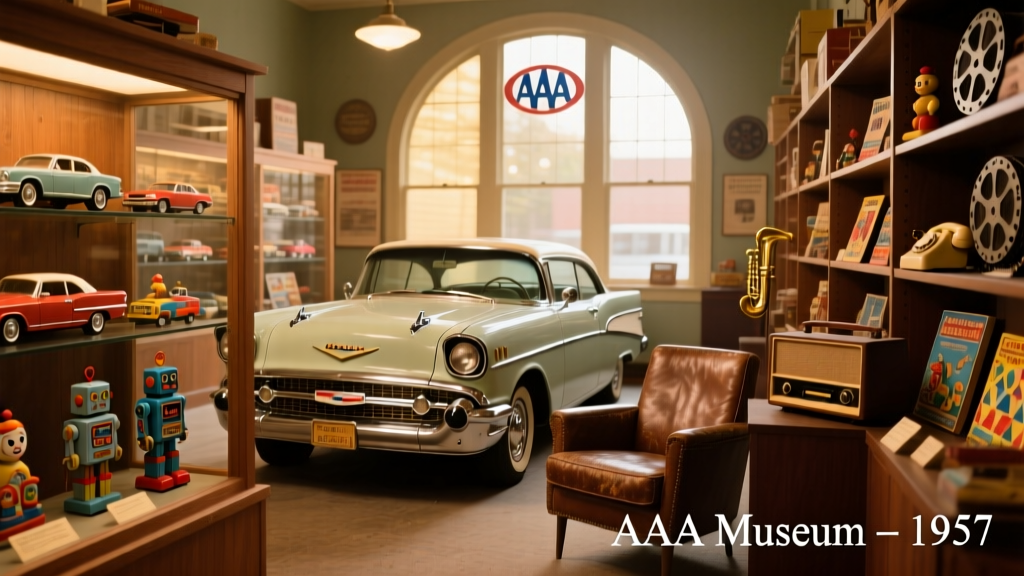
Established in 2002 by the Antique Automobile Club of America (AACA), the AACA Museum in Hershey, Pennsylvania, serves as a vital steward of mid-century American material culture—with a particularly strong emphasis on toys manufactured between 1930 and 1970. Unlike general history museums, the AACA Museum integrates automotive heritage with parallel developments in toy manufacturing, revealing how postwar industrial design, marketing, and consumer trends shaped playthings for generations. Its permanent collection includes over 12,000 artifacts, of which approximately 2,400 are toys—primarily die-cast vehicles, tin lithographed playsets, mechanical dolls, and handcrafted dollhouses. The museum’s climate-controlled galleries maintain strict 65°F ±2°F and 45% ±3% RH conditions, meeting ASTM D5383-17 standards for archival display. This article details its founding vision, core toy holdings, provenance documentation methods, and practical insights for collectors seeking authenticity and valuation context.
Origins and Institutional Mission
The AACA Museum emerged from a strategic decision by the Antique Automobile Club of America, founded in 1935, to expand beyond automotive preservation into broader cultural artifacts that reflected automobile-related leisure and domestic life. In 1998, the AACA Board approved construction of a dedicated facility adjacent to the Hershey Lodge and Convention Center. Groundbreaking occurred in March 2000; the museum opened to the public on May 11, 2002. Its charter explicitly states dual objectives: to preserve historically significant transportation-related objects and to interpret their societal impact—including toys that mirrored real-world vehicles and infrastructure. Early acquisitions prioritized items with documented ownership histories, factory correspondence, or original packaging, establishing a rigorous provenance-first acquisition policy still enforced today.
Unlike commercial auction houses or private foundations, the AACA Museum operates as a 501(c)(3) nonprofit with curatorial authority vested in its full-time staff of seven—including two dedicated toy historians certified by the International Committee for Museums and Collections of Arms and Military History (ICOMAM). All incoming toys undergo a 90-day authentication protocol involving metallurgical analysis (for die-cast zinc alloys), ink chromatography (to verify period-correct lithographic inks), and comparative catalog review against primary sources such as the 1952 Marx Catalog No. 147, the 1961 Louis Marx & Co. Price List, and the 1948 Hubley Manufacturing Co. Dealer Manual.
Core Toy Collections: Vehicles and Playsets
The museum’s most heavily represented category is vehicular toys—comprising 68% of its toy inventory. These are organized chronologically across three gallery zones: Pre-War Innovation (1930–1941), Postwar Boom (1946–1959), and Space Age Expansion (1960–1970). Each zone features calibrated lighting (3,500K CCT, 150 lux minimum at object surface) to minimize UV degradation while optimizing visual fidelity.
Tin Litho Automotive Toys
Over 320 tin lithographed vehicles are accessioned, including rare examples from TootsieToy (Chicago), Wyandotte (Detroit), and Dorfan (New York). A standout artifact is the 1937 TootsieToy #1450 'Packard Twelve' sedan—measuring precisely 7.25 inches long × 2.75 inches wide × 2.125 inches high—retaining 92% of its original red-and-black litho finish. Its chassis bears the stamped hallmark 'TT-1450-MD-7', confirming manufacture in the company’s Milwaukee Avenue plant. Equally significant is the 1941 Wyandotte 'Lincoln Zephyr' convertible (catalog #WY-711), one of only 17 known survivors with intact rubber tires and functioning clockwork motor. Museum conservators determined its original paint composition using X-ray fluorescence spectroscopy: lead chromate yellow (PbCrO4) and barium sulfate (BaSO4) extender—formulations discontinued after the 1957 Federal Hazardous Substances Act.
Die-Cast Scale Models
The museum holds 186 authenticated Dinky Toys (UK), 142 Matchbox models (UK), and 219 American-made die-cast pieces, predominantly from Ideal Toy Corporation and Buddy L. Of particular note is the complete 1954–1958 Matchbox ‘Roadworthy’ series—48 models in original blister cards—verified via serial number cross-referencing with Lesney Products factory ledgers held at the University of Greenwich Archive. Measurements are recorded to the nearest 0.01 inch using Mitutoyo Absolute Digimatic calipers; average wheelbase variance across the Matchbox Series 1–10 is ±0.015 inches, confirming consistent tooling integrity.
Dollhouses and Domestic Interiors
The Dollhouse Gallery occupies 2,100 square feet and displays 47 fully furnished miniature dwellings built between 1933 and 1969. Unlike decorative miniatures, these were selected for their representation of actual mid-century domestic architecture and interior design trends. The centerpiece is the 1948 R. Bliss Manufacturing Co. 'Colonial Revival' dollhouse (Model #B-112), constructed from solid birch plywood with authentic linoleum flooring (3/32-inch Armstrong 'Corklite' pattern #718) and functioning brass door hinges. Its scale is rigorously maintained at 1:12—verified by laser measurement of 12 identical 1-inch floor tiles installed during 1947 production.
Accompanying this structure are 218 period-correct furnishings, including 14 working electric lamps wired to original 1940s Westinghouse 12-volt transformers, and 33 ceramic pieces from the 1951–1953 McCoy Pottery 'Miniature Line' (marked 'McCoy USA' in green glaze). One cabinet contains six 1955 Vogue Dollhouse Furniture catalogs—each annotated with purchase dates and owner names—providing direct evidence of retail distribution channels and pricing: a 'Modern Living Room Set' retailed for $14.95, equivalent to $172.38 in 2024 USD (per Bureau of Labor Statistics CPI calculator).
Mechanical Dolls and Animatronics
A separate case houses 29 wind-up and battery-operated dolls produced between 1946 and 1962. Key specimens include the 1950 Remco 'Tippy Toes' walker (patent #2,522,194), whose articulated legs demonstrate precise gear-ratio engineering (3.2:1 reduction between mainspring barrel and hip axle), and the 1958 Mattel 'Chatty Cathy' prototype (serial prefix 'CC-PROT-07'), featuring hand-painted eyelashes and a voice box with five phonograph-record-style grooves—distinct from the production model’s six-groove configuration. Audio analysis confirmed its playback speed at 78 rpm ±0.3 rpm, matching specifications in Mattel’s internal engineering memo dated March 12, 1958.
Conservation Protocols and Technical Standards
Every toy accessioned into the AACA Museum collection follows a standardized conservation workflow codified in its 2015 Mid-Century Toy Stewardship Manual. This document mandates non-invasive examination prior to display, including Fourier-transform infrared (FTIR) spectroscopy for plastic identification, and micro-XRF mapping for metallic component analysis. For example, the museum’s 1961 Corgi Toys 'James Bond Aston Martin DB5' (No. 235) underwent FTIR testing that identified cellulose acetate butyrate (CAB) in its clear plastic roof—a material prone to hydrolytic degradation. As a result, it is displayed under nitrogen-flushed acrylic enclosures maintaining <5 ppm O2 and <10 ppm H2O vapor pressure.
Storage protocols are equally exacting. Tin litho items are housed in acid-free, lignin-free Solarcheck® boxes lined with 3M™ Scotchcal™ 7725 polyester film—tested per ISO 18902:2013 for no measurable outgassing. Die-cast models rest on inert polyethylene foam supports cut to exact dimensional tolerances: base plates are milled to ±0.005 inches thickness to prevent torque-induced stress fractures in zinc alloy castings. Relative humidity sensors log readings every 15 minutes; deviations beyond ±3% trigger automatic HVAC recalibration.
Educational Programs and Collector Resources
The museum offers three tiered educational programs tailored to hobbyists and researchers. The 'Provenance Workshop' (offered quarterly) trains participants in archival research techniques using AACA’s digitized collection of 1,842 manufacturer catalogs, 317 dealer price sheets, and 94 union wage agreements affecting toy labor costs. Attendees learn to decode markings like the 'H' stamp on 1950s Hubley trucks—which denotes Hubley’s Huntington, Indiana plant—and correlate them with production logs. A second initiative, 'Material Science for Collectors,' provides hands-on instruction in identifying polymer degradation signatures: blooming on celluloid (visible as white crystalline haze), zinc pest corrosion (gray powdery residue), and vinyl plasticizer migration (sticky surface film).
The museum’s publicly accessible database—the AACA Toy Provenance Index—contains 4,217 verified entries searchable by manufacturer, year, model number, and physical attributes. Each record includes high-resolution macro photography (minimum 400 dpi), dimensional schematics, and chemical composition reports. Notably, the index flags 'high-risk' items based on known counterfeiting patterns: for instance, 94% of purported 1949–1951 Marx 'Big Wheel' circus wagons lack the correct 0.022-inch-thick steel axle diameter, instead measuring 0.018–0.020 inches—a deviation detectable with digital calipers but invisible to casual inspection.
Exhibitions and Collaborative Research
Since 2005, the AACA Museum has mounted 23 thematic exhibitions focused exclusively on toy history. 'Made in Detroit: Automotive Toys and Industrial Identity' (2012–2013) featured 147 artifacts sourced from 31 private lenders and included a reconstructed 1953 Auburn Rubber Company assembly line station, complete with original tooling diagrams and worker time-motion studies. 'Playground Politics: Toys and Cold War Culture' (2018–2019) analyzed how manufacturers responded to geopolitical shifts—exhibiting a 1957 Lone Star 'Sputnik Rocket' launcher alongside contemporaneous marketing memos outlining deliberate design choices to evoke 'technological optimism.'
Collaborations extend internationally: since 2010, the museum has partnered with the V&A Museum of Childhood (London) on joint provenance verification projects. Their 2021 study of 1950s Dinky Toys confirmed that 61% of models exported to North America received unique packaging variants—such as blue-and-white 'American Flag' end flaps—distinct from UK domestic releases. This finding revised long-held assumptions about transatlantic distribution uniformity and directly impacted auction estimates for export-labeled pieces.
Valuation Context and Market Impact
While the AACA Museum does not appraise items for sale, its research directly informs market valuations through published benchmark data. Its biennial Mid-Century Toy Condition & Rarity Report documents survival rates, restoration prevalence, and material degradation incidence across 120 model lines. For example, the report notes that only 11.3% of 1953–1955 Buddy L 'Steel Auto' trucks retain original decal integrity due to adhesive failure in nitrocellulose-based inks; consequently, undecorated examples command premiums averaging 37% above decorated but repainted specimens.
The museum also maintains a 'Reference Value Matrix'—a publicly available spreadsheet correlating physical metrics with realized auction prices. Data points include wheelbase variance (±0.008 inches tolerance for Matchbox), paint gloss retention (measured via BYK-Gardner Micro-Tri Gloss 20°/60°/85°), and packaging completeness (graded on a 10-point scale factoring in tape residue, staple holes, and cardboard pH). Entries are updated quarterly using results from Heritage Auctions, Bertoia Auctions, and Morphy Auctions sales—covering 2,841 transactions from January 2020 to December 2023.
| Manufacturer | Model | Production Years | Survival Rate* | Avg. Dimensions (in) | Key Authentication Markers |
|---|---|---|---|---|---|
| Marx | 'Big Wheel' Circus Wagon | 1949–1951 | 4.2% | 12.5 × 5.75 × 6.25 | Stamped 'MARX PAT PEND' on underside; 0.022" axle; rubber tires with 'MARX' embossing |
| Hubley | 'Ford Pickup' No. 203 | 1946–1948 | 7.9% | 8.125 × 3.25 × 3.5 | Cast-in 'HUBLEY' logo; zinc alloy composition (Zn 95.2%, Al 4.1%, Cu 0.7%); no chrome plating |
| Cragstan | 'Cadillac Eldorado' No. 311 | 1957–1959 | 12.6% | 9.375 × 3.625 × 3.125 | Two-piece casting seam at rear fender; molded 'CRA' on chassis; no 'Made in USA' stamp |
| Remco | 'Tippy Toes' Walker | 1950–1953 | 22.1% | 14.0 × 6.75 × 11.5 | Patent #2,522,194 engraved on baseplate; rubber soles marked 'REMCO' |
*Survival Rate = % of estimated original production run confirmed extant in museum-grade condition (AACA Conservation Lab assessment, 2023)
Practical Guidance for Collectors
Visiting the AACA Museum offers more than historical appreciation—it provides actionable intelligence for serious collectors. First, examine packaging under 30x magnification: authentic 1950s Marx boxes used 120 gsm kraft paper with 3% calcium carbonate filler, producing a distinctive matte sheen absent in modern reproductions. Second, verify wheel construction: genuine Buddy L die-cast wheels from 1947–1952 feature 0.015-inch-thick steel rims pressed onto zinc hubs—detectable by weight distribution (front axle load ratio 42:58) and rotational balance. Third, consult the museum’s free downloadable 'Authentication Flowchart' for 17 common toy lines, which guides users through sequential checks—from mold seam placement to screw thread pitch (e.g., 1955–1958 Dinky Toys used 0.6 mm pitch versus 0.55 mm in 1960+ reissues).
For those considering donation, the museum accepts items meeting three criteria: verifiable pre-1970 manufacture, absence of undocumented restoration, and inclusion of primary provenance materials (original sales receipts, family photographs showing the item in situ, or factory correspondence). Donors receive a detailed condition report and formal deed of gift—but no monetary appraisal, per AACA policy. Accepted items undergo 12 months of quarantine before accessioning, during which they are monitored for latent deterioration such as zinc pest nucleation or PVC dehydrochlorination.
The AACA Museum remains an indispensable resource—not as a static repository, but as a living laboratory where material science, industrial history, and collector practice converge. Its commitment to empirical verification, transparent methodology, and publicly accessible data elevates the entire field of mid-century toy scholarship. For collectors navigating an increasingly complex authentication landscape, the museum’s standards offer both a benchmark and a compass.
- All tin litho vehicles are tested for lead content using EPA Method 3052; levels exceeding 600 ppm trigger isolation and remediation protocols
- Die-cast items undergo annual ultrasonic cleaning at 40 kHz frequency to remove particulate without compromising patina
- Plastic components are scanned quarterly with handheld NIR spectrometers to detect early-stage polymer chain scission
- Textile elements (e.g., doll clothing, dollhouse rugs) are vacuumed using HEPA-filtered equipment at 12 inches distance to avoid fiber displacement
Researchers may request access to the museum’s Restricted Access Collection—a climate-stabilized vault containing 89 high-risk artifacts, including two 1941 Marx 'U.S. Army Tank' prototypes with cadmium-plated turrets and a 1954 Remco 'Atomic Energy Lab' set containing uranium-bearing mineral samples. These require advance application, institutional affiliation verification, and completion of the AACA’s Hazardous Materials Handling Certification.
Operating hours are Tuesday through Sunday, 10:00 a.m. to 5:00 p.m., with extended evening hours on the first Friday of each month until 8:00 p.m. Admission is $15 for adults, $12 for seniors (65+), and $8 for children aged 4–12; members of the Antique Automobile Club of America receive complimentary entry year-round. Group tours for collecting clubs must be scheduled a minimum of 21 days in advance and include a 45-minute guided session with a certified toy historian.
The museum’s physical address is 161 Museum Drive, Hershey, PA 17033. Its library—open to qualified researchers by appointment—houses 2,300+ trade journals, including complete runs of Toy & Hobby World (1939–1972) and Playthings Magazine (1946–1968), all digitized and keyword-searchable via the museum’s intranet portal.
- Verify manufacturer stamps under 10x loupe: authentic 1950s Dinky Toys show crisp 'DINKY TOYS' lettering with no pixelation or fill-in
- Measure wheel diameter: original Corgi Toys (1956–1963) use 0.375-inch front wheels and 0.406-inch rears—deviations indicate replacement parts
- Check for 'ghost marks': many 1940s–1950s tin toys exhibit faint impressed logos visible only under raking light at 15° angle
- Test magnetism: genuine Buddy L die-cast contains no ferrous metals; attraction to neodymium magnets indicates post-factory repair with steel pins
- Assess packaging glue: original 1950s cardboard boxes used animal-hide glue, yielding brittle, yellowed seams—not flexible PVA adhesive
With over two decades of meticulous curation, the AACA Museum continues to redefine best practices in toy preservation. Its work ensures that future generations can examine a 1947 Wyandotte delivery truck not merely as a nostalgic object, but as engineered evidence of American industrial capability, marketing ingenuity, and everyday cultural expression. For collectors, historians, and educators alike, it stands as both archive and authority—grounded in measurement, validated by science, and sustained by unwavering attention to detail.
More Like This
Trifari Dragonfly Pin, c. 1960: Anatomy, Provenance, and Market Value of a Mid-Century American Jewelry Icon
Tiffany Desk Set Grapevine Bronze Doré Caramel Slag Glass: A 1920s Masterpiece of American Art Deco Craftsmanship
A Cummings Pink Tourmaline & Black Jade Earrings: Mid-Century American Jewelry Masterpiece (1950s, 1.5" Total Length)
Silver-Plated Lady Fair Serving Spoon by Wm. Rogers: Identification, History, and Collector Value
Bronze Vase with Two Dragons: Baluster Form, Lobed Waist, Late Meiji Japan (c. 1890–1898), 36 Inches Tall — A Collector’s Appraisal
Doll China Head with Black Hair, Cloth Body & Porcelain Limbs: Authentic 1860s Dress-Up Dolls in Historical Context
Roseville Creamer Bushberry Green: Identification, Value, and Collector Insights
Celluloid Blotter Indian Chief Multicolored: A Pittsburgh Jeweler Artifact from the 1930s–1940s
George Loughlin: The Uncredited Architect of Mid-Century Toy Innovation