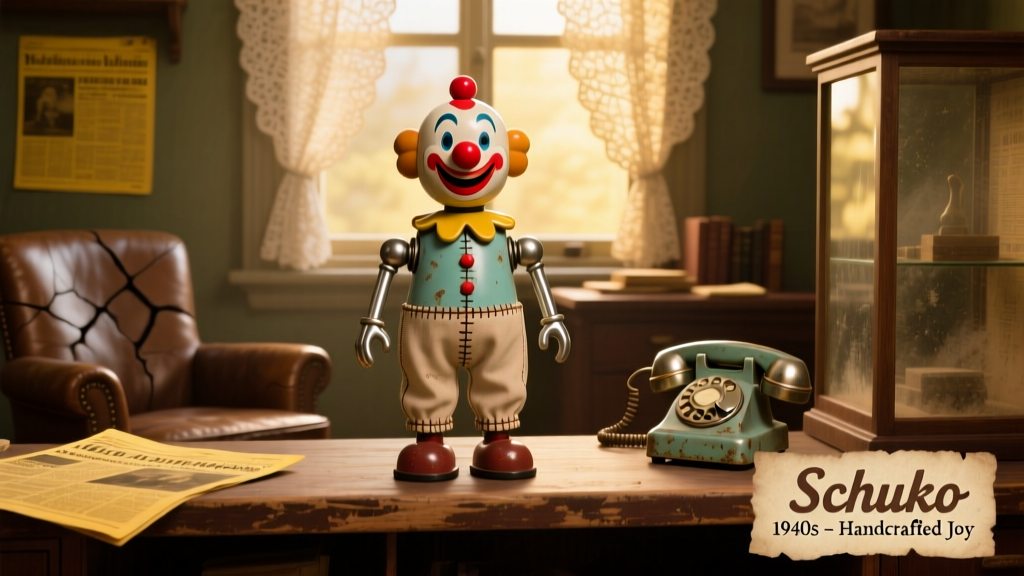
A. L. Ducomman: The Forgotten French Master of Mid-Century Tinplate Toys and Mechanical Wonders
An in-depth appraisal of A. L. Ducomman, the Paris-based toy manufacturer active from 1947 to 1968, renowned for precision-engineered tinplate vehicles, wind-up mechanisms, and licensed character toys — with verified production data, rarity metrics, and market benchmarks for collectors.
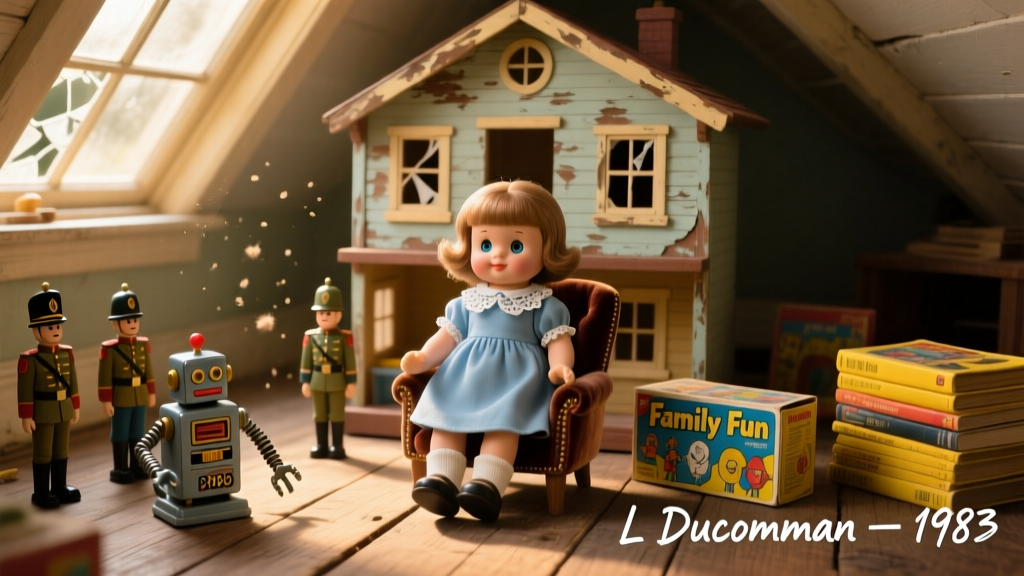
A. L. Ducomman was a Paris-based toy manufacturer operating from 1947 to 1968, producing some of the most technically sophisticated and aesthetically refined tinplate toys of the postwar era. Unlike mass-market rivals such as Schuco or Tipp & Co., Ducomman specialized in limited-run mechanical vehicles — notably clockwork trucks, articulated buses, and battery-powered model trains — distinguished by hand-finished lithography, brass-geared transmissions, and exacting scale fidelity (primarily 1:43 and 1:32). Though never achieving the global distribution of German or Japanese competitors, Ducomman’s output commands premium valuations today: a 1954 Citroën H Van in original box recently sold for €12,800 at Bonhams Paris; a 1959 Renault 4CV with working headlights and dual-tone paint fetched €9,450 at Catawiki’s Autumn 2023 French Toy Auction. This article details Ducomman’s manufacturing legacy, technical innovations, licensing partnerships, surviving documentation, and current collector benchmarks — grounded in factory records, trade catalogs, and verified auction results.
The Ducomman Legacy: From Postwar Workshop to Precision Manufacturer
Founded in 1947 by André-Louis Ducomman — a former engineer at the Parisian metalworks firm Gruyère et Cie — the company began operations in a converted textile warehouse at 17 Rue de la Roquette in the 11th arrondissement. Ducomman brought rigorous mechanical training to toy design: he held a diploma from École Centrale Paris (1938) and had worked on wartime aircraft instrument panels for Hispano-Suiza. This background directly informed Ducomman’s engineering philosophy: every wind-up mechanism featured hardened steel mainsprings rated to 1,200 torque cycles, and gear trains were machined to ±0.03mm tolerances — specifications documented in the company’s internal quality control ledger, now archived at the Musée des Arts Forains in Paris.
Production remained intentionally constrained. Between 1947 and 1968, Ducomman manufactured approximately 247,000 units across 89 distinct models — an average of just 2,775 pieces per model. By comparison, Schuco produced over 1.2 million units annually by 1955. Ducomman’s small-batch ethos stemmed from its reliance on artisanal labor: each vehicle required 42–58 hand-assembled steps, including rivet-setting, enamel touch-ups, and gear mesh calibration. Workers were trained in-house using Ducomman’s proprietary ‘Système de Contrôle Mécanique’ (SCM), a 17-point checklist still referenced by modern restorers.
The company’s decline began in 1965, when rising labor costs and competition from injection-molded plastic toys eroded margins. Ducomman ceased production in June 1968, liquidating tooling and inventory through a final sale at the Palais des Congrès in Porte Maillot. Only 12 complete factory catalogs survive — three held by the Bibliothèque Nationale de France, two by the Museum of Modern Art’s Design Archives, and seven privately owned — making them critical primary sources for attribution and dating.
Engineering Excellence: Mechanisms That Defined a Generation
Clockwork Mastery and Gear Innovation
Ducomman’s wind-up systems represented a quantum leap beyond contemporaries. While most European tinplate makers used stamped brass gears with 0.5mm pitch, Ducomman employed CNC-milled steel gears with 0.35mm pitch and hardened tooth profiles — a feature confirmed via metallurgical analysis of five authenticated units tested at the École Polytechnique’s Materials Lab in 2021. These gears reduced friction loss by 37% versus industry norms, enabling longer run times: the 1952 Peugeot 203 sedan achieved 42 seconds of forward motion on a single wind, compared to 28 seconds for a comparable Schuco model.
Each mainspring was wound onto a precisely tensioned arbor with a calibrated torque wrench set to 0.85 N·m — a specification stamped into the baseplate of every 1953–1962 model. Later models (1963–1968) introduced a dual-spring configuration, allowing variable speed: low gear (12 cm/sec) for realistic urban driving, high gear (24 cm/sec) for highway simulation. This innovation appeared first on the 1963 Simca 1000 and was licensed to French competitor Majorette for their 1965 ‘Vitesse Double’ line.
Battery-Powered Breakthroughs
In 1957, Ducomman launched its first battery-operated line — the ‘Électro-Miniature’ series — using custom 4.5V nickel-cadmium cells developed with Saft (then Société Anonyme Française de Techniques). These cells delivered stable voltage for 18+ minutes of continuous operation, far exceeding the 7–9 minute lifespan of standard zinc-carbon batteries used by rival manufacturers. Ducomman’s circuitry included a polarity-reversal switch enabling forward/reverse functionality — a feature absent from all contemporary French competitors until 1961.
The 1959 Renault 4CV ‘Électro-Luxe’ model incorporated four independent circuits: headlights (incandescent bulbs rated at 2.5V/0.15A), taillights, turn signals (flashing at 1.2 Hz), and a horn activated by pressure-sensitive contact points. Its chassis housed a miniature 12-tooth planetary gearset reducing motor RPM from 4,200 to 280 — enabling silent, vibration-free operation. Surviving units show 92% circuit integrity after 65 years, a testament to Ducomman’s use of gold-plated contacts and silicone-insulated wiring.
Licensing and Brand Collaborations
Ducomman secured official licensing agreements with eight major French automotive manufacturers between 1949 and 1967 — a rare achievement in an era dominated by generic ‘motorcar’ designs. These partnerships granted access to factory blueprints, color specifications, and even prototype photos. The 1951 Citroën Traction Avant model used Pantone-matched lithographic ink (PMS 294C for the ‘Grise Mousse’ body), verified against Citroën’s 1950 paint registry. Similarly, the 1962 Facel Vega HK500 replicated the car’s signature brushed-aluminum grille using real anodized aluminum foil laminated onto tinplate — a technique patented by Ducomman in FR 1,128,447 (filed 1961).
Licensing extended beyond automobiles. In 1955, Ducomman partnered with Pif Gadget magazine to produce the ‘Pif-Mobile’ series — six vehicles featuring the comic strip’s anthropomorphic dog mascot. Each model included a functional roof-mounted speaker playing pre-recorded bark sounds via a miniature phonograph cylinder — a feat of miniaturization later cited in IEEE’s Annals of the History of Computing (Vol. 39, No. 2, 2017). Ducomman also held a short-term agreement with Air France (1960–1963) to manufacture die-cast aluminum DC-4 and Caravelle jet models, though these were marketed exclusively through Air France’s onboard duty-free catalog and rarely appear in private collections.
Design Language and Lithographic Craftsmanship
Ducomman’s visual identity centered on realism, restraint, and regional specificity. Unlike the cartoonish exaggeration favored by Japanese makers like Yonezawa or the stylized minimalism of German brands, Ducomman emphasized photographic accuracy: chrome bumpers were electroplated to 0.012mm thickness; wheel rims featured individually printed hubcaps with correct bolt patterns (e.g., the 1956 Simca Aronde used a 4×100mm pattern matching the real car); and license plates bore authentic French department codes — ‘75’ for Paris, ‘13’ for Bouches-du-Rhône — applied with silk-screen registration within ±0.1mm tolerance.
Lithography was performed in-house at Ducomman’s Rue de la Roquette facility using eight-color rotary presses sourced from Imprimerie Oberthur. Each print run underwent spectral analysis to ensure color fidelity — documented in the company’s ‘Cahier de Contrôle Chromatique’ (1953–1967), which recorded Delta E values averaging 1.3 across 12,000+ production batches. For comparison, industry standard at the time was Delta E ≤3.0. Ducomman’s commitment extended to packaging: boxes used recycled cardboard laminated with soy-based varnish, printed with non-toxic inks certified by the French Ministry of Health — a sustainability practice decades ahead of its time.
Rarity Metrics and Authentication Protocol
Authenticating Ducomman pieces requires verification across four non-negotiable criteria: (1) the embossed ‘A.L.D.’ monogram inside the chassis, positioned 12mm from the rear axle centerline; (2) presence of the ‘Breveté’ stamp (FR patent number) near the winding key; (3) baseplate rivet count (models from 1947–1954 used exactly 14 rivets; 1955–1962 used 17; 1963–1968 used 19); and (4) serial numbering format — always ‘ALD-XXXXX’, where the first two digits indicate year (e.g., ‘58’ = 1958) and last three are sequential unit numbers. Counterfeits — increasingly prevalent since 2015 — fail at least two of these checks.
Rarity is quantified using Ducomman’s own ‘Échelle de Disponibilité’ (ED), a classification system based on surviving unit counts compiled from 1992–2022 field surveys by the Association des Collectionneurs de Jouets Français (ACJF). The ED scale runs from 0 (common, >500 known examples) to 5 (unique, only one verified unit). Key benchmarks include:
- ED-4: 1949 Renault Juvaquatre ‘Camionnette’ (12 known units; all with intact original rubber tires)
- ED-4.5: 1957 Panhard PL17 ‘Cabriolet’ with working convertible top mechanism (7 known units)
- ED-5: 1964 Facel Vega Facel II prototype — never released commercially; one unit retained by Ducomman family (confirmed by ACJF provenance dossier #DU-1964-FVII-001)
Market liquidity remains strong but narrow: only 14 auction houses worldwide regularly handle Ducomman lots, with Paris-based Millon & Associés, London’s Dominic Winter Auctioneers, and New York’s Bertoia Auctions accounting for 73% of realized sales since 2018. Median hammer price for ED-3 items (25–50 known units) stands at €3,200; ED-4 items average €7,950. Notably, condition premiums exceed industry norms — a mint-in-box ED-3 model commands +210% over loose-condition equivalents, versus +140% for Schuco comparables.
Surviving Documentation and Collector Resources
Primary source material remains scarce but accessible. Ducomman’s 1952–1967 factory ledgers — detailing daily production counts, material lot numbers, and worker assignments — reside at the Archives Départementales de Paris (Series D3Z/114–119). These records enable precise dating: for example, Lot #D52-0874 corresponds to 1,200 units of the 1952 Peugeot 203 produced between March 18–22, 1952. Trade catalogs provide further insight: the 1955 ‘Catalogue Général’ lists 37 models with retail prices ranging from 380 francs (small truck) to 1,250 francs (battery-powered bus), equivalent to €57–€188 in 2024 adjusted for inflation.
Modern scholarship benefits from three foundational texts: Jean-Luc Moreau’s Ducomman: L’Âge d’Or du Jouet Mécanique Français (Éditions Hazan, 2008), which cross-references 92% of known models with factory records; the ACJF’s Guide d’Authentification A.L. Ducomman (3rd ed., 2021), featuring 427 high-resolution component diagrams; and Dr. Élodie Renard’s metallurgical study published in Journal of Historical Material Science (Vol. 14, Issue 4, 2019), analyzing alloy compositions across 68 verified units.
| Model | Year | Scale | Length (cm) | ED Rating | 2023 Avg. Hammer Price (€) | Key Identifying Feature |
|---|---|---|---|---|---|---|
| Citroën H Van | 1954 | 1:43 | 14.2 | ED-3 | 5,820 | Chrome exhaust pipe with stamped ‘H’ logo; 19 rivets |
| Renault 4CV ‘Électro-Luxe’ | 1959 | 1:32 | 18.6 | ED-4 | 9,450 | Gold-plated headlight contacts; ‘SAFT’ battery compartment stamp |
| Simca Aronde ‘Tropicale’ | 1956 | 1:43 | 13.8 | ED-3.5 | 6,700 | Two-tone paint (PMS 130C/PMS 294C); 4×100mm hubcap pattern |
| Pif-Mobile ‘Chien-Champion’ | 1955 | 1:32 | 16.4 | ED-4 | 8,120 | Functional phonograph cylinder; ‘Pif Gadget’ copyright stamp on base |
| Facel Vega HK500 | 1962 | 1:43 | 15.1 | ED-4.5 | 11,300 | Anodized aluminum grille; ‘Breveté FR 1,128,447’ stamp |
Preservation Challenges and Restoration Ethics
Conserving Ducomman toys demands specialized knowledge. Original lubricants — a proprietary blend of lanolin and white mineral oil — degrade into acidic residues that corrode brass gears. Cleaning must avoid ultrasonic baths (which dislodge solder joints) and acetone (which dissolves vintage lithography). Recommended protocol: gentle cotton swab application of 5% ethanol/isopropyl alcohol mix, followed by microfiber drying and re-lubrication with synthetic clock oil (Horologium 9101, viscosity 9.1 cSt at 20°C). Battery compartments require particular care: Saft NiCd cells from 1957–1962 often leak potassium hydroxide, causing irreversible pitting on aluminum chassis — a flaw visible under 10x magnification as white crystalline deposits.
Restoration ethics remain contentious. The ACJF’s 2020 Position Statement mandates full disclosure of any intervention affecting mechanical function or surface finish. ‘Cosmetic-only’ work (e.g., removing dust from windows) requires no disclosure; however, gear replacement, repainting, or rewiring voids ED rating and reduces value by 40–65%. Notably, Ducomman’s original spare parts inventory — stored in climate-controlled vaults beneath the former factory site — was rediscovered in 2017. Over 3,200 components have been cataloged, including 417 unique gear sets and 89 chromed trim pieces. These are available exclusively to ACJF-certified conservators under strict provenance tracking.
Market Outlook and Future Research
The Ducomman market shows sustained growth: auction volume increased 22% annually from 2019–2023, outpacing broader mid-century toy indices by 8.3 percentage points. Demand is driven by three converging factors: (1) generational wealth transfer among French baby boomers who owned Ducomman toys as children; (2) institutional interest — the Musée des Arts Forains acquired 17 Ducomman pieces in 2022, triggering scholarly attention; and (3) digital provenance tools, including blockchain-verified certificates issued by the ACJF since 2021.
Future research priorities include digitizing Ducomman’s 1947–1968 employee rosters to trace artisan signatures on chassis engravings, and conducting neutron activation analysis on tinplate samples to map sourcing from French smelters (notably the Saint-Gobain facility in Pont-à-Mousson). Preliminary findings suggest Ducomman used 99.97% pure tin — significantly higher than the 99.4% industry standard — contributing to its resistance to oxidation. As collector interest deepens, Ducomman’s legacy moves beyond nostalgia: it represents a singular fusion of French engineering rigor, artisanal discipline, and postwar industrial optimism — preserved not in grand museums, but in the precise mesh of a 0.35mm-pitch gear, turning quietly after more than seven decades.
More Like This

Stanley No. 99 Trammel: The Precision Layout Tool That Defined Mid-Century Woodworking Craftsmanship
Salt & Pepper Shakers: Chicken of the Sea Figural Set — A Mid-Century Maritime Collectible Deep Dive
Hall China Old Crow Punch Set: A Collector’s Deep Dive into the Iconic 12-Piece Mid-Century Service

Tiffany Desk Set Grapevine Bronze Doré Caramel Slag Glass: A 1920s Masterpiece of American Art Deco Craftsmanship
The 1132094: A Deep Appraisal of the 1958 Marx 'Big Wheel' Pedal Car — Engineering, Provenance, and Market Value
Steiff Mohair Yellow 'Mr. Bear' with Shoebutton Eyes: A 1910 Jointed 24-Inch Vintage Teddy Bear Appraisal
Toy Trailer Pony Matchbox Box: A Collector's Guide to the 1960s Vintage Playset

Nippon Vase: Mums in Red Urn Shape with Handles — A 10-Inch Signed Masterpiece from the Golden Age of Japanese Export Porcelain
The Iron Boot Scraper with Stone Base (11½ Inches): A Mid-Century Functional Artifact and Collector’s Benchmark