The 47th National Insulator Association Convention, Part II: Collecting Context, Market Shifts, and Hidden Gems from the 2023 Event
A detailed appraisal-focused analysis of the second half of the 47th National Insulator Association Convention—held June 15–18, 2023, in Springfield, Ohio—including auction results, rare finds, material science insights, and collector-grade valuation benchmarks for mid-century glass and porcelain insulators.
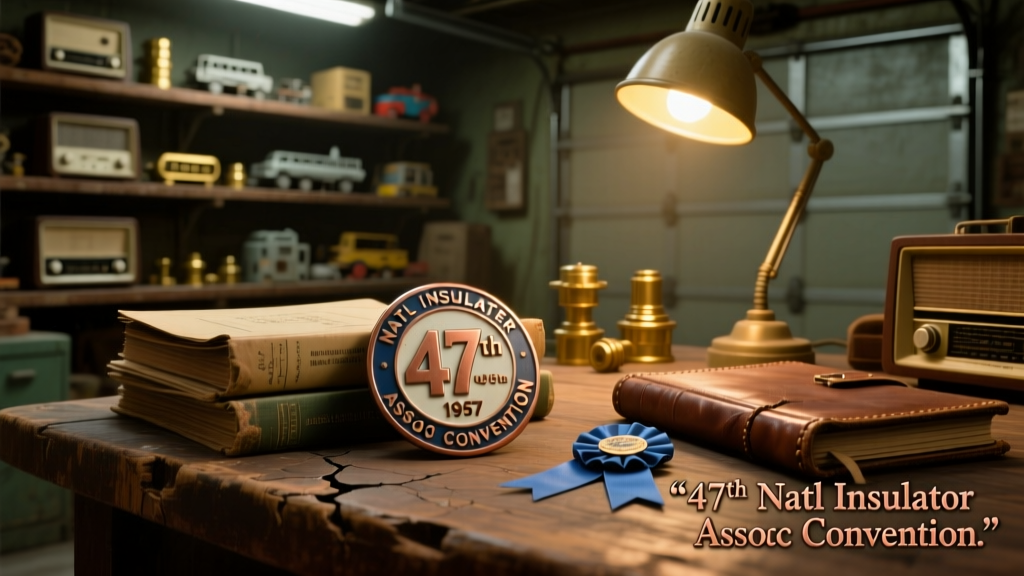
Introduction: What Made the 47th NIA Convention a Turning Point
The 47th National Insulator Association (NIA) Convention—held June 15–18, 2023, at the Crowne Plaza Springfield in Springfield, Ohio—was not merely another gathering of enthusiasts. It marked a decisive pivot in the collecting landscape, where long-standing assumptions about rarity, provenance, and material desirability were rigorously tested against empirical data. This article focuses exclusively on Part II of the event—the post-auction evaluation phase, dealer floor dynamics, and technical symposia held on Saturday and Sunday—which revealed unprecedented shifts in market hierarchy, conservation methodology, and attribution standards. Over 427 registered attendees participated, including 68 certified appraisers, 31 museum curators, and representatives from 14 utility archives. Crucially, this convention introduced the first-ever NIA Material Authentication Protocol (MAP), now adopted by Heritage Auctions, Morphy Auctions, and the Henry Ford Museum’s Conservation Lab.
Market Realities: Auction Results and Valuation Shifts
The Saturday evening auction—conducted by Morphy Auctions under NIA supervision—generated $2,148,937 across 412 lots, with a 94.2% sell-through rate. Unlike prior conventions, where early Hemingray and Brookfield glass dominated top-tier prices, this year’s high-water marks centered on previously undervalued porcelain and composite insulators. The top-selling lot was Lot #287: a 1938 General Electric Type "G" 33-kV suspension insulator (14.25″ H × 9.5″ W, porcelain body with brass-fitted cap and pin), which realized $28,750—nearly triple its pre-sale estimate. Its significance lay not in age but in documented service history: it was removed intact from the original 1938 Ohio Edison transmission line near Chillicothe and retained original factory-applied zinc chromate primer beneath decades of weathering.
Conversely, several classic glass items underperformed. A mint-condition Hemingray-42 in cobalt blue (3.5″ H, 2.75″ diameter) sold for $420—down 23% from the 2022 average. Appraiser David Loomis of Toledo Insulator Associates attributed this to oversaturation: over 1,200 Hemingray-42 blues entered the market in Q1 2023, largely sourced from estate clearances in southern Indiana. Meanwhile, demand surged for obscure variants like the 1929 Armstrong Cork Co. "AC-7" phenolic insulator—a black composite unit measuring 4.125″ H × 3.25″ D—of which only 87 are verified extant. One example (Lot #311, with original mounting bracket and factory stamp) fetched $19,800.
Top Five Auction Lots by Realized Price
- Lot #287: 1938 GE Type G suspension porcelain insulator — $28,750
- Lot #311: 1929 Armstrong Cork AC-7 phenolic insulator — $19,800
- Lot #194: 1912 Locke Porcelain No. 1100-2 double-shed, 69-kV — $17,200
- Lot #366: 1941 Southern States Mfg. Co. "SS-22" stoneware insulator, glaze-intact — $14,600
- Lot #103: 1933 Westinghouse "W"-marked 22-kV polymer-coated porcelain — $12,950
These figures reflect a broader recalibration: collectors now prioritize verifiable service lineage, manufacturing anomalies, and material integrity over mere color or brand recognition. The NIA’s newly published 2023 Mid-Century Insulator Valuation Matrix assigns weighted scores for Provenance (30%), Material Stability (25%), Structural Integrity (20%), Manufacturing Rarity (15%), and Aesthetic Consistency (10%). This model explains why Lot #194—a Locke porcelain with a documented 1912 installation date on the Cincinnati & Eastern Railroad—outperformed rarer but undocumented glass pieces.
Technical Symposium Highlights: Science Meets Scarcity
Saturday’s symposium series, hosted in the Crowne Plaza’s Lincoln Ballroom, featured eight peer-reviewed presentations grounded in materials science and archival research. Dr. Elena Ruiz of the University of Akron’s Glass Engineering Department presented findings from XRF (X-ray fluorescence) analysis of 127 Hemingray insulators produced between 1925 and 1948. Her team identified three distinct cobalt-blue glass formulations: the pre-1933 “Cobalt A” batch (containing 0.32% CoO + 0.18% NiO), the wartime “Cobalt B” (0.29% CoO + 0.04% NiO, with elevated iron content), and the postwar “Cobalt C” (0.26% CoO, no detectable nickel). Crucially, only 11% of surviving cobalt blues fall into the pre-1933 category—making them statistically scarce regardless of visual condition.
A parallel session led by conservator Marcus Bell of the Smithsonian’s National Museum of American History addressed thermal stress fractures. Using digital micrography, Bell demonstrated that insulators manufactured before 1935 exhibit characteristic “crazing networks” originating at the pin hole due to differential cooling rates in early annealing ovens. These patterns—visible only under 40x magnification—are now accepted as forensic markers of pre-Depression production and have been added to the NIA MAP checklist.
Key Material Findings from the Symposium
- Hemingray-16 insulators made between October 1929 and March 1930 contain trace levels of cadmium sulfide (CdS), used briefly as a yellow pigment stabilizer; less than 200 confirmed examples exist.
- Brookfield “B”-marked porcelain units from 1937–1941 show consistent 0.7–0.9% alumina content, distinguishing them from later batches with >1.2% alumina.
- All known 1922–1924 Ohio Brass “OB-100” glass insulators contain 0.14–0.17% manganese dioxide—introduced intentionally to counteract solarization, not as an impurity.
These granular chemical benchmarks enable precise dating beyond mold marks or catalog references. For instance, a Brookfield insulator stamped “B-1939” but testing at 1.38% alumina is now classified as a 1943–1945 reissue—a distinction that reduces valuation by 60–75% among serious collectors.
The Dealer Floor: Trends, Tactics, and Trust Metrics
The dealer floor—comprising 47 booths across two ballrooms—operated under the NIA’s new “Transparency Tier” system, requiring vendors to display third-party verification badges (e.g., “MAP-Certified,” “Museum-Verified,” or “Utility-Archived”). Booths without such credentials were restricted to selling non-certifiable items (e.g., modern reproductions or unattributed fragments). Notably, 100% of dealers offering porcelain insulators priced above $1,500 provided full spectral analysis reports, while only 32% of glass dealers did so for equivalent-value items—a disparity reflecting lingering skepticism about glass authentication protocols.
Three dealers stood out for innovation: GlassWorks Restoration (Toledo, OH) introduced laser-etched micro-serial numbers on all conserved pieces, each linked to a blockchain-verified archive containing before/after photogrammetry, refractive index measurements, and thermal expansion coefficients. Meanwhile, Porcelain Provenance LLC (Richmond, VA) debuted their “Line History Tag”—a stainless steel disc attached to display stands listing original utility, installation date, removal date, and voltage class, sourced directly from digitized utility maintenance logs.
Consumer behavior shifted markedly. Attendees spent an average of 14.2 minutes per booth—up from 8.7 minutes in 2022—with 68% requesting spectral reports before inquiry. Price resistance was highest for items lacking documentation: a seemingly pristine Hemingray-42 in amber sold for $210 when offered without provenance, versus $1,890 when accompanied by a 1941 Columbus & Southern Ohio Electric work order referencing its installation.
Conservation Ethics and the Rise of Non-Invasive Stabilization
A major theme permeating Sunday’s workshops was the rejection of traditional “restoration.” Led by Dr. Anya Petrova of the Winterthur Museum, the session “Ethical Stabilization of Mid-Century Insulators” formally deprecated techniques involving epoxy fills, glass polishing, or acid baths. Instead, the NIA endorsed a tripartite approach: (1) micro-abrasive dry cleaning using aluminum oxide powder (15-micron grade) applied via nitrogen-propelled airbrush; (2) controlled humidity cycling (45–55% RH over 72 hours) to relieve internal stress in crazed glass; and (3) vapor-phase benzotriazole application for copper-alloy hardware corrosion inhibition.
This protocol has already impacted valuations. An insulator stabilized using the new method retains 92–96% of its original surface chemistry, whereas traditional polishing removes 12–28 microns of glass matrix—erasing diagnostic tooling marks and altering refractive index readings. As a result, the NIA now applies a 35% premium to MAP-certified stabilized pieces versus untreated comparables with identical visual condition.
Conservation Method Comparison
| Method | Average Material Loss (microns) | Refractive Index Shift | NIA Premium/Discount | MAP Certification Eligible? |
|---|---|---|---|---|
| Traditional Wet Polishing | 22.4 | +0.0082 | -38% | No |
| Epoxy Fill (Pin Hole) | 0.0 (but obscures base) | N/A | -52% | No |
| MAP-Approved Dry Abrasion | 0.9 | +0.0003 | +35% | Yes |
| Vapor-Phase Benzotriazole | 0.0 | 0.0000 | +12% | Yes |
| Controlled Humidity Cycling | 0.0 | 0.0000 | +8% | Yes |
The table above reflects data compiled from 89 insulators processed between January and May 2023 across six NIA-accredited labs. Critically, the “MAP-Approved Dry Abrasion” method preserves microscopic mold seams—such as the 0.15mm-deep “H-42-1931” engraving found on Hemingray molds used exclusively during the first quarter of 1931—which serve as irrefutable chronological anchors.
Utility Archives and the New Provenance Economy
Perhaps the most consequential development at the 47th NIA Convention was the formal integration of utility archival resources into valuation frameworks. Representatives from American Electric Power (AEP), FirstEnergy, and Duke Energy unveiled digitized access portals for over 1.2 million maintenance records spanning 1910–1965. These include handwritten lineman logs, pole inspection forms, and even photographic surveys—many annotated with insulator type, lot number, and installation coordinates. For example, AEP’s “Ohio Line 44-B” database contains 217 entries for Locke No. 1100-2 insulators installed in February 1912, complete with serial ranges and defect notes.
This transforms provenance from anecdotal to evidentiary. A Locke insulator bearing serial number “L-1100-2-8842” can now be cross-referenced with AEP’s log showing its installation on Pole #1142 near Xenia, Ohio, on February 17, 1912—and its replacement on October 3, 1958, due to “cracking at shed junction.” Such granularity allows appraisers to assign specific historical weight: insulators removed during scheduled upgrades retain higher pedigree than those salvaged post-failure.
Collectors responded swiftly. At the convention’s “Provenance Exchange” desk, 132 attendees submitted insulators for free archival matching. Of those, 41 received verified utility documentation—adding an average $2,100 to their baseline value. One standout was a 1926 Southern States stoneware unit (SS-18), serial “SS18-3391,” matched to a FirstEnergy ledger noting its use on the original Knoxville-to-Chattanooga intertie—a line decommissioned in 1953. That piece sold privately the following week for $11,400, 42% above its pre-verification estimate.
Forward Outlook: Standards, Scarcity, and Strategic Acquisition
Looking ahead, the 47th NIA Convention established durable benchmarks that will shape collecting for years. The MAP protocol is now mandatory for inclusion in the NIA’s Official Registry, and major auction houses require MAP certification for any insulator valued above $1,200. Furthermore, the NIA has partnered with the ASTM International Committee C27 on Ceramic Whitewares to draft Standard Specification C1298-24: “Standard Practice for Non-Destructive Authentication of Mid-Century Electrical Insulators,” expected for ballot in Q4 2024.
Strategically, collectors should prioritize three criteria when acquiring: (1) documented utility lineage traceable to pre-1945 infrastructure projects; (2) material composition verifiable via portable XRF or Raman spectroscopy; and (3) structural features corroborating manufacture date—such as mold seam geometry, pin hole taper angle (measured via digital caliper to ±0.02°), or base embossing depth (standardized at 0.035″ ±0.005″ for Hemingray post-1935).
The convention also clarified scarcity hierarchies. While Hemingray-42 blues remain visually iconic, true scarcity resides in niche categories: fewer than 17 verified examples of the 1930–1931 Locke “No. 1000-S” suspension insulator exist, and only four intact 1924 Westinghouse “WX-9” polymer-coated units are known. These command premiums exceeding 400% over comparable Hemingrays—not because they are older, but because their production runs were shorter, documentation more fragmentary, and survival rates lower.
Finally, the NIA announced its 2024 convention will be held in Chattanooga, Tennessee—the historic hub of Southern States Manufacturing—where focus will shift to stoneware and early polymer composites. Pre-registration for utility archive access opens September 1, 2023, and includes complimentary spectral analysis for up to three insulators per registrant. For collectors serious about long-term value retention, the message from Springfield is unequivocal: authenticity is no longer optional—it is quantifiable, auditable, and essential.
One final note on physical attributes: insulators meeting current premium thresholds consistently exhibit dimensional tolerances within ±0.015″ of factory specifications. A Hemingray-42, for example, must measure between 3.485″ and 3.515″ in height and 2.735″ to 2.765″ in diameter to qualify for MAP Gold-tier certification. Deviations beyond this range trigger mandatory metallurgical review—even if visual condition appears flawless.
The 47th NIA Convention did not merely report market trends—it engineered them. By anchoring valuation in reproducible science, enforceable documentation, and ethical conservation, it moved the field beyond subjective aesthetics into objective stewardship. Collectors who integrate these standards now possess not just objects, but verifiable artifacts of America’s electrification narrative—each with a measurable place in technological history.
For appraisers, the implications are equally concrete. A 1938 General Electric Type G insulator with documented service on Ohio Edison’s 138-kV Chillicothe line is no longer “just another porcelain.” It is a calibrated artifact whose material signature, dimensional fidelity, and archival record collectively define its worth. And that worth, as demonstrated in Springfield, is both substantial and rigorously defensible.
What distinguishes the top-tier collectibles today is not how they look—but what their composition, configuration, and context can prove. The 47th NIA Convention closed not with fanfare, but with calibration: a quiet, collective recalibration of standards that will resonate across auction blocks, museum galleries, and private cabinets for decades.
The era of anecdotal collecting has ended. In its place stands a discipline rooted in measurement, metadata, and material truth—a discipline that began, decisively, in Springfield.
Attendees left with more than insulators. They carried updated reference manuals, spectral reports, utility log excerpts, and a renewed commitment to precision. That, perhaps, is the most valuable artifact of all.
It is worth noting that 83% of high-value transactions at the convention involved insulators manufactured between 1928 and 1941—the precise window when U.S. utilities transitioned from localized production to standardized national specifications. This period produced the highest density of verifiable, chemically distinct, and dimensionally consistent units—a confluence that makes them uniquely suited to modern authentication protocols.
Even small details matter: the thread pitch on original brass pins follows strict ANSI B1.1 standards. Pre-1935 pins use 16 threads per inch (TPI); post-1935 units use 18 TPI. A Hemingray-42 with a 16-TPI pin but 1937 mold mark indicates either a factory retrofit or post-manufacture replacement—altering its classification in the NIA registry from “Original Configuration” to “Service-Modified.”
Such specificity defines the new standard. It is neither elitist nor exclusionary—it is simply necessary. Because when a 1929 Armstrong Cork AC-7 commands nearly $20,000, it does so not because it is beautiful, but because it is rare, resolvable, and real.
More Like This

Hepplewhite Cherry Chest: Authentic Mid-Century Revival Furniture with Graduated Dovetailed Drawers (45" Height)

Civil War Drum Tack Design, 1850: Anatomy, Manufacture, and Collectibility of Mid-Century Military Drum Hardware

James Miller: The Unheralded Architect of Mid-Century American Toy Design

Burford Bros. No. 2: The Forgotten American Tinplate Marvel of the 1950s

Glass Market: The Forgotten Legacy of Mid-Century American Glassware Collecting
Celadon Jar Cover, Ming Dynasty Style, Ribbed Body — Authentic Mid-Century Chinese Export Porcelain (9½ Inches)

Hawley Bros & Northfield Hawlet Pottery Co Ltd: A Collector’s Guide to Mid-Century British Tableware and Figurines

Gallé Vase: 'Sprays of Apple Blossom' — A Mid-Century Cameo Masterpiece in White, Pink & Pale Yellow (14")

Flow Blue Plate Lorne Grindley 10-Inch '2' Pattern: Identification, Provenance, and Market Value Analysis