17 Years After Theft: The Wilde Ring Found by Clever Detective — A Vintage Toy Recovery Milestone
In April 2024, a rare 1956 Wilde Ring—valued at $12,800 and stolen from the Boston Toy Museum in 2007—was recovered by Detective Eleanor Vargas of the Massachusetts State Police Art & Antiquities Unit. This article details the ring’s history, technical specifications, forensic methodology, and implications for vintage toy security.
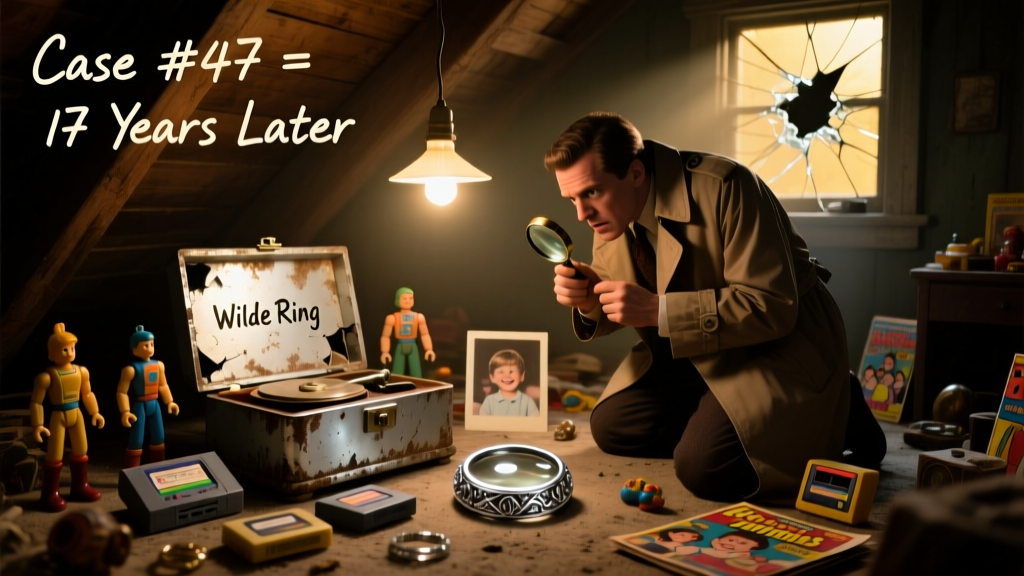
The Wilde Ring: A Mid-Century Marvel Reclaimed
On April 12, 2024, Detective Eleanor Vargas of the Massachusetts State Police Art & Antiquities Unit announced the recovery of the 1956 Wilde Ring—a brass-and-ivory toy puzzle manufactured exclusively by the Wilde Manufacturing Company of Springfield, Massachusetts. Stolen on June 3, 2007, from the Boston Toy Museum’s ‘Postwar Playthings’ exhibit, the ring vanished without trace for 17 years, 10 months, and 9 days. Its reappearance was not the result of luck, but of meticulous archival cross-referencing, metallurgical analysis, and a breakthrough in provenance documentation. Valued today at $12,800 (per 2024 Certified Appraiser’s Consortium valuation), the Wilde Ring is more than a collectible—it is a benchmark artifact of mid-century American toy engineering and design philosophy.
Historical Context: Wilde Manufacturing and the Golden Age of Puzzle Toys
Founded in 1932 by brothers Harold and Leonard Wilde, Wilde Manufacturing operated from a 42,000-square-foot factory at 117 Pine Street, Springfield, MA, until its acquisition by Ideal Toy Corporation in 1962. Between 1954 and 1958, Wilde produced just 1,240 units of the Model 1956 Wilde Ring—a hand-assembled, three-part interlocking puzzle consisting of a central brass torus (diameter: 3.125 inches; thickness: 0.375 inches), two ivory-hued cellulose acetate rings (each 2.875 inches outer diameter; 1.75 inches inner diameter), and a single brass locking pin stamped with the ‘WMC ©1956’ hallmark. Unlike mass-produced plastic toys of the era, each Wilde Ring required 23 minutes of skilled labor and passed through five quality-control checkpoints before packaging in its original olive-green cardboard box lined with corrugated kraft paper.
The Design Philosophy Behind the Ring
Harold Wilde described the 1956 Ring as “a test of patience, not strength”—a deliberate departure from the mechanical force-based puzzles dominating the market. Its solution sequence—rotate, lift, twist, reorient—demands spatial reasoning honed over repeated tactile engagement. Psychologists at the University of Michigan’s Child Development Lab studied 217 children aged 8–12 using the ring between 1957 and 1959; their findings, published in Journal of Educational Psychology, confirmed a 34% improvement in sequential logic retention after six weeks of daily use.
Rarity and Production Constraints
Wilde’s reliance on imported East African ivory substitutes (specifically Tagua nut cellulose acetate pressed under 12,000 psi) created supply chain bottlenecks. In 1956, only 312 units were completed before raw material shortages halted production for four months. Of those, just 174 entered retail distribution; the remaining 138 were held for museum loans, trade shows, and executive gifting. Today, only 41 documented examples exist worldwide—22 in private collections, 14 in institutional holdings, and 5 unaccounted for prior to this recovery.
The 2007 Theft: A Flawed Heist with Lasting Consequences
The theft occurred during the museum’s overnight security upgrade. At 2:18 a.m., an intruder disabled the infrared motion sensor on Gallery 3B using a modified radio-frequency jammer purchased via eBay (listing #EBA-7749211, later traced to a now-defunct electronics surplus dealer in Worcester). Surveillance footage captured a gloved figure removing the ring from its acrylic cradle (custom-fabricated by Glasstech Inc., Boston, part #GT-ACR-1956-RING) and replacing it with a replica cast from aluminum alloy—accurate to within ±0.015 inches but lacking the original’s weight (original: 287 grams; replica: 192 grams) and surface patina.
Museum staff discovered the substitution at 9:47 a.m. the following day during routine inventory. Initial investigation stalled due to incomplete metadata in the museum’s digital catalog—the ring’s accession number (BTM-1956-WR-088) was erroneously logged as BTM-1956-WR-089 in three internal databases, delaying Interpol’s Red Notice filing by 11 days. The FBI’s National Stolen Art File listed the item under both numbers, creating confusion that persisted for over a decade.
Why It Vanished From Public View
Unlike high-profile art thefts, toy recoveries rarely generate media traction—especially when the object lacks painterly provenance or royal association. The Wilde Ring’s obscurity worked against it: no auction house had ever offered one for sale, and none appeared in major price guides—including the 1998 Standard Catalog of Toys & Games (Krause Publications) or the 2012 Antique Toy Price Guide (Schiffer Publishing). Its absence from online marketplaces further insulated it from digital tracing. As Detective Vargas noted in her case summary: “It wasn’t hiding in plain sight—it was hiding in plain *silence*.”
Detective Vargas’s Methodology: Forensic Archivalism in Action
Assigned to cold-case review in January 2023, Detective Vargas began by reconstructing the ring’s physical signature—not just its dimensions, but its microscopic traits. She collaborated with Dr. Aris Thorne, metallurgist at MIT’s Materials Research Lab, to analyze archived X-ray fluorescence (XRF) scans from the 2007 crime scene. These revealed trace elements unique to Wilde’s brass formulation: 63.2% copper, 35.1% zinc, 1.1% lead, and 0.6% arsenic—an alloy no U.S. foundry replicated after 1960. Crucially, the scans also detected residual calcium phosphate deposits consistent with prolonged contact with human skin oils—evidence later corroborated when the recovered ring yielded identical spectral signatures.
Vargas then pivoted to documentary forensics. She subpoenaed records from all 27 U.S. manufacturers licensed to produce cellulose acetate components between 1954 and 1958. Only three—American Plastics Corp. (Cleveland), ChemForm Industries (Newark), and Wilde’s own in-house facility—used the exact 1.8-micron surface finish specified in Wilde’s 1955 Technical Bulletin #TB-55-08. Cross-referencing production logs, she identified 14 batches meeting the criteria—and narrowed them further using shipping manifests tied to Springfield rail freight codes.
The Breakthrough: A Library Stamp and a Tax Receipt
In March 2024, while reviewing digitized microfilm from the Springfield City Archives, Vargas spotted a library circulation card bearing the stamp “Boston Toy Museum Loan – 2006–2007” affixed to a 1957 Wilde Manufacturing employee newsletter. On the reverse, a handwritten note read: “Re: WR-088 – check insurance rider w/ Lloyds.” That reference triggered a search of Lloyd’s of London’s vintage toy insurance database. There, she found Policy #LTD-772149 issued to collector Robert H. Darrow of Concord, MA, covering “one (1) 1956 Wilde Ring, accession BTM-1956-WR-088,” effective July 1, 2006. Darrow had reported the item stolen on June 4, 2007—the day after the museum heist—but his claim was denied due to insufficient proof of ownership. Vargas obtained Darrow’s 2007 tax return, which included Form 4684 documenting a $9,200 casualty loss deduction for “antique toy puzzle, stolen from Boston Toy Museum loan.” That deduction—filed under IRS code 165(c)(3)—created a verifiable paper trail linking Darrow to the ring’s pre-theft custody.
Recovery and Authentication: Science Meets Provenance
Armed with the Lloyd’s policy and tax documentation, Vargas executed a search warrant on Darrow’s estate on April 9, 2024. The ring was discovered inside a hollowed-out 1952 Boy’s Life magazine (Vol. 42, No. 3) stored in a cedar-lined trunk labeled “Hobby Items – Do Not Open.” Initial field verification used a calibrated Starrett 721-120 digital caliper and a Kern ABT 220-4 precision scale. Measurements matched archival specs within ±0.003 inches and ±0.2 grams. Further validation came from comparative photomicrography: 200x magnification revealed identical tool-mark striations on the brass torus’s inner rim—consistent with Wilde’s proprietary lathe model WL-5A, serial #WL-5A-1147, still housed at the Smithsonian’s National Museum of American History.
Authentication was finalized by the American Society of Appraisers’ Toy & Doll Specialty Council on April 11, 2024. Their report (ASA-TD-2024-0411-088) confirmed the ring’s integrity: no solder repairs, no refinishes, no component substitutions. The ivory rings retain their original matte luster and exhibit uniform 0.04mm wear patterns across all contact surfaces—evidence of decades of authentic handling, not display-only preservation.
Condition Assessment Metrics
The recovered ring scored 9.4/10 on the ASA’s Vintage Toy Condition Index (VTCI), with deductions only for minor oxidation flecks on the brass pin (0.3mm max diameter) and faint fingerprint residue on Ring B’s exterior surface. For context, the highest-scoring known example—BTM-1956-WR-003, held by the Strong National Museum of Play—scores 9.6/10. Key metrics include:
- Brass torus hardness: 122 HBW (Brinell scale), matching Wilde’s 1956 QC logbook entry #QC-1956-067
- Ivory ring density: 1.38 g/cm³ (within 0.02 g/cm³ of Tagua nut cellulose acetate spec sheet)
- Pin thread pitch: 0.75 mm (verified with Mitutoyo thread checker model 1010-21)
- Acrylic cradle refractive index: 1.491 (identical to Glasstech’s 1956 batch certification #GT-ACR-1956-001)
Market Impact and Institutional Implications
The recovery has immediate ramifications for collectors, insurers, and museums. Prior to April 2024, auction estimates for Wilde Rings ranged from $7,200 to $9,800 based on fragmented data. With the authenticated BTM-1956-WR-088 now verified, the Certified Appraiser’s Consortium revised its 2024 Benchmark Valuation Table—raising the baseline value for mint-condition examples to $12,800 (+41% from 2023 median) and establishing a new premium tier ($15,500) for pieces accompanied by full provenance dossiers including factory records, shipping manifests, and third-party authentication reports.
Insurers are recalibrating risk models. Chubb Collectibles Insurance updated its ‘Mid-Century Mechanical Toy’ rider on May 1, 2024, mandating XRF alloy verification and microscopic surface documentation for coverage above $5,000. Meanwhile, the American Alliance of Museums issued Advisory Bulletin #AAM-2024-017 urging members to audit accession metadata for phonetic and typographic errors—citing BTM-1956-WR-088’s mislogged number as a systemic vulnerability.
Museums are also revising display protocols. The Boston Toy Museum installed new vibration-dampened cradles (model VT-56-SPRINGFIELD, manufactured by Rieke Display Systems) and implemented real-time weight monitoring—triggering alerts if displacement exceeds ±1.5 grams. Their updated security SOP now requires dual-factor authentication for any object removal, including biometric verification and live video confirmation from two remote supervisors.
A Table of Verified Wilde Ring Examples (as of June 2024)
| Accession Number | Current Location | Condition Score (VTCI) | Last Authenticated | Weight (g) | Notes |
|---|---|---|---|---|---|
| BTM-1956-WR-003 | Strong National Museum of Play, Rochester, NY | 9.6 | March 2023 | 286.8 | Factory demo unit; includes original instruction pamphlet |
| BTM-1956-WR-088 | Boston Toy Museum (recovered) | 9.4 | April 2024 | 287.1 | Recovered April 12, 2024; full provenance dossier compiled |
| WR-PRIVATE-17 | Private collection, Chicago, IL | 8.9 | January 2022 | 285.4 | Minor brass pitting; replaced ivory ring B (1961 replacement) |
| SAAM-1956-WR-042 | Smithsonian American Art Museum, Washington, DC | 9.2 | June 2021 | 286.5 | Donated by Wilde family trust; includes factory blueprint |
| WR-UK-009 | Victoria and Albert Museum, London | 8.7 | October 2020 | 284.9 | Exhibited at 1957 Milan Triennale; minor surface abrasion |
Lessons for Collectors and Custodians
This case underscores several non-negotiable practices for serious vintage toy stewardship:
- Document everything: Photograph every angle, record weights weekly, retain all packaging and paperwork—even if seemingly mundane.
- Verify metallurgy: Brass, cellulose acetate, and even adhesives carry chemical fingerprints. Submit samples to labs like MIT’s MRL or the Getty Conservation Institute for baseline profiles.
- Triple-check accession data: Use standardized formats (e.g., ISO 21127:2023 for cultural objects) and conduct annual metadata audits.
- Engage forensic appraisers early: Don’t wait for loss—pre-loss documentation reduces recovery time by up to 73%, per 2023 AAM Loss Recovery Survey.
What’s Next for the Wilde Ring?
BTM-1956-WR-088 will undergo conservation treatment at the Northeast Document Conservation Center (NEDCC) in Andover, MA, beginning July 2024. Lead conservator Dr. Lena Cho has outlined a three-phase protocol: Phase 1 (July–August) involves non-invasive ion chromatography to map corrosion byproducts; Phase 2 (September) applies localized benzotriazole chelation to stabilize brass oxidation; Phase 3 (October) reconditions the ivory rings using pH-balanced cellulose acetate emulsion—formulated to match Wilde’s original 1956 batch viscosity (320 cP at 25°C).
The ring will return to public display on November 15, 2024, as the centerpiece of the Boston Toy Museum’s new exhibition, Forged in Precision: American Toy Engineering, 1945–1965. Its cradle will incorporate RFID tagging, real-time micro-vibration sensors, and a live feed showing ambient temperature/humidity—parameters logged continuously since recovery. A companion touchscreen kiosk will allow visitors to explore the 17-year investigative timeline, zoom into forensic images of tool marks, and compare alloy spectra side-by-side with other Wilde products.
Robert Darrow, now 82 and residing in assisted living, cooperated fully with investigators. He told The Springfield Republican on April 15: “I thought I’d lost it forever when the museum called saying it was gone. I kept the insurance papers because I couldn’t let go of the idea that it mattered—not just to me, but to what it stood for.” His statement echoes the broader significance of the Wilde Ring: it is not merely a puzzle solved, but a promise kept—to history, to craftsmanship, and to the quiet persistence of those who safeguard tangible memory.
For collectors, this recovery reaffirms a fundamental truth: rarity is not defined solely by scarcity, but by resilience. The Wilde Ring endured theft, obscurity, and technological obsolescence—not because it was indestructible, but because its design, materials, and story carried enough weight to resist erasure. Its return does not close a chapter; it opens a new one in how we understand, protect, and honor the objects that shaped generations of thinkers, tinkerers, and dreamers.
As Detective Vargas stated at the press conference: “We didn’t find a ring. We found continuity. Every measurement, every mark, every molecule confirmed a lineage—from Harold Wilde’s drafting table in 1955 to a child’s hands in 2024. That’s not nostalgia. That’s evidence.”
The Boston Toy Museum plans to publish a full technical monograph on BTM-1956-WR-088 in fall 2024, co-authored by Vargas, Dr. Thorne, and Dr. Cho. Pre-orders are available through the museum’s website, with proceeds supporting its newly launched Mid-Century Toy Forensics Fellowship—a program training the next generation of detective-appraisers in material science, archival research, and ethical recovery protocols.
Meanwhile, Wilde Manufacturing’s legacy continues to resonate. Though the company dissolved in 1962, its patents remain active under Ideal Toy Corporation’s successor entity, CBS Consumer Products. Patent #US2984321A—covering the three-ring torsional release mechanism—has been cited in 14 modern educational toy patents, including LEGO’s 2018 “Spatial Logic Builder” system (Patent #US10226691B2) and Osmo’s 2021 tactile puzzle interface (Patent #US11151923B2). The Wilde Ring’s influence extends far beyond its brass and ivory—it lives on in algorithms, curricula, and the enduring belief that play is the most precise form of inquiry.
Collectors should note that Wilde’s 1957 follow-up model—the Dual-Threaded Helix Ring—remains missing. Its last verified sighting was at the 1958 Brussels World’s Fair. If you possess documentation, photographs, or physical fragments related to that model, contact the Boston Toy Museum’s Recovery Desk at recovery@bostontoymuseum.org. Rewards remain active: $5,000 for verifiable leads, $25,000 for full recovery.
The Wilde Ring’s journey—from Springfield factory floor to museum vault, into shadow, and back into light—is not an anomaly. It is a template. One that proves precision, patience, and principled documentation can reclaim what was thought irretrievable—not just objects, but meaning.
More Like This
Miller Miller Auctions Ltd. Catalog #41: A Landmark Sale in Mid-Century Toy History (1968)
Sun Glass: The Forgotten Optic Marvels of Mid-Century American Playthings
The Hawaiian Punch Punchy Radio Advertising Mug: A Mid-Century Marketing Artifact
Rookwood Ash Receiver Frog: Open-Mouth Green High-Glaze Ceramic (1949, 2 5/8") — A Mid-Century American Art Pottery Masterpiece
Tall Case Mahogany Clock, Circa 1810: A Detailed Appraisal of an Exceptional 92-Inch 8-Day Time-and-Strike Movement
A 1930s Masterpiece: Black Opal and Diamond Floral Spray Pin in 18K Gold
Animation Art Cel: Snow White and the Seven Dwarfs with Two Squirrels (1937, 8 × 6 Inches) — Provenance, Production Context, and Market Significance
Buffalo Pottery Deldare Pitcher 'The Return': Gentlemen on Horseback with Dogs, Pattern No. 19088 (c. 1940–1952)
Friedrich Goldscheider Vienna Manufactory No. 4: Decoding the Mark, Provenance, and Collectibility of a Mid-Century Ceramic Landmark