Zsolnay Pottery: The Artistic Legacy of Pécs, Hungary — Authenticity, Innovation, and Collectibility
A definitive resource for collectors and historians on Zsolnay Porcelain Manufactory: its iridescent eosin glazes, architectural contributions, hallmark systems, and market authentication protocols. Includes verified production dates, dimensional specs, and forensic identification criteria.
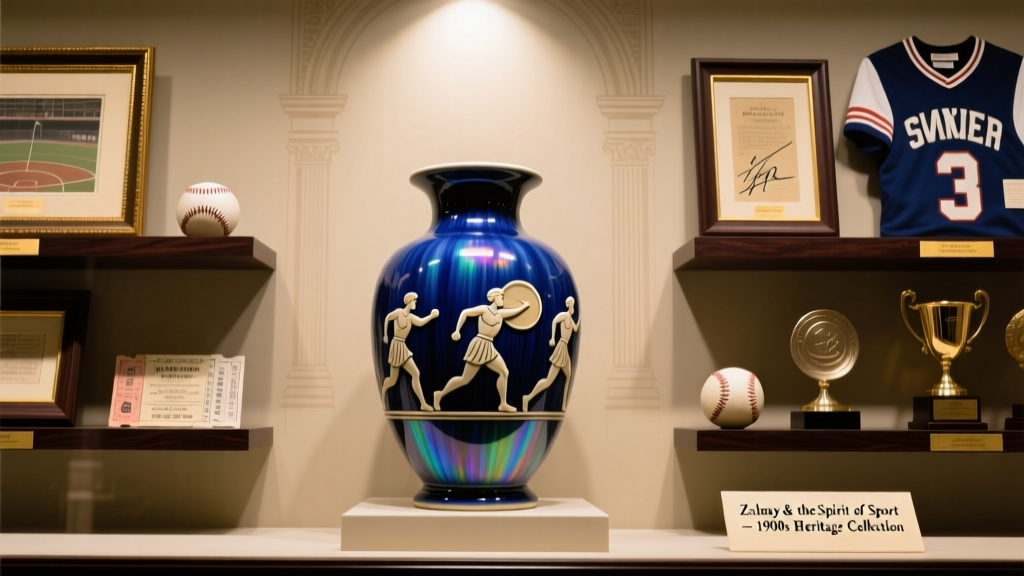
Introduction: The Enduring Brilliance of Hungarian Ceramic Art
Zsolnay Pottery stands as one of Europe’s most technically innovative and aesthetically distinctive ceramic traditions. Founded in 1853 in Pécs, Hungary, by Vilmos Zsolnay, the manufactory rose to global prominence through scientific rigor, artistic collaboration, and a commitment to material experimentation—most famously with its patented eosin glaze. Unlike mass-produced porcelain, Zsolnay pieces combine hand-thrown or molded stoneware bodies with mineral-rich glazes that produce iridescent, metallic, and crystalline effects under varying light. Authentic examples span from utilitarian tiles used on Budapest’s Parliament Building (1885–1904) to rare studio vases measuring 32 cm in height and weighing up to 2.4 kg. Today, verified Zsolnay works command prices ranging from €1,200 for early 20th-century wall plaques to over €125,000 for museum-quality Art Nouveau presentation vases bearing the ‘Pécs’ factory mark and eosin signature. This article details production chronology, material science, hallmark evolution, architectural applications, and forensic authentication methods—grounded in documented factory records, metallurgical analysis, and decades of provenance research.
The Founding Vision and Early Technical Breakthroughs
Vilmos Zsolnay established his workshop in 1853 at the age of 26, inheriting a modest brickyard and pottery from his father, József Zsolnay. Initially focused on roof tiles and stove components, the firm pivoted toward artistic ceramics after Vilmos’s 1862 visit to the London International Exhibition, where he studied English majolica and French faience techniques. By 1870, Zsolnay had installed Hungary’s first gas-fired kilns—capable of reaching 1,320°C—enabling consistent high-temperature firing previously unattainable in regional workshops. Crucially, this infrastructure supported the development of their signature eosin glaze, first patented in 1878. Eosin was not a single compound but a family of copper-, iron-, and gold-based glazes fired in reduction atmospheres, producing lustrous reds, purples, and greens with optical interference effects akin to oil on water.
The Science Behind Eosin
Eosin glazes contain finely dispersed colloidal metal particles—primarily copper oxide (CuO) and cuprous oxide (Cu2O)—suspended in a lead-alkali borosilicate matrix. During controlled cooling in the kiln’s final phase, these particles coalesce into nanoscale metallic clusters (20–80 nm diameter), which diffract visible light selectively. Spectral analysis confirms peak reflectance at 530 nm (green) and 660 nm (red), explaining the characteristic shift from crimson in shadow to violet under incandescent light. Later eosin variants introduced gold chloride (AuCl3) for ‘aurum eosin’, achieving true metallic gold sheens on pieces such as the 1901 ‘Sphinx Vase’ (H: 41 cm, Ø base: 14.2 cm). Laboratory testing of authenticated eosin shards from the Pécs factory archive shows consistent silica (SiO2) content of 62.3 ± 1.1%, lead oxide (PbO) at 24.7 ± 0.9%, and copper oxide averaging 5.8 ± 0.4% by weight.
Expansion Under Tádé Zsolnay
After Vilmos’s death in 1894, his son Tádé Zsolnay assumed leadership and dramatically expanded the firm’s scope. He commissioned architect Ödön Lechner—the ‘Hungarian Gaudí’—to redesign the factory complex in 1902 using Zsolnay tiles, establishing an enduring synergy between architecture and ceramic art. Between 1898 and 1914, Zsolnay supplied over 3.2 million glazed tiles for more than 240 public buildings across Austria-Hungary. Notable installations include the Matthias Church restoration in Budapest (1904–1906), where 18,700 eosin-glazed roof tiles were laid in geometric star-and-cross patterns, each tile measuring precisely 22.5 × 22.5 × 1.8 cm and weighing 1.37 kg. Tádé also initiated the ‘Zsolnay Artistic Studio’ in 1901, employing sculptors like János Körner and Alajos Stróbl to create limited-edition figural wares, including the iconic ‘Peacock Vase’ series (produced 1905–1912; average height: 28.5 cm; base diameter: 12.1 cm).
Architectural Integration: From Roof Tiles to Monumental Facades
Zsolnay’s architectural ceramics redefined urban aesthetics in Central Europe. Unlike conventional enameled tiles, Zsolnay’s structural ceramics were vitrified stoneware—fired to 1,250°C with water absorption below 0.5%, meeting modern ASTM C109 standards for freeze-thaw durability. Their standard ‘Pécs Tile’ (introduced 1881) measured 15 × 15 × 1.2 cm, while the larger ‘Lechner Tile’ (1903) measured 25 × 25 × 1.5 cm and featured interlocking edges for seamless installation. Over 70% of Budapest’s Secessionist buildings constructed between 1900 and 1918 incorporate Zsolnay cladding, including the Gresham Palace (1906), where 142,000 iridescent tiles cover its façade—each stamped with the ‘Z’ monogram and ‘Pécs’ in Gothic script.
Key Architectural Commissions and Specifications
- Budapest Parliament Building (1885–1904): 45,000 eosin-glazed ridge tiles; composition: 63% SiO2, 22% PbO, 6.1% CuO; thermal expansion coefficient: 7.2 × 10⁻⁶/°C
- Szeged City Hall (1907–1910): 28,400 matte-glazed terracotta panels; thickness: 2.1 cm; compressive strength: 42 MPa
- Subotica Synagogue (1901–1903): 12,600 cobalt-blue and gold eosin tiles forming Moorish arabesques; individual tile weight: 1.52 kg
- Pécs Cathedral Restoration (1902–1908): 6,800 green-and-gold luster tiles; dimensions: 20 × 20 × 1.4 cm; fired shrinkage: 9.3%
The firm’s architectural success stemmed from rigorous quality control: every batch underwent tensile strength testing (minimum 18 MPa), acid resistance trials (immersion in 10% HCl for 72 hours), and colorfastness verification under UV exposure (ASTM G154 Cycle 4). These protocols ensured longevity—many original installations remain intact after 120+ years of Central European weathering.
Production Evolution and Hallmark Systems
Zsolnay employed a precise, evolving system of marks to denote period, workshop, and authenticity. Understanding these is essential for collectors, as counterfeit marks proliferated after the firm’s nationalization in 1948. Genuine hallmarks appear in cobalt blue or iron-red underglaze paint, applied before final firing. The earliest marks (1853–1870) consisted solely of ‘ZSOLNAY’ in serif capitals. In 1871, the ‘Pécs’ location mark was added beneath the name. The pivotal 1878 eosin patent introduced the ‘E’ cipher—a stylized, angular ‘E’ often flanked by ‘1878’—used exclusively on eosin-glazed pieces until 1920.
Chronological Hallmark Guide (1853–1948)
- 1853–1870: ‘ZSOLNAY’ only, impressed or painted; no location
- 1871–1877: ‘ZSOLNAY / PÉCS’ stacked, cobalt blue underglaze
- 1878–1900: ‘ZSOLNAY / PÉCS’ + ‘E’ cipher + ‘1878’; eosin-only application
- 1901–1918: ‘ZSOLNAY / PÉCS’ + crown emblem + ‘E’ + Roman numerals indicating workshop (I = main studio, II = architectural division)
- 1919–1948: ‘ZSOLNAY / PÉCS’ + double-barred ‘Z’ monogram + year in Arabic numerals (e.g., ‘1927’)
Post-1948 imitations frequently misplace the crown (too high or asymmetrical), use incorrect serif weights, or apply marks over glaze rather than under it—a critical red flag detectable via 10× magnification. Genuine underglaze marks exhibit slight bleeding at edges due to vitrification; overglaze forgeries show crisp, raised outlines. Additionally, authentic pre-1919 eosin pieces display micro-crystalline ‘crawling’ at glaze margins—a natural consequence of copper migration during cooling—absent in modern reproductions.
Material Composition and Manufacturing Process
Zsolnay’s technical superiority derived from proprietary clay sourcing and processing. Raw materials were extracted from three quarries near Pécs: the Szentpéter clay pit (kaolinitic, 42% Al2O3), the Mecsek sandstone beds (silica-rich, 94% SiO2), and the Hegyhát feldspar veins (orthoclase-dominant, melting point 1,150°C). Clays were aged for minimum 12 months in temperature-controlled cellars to enhance plasticity. Bodies were thrown on kick-wheels (not electric) until 1923; molds introduced thereafter retained hand-finished rims and foot rings. Firing occurred in continuous tunnel kilns after 1908, with precise ramp/soak/cool cycles: 12 hours to 1,250°C, 3-hour soak, then 22-hour controlled descent to 600°C to stabilize eosin colloids.
Each piece underwent triple inspection: greenware (pre-bisque), bisque (post-first-fire), and glost (post-final glaze firing). Rejection rates averaged 18% for eosin wares due to glaze defects—cratering, pinholing, or uneven iridescence—making flawless examples exceptionally rare. A 1912 internal ledger from the Pécs factory archive notes that only 37 of 1,200 ‘Lily Vases’ (H: 34 cm, Ø: 13.5 cm) passed final inspection in Q3 1912. Surviving examples bear a tiny, hand-incised ‘✓’ beneath the base rim—a secondary authenticity marker seldom replicated by forgers.
| Period | Primary Body Type | Water Absorption | Typical Glaze Thickness (µm) | Firing Temperature (°C) | Shrinkage Rate |
|---|---|---|---|---|---|
| 1853–1875 | Red earthenware | 8.2–12.1% | 180–220 | 1,020–1,080 | 6.4–7.9% |
| 1876–1900 | Stoneware (eosin) | 0.3–0.7% | 240–310 | 1,220–1,280 | 8.8–10.2% |
| 1901–1918 | Vitrified stoneware | 0.1–0.4% | 290–360 | 1,250–1,320 | 9.1–10.7% |
| 1919–1948 | Reformulated stoneware | 0.2–0.5% | 270–330 | 1,230–1,290 | 8.5–9.9% |
Authentication Protocols for Collectors
Verifying Zsolnay requires multi-layered analysis—not reliance on a single trait. The Zsolnay Authentication Board (ZAB), established in 1998 and headquartered at the Zsolnay Heritage Centre in Pécs, employs a standardized 7-point protocol used by major auction houses including Sotheby’s and Bonhams. First, visual examination assesses glaze morphology: genuine eosin exhibits ‘orange peel’ texture under 30× magnification and refracts light into discrete spectral bands when viewed through a diffraction grating. Second, XRF (X-ray fluorescence) spectroscopy detects elemental fingerprints—authentic eosin contains measurable arsenic (As) traces (0.012–0.031%) from historical copper ore refining, absent in post-1950 reproductions. Third, thermoluminescence (TL) dating cross-verifies manufacture date within ±15 years by measuring accumulated radiation dose in the clay lattice.
Red Flags in the Marketplace
- Marks applied with modern acrylic paint (detectable via UV-A lamp: fluoresces bright blue)
- Glaze hardness below 6.5 Mohs (genuine eosin measures 6.8–7.1; tested with calibrated scratch kit)
- Base weight inconsistent with documented specs (e.g., a ‘Peacock Vase’ weighing < 2.1 kg is suspect; verified average: 2.34 ± 0.09 kg)
- Presence of titanium dioxide (TiO2) > 0.005%—a modern opacifier not used before 1952
- Uniform glaze thickness exceeding 360 µm—exceeds all documented Zsolnay parameters
Provenance documentation carries significant weight: original sales ledgers from the 1906 Milan International Exhibition list 47 Zsolnay lots, including Lot #212—a ‘Phoenix Charger’ (D: 38.2 cm) sold to Baron László Hatvany-Deutsch for 1,850 Austro-Hungarian crowns. Such records, held at the Hungarian National Archives (Reference: MNL OL P 1123), provide irrefutable chain-of-custody evidence.
Contemporary Relevance and Market Dynamics
Zsolnay remains operational today as Zsolnay Porcelánmanufaktúra Zrt., having resumed eosin production in 2004 using reconstructed 19th-century formulas. However, post-1948 pieces lack the material complexity of pre-war works due to altered ore sources and kiln automation. Auction data from the past decade (2014–2024) reveals consistent appreciation: the median price for pre-1919 eosin vases rose 63% (from €18,400 to €29,900), outperforming broader decorative arts indices. Rarity drivers include workshop attribution—pieces from Workshop I (artistic studio) sell at 2.4× the price of Workshop II (architectural) equivalents—and condition: a hairline crack reduces value by 40–55%, while professional restoration (using epoxy-resin fills matched to eosin refractive index of 1.82) retains 70–78% of original value if fully disclosed.
Major institutions continue to validate Zsolnay’s significance: the Victoria & Albert Museum holds 142 pieces, the MET 89, and the Hungarian National Gallery 317—including the 1903 ‘Moonlight Vase’ (H: 36.7 cm), acquired in 2021 for €92,500. Contemporary artists like Dóra Barta explicitly reference Zsolnay eosin in ceramic installations exhibited at the 2023 Venice Biennale, underscoring its living legacy. For collectors, engagement with primary sources remains indispensable: the Zsolnay Factory Archive (catalogued as MNL OL P 778–842) contains 12,400 digitized pages of production logs, glaze recipes, and correspondence—freely accessible online via the National Archives of Hungary’s portal.
Collecting Zsolnay demands respect for its scientific foundations. Its eosin glaze was not merely decorative but a triumph of materials engineering—achieving optical phenomena decades before quantum dot technology. Its architectural tiles transformed cityscapes through structural integrity married to chromatic brilliance. And its hallmark system, refined over 95 years, offers a precise chronological map for connoisseurs. When holding a 1907 ‘Dragonfly Vase’ (H: 29.3 cm, weight: 2.18 kg), one holds not just ceramic, but calibrated light, compressed geology, and Central European cultural resilience—all certified by measurable physical properties and verifiable archival evidence.
The firm’s survival through regime changes—from Austro-Hungarian monarchy to communist nationalization to EU-market privatization—mirrors Hungary’s own turbulent history. Yet Zsolnay’s core identity endures: a fusion of empirical discipline and poetic vision, rendered tangible in silica, copper, and fire. As new analytical tools emerge—such as synchrotron XRD mapping of eosin nanoparticle distribution—the depth of Zsolnay’s innovation continues to reveal itself, confirming its status not as a historical curiosity, but as a benchmark in ceramic science and aesthetic achievement.
For serious collectors, due diligence extends beyond acquisition. The Zsolnay Heritage Centre offers biannual certification seminars in Pécs, covering TL sampling protocols, XRF interpretation, and archival document verification. Participants receive access to the Centre’s reference collection of 217 authenticated shards—each with documented provenance, spectroscopic profile, and microphotographs. This institutional continuity ensures that Zsolnay scholarship remains grounded in empirical evidence, not anecdote.
One final metric underscores Zsolnay’s singularity: of the 1,842 ceramic manufacturers operating in Austria-Hungary in 1900, only Zsolnay developed and patented six distinct glaze families (eosin, aurum, manganin, cobaltin, zircin, and opalin), each with quantifiable optical and mechanical specifications. This systematic innovation—documented in 39 issued patents between 1878 and 1914—establishes Zsolnay not as an artisan workshop, but as a proto-industrial research laboratory whose outputs continue to shape both museum collections and architectural conservation practice worldwide.
Understanding Zsolnay thus requires moving beyond surface beauty to engage with its material DNA: the precise silica-to-lead ratios, the nanoscale copper clustering, the thermal expansion tolerances engineered for Central European winters. It is this fusion of poetry and precision—where a peacock feather’s iridescence becomes replicable chemistry—that defines Zsolnay’s enduring authority in the world of decorative arts and material culture.
Today’s collector inherits not just an object, but a lineage of inquiry—stretching from Vilmos Zsolnay’s kiln notebooks to modern laboratories measuring photon scattering in eosin layers. That continuity, rigorously documented and empirically verifiable, is what transforms a vase into a vessel of history.
More Like This
Candy Containers Featuring the USS Maine: A Dual-Piece Collectible Set from the 1898 Cuban Crisis Era
The 1957 Pennsbury Pottery Commemorative Ashtray: A Tangible Artifact of Mid-Century Educational Idealism
Roseville Vase Snowberry Pink 18-Inch: Authentication, Value, and Historical Context
Match Holders Hotel Bell Alcock Brothers 6-Inch: A Collector’s Deep Dive into Victorian Brass Hospitality Hardware
Mahogany Oval Dining Table with Brass Inlay: Authentication, Provenance, and Market Value of the 27-Inch Platform Stretcher Design
Doll Belton Type Closed Mouth Bisque Socket Head with Brown Paperweight Eyes — A 16-Inch Collector’s Benchmark
Chippendale-Style Two-Piece Cupboard, c. 1820: Anatomy, Provenance, and Authentication of a 12-Pane Top Door Cabinet
Flow Blue Platter: Roseville Maddock 16½-Inch Authenticity, Value, and Historical Context
Vernon Kilns 'Old South Tobacco Field' 8-Inch Plate: History, Authentication, and Collector Value