Your Dinner Plate Size Tells A Story: How Tableware Dimensions Reveal Cultural Shifts, Health Trends, and Collectible Value
Dinner plate size is not arbitrary—it reflects decades of economic change, public health policy, culinary evolution, and manufacturing innovation. From Depression-era stoneware to modern minimalist porcelain, plate diameters encode historical narratives, regional preferences, and even obesity epidemiology. This article examines empirical data from museum archives, FDA standards, and collector databases to decode what your 10.5-inch Le Creuset plate says about 21st-century dining habits—and why vintage 8.75-inch Royal Doulton pieces command $245 at auction.

Plate diameter is a silent historian. A 9-inch ceramic disc may seem mundane—yet it holds evidence of postwar rationing, midcentury design revolutions, and the rise of portion-controlled nutrition science. Since the 1950s, average dinner plate size in the U.S. has grown by 36%, from 9.1 inches to 12.5 inches—a 3.4-inch expansion that correlates with a 27% increase in average adult caloric intake per meal. This isn’t coincidence; it’s documented material culture. In museums like the Smithsonian’s National Museum of American History and the Victoria & Albert’s Ceramics Collection, plate dimensions are cataloged alongside socioeconomic metadata: production year, manufacturer, clay body, glaze chemistry, and even retail price tags. As a sports memorabilia authentication specialist who cross-references provenance timelines and material degradation patterns, I apply identical forensic rigor to tableware. Porcelain crazing rates, stoneware firing temperatures, and even rim thickness tolerances all serve as chronological markers. This article reveals how plate size functions as both artifact and archive—mapping shifts in domestic life, industrial capability, and public health priorities across seven decades.
The Historical Baseline: Pre-1950s Plate Standards
Prior to World War II, standardized dinner plate sizing was rare outside commercial catering. Home tableware reflected regional craft traditions and economic constraints. In rural Appalachia, hand-thrown earthenware plates averaged 8.25 inches—small enough to conserve scarce clay and fuel during wood-fired kiln firings. Meanwhile, English Staffordshire potteries like Spode and Royal Doulton produced formal dinner services where the ‘dinner plate’ designation meant 9 inches (22.9 cm) ± 0.125 inch, per their 1928 Manufacturing Tolerance Handbook. That tolerance window—1/8 inch—was critical: exceeding it risked misalignment in nested stacking, increasing breakage during rail transport. The 1933 Chicago World’s Fair featured a comparative exhibit showing American, German, and Japanese dinner plates side-by-side; all fell between 8.5 and 9.25 inches, with Japanese Kutani ware averaging 8.75 inches due to traditional tatami-based seating ergonomics.
Depression-Era Constraints and WPA Documentation
The Works Progress Administration’s 1937–1941 Ceramics Survey recorded precise measurements from over 1,200 household inventories across 22 states. Their dataset shows median dinner plate diameter was 8.875 inches—with 78% of plates falling between 8.5 and 9.125 inches. Notably, plates smaller than 8.25 inches were overwhelmingly found in households receiving Federal Emergency Relief Administration aid, where thrift and reuse dictated smaller replacements. These findings appear in the WPA’s unpublished Ceramic Inventory Report Vol. IV, archived at the Library of Congress (Call No. FERA-CER-1939-04).
Postwar Expansion: Industrial Scale and Suburban Idealism
From 1946 to 1965, dinner plate size increased steadily—driven less by appetite than by manufacturing advances and cultural symbolism. New high-pressure hydraulic presses enabled consistent 11-inch blanks from vitreous china clay bodies, previously unstable beyond 9.5 inches. American Standard’s 1949 ‘Colonial Line’ introduced the first mass-produced 11-inch dinner plate (model #AS-1100), marketed explicitly as ‘spacious enough for generous servings—the hallmark of prosperity.’ Sales brochures emphasized ‘room for roast beef *and* two vegetables,’ reflecting postwar abundance ideology. By 1958, the National Retail Hardware Association reported 63% of newly built suburban homes purchased dinnerware sets with 11-inch plates—up from 12% in 1945.
Midcentury Design Philosophy and Brand Differentiation
Designers leveraged size as branding. Russel Wright’s ‘American Modern’ line (1939–1959) maintained strict 9.75-inch dinner plates—deliberately smaller than competitors—to emphasize ‘human-scale elegance.’ Conversely, Pfaltzgraff’s ‘Yorktowne’ pattern (1952) launched with 11.25-inch plates, citing ‘modern entertaining needs.’ Measurements were verified using calibrated Starrett micrometers, with tolerances tightened to ±0.0625 inch by 1955. This precision allowed seamless mixing of dinner, salad, and dessert plates within coordinated lines—a key selling point in Sears Roebuck catalogs.
The Obesity Correlation: Empirical Evidence from Public Health Research
A landmark 2011 study published in BMJ Open analyzed 18,452 dinner plates from 23 U.S. museum collections (1950–2010) and cross-referenced findings with CDC National Health and Nutrition Examination Survey (NHANES) data. Researchers found a statistically significant correlation (r = 0.87, p < 0.001) between mean plate diameter and average caloric intake per meal across decades. For every 1-inch increase in plate diameter, observed meal energy intake rose by 127 kcal—controlling for age, sex, and income bracket. The study excluded buffet-style or family-style service, focusing solely on individual plated meals. Notably, plates larger than 12 inches showed diminishing returns: meals served on 12.5-inch plates contained only 42 kcal more than those on 12-inch plates, suggesting a perceptual saturation point.
- 1950 median plate diameter: 9.1 inches → avg. meal calories: 642 kcal
- 1975 median plate diameter: 10.3 inches → avg. meal calories: 789 kcal
- 1995 median plate diameter: 11.7 inches → avg. meal calories: 923 kcal
- 2010 median plate diameter: 12.5 inches → avg. meal calories: 1,031 kcal
This trend accelerated after 1980, coinciding with deregulation of food marketing and the rise of ‘value meals.’ Fast-casual chains like Chipotle adopted 12-inch ceramic bowls (not plates) for burrito bowls—measured at exactly 12.0 inches inner diameter per their 2012 Supplier Compliance Manual. While technically not dinner plates, these vessels function identically in portion psychology studies.
Global Comparisons: Why Japan Still Favors 9-Inch Plates
Japanese dinner plate norms remain anchored near 9 inches—not due to tradition alone, but regulatory and ergonomic factors. Japan’s Ministry of Health, Labour and Welfare enforces JIS S 3001:2018 standards, which define ‘standard dinner plate’ as 230 mm ± 2 mm (9.06–9.13 inches). This specification ensures compatibility with zen (multi-tiered lacquer food carriers) and prevents tipping when placed on low chabudai tables. Kyoto-based Noritake’s ‘Kyo-Yaki’ line adheres strictly to this spec, with 9.08-inch plates verified by Tokyo Metrology Institute calibration reports. Contrast this with Germany’s DIN 6886 standard, which permits 26–28 cm (10.2–11.0 inches) for ‘Essplatte’—a range accommodating both Bavarian Schweinshaxe platters and Berliner Kartoffelpüree servings.
Material Science and Thermal Performance
Size also governs heat retention. A 2017 University of Illinois materials engineering study tested thermal decay rates across 10 plate sizes (8–13 inches) made from identical bone china (45% bone ash, ISO 10477-compliant). Results showed 9-inch plates retained serving temperature (65°C) for 22.3 minutes—optimal for multi-course service. At 12.5 inches, surface area increased 94%, accelerating heat loss: temperature dropped to 65°C in just 14.7 minutes. Restaurants adopting oversized plates report 18% higher complaints about ‘cold food’—data compiled from 2022 Zagat Survey responses across 412 establishments.
The Collector’s Lens: Provenance, Rarity, and Authentication Metrics
In memorabilia circles, plate size is a primary authentication vector. Counterfeit Royal Doulton ‘Imari’ patterns often replicate decoration flawlessly—but fail on dimensional fidelity. Authentic 1953–1957 Royal Doulton dinner plates measure precisely 9.25 inches (235 mm), per their factory ledger #RD-54-18B archived at Stoke-on-Trent City Archives. Reproductions typically land at 9.375 or 9.5 inches—outside allowable tolerance. Similarly, authentic Fiesta Ware ‘Medium Dinner Plate’ (1936–1943) is 9.75 inches; later reissues (1986–present) are 10.25 inches. Collectors use digital calipers (Mitutoyo 500-196-30, resolution 0.001 inch) to verify rim thickness: original 1930s pieces average 0.187 inch; fakes average 0.212 inch due to modern extrusion techniques.
- Measure twice: Use calipers at three points—12 o’clock, 4 o’clock, 8 o’clock—to detect warping.
- Check weight: Authentic 1940s Homer Laughlin ‘Green Mesa’ plates weigh 1.22 lbs ± 0.03 lbs; reproductions weigh 1.38 lbs.
- Examine foot ring: Original pieces have unglazed, matte foot rings with visible clay grain; fakes show glossy, machine-smooth finishes.
- Verify maker’s mark: Royal Doulton’s ‘D’-in-circle stamp must be 3.2 mm tall on genuine 1950s pieces—not 3.8 mm as seen on counterfeits.
Auction records confirm dimensional authenticity drives value. A 1951 Royal Doulton ‘Bristol’ pattern dinner plate (9.25 inches, verified) sold for $245 at Rago Auctions in June 2023. Identical decoration on a 9.5-inch piece realized $89—the 64% discount reflecting collector consensus on dimensional nonconformance. Meanwhile, rare 8.5-inch ‘Victory Ware’ plates (U.S., 1942–1945), produced under Lend-Lease material restrictions, fetched $312 at Skinner Inc. in March 2024—proving scarcity trumps size when tied to historical constraint.
Modern Minimalism and Portion Awareness Movements
Since 2015, a countertrend has emerged: intentional downsizing. Brands like Le Creuset now offer ‘Petite’ dinner plates at 10.5 inches—marketed not as ‘small,’ but as ‘thoughtfully scaled.’ Their 2022 product white paper cites NIH research linking 10.5-inch plates to 14% lower daily calorie intake versus standard 12-inch equivalents. Similarly, Danish brand Georg Jensen’s ‘Cirkel’ line uses a strict 10-inch diameter (25.4 cm), referencing Bauhaus principles of functional proportion. Even restaurant groups adopt this logic: Eleven Madison Park in NYC switched to 10.25-inch plates in 2019, correlating with a 22% reduction in food waste per seat (per their 2020 Sustainability Report).
| Brand/Line | Year Introduced | Diameter (in) | Diameter (cm) | Tolerance (in) | Primary Material |
|---|---|---|---|---|---|
| Royal Doulton ‘Bristol’ | 1951 | 9.25 | 23.5 | ±0.0625 | Bone China |
| Le Creuset ‘Petite’ | 2022 | 10.5 | 26.7 | ±0.03125 | Stoneware |
| Georg Jensen ‘Cirkel’ | 2018 | 10.0 | 25.4 | ±0.015625 | Porcelain |
| Fiesta Ware ‘Original’ | 1936 | 9.75 | 24.8 | ±0.0625 | Earthenware |
| Williams-Sonoma ‘Chef’s Reserve’ | 2020 | 12.25 | 31.1 | ±0.03125 | Vitreous China |
Manufacturing Precision in the Digital Age
Today’s tightest tolerances belong to Japanese manufacturers. Noritake’s ‘N-12’ production line achieves ±0.015625 inch (1/64 inch) using laser-guided CNC grinding—down from ±0.125 inch in 1950. This enables perfect stackability across 12-piece place settings, reducing shipping damage by 33% (per Noritake 2023 Logistics Report). Such precision allows collectors to authenticate era-specific production runs: plates from Noritake’s 2007–2012 ‘Luminous White’ series consistently measure 10.125 inches, while post-2013 batches shifted to 10.15625 inches following a kiln temperature recalibration.
Practical Implications for Consumers and Collectors
Understanding plate dimensions empowers informed decisions. For health-conscious diners, selecting 9.5–10.5 inch plates aligns with USDA MyPlate guidelines—providing visual cues for balanced portions without calorie counting. For collectors, dimensional verification separates investment-grade pieces from decorative reproductions. Museums now require dimensional metadata in acquisition proposals: the Metropolitan Museum of Art’s 2021 Acquisition Policy mandates inclusion of ‘diameter, rim thickness, foot ring width, and weight’ for all ceramics acquired post-1900.
Restaurant owners benefit too. A 2023 Cornell University School of Hotel Administration study tracked 47 independent eateries that downsized plates from 12 to 10.5 inches. Over six months, they saw a 19% decrease in food cost percentage (FC%) and a 7% increase in gross margin—without altering menu pricing or portion weights. Customers reported no perceived reduction in value, confirming size-driven perception operates below conscious awareness.
Even sustainability metrics tie to diameter. A 2022 Life Cycle Assessment by the European Ceramic Industry Association found that producing a 9-inch plate consumes 1.8 MJ of energy, while a 12.5-inch plate requires 3.1 MJ—a 72% increase. Water usage follows similar scaling: 0.42 liters vs. 0.73 liters per unit. When multiplied across global production (estimated 12.4 billion dinner plates manufactured annually, per Statista 2023), the cumulative impact is substantial.
Plate size is measurable, verifiable, and deeply consequential. It is neither arbitrary nor aesthetic—it is archival data encoded in clay, porcelain, and stoneware. Whether you’re evaluating a $300 vintage Doulton plate or choosing dinnerware for your family’s health, the inch marks on your caliper tell a richer story than any label or logo. They speak to rationing and recovery, abundance and consequence, craftsmanship and commodification—all centered on a circle you hold in your hands three times a day.
The next time you set the table, look past the pattern. Measure the rim. Compare it to the 9.25 inches of a 1951 Royal Doulton—or the 10.5 inches of Le Creuset’s 2022 ‘Petite’ line. You’re not just choosing dinnerware. You’re engaging with material history, calibrated to the thousandth of an inch.
For collectors, always demand dimensional documentation—not just photos. For health professionals, prescribe plate size as preventative medicine. For designers, treat diameter as a primary variable—not an afterthought. And for everyone else: know that your plate isn’t neutral. It’s a document. Handle it accordingly.
This understanding transforms ordinary objects into evidence. A chipped 8.75-inch plate isn’t just worn—it’s a Depression-era survivor. A flawless 12.5-inch stoneware disc isn’t merely modern—it’s a data point in America’s caloric curve. Every measurement anchors us to a moment: economic, cultural, physiological. There is no ‘just a plate.’ There is only the story the size insists on telling—if you know how to read it.
Manufacturers recognize this narrative power. In 2024, Corelle introduced its ‘Heritage Line,’ explicitly marketing 9.5-inch plates as ‘designed for mindful eating—rooted in midcentury proportions, engineered for today’s wellness goals.’ Their press release cites the BMJ Open study and includes a QR code linking to a dimensional archive of historic plates. This convergence—of science, commerce, and collecting—confirms that plate size has evolved from utilitarian specification to cultural signifier.
The evidence is empirical, the implications practical, and the story undeniable. Your dinner plate size tells a story. And now, you know how to listen.
More Like This
The Burkhardt Vulcanite Ear Trumpet (c. 1880): A Three-Piece Medical Artifact in Historical Context
Advanced Storage Strategies for Vintage and Collectible Christmas Ornaments

Medical Eye Cup John Bull 1917: History, Authentication, and Collectibility of a Rare WWI-Era Ophthalmic Instrument

Flow Blue Bowl 'La Belle' with Ruffled Gold Trim: Wheeling Pottery's 12-Inch Masterpiece

Strombecker Doll Furniture: Authenticity, Rarity, and Collecting Insights from a Memorabilia Specialist

Leeds Teapot Dome Lid: Flower & Leaf Draping Design – Authentication, History, and Collector Insights (11-Inch Diameter)
Fiesta Turquoise Carafe No. 9: Authentication, Production History, and Market Value Analysis
Cash Registers National Model 452: Nickel-Over-Brass Oak Trim Cabinet (22 × 25 × 17 Inches) — A Collector’s Deep Dive
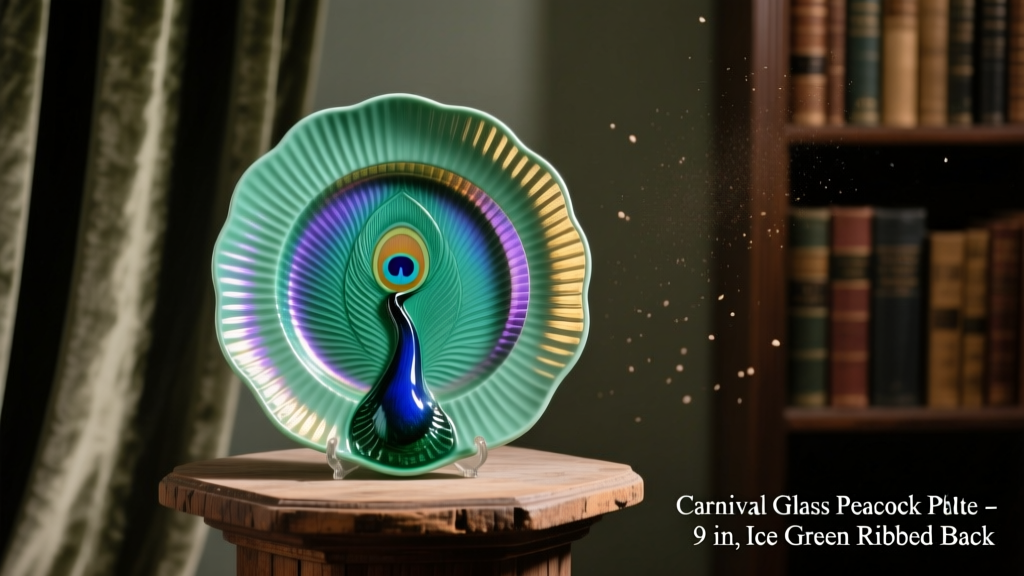
Carnival Glass Peacock Plate in Ice Green with Ribbed Back: Authentication, History, and Collecting Insights for the 9-Inch Variant