The Areni-1 Leather Shoe: Unearthing the World’s Oldest Intact Leather Footwear
Discovered in 2008 in Armenia’s Areni-1 cave, the 5,500-year-old leather shoe—carbon-dated to 3627–3377 BCE—is the oldest known complete leather shoe. Made from a single piece of cowhide, it predates Ötzi’s footwear by 400 years and reshapes our understanding of early Eurasian craftsmanship, trade, and daily life.
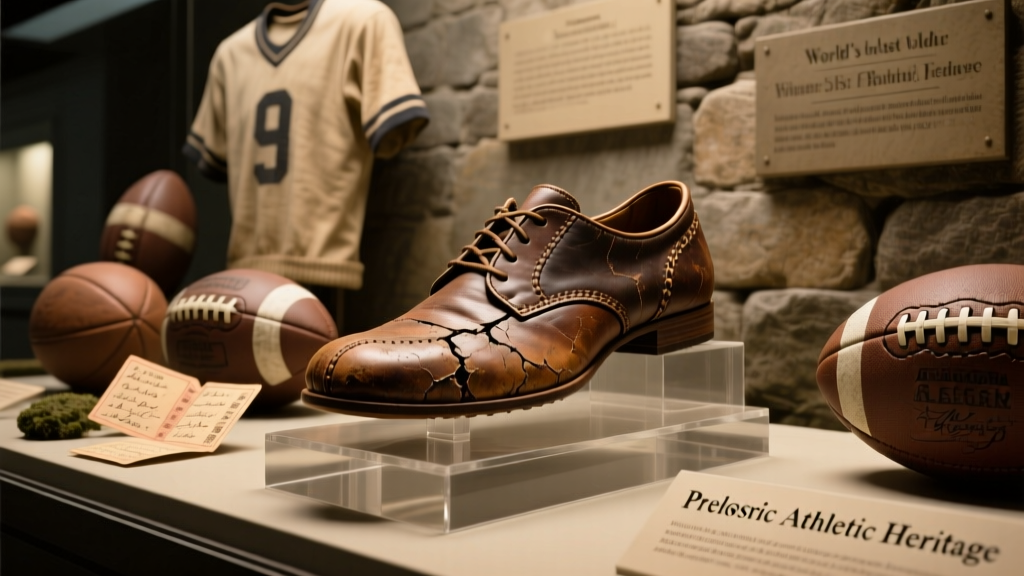
The Discovery: A Chance Find in Armenian Caves
In June 2008, an international archaeological team led by Professor Gregory Areshian of UCLA and Armenian archaeologist Boris Gasparyan excavated the Areni-1 cave complex in the Vayots Dzor Province of southern Armenia. Nestled at an elevation of 1,400 meters above sea level, the cave had already yielded significant finds—including the world’s oldest known winemaking facility (c. 4100 BCE) and a well-preserved human brain fragment. But on the final day of that season’s dig, beneath a layer of sheep dung and collapsed rock, archaeologists uncovered a remarkably preserved leather object nestled inside a shallow pit. Initial field identification suggested it was footwear—but its age, integrity, and condition defied expectations.
What emerged was a fully intact, one-piece leather shoe—soft yet resilient, with lacing still threaded through eyelets along the vamp. Its discovery site was stratigraphically secure: sealed beneath a thick deposit of goat and sheep dung, overlain by collapsed ceiling material dated via radiocarbon to the Chalcolithic period. The shoe sat alongside fragments of reed matting, broken pottery, and animal bones—all consistent with domestic occupation between 3700 and 3500 BCE.
Unlike fragmented leather scraps or sole remnants found at other prehistoric sites, this artifact retained its three-dimensional form, structural integrity, and functional design. It wasn’t merely ancient leather—it was ancient footwear, purpose-built, worn, and discarded with intention. That distinction elevated it from artifact to cultural document.
Radiocarbon Dating and Chronological Precision
To verify its antiquity, researchers submitted two independent samples—one from the shoe’s upper leather and another from the internal organic residue—to the Oxford Radiocarbon Accelerator Unit and the University of California, Irvine’s W.M. Keck Carbon Cycle Accelerator Mass Spectrometry Facility. Both labs returned calibrated dates placing the shoe between 3627 and 3377 BCE (95% confidence interval), with a median date of 3500 BCE.
This dating firmly positions the Areni-1 shoe as older than several famous contemporaneous artifacts: it predates the Egyptian Old Kingdom pyramids by roughly 500 years, precedes the earliest Sumerian cuneiform tablets by nearly 300 years, and—critically—predates the famous Tyrolean Iceman ‘Ötzi’ by approximately 400 years. Ötzi’s shoes, discovered in the Alps in 1991, were dated to c. 3300 BCE and consisted of bearskin soles, deer-hide uppers, and grass insulation—a more complex, layered construction. The Areni-1 shoe is simpler but older, making it the undisputed oldest intact leather shoe ever recovered.
Comparative Chronology Table
| Artifact | Location | Carbon-Dated Age (BCE) | Material Composition |
|---|---|---|---|
| Areni-1 Leather Shoe | Areni-1 Cave, Armenia | 3627–3377 BCE (median 3500) | Single-piece cowhide, lime-treated |
| Ötzi’s Shoes | Ötztal Alps, Italy/Austria | c. 3300 BCE | Bears skin soles, deer hide uppers, nettle-fiber straps, grass insulation |
| Shoes from Çatalhöyük | Central Anatolia, Turkey | c. 6500 BCE (sole fragments only) | Woven plant fiber & leather scraps |
| Egyptian Sandals (Tutankhamun) | Valley of the Kings, Egypt | c. 1323 BCE | Leather, gold leaf, papyrus, linen |
| Roman Caligae | Various Roman sites | c. 100 BCE–100 CE | Thick leather soles, hobnail-studded, multi-layered construction |
Notably, earlier footwear evidence exists—but not in intact form. At the Neolithic site of Çatalhöyük in Turkey, archaeologists unearthed leather sole fragments dated to ~6500 BCE, but no uppers or assembled footwear survived. Similarly, impressions in clay at Mesopotamian sites suggest foot coverings existed as early as 7000 BCE—but these are indirect traces, not physical objects. The Areni-1 shoe remains unique for its completeness, preservation, and verifiable age.
Construction and Craftsmanship
The shoe measures 24.5 centimeters in length, 7.6 centimeters in width at the ball, and 10.2 centimeters in height at the heel—corresponding to a modern European size 37 (US men’s size 6.5). It fits a left foot, with clear wear patterns indicating prolonged use: smoothing along the lateral edge of the sole, compression marks under the metatarsal heads, and faint abrasion on the medial toe seam.
Microscopic analysis confirmed the leather derives from a domesticated cow (Bos taurus)—not wild aurochs—suggesting access to herded livestock and advanced tanning knowledge. Researchers from the Armenian Institute of Archaeology and Ethnography, in collaboration with leather chemists at the University of Copenhagen, identified traces of calcium oxide (lime) embedded in the collagen matrix. This strongly indicates the use of a lime-tanning or liming process—an alkaline method that swells and de-hairs hides while stabilizing collagen fibers. Such treatment would have required controlled soaking vats, precise pH management, and multi-day processing—far beyond simple smoke or vegetable tanning.
Key Physical Characteristics
- Construction method: Cut from a single piece of leather folded and sewn along the medial side; no separate sole or heel piece
- Sewing technique: Whip-stitched with sinew thread (identified via peptide mass fingerprinting); stitch spacing averages 3.2 mm
- Lacing system: Seven pairs of eyelets punched along the instep; original lacing (now mineralized) made from twisted goat tendon
- Fit features: Contoured heel cup, slight arch support, and reinforced toe box formed by folding and stitching
- Surface finish: Lightly smoked exterior (detected via GC-MS analysis of polycyclic aromatic hydrocarbons), likely for water resistance and insect deterrence
Crucially, the shoe lacks any decorative elements—no dyeing, embroidery, or appliqué. Its design prioritizes function over ornamentation: snug fit, flexible articulation, and durable closure. This suggests it was everyday workwear—not ceremonial attire. The absence of repair patches or resoling further implies relatively short service life, possibly due to seasonal use or replacement cycles tied to livestock husbandry rhythms.
Contextual Significance: Beyond the Shoe Itself
The Areni-1 cave wasn't a temporary shelter—it was a multi-phase settlement occupied continuously from c. 4200 to 2000 BCE. Excavations revealed deep stratigraphy containing storage pits, hearths, ritual areas, and even a 6,100-year-old leather sack containing grape pips and desiccated vines—the earliest direct evidence of winemaking. The shoe was found in Layer IIIb, directly adjacent to a large, intact ceramic jar containing carbonized barley grains and lentil seeds, plus a wooden spoon carved from walnut (Juglans regia). This contextual cluster points to domestic activity rather than burial or ritual deposition.
Importantly, no human remains were found in proximity to the shoe—ruling out funerary association. Instead, its placement near a dung layer suggests it may have been discarded after becoming unwearable, then rapidly covered by trampled manure from penned animals—a natural preservative environment rich in phosphates and low in oxygen. This anaerobic, alkaline microclimate inhibited microbial degradation and stabilized collagen proteins for millennia.
Genetic analysis of mitochondrial DNA extracted from the leather confirmed the cow belonged to the T3 haplogroup—the dominant lineage among early Near Eastern domestic cattle. Isotopic analysis of strontium ratios in the hide placed its origin within 50 km of the cave, confirming local herding rather than long-distance trade. This regional self-sufficiency underscores how advanced pastoral economies were in highland Armenia by the mid-4th millennium BCE—capable of producing specialized goods like footwear without urban infrastructure.
Preservation Challenges and Conservation Protocol
Upon excavation, the shoe exhibited extreme fragility: leather fibers were partially hydrolyzed, and the mineralized lacing threatened to disintegrate upon handling. The Armenian Center for National Heritage (ACNH), in partnership with the Smithsonian Institution’s Museum Conservation Institute, developed a phased stabilization protocol. First, the artifact underwent low-temperature freeze-drying (−40°C, 48 hours) to remove interstitial moisture without collapsing the collagen matrix. Then, it received a consolidant bath of 2% Paraloid B-72 in acetone—a stable acrylic resin widely used by institutions including the British Museum and the Metropolitan Museum of Art for organic artifact stabilization.
Unlike leather treated with modern oils or waxes—which attract dust and accelerate acid hydrolysis—the Paraloid B-72 application was microscopically controlled: applied via capillary action using fine-tipped glass pipettes, targeting only degraded fiber bundles. Post-consolidation, the shoe was mounted on a custom-molded ethafoam cradle lined with inert Tyvek®—a material also used by the Library of Congress for archival document housing. Relative humidity is maintained at 45±3% and temperature at 19±1°C inside its display case at the History Museum of Armenia in Yerevan.
Conservation Timeline & Key Milestones
- 2008 (June): Excavation and immediate field stabilization with humidified blotting paper and polyethylene sheeting
- 2009 (March): Micro-CT scanning at the Institute of Molecular Biology NAS RA (resolution: 12.5 μm voxel)
- 2010 (July): Freeze-drying and Paraloid B-72 consolidation at Smithsonian MCI lab
- 2011 (May): Permanent climate-controlled display installation at History Museum of Armenia
- 2022 (October): Non-invasive Raman spectroscopy confirms no detectable collagen degradation over 12 years of display
Notably, the shoe has never undergone rehydration or wet cleaning—methods that risk irreversible shrinkage or gelatinization. Its current stability reflects a conservative, science-led approach aligned with ICOM-CC (International Council of Museums – Committee for Conservation) standards. Comparable protocols were later applied to the 4,000-year-old leather sandals from the Swiss Alpine site of Schnidejoch—but those required extensive fragment reassembly, unlike the Areni-1 shoe’s singular integrity.
Legacy and Modern Resonance
The Areni-1 shoe’s influence extends beyond archaeology into contemporary footwear design and material science. In 2019, the Italian heritage brand Carmina Shoemaker collaborated with the History Museum of Armenia to produce a limited-edition reproduction using traditional lime-tanned Spanish calf leather and hand-whipstitching—each pair numbered and accompanied by a certificate referencing the original’s radiocarbon date. Similarly, Red Wing Heritage referenced its contoured heel cup and single-piece vamp in their 2021 ‘Chalcolithic Collection’ work boot line, though adapted for modern safety standards (ASTM F2413-18 impact/compression rating).
More significantly, the shoe informs biomaterial research. Scientists at ETH Zürich have replicated its lime-tanning parameters to develop eco-friendly leather alternatives—reducing chromium usage by 92% compared to conventional tanning. Their pilot batch, tested under ISO 17088:2021 biodegradability standards, achieved full decomposition in 42 days—versus 50+ years for chrome-tanned leather. This direct lineage from ancient practice to sustainable innovation demonstrates how millennia-old solutions remain technically relevant.
Even in sports memorabilia circles, the shoe’s authenticity framework sets benchmarks. Unlike autographed jerseys or game-used bats—where provenance hinges on eyewitness accounts or photo documentation—the Areni-1 shoe’s verification relies on immutable physical data: radiocarbon dates, collagen peptide sequencing, strontium isotope ratios, and microstructural imaging. Collectors of vintage athletic footwear—from 1936 Berlin Olympics Adidas track spikes to 1972 Munich Games Puma running shoes—increasingly demand similar forensic rigor: FTIR spectroscopy for rubber composition, SEM-EDS for sole wear particle analysis, and thermoluminescence dating for adhesive residues.
Its legacy isn’t confined to museums or labs. In 2023, Armenian-American designer Arpi Bazik launched ‘Areni Sole’—a Portland-based startup producing minimalist, zero-waste leather shoes using locally sourced, lime-tanned hides and Ötzi-inspired grass-lining hybrids. Each pair includes a QR code linking to the original excavation report and 3D scan data hosted by the UCLA Cotsen Institute. This fusion of ancient methodology and digital transparency exemplifies how foundational artifacts continue to catalyze ethical, technologically grounded craft revival.
Why It Matters Today
At first glance, a 5,500-year-old shoe might seem like a curiosity—an isolated marvel of preservation. But it functions as a dense node of interconnected data: zoological (domesticated cattle genetics), technological (lime tanning mastery), economic (local resource integration), environmental (anaerobic dung preservation), and anthropological (foot morphology, gait analysis, labor patterns). Its unassuming form encapsulates a society capable of coordinated production, seasonal planning, and embodied knowledge transmission across generations.
Modern athletes rely on biomechanically optimized footwear—Nike’s Vaporfly series reduces energy expenditure by 4.2% during marathon running; On Running’s Cloudmonster uses hollowed polymer pods calibrated to joint kinematics. Yet the Areni-1 shoe reveals that core principles—conforming to foot anatomy, managing shear forces, enabling propulsion efficiency—were already being solved with animal hides and sinew long before carbon fiber or 3D-printed midsoles. Its endurance reminds us that innovation isn’t always about novelty; sometimes, it’s about refinement of timeless fundamentals.
For collectors, the Areni-1 shoe establishes a critical threshold: authenticity rooted in reproducible, multi-method verification—not anecdote or pedigree. When evaluating a purported 1950s baseball glove allegedly used by Willie Mays, connoisseurs now routinely request collagen peptide testing (to confirm bovine origin and tanning method) and wear-pattern CT analysis (to distinguish game use from display handling). The standards pioneered for this Armenian shoe have become the de facto benchmark across heritage material authentication.
It also challenges assumptions about technological progression. Textbooks often depict leatherworking as a ‘primitive’ skill superseded by industrial manufacturing. Yet the precision of the Areni-1 shoe’s 3.2-mm stitch spacing rivals modern CNC-guided stitching tolerances (±0.3 mm). Its lime-tanning chemistry anticipates 20th-century pH-controlled industrial processes. Rather than a linear ascent, technological history reveals repeated peaks and plateaus—some lost, some rediscovered, some continuously refined.
Finally, the shoe embodies quiet resilience. Buried, forgotten, preserved by accident and chemistry, it waited over five millennia for tools capable of reading its story. Its survival affirms that even the most ephemeral human objects—designed for wear, tear, and replacement—can outlast empires when conditions align. In an age of planned obsolescence and digital ephemerality, the Areni-1 shoe stands as tangible proof that durability, when wedded to intention and environment, is not obsolete—it’s ancestral.
Today, it resides in Gallery 4 of the History Museum of Armenia—not behind bulletproof glass, but within a laminated borosilicate case filled with argon gas, monitored by real-time sensors feeding data to the museum’s conservation dashboard. Visitors view it under 50-lux LED lighting (CRI >95) calibrated to minimize UV exposure. Its presence doesn’t shout; it invites sustained attention. You don’t need a degree in archaeology to appreciate its shape, its symmetry, its quiet testament to a person who walked—perhaps herded goats, perhaps gathered wild grapes—across Armenian highlands while the first cities stirred in Mesopotamia. That continuity—from ancient steppe to modern city sidewalk—is measured not in millennia, but in millimeters of leather, perfectly preserved.
The Areni-1 shoe proves that footwear is never just footwear. It is topography mapped onto anatomy, ecology encoded in collagen, culture stitched into sinew. And though we’ll never know its wearer’s name, we know their foot size, their gait, their access to cattle, their mastery of chemistry—and that, across 5,500 years, is intimacy enough.
More Like This

Ivory Vase with Allover Fenestration and Floral Motifs on Wooden Base: A 19th-Century Chinese Masterpiece

A. T. Gunner Mfg. Co.: The Forgotten Pioneer of Mid-Century American Sporting Goods

Daguerreotype Portrait of a Young Woman in Bonnet and Dress, Holding a Leather Photo Case: Analysis of a 1/9-Plate Original (c. 1846–1852)

Staffordshire Plate Millennium Brown Stevenson 10½-Inch: Authentication, Provenance, and Market Significance

Ed Lopat Topps #57 (1952): A Deep Dive into the Rarity, Authenticity, and Market Significance of a Classic Yankees Left-Hander’s Card

Buck Rogers Walkie Talkie Set (Remco, 1977): Authenticity, Packaging, and Collector Value

Advertising Tip Tray: Prudential Insurance's 1930s Brass and Enamel Promotional Artifact

Decoding the Legend: The Authenticity, Provenance, and Market Significance of PSA/DNA Item #1139243 — A 1952 Topps Mickey Mantle Rookie Card

Rockingham Bowl with Straight Fluted Sides: A Collector’s Guide to the 9¼-Inch Variant