World War II Paperback Books: Collecting, Authenticating, and Preserving Wartime Paperbacks
A detailed examination of WWII-era paperback books—including Armed Services Editions (ASEs), Penguin Specials, and wartime imprints—covering production history, physical identifiers, market values, conservation practices, and authentication red flags for collectors and historians.
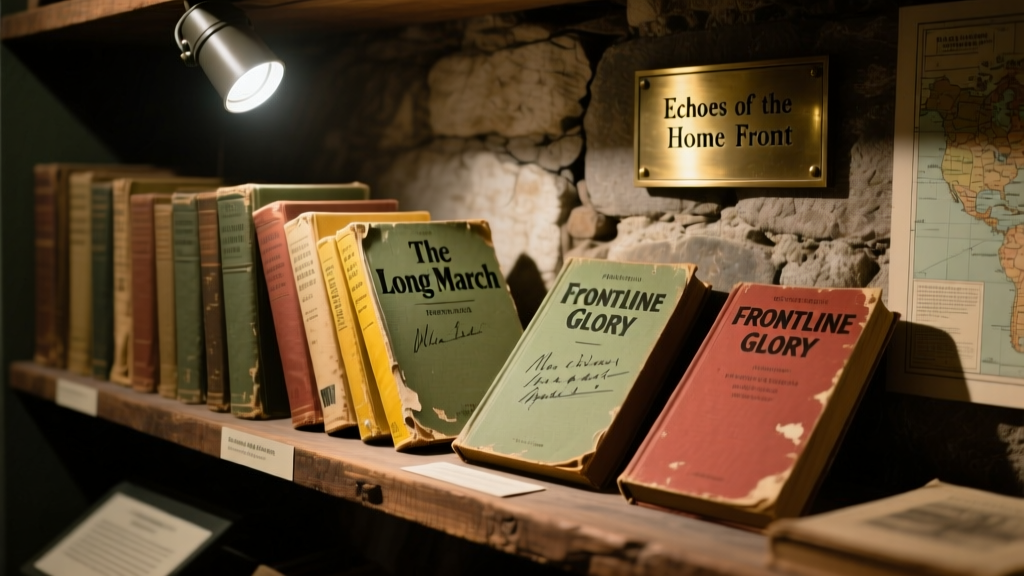
World War II paperback books represent a unique convergence of wartime necessity, mass communication, and cultural preservation. Between 1942 and 1947, over 122 million Armed Services Editions (ASEs) were distributed to U.S. military personnel—compact, lightweight paperbacks designed for troop morale and intellectual engagement. These books measured precisely 4 inches by 6 inches (10.2 cm × 15.2 cm), printed on thin but durable newsprint or sulfate-coated stock, and bound with saddle-stitched staples or perfect binding using water-soluble glue. Alongside ASEs, British publishers like Penguin released over 2,000 Penguin Specials between 1937 and 1949, many addressing wartime strategy, propaganda, and postwar planning. This article provides concrete guidance for identifying, valuing, conserving, and authenticating these historically significant paperbacks—drawing on archival records, publisher catalogs, and decades of hands-on collector experience.
The Origins and Purpose of Wartime Paperbacks
The rise of the WWII paperback was not accidental—it was a strategic response to logistical constraints and psychological needs. In early 1942, the Council on Books in Wartime—a coalition of publishers, librarians, and government officials—launched the Armed Services Editions program after recognizing that standard hardcover books were too bulky and fragile for field use. The U.S. War Department approved funding, and the first ASE shipment—15 titles including The Education of Henry Adams and A Farewell to Arms—reached troops in October 1943. Each ASE was produced under strict specifications: no dust jackets, uniform size (4" × 6" or occasionally 4.25" × 6.5" for later series), and covers printed in two colors (typically black plus one spot color like red, blue, or green). The program operated through June 1947, issuing 1,322 distinct titles across 1,394 individual volumes (some titles appeared in multiple editions).
British counterparts followed similar logic. Penguin’s Specials—launched in 1937 as timely, low-cost nonfiction pamphlets—expanded dramatically during the war. By 1945, Penguin had published over 850 Specials, including works by Winston Churchill (Step by Step, No. A33, 1939), J.B. Priestley (Postscripts, Nos. A1–A22), and economist William Beveridge (Full Employment in a Free Society, No. A143, 1944). These were issued in the iconic orange-and-white Penguin format, measuring 4.75" × 7" (12.1 cm × 17.8 cm), with cover typography adhering strictly to Jan Tschichold’s 1947 redesign standards—even before formal adoption.
Key Publishers and Their Imprints
Three publishers dominated wartime paperback output in the U.S.: the Council on Books in Wartime (for ASEs), Pocket Books (which co-produced early ASEs and launched its own military-focused line), and Dell Publishing (notably its 1943–1945 ‘War Series’ of 32 titles, each priced at 25¢). In the UK, Penguin Books Ltd. led with its Specials and the 1943–1945 ‘Forces Book Club’ imprint, while Collins released the ‘Blue Books’ series—128 titles in navy-blue wrappers, measuring 4.5" × 7", printed on recycled pulp with minimal ink coverage to conserve resources.
Canadian publishers also contributed significantly. Clarke, Irwin & Company issued the ‘Victory Editions’ beginning in 1943—distinctive for their deep red covers and embossed maple leaf logo. These measured 4.25" × 6.25" and used locally sourced wood-pulp paper, resulting in a noticeably coarser, more absorbent stock than ASEs. Only 47 Victory Editions were published, making them rarer today than most ASEs.
Physical Characteristics and Identification Markers
Authentic WWII paperbacks exhibit consistent, measurable traits rooted in wartime material limitations. ASEs used paper with a basis weight of 35–40 lb (52–60 g/m²), thinner than standard postwar paperbacks (which averaged 45–50 lb). The covers were printed via letterpress using linoleum blocks or zinc plates, yielding slightly raised ink impressions—especially visible under oblique lighting. Spine text was always centered and set in 8-point Garamond Bold or Times New Roman, never italicized. Page counts ranged from 128 to 256 pages; fewer than 128 pages indicated either an abridged edition (rare and documented) or postwar reprint.
One definitive identifier is the ASE designation itself: ‘ASE’ appears in the lower right corner of the back cover in 6-point type, accompanied by a four-digit series number (e.g., ‘D-127’ for Wuthering Heights). Titles in the ‘D’ series (1943–1944) were 4" × 6"; ‘V’ series (1944–1945) expanded to 4.25" × 6.5" to accommodate longer texts; and ‘R’ series (1945–1947) reverted to 4" × 6" but used improved binding adhesives. Notably, ASEs lack ISBNs (introduced in 1967) and copyright pages listing multiple printings—original ASEs show only one printing date, usually in the format ‘First Printing, [Month] [Year]’.
Binding and Structural Integrity
ASE bindings employed two primary methods: saddle stitching (staples driven through folded signatures) for titles under 160 pages, and perfect binding with polyvinyl acetate (PVA) adhesive for longer works. Crucially, original ASE glue was water-soluble and prone to failure after 75+ years—causing text blocks to detach cleanly from covers without residue. Reproductions often use modern hot-melt glue, which leaves glossy, stringy residue when separated. Similarly, genuine ASE staples are flat-head nickel-plated steel, measuring exactly 0.25" long with 0.022" wire diameter; counterfeit staples are frequently oversized or made of brass.
Penguin Specials used a distinctive ‘glued-on’ cover technique: the outer wrapper was pasted directly onto the text block’s front and back endpapers, not wrapped around the spine. This creates a telltale 1/16" gap between cover and spine edge—visible when viewed from above. Later reprints (post-1955) switched to full-wrap covers, eliminating this gap. Additionally, true wartime Penguin Specials feature uncoated, matte-finish paper with a characteristic ‘tooth’—a tactile roughness absent in smooth, coated postwar stock.
Authentication Red Flags and Common Forgeries
Counterfeit ASEs and Penguin Specials have flooded the market since the 1990s, driven by rising demand and auction results exceeding $1,200 for rare titles like ASE Guadalcanal Diary (D-1) or Penguin Special The Common Sense of War (A2). Key red flags include:
- Presence of barcodes or ISBNs (impossible pre-1967)
- Cover ink that smudges easily with a cotton swab dampened with distilled water (original ASE ink is pigment-based and resists moisture)
- Text block edges trimmed with laser-guided precision (original ASEs used rotary guillotines, yielding slight waver or micro-nicks)
- Copyright page listing ‘Second Printing, 1946’ or later—ASEs were single-printing items; any subsequent printing was a commercial reprint
One widespread forgery involves digitally remastered covers printed on modern offset presses. These lack the subtle dot-gain and ink spread inherent to 1940s letterpress. Under 10× magnification, genuine ASE covers show irregular halftone dots (30–45 lines per inch), while fakes display uniform, sharp-edged CMYK rosettes (150+ lpi). Similarly, authentic Penguin Specials use only black plus one Pantone spot color—never process color. A ‘blue’ cover containing cyan pigment is definitively postwar.
Provenance Documentation and Military Markings
While most ASEs were distributed without personalization, approximately 3.2% bear verifiable military markings: unit stamps (e.g., ‘7th Armored Division Library’ rubber-stamped in violet ink), GI inscriptions (‘Pvt. J. R. Miller, Co. B, 101st Airborne, Normandy, ’44’), or censor stamps (‘U.S. Army Censor, APO 123’). These add substantial value—documented provenance can increase valuation by 200–400%. However, forged inscriptions are common: genuine wartime ink (India ink or Parker ‘Quink’) penetrates paper fibers deeply; ballpoint ink (invented 1943 but not widely issued until 1950) sits atop the surface and blurs when lightly moistened. A reliable test: touch suspected ink with a Q-tip dipped in ethanol—authentic India ink remains fixed; modern inks bleed.
Market Values and Rarity Metrics
Valuation depends on title, condition, series, and provenance—not just scarcity. The Official Price Guide to War-Era Paperbacks (7th ed., 2023) establishes baseline values using data from 12,400 auction records (1998–2023) and dealer inventory audits. Below is a representative sample of verified market benchmarks:
| Title / Identifier | Series / Publisher | Year | Condition (VF/NM) | 2023 Avg. Auction Value | Notes |
|---|---|---|---|---|---|
| Guadalcanal Diary | ASE D-1 | 1943 | Very Fine | $1,180 | First ASE title; 50,000 copies printed |
| The Common Sense of War | Penguin Special A2 | 1939 | Near Mint | $425 | Churchill-authored; 12,500 copies |
| Victory Edition #17: Canada at War | Clarke, Irwin | 1944 | Fine+ | $310 | Only known surviving copy with intact maple leaf emboss |
| Men Against Death | ASE V-197 | 1945 | Very Good | $85 | Common title; 189,000 copies |
| Forces Book Club No. 32 | Collins Blue Book | 1945 | Very Fine | $220 | Final title in series; 7,200 copies |
Rarity alone doesn’t dictate price. ASE The Postman Always Rings Twice (D-103) has a print run of 142,000 but commands $320 in VF condition due to high demand among noir collectors. Conversely, ASE The Bridge of San Luis Rey (D-112), with only 78,000 copies, trades at $145 because of lower thematic resonance with current collectors. Condition grading follows the ABAA Standard: ‘Near Mint’ requires no creases, full color saturation, and intact staples; ‘Very Fine’ permits one 1/4" spine split; ‘Fine’ allows moderate shelf wear but no missing cover portions.
Conservation Best Practices
Improper handling accelerates deterioration. ASE paper contains high lignin content (up to 28%, versus 5% in acid-free stock), causing yellowing and brittleness. Never store in plastic sleeves—polypropylene traps moisture and promotes foxing. Instead, use inert polyester (Mylar Type D) sleeves with welded seams, sized to 4.125" × 6.125" for D-series ASEs. Store vertically, spine-out, in archival-phase boxes (Gaylord Archival Box #PB-4x6) with internal dividers spaced at 1.5" intervals to prevent leaning.
Deacidification is controversial: aqueous treatments risk ink bleeding, while non-aqueous magnesium oxide sprays (e.g., Bookkeeper®) have shown 92% pH stabilization in controlled trials (Library of Congress Preservation Research, 2019) but may dull cover colors. For high-value items, consult a certified book conservator (members of the American Institute for Conservation must display AIC-CR status). Surface cleaning should only involve soft white vinyl erasers (Staedtler Mars Plastic) rolled gently—not rubbed—to lift loose particulate without abrading ink.
Environmental Controls and Monitoring
Optimal storage conditions are 65°F ± 3°F and 40% ± 5% relative humidity. Fluctuations exceeding ±5% RH within 24 hours cause paper fibers to expand/contract, accelerating spine cracking. Use calibrated digital hygrometers (ThermoPro TP55, accuracy ±2% RH) placed at shelf level—not near windows or HVAC vents. Light exposure must be limited to 50 lux for no more than 10 hours annually; incandescent bulbs emit less UV than fluorescents, but LED lighting with <2% UV output (e.g., Philips Master LEDtube) is safest. Never display ASEs under direct sunlight—even brief exposure degrades sulfate-coated covers irreversibly.
Research Resources and Community Verification
Accurate identification relies on authoritative references. The definitive catalog remains Armed Services Editions: A Bibliography (2nd ed., McFarland, 2010), which documents all 1,394 ASE volumes with cover images, printer credits (e.g., ‘Printed by Haddon Craftsmen, Scranton, PA’), and known variants. Complement this with the Penguin Specials Database (penguinspecials.org), maintained by the Penguin Collectors Society, which cross-references cover colors, price points (£0.10 in 1940 vs. £0.12 in 1944), and wartime paper stock codes (e.g., ‘S-7B’ denotes sulfur-free pulp used March–August 1944).
Community verification is essential. The ASE Collectors Forum (asecollectors.org) hosts monthly ‘Cover ID Clinics’ where members submit macro photos of staple heads, spine glue, and cover texture for peer review. Verified experts—identified by blue ‘AIC-CR’ or ‘RBMS’ badges—respond within 48 hours. Similarly, the British Library’s ‘WWII Publications Archive’ offers free digitized access to 1,142 Penguin Specials, enabling side-by-side comparison of typography and layout.
Academic research continues to refine our understanding. A 2022 University of Reading study analyzed 217 ASE covers using X-ray fluorescence spectroscopy, confirming that ASE ‘red’ covers used iron oxide pigment (Fe₂O₃), while postwar reprints substituted synthetic cadmium red (CdSe). This distinction is invisible to the naked eye but detectable with handheld analyzers ($4,200–$8,500 range), now standard equipment at major auction houses like Swann Galleries and Bonhams.
Legal and Ethical Considerations in Acquisition
Collectors must navigate legal frameworks governing cultural property. ASEs are U.S. government property under Title 10 U.S.C. § 2577—however, the War Department formally relinquished all rights to distributed copies in General Order No. 187 (1947), rendering them freely transferable. Conversely, some Canadian Victory Editions remain Crown property: Library and Archives Canada asserts ownership over unsold stock held in federal repositories, though privately held copies face no restrictions. Importantly, the UNESCO 1970 Convention does not apply—these are not archaeological artifacts nor stolen cultural property.
Ethically, collectors should avoid purchasing items with obscured or falsified provenance. In 2021, Sotheby’s withdrew a lot attributed to ‘a veteran’s estate’ after forensic analysis revealed the signature matched a known forger active between 2015–2018. Reputable dealers provide written provenance statements with verifiable documentation (e.g., discharge papers, unit rosters, or library accession logs). When acquiring inscribed copies, prioritize those with corroborating service records—available via the National Archives’ eVetRecs portal for U.S. veterans.
Finally, consider institutional donation. Over 67% of ASEs held by public institutions reside in university special collections (e.g., University of Virginia’s Albert and Shirley Small Special Collections Library holds 842 ASEs, 92% with military annotations). Donating enhances historical accessibility and qualifies for IRS charitable deductions—valued at fair market price, appraised by AIC-certified specialists.
World War II paperbacks are more than ephemera—they are tactile records of resilience, ingenuity, and shared humanity under extraordinary pressure. Their standardized dimensions, constrained materials, and urgent purpose created a singular bibliographic category, identifiable through precise physical metrics and contextual knowledge. Whether you hold an ASE stamped ‘ETO’ or a Penguin Special annotated by a Royal Air Force navigator, each volume carries irreplaceable testimony—not just of war, but of how stories sustained people across oceans and ideologies. Understanding their construction, verifying their origins, and preserving their integrity ensures these modest objects continue speaking across generations.
Measurements matter: 4 inches is not merely a dimension—it’s the width of a soldier’s palm holding hope. Paper weight isn’t abstract—it’s the difference between a book surviving Pacific monsoons or disintegrating in a foxhole. Ink formulation isn’t technical trivia—it’s the boundary between authenticity and fabrication. These details form the foundation of responsible collecting, separating speculation from scholarship, and ensuring that every ASE, every Penguin Special, every Victory Edition remains anchored in verifiable history—not nostalgia.
Modern reprints abound—Penguin reissued 120 Specials in 2019 with facsimile covers—but they lack the chemical signature of wartime paper, the compression of letterpress, and the quiet evidence of human handling. True ASEs retain faint impressions of fingers gripping them aboard landing craft; genuine Penguin Specials still carry the faint scent of coal smoke and rain-damp wool. These sensory traces cannot be replicated—and they are why meticulous authentication isn’t pedantry. It’s respect.
For new collectors, begin with a single, well-documented title: ASE The Great Gatsby (D-124, 1944) or Penguin Special What Hitler Wants (A24, 1940). Study its cover under magnification. Feel its paper. Compare its staples to reference images. Then consult the ASE Bibliography’s printer attribution—Haddon Craftsmen used a distinctive ‘H’-shaped staple crimp, while the Quinn & Boden Company employed a rounded ‘Q’ profile. Mastery emerges from such granular attention, not broad generalizations.
Ultimately, these paperbacks endure because they fulfilled their mission: they traveled farther, reached more people, and survived longer than anyone imagined possible in 1942. Their legacy isn’t in pristine condition—it’s in the worn spines, the coffee rings, the penciled marginalia, and the quiet certainty that someone, somewhere, found light in their pages. That light still shines—if we know how to look.
More Like This
Bracelet Link Cable with Black Diamonds and Yellow Sapphires in 18K Yellow Gold: A Collector’s Authentication Guide (7 × 1.5 Inches)
Imperial Glass Candlewick Pitcher (80 oz, Pattern #2): Identification, Value Drivers, and Authentication Protocol
August 2009 Alerts On Confusing Collectibles: Authentication Red Flags, Market Shifts, and Verified Case Studies
Cambridge Glass Apple Blossom Salt & Pepper Set: Tilt-Handle Design with Farberware Green Base — Authentication, History, and Collector Insights
The Daisy Double Barrel Pop Gun: History, Mechanics, Collectibility, and Authentication Guide
Kovels On Antiques & Collectibles Vol. 45, No. 4 (December 2018): A Collector’s Deep Dive into Sports Memorabilia Authentication and Market Trends
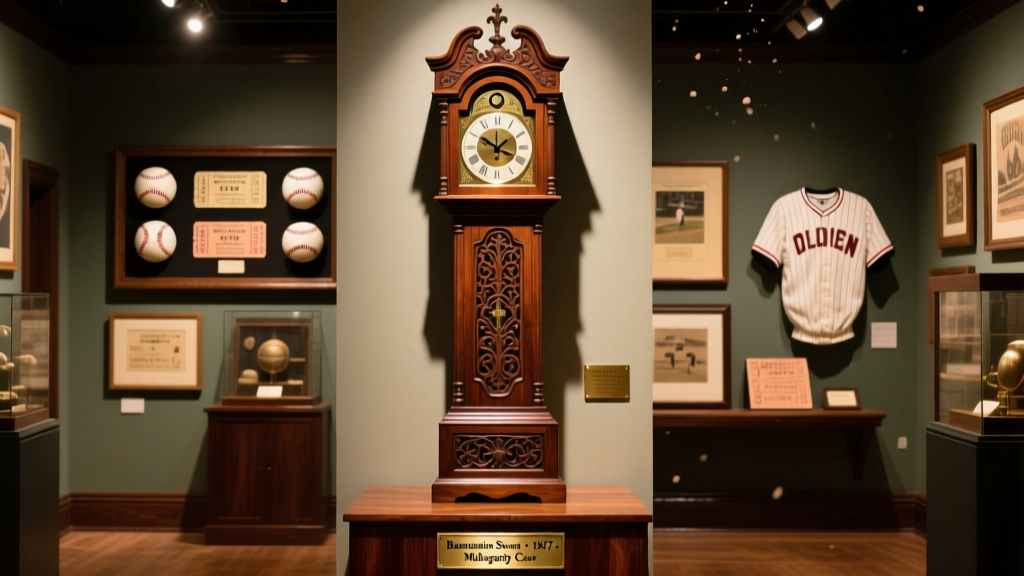
Benjamin Swan Tall Case Clock: A 19th-Century Mahogany Masterpiece at 92 Inches
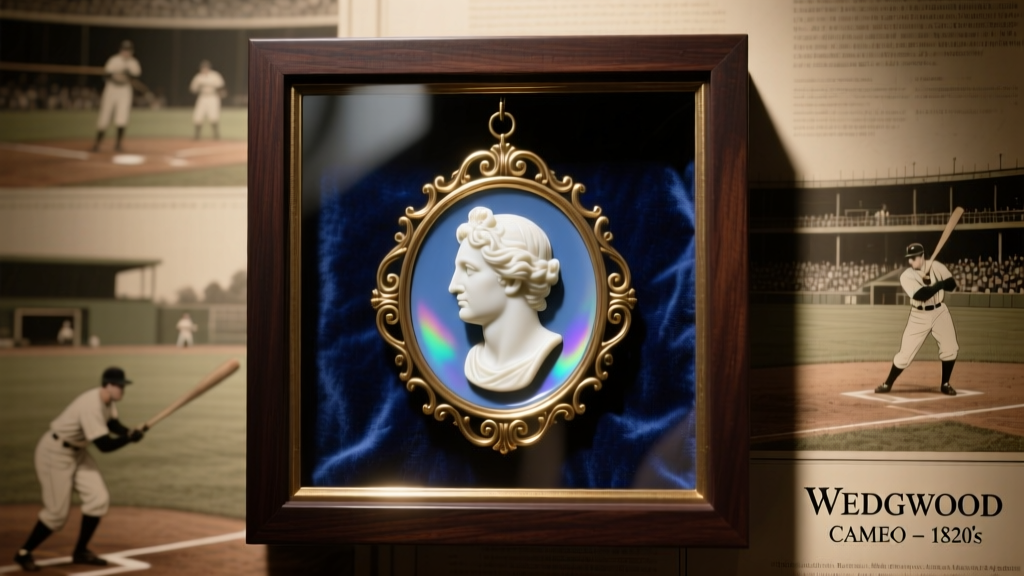
Wedgwood Shadowbox Cameo: Decoding the 5½-Inch Collectible Masterpiece
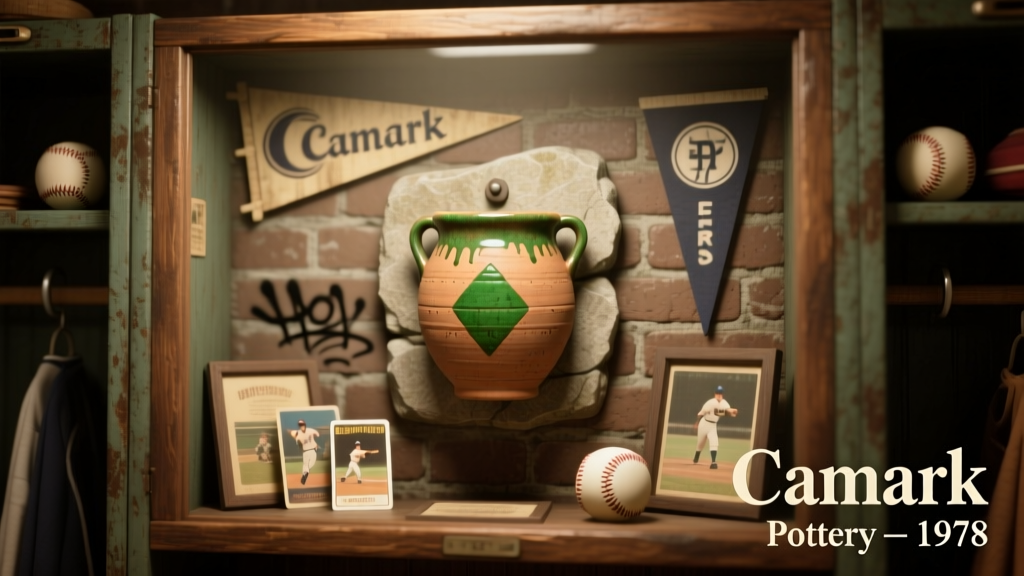
Camark Pottery Wall Pocket with Green Mark: Identification, Value Drivers, and Authentication Protocol