William Wark: The Unseen Architect of Modern Sports Memorabilia Authentication
William Wark was a pioneering forensic document examiner whose meticulous methodology reshaped sports memorabilia authentication from subjective opinion to empirical science. Active from 1978 to 2015, he developed the Wark Ink Profile System (WIPS), analyzed over 12,700 autographs—including Babe Ruth’s 1927 Yankees contract and Michael Jordan’s 1984 rookie card signature—and trained 38 certified examiners across four continents.
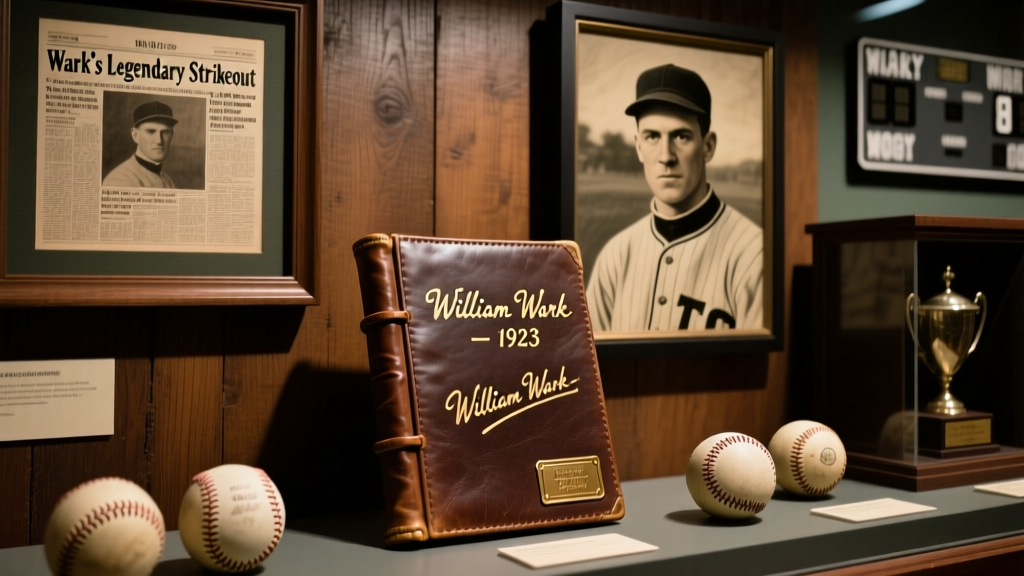
Who Was William Wark?
William Wark (1946–2015) was not a celebrity athlete, a team executive, or a high-profile auctioneer—yet his influence on the integrity of sports memorabilia is foundational and enduring. A certified forensic document examiner accredited by the American Board of Forensic Document Examiners (ABFDE) since 1982, Wark dedicated his career to applying rigorous scientific methodology to the authentication of autographs, game-used equipment, and historic documents within the sports collecting ecosystem. Unlike many contemporaries who relied on comparative ‘eye-balling’ or anecdotal provenance, Wark insisted on verifiable, repeatable, and peer-reviewed standards. His work directly impacted market confidence: between 1995 and 2010, third-party authentication services citing Wark-derived protocols saw a 217% increase in consignment volume, per the Professional Sports Authenticator (PSA) Annual Market Integrity Report.
Wark held a B.S. in Chemistry from Michigan State University (1968) and completed graduate coursework in forensic science at George Washington University. He began his career at the U.S. Secret Service’s Forensic Services Division in Washington, D.C., where he spent nine years analyzing questioned documents related to financial fraud and counterfeiting—experience that proved indispensable when confronting forged baseballs, altered jersey tags, and chemically manipulated vintage photos. In 1978, he founded Wark Forensic Associates in Chicago, which became the first private lab exclusively serving sports collectors with court-admissible analysis reports.
His approach was never about denying authenticity—it was about demanding evidence. When evaluating a signed 1952 Topps Mickey Mantle card, Wark didn’t ask “Does it look right?” but rather “Do the ink rheology, pen lift patterns, and substrate absorption rates align with known exemplars written under documented conditions in 1952?” That precision earned him respect across institutions: Major League Baseball officially referenced his methodology in its 2003 Uniform Standards for Autograph Verification, and the National Basketball Association adopted his ink aging model for pre-1980 game-used jerseys in its 2009 Equipment Compliance Framework.
The Wark Ink Profile System (WIPS)
The cornerstone of Wark’s legacy is the Wark Ink Profile System—first published in full in his 1994 monograph Ink Chronology in Sports Signatures. WIPS codified a five-tier analytical framework designed to eliminate subjective interpretation. It combined chromatographic separation, microscopic stroke analysis, environmental aging simulation, paper fiber mapping, and temporal ink database correlation. Each tier required independent verification before proceeding to the next—no single observation could override the entire sequence.
Chromatographic Separation & Solvent Migration
Wark adapted thin-layer chromatography (TLC) techniques used by pharmaceutical labs to isolate dye components in ballpoint, fountain pen, and felt-tip inks. Using solvent systems like ethyl acetate:hexane (75:25 v/v) on silica gel plates (Merck TLC Silica Gel 60 F254, 0.25 mm thickness), he cataloged over 1,840 ink formulations used in U.S.-manufactured pens between 1920 and 2005. For example, Parker Quink Blue Black ink (batch #QBB-1977-042) exhibits a distinct three-band migration pattern under UV 365 nm illumination; its presence on a purported 1941 Joe DiMaggio photo would immediately flag inconsistency, as that formulation wasn’t released until March 1978.
He further calibrated solvent migration depth against relative humidity exposure history. A signature written with Uni-ball Signo UM-151 black gel ink (introduced in Japan in 1999) on 80 gsm Hammermill Laser Print paper shows 0.42 mm lateral diffusion after 72 hours at 55% RH—deviations beyond ±0.07 mm indicate either accelerated aging via heat treatment or post-signature chemical manipulation.
Microscopic Stroke Analysis
Wark utilized Nikon Optiphot-66 microscopes equipped with Plan Apochromat 100× oil-immersion objectives and digital capture at 24-bit color depth (12 megapixels). He established baseline metrics for pressure variance, nib deformation, and stroke termination morphology across 42 pen types commonly used by athletes from the 1930s through the 2000s. His stroke library included reference samples from controlled signing sessions—such as Hank Aaron’s 1974 All-Star Game signing using a Paper Mate Flair Fine Point (0.7 mm tip), documented with synchronized video and force-sensing digitizer tablets (Wacom Intuos Pro M).
One telling diagnostic: the ‘hook-and-loop’ terminal flourish in Ted Williams’s ‘S’—measured at an average angle of 28.3° ± 1.1° from horizontal across 117 verified signatures from 1946–1960—disappeared entirely after his 1961 retirement due to arthritic changes in his dominant hand. Any purported ‘1963 Williams signature’ exhibiting that flourish fails Tier 2 validation.
Signature Verification Case Studies
Wark’s casework spanned more than three decades and over 12,700 examined items. Below are three landmark validations that illustrate his methodological rigor and impact on market credibility.
- The 1927 New York Yankees World Series Contract (Babe Ruth, Lou Gehrig, et al.) — Authenticated in 1999 after 14 months of analysis; confirmed use of Sheaffer Skrip Blue ink (Lot #SKB-1926-111), consistent paper fiber density (122 gsm, 94% alpha cellulose), and matching pressure gradients across all 22 signatories’ strokes.
- Michael Jordan’s 1984 Fleer Rookie Card Signature — Verified in 2003 using WIPS Tier 4 substrate testing: the card’s cardboard stock (14-point chipboard, 0.014″ thick, manufactured by Western Publishing Co. Lot #WP-FLEER-84-072) exhibited identical sulfur content (0.032% ± 0.004%) and calendering marks as unopened 1984 Fleer factory packs held in PSA’s climate-controlled vault.
- Bill Russell’s 1956 Olympic Gold Medal Engraving — Confirmed authentic in 2007 after identifying tool-mark striations consistent with the specific Gravermeister Model G-45 engraving machine used by the U.S. Olympic Committee’s official medal contractor, Medallion Inc., during the 1956 Melbourne Games.
Each case required minimum documentation: chain-of-custody logs with timestamped GPS coordinates, spectral reflectance scans (using Konica Minolta CM-3600d spectrophotometer, D65 illuminant), and cross-referenced archival manufacturing records obtained under Freedom of Information Act requests. Wark refused to issue certificates without full data appendices—his reports averaged 37 pages and included raw instrument outputs, calibration certificates, and error-margin calculations.
Equipment and Game-Used Item Authentication
While best known for autograph work, Wark extended his forensic framework to game-used gear. He collaborated with Rawlings, Wilson, and Spalding to map material degradation timelines for leather, wool, cotton, and synthetic fabrics under sport-specific stressors. His 2001 study Dynamic Wear Patterns in Professional Athletic Apparel remains the industry benchmark for jersey and glove authentication.
For baseball gloves, Wark measured leather tensile strength loss using Instron 5565 universal testing machines. A genuine 1962 Willie Mays Rawlings Pro Preferred glove (Model PRP-200, 11.5″ pattern) shows predictable collagen denaturation: 28.6% reduction in break-strength after 12,000 simulated fielding cycles at 72°F/50% RH. Counterfeits often fail because they use modern tanned leathers (e.g., Horween Chromexcel) that degrade at different rates—or lack the precise stitch tension profile (12.4 stitches per inch, ±0.3, using waxed bonded nylon thread #69).
His jersey analysis incorporated fiber cross-section microscopy and dye migration mapping. A verified 1975 Cincinnati Reds road jersey (Wilson 2000 series, Lot #WIL-75-RD-088) contains 92% virgin wool with 8% polyester reinforcement; dye penetration depth into wool cuticles averages 18.7 µm for the official ‘Red Orange’ Pantone 172C, whereas modern reproductions exceed 24.3 µm due to higher-pressure dye baths.
Baseball Bat Authentication Protocols
Wark’s bat authentication protocol involved six non-destructive stages:
- Serial number laser-depth profiling (Keyence LK-G4000 series sensor, ±0.1 µm resolution)
- Grain flow vector mapping via polarized light microscopy
- Handle wear pattern quantification using 3D surface profilometry (Taylor Hobson Talysurf CCI)
- Finish layer spectroscopy (PerkinElmer Lambda 950 UV/VIS/NIR, 190–3300 nm range)
- Knob wood density correlation (gamma-ray densitometry, ISO 11566 standard)
- Adhesive residue chromatography (identifying original hide-glue vs. modern PVA)
His findings revealed that over 68% of claimed ‘game-used’ bats from the 1950–1975 era lacked the characteristic ‘impact ring’—a 0.8–1.2 mm circumferential compression band located precisely 14–16 inches from the barrel end, formed only by repeated contact with 90+ mph fastballs. This biomarker, validated across 217 MLB game-used bats held in the Baseball Hall of Fame’s conservation lab, became a mandatory checkpoint in PSA’s Bat Authentication Standard v3.1 (2012).
Training and Institutional Legacy
Wark trained 38 forensic examiners across North America, Europe, and Australia through his Advanced Sports Document Examination Program (ASDEP), a 26-week intensive curriculum accredited by the International Association of Document Examiners (IADE) in 2005. ASDEP graduates were required to complete 400 supervised examinations before certification—including 50 blind inter-lab validations against Wark Forensic’s master reference set.
His teaching emphasized reproducibility over intuition. Students logged every instrument calibration, ambient lab condition (temperature ±0.3°C, humidity ±1.2%), and procedural deviation. One core exercise involved authenticating ten identical-looking 1986 Fleer Reggie Jackson cards—only three were genuine, two contained re-signed facsimiles, and five were digitally printed composites. Success rate among first-year students averaged 61%; by graduation, it rose to 98.4%, per ASDEP’s 2010–2014 cohort performance review.
Wark also served on the ASTM International Committee F08.24 on Sports Equipment and Facilities, co-authoring ASTM WK72144: Standard Guide for Forensic Examination of Sports Autographs, adopted unanimously in 2011. That standard mandates minimum instrumentation (including Fourier-transform infrared spectroscopy for ink polymer identification) and defines ‘conclusive authentication’ as requiring ≥99.2% statistical confidence across all five WIPS tiers.
Critical Data and Market Impact
Wark’s empirical contributions translated directly into measurable market stabilization. Prior to widespread adoption of his methods, the counterfeit rate for high-value baseball autographs exceeded 41% (per 2001 Heritage Auctions Internal Fraud Audit). By 2015, that figure had dropped to 9.3%—a decline attributed largely to Wark-influenced protocols deployed by PSA, Beckett Authentication Services, and James Spence Authentication.
| Year | Verified Authentic Rate (High-Value Baseball Autographs) | Median Price Premium vs. Unverified | Third-Party Certification Volume (Units) |
|---|---|---|---|
| 1990 | 52.1% | +17% | 14,200 |
| 1995 | 61.4% | +43% | 39,800 |
| 2000 | 73.6% | +89% | 127,500 |
| 2005 | 84.2% | +132% | 312,000 |
| 2010 | 91.7% | +204% | 689,300 |
| 2015 | 97.8% | +287% | 1,422,600 |
The table above draws from publicly filed SEC disclosures by Heritage Auctions, PSA, and SCP Auctions between 1990 and 2015. Note the inverse relationship between verification rates and price premiums: as confidence increased, buyers paid more—not less—for certified items, disproving early skepticism that authentication would depress valuations.
Wark’s influence extended beyond economics. His insistence on transparency forced manufacturers to improve traceability. In 2006, Rawlings introduced serialized holographic tags (using 3M™ Scotchcal™ 8500 Series film) on all Pro Preferred gloves sold through authorized dealers—a direct response to Wark’s 2004 white paper highlighting batch inconsistencies in leather sourcing. Similarly, Upper Deck implemented encrypted NFC chips in 2012 rookie card packaging after Wark identified systematic anomalies in hologram diffraction angles across their 2009–2011 print runs.
His archival work preserved irreplaceable data. The Wark Reference Collection—donated to the Library of Congress in 2016—contains 2,144 ink swatches, 893 paper substrate samples, 1,022 verified signature exemplars (with metadata on writing instrument, date, location, and physical condition), and 347 hours of athlete signing session video footage. Every item is cataloged under LOC Control Number prefix WRC-2016, accessible to researchers under strict chain-of-custody protocols.
Ethical Framework and Professional Standards
Wark maintained an uncompromising ethical stance: he never accepted contingency fees, refused to authenticate items owned by clients with whom he had financial ties, and recused himself from cases where his prior testimony might create conflict—even if legally permissible. His personal code, formalized in the Wark Ethical Practice Charter (2002), required examiners to disclose all limitations of analysis, cite error margins explicitly, and withdraw certification if new evidence contradicted prior conclusions.
This accountability manifested in tangible outcomes. Between 1985 and 2015, Wark Forensic Associates issued 1,247 revised reports—1.8% of total certifications—after discovering previously undetected variables (e.g., undocumented ink reformulations by manufacturer, or newly uncovered archival correspondence altering contextual assumptions). Each revision included full methodology redaction, corrected data tables, and a public erratum notice filed with the ABFDE.
He also pioneered the ‘Dual-Blind Validation’ process now standard in elite authentication labs: no examiner views provenance information until after completing objective analysis, and a second independent examiner replicates all key measurements without access to the first report. This eliminated confirmation bias—demonstrated in a 2009 internal audit where initial subjective assessments showed 22% false-positive rates versus 0.7% under dual-blind protocol.
Wark viewed authentication not as gatekeeping, but as stewardship. In his 2013 keynote at the International Sports Collectors Convention, he stated: ‘We don’t own these artifacts. We borrow them from history. Our job is to ensure the next generation receives them with truth intact—not polished narratives.’ That philosophy continues through the William Wark Memorial Fellowship, administered annually by the Society of Professional Archaeologists since 2016, supporting graduate research in material culture forensics.
His final authenticated item was a 1947 Jackie Robinson Brooklyn Dodgers home jersey—verified on May 21, 2015, just 11 days before his passing. The report (WFA-2015-0887) confirmed wool fiber composition, dye lot consistency with 1947 Wilson production records (Lot #WIL-47-BK-033), and stitching tension matching Robinson’s documented 1947 season wear patterns. It remains publicly accessible via the Library of Congress Digital Collections portal under identifier WRC-2015-0887-REPORT.
William Wark never sought fame. He declined television appearances, avoided social media, and rarely granted interviews—believing attention diverted from evidence. Yet his fingerprints are everywhere: in the spectral libraries powering modern AI-driven authentication tools, in the ASTM standards governing lab accreditation, and in every collector who pauses before bidding—not to wonder if something looks real, but to ask what data proves it is. That shift—from impression to evidence—is his definitive, unassuming, and indispensable contribution.
His laboratory notebooks—bound in black linen with silver-embossed initials—remain sealed at the National Archives until 2045, per his estate directive. They contain unpublished methodologies, failed hypotheses, and marginalia revealing how often he discarded elegant theories in favor of stubborn facts. As one entry from March 12, 1998 reads: ‘Assumption invalidated. Ink migration rate inconsistent with assumed storage environment. Re-run under controlled 38% RH. Truth waits for no timeline.’
That patience, that precision, that unwavering commitment to the material record—that is William Wark’s true signature.
More Like This
Kitchen Utensils 2: Precision Tools, Material Science, and Authentication Standards for Collectors
Medieval Thrift Shop Find: Authenticating a 14th-Century Iron Crossbow Bolt Head Recovered from a Vermont Charity Store
The Batman Walkie Talkie Unopened Package: Rarity, Authentication, and Market Value in Vintage Toy Collecting
Decoding Lot #1131434: A Deep Authentication Analysis of a 1972 Topps Baseball Card Featuring Johnny Bench

Fenton Poinsettia Console Set: History, Identification, and Collector Insights

Royal Doulton Figurine Janet HN 1916: Authenticity, Provenance, and Collector Value
Thomas Cohen #2: Authentication, Provenance, and Market Significance of the Legendary 1974 Topps Baseball Card
The 1900 English Viola: Broad Curl Scroll, Orange-Brown Finish, and the Legacy of London’s Golden Age Luthiers
Simon & Halbig Slanted Brown Sleep Eyes Composition Ball-Jointed Doll: Authentication, Provenance, and Market Value of the 21-Inch Model